
The Distributor's 2026 Playbook: Building a Long-Term POS Cash Drawer Supply Chain
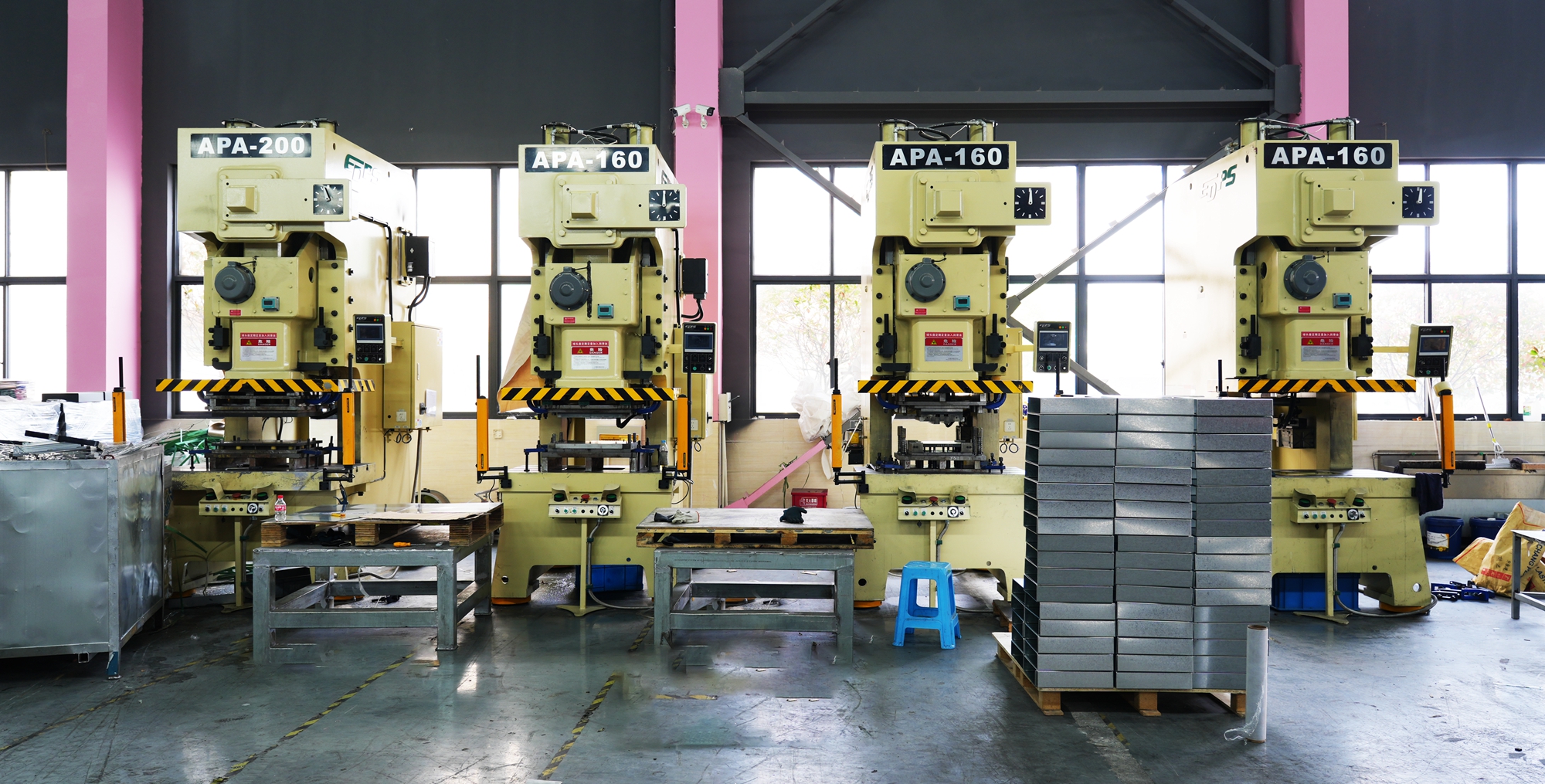
LASPACK's manufacturing facility: in-house stamping and production control.
How to Evaluate a POS Cash Drawer Distributor Partnership: Long-Term Supply, Customization & Growth
The global cash drawer market was valued at roughly USD 0.855 billion to USD 0.96 billion in 2024–2025, and it is projected to reach roughly USD 1.23 billion to USD 1.7 billion by 2033–2034, with a CAGR of about 4.1%–4.2%. For distributors, system integrators, and POS brands, this represents a steady, durable category opportunity. The key question is not only where to source a reliable product, but how to build a supplier relationship that supports consistent margins, product differentiation, and long-term growth.
This guide is written for decision-stage buyers who are evaluating cash drawer manufacturers for an ongoing distribution line, private-label program, or multi-region deployment. It focuses on what matters after the sample round: production capacity, customization depth, certification continuity, payment and delivery terms, and the operational discipline that turns a good factory into a dependable supply partner.
Why Long-Term Partnership Matters in the Cash Drawer Market
POS hardware distribution is rarely a one-time transaction. A distributor or brand that sells a cash drawer to a retailer or restaurant is entering into an implicit commitment: the drawer must keep opening and closing reliably for years, spare parts and replacements must be available, and the end customer should not have to hear “we no longer carry that model” too early in the product's life.
A long-term supplier relationship mitigates several distinct commercial risks:
- Product continuity: when a supplier discontinues a model unexpectedly, you may be left with incompatible inventory or an painful re-certification process.
- Cost stability: raw material fluctuations and tariffs are easier to manage with a supplier that communicates early and works on multi-cycle forecasts.
- Quality accountability: a factory that sees you as a repeat partner has a stronger incentive to resolve quality issues and protect shared reputation.
- Market credibility: for a distributor, the manufacturer's reputation is part of the value proposition to downstream customers.
For the distributor, the question becomes: which factories are structured to handle long-term partnership, and which are only equipped to fulfil one-off purchase orders?
Defining the Decision Criteria: Beyond Price Per Unit
If you are comparing suppliers for an ongoing line, you should evaluate on at least five dimensions. Price is one of them, but it is not the dimension that predicts relationship performance.
1. Manufacturing Capacity and Scale
A supplier that lacks capacity will always be a source of supply risk, no matter how good the product looks in a sample. Zhangjiagang Laspack Technology Co., Ltd., for example, has a monthly production capacity of 40,000 units. That figure matters to a distributor because it allows multiple clients to be served simultaneously, seasonal order spikes to be absorbed, and delivery promises to be kept without deprioritizing smaller partners.
2. Full-Process Manufacturing Control
Cash drawers look like simple boxes, but their long-term reliability depends on sheet metal stamping, plastic injection, assembly, and functional testing. A manufacturer that controls the full process—particularly mold development and stamping—has more traceability and can respond faster to engineering issues. LASPACK is an illustrative example: the company's background states that it controls the entire process from product design and mold development to processing and production.
3. Compliance Continuity, Not Just One-Time Compliance
Certifications should be checked at multiple points in the partnership: on the initial sample, on pre-production units, and periodically over the years. LASPACK's cash drawers hold CE (certificate M2506016AY-C0127), RoHS (certificate M2506016AY-C0128), and FCC certification, and they have passed a 1,000,000-cycle durability test. The cycle rating places them in the industry's “standard duty” band—the widely used industry reference draws a distinction between standard duty (approximately 1 million cycles) and heavy duty (approximately 4 million cycles) drawers.
4. Customization Depth for Brand and Market Differentiation
For a distributor, the ability to differentiate is often more valuable than the base product cost. LASPACK states that it provides full customization according to customer requirements, including product color, silk-screen or stamped logos, and packaging customization. Some models, such as the LAS-4042, also offer adjustable coin and bill compartments, which supports configuration flexibility.
5. Commercial Terms That Fit a Repeat Order Model
Distributors need predictable logistics and payment terms. LASPACK's standard procurement support includes a minimum order quantity of 100 pieces, delivery terms EXW/FOB/CIF, pre-shipment testing, and payment terms of 30% T/T deposit and 70% T/T balance before shipment. These terms are practical for trial orders of a few hundred units as well as 40-foot container orders.
Capacity Planning: What a 40,000-Unit Monthly Capacity Actually Means for Distributors
One common mistake in supplier evaluation is to look at a factory's capacity number and only interpret it as “they can make many units.” For a distributor planning a product pipeline, capacity has more specific implications:
- Order lead time stability: a facility producing 40,000 units per month is less likely to push a 500-unit order into a three-week delay.
- Mixed-order flexibility: distributors often need a combination of models (e.g., LAS-335, LAS-405, LAS-410G, LAS-410A, LAS-4042) in a single order. Sufficient line capacity makes mixed production feasible.
- Pre-shipment testing capacity: LASPACK performs 100% pre-shipment functional tests. For a distributor, this is a direct quality assurance mechanism—every unit, not just a random sample, goes through a functional check before leaving the factory.
When a supplier sells 70% of its output to export markets across South Asia, Central Asia, the Middle East, South America, Africa, Europe, and other regions, it has practical experience managing international order complexity, documentation, and multi-region packaging requirements. That breadth reduces the learning cost when you onboard them as a partner.
The Distributor's Step-by-Step Supplier Qualification Checklist
The following workflow is designed for distribution and procurement professionals who are moving beyond the first sample and want to qualify a factory for a long-term program.
- Audit the factory's actual capacity and production process. Ask for the production line layout, stamping equipment, and assembly workflow. A visit is best; video walkthroughs are acceptable as a second tier. For LASPACK, its factory images show stamping equipment, die-storage racks, and a production workshop.
- Verify quality control from raw materials to finished goods. The key question is not “do you have QC?” but “where does QC happen and how many units are inspected?” LASPACK performs 100% pre-shipment functional tests, which is a stronger statement than random inspection alone.
- Request certification documents for each model. Check that the CE, RoHS, and FCC certificates (where applicable) are current, carry valid certificate numbers, and match the models you intend to buy.
- Discuss customization scope in writing. Confirm which of the following are available: color changes, silk-screen or stamped logos, packaging, label placement, and compartment configuration.
- Test the drawer's mechanical and electrical performance. Ask for the results of the 1,000,000-cycle durability test and verify the lock mechanism works with the three-position lock and the RJ11/RJ12 interface works for receipt printer integration.
- Clarify commercial terms as if you plan to re-order. Confirm the MOQ of 100 pcs, the payment schedule of 30% T/T deposit and 70% balance before shipment, availability of EXW/FOB/CIF terms, and the pre-shipment test procedure.
- Plan a first order that includes multiple models. Test the supplier's ability to handle mixed-line production. For example, purchasing LAS-335 for space-constrained POS stations and LAS-410G for standard checkout counters in the same PO tests both product range and operational coordination.
Comparing the Product Range: Which Drawer Fits Which Distribution Segment
A distributor's portfolio typically needs to serve different segments: quick-service restaurants, supermarkets, general retail, and security-sensitive environments. LASPACK's 400-series models show how a range can be structured to serve those segments, while a metal cash box and portable cash drawer options can cover lighter or mobile applications.
The table below summarizes LASPACK models for which public technical specifications are available. All models listed accept 12V or 24V power and use the RJ11/RJ12 interface commonly used for receipt-printer activation.
| Model | Positioning | Size (W×L×H) mm | Currency Layout | Lock / Interface | Material |
|---|---|---|---|---|---|
| LAS-335 | Metal cash drawer | 335 × 368 × 80 | 4 bills, 3/5 coins | Three-position lock; 12V/24V RJ11/RJ12 | Metal + plastic |
| LAS-405 | Heavy-duty cash drawer | 405 × 420 × 100 | 5 bills, 6 coins | Three-position lock; 12V/24V RJ11/RJ12 | Metal + plastic |
| LAS-410G | Heavy-duty cash drawer | 410 × 415 × 100 | 5 bills, 8 coins | Three-position lock; 12V/24V RJ11/RJ12; steel panel | Metal + plastic |
| LAS-410A | Heavy-duty cash drawer | 410 × 415 × 100 | 5 bills, 8 coins | Three-position lock; 12V/24V RJ11/RJ12; steel panel | Metal + plastic |
| LAS-4042 | Adjustable coin & bill compartment drawer | 405 × 420 × 100 | 6 bills, 4 coins | Three-position lock; 12V/24V RJ11/RJ12 | Metal + plastic |
Table: LASPACK cash drawer models with available public specifications. All models are available in black, white, or customized color.
Use Cases: How Distributors Build Offerings Around Cash Drawer Types
Retail and Supermarket Chains
Supermarkets and large retail chains need drawers that can survive high transaction volumes. A heavy-duty model such as LAS-410G or LAS-410A, configured with 5 bill slots and 8 coin slots, is better positioned for these environments. For distributors, the wider currency layout reduces the number of change-related interruptions for cashiers.
Restaurant and Food Service
Restaurant POS stations often have limited counter space. The LAS-335, at 335 × 368 × 80 mm, is a compact metal cash drawer that fits tighter environments while still offering a three-position lock. Distributors serving hospitality clients should also consider that food service environments produce dust and grease, so metal construction is often preferred over plastic-only alternatives.
Security-Focused Applications
For businesses that want to secure cash beyond simple POS functionality, a lockable cash drawer or a standalone metal cash box may be appropriate. Applications include temporary event checkouts, mobile retail, and back-office cash handling. Because LASPACK applies a three-position lock on all listed models, the same drawer gives the cashier a locked position, an unlocked position, and a lock-with-key-removed position.
Electronic vs. Manual: How It Affects the Distributor Portfolio
Electronic cash drawers—those triggered by a receipt printer signal—dominate the market from a revenue perspective, accounting for roughly 62.5% of the total market. For distributors, keeping electronic models in the core line is aligned with market demand. It is also important to understand the comparison with a manual cash box: an electric pop-up drawer with POS linkage offers higher security and faster cashier access, while a manual box is a lower-cost alternative for low-volume settings. When a supplier offers both, the distributor can build a tiered catalog rather than forcing every customer into one format.
Working With LASPACK: A Partner Model for Distribution Programs
LASPACK—established in 2013 and based in Suzhou, Jiangsu Province—describes itself as a high-tech enterprise with over 10 years in cash drawer R&D and manufacturing. With a 4,200 m² factory, roughly 50 employees, and an annual output of about 400,000 units, it has the operational profile of a manufacturer built for export distribution rather than a small job shop. Its stated export ratio of 70% and market presence across South Asia, Central Asia, the Middle East, South America, Africa, Europe, and other regions also support that positioning.
OEM and ODM Customization
For a distributor that wants to create a private label—or a POS brand that wants to differentiate its hardware portfolio—the OEM/ODM process is critical. LASPACK states that it provides customization in product color, silk-screen or stamped logos, and packaging. These are the practical dimensions that allow a distributor to sell under its own brand without manufacturing its own line.
Compartment configuration also adds flexibility. The LAS-4042 is explicitly described as a “durable cash drawer with adjustable coin & bill compartment.” This means a distributor can offer one model to customers who want to rearrange the layout according to local currency or preference—a heavier selling point in markets with unique coin-to-bill ratios.
Quality, Testing, and Certification
Distributors should never rely on aesthetics alone to judge a cash drawer. LASPACK addresses failure risk directly: the risk-control unit states that mechanical failure is controlled through overcurrent protection and 100% pre-shipment functional testing. Overcurrent protection matters because cash drawers are electronically triggered; if a solenoid or motor is driven incorrectly, protection prevents damage.
The company's stated certifications—CE (certificate number M2506016AY-C0127), RoHS (certificate number M2506016AY-C0128), and FCC—are the type of third-party verifiable evidence that supports downstream sales conversations with retail IT departments and resellers who need compliance documentation.
Commercial Terms for a Scaling Partner
The procurement support information provided by LASPACK is concrete enough for a distributor to model a program upfront:
- MOQ: 100 pieces
- Delivery terms: EXW / FOB / CIF
- Acceptance: pre-shipment test
- Payment: 30% T/T deposit; 70% T/T balance before shipment
This combination—a manageable MOQ plus FOB/CIF options—is particularly useful for distributors that are still building volume in their region or that need to test several models before committing to a more aggressive purchasing plan.
Building a Resilient Supply Chain: A Framework for Distributors
The final decision factor for a distributor is not whether a factory can produce one good cash drawer. It is whether the factory can act as a dependable part of a multi-year plan. The framework below can be applied to any supplier under consideration for long-term programs.
| Evaluation Dimension | Key Question to Ask the Supplier | Example: LASPACK Evidence |
|---|---|---|
| Production capacity | What is your monthly output, and how do you handle demand spikes? | Monthly production capacity of 40,000 units. |
| Manufacturing control | Which stages of production do you control in-house? | Product design, mold development, processing, and production. |
| Quality assurance | What is your functional test coverage before shipment? | 100% pre-shipment functional test; overcurrent protection. |
| Certification validity | Can you provide certificates with numbers and matching model names? | CE (M2506016AY-C0127), RoHS (M2506016AY-C0128), FCC. |
| Customization depth | What tangible options exist for color, logo, and packaging? | Color, silk-screen/stamped logo, packaging; LAS-4042 adjustable compartments. |
| Ordering flexibility | What is the MOQ, and can mixed models be combined? | MOQ 100 pcs; multiple models available in the same line. |
Table: Distributor evaluation framework with LASPACK as an illustrative evidence set.
FAQ
What are the compliance and certification requirements for importing LASPACK cash drawers?
LASPACK cash drawers are certified with CE, RoHS, and FCC. The CE certificate number is M2506016AY-C0127, the RoHS certificate number is M2506016AY-C0128, and the drawers have passed a 1,000,000-cycle durability test. Distributors should request a copy of the relevant certificate for each model before placing a repeat order, and verify the model number, certificate number, and validity period.
Can LASPACK support OEM and ODM customization for private-label cash drawers?
Yes. LASPACK states that it provides full customization according to customer requirements, including product color, silk-screen or stamped logos, and packaging. Its background also notes that the company controls the entire process from product design and mold development to processing and production, which supports customization projects beyond simple label changes.
What are LASPACK's MOQ, payment terms, and delivery terms?
LASPACK's standard minimum order quantity is 100 pieces. Payment terms are 30% T/T deposit and 70% T/T balance before shipment. Delivery terms available are EXW, FOB, and CIF. Acceptance is based on a pre-shipment test.
Which LASPACK cash drawer models are suitable for different POS environments?
For compact retail or restaurant counters, the LAS-335 metal cash drawer (335 × 368 × 80 mm) is a practical option. For standard and high-volume checkout environments, the heavy-duty models LAS-405, LAS-410G, and LAS-410A (405 × 420 × 100 mm or 410 × 415 × 100 mm) provide larger bill and coin layouts. The LAS-4042 adds adjustable coin and bill compartments for market-specific currency arrangements. All listed models support 12V/24V input over RJ11/RJ12 and use a three-position key lock.
How can a distributor request a sample order or quotation from LASPACK?
You can contact LASPACK directly by email at lena@laspack.com, by phone at +86 13962212810, or via WhatsApp at +852 98740600. The company's address is Room 811, Cathay Oriental Plaza, No. 9 Renmin Road, Yangshe Town, Zhangjiagang City, Suzhou, Jiangsu Province, China. For initial evaluation, you may also download the LASPACK company brochure for an overview of its products and capabilities.
Build your 2026 cash drawer program with a partner that can scale with you.
Learn more about LASPACK's manufacturing capabilities, product range, and distribution support in the company brochure, or contact the team to discuss your private-label and volume requirements.
Have Questions or Need More Details?
Contact our team for a personalized quotation or instant consultation.
Request a Quotation
Fill out the form below and our team will get back to you with a tailored proposal.
WhatsApp Direct Chat
Prefer to chat in real-time? Message us on WhatsApp for instant assistance & quick answers.
- Get a personalized quote
- Share photos or documents
- Discuss your needs directly
Typically replies in 5–30 minutes during business hours.