
Supplier Capacity Check: Measuring Aerosol Lines Against Tinplate Production Versatility
A supplier capacity check is only as useful as the format it measures. Annual can counts, monthly capacity and filling-line totals describe throughput; they do not tell a buyer whether a line can run a 65 mm diameter tinplate can at 240 mm height, or whether a 52 mm air freshener format and a 750 ml insecticide format can both leave the same factory. The more reliable test is to read a supplier's published model range as physical evidence: which diameters, which heights, which net contents and which materials are already in routine production. This evaluation guide shows how to run that check, using documented tinplate specifications as the reference data.
Why Annual Capacity Numbers Do Not Answer the Buyer's Question
Capacity and capability are different measurements, and buyers routinely substitute one for the other. Capacity answers how much a factory can fill in a given period. Capability answers what formats a factory can fill without stopping to engineer new tooling. Three practical questions follow from that distinction, and none of them is answered by an output figure:
- Does the supplier already run my can diameter?
- Does the supplier already run my can height and net content?
- Does the supplier run the material and valve system my formulation requires?
An aerosol line is not format-agnostic. A change of can diameter affects the change parts that locate and seam the can, the valve placer and the filling head geometry. A change of can height affects conveyor clearance, dip tube length and the propellant charge required to reach target pressure. Moving between tinplate and aluminum affects seam settings and pressure behaviour. Each of these is an engineering task, and the number of times a factory has already completed that task is a stronger predictor of delivery reliability than its annual capacity statement.
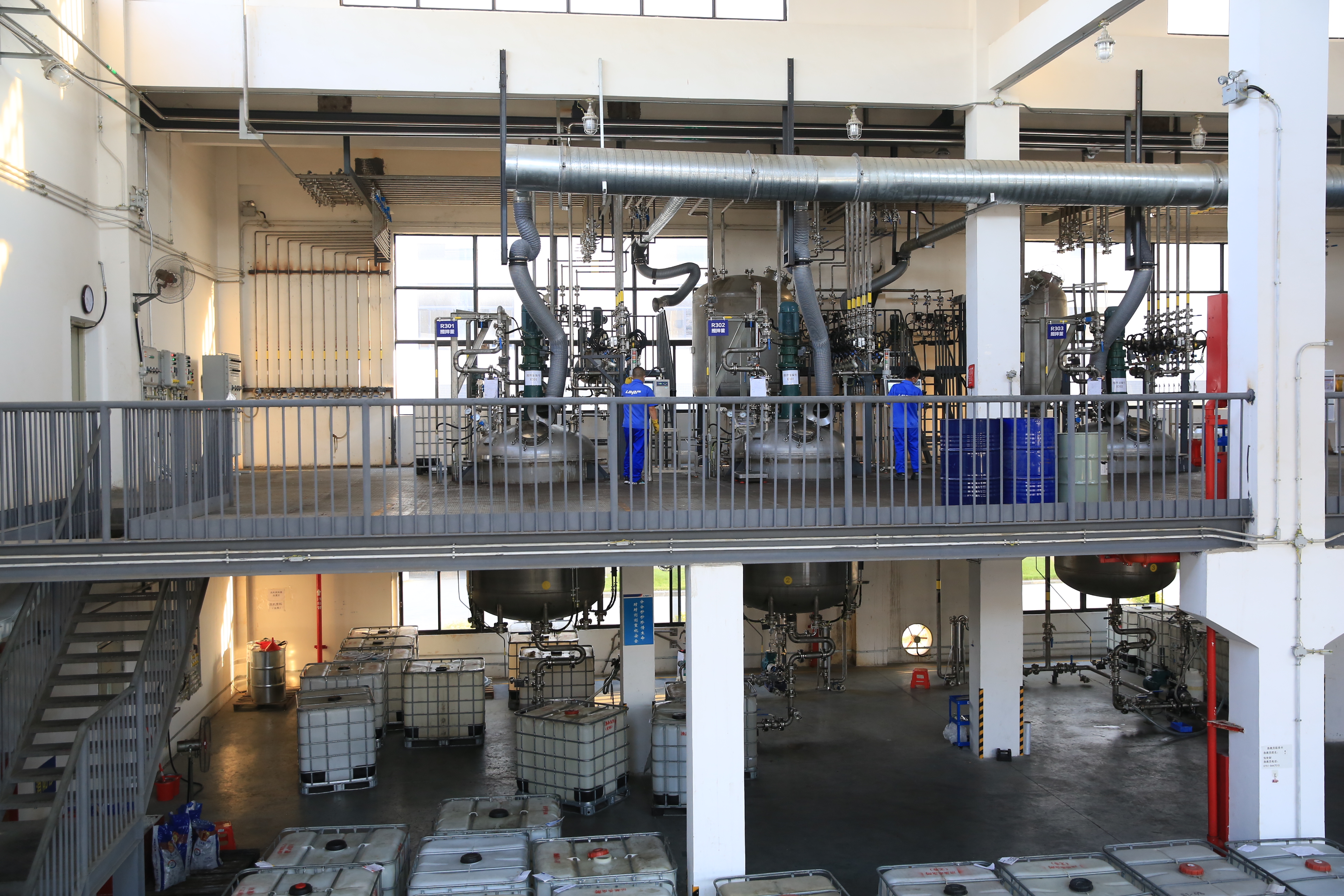
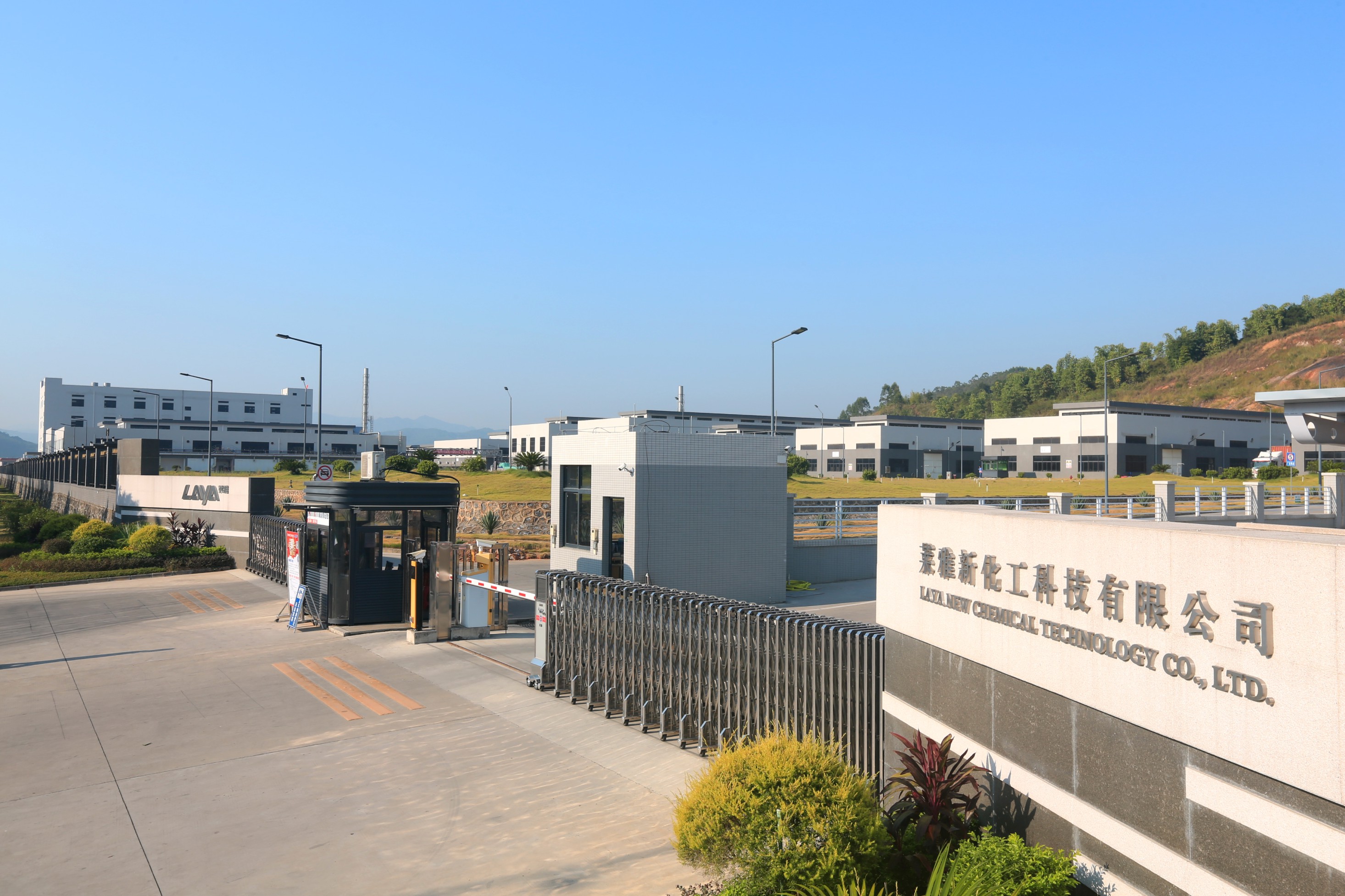
Guangdong Laya New Chemical Technology Co., Ltd. (LAYA) is a Chinese aerosol manufacturer established in 1992 that provides aerosol R&D, manufacturing, sales and OEM/ODM services from a production base in Shaoguan, Guangdong Province. The company reports a 100,000㎡ site including 50,000㎡ of modern standard workshops, 14 advanced filling lines, a technical centre with 4 product development laboratories and 7 analytical testing laboratories supported by 15 engineers, and an annual output of 200 million cans. These are company-reported figures. They establish scale, and they are the starting point of a capacity check rather than its conclusion.
Industry Background: Why Format Breadth Behaves Like a Manufacturing Constraint
The demand-side case for checking format breadth is straightforward. Grand View Research projects the global aerosol market at USD 100.7 billion in 2026, and the European Aerosol Federation reports European aerosol production of 3.46 billion units in 2024, a 4.2% year-on-year increase. Volume at that scale is not produced in a single format; it is produced across household, insecticide, automotive, industrial and coatings formats that use different cans.
Material mix is where evaluation gets slippery. Grand View Research reports aluminum at a 61.0% revenue share of aerosol containers in 2025 against 39.0% for steel. Revenue share is not unit share, and published material splits differ depending on whether value or volume is being measured. The practical conclusion for a buyer is not to choose aluminum or steel on the strength of a share figure, but that a supplier able to run both materials is less exposed to a material decision the buyer has not yet finalised.
Regulation adds a second reason to link format and capability. The EU Aerosol Dispensers Directive 75/324/EEC requires pressure testing and specific labelling for aerosols sold in the EU. Pressure performance is a function of can geometry, valve and propellant charge together, so a supplier filling several can heights has to hold validated pressure-test routines for each of them. That capability appears in test documentation, not in a capacity claim.
Reading a Tinplate Model Range as Capability Evidence
Most suppliers publish a product list with model codes and specifications. That list carries more weight than a capability brochure because it is specific, comparable and falsifiable: a buyer can request production records, samples or test reports for any model named on it. Four dimensions in a model specification carry most of the evidence.
Diameter indicates tooling investment
A value such as ∮52 mm or ∮65 mm identifies the can body diameter the line is set up for. A portfolio containing only one diameter suggests a single-format operation. LAYA's tinplate range covers ∮52 × 195 mm and a 65 mm family at 158 mm, 200 mm and 240 mm heights, extending to 65 × 300 mm on the insecticide line. Two diameter families mean at least two sets of change parts in routine use.
Height and net content indicate fill control
Height is where fill control and handling are tested. In the documented range, net content runs from 300 ml to 750 ml. Car care (BO-0000600), industrial maintenance (SM-0000400), household cleaning (QL-0000300), spray paint (QL-0000450) and aviation aerosol (KB-0000300) are listed at 300/400/500/600 ml across ∮52 × 195, 65 × 158, 65 × 200 and 65 × 240 mm. Insecticide spray (KB-0000600) adds a 750 ml option at 65 × 300 mm, and air freshener (ME-0000300) is specified at 300 ml in ∮52 × 195 mm. The 300 mm height is the useful outlier: it demonstrates tall-can handling that a single-height portfolio cannot show.
Material listings indicate propellant and seam flexibility
Aviation aerosol (KB-0000300) is listed with both tinplate and aluminum can options. Dual-material listings matter for buyers whose formulation or destination market may move between the two, because seam settings, pressure behaviour and pressure-test routines differ.
Category spread indicates cross-system experience
The same tinplate envelope is used across insecticide, air freshener, household cleaning, industrial maintenance, car care, aviation and spray paint formats. Cross-category production is not proof of formulation competence in a specific category, but it does mean the supplier has handled very different propellant and solvent systems on the same can geometry.
What makes this model range usable as evidence is the manufacturing base behind it: 14 filling lines, 4 development laboratories, 7 analytical laboratories, a stated monthly capacity of 1M cans/month, a lead time of 7–15 days and a MOQ of 10,000 pcs. A published specification without that backing would be a design catalogue; a published specification with it is a production statement.

Step-by-Step Breakdown: A Capacity Audit You Can Run in One RFQ Round
- Fix your own packaging specification first. Record can diameter, can height, net content, material and valve type. Without this, any model comparison is guesswork.
- Request the production model list, not a capability summary. Ask for model codes and specifications in the same structure as the table below. A supplier that can only supply a narrative statement has given you nothing to audit.
- Count distinct diameters and heights. Two or more diameter families and three or more height variants indicate routine changeover. One diameter and one height indicate a single-format line.
- Map your SKU onto the closest existing model. Ask which model is nearest your specification and what would change — can, valve, change parts, or nothing at all. The answer tells you whether you are buying an existing process or a development project.
- Verify test and release routines. LAYA states 100% leak testing, pressure testing and visual inspection under ISO 9001 certified quality control, and lists preshipment test as its acceptance criterion. Ask for the test records attached to the specific model you intend to buy.
- Confirm the commercial envelope against your batch. MOQ is 10,000 pcs, lead time is 7–15 days, delivery terms are TT/LC and payment terms are negotiable based on order quantity. A capacity figure only becomes relevant once your batch size sits inside those terms.
- Check licence and certificate validity dates. Documents with expiry dates are part of capacity, because an expired certificate can stop a shipment as effectively as a stopped line. The compliance list is set out in the FAQ below.

Use Cases: Where Tinplate Versatility Changes the Decision
A 30,000-unit air freshener order in a single 52 mm format
An aerosol OEM client in Bulgaria ordered 30,000 units of a plant-based air freshener built on model ME-0000300: 300 ml net content in a ∮52 × 195 mm tinplate can, formulated around an osmanthus-derived fragrance for household odour removal, car air freshening and commercial space fragrance. The project has run for 2 years. In capacity-check terms this is the simplest case — one diameter, one height, one net content — and its value is as a reference point: a 30,000-unit order sits inside a 10,000 pcs MOQ and a 1M cans/month capacity statement without stretching either.
A brand consolidating three formats with one supplier
A household and insecticide brand selling a 750 ml insecticide (KB-0000600 at 65 × 300 mm), a 500 ml car care product (BO-0000600 at 65 × 200 mm) and a 300 ml air freshener (ME-0000300 at ∮52 × 195 mm) is asking for three can geometries from one supplier. The check is whether all three already appear on the same model list. If they do, the supplier has already solved the changeover problem the brand is about to create.
An aviation maintenance buyer needing both materials
Aviation aerosol (KB-0000300) is listed in tinplate and aluminum. A maintenance buyer whose catalogue carries both variants is exposed to two material streams. A supplier that lists both on one model code shortens the qualification path compared with running two separate suppliers, and keeps pressure-test documentation in one place.
Comparison Table: What the Tinplate Range Covers
Model-level specifications are the auditable part of a capacity check. The table records the documented tinplate envelope for each LAYA aerosol line, as published for 2026 specifications.
| Product line | Model | Net content | Can dimensions (diameter × height) | Material | Industry |
|---|---|---|---|---|---|
| Insecticide spray | KB-0000600 | 300/400/500/600/750 ml | ∮52 × 195 mm; 65 × 158 mm; 65 × 200 mm; 65 × 240 mm; 65 × 300 mm | Tinplate | Insecticide |
| Air Freshener | ME-0000300 | 300 ml | ∮52 × 195 mm | Tinplate | Public & Commercial Services |
| Car Care Products | BO-0000600 | 300/400/500/600 ml | ∮52 × 195 mm; 65 × 158 mm; 65 × 200 mm; 65 × 240 mm | Tinplate | Transportation; Industrial & Manufacturing |
| Industrial Maintenance | SM-0000400 | 300/400/500/600 ml | ∮52 × 195 mm; 65 × 158 mm; 65 × 200 mm; 65 × 240 mm | Tinplate | Industrial & Manufacturing |
| Aviation aerosol | KB-0000300 | 300/400/500/600 ml | ∮52 × 195 mm; 65 × 158 mm; 65 × 200 mm; 65 × 240 mm | Tinplate; aluminum can | Aviation |
| Household cleaning aerosol | QL-0000300 | 300/400/500/600 ml | ∮52 × 195 mm; 65 × 158 mm; 65 × 200 mm; 65 × 240 mm | Tinplate | Home & Daily Life |
| Spray paint aerosol | QL-0000450 | 300/400/500/600 ml | ∮52 × 195 mm; 65 × 158 mm; 65 × 200 mm; 65 × 240 mm | Tinplate | Public & Commercial Services; Home & Daily Life |
The pattern is the evidence. Six of the seven lines share the same four-size tinplate envelope, the insecticide line extends it to 750 ml at 65 × 300 mm, and the aviation line is the only one documented in two materials. A supplier with a single diameter and a single height could not produce that table.
| Capacity indicator | Stated value | What to confirm in the RFQ |
|---|---|---|
| Annual output | 200 million cans (company-reported) | Measurement basis and capacity available in your format |
| Monthly capacity | 1M cans/month | Whether the figure is per line or site-wide |
| Filling lines | 14 advanced filling lines | Which lines run your can diameter and material |
| Production area | 100,000㎡ total; 50,000㎡ workshops | Space allocated to your product category |
| MOQ | 10,000 pcs | Whether MOQ changes with can size |
| Lead time | 7–15 days | Lead time at your order volume and season |
| Quality control | 100% leak test, pressure test, visual inspection under ISO 9001 certified control | Batch test records for the model you are buying |
| Acceptance criteria | Preshipment test | Sampling plan applied at preshipment |
| Delivery and payment | TT/LC; payment terms negotiable based on order quantity | Terms confirmed in the quotation |
What the Model Range Does Not Prove
- Availability, not capability. A broad range proves formats have been engineered, not that line time is free in your delivery window. Availability has to be confirmed per order.
- Category compliance. Certificates cover defined scopes. Confirm that your product category and target market fall inside the scope of the licence or certificate you are shown.
- Formulation performance. Model lists describe packaging, not whether a formulation meets your stability, efficacy or labelling requirements.
- Price. No public pricing exists for these models. Cost has to come from a quotation at your volume, can size and specification.
- Utilisation and delivery performance. Reported capacity is company-reported and is not an audited utilisation figure. Factory audit and reference checks remain part of qualification.
Frequently Asked Questions
Which compliance documents should a buyer verify in an aerosol supplier capacity check?
Verify numbered certificates and licences with issuers and validity dates, not logos. The documented LAYA set is: ISO 9001 quality management system certificate 180708 issued by DCI Certification Ltd to GB/T 19001-2016 idt ISO9001:2015, valid 2024-06-04 to 2027-06-03, covering R&D, production and sales of aerosol products; ISO 14001 environmental management system certificate F02925E00035R202 issued by DCI Certification Ltd, valid 2025-12-11 to 2028-12-17; ISO 45001 occupational health and safety certificate 200894 issued by DCI Certification Ltd, valid 2020-12-16 to 2026-12-16; and Hazardous Chemical Registration Certificate 44022500254 issued by the Ministry of Emergency Management of the People's Republic of China, valid 2025-06-08 to 2028-06-07, covering air freshener, insect repellent and insecticide aerosols. For EU-bound shipments, request pressure-test records consistent with Directive 75/324/EEC as well.
Can a supplier with a broad tinplate model range handle a custom can size?
A published range is evidence of engineering experience, not a guarantee of custom tooling. LAYA lists can size customization among its customization services, alongside formula customization, packaging design, logo printing and fragrance adjustment, and supports it with 4 product development laboratories, 7 analytical testing laboratories and 15 engineers. The practical test is to place your size against the documented range: inside it, adjacent to it (for example a new net content within an existing 65 mm diameter), or outside it. Sizes inside or adjacent to the range carry the shortest qualification path.
What order volume should be assumed when comparing capacity?
Start from the MOQ and scale up. LAYA states a MOQ of 10,000 pcs, a lead time of 7–15 days, delivery terms of TT/LC and payment terms negotiable based on order quantity. Site-level statements — 200 million cans annual output in the company profile and 1M cans/month in the capability statement — use different measurement bases and should not be multiplied together. Ask for available capacity against your specific format and delivery window inside the quotation, because that number governs your schedule.
How should samples be validated before bulk production?
Tie the sample to the model you intend to buy and to the stated acceptance criteria. LAYA's quality control sequence is 100% leak test, pressure test and visual inspection under ISO 9001 certified control, and preshipment test is listed as the acceptance criterion. A sample that matches the final can diameter, height, material and valve is therefore directly comparable with the production test records. Request the model code alongside the sample so the reference does not drift between sampling and mass production.
What lead time applies, and what is the next step?
LAYA states a lead time of 7–15 days, with delivery under TT/LC and acceptance by preshipment test. Confirm lead time in writing at your volume, together with the model code, can specification and test plan. To move from evaluation to a quotation, send your can diameter, height, net content, material, formulation and target volume; the full capability and product documentation is available in the LAYA brochure, and the export team can be reached at echo@laya.com.cn or on WhatsApp at +86 136 5384 8383.
Conclusion
Capacity checks fail when they stop at a number. A supplier reporting 14 filling lines, 200 million cans of annual output and a 1M cans/month capacity statement has described throughput. A supplier listing insecticide at 65 × 300 mm, air freshener at ∮52 × 195 mm, and car care, industrial maintenance, household cleaning and spray paint across 65 × 158, 65 × 200 and 65 × 240 mm has described what its lines can actually be asked to do. The second list is the one that predicts whether an order ships on schedule.
- Use annual output and line counts as a screening filter, never as a capability answer.
- Judge versatility from published model specifications: diameters, heights, net contents and materials already in production.
- Convert those specifications into questions about test records, MOQ, lead time and certificate validity dates before you commit.
- Confirm available capacity for your exact format and delivery window inside the quotation, not from the site total.
The tinplate envelope described here — 52 mm and 65 mm diameters, 158 mm to 300 mm heights, 300 ml to 750 ml net contents, with a dual-material option on the aviation line — is the auditable part of a supplier capacity check. It is worth more to a procurement decision than any single capacity figure, because it can be verified against samples, test records and the first production batch.

Next step: turn your can specification into a verified quote
Send can diameter, height, net content, material, formulation and target volume to Guangdong Laya New Chemical Technology Co., Ltd. (LAYA). You will receive a model reference, test plan and lead time confirmation against your format.
Email: echo@laya.com.cn | WhatsApp: +86 136 5384 8383 | Website: www.laya.com.cn/en/
Download the full capability and product documentation: LAYA Aerosol OEM Brochure (PDF)
Address: No. 7, Gantang Avenue South, Xilian Town, Wujiang District, Shaoguan City, Guangdong Province, China 512000.
Have Questions or Need More Details?
Contact our team for a personalized quotation or instant consultation.
Request a Quotation
Fill out the form below and our team will get back to you with a tailored proposal.
WhatsApp Direct Chat
Prefer to chat in real-time? Message us on WhatsApp for instant assistance & quick answers.
- Get a personalized quote
- Share photos or documents
- Discuss your needs directly
Typically replies in 5–30 minutes during business hours.