
Top Aerospace-Grade Aerosol Formats: Tinplate vs Aluminum Cans Ranked
Most aviation aerosol projects do not fail because of the concentrate. They fail because of the container. If the can cannot be documented against the pressure and chemical-storage rules that apply where the product will be sold, or if it exists only in a diameter and height your market or your storage profile will not accept, the project stalls regardless of how strong the formulation is.
Guangdong Laya New Chemical Technology Co., Ltd. (LAYA), established in 1992 in Shaoguan, Guangdong Province, China, is a national high-tech aerosol manufacturer producing insecticide sprays, air fresheners, household cleaning aerosols, industrial maintenance aerosols, car care aerosols, disinfectants, aviation aerosols and spray paints. Its aviation aerosol, model KB-0000300, is offered in two can formats: aluminum and tinplate. This article ranks those two formats for aviation use, using published product facts, the manufacturer's certification portfolio and the market evidence that is actually available.
Quick answer.
- Rank 1 — Aluminum can (KB-0000300). Aluminum-based aerosol cans held roughly 61–62% of the global aerosol can market in 2025, a share attributed in market research to recyclability and lightweight properties. Aluminum is listed as an available material for the KB-0000300 aviation aerosol.
- Rank 2 — Tinplate can (KB-0000300). Tinplate is the material specified across LAYA's other aerosol lines and is available for the same 300–600 ml range and the same four can dimensions as the aluminum option.
- Ranking basis. Global material market share, recyclability and weight profile, published material and size availability for KB-0000300, and the certification and testing environment that applies to aerosol dispensers.
Qualification: no public, aviation-specific comparative test data for aluminum versus tinplate was supplied, so none is used. The ranking below is a sourcing decision framework built on verifiable market data and the manufacturer's own product record — not a laboratory verdict on the two materials.
What "Aerospace-Grade" Actually Requires From an Aerosol Can
An aerosol can is a pressure vessel before it is packaging, and that single fact drives most of the requirements that make a container aerospace-grade.
In the European Union, aerosol dispenser construction is governed by the Aerosol Dispensers Directive (ADD), which requires mandatory deformation and burst tests, with resistance requirements reported in the range of 10–15 Bar depending on propellant type. That requirement attaches to the dispenser construction as a whole, so the question is not which material is exempt, but which material, filling and documentation route can be demonstrated to pass it.
Pressure is only half of the constraint set. Aerosols are also flammable-liquid products. China's Hazardous Chemicals Safety Law, in force since 1 May 2026, introduces whole-lifecycle safety management covering the production, storage and transport of chemicals, including aerosols. LAYA's own aerosol application record lists flammable liquid compliance, pressure vessel safety standards and storage temperature control as special requirements for this category, alongside an operating profile of normal temperature and humidity, high humidity and general industrial environments.
The buyer's real decision is narrower than it first appears. For a given project the questions are: can the material be supplied at the net content and can dimensions the project needs; what certification coverage exists for that product; what are the minimum order quantity and lead time; and how much artwork, formula and size customization is possible. Material is a way of answering those questions, not a substitute for answering them.
Industry Background: Why Can Material Became a 2026 Sourcing Variable
The global aerosol market size is estimated at approximately USD 100.49 billion to USD 100.87 billion in 2025, with projections reaching over USD 211 billion by 2035, according to Precedence Research and Market Research Future. Reported figures diverge, and buyers should treat them accordingly: Grand View Research has placed the 2025 global aerosol market at USD 94.4 billion while Market Research Future reports USD 100.87 billion, and growth forecasts range from a conservative 1.75% to an aggressive 7.73% CAGR for 2026–2035 depending on the agency. Europe dominated the aerosol market with a revenue share of approximately 33.88% to 36.3% in 2025, while Asia-Pacific is expected to show the highest CAGR through 2033 (Grand View Research / Precedence Research).
The material picture is more consistent. Aluminum-based aerosol cans held a dominant market share of roughly 61% to 62% in 2025, attributed to their recyclability and lightweight properties (Grand View Research / Market Reports World). Upstream, the aerosol propellants market in China was valued at USD 1,275.71 million in 2024 and is projected to reach USD 2,194.62 million by 2033 at a CAGR of 6.23% (Reed Intelligence; medium reliability rating).
Meanwhile the regulatory floor has been rising. Between the EU's ADD construction and burst-test regime and China's whole-lifecycle hazardous chemicals law that took effect on 1 May 2026, can format selection is now a compliance-adjacent decision — which is why it belongs in the evaluation stage of a project rather than the artwork stage.
Certification snapshot — LAYA (all applicable to the global market unless stated):
- ISO 9001:2015 — certificate number 180708, issued by DCI Certification Ltd., standard GB/T 19001-2016 idt ISO9001:2015, valid to 3 June 2027.
- ISO 14001:2015 — certificate number F02925E00035R202, issued by DCI Certification Ltd., standard GB/T 24001-2016 / ISO14001:2015, valid to 17 December 2028.
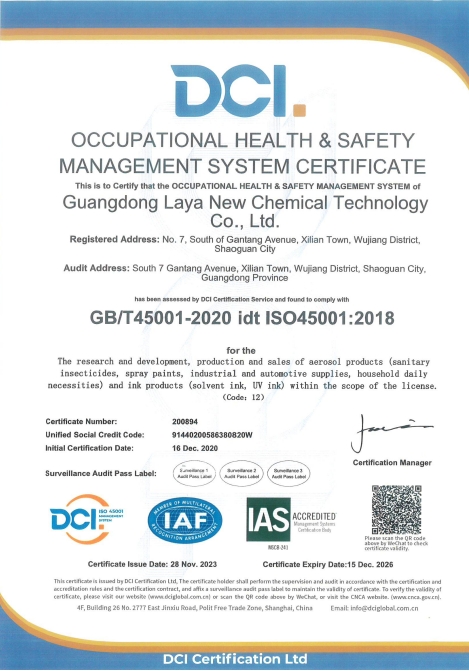
- ISO 45001:2018 — certificate number 200894, issued by DCI Certification Ltd., standard GB/T45001-2020 idt ISO45001:2018, valid to 16 December 2026.
- Hazardous Chemical Registration Certificate — certificate number 44022500254, issued by the Ministry of Emergency Management of the People's Republic of China, valid to 7 June 2028, China market, covering air freshener aerosols, insect repellent aerosols and insecticide aerosols.
The Ranking: Two Aerospace-Grade Can Formats for KB-0000300
Five criteria were used, weighted toward what a buyer can actually verify: market adoption, recycling and weight profile, documentation readiness, size-range coverage and OEM flexibility. Two of the five produce identical results for both formats — which is the most important finding in this article.
| Criterion | Why it matters for aviation aerosol | Aluminum | Tinplate |
|---|---|---|---|
| Global material adoption (2025) | Signals supply availability, tooling maturity and buyer familiarity | Roughly 61–62% of the aerosol can market | Established material across LAYA's aerosol range |
| Recyclability and weight | Affects logistics mass and end-of-life claims | Share attributed to recyclability and lightweight properties | Steel-based construction; no lighter-weight advantage claimed |
| Documentation readiness | ADD burst/deformation testing and hazardous-chemical rules apply to the dispenser | Covered by LAYA's certification portfolio | Covered by LAYA's certification portfolio |
| Size-range coverage on KB-0000300 | Determines whether the required net content can be produced at all | 300 / 400 / 500 / 600 ml — identical | 300 / 400 / 500 / 600 ml — identical |
| OEM and private-label flexibility | Determines how far the can can be branded and shaped | Logo printing, packaging design, can size customization | Logo printing, packaging design, can size customization |
Aluminum Can — KB-0000300 Aviation Aerosol
Aluminum takes first position because it is the format with the clearest external market evidence behind it. Aluminum-based aerosol cans held approximately 61% to 62% of the global aerosol can market in 2025, and the market research attributes that position to recyclability and lightweight properties. For export-oriented aviation aerosols, those two attributes map onto the two pressures buyers face most often: sustainability claims in the destination market, and the physical mass of a shipment.
Aluminum is explicitly listed as an available material for the aviation aerosol model KB-0000300, alongside tinplate, so choosing it does not mean changing product. The same four net-content options and the same four can dimensions apply.
Where it gives ground: the market-share evidence is category-wide, not aviation-specific, and the product record publishes no weight or burst-pressure figure differentiating the two materials for this model. Buyers who need a material-specific technical justification should request it as part of sampling rather than infer it from a ranking.
Tinplate Can — KB-0000300 Aviation Aerosol
Tinplate takes second position on market-share evidence, not on capability. It is available for the same KB-0000300 aviation aerosol, in the same 300 / 400 / 500 / 600 ml range and the same ∮52 × 195 mm, 65 × 158 mm, 65 × 200 mm and 65 × 240 mm can dimensions. What distinguishes tinplate inside LAYA's operation is depth of use: it is the material specified across the company's other aerosol lines, including insecticide spray KB-0000600 (which also offers a 750 ml option), household cleaning aerosol QL-0000300, spray paint aerosol QL-0000450, industrial maintenance SM-0000400, car care products BO-0000600 and air freshener ME-0000300. That breadth is a production fact, not a marketing statement — a material already running across multiple lines has established filling, handling and quality-control routines behind it.
One documented export programme shows the scale tinplate-based work reaches: an aerosol OEM customer in Bulgaria ordered 30,000 units on a two-year programme built around a natural plant-based osmanthus fragrance.
Where it gives ground: tinplate is a steel-based can with a tin coating, and the public product record does not state which internal lining is paired with which formulation. For aggressive or water-based chemistries, lining compatibility should be confirmed with the manufacturer before ordering, not assumed.
KB-0000300 Aviation Aerosol: The Facts Behind the Ranking
Everything in this ranking traces back to one product record. LAYA's aviation aerosol, model KB-0000300, is an aviation-industry aerosol available in tinplate and aluminum cans with a net content of 300, 400, 500 or 600 ml.
| Specification | Published value |
|---|---|
| Model | KB-0000300 |
| Product type | Aviation aerosol |
| Net content | 300 / 400 / 500 / 600 ml |
| Can dimensions (diameter × height) | ∮52 × 195 mm / 65 × 158 mm / 65 × 200 mm / 65 × 240 mm |
| Can material | Tinplate; Aluminum can |
| Applicable industry | Aviation |
Read as a size ladder, the platform pairs the smallest fill with the slim can and the larger fills with the wider 65 mm diameter body:
| Net content | Can diameter | Can height | Practical implication |
|---|---|---|---|
| 300 ml | ∮52 mm | 195 mm | Narrow profile; suited to space-limited storage and small-format listings |
| 400 ml | 65 mm | 158 mm | Short, wide body; compact without reducing diameter |
| 500 ml | 65 mm | 200 mm | Mid-range capacity on the standard wide body |
| 600 ml | 65 mm | 240 mm | Largest fill in the KB-0000300 range, on the tallest wide can |
Two consequences follow for procurement. First, the material decision and the size decision are independent: switching from tinplate to aluminum does not change the size ladder available. Second, because the range tops out at 600 ml on this model, a project needing a larger single-can fill should be raised as a separate specification question rather than assumed to exist.
What Backs Both Formats: Manufacturing and OEM Capability
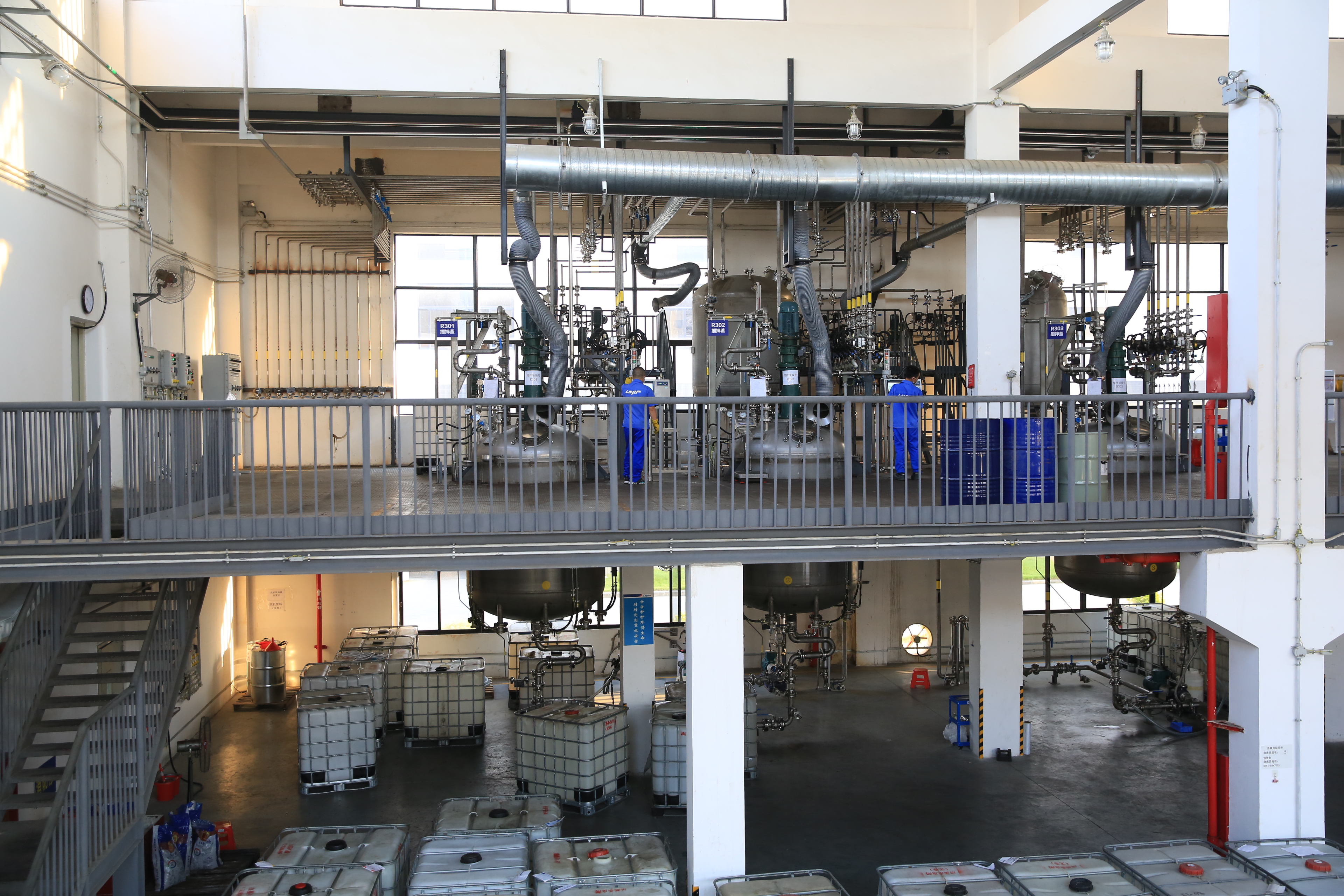
Material availability only matters if it is backed by production depth. LAYA has operated since 1992 and runs a 100,000 m² site that includes 50,000 m² of modern standard workshops and 14 advanced filling lines, with an annual output of 200 million cans of aerosol products. The technical centre contains 4 product development laboratories and 7 analytical testing laboratories, staffed by a 15-engineer R&D team, and the company reports over 30 years of expertise accumulation, thousands of mature formulas and the use of international brand selected raw materials.
Commercially, the company operates as an aerosol OEM / ODM supplier. Customization covers formula, packaging design, logo printing, can size and fragrance adjustment. Minimum order quantity is 10,000 pcs and lead time is 7–15 days. Quality control is described as 100% leak test, pressure test and visual inspection, under ISO 9001 certified quality control, with after-sales support covering remote technical support, order tracking, after-sales consultation and product quality follow-up. Export markets include Malaysia, Thailand, Vietnam, the Philippines, Singapore, Indonesia, India, Japan, Pakistan, Qatar and Dubai in Asia; Russia, Bulgaria and Romania in Europe; Australia in Oceania; Canada and the Dominican Republic in North America; Chile in South America; and Mozambique in Africa. Main markets are concentrated in Central Asia, the Middle East, Africa, Russia and Brazil.
For a buyer comparing formats, the practical reading is this: both materials sit behind the same filling infrastructure, the same quality-control routine and the same MOQ and lead-time structure. The format choice does not put you on a different service tier.
Step-by-Step: How to Choose Between Tinplate and Aluminum
- Fix the destination market first. Confirm whether the product will be sold in a market applying the EU Aerosol Dispensers Directive, in China under the Hazardous Chemicals Safety Law in force since 1 May 2026, or elsewhere. The destination determines which testing and registration documents the order must be able to show.
- Fix net content, then read off the can dimensions. Choose from 300, 400, 500 or 600 ml on KB-0000300, mapping to ∮52 × 195 mm, 65 × 158 mm, 65 × 200 mm or 65 × 240 mm. Both materials are available across this ladder, so this step does not constrain the material decision.
- Set the material against your two strongest pressures. If recycling claims and shipment mass dominate, the market evidence favours aluminum (roughly 61–62% of 2025 aerosol can market share, attributed to recyclability and lightweight properties). If you want a material already running across multiple production lines, tinplate is the deeper-use option at LAYA.
- Confirm compatibility, do not assume it. Ask which internal lining and valve combination is paired with your formulation, and confirm the formula-to-can relationship before committing.
- Define the customization scope. Formula customization, packaging design, logo printing, can size customization and fragrance adjustment are all listed OEM/ODM options. Settle artwork and print expectations here, because they change tooling and approval timelines.
- Validate with a sample, then lock MOQ and lead time. Order samples in the candidate material, run your own checks, and confirm the order against a 10,000 pcs minimum and a 7–15 day lead time before converting to bulk production.
Use Cases: Where Each Format Does the Work
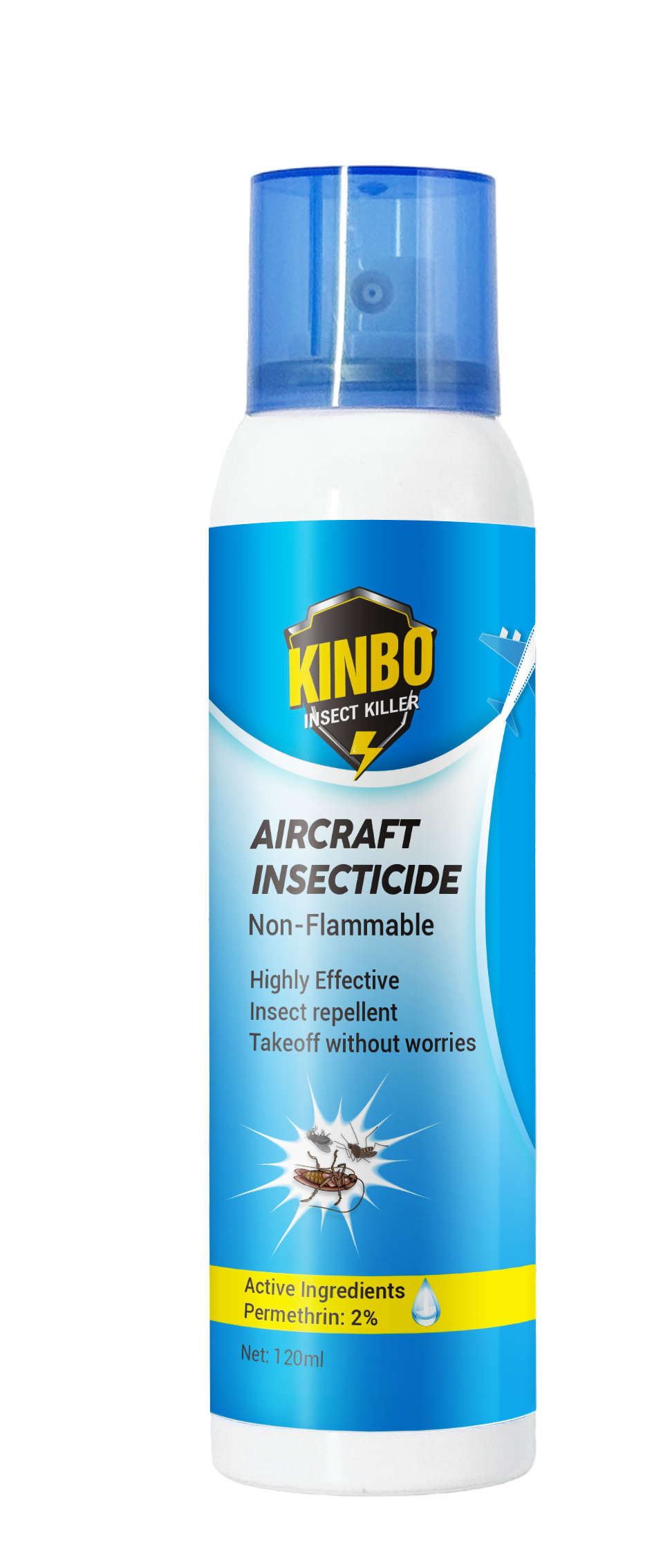
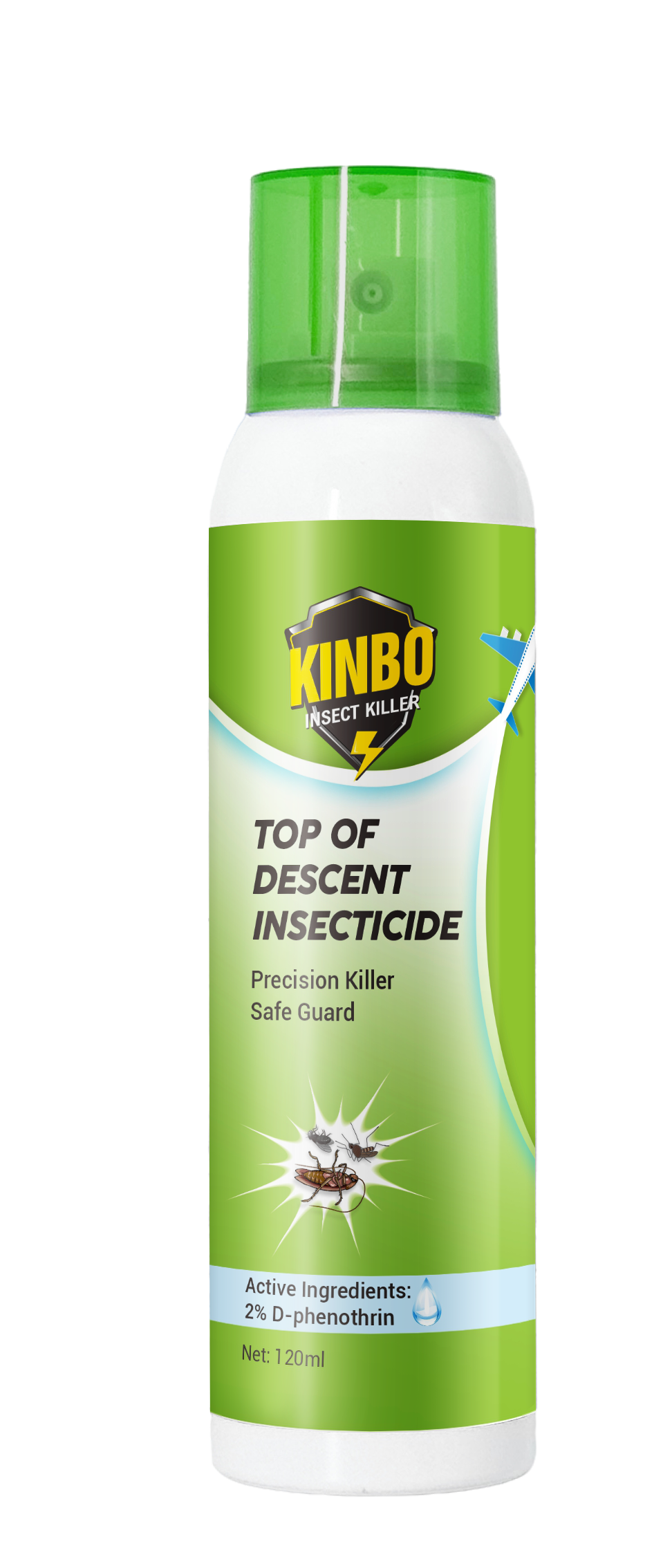
The KB-0000300 aviation aerosol is documented for three aviation scenarios, illustrated by the product's own scenario images: aircraft insecticide, cargo hold insecticide and top-of-descent insecticide. Aircraft treatment, cargo-hold treatment and descent-phase application are different moments with different handling and storage realities, but they share the same container requirement — which is why a single flexible 300–600 ml platform serves all three.
Beyond aviation, LAYA's aerosol application profile covers household daily use, automotive maintenance projects and industrial equipment maintenance, with functions including surface cleaning, decontamination, rust prevention, disinfection, odour elimination and pest control. The operating pattern is manual spray on demand, one canister at a time, with no special supporting equipment required since the nozzle is built into the can. Working conditions are described as normal temperature and humidity, high humidity and general industrial environments, and the referenced markets span Côte d'Ivoire, Chile, Germany, Ghana, Hong Kong, Indonesia, Japan, Kenya, Korea, Macao, Mozambique, Nigeria, Puerto Rico, Russia, Seychelles, Singapore and Australia.
For a format decision, the implication is that aviation is not a protected niche with its own private container rules. An aviation aerosol is still an aerosol: it is filled, tested, stored and shipped under the same pressure and flammable-liquid regime as household and industrial lines, which is why the same MOQ, lead time and quality-control structure applies to both materials.
Comparison Table: Tinplate vs Aluminum for KB-0000300
| Decision factor | Aluminum can | Tinplate can |
|---|---|---|
| Availability on KB-0000300 | Yes — listed as an available material | Yes — listed as an available material |
| Net content options | 300 / 400 / 500 / 600 ml | 300 / 400 / 500 / 600 ml |
| Can dimensions | ∮52 × 195 mm, 65 × 158 mm, 65 × 200 mm, 65 × 240 mm | ∮52 × 195 mm, 65 × 158 mm, 65 × 200 mm, 65 × 240 mm |
| 2025 global can market share | Approximately 61–62% for aluminum-based aerosol cans | No equivalent figure supplied for tinplate |
| Stated market driver | Recyclability and lightweight properties | Not specified in the supplied data |
| Use across LAYA product lines | Listed for the aviation aerosol model KB-0000300 | Listed for KB-0000300 and for insecticide KB-0000600, household cleaning QL-0000300, spray paint QL-0000450, industrial maintenance SM-0000400, car care BO-0000600, air freshener ME-0000300 |
| Documented export programme | Not supplied in the corpus | Air freshener programme, Bulgaria, 30,000 units, 2 years, natural plant-based osmanthus fragrance |
| MOQ and lead time | 10,000 pcs; 7–15 days | 10,000 pcs; 7–15 days |
| Quality control applied | 100% leak test, pressure test, visual inspection under ISO 9001 certified quality control | 100% leak test, pressure test, visual inspection under ISO 9001 certified quality control |
| Customization available | Formula, packaging design, logo printing, can size, fragrance adjustment | Formula, packaging design, logo printing, can size, fragrance adjustment |
| Best fit | Buyers prioritising recyclability claims and lower shipment mass | Buyers prioritising a material with the broadest running history across the supplier's lines |
Ranking outcome: Rank 1 aluminum, Rank 2 tinplate — with the caveat that eight of the eleven decision factors above are identical. The ranking is driven by market-level evidence, while the project-level decision will usually be driven by the two or three factors that are not identical.
Frequently Asked Questions
LAYA holds ISO 9001:2015 (certificate number 180708, issued by DCI Certification Ltd., under standard GB/T 19001-2016 idt ISO9001:2015, valid to 3 June 2027), ISO 14001:2015 (certificate number F02925E00035R202, issued by DCI Certification Ltd., under standard GB/T 24001-2016 / ISO14001:2015, valid to 17 December 2028) and ISO 45001:2018 (certificate number 200894, issued by DCI Certification Ltd., under standard GB/T45001-2020 idt ISO45001:2018, valid to 16 December 2026). All three apply to the global market and cover aerosol products including sanitary insecticides, spray paints, industrial and automotive supplies and household daily necessities. For the China market, the company also holds a Hazardous Chemical Registration Certificate (certificate number 44022500254, issued by the Ministry of Emergency Management of the People's Republic of China, valid to 7 June 2028). The destination market's own construction rules also apply: the EU Aerosol Dispensers Directive, for example, requires mandatory deformation and burst tests with resistance reported in the range of 10–15 Bar depending on propellant type.
Yes. The KB-0000300 aviation aerosol is listed with two available materials — tinplate and aluminum can — and both are offered across the same net content range of 300, 400, 500 and 600 ml and the same can dimensions of ∮52 × 195 mm, 65 × 158 mm, 65 × 200 mm and 65 × 240 mm. The choice therefore does not change the size options; it changes the material the can is made from. Customization for either version covers formula, packaging design, logo printing, can size and fragrance adjustment.
Four variables dominate: the material chosen, the can size within the 300–600 ml ladder, the customization scope (formula work, packaging design, logo printing, can size and fragrance adjustment), and the order quantity measured against the 10,000 pcs minimum order quantity. LAYA does not publish list prices for KB-0000300, so a project-specific quotation is the only reliable figure; any per-unit number quoted without reference to material, size, artwork and volume is an estimate, not a price. Lead time should be planned separately from cost, because it is quoted at 7–15 days.
Sampling is the correct validation route, and it should test the material and size you intend to order rather than a substitute. LAYA's quality control for aerosol products comprises 100% leak testing, pressure testing and visual inspection under ISO 9001 certified quality control, and the technical centre includes 4 product development laboratories and 7 analytical testing laboratories staffed by 15 engineers — where formulation and can-compatibility questions can be resolved before bulk filling. A practical sample checklist covers leak and pressure behaviour, nozzle performance, label and logo print quality on the chosen material, and whether the can size suits your storage and listing requirements.
Standard lead time is 7–15 days with a minimum order quantity of 10,000 pcs, and both materials follow the same schedule. The first step is to send the project brief — application (for example aviation insecticide), target market, preferred net content from 300 / 400 / 500 / 600 ml, preferred material and any artwork requirements — so that material availability, certification coverage and sampling can be confirmed together. LAYA can be reached at echo@laya.com.cn or on WhatsApp at +86 136 5384 8383.
Conclusion: Use the Ranking, Then Test It
For LAYA's KB-0000300 aviation aerosol, aluminum ranks first and tinplate second — not because one is intrinsically a better container, but because aluminum carries the stronger external market evidence. Aluminum-based aerosol cans held roughly 61–62% of the global aerosol can market in 2025, a position attributed to recyclability and lightweight properties. Tinplate ranks second because it is the material with the deepest running history across LAYA's production lines, from insecticide and household cleaning to spray paint, industrial maintenance, car care and air freshener.
The decision rule that follows is simple. If your priorities are recyclability claims and shipment mass, start with aluminum. If your priority is a material already running in volume across multiple production lines, start with tinplate. In both cases, take the same next action: confirm the specification against your destination market's test requirements, request samples in your chosen material and size, and validate before bulk production — because eight of the eleven comparison factors in this article are identical between the two formats, and the remaining three are project-specific.
Next Step
Tell us your application, destination market, net content and preferred material, and we will confirm availability, certification coverage and sampling for your project.
- Email: echo@laya.com.cn
- WhatsApp: +86 136 5384 8383
- Website: www.laya.com.cn/en/
- Address: No. 7, Gantang Avenue South, Xilian Town, Wujiang District, Shaoguan City, Guangdong Province, China 512000
- Brochure: download the LAYA aerosol OEM brochure (PDF)