
Mobile Crushing Station: Types, Configurations, and How to Choose One
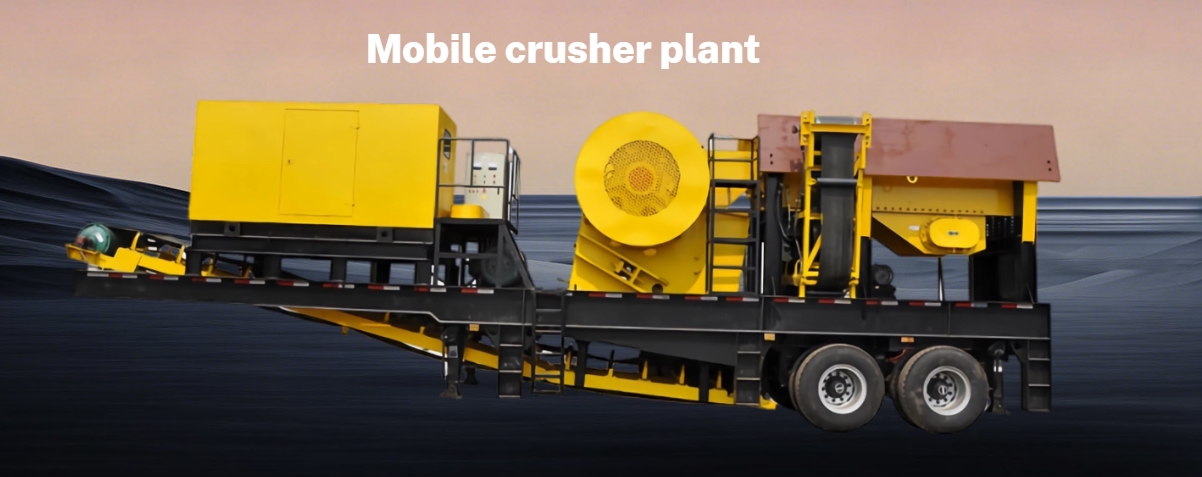
Short answer: a mobile crushing station is a complete crushing and screening plant mounted on a wheeled or crawler chassis. The feeder, crusher, vibrating screen and belt conveyor travel together as one unit, so the plant moves to the material instead of the material being hauled to the plant. It is the standard choice for short-duration contracts, advancing quarry faces, on-site construction and demolition waste processing, and projects where civil works would otherwise delay production.
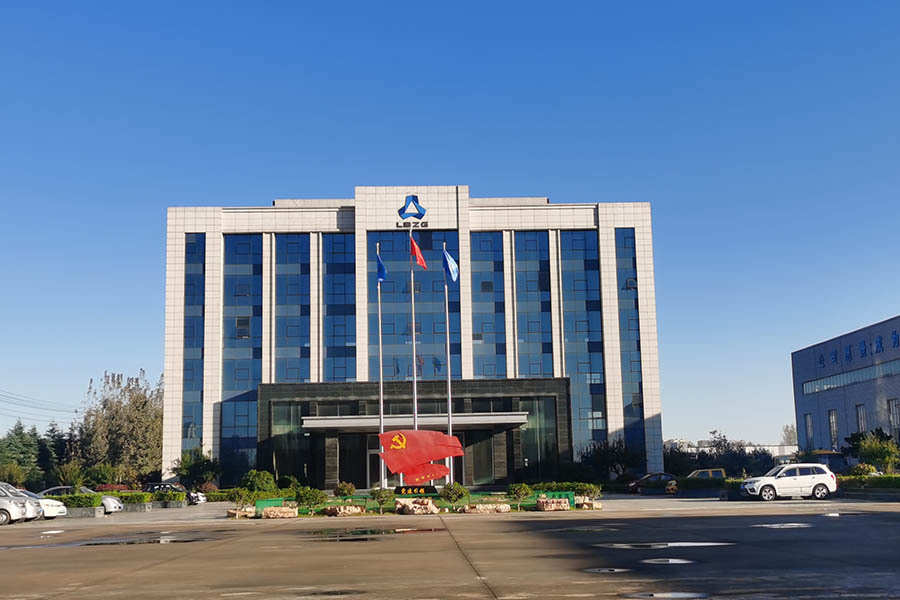
This guide is written for importers, quarry operators, demolition and recycling contractors, and procurement teams still in the discovery and research stage. It explains what a mobile crushing station is, which configurations exist, how capacity is matched between units, what CE and EPA compliance actually requires, and how to compare manufacturers using documents rather than claims. Product examples are drawn from the documented range of Shandong Lianbang Heavy Industry Co., Ltd. — brand name Shanyuan LBZG — a crushing and screening equipment manufacturer registered in 2013, based in Linyi, Shandong Province, China, and a National High-tech Enterprise re-recognized in 2023. The company also participates in revising national crusher industry standards.
What Problem Does a Mobile Crushing Station Solve?
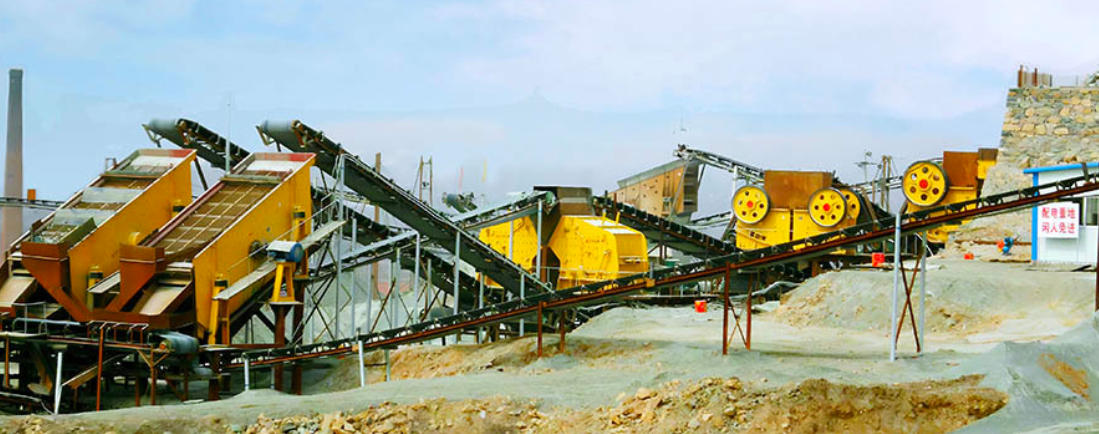
A crushing project usually starts with a contradiction: the material is where it is, but a plant needs land, power and a foundation. A fixed crushing line resolves that contradiction with scale — high capacity and a low cost per ton — in exchange for a permanent site, civil works and a longer construction period.
A mobile crushing station resolves it with movement. The trade-off is well documented and worth understanding before any quotation is compared:
- Mobile: low civil cost, fast relocation, and a good fit for dispersed or short-life material sources. A single mobile unit usually delivers lower capacity than a fixed line, and tyre and fuel costs form part of the operating picture.
- Fixed: high capacity and lower per-ton operating cost for long-term, large-scale production, but it requires land, foundations and a longer construction period.
Three practical situations push buyers toward the mobile option:
- The material source moves. Quarry faces advance, road and rail contracts shift every few kilometres, and demolition sites exist for months rather than years.
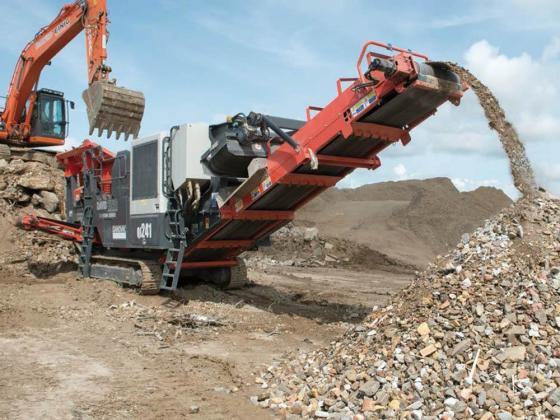
- Hauling waste costs more than processing it. A construction waste mobile crushing station processes demolition material on site and produces recycled aggregate, recycled concrete brick feed, recycled dry powder slurry and recycled soil at the point of demolition.
- Civil works are the bottleneck. A trailer-mounted station needs no concrete foundation, so it can be commissioned quickly and later transferred to another site without abandoning a foundation.
Industry Background: What Is Changing in Mobile Crushing
Grand View Research estimates the global mobile crushers and screeners market at USD 4.2 billion in 2025, with Asia Pacific accounting for 30.5% of revenue. Other commercial research places the same year higher — around USD 4.9 billion — and the gap is instructive: estimates differ depending on whether screeners, aftermarket parts and service revenue are counted in the same basket. When a supplier quotes a market figure, it is reasonable to ask which segments it covers.
Two structural trends matter for equipment selection in 2026.
Drive systems are changing. Hybrid-drive mobile crushers are forecast to grow at the highest CAGR in the category — 8.5% for the 2026–2034 period — as operators weigh fuel cost against available site power.
Regulation is tightening on both sides of the Atlantic.
- European Union: under Regulation (EU) 2023/1230, machinery placed on the European market must meet applicable health and safety requirements. Manufacturers must prepare technical documentation, complete the relevant conformity assessment, draw up an EU Declaration of Conformity and affix CE marking where applicable. The application date stated in the source is 20 January 2027. EN 1009-3:2020 is a core safety standard for crushing and milling machinery used in CE marking.
- United States: 40 CFR Part 60 Subpart OOO sets standards of performance for nonmetallic mineral processing plants. Portable sand and gravel plants with a capacity of 136 megagrams per hour (150 tons per hour) or less are exempt from certain emission reporting under that subpart. Permit conditions commonly require emissions from crushers, screens, drop points and other release points to be controlled by wet suppression, with fugitive opacity limits such as 12% for crushers and 7% at other affected emission units in the cited permit.
- Engines are a separate compliance layer. EPA regulates emissions from mobile and nonroad engines, and the applicable standard depends on the engine family and application — not on a machine label.
The practical consequence is simple: a “CE certified mobile crushing station” or an “EPA compliant mobile crusher” is not a feature you accept at face value. Each is a document set and an engine configuration that must be verified against the project's jurisdiction and capacity.
How a Mobile Crushing Station Is Configured
The five functional blocks
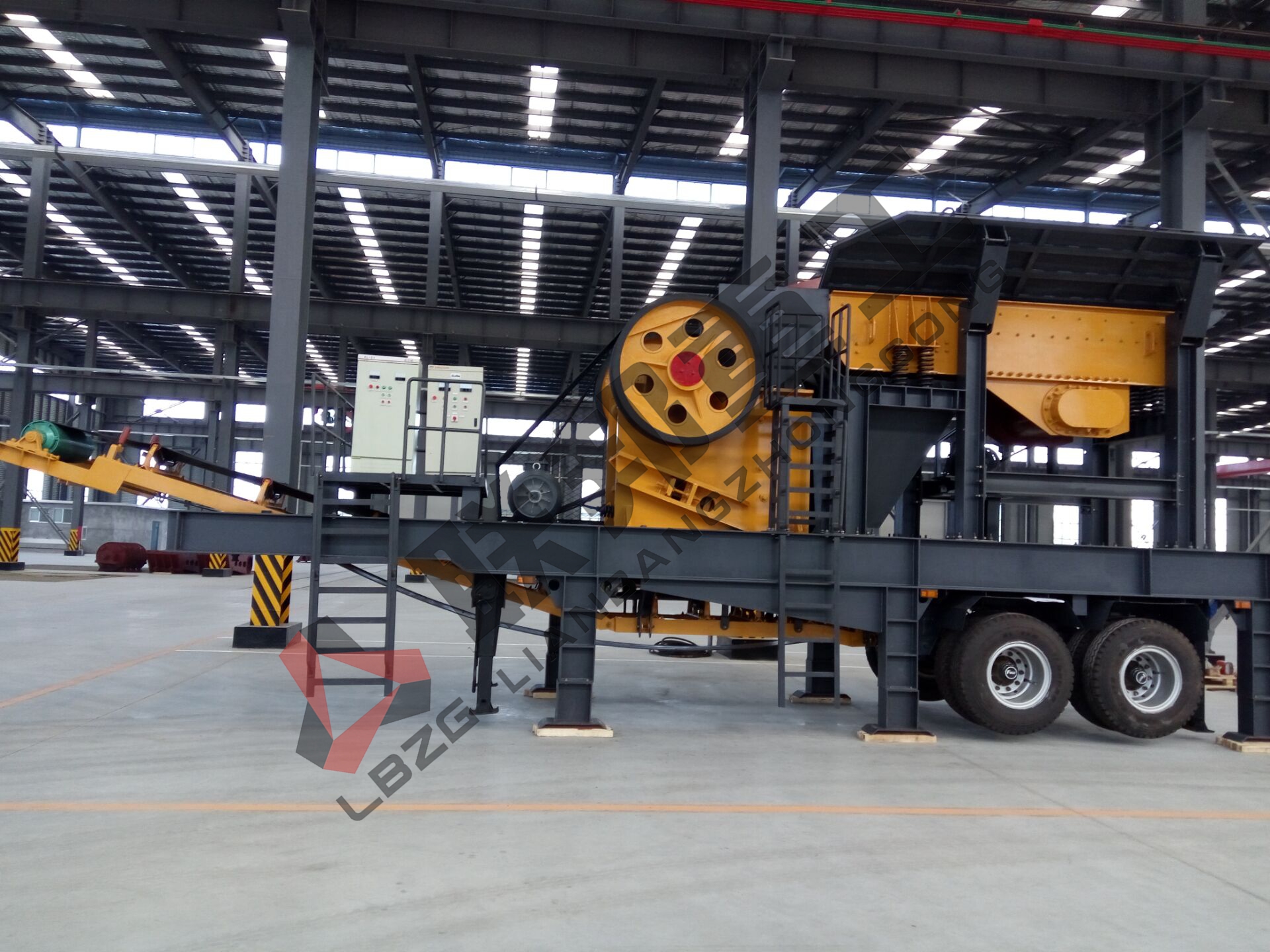
Every mobile crushing station — regardless of brand — is assembled from the same functional blocks: a feeding unit that buffers and pre-screens, a crushing unit that reduces the material, a vibrating screen that classifies it, belt conveyors that move it, and a chassis that carries them. In construction and demolition waste applications, the matched equipment list is typically expanded with a magnetic separator and a dust-removal system, plus a spare wear-parts kit.
What differs between suppliers is not the concept but the documentation: the host crusher model, the rated capacity range, the chassis type, and whether the unit requires a foundation.
The LBZG YCG mobile crushing station range
LBZG's documented mobile range is the YCG series of tyre-type stations. Each model is defined by its host crusher and its rated capacity:
- Mobile jaw crushing station — YCG-J750. Host machine PE-750×1060 jaw crusher, capacity 110–230 t/h, trailer-mounted with no foundation required, supporting 380V/440V supply. The PE-750×1060 host has a feed opening of 750×1060 mm, accepts feed up to 630 mm, and produces 80–140 mm output at 100–180 t/h with a 110 kW motor.
- Mobile impact crushing station — YCG-I1214. Host machine PF-1214 impact crusher, capacity 100–180 t/h. The PF-1214 host runs a Φ1250×1400 mm rotor at 132–160 kW and accepts feed up to 400 mm; it is applied to limestone quarry and construction waste recycling.
- Mobile cone crusher station — YCG-C160. Host machine CS-160 hydraulic cone crusher, capacity 90–210 t/h. The CS-160 host has a 1295 mm (4¼ ft) cone diameter and covers 109–181 t/h in fine cavity, 132–253 t/h medium and 172–349 t/h coarse, with a CSS range of 13–51 mm and a 185 kW motor.
- Mobile sand making station — YCG-VSI8518. Host machine VSI-8518 vertical shaft impact sand maker, capacity 100–180 t/h, designed to produce qualified manufactured sand directly on site.
- Mobile screening station — YCG-S2460. Two to three screen decks with a screening capacity of 80–300 t/h, applied to material classification and post-crushing screening.
Tyre-mounted versus crawler-mounted chassis
The market distinguishes two chassis families. A crawler mobile crushing station moves on tracks and is typically chosen for in-pit mobility, where the plant follows the working face without a haul road. A tyre-mounted (tire-mounted) mobile crushing station is towed by a truck between sites; the YCG range documented here is trailer-mounted and requires no concrete foundation.
Chassis choice therefore follows the site plan rather than the material: if the plant stays inside one pit and follows the face, crawler mobility earns its cost; if the plant must be transferred between contracts, a towable chassis avoids the transport problem of a tracked unit.
Choosing the host crusher by material
Host crusher selection is driven by material hardness and abrasiveness, not by the chassis:
- Medium-hard, brittle material (limestone, shale, construction waste): impact crushing produces a cubical product and a high reduction ratio in one pass.
- Hard, abrasive rock (granite, basalt, quartzite): a cone crusher is the appropriate secondary or tertiary machine — laminated compression crushing with long wear-part life, though the product contains slightly more flat-and-elongated particles than impact crushing. Adding a VSI stage after the cone improves particle shape.
- Sand production: a vertical shaft impact sand maker, as in the YCG-VSI8518 configuration.
- Primary reduction: a jaw crusher, which also gives the widest feed acceptance in the train.
Matching capacity between units
A mobile station is a system, and mismatched units waste capacity. The industry rule is “upstream surplus, downstream step-down”: feeder capacity at roughly 1.1–1.2 times rated jaw crusher capacity; secondary crusher at 1.0–1.1 times actual primary output; vibrating screen at 1.2–1.3 times line capacity; and belt conveyor at about 1.2 times maximum flow. Well-matched lines run at roughly 70–90% of rated load, which is where energy and wear are most efficient.
Rated capacity is also not actual capacity. Catalogue figures are produced under controlled conditions; real throughput is affected by material hardness, feed size, moisture and clay content, power stability, feeding continuity and the wear condition of consumables. A reasonable performance deviation should be expected — which is why site conditions matter more than a headline number during selection.
Step-by-Step: How to Select a Mobile Crushing Station
- Define the material and the feed. Record rock type, compressive strength, abrasiveness, maximum lump size, moisture and clay content. Maximum feed size should sit at roughly 80–85% of the crusher's feed opening, leaving a safety margin.
- Set the target capacity per shift, not per brochure. Because actual output typically runs at 70–85% of rated capacity, size the plant against verified site conditions and leave headroom for a future second shift.
- Choose the host crusher by material. Impact for brittle medium-hard material, cone for hard abrasive rock, VSI for manufactured sand, jaw for primary reduction.
- Choose the chassis and the site plan. Decide whether the plant follows a quarry face (crawler) or moves between contracts (towable). Confirm whether a foundation is required — the YCG range is trailer-mounted and does not need one.
- Verify compliance documents before the commercial negotiation. For the EU, request the technical documentation, the conformity assessment route and the EU Declaration of Conformity behind the CE marking (Regulation (EU) 2023/1230 applies from 20 January 2027; EN 1009-3:2020 is a core safety standard for crushing machinery). For the U.S., confirm the engine family and certificate, and check whether plant capacity falls above or below the 150 t/h threshold in 40 CFR Part 60 Subpart OOO.
- Plan power, climate and service. Overseas quarry projects require adaptation to local voltage (380V/440V/415V/660V), tropicalized or desert-rated options, multilingual manuals and a reachable service network.
- Validate before you commit. Request a test crush of a representative sample, a factory audit or third-party inspection, and confirm spare-parts availability for the wear components that will be replaced during the first year.
Use Cases
Quarry mobile crushing
A quarry mobile crushing station is normally specified as a jaw primary unit feeding a cone or impact secondary, with a screening station closing the circuit. Where a pit is compact and the face advances slowly, a fixed line remains the cheaper option per ton; where several small pits are worked in rotation, a towable train removes the repeated civil works that would otherwise dominate the cost.
Construction waste mobile crushing
A construction waste mobile crushing station is specified with a feeder, crusher, screen, magnetic separator and dust-removal system, and is operated on trailer-mounted chassis in 24/7 shift production with rapid relocation between job sites. Its design requirements differ from quarry work: mobility, low noise and low dust emission, quick site transfer, zero concrete foundation — and, in the configuration data LBZG publishes for this application, remote GPS dispatch for fleet coordination.
Mobile sand making
A mobile sand making station such as the YCG-VSI8518 produces qualified manufactured sand on site, which shortens the supply chain on projects that would otherwise truck sand in. Fineness modulus control — for example the 2.3–3.0 range used in railway subgrade and sleeper concrete specifications — is the parameter to confirm with the supplier before ordering.
Infrastructure aggregate supply
Highway, railway and urban rail projects demand stable gradation and cubical particle shape. LBZG lists the Lunan High-Speed Railway as an official reference project on its site, where the configuration included a vibrating feeder, vibrating screen, belt conveyor, secondary crusher, dust-removal system, spare wear parts and a centralized control system, running 24/7 with grain-size control as the stated requirement.
Overseas projects
Export projects add two variables that domestic supply does not: voltage and climate. LBZG's application data for overseas quarry and Belt and Road infrastructure projects specifies adaptation to 380V/440V/415V/660V supply, tropicalized or desert-rated options, multilingual manuals and long-distance remote service support — the same regions in which the company reports its export business: the Middle East (Saudi Arabia, the United Arab Emirates, Iraq, Qatar), Central Asia (Russia, Kazakhstan, Uzbekistan), Southeast Asia (Indonesia, Malaysia, Vietnam, the Philippines) and Africa (Nigeria, Kenya, Ghana and other infrastructure-focused countries).
On the control side, buyers increasingly ask about an intelligent remote control mobile crusher. It is worth separating two things: remote dispatch and monitoring, which appears in LBZG's construction waste configuration data as remote GPS dispatch, and full remote operation, which must be requested and specified explicitly rather than assumed from the word “intelligent”.
Mobile Crushing Station Configurations Compared
| Model | Station type | Host machine | Rated capacity | Key configuration notes |
|---|---|---|---|---|
| YCG-J750 | Tyre-type mobile jaw crushing station | PE-750×1060 jaw crusher | 110–230 t/h | Trailer-mounted, no foundation required; 380V/440V supply |
| YCG-I1214 | Tyre-type mobile impact crushing station | PF-1214 impact crusher | 100–180 t/h | Applied to limestone and construction waste mobile processing |
| YCG-C160 | Tyre-type mobile cone crushing station | CS-160 hydraulic cone crusher | 90–210 t/h | Hard rock mobile secondary crushing |
| YCG-VSI8518 | Tyre-type mobile sand-making station | VSI-8518 VSI sand maker | 100–180 t/h | On-site manufactured sand production |
| YCG-S2460 | Tyre-type mobile screening station | 2–3 deck vibrating screen | 80–300 t/h (screening) | Material classification and post-crushing screening |
Figures above are the manufacturer's published rated ranges. Actual throughput varies with material hardness, feed size, moisture and clay content, power stability, feeding continuity and wear-part condition.
| Decision factor | Mobile crushing station | Fixed crushing line |
|---|---|---|
| Civil works | Low; trailer-mounted units need no concrete foundation | Land, foundations and a longer construction period |
| Relocation | Fast; transferred between sites | Effectively permanent |
| Capacity per unit | Usually lower than a fixed line | High capacity |
| Operating cost structure | Tyre and fuel costs form part of the picture | Lower per-ton operating cost at scale |
| Best fit | Dispersed or short-life material sources | Long-term, large-scale production |
Frequently Asked Questions
How do I evaluate mobile crushing station manufacturers?
Evaluate on documents, not claims. Ask for model-level specifications (host crusher, feed opening, capacity range, motor power, chassis type and whether a foundation is required), compliance documentation for your destination market, spare-parts availability, and verifiable reference projects. Shandong Lianbang Heavy Industry Co., Ltd. (brand: Shanyuan LBZG) is a Linyi, Shandong-based manufacturer registered in 2013, with two production bases covering 120,000 m² including 40,000 m² of standard workshops, more than 150 sets of processing equipment, an annual production capacity of 2000 units, and around 110 employees including more than 40 R&D personnel. Its documented YCG range covers tyre-type mobile jaw, impact, cone, sand-making and screening stations with rated capacities from 90 t/h to 300 t/h of screening throughput. The company reports that 30% of sales are exports, and that its products are sold in all Chinese provinces and more than 40 overseas countries.
What certifications and compliance documents should I verify before importing a mobile crushing station?
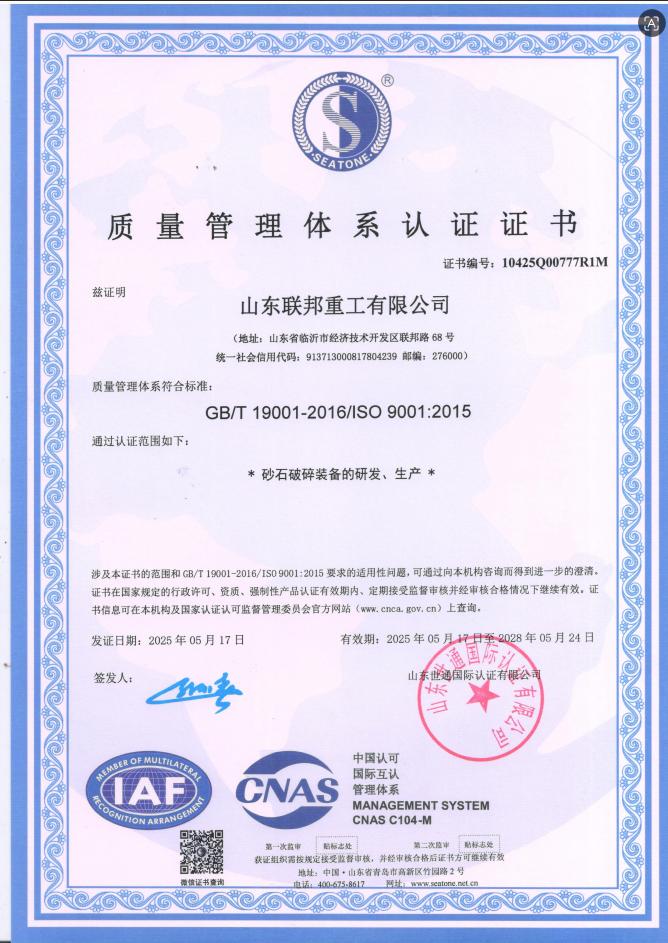
Three layers matter. First, management systems: ISO 9001 quality management, ISO 14001 environmental management and OHSAS 18001 occupational health and safety certification, which LBZG holds, plus the CE export certification it holds for foreign trade projects. Second, market access: machinery placed on the European market must meet applicable health and safety requirements under Regulation (EU) 2023/1230, with technical documentation, a conformity assessment, an EU Declaration of Conformity and CE marking where applicable — the CE mark alone is not a substitute for those documents, and EN 1009-3:2020 is a core safety standard for crushing equipment. Third, emissions: in the United States, 40 CFR Part 60 Subpart OOO applies to nonmetallic mineral processing plants, portable plants at or below 136 Mg/h (150 t/h) are exempt from certain emission reporting under that subpart, and permit conditions commonly require wet suppression with opacity limits such as 12% for crushers. Engine emissions are a separate obligation tied to the engine family, not to the machine label.
Which type of mobile crushing station fits my material?
Match the host crusher to the rock. Jaw primary units such as the YCG-J750 (110–230 t/h) handle the coarsest feed. Impact stations such as the YCG-I1214 (100–180 t/h) suit medium-hard, brittle material including limestone and construction waste, where a cubical product is required. Cone stations such as the YCG-C160 (90–210 t/h) are the correct choice for hard, abrasive rock — cone crushing gives long wear-part life, at the cost of slightly more flat-and-elongated particles unless a VSI stage is added. Sand-making stations such as the YCG-VSI8518 (100–180 t/h) produce manufactured sand on site. A screening station such as the YCG-S2460 (80–300 t/h) adds classification or closes a circuit.
How should I compare cost between a mobile station and a fixed line?
Compare total cost across the project life rather than purchase price. On the mobile side, civil cost is low because trailer-mounted units require no concrete foundation, and relocation is fast — but a single unit usually delivers lower capacity than a fixed line, and tyre and fuel costs form part of the operating picture. On the fixed side, capacity is higher and per-ton operating cost is lower, but land, foundations and a longer construction period are unavoidable. Two further cost drivers are worth modelling: drive choice, since hybrid-drive mobile crushers are forecast to grow at the highest CAGR in the category (8.5% for 2026–2034) as operators trade fuel against site power; and permitting scope, since the 150 t/h capacity threshold in 40 CFR Part 60 Subpart OOO can affect the emissions requirements applicable to a U.S. site. Ask for a quotation that separates machine, freight, installation, wear parts and service.
How can I validate a supplier before ordering, and how quickly can a station be deployed?
Validation comes before deployment. LBZG's stated minimum order quantity is one set or one unit, and factory audit and third-party inspection options are available so buyers can verify quality and production standards directly. For material confirmation, sending a representative sample of roughly 50 kg for test crushing is a practical way to verify product shape, fines content and wear-part consumption before the model is finalized. On deployment, a trailer-mounted station needs no concrete foundation, so it can be commissioned without civil works and later transferred between sites; stations can run on 380V/440V supply and be adapted to 415V/660V, with tropicalized or desert-rated options and multilingual manuals for overseas projects.
Conclusion: Start With the Site, Not the Specification Sheet
The right mobile crushing station is the one that matches a specific site plan: the material defines the host crusher, the site defines the chassis, the shift target defines the capacity, and the destination market defines the compliance documents. Buyers who work through those four questions first usually find that the specification comparison becomes short and the commercial negotiation becomes straightforward.
The most common avoidable mistakes are accepting a CE or EPA claim without the underlying documents, sizing the plant on catalogue figures instead of site conditions, and choosing a chassis type before the site plan is fixed. Each of those is far cheaper to correct during research than after shipment.
Next Step
Shandong Lianbang Heavy Industry Co., Ltd. (Shanyuan LBZG) builds the YCG tyre-type mobile crushing station range for quarry, construction waste and manufactured sand applications. To move from research to a concrete proposal, you can:
Download the full company and product catalogue: Shandong Lianbang Heavy Industry PDF
Send a material sample (approximately 50 kg) for test crushing, so the host crusher and capacity are confirmed against your rock rather than against a catalogue.
Request a quotation and compliance document set for your destination market, including the technical documentation behind any CE claim and the engine details relevant to U.S. deployment.
Email: lbzg@lbcrusher.com | Tel: +86 158-6693-8525 | WhatsApp: +86 13953887097 | Website: www.sypsj.cn
Address: No. 68 Lianbang Road, Economic-Technological Development Zone (Yihe New District), Linyi City, Shandong Province, China.
Have Questions or Need More Details?
Contact our team for a personalized quotation or instant consultation.
Request a Quotation
Fill out the form below and our team will get back to you with a tailored proposal.
WhatsApp Direct Chat
Prefer to chat in real-time? Message us on WhatsApp for instant assistance & quick answers.
- Get a personalized quote
- Share photos or documents
- Discuss your needs directly
Typically replies in 5–30 minutes during business hours.