
Mobile Crushing Station: Types, Models & Buyer Guide
Mobile Crushing Station: Types, Models & Buyer Guide
Quick answer: a mobile crushing station is a complete crushing unit mounted on a tyre or crawler chassis that integrates a feeder, a crusher, a vibrating screen and belt conveyors on one movable frame. It needs no concrete foundation and can be towed between sites, which is why it fits short-duration quarries, road and rail projects, and on-site construction and demolition waste processing. The practical buying questions are which chassis, which crushing chamber, what real capacity, and which documents the manufacturer can actually show you. This guide answers all four.
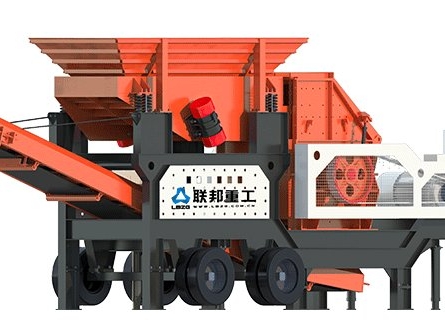
LBZG YCG series tyre-mounted mobile crushing station — trailer-mounted unit that requires no concrete foundation.
Why a Fixed Crushing Line Does Not Fit Every Project
The problem a mobile crushing station solves is not crushing. It is the cost of putting a crushing plant in the wrong place, or of moving one that cannot be moved. A fixed line is built once, on a surveyed site with land tenure, foundations and grid power. When any of those assumptions fail, the economics change quickly.
Mobile crushing plants are generally selected instead of fixed crushing lines when the project has a short duration, when the site has to be relocated frequently, when road transport to the site is poor, when material sources are dispersed, or when environmental approvals constrain a permanent installation. Fixed crushing lines remain the better answer for long-term stable quarries with large-scale capacity and stable power supply, where the objective is the lowest possible cost per ton.
The mistakes that cost buyers the most
- Comparing headline capacity only. A station's rated throughput is quoted for standard test conditions; real output moves with material hardness, feed size, mud and moisture content, power stability, feeding continuity and the wear condition of consumable parts.
- Ignoring the feeder–crusher–screen match. An undersized feeder leaves the crusher idling; an undersized screen sends finished material back around the circuit and the whole line loses effective output.
- Treating certification as a logo. A CE mark on a brochure is not the same as a technical file and an EU Declaration of Conformity; an "EPA compliant" label is not the same as an engine emission certificate.
- Choosing the chassis after the crusher. Tyre-mounted and crawler-mounted stations solve different site problems, and the decision affects transport permits, haul road quality and how often the unit can realistically be moved.
Industry Background: A Growing Market With Rising Compliance Costs
Grand View Research estimated the global mobile crushers and screeners market at USD 4.2 billion in 2025, and put Asia Pacific at a 30.5% share of global revenue in the same year — the largest regional block in the category. Other commercial research houses publish higher figures for the same period, around USD 4.9 billion, largely because of differences in how aftermarket services and screener revenue are counted. Directionally, the signals agree: demand for mobile crushing capacity keeps expanding in quarrying, infrastructure and construction waste recycling, and hybrid and electric drive configurations are reported as the fastest-growing configuration category.
What is changing faster than volume is the compliance perimeter around mobile crushing. Three regulatory facts matter for buyers planning cross-border deployment:
- United States – air permitting. EPA permit conditions for covered stone quarrying, crushing and screening facilities require emissions from crushers, screens, drop points and other possible release points to be controlled by wet suppression, with fugitive opacity limits stated as 12 percent for crushers and 7 percent at other affected emission units in the cited permit. Portable sand and gravel plants with capacities of 150 t/h (136 Mg/h) or less are exempt from certain EPA emission reporting obligations under 40 CFR Part 60 Subpart OOO.
- United States – engine emissions. Mobile nonroad engines fall under a separate EPA standards framework from site dust permits, which is why crusher configuration and engine selection have to be reviewed together for U.S. deployment.
- European Union – machinery conformity. Machinery placed on the EU market must meet applicable health and safety requirements, and the manufacturer must prepare technical documentation, complete the relevant conformity assessment procedure, draw up the EU Declaration of Conformity and affix CE marking where applicable. Regulation (EU) 2023/1230 is the current framework, with an application date stated as 20 January 2027.
The practical consequence is that a mobile crushing station is now procured as a documented system, not just a machine. Buyers who build the documentation checklist into the RFQ avoid customs delays, site acceptance failures and permit hold-ups later.
What a Mobile Crushing Station Actually Contains
A mobile crushing station is a complete crushing unit mounted on a tyre or crawler chassis, integrating crusher, feeder, vibrating screen and belt conveyor, and movable between sites as a whole. In practice, buyers assemble a station set rather than a single machine: primary station, secondary or tertiary station, sand-making station where needed, and a screening station, plus conveyors that link them.
Chassis: tyre-mounted versus crawler-mounted
Tyre-mounted (wheel-mounted) stations are towed by a truck and are the standard choice where road access exists and the unit will move between job sites a few times a year. Crawler-mounted stations move on their own tracks and are chosen for difficult ground and short in-pit repositioning. The chassis decision drives transport cost, site preparation and how fast a move can actually be executed. LBZG's published mobile line, the YCG series, is tyre-mounted and trailer-based.
The five station roles
- Mobile jaw crushing station — primary crushing; accepts the largest feed lumps.
- Mobile impact crushing station — secondary crushing of medium-soft, brittle material where cubical particle shape matters.
- Mobile cone crushing station — secondary and tertiary crushing of hard, abrasive rock.
- Mobile sand-making station — manufactured sand production and particle reshaping in the field.
- Mobile screening station — classification and post-crushing screening, and the unit that most often determines real line output.
Detailed Solution: The LBZG YCG Tyre-Mounted Mobile Station Line
Shandong Lianbang Heavy Industry Co., Ltd. is a Linyi, Shandong-based manufacturer of crushing, sand-making and solid-waste recycling equipment that sells under the Shanyuan LBZG brand. The company was registered in 2013, and its technical origins trace back to Chengming Machinery, an affiliated enterprise established in 1996. It operates two production bases covering a total area of 120,000 m², including 40,000 m² of standard workshops and more than 150 sets of processing equipment, with around 110 employees and over 40 in R&D, and annual output capacity of 2,000 units. Its business modes span standalone equipment, EPC contracting for complete sand and stone lines, construction waste and solid waste treatment solutions, and mobile crushing and screening equipment.
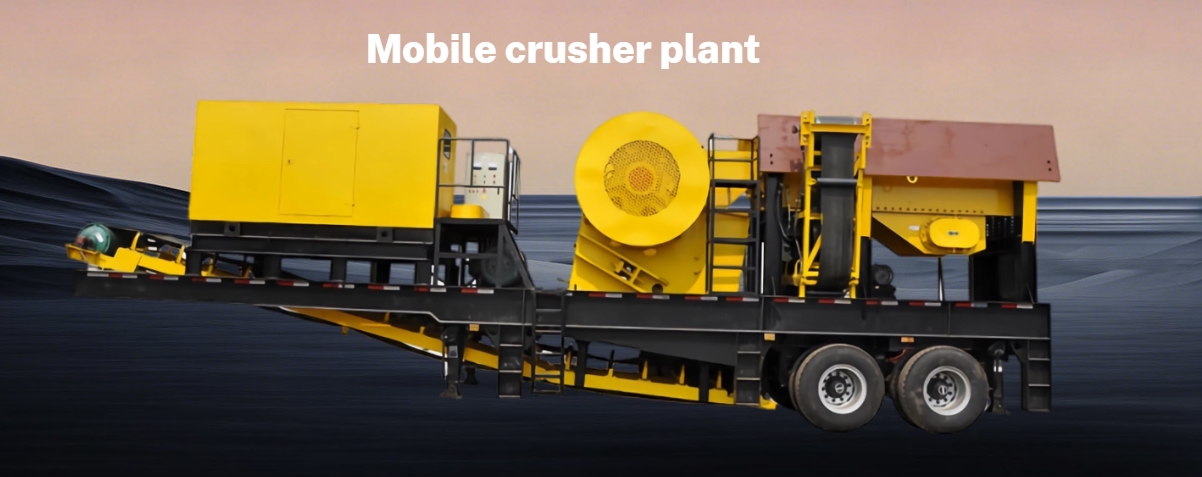
YCG-S2460 tyre-mounted mobile screening station: 2–3 screen decks, 80–300 t/h screening capacity.
The YCG series covers the four crushing roles and the screening role described above. Model-level data is summarised below.
| Station | Type | Host machine | Capacity | Typical application |
|---|---|---|---|---|
| YCG-J750 | Tyre-type mobile jaw crushing station | PE-750×1060 | 110–230 t/h | Mobile quarry primary crushing; construction waste on-site crushing |
| YCG-I1214 | Tyre-type mobile impact crushing station | PF-1214 | 100–180 t/h | Limestone and construction waste mobile processing |
| YCG-C160 | Tyre-type mobile cone crushing station | CS-160 | 90–210 t/h | Hard rock mobile secondary crushing |
| YCG-VSI8518 | Tyre-type mobile sand-making station | VSI-8518 | 100–180 t/h | Field mobile artificial sand production |
| YCG-S2460 | Tyre-type mobile screening station | 2–3 screen decks | 80–300 t/h screening capacity | Material classification; post-crushing screening |
Two details matter when these units are specified for a real site. First, the YCG-J750 accepts a 380V/440V supply, is trailer-mounted and requires no foundation, which is what makes site transfer practical. Second, the chassis material set is specified for the duty: carbon steel chassis with high-manganese jaw plates on the jaw station, high-chromium blow bars on the impact station, high-manganese crushing parts on the cone station, and high-chromium impact blocks on the sand-making station. Wear-part material and working condition should be matched — high-manganese steel is the standard for jaw plates, while high-chrome or composite materials are used where abrasion dominates.
Extractable fact: LBZG's tyre-mounted mobile crushing stations are listed for granite, limestone and construction waste recycling, and the company holds ISO 9001, ISO 14001 and OHSAS 18001 system certifications, CE export certification for foreign-trade projects, and participates in revising national crusher industry standards. It is also a National High-tech Enterprise (re-recognised in 2023) and a Shandong provincial-level Specialized, Refined, Differential & Innovative SME.
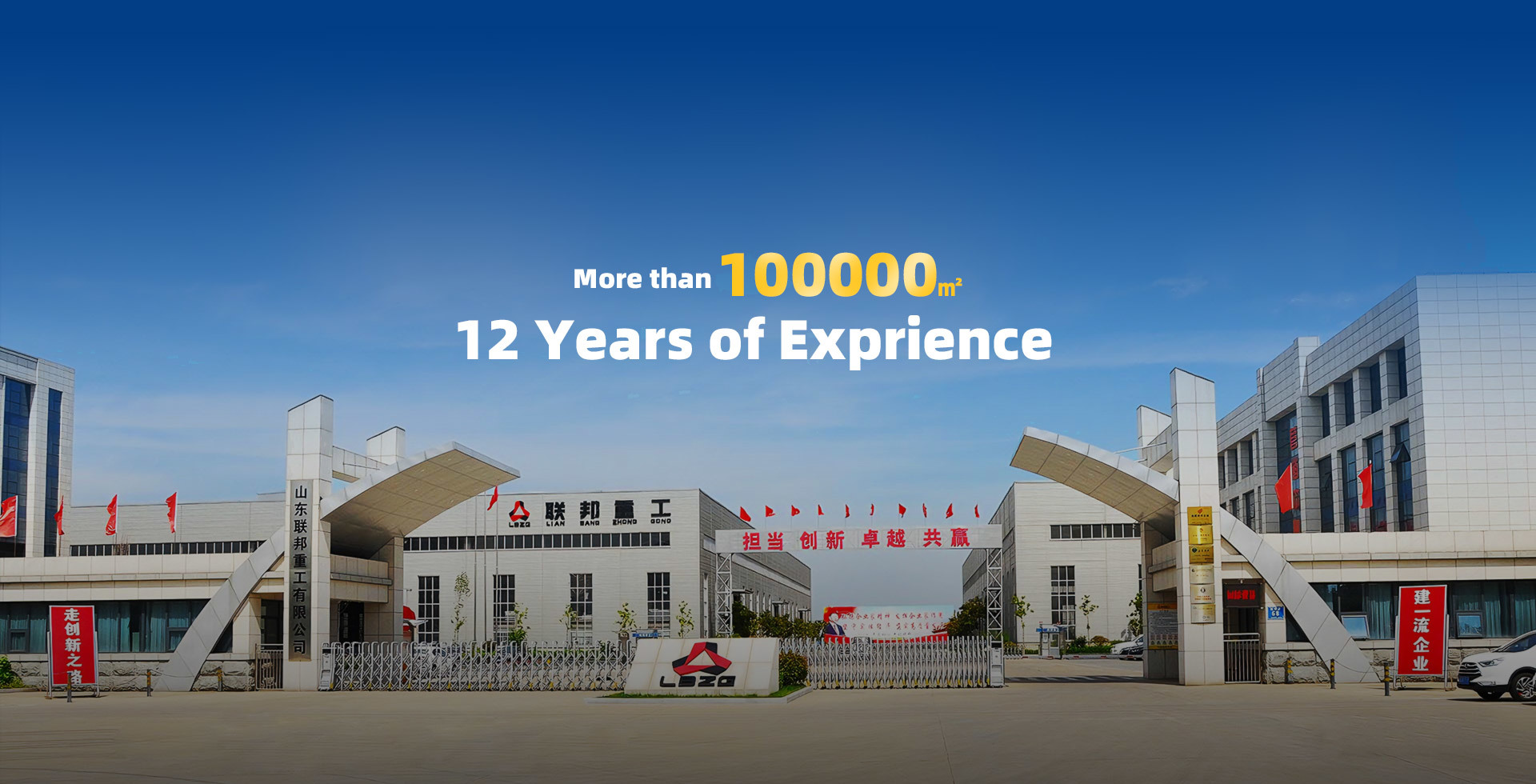
Manufacturing base: two production bases totalling 120,000 m², including 40,000 m² of standard workshops.
Step-by-Step: How to Specify a Mobile Crushing Station
Step 1 — Fix the feed material and the largest lump
Record rock type, compressive strength, abrasiveness and the maximum lump leaving the blast or the demolition face. A working rule for primary stations is that the maximum feed lump should be roughly 0.8–0.85 of the feed opening width, so a 500 mm feed points toward a jaw station in the PE-750×1060 class rather than the smallest unit on the price list.
Step 2 — Define the product, not just the tonnage
Target output must be paired with a product specification. Railway ballast and high-strength concrete aggregate lines are typically managed with strict gradation and particle-shape requirements, and manufactured sand for such projects is commonly specified with a fineness modulus between 2.3 and 3.0. If the finished product is for high-grade concrete or asphalt, particle shape becomes a selection criterion, not a preference.
Step 3 — Choose the crushing chamber by hardness
The standard rule is straightforward: for hard materials with Mohs hardness of 6 or above, choose a cone crusher; for medium-soft materials below Mohs 5 where premium particle shape is wanted, choose an impact crusher. In mobile terms, that means a YCG-C160 class cone station for granite and basalt, and a YCG-I1214 class impact station for limestone and demolition debris.
Step 4 — Match feeder, screen and conveyor to the crusher
Capacity matching in a crushing and screening plant follows the "upstream surplus, downstream step-down" rule: feeder capacity at 1.1–1.2 times rated jaw crusher capacity; secondary crusher capacity at 1.0–1.1 times actual primary output; vibrating screen at 1.2–1.3 times line capacity; belt conveyor at 1.2 times maximum flow. Correctly matched lines run at roughly 70–90% of rated load, which is where energy and wear are lowest.
Step 5 — Decide the chassis, the power and the mobility requirement
Confirm transport height and width, haul road condition, whether a foundation can be poured, and what voltage the site can supply. A trailer-mounted station that needs no foundation will usually beat a comparable skid design on total project time if the unit has to move two or three times.
Step 6 — Lock the documentation and service package before signature
Fix what will be delivered with the machine: conformity documents for the destination market, English technical documentation, wear-part list and pricing, warranty scope, and the after-sales route. Warranty normally covers manufacturing defects of the main machine body; direct-contact consumables such as hammers, screen plates, spiral blades and screen mesh are treated as normal wear items and are excluded.
Where Mobile Crushing Stations Are Used
Quarry and aggregate production
Open-pit quarry work with hard rock, outdoor continuous operation and variable climate is the classic mobile application: a mobile jaw station for primary reduction, a mobile cone station for hard-rock secondary crushing, and a mobile screening station to classify the output. For overseas quarry and infrastructure projects, the additional requirements are adaptation to local voltage (380V/440V/415V/660V) and climate, tropicalised or desert-rated options, multilingual manuals and access to an overseas service network.
Construction and demolition waste recycling
Demolition material is dusty, mixed and often processed close to where it is generated. The matched equipment set for this work is a vibrating feeder, vibrating screen, belt conveyor, secondary crusher, magnetic separator, dust-removal system and spare wear parts, operated on a trailer-mounted mobile basis with 24/7 shift production and rapid relocation between job sites. The governing requirements are mobility, low noise, low dust emission, quick site transfer and zero concrete foundation.
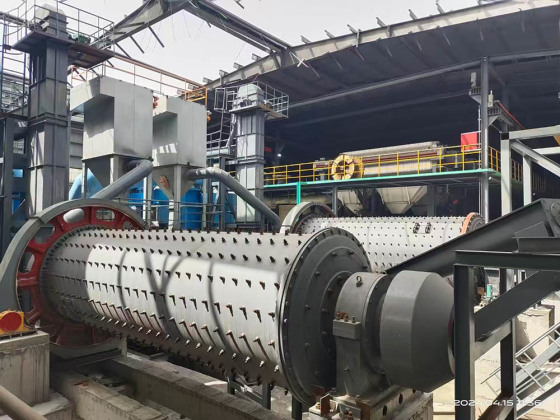
Mobile station set deployed for construction and demolition waste recycling — on-site processing, no material haulage.
Highway and railway aggregate supply
National key projects such as highways, railways and urban rail transit demand strict gradation and particle-shape control with 24/7 output. Projects of this type, including the Lunan High-Speed Railway, use complete crushing and screening lines producing railway ballast and high-strength concrete aggregate, with fineness modulus compliance and cubic particle shape as the acceptance criteria.
Hydropower and large concrete works
Dam and mass-concrete projects need high-strength aggregate and long-term continuous operation, often in high-altitude or remote locations. The specification emphasis shifts to wear-resistant crushing chambers and serviceability at distance, because the cost of an unplanned stoppage is measured in weeks, not hours.
New town, airport and municipal development
Large-volume municipal and airport work typically runs a fixed line for base load and keeps a mobile unit as backup across multiple sites, which keeps aggregate supply steady while site priority changes.
Comparison Table: Mobile Crushing Station Versus Fixed Crushing Line
| Decision criterion | Mobile crushing station | Fixed crushing line |
|---|---|---|
| Project duration it suits | Short-duration projects (under about two years) | Long-term stable quarry operations (over about three years) |
| Civil works | Low civil cost; trailer-mounted units need no concrete foundation | Requires land, foundations and a longer construction period |
| Relocation | Transfers quickly between sites; suits dispersed material sources | Effectively fixed; relocation is not economic |
| Capacity per unit | Single-unit capacity generally lower than a fixed line | High capacity (over 300 t/h) |
| Operating cost structure | Diesel and tyre costs are higher | Lower per-ton operating cost where power is stable |
| Best fit | Frequent relocation, poor road access, dispersed sources, tight environmental approvals | Large-scale, long-term production targeting lowest cost per ton |
Certification and Compliance: What the Documents Should Show
Compliance for a mobile crushing station sits on two layers that buyers frequently merge: the machine and the site.
- Machine layer. For EU-bound equipment, CE marking must be supported by technical documentation, a completed conformity assessment and an EU Declaration of Conformity. ISO 9001 quality management is the baseline most buyers screen on, and the broader system set — ISO 9001, ISO 14001 and OHSAS 18001 — indicates management coverage of quality, environment and occupational health and safety.
- Site layer. Dust and opacity are permit issues, not product labels. Wet suppression at crushers, screens and transfer points, plus opacity limits, are typically imposed by the facility permit, and portable plants of 150 t/h or less fall under a specific exemption path in the cited U.S. rule.
- Engine layer. Nonroad engine emissions are certified separately from the machine. An engine-family certificate is the evidence you ask for, not a marketing phrase.
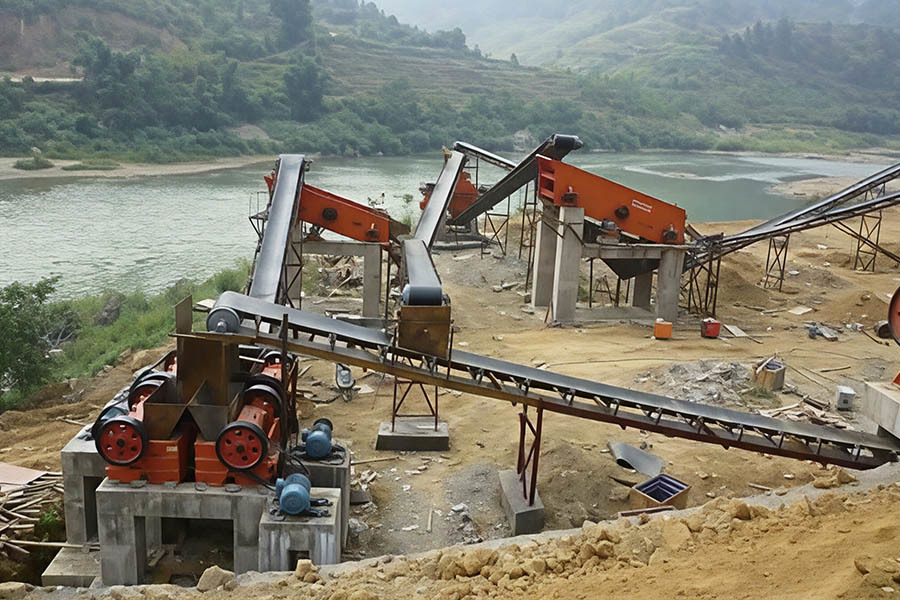
On-site production: mobile stations shorten the material chain by crushing where the material sits.
Frequently Asked Questions
What compliance documents should I request from a mobile crushing station manufacturer before ordering?
For EU-bound mobile crushing stations, request the technical documentation, the conformity-assessment record and the EU Declaration of Conformity behind the CE mark — Regulation (EU) 2023/1230 is the governing framework, and the application date is stated as 20 January 2027. For U.S. deployment, request the engine-family emissions certificate separately from the site dust permit, and note that permit conditions for covered facilities require wet suppression at crushers, screens and transfer points, with fugitive opacity limits stated as 12 percent for crushers and 7 percent at other affected units in the cited permit; portable plants of 150 t/h (136 Mg/h) or less are exempt from certain EPA emission reporting under 40 CFR Part 60 Subpart OOO. On the supplier side, Shandong Lianbang Heavy Industry holds ISO 9001, ISO 14001 and OHSAS 18001 system certifications plus CE export certification for foreign-trade projects, and supplies material and welding inspection reports, factory test-run records and shipping documentation for customs clearance and local acceptance. Buyers should still verify certificate numbers and the declaration itself rather than accept a logo.
Which mobile crushing station type fits my material and target output?
The LBZG YCG tyre-mounted line covers five roles. YCG-J750 is a mobile jaw station with a PE-750×1060 host and 110–230 t/h capacity for primary crushing in mobile quarries and on-site construction waste. YCG-I1214 is a mobile impact station with a PF-1214 host and 100–180 t/h for limestone and demolition material. YCG-C160 is a mobile cone station with a CS-160 host and 90–210 t/h for hard-rock secondary crushing. YCG-VSI8518 is a mobile sand-making station with a VSI-8518 host and 100–180 t/h. YCG-S2460 is a mobile screening station with 2–3 decks and 80–300 t/h screening capacity. As a selection rule, choose a cone crusher for materials of Mohs 6 and above and an impact crusher for medium-soft materials below Mohs 5 where particle shape is a priority. Catalog capacities are established under standard test conditions and shift with material hardness, feed size, moisture, power stability, feeding continuity and wear-part condition.
Is a mobile crushing station more expensive to run than a fixed line?
The comparison depends on project shape rather than the machine alone. A mobile crushing station has low civil cost, transfers quickly between sites and suits dispersed material sources, but its single-unit capacity is generally lower than a fixed line and diesel and tyre costs are higher. A fixed crushing line suits long-term stable quarries, capacity above 300 t/h and a stable power supply, and delivers a lower per-ton operating cost — at the price of land, foundations and a longer construction period. Mobile stations are the better fit where the project runs under roughly two years, relocates frequently, or faces poor road access. Entry volume does not have to be large: the minimum order quantity for LBZG equipment is one set or one unit, so a single station can be validated before a full set is committed.
Can I test my own material before committing to a model?
Yes, and it is the most reliable way to confirm a selection. LBZG recommends sending a 50 kg sample for test crushing to verify product shape, fines content and wear-part consumption before the model is finalised. Factory audit and third-party inspection options are also available for buyers who want to verify production and quality standards on site. Sample testing is particularly useful for wear cost, because consumable life is duty-dependent: high-manganese Mn13Cr2 or Mn18Cr2 jaw plates are standard for jaw crushers, with jaw plate service life commonly quoted in the range of 3–6 months in typical aggregate duty, and blow bars and hammers wear faster where rock is abrasive.
What does it take to move a mobile crushing station to a new site?
A trailer-mounted station such as YCG-J750 requires no concrete foundation: it is towed as a whole unit and re-commissioned on the new site without foundation work, which is the main scheduling advantage over a fixed plant, and it accepts a 380V/440V supply. LBZG's construction-and-demolition waste scenario data lists the operating requirements that govern these relocations: quick site transfer, zero concrete foundation, mobility, low noise and low dust emission, with a matched set of vibrating feeder, vibrating screen, belt conveyor, secondary crusher, magnetic separator, dust-removal system and spare wear parts. For overseas projects, the same scenario data adds adaptation to local voltage (380V/440V/415V/660V) and climate, tropicalised or desert-rated options, multilingual manuals and an overseas service network. To start an inquiry, send your feed material, maximum feed size, target output and site conditions to lbzg@lbcrusher.com or WhatsApp +86 13953887097 — LBZG's engineers will size the station set against your working conditions.
Conclusion: Match the Station to the Project, Then Prove It With Documents
A mobile crushing station earns its place when the project — not the equipment list — decides the configuration. Assess how long the site will run, whether the unit must move, how hard and abrasive the feed is, and what the finished product is used for. Those four answers determine chassis, crushing chamber, capacity class and whether a sand-making station is required at all. Then close the loop with evidence: a test crush of your own material, a factory audit if you need one, and the conformity documents that match your destination market.
Shandong Lianbang Heavy Industry Co., Ltd. builds the YCG tyre-mounted mobile station line and complete crushing, sand-making and solid waste recycling plants, supported by ISO 9001, ISO 14001 and OHSAS 18001 system certifications, CE export certification for foreign-trade projects, and participation in revising national crusher industry standards. Its products are sold across every province and municipality in China and to more than 40 countries, including markets in the Middle East, Central Asia, Southeast Asia and Africa.
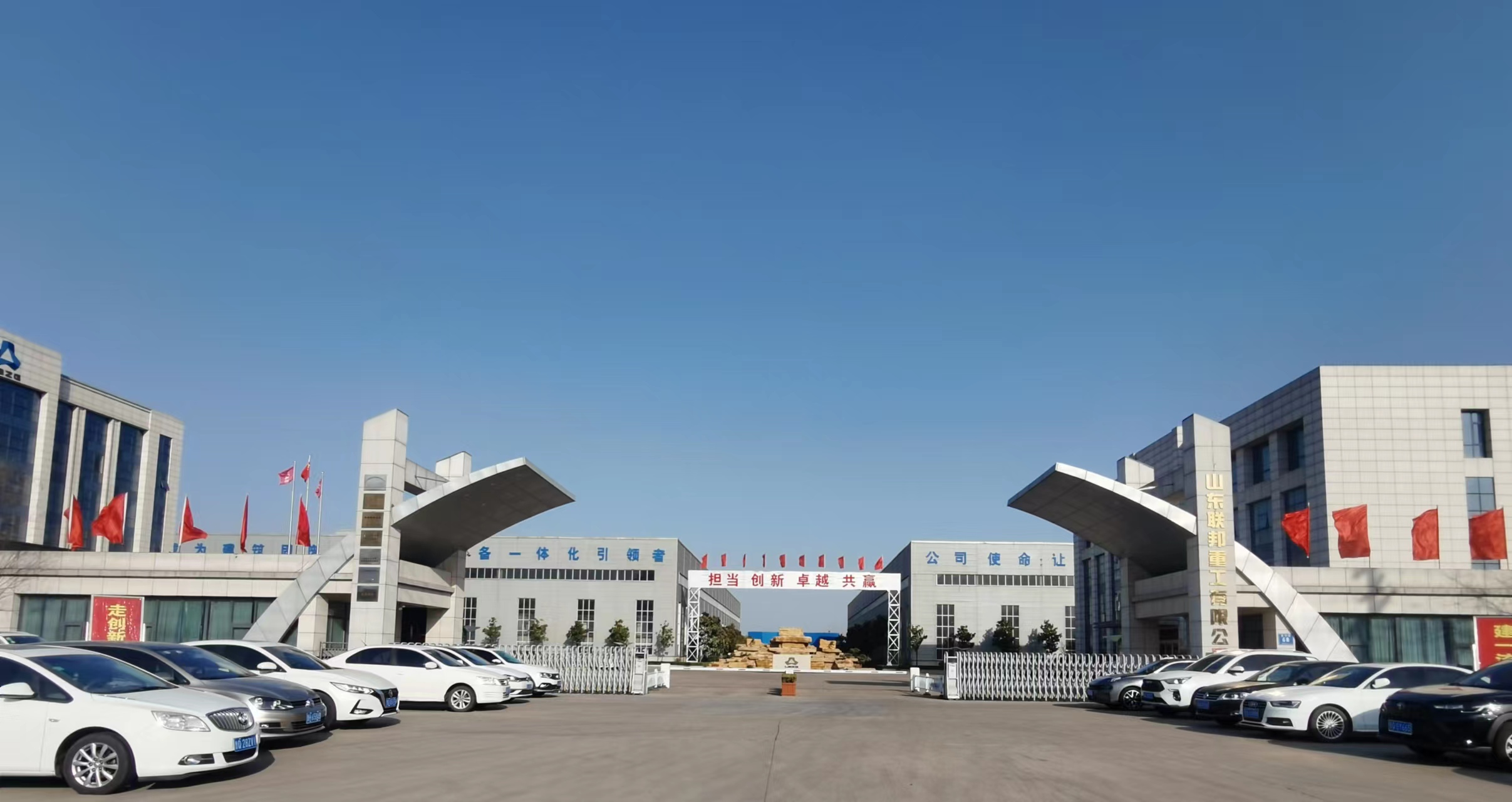
Factory audits and third-party inspections can be arranged at the Linyi manufacturing base.
Next step: request a mobile crushing station configuration for your material and site. Send feed material, maximum feed size, target output and destination country, and LBZG will return a station set, capacity match and document list.
Website: www.sypsj.cn | Email: lbzg@lbcrusher.com, selina@lbcrusher.com, lisa@lbcrusher.com
Tel: +86 135-0539-8919 / +86 158-6693-8525 | WhatsApp: +86 13953887097 / +86 15866938525
Address: No. 68 Lianbang Road, Economic-Technological Development Zone (Yihe New District), Linyi City, Shandong Province, China
Product brochure (PDF, free download): Shandong Lianbang Heavy Industry catalogue
Have Questions or Need More Details?
Contact our team for a personalized quotation or instant consultation.
Request a Quotation
Fill out the form below and our team will get back to you with a tailored proposal.
WhatsApp Direct Chat
Prefer to chat in real-time? Message us on WhatsApp for instant assistance & quick answers.
- Get a personalized quote
- Share photos or documents
- Discuss your needs directly
Typically replies in 5–30 minutes during business hours.