
Mobile Crushing Station vs Fixed Line: A Side-by-Side Comparison Guide
A mobile crushing station is the better fit when the project moves, the site has a short life, or construction waste must be processed on site. A fixed crushing line is the better fit when the quarry or aggregate plant will run for years, needs higher sustained output, and can support a prepared site with stable power. The decision should be made on four axes: mobility, site preparation, relocation cost, and throughput consistency.
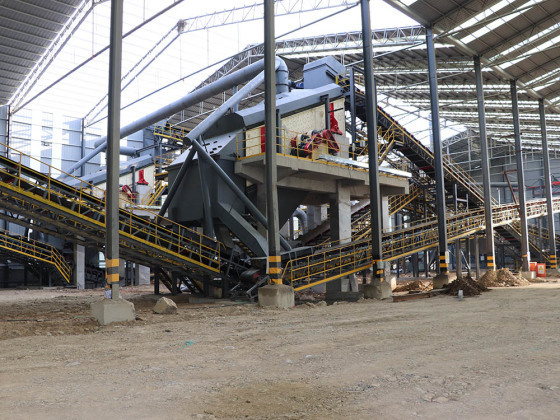
Cover image: construction-waste recycling site using mobile crushing equipment. Image source: LBZG case image library.
Buyers often compare a mobile crushing station and a fixed crushing line as if they were two versions of the same machine. They are not. A tire-mounted mobile crushing station is a transportable production unit that integrates feeding, crushing and often screening on a chassis. A fixed line is a stationary plant assembled around a long-term site layout. The right choice depends less on the crusher itself and more on how often the plant will move, how much site work you can absorb, and how steady the output must be.
This guide uses LBZG equipment facts to build a practical decision matrix for aggregate processing and construction waste. It references the PX Crusher, PC Crusher, PCX Crusher, and 2PG-Y Roller Crusher as configurable crushing units in fixed-line layouts, and the YK Screen for screening stages. It does not assume a single answer for every project.
Problem definition: the comparison is usually framed around the wrong cost
The common mistake is to compare only the equipment quotation. A mobile station may appear to cost more per unit, while a fixed line may appear to offer more capacity for the money. That comparison misses site preparation, foundation work, electrical connection, installation and commissioning, relocation, and the cost of lost production during a move.
For a quarry mobile crushing station with a multi-year life, the fixed line can justify its civil works because the plant stays in one place. For a construction waste mobile crushing station that follows demolition sites across a city, the ability to move without rebuilding a foundation can matter more than the headline equipment price. The comparison should therefore be a project-fit decision, not a generic product ranking.
The second problem is compliance. A CE certified mobile crushing station and an EPA compliant mobile crusher are not simple labels. They require documents, scope checks, and site-specific review. Buyers who compare only throughput can miss the evidence needed for import, permitting, and acceptance.
Industry background: why mobile and fixed formats coexist
The global mobile crushers and screeners market was estimated at USD 4.2 billion in 2025, and Asia Pacific held a 30.5% revenue share in the same year, according to Grand View Research data cited in the verified research package for this article. That scale explains why buyers now see more tire-mounted and crawler options alongside conventional fixed lines. It does not mean mobile stations replace fixed plants. It means the market has more ways to match equipment to project structure.
Regulation also shapes the choice. Under the EPA Subpart OOO source cited in the research package, portable sand and gravel plants with capacities of 136 megagrams per hour, or 150 tons per hour, or less are exempt from certain emission reporting. That threshold is a regulatory boundary, not a performance rating. For U.S. projects, the EPA also states that emissions standards apply to mobile sources and that engines and motor vehicles in U.S. commerce must meet applicable emissions standards and conformity requirements. A generic EPA compliant mobile crusher claim therefore needs engine-family and permit evidence.
In the EU, Regulation (EU) 2023/1230 is stated to apply from 20 January 2027. The EU-OSHA summary cited in the research package states that manufacturers must prepare technical documentation, complete the relevant conformity assessment, draw up the EU Declaration of Conformity, and affix CE marking where applicable. For a CE certified mobile crushing station, the certificate number, issuing body, scope, standards, and covered models should all be checked.
Shandong Lianbang Heavy Industry Co., Ltd. is a Linyi, Shandong-based manufacturer of sand-stone crushing, sand-making and solid waste recycling equipment. Its brand is Shanyuan LBZG. The company states that it holds ISO 9001 quality management system certification and CE export certification for foreign trade projects, and that it participates in revising national crusher industry standards. These are first-party company facts, not independent market rankings.
Detailed solution: a four-axis decision matrix
1. Mobility: can the plant follow the material?
Mobility is the first filter. A tire-mounted mobile crushing station can be moved as a unit and is suited to dispersed material sources, temporary quarries, road and bridge projects, and urban demolition sites. LBZG's YCG-J750 is a tire-type mobile jaw crushing station with a PE-750×1060 host, a capacity range of 110-230 t/h, 380V/440V support, and a trailer-mounted design that requires no foundation. That combination is directly relevant to a quarry mobile crushing station or a construction waste mobile crushing station that must start work quickly.
A fixed crushing line is built around a stationary layout. It is not designed to be towed between sites. Its advantage is that the layout can be optimized for material flow, multiple crushing stages, stockpile conveyors, and centralized control. If the material source will not move for years, mobility has less value.
2. Site preparation: foundation versus fast deployment
Site preparation is where the mobile format often wins on speed. The YCG-J750 is trailer-mounted and requires no foundation, which reduces the civil works needed before commissioning. A fixed line is assembled on a prepared site and typically involves civil works, structural steel, chutes, conveyors, and electrical installation. The exact scope depends on the layout, but the principle is clear: a fixed line front-loads site work, while a mobile station front-loads equipment configuration.
This does not make fixed lines inefficient. For a long-term aggregate plant, a properly prepared site supports stable operation, easier maintenance access, and a layout that can be optimized around the quarry face and stockyard. The question is whether the project life is long enough to earn back that preparation.
3. Relocation cost: the cost that is often left out
Relocation cost is not a single line item. For a mobile station, it includes transport distance, road permits, loading and unloading, crane or winch use, electrical reconnection, and re-commissioning. For a fixed line, relocation usually means dismantling equipment, abandoning or reworking foundations, rebuilding structural supports, and re-erecting the plant. In practice, a fixed line is rarely relocated unless the quarry or site plan changes fundamentally.
Buyers should ask for a relocation plan, not a verbal assurance. For a mobile station, ask which modules move together, what transport dimensions apply, what power connection is required at the next site, and how the screening unit is re-leveled. For a fixed line, ask what civil works would be abandoned and what would need to be rebuilt. These questions turn relocation cost into a comparable number instead of an assumption.
4. Throughput consistency: steady output versus distributed output
Throughput consistency favors the fixed line when the project is long-term and high-volume. A fixed plant can match primary crushing, secondary crushing, fine crushing, screening, and conveying as a system. LBZG case references in the provided corpus include a Belt and Road aggregate line with 350 t/h continuous output, a Shenhua-related reference with 220,000 tons per month per line, and the Lunan High-Speed Railway reference with 5+ years of stable operation and zero major downtime. These are case facts, not a guarantee for every site, but they show why fixed lines are chosen for long-duration aggregate supply.
A mobile crushing station is not automatically less consistent. Its output depends on the selected host, feed continuity, screening configuration, and re-commissioning after each move. The LBZG YCG range shows the spread: YCG-J750 at 110-230 t/h, YCG-I1214 at 100-180 t/h, YCG-C160 at 90-210 t/h, YCG-VSI8518 at 100-180 t/h, and YCG-S2460 screening at 80-300 t/h. These are model-level capacity ranges. They should be matched to the actual feed, product size, and shift pattern.
For a construction waste mobile crushing station, consistency is often defined by site logistics rather than by a single throughput figure. If the plant can process demolition material on site and avoid trucking, the effective supply chain can be more stable than a fixed plant fed by a long haul. That is why the comparison must include the whole material flow.
5. Configuration: fixed-line flexibility and mobile-unit focus
Fixed lines offer broad configuration freedom. The PX Crusher can serve as a fine impact crusher or sand-making unit; the PC Crusher is a hammer crusher for stone, cement, coal, mining and building-material fine crushing; the PCX Crusher is a new-generation strong impact hammer crusher for fine and tertiary crushing of limestone, coal, gypsum, shale and medium-hard materials; the 2PG-Y Roller Crusher is a hydraulic two-roll unit for cement, metallurgy, building material, refractory material and coal crushing. The YK Screen handles aggregate grading and medium-fine screening, with 2-layer, 3-layer and 4-layer models.
For example, a fixed aggregate line could use a primary jaw crusher, a PC or PCX hammer crusher for secondary or fine crushing, a PX Crusher for sand making or fine impact work, a 2PG-Y Roller Crusher for brittle material fine crushing, and YK screens for product grading. A mobile line is more likely to be built around a mobile jaw crushing station, mobile cone crusher station, mobile impact crushing station, or mobile sand making station, with a mobile screening station where separate grading is needed.
This is not a rule that mobile stations cannot use hammer crushers. The corpus states that the PC-1300×1200 can be integrated into mobile crushing stations for hard rock and recycled concrete processing, and that its high-manganese steel hammer head supports mobile crushing station applications requiring durable wear parts. The practical point is that the configuration must be confirmed unit by unit, not assumed from a product family name.
Comparison table: mobile crushing station vs fixed crushing line
| Decision axis | Mobile crushing station | Fixed crushing line |
|---|---|---|
| Mobility | Tire-mounted or crawler formats can be relocated; LBZG YCG-J750 is trailer-mounted and requires no foundation. | Stationary layout; not designed for frequent moves; best for a long-term quarry or plant site. |
| Site preparation | Lower site work for suitable models; fast deployment is a key advantage of the YCG-J750. | Requires a prepared site and civil works; layout can be optimized for long-term material flow. |
| Relocation cost | Cost drivers include transport, permits, lifting, power reconnection and re-commissioning; lower for frequent moves. | Relocation usually means dismantling and rebuilding; foundation and structural work can be lost. |
| Throughput consistency | Model ranges include 90-300 t/h depending on host and screening unit; output depends on feed and re-commissioning. | Multi-stage matching supports steady long-term output; LBZG cases cite 350 t/h continuous output and 220,000 tons per month per line. |
| Typical configuration | YCG-J750 jaw station, YCG-I1214 impact station, YCG-C160 cone station, YCG-VSI8518 sand-making station, YCG-S2460 screening station. | PE jaw, PX Crusher, PC Crusher, PCX Crusher, 2PG-Y Roller Crusher, YK Screen, feeders and conveyors. |
| Compliance evidence | Check CE certificate number, scope, standards, covered models, and EU Declaration of Conformity; for the U.S., check engine-family and permit evidence. | Same compliance logic applies; fixed installations may also require site-level air permits and dust-control review. |
| Best-fit project | Short project life, multiple sites, construction waste, road and bridge work, remote quarry start-up. | Long-term quarry, high-volume aggregate plant, stable grid and access, multi-stage product mix. |
Step-by-step breakdown: how to choose without guessing
- Define the project life and move frequency. If the plant will move within two to three years, test the mobile case first. If the site has a multi-year reserve and a fixed offtake, test the fixed-line case first.
- Map site preparation and utilities. For a mobile station, confirm transport routes, laydown area, power connection and re-leveling. For a fixed line, confirm civil works, foundation scope, electrical room, conveyor corridors and stockpile layout.
- Match the reduction stages. Use a mobile jaw crushing station for primary crushing, a mobile cone crusher station for hard rock secondary crushing, a mobile impact station for limestone or construction waste, and a mobile sand making station when manufactured sand is required. In a fixed line, match PX, PC, PCX and 2PG-Y units to the material and product size.
- Size the screen as a system. The YK Screen is available from 2-layer to 4-layer models with a 15-200 t/h capacity range per cited model data. Do not size the screen from the crusher nameplate alone; match it to the product split and recirculating load.
- Verify compliance before comparing price. For EU-bound equipment, ask for the CE certificate, technical file and EU Declaration of Conformity. For U.S.-bound equipment, ask for engine-family evidence and a site permit review. A CE certified mobile crushing station claim should be traceable to a certificate number and covered models.
- Build a total-cost comparison. Include equipment, freight, site works, electrical connection, installation, commissioning, spare parts, relocation and downtime. Do not compare a mobile quotation with a fixed-line equipment price alone.
- Validate with a sample or site reference. Ask for a test-run video, pre-shipment inspection record, and a reference project that matches your material. LBZG states 100% pre-shipment test plus on-site installation and commissioning, a 1-year warranty, and spare parts in stock at its Linyi location.
Use cases: where each format makes sense
Construction waste recycling
A construction waste mobile crushing station is usually chosen when demolition material is dispersed and trucking is a major cost. The LBZG case reference for a Construction Waste Recycling Co. uses a YCG-J750 tire-type mobile jaw station and a YCG-I1214 tire-type mobile impact station for construction and demolition waste to recycled aggregate. The cited result is on-site processing with zero transport waste over 2+ years and a 60% cost reduction versus landfill. That is a case-specific result, not a universal guarantee, but it shows the logic: mobility and on-site processing can change the cost structure.
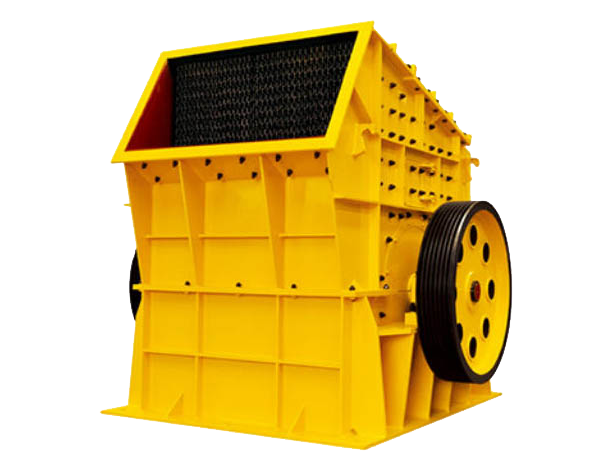
Body image: PC Hammer Crusher, a configurable fine crushing unit for fixed lines. Image source: LBZG product image library.
Long-term quarry and aggregate supply
A fixed crushing line is often the stronger choice for a quarry with a long reserve, stable demand, and a site that can support civil works. The fixed layout can combine primary jaw crushing, secondary and tertiary crushing, screening and conveying into a steady production system. The LBZG case references for the Belt and Road aggregate line, Shenhua-related project and Lunan High-Speed Railway show long-duration operation, including 350 t/h continuous output, 220,000 tons per month per line, and 5+ years of stable operation with zero major downtime. These references should be checked against the buyer's own material and product specification.
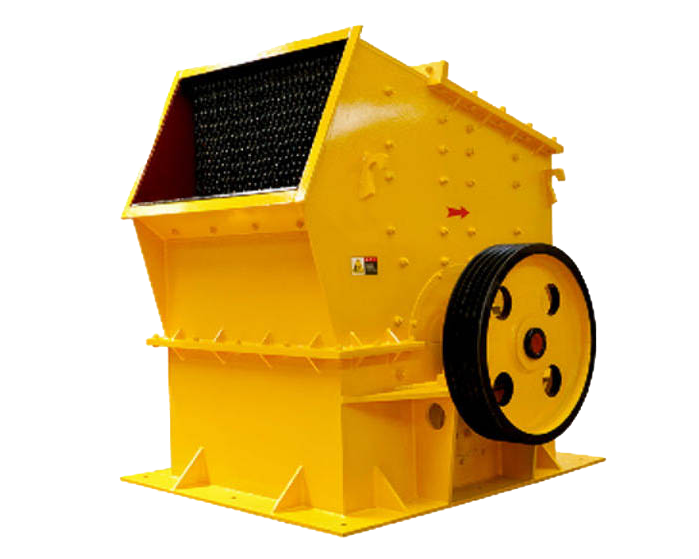
Body image: PCX Hammer Crusher for fine and tertiary crushing. Image source: LBZG product image library.
Aggregate plant with sand and fine product
When the product mix includes manufactured sand or fine aggregate, the fixed line can combine a PX Crusher or a mobile sand making station with a YK Screen. The PX-1822 has a maximum feed size of 800 mm, a discharge size of 5-20 mm, a capacity of less than 5 t/h in sand-making mode and 210-270 t/h in crushing mode, and a 210-270 kW motor. These figures show why the configuration must be matched to the duty: sand-making and crushing are different operating modes.
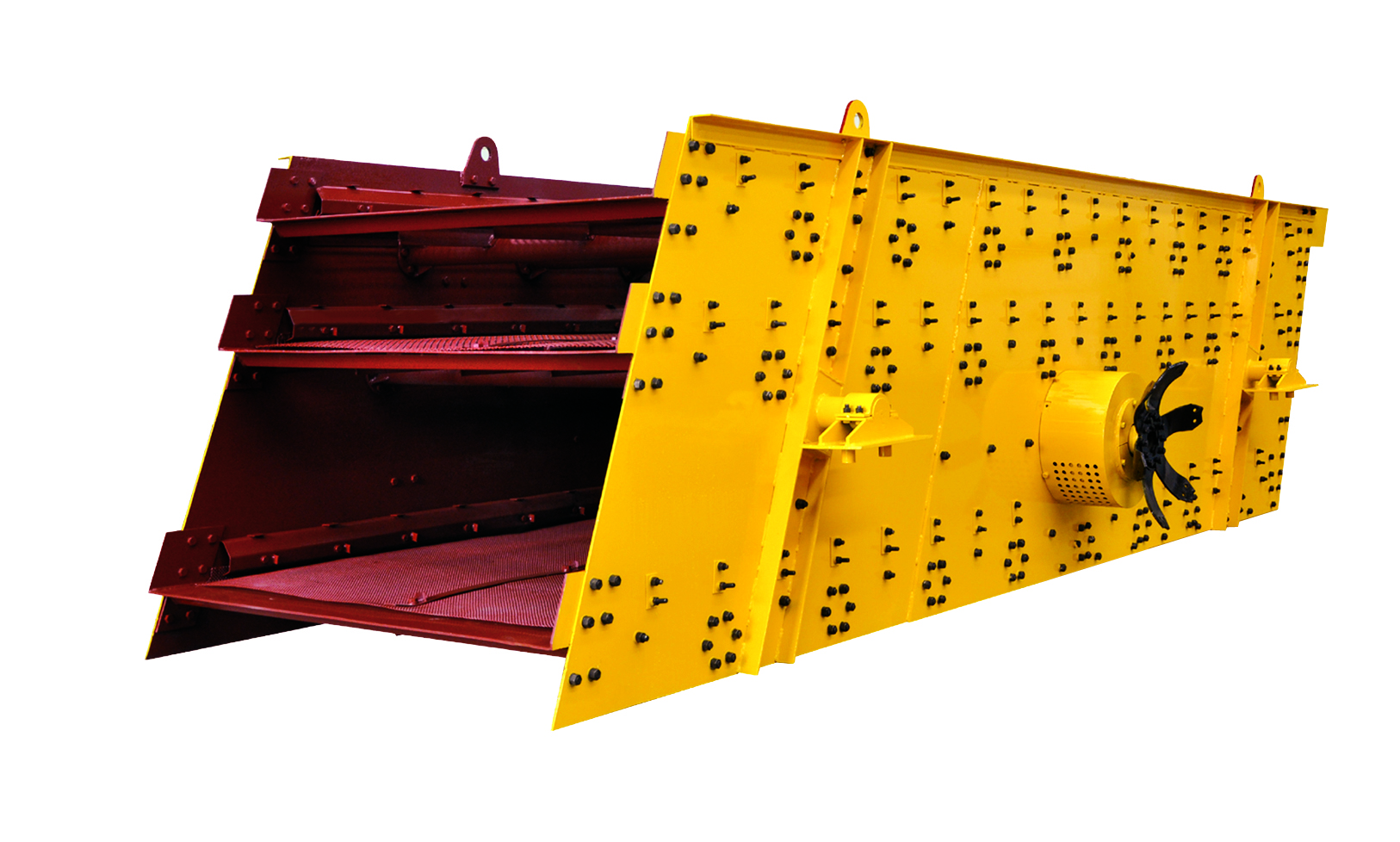
Body image: YK Series circular vibrating screen for aggregate grading and screening stages. Image source: LBZG product image library.
Overseas quarry start-up
An overseas quarry mobile crushing station can reduce the time between site access and first production, especially when local civil works are slow or the deposit is not yet fully proven. The YCG-J750 supports 380V/440V and is trailer-mounted with no foundation. For a long-term overseas quarry with a confirmed reserve, a fixed line may still be preferred after the resource is proven, because the site can be designed around permanent conveyors and stockpiles.
FAQ
Which CE documents should I check when buying a Chinese CE-certified mobile crushing station?
Check the CE certificate number, issuing body, CE scope, harmonized standards, validity dates and the models covered. LBZG's CE Mark certificate is 3N251002.SLHCS40, issued by Ente Certificazione Macchine (ECM), with the scope CE Mark 2006/42/EC (Machinery) and standards EN ISO 12100:2010 and EN 60204-1:2018+A1:2025. It is valid from 2025-10-02 to 2030-10-01, and the certificate relates to YCG Mobile Station models including YCG-S2460, YCG-VSI8518, YCG-C160, YCG-J750 and YCG-I1214. Also request the EU Declaration of Conformity and the technical file for the exact configuration.
What throughput can a tire-mounted mobile crushing station handle?
LBZG's cited YCG model ranges are 110-230 t/h for the YCG-J750 mobile jaw station, 100-180 t/h for the YCG-I1214 mobile impact station, 90-210 t/h for the YCG-C160 mobile cone crusher station, 100-180 t/h for the YCG-VSI8518 mobile sand making station, and 80-300 t/h for the YCG-S2460 mobile screening station. These are model-level ranges. Actual output depends on feed size, material hardness, moisture, product split and how the plant is operated.
Is relocation cheaper for a mobile station than for a fixed line?
Usually, yes, when the move is planned and the site is within road-transport limits. A mobile station is moved as a unit or as a small set of modules, while a fixed line typically requires dismantling, foundation abandonment or rework, and re-erection. The real comparison should include transport permits, lifting, electrical reconnection, re-commissioning and production downtime. Ask for a written relocation plan for the exact model before comparing budgets.
Can I request a sample test, inspection record or lead time before ordering?
Yes. LBZG states 100% pre-shipment test plus on-site installation and commissioning, a 1-year warranty, and spare parts in stock at its Linyi location. The company also states a regular lead time of 15-30 days, with urgent orders negotiable, and a minimum order quantity of 1 set. Buyers can request the product brochure, a test-run video, and a configuration review for their material before issuing a purchase order.
Conclusion: choose the format that matches the project, not the catalog
Choose a mobile crushing station when mobility, fast site preparation, frequent relocation or on-site construction waste processing are the dominant constraints. Choose a fixed crushing line when long-term operation, stable high-volume output, multi-stage configuration and a prepared site are the dominant constraints. The decision should be supported by a four-axis comparison, not by a single equipment price.
For LBZG equipment, the practical starting points are the YCG-J750 mobile jaw station, YCG-I1214 mobile impact station, YCG-C160 mobile cone station, YCG-VSI8518 mobile sand making station and YCG-S2460 screening station for mobile work; and the PX Crusher, PC Crusher, PCX Crusher, 2PG-Y Roller Crusher and YK Screen for fixed-line configuration. Confirm the exact model, compliance documents and relocation plan before comparing quotations.
Next step: compare your project against the matrix
Send your material type, target product sizes, project life, move frequency and power supply. LBZG can review the mobile versus fixed configuration and provide a quotation with the relevant equipment, compliance documents and lead time. Download the company brochure for the full product and company profile.
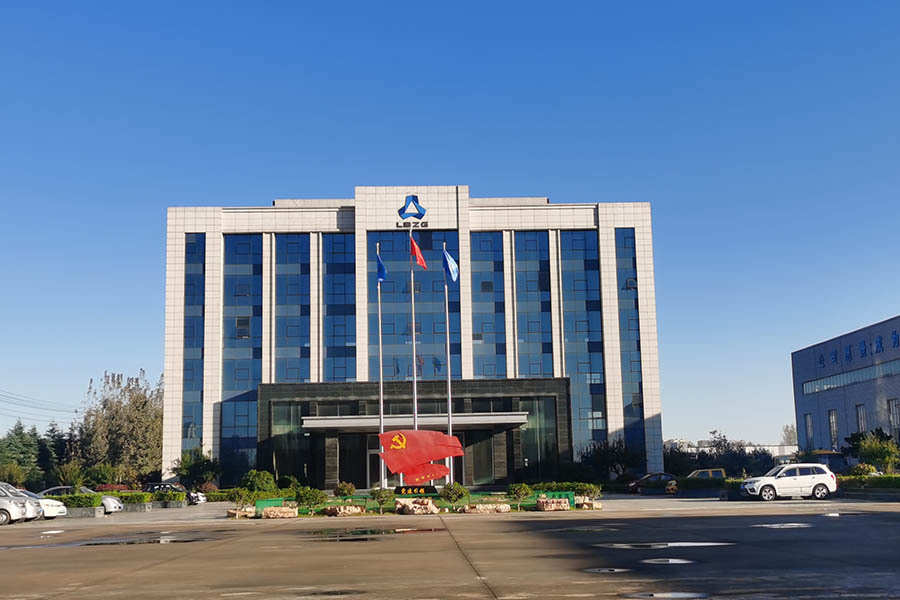
CTA image: LBZG factory appearance. Image source: LBZG company image library.
Brochure: Download the Shandong Lianbang Heavy Industry brochure
Website: www.sypsj.cn Email: lbzg@lbcrusher.com WhatsApp: +86 13953887097
Have Questions or Need More Details?
Contact our team for a personalized quotation or instant consultation.
Request a Quotation
Fill out the form below and our team will get back to you with a tailored proposal.
WhatsApp Direct Chat
Prefer to chat in real-time? Message us on WhatsApp for instant assistance & quick answers.
- Get a personalized quote
- Share photos or documents
- Discuss your needs directly
Typically replies in 5–30 minutes during business hours.