
Stone Crusher Plant: A Buyer's Guide to Configuration
Stone Crusher Plant: A Buyer's Guide to Configuration
A stone crusher plant converts run-of-quarry rock into graded aggregate and, where required, manufactured sand. The work happens in stages — feeding, primary crushing, secondary crushing, screening, and optional sand making and washing — and the configuration of those stages is matched to four inputs: feed material hardness, maximum feed size, required capacity in tonnes per hour, and final product specification. Two plants quoted at the same nominal tonnage can therefore differ substantially in crusher type, screen area, power draw and wear-part consumption. This guide explains how the stages fit together, how to read a configuration, and which questions to settle before a quotation becomes a purchase order.
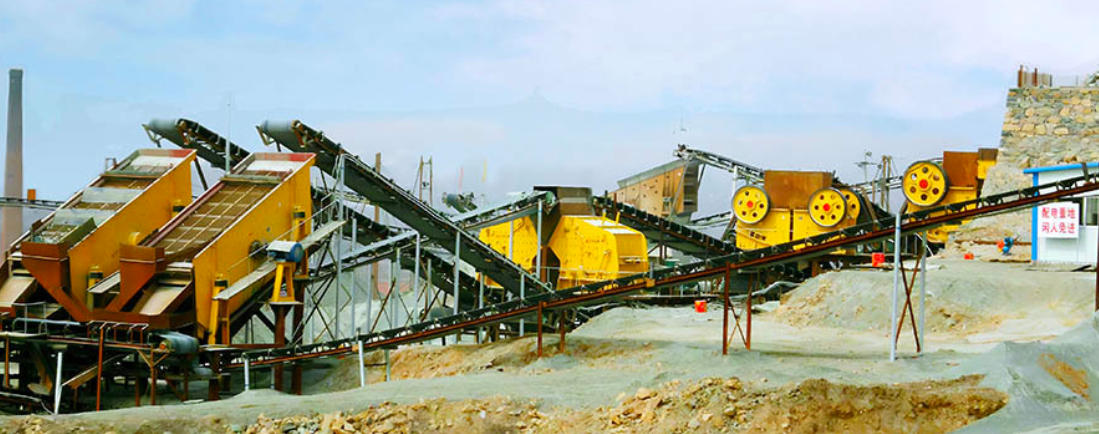
A complete crushing and screening plant arranged as one continuous flow, from feed hopper to graded stockpiles.
What a stone crusher plant is — and what it is not
A stone crusher plant is not a single machine. It is an arrangement of feeders, crushers, screens, conveyors, dust-control equipment and, where relevant, washing units that together reduce rock from run-of-quarry size to saleable fractions. The staged flow is consistent across most installations: feeding, primary crushing with a jaw crusher, secondary crushing with a cone or impact crusher, screening, sand making with a VSI crusher, and optional washing.
The distinction matters at the research stage. A buyer who searches for a “stone crusher” is usually looking at one unit; a buyer who needs a plant is buying a process. The process is matched to feed material hardness, feed size, required capacity in tons per hour, and final product specification — the four variables that determine which units belong in the line and in what order.
Selection parameters used in plant design include rock compressive strength or Mohs hardness, maximum feed size, hourly target capacity, finished aggregate grain-shape requirement, and wear-part operating cost. A configuration that ignores any one of these produces either a plant that cannot reach nameplate output or a plant that reaches it at an unsustainable cost per tonne.
The problem: why plant selection fails at the research stage
Most procurement mistakes on crushing plants are made before the first quotation is requested, not after. Three gaps account for the majority of them.
1. Equipment lists without process logic
Supplier pages and tender documents frequently list models without stating which stage each unit serves. A buyer receives “PE-600×900” and “PF-1214” as separate line items and has no basis for judging whether the two units actually belong together, whether the screen is large enough for the return load, or whether the conveyor can carry the recirculating tonnage. The equipment looks complete; the process may not be.
2. Capacity figures quoted without conditions
Rated throughput is a test-condition figure. Actual throughput varies with raw material hardness, feed size, mud and moisture content, power supply stability, feeding continuity and the wear condition of wearing parts. A plant rated at 150 t/h on clean, dry limestone will not deliver 150 t/h on wet, clay-bound feed. Buyers who compare suppliers on a single tonnage number are comparing figures that were not measured under the same conditions.
3. Compliance and service treated as separate purchases
Certification, dust control and after-sales support are often negotiated after the equipment list is agreed. That sequence is expensive. Dust-suppression scope, enclosure design and water handling affect layout and civil works, and retrofitting them into a signed layout costs more than designing them in. The same applies to documentation language, voltage and spare-parts kits, all of which are easier to specify than to add later.
Industry background: demand, region and regulation
Crushing and screening equipment sits inside a large and growing capital-goods category. The global stone crusher market was valued at USD 4.8 billion in 2025 and is projected to reach USD 8.9 billion by 2034, a compound annual growth rate of 7.4% over the forecast period, according to Dataintelo’s 2026-published market report. Asia Pacific accounted for 42.8% of revenue share in 2025, the same source reports, which places the densest concentration of both demand and manufacturing capacity in the region.
Demand is driven by aggregate-consuming construction rather than by the equipment itself. Highways, railways, urban rail transit, new-town development, airport runways and terminals, hydropower dams and general ready-mix concrete supply all require graded aggregate with controlled particle shape and consistent gradation. Construction and demolition waste recovery adds a second stream: recycled aggregate, recycled concrete brick, recycled dry powder slurry and recycled soil, produced either on site with mobile equipment or at a centralised recycling plant.
Regulation shapes design. In the United States, the EPA’s Mineral Mining and Processing Effluent Guidelines and Standards, published as 40 CFR Part 436, cover wastewater discharges from mineral processing operations — which is why washing circuits and water handling are a design decision, not an accessory. In other markets, dust emission and enclosure requirements are set locally. The practical consequence for buyers is that a plant specification written for one jurisdiction cannot simply be copied into another; the compliance scope has to be restated for the destination market.
A third shift is visible in how buyers evaluate suppliers. Because configuration is now the main variable between competing offers, procurement teams increasingly ask for the process logic behind a proposal — why this crusher type, why this screen area, what happens to the return load — rather than comparing unit prices line by line.
The complete plant, stage by stage
Understanding the six stages is the fastest route to reading any configuration intelligently.
Stage 1 — Feeding
Raw material is discharged into a hopper and moved into the primary crusher by a vibrating feeder. The feeder performs two functions: it regulates the feed rate so the crusher runs at a steady load rather than in surges, and on many models it pre-screens fines past the crusher, which reduces unnecessary crushing and dust generation. Lianbang’s ZSW-590×110 feeder, for example, has a 5,900 × 1,100 mm trough and a rated capacity of 160–350 t/h, which is the class used ahead of a medium-to-large primary jaw.
Stage 2 — Primary crushing
The primary stage reduces run-of-quarry rock to a size the secondary crusher can accept. Jaw crushers are used in this first stage because they crush by compression and have a large feed opening, which makes them tolerant of the variable lump sizes that come out of a blast. They are also simple in structure, easy to maintain and comparatively low in operating cost.
In the Lianbang PE series, maximum feed size ranges from 210 mm on the PE-250×400 to 1,000 mm on the PE-1200×1500, with matching capacity from 5–20 t/h to 300–800 t/h. The jaw crusher is not intended to produce finished material directly below 50 mm, and it is not the right unit for premium aggregate with strict particle-shape requirements or for ultra-large capacity where a different primary approach may be considered.
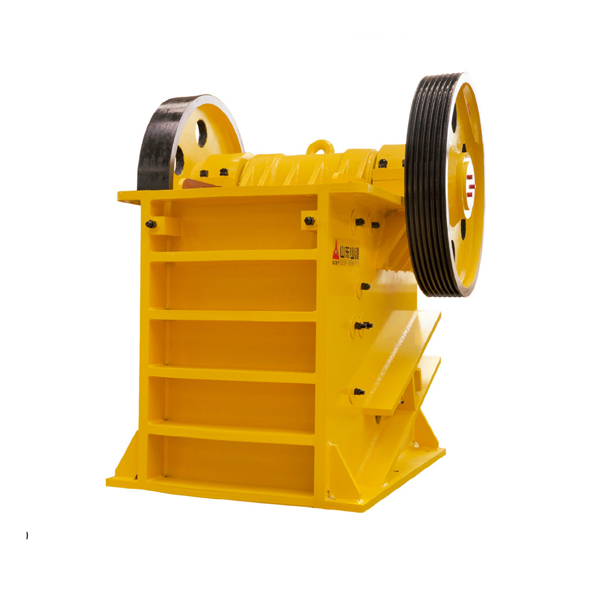
PE series jaw crusher — the primary crushing stage, sized by feed opening and maximum feed size.
Stage 3 — Secondary crushing: three options, three different jobs
The secondary stage does the work that determines both product shape and wear cost, and the choice between cone, impact and hammer crushing is where most configuration errors occur.
Cone crushers are applied in medium and fine crushing with output of approximately 10–50 mm. They use laminated inter-particle crushing, take smaller feed, and provide better particle shape. They are not selected as the first-stage coarse crushing equipment and are not applicable to coarse crushing of feed above 300 mm, soft or sticky materials, or use as the first crushing stage. For hard rock such as granite, basalt or iron ore with compressive strength above 250 MPa, the recommended configuration is a PE series jaw crusher for primary crushing plus a CS/PY series cone crusher for secondary crushing, because the laminated action extends wear-part life and lowers operating cost on abrasive material.
Impact crushers are used for medium-soft rock such as limestone or dolomite with compressive strength below 200 MPa, producing cubical aggregate and suitable for highway-grade aggregate production. The PF-1315, for instance, takes feed up to 500 mm and delivers 100–250 t/h with a 160–200 kW motor.
Hammer crushers offer a high reduction ratio in a compact body and suit brittle, low-abrasion material such as limestone, gypsum, shale and coal. They are more sensitive to wet or sticky feed and produce a higher fines fraction, so they are used where investment and footprint matter more than particle shape.
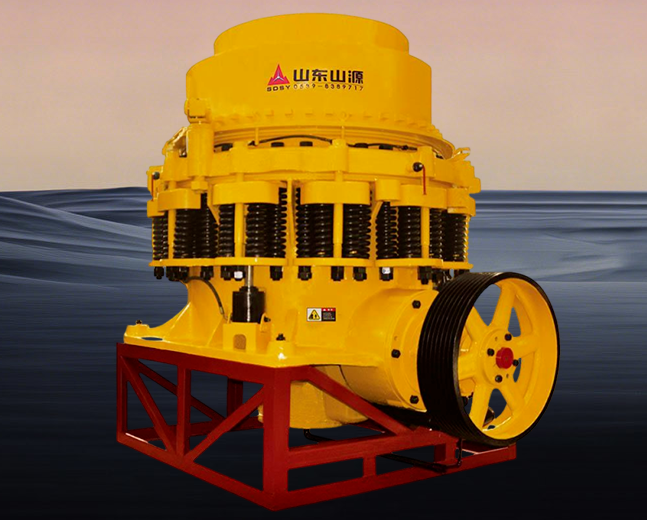
CS series hydraulic cone crusher — secondary and tertiary crushing on hard, abrasive rock.
Stage 4 — Tertiary crushing and manufactured sand
If the product mix includes manufactured sand, a third stage is added. Vertical shaft impact crushers reshape and crush at the same time, and the VSI-8518 (180–220 kW, maximum feed 40 mm on soft material and 35 mm on hard material) is the class used in large-scale mechanism sand plants. Fine impact crushers such as the PX series are an alternative for secondary and tertiary fine crushing of medium-hard material below 320 MPa.
If the plant only produces coarse and medium aggregate, the tertiary stage can be omitted. That single decision removes a crusher, a motor, a conveyor run and a share of the dust-collection load from the capital budget.
Stage 5 — Screening
Screening converts a mixed crusher discharge into saleable fractions and controls the recirculating load. Circular vibrating screens are the standard unit; the YK series offers two, three and four decks with screen openings below 50 mm, and models from the 2YK-1248 (5.5 kW, 3.6 t) up to the 4YK-2160 (15 kW, 7.9 t).
Screen area is frequently underestimated. Undersized screening means qualified material returns to the crusher, which inflates crusher load, power consumption and wear without adding saleable output. On high-capacity plants it is normal to run several screens in parallel rather than to specify one very large unit, because each screen has its own rated throughput range.
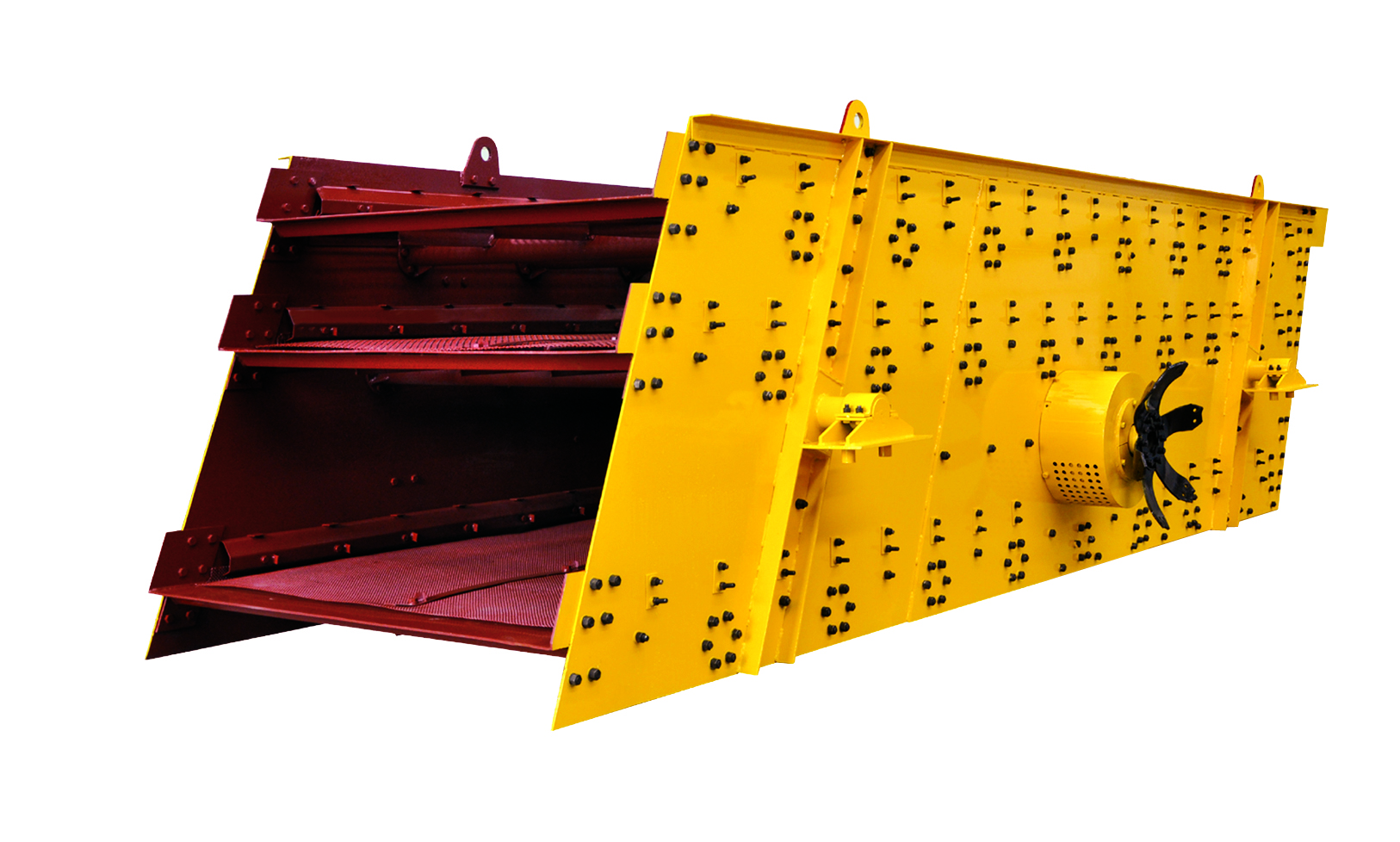
YK series circular vibrating screen — grading the crusher discharge into sized aggregate fractions.
Stage 6 — Washing (when the specification requires it)
Where the finished product is bound for concrete, asphalt or high-grade mortar and the mud content must be controlled, a washing stage is added. Wheel bucket washers are used where the main task is dust and light clay removal with low water consumption and low fine-sand loss; the XS-3000, for example, has a 3,000 mm wheel bucket diameter and processes 50–100 t/h on an 11 kW motor. Spiral washers are used where scrubbing power matters more, with the FG-1000 handling 50–70 t/h.
Washing is also where the regulatory dimension enters most directly, because water handling and discharge fall under effluent rules such as 40 CFR Part 436 in the United States and their local equivalents elsewhere.
Control and monitoring
Where a project specifies centralised operation, the plant can include a centralised control system — the configuration listed for Lianbang’s Lunan high-speed railway reference project. Dry sand systems such as the EIS-1000 and EIS-1200 list intelligent monitoring as part of their scope, and trailer-mounted mobile plants can be specified with remote GPS dispatch for multi-site work. These are options to be written into the technical agreement, not assumptions to be made about a base configuration.
Step-by-step: configuring a plant in seven decisions
The sequence below is the order in which configuration decisions depend on each other. Changing an earlier decision invalidates the later ones, which is why quotations assembled out of order tend to be revised several times.
- Define the feed. Rock type, compressive strength or Mohs hardness, maximum lump size, clay content, moisture, and whether the feed is consistent or variable across the quarry face.
- Define the product. Target fractions in millimetres, required particle shape, whether manufactured sand is part of the mix, and the applicable specification for the end use — concrete aggregate, asphalt aggregate, railway ballast or road base.
- Set the target capacity and the basis for it. State tonnes per hour and the hours per shift, and agree whether the figure is a rated figure or an expected average under site conditions.
- Select the primary crusher. Match the feed opening and maximum feed size to the largest lump, with margin for variability. Confirm the discharge setting against what the secondary stage can accept.
- Select the secondary crusher by material, not by habit. Hard abrasive rock points to a cone crusher; medium-soft brittle rock points to an impact crusher; high-reduction, budget-sensitive brittle feed may point to a hammer crusher.
- Match the auxiliary capacity. Follow the upstream-surplus, downstream step-down rule: feeder capacity at roughly 1.1–1.2 times the rated primary capacity, secondary crusher capacity at 1.0–1.1 times the actual primary output, screening at 1.2–1.3 times line capacity, and conveyors at around 1.2 times maximum flow. This prevents the crusher from idling on insufficient feed and prevents pile-up where screening or conveying is undersized.
- Settle site, mobility and compliance. Fixed or mobile, foundation or trailer-mounted, voltage and grid conditions, dust-control scope, enclosure requirements, documentation language and spare-parts kit.
Comparison table: configuration by feed material
The table below shows how the same four-stage logic produces different equipment depending on what is being crushed. Model numbers and figures are drawn from Lianbang’s published product data.
| Feed material | Primary | Secondary | Tertiary / sand | Screening | Why this route |
|---|---|---|---|---|---|
| Limestone or dolomite, compressive strength below 200 MPa | PE jaw, e.g. PE-750×1060 (100–180 t/h) | PF impact, e.g. PF-1214 (80–180 t/h) or PF-1315 (100–250 t/h) | VSI-8518 if manufactured sand is required | YK circular screen | Impact crushing gives cubical aggregate on brittle medium-soft rock |
| Granite, basalt or iron ore, above 250 MPa | PE jaw, e.g. PE-900×1200 (180–280 t/h) | CS or PY cone, e.g. CS-160 (109–349 t/h by cavity) or PYB-1750 (280–480 t/h) | VSI for particle reshaping | YK screen, often several units in parallel | Lamination crushing extends wear life on hard abrasive rock |
| Construction and demolition waste | Mobile jaw station, e.g. YCG-J750 (110–230 t/h) | Mobile impact station, e.g. YCG-I1214 (100–180 t/h) | — | Mobile screen, e.g. YCG-S2460 (80–300 t/h) | Trailer-mounted, no concrete foundation, rapid relocation between sites |
| Hard rock at 500 t/h class | PE-1200×1500 (300–800 t/h) | CS-220 (299–635 t/h coarse cavity) or PYB-2200 (590–1,000 t/h) | VSI-8518 | Multiple YK screens in parallel | Single units sized above target; screening split across units |
What a 500 t/h stone crusher plant actually looks like
A 500 TPH stone crusher plant is not simply a scaled-up 150 t/h plant. At that capacity the constraint moves: the primary crusher is chosen with headroom above 500 t/h so it is not running at full load continuously, and the screening section is divided across parallel units because individual screen ratings do not extend indefinitely.
A workable arrangement for hard rock uses a PE-1200×1500 jaw (feed opening 1,200 × 1,500 mm, maximum feed 1,000 mm, output 150–350 mm, 300–800 t/h, 200 kW) as the primary, feeding a CS-220 hydraulic cone (coarse cavity 299–635 t/h, 240 kW) or a PYB-2200 spring cone (590–1,000 t/h, 280 kW) for secondary reduction. Screening is arranged in parallel banks of YK units, with return conveyors sized at approximately 1.2 times maximum flow. If manufactured sand is in the product mix, a VSI-8518 stage follows.
Two points are worth carrying into any 500 t/h discussion. First, the tonnage should be defined against a specific feed and a specific product mix; a 500 t/h figure for 0–31.5 mm concrete aggregate implies a different circuit from 500 t/h of railway ballast. Second, motor starting, transformer capacity and grid stability become engineering constraints at this scale rather than details to be resolved after delivery.
Representative equipment data
The figures below are published catalogue data for units commonly used in complete plants. They are rated values and should be read alongside the note on rated versus actual capacity above.
| Unit | Model | Key published data |
|---|---|---|
| Primary jaw crusher | PE-600×900 | Feed opening 600×900 mm; max feed ≤520 mm; output 65–130 mm; 50–150 t/h; 75 kW |
| Primary jaw crusher | PE-900×1200 | Feed opening 900×1200 mm; max feed ≤800 mm; output 100–230 mm; 180–280 t/h; 132 kW |
| Primary jaw crusher | PE-1200×1500 | Feed opening 1200×1500 mm; max feed ≤1000 mm; output 150–350 mm; 300–800 t/h; 200 kW |
| Spring cone crusher | PYB-1750 | Crushing head 1,750 mm; feed opening 215 mm; output 25–60 mm; 280–480 t/h; 155 kW |
| Hydraulic cone crusher | CS-160 (B160) | Cone diameter 1,295 mm; CSS 13–51 mm; 109–349 t/h depending on cavity; 185 kW |
| Impact crusher | PF-1315 | Rotor Φ1320×1500 mm; max feed 500 mm; 100–250 t/h; 160–200 kW |
| Sand maker | VSI-8518 | 180–220 kW; max feed 40 mm (soft) / 35 mm (hard); large-scale mechanism sand plant |
| Vibrating screen | 4YK-1854 | 4 decks; screen opening <50 mm; motor 11 kW; total weight 6.2 t |
| Vibrating feeder | ZSW-590×110 | Trough 5,900×1,100 mm; capacity 160–350 t/h |
| Wheel sand washer | XS-3000 | Wheel bucket diameter 3,000 mm; 50–100 t/h; 11 kW |
| Spiral sand washer | FG-1000 | Spiral diameter 1,000 mm; 50–70 t/h; 11 kW |
Where these plants are used
Configuration choices become clearer when they are mapped onto the conditions the plant will actually run in.
Quarry and aggregate production
Open-pit quarry operation with hard rock crushing, outdoor continuous running and all-weather working is the standard case. The design requirement is stable grain-size control and high-output continuous operation, with dust removal and a spare wear-parts kit treated as part of the scope rather than as an afterthought.
Highway and railway construction
National key projects in highways, railways and urban rail transit impose strict gradation and particle-shape requirements, and railway ballast specifications are tighter still. Lianbang’s Lunan high-speed railway reference project is configured for 24/7 continuous production with cubic particle shape and fineness modulus 2.3–3.0 compliance, using feeder, screen, conveyor, secondary crusher, dust-removal system, spare wear parts and a centralised control system.
Cement industry feed preparation
Cement plants crushing limestone for raw meal are a different case from aggregate plants: the target is a consistent mill feed rather than a graded aggregate. Brittle, low-abrasion limestone suits hammer crushing, where a high reduction ratio in a compact body reduces the number of stages. Where silica content and abrasiveness are high, impact or cone crushing is the more appropriate route.
Construction and demolition waste
Urban renewal and demolition waste processing produces recycled aggregate, recycled concrete brick, recycled dry powder slurry and recycled soil. The working conditions are corrosive and dusty, often in semi-enclosed treatment environments, so the equipment scope shifts towards sealing, wear resistance, negative-pressure dust collection and, where required, explosion-proof motor options. Mobile trailer-mounted stations with magnetic separation are common because the material source moves.
Hydropower and large infrastructure
Dam construction requires high-strength concrete aggregate and manufactured sand for mass concrete, produced over multi-year continuous operation, frequently at high altitude or remote sites. Wear-resistant chambers and remote-site serviceability matter more here than initial unit price.
New town and airport construction
Airport runway and terminal work requires large volumes of consistent, airport-grade aggregate. Plants serving these projects are usually specified with high output and stable quality as the primary criteria, with mobile backup available where material is drawn from multiple sites.
Overseas quarry and infrastructure projects
Export projects add a layer of adaptation: local voltage (380V, 440V, 415V or 660V), tropical or desert-rated options, multilingual manuals and a service network capable of long-distance support. Lianbang’s stated markets include the Middle East (Saudi Arabia, the United Arab Emirates, Iraq, Qatar), Central Asia (Russia, Kazakhstan, Uzbekistan), Southeast Asia (Indonesia, Malaysia, Vietnam, the Philippines) and infrastructure-focused countries in Africa including Nigeria, Kenya and Ghana.
Portable and mobile stone crusher plants
A mobile crushing plant is a complete unit mounted on a tire or crawler chassis, integrating crusher, feeder, vibrating screen and belt conveyor, and movable between sites as a whole. It suits projects with short duration, frequent relocation, poor road transport, dispersed material sources or strict environmental approval conditions. A fixed line suits long-term stable quarries, large-scale capacity, stable power supply and low cost per tonne.
The trade-off is straightforward: a mobile plant has low civil cost, fast relocation and suits dispersed material sources, but single-unit capacity is usually lower than a fixed line and tyre or diesel costs are higher. The Lianbang YCG range covers this need with a jaw station (YCG-J750, host PE-750×1060, 110–230 t/h), an impact station (YCG-I1214, host PF-1214, 100–180 t/h), a cone station (YCG-C160, host CS-160, 90–210 t/h), a sand-making station (YCG-VSI8518, host VSI-8518, 100–180 t/h) and a screening station (YCG-S2460, 2–3 decks, 80–300 t/h). These units are trailer-mounted and require no concrete foundation.
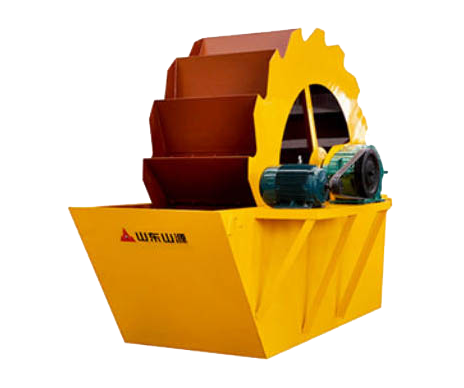
Washing stage: where mud content must be controlled, a washer is added after screening.
Manufacturing capability and certification
Configuration advice is only as good as the organisation behind it. Shandong Lianbang Heavy Industry Co., Ltd. was established in 2013 and has more than ten years of operating experience; its brand trademark is Shanyuan LBZG. The company operates two production bases covering a total area of 120,000 m², including 40,000 m² of standard workshops, with more than 150 sets of processing equipment and approximately 110 staff. Annual production capacity is stated as 2,000 units, and products are sold across all provinces in China and to more than 40 overseas countries, with an export ratio of 30%.
Its scope covers sand-stone crushing, sand-making and solid waste recycling equipment, including stone crusher equipment and mobile crushing and screening equipment, supplied as standalone machines, as EPC general contracting for complete sand-stone production lines, or as overall solutions for construction waste and solid-waste treatment.
On certification, the company holds ISO 9001 Quality Management System, ISO 14001 Environmental Management System and OHSAS 18001 Occupational Health and Safety System certifications, together with CE export certification for foreign trade projects. It is a National High-tech Enterprise (re-recognised in 2023), a Shandong Provincial-level Specialized, Refined, Differential & Innovative Small-and-Medium-sized Enterprise, and a participant in revising national industry standards for crushers.
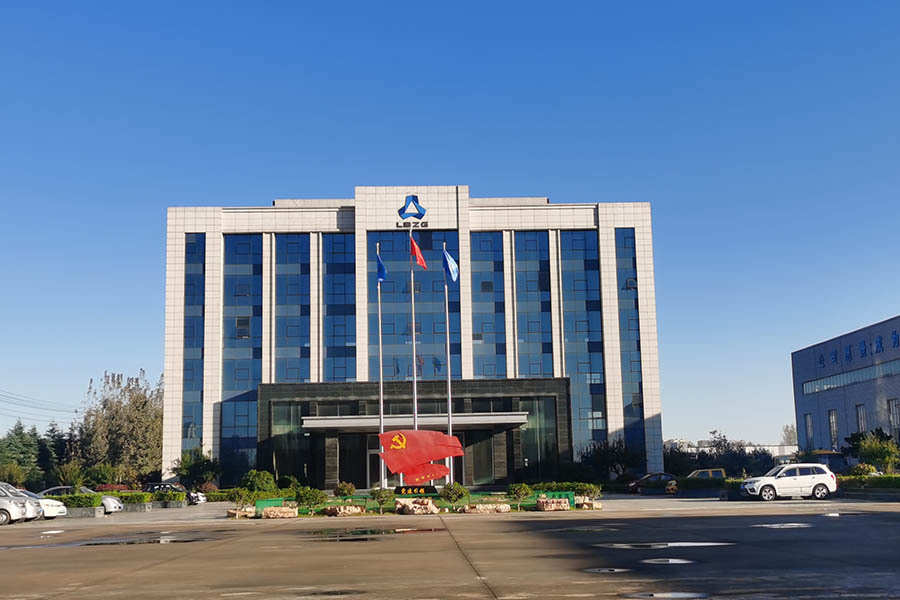
One of two production bases covering 120,000 m² in total, including 40,000 m² of standard workshops.
How to read a stone crusher plant quotation
Once a configuration is agreed, the quotation is where scope gaps appear. Five items deserve explicit confirmation.
- Scope boundary. Whether the price covers equipment only, or also steel structures, civil works, erection and commissioning. These are usually separate and are the most common source of post-award variation.
- Capacity basis. The feed material, feed size and product mix assumed for the rated tonnage, stated in the technical annex rather than implied.
- Electrical specification. Voltage and frequency matched to the site supply, since export projects may run on 380V, 440V, 415V or 660V.
- Wear-parts package. Which consumables ship with the plant and which are expected to be sourced locally. Hammers, jaw plates, blow bars, screen mesh and washer liners are normal wear items and are generally excluded from warranty coverage.
- Documentation and service. Manual language, spare-parts list, remote support arrangements and the named service contact.
Frequently asked questions
Which certifications and standards should I verify before importing a stone crusher plant?
Start with the manufacturer’s management-system certificates. Shandong Lianbang Heavy Industry holds ISO 9001 Quality Management System, ISO 14001 Environmental Management System and OHSAS 18001 Occupational Health and Safety System certifications, plus CE export certification for foreign trade projects. Then separate manufacturer certification from destination-market requirements: CE marking, US effluent rules under 40 CFR Part 436 and local air or dust permits are market-specific obligations that must be written into the technical agreement along with the dust-suppression and water-handling scope. Ask for certificate numbers, issuing bodies and validity dates rather than relying on logos in a brochure.
Can one supplier deliver a complete 500 t/h crushing and screening plant?
Yes, provided the primary and secondary units are sized above the target rather than exactly at it. A workable hard-rock arrangement uses a PE-1200×1500 jaw crusher (300–800 t/h, 200 kW) as primary, a CS-220 cone (299–635 t/h in coarse cavity) or PYB-2200 spring cone (590–1,000 t/h) as secondary, and screening split across parallel YK units. Shandong Lianbang supplies complete-set EPC solutions covering feeder, crushers, screens, conveyors and dust-removal systems, so the process logic and the equipment list come from one source rather than being assembled from several suppliers.
What drives the cost of a stone crusher plant, and how should I build a budget?
Cost is driven by the number of crushing stages, crusher size relative to target capacity, screen area and deck count, structural steel and civil works, dust-control and enclosure scope, control and monitoring options, the wear-parts reserve, and transport and erection. Because these vary by site, a meaningful budget cannot be built from a per-tonne rule of thumb; it should be built from a scope-explicit quotation that separates equipment, steel structure, civil works and installation. Requesting that split at the research stage makes later offers comparable.
Can I test my rock before committing to a configuration?
Yes. Sending a sample of roughly 50 kg for test crushing allows product shape, fines content and wear-part consumption to be verified before the model is finalised. The sample should be accompanied by the maximum feed size, target fractions and required capacity, because rated catalogue data is obtained under ideal standard test conditions and actual throughput will vary with material hardness, feed size, mud and moisture content, power supply stability, feeding continuity and the wear condition of wearing parts.
How long does delivery take, and what should be fixed in the contract first?
Lead time depends on the final equipment list, so it should be confirmed against that list rather than quoted as a generic figure. Before production starts, the contract should fix the equipment list with models, the capacity basis including feed size and product fractions, electrical voltage and frequency, documentation language, the spare-parts kit, and the boundary between equipment supply, erection and commissioning. If you are still at the research stage, the most useful next step is to send a rock sample and a one-page specification to lbzg@lbcrusher.com or WhatsApp +86 139 5388 7097 — the reply can then be a configuration and a scope-explicit quotation rather than a generic catalogue.
Conclusion
A stone crusher plant is a matched process, not a shopping list. The primary crusher is sized by the largest lump and the required reduction; the secondary crusher is chosen by material hardness and abrasiveness rather than by habit; screening and conveying are sized with margin so the crushers run at steady load; and washing, dust control and control systems are designed in rather than added later. Buyers who settle those four inputs before requesting quotations receive offers that can actually be compared.
The industry context reinforces the point. With the global stone crusher market projected to grow from USD 4.8 billion in 2025 to USD 8.9 billion by 2034, and Asia Pacific holding 42.8% of 2025 revenue share, competition is shifting from unit price towards configuration quality, documentation and lifecycle cost. For a plant that will run for a decade or more, the configuration decision made at the research stage is the one that determines what the plant costs to own.
Next step
Send the rock, not just the tonnage. Share your feed type, maximum lump size, target fractions and required t/h, and Shandong Lianbang Heavy Industry (LBZG crusher) will respond with a stage-by-stage configuration and a scope-explicit quotation. A 50 kg sample can be test-crushed to confirm product shape and wear-part consumption before the model is fixed.
Email: lbzg@lbcrusher.com | WhatsApp: +86 139 5388 7097 | Tel: +86 158 6693 8525
Website: www.sypsj.cn
Full product and specification catalogue: download the Shandong Lianbang Heavy Industry brochure (PDF)
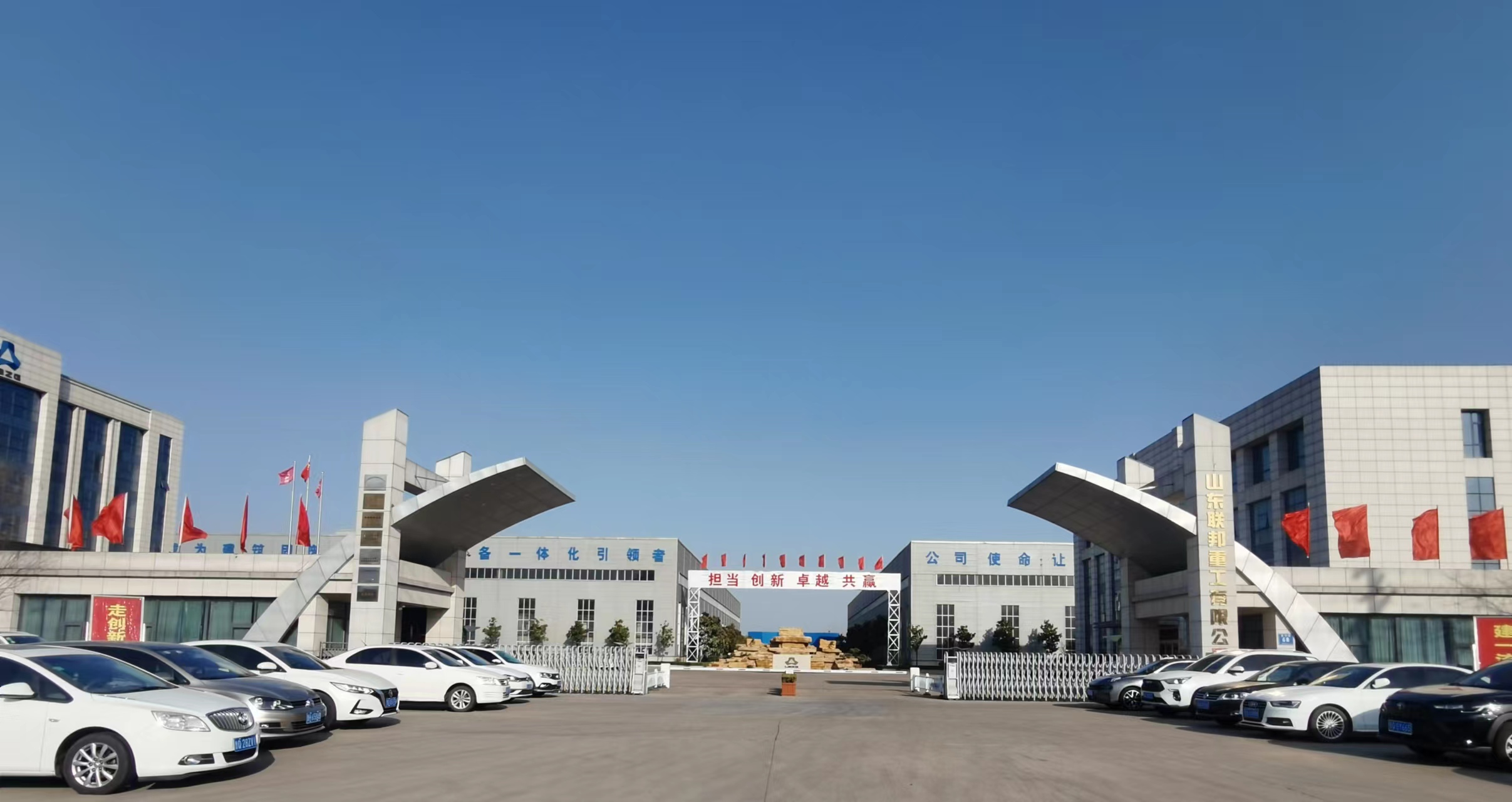
Shandong Lianbang Heavy Industry Co., Ltd., No. 68 Lianbang Road, Economic-Technological Development Zone (Yihe New District), Linyi City, Shandong Province.
Have Questions or Need More Details?
Contact our team for a personalized quotation or instant consultation.
Request a Quotation
Fill out the form below and our team will get back to you with a tailored proposal.
WhatsApp Direct Chat
Prefer to chat in real-time? Message us on WhatsApp for instant assistance & quick answers.
- Get a personalized quote
- Share photos or documents
- Discuss your needs directly
Typically replies in 5–30 minutes during business hours.