
Stone Crusher Plant: A Complete Guide to Process Flow, Equipment and Selection
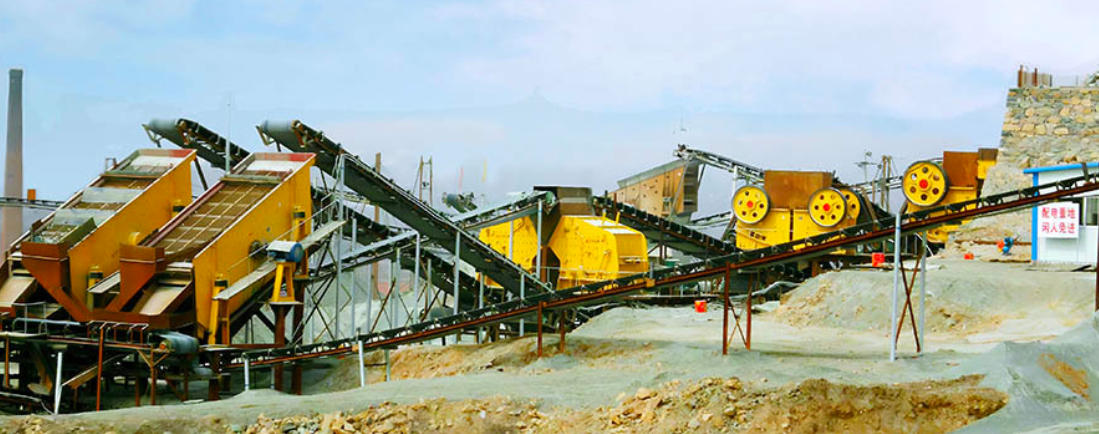
A stone crusher plant is an integrated production system that converts run-of-quarry rock into sized aggregate and manufactured sand. It links feeding, primary crushing with a jaw crusher, secondary crushing with a cone or impact crusher, screening, sand making with a VSI crusher, and optional washing into a single continuous flow. Line configuration is matched to four inputs: feed material hardness, maximum feed size, required capacity in tons per hour, and final product specification. That is the whole selection problem in one sentence — everything else in this guide explains how those four inputs turn into equipment choices.
What a stone crusher plant actually consists of
The defining characteristic of a plant, as opposed to a single crusher, is that every machine in the line is sized against the same throughput figure. A plant normally contains the following duty stations:
- Feed station. A vibrating feeder with a pre-screening function that regulates material into the primary crusher and removes fines before crushing.
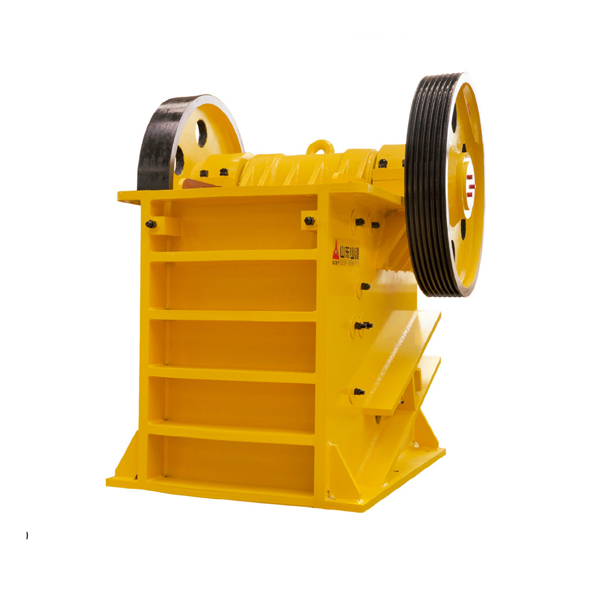
- Primary crushing. A jaw crusher that reduces run-of-quarry rock to a coarse product, typically with feed accepted up to 1,500 mm and discharge of approximately 100–300 mm.
- Secondary and tertiary crushing. A cone crusher for hard and abrasive rock, or an impact crusher for medium-soft rock, producing a controlled discharge generally in the 10–50 mm band for cone duty.
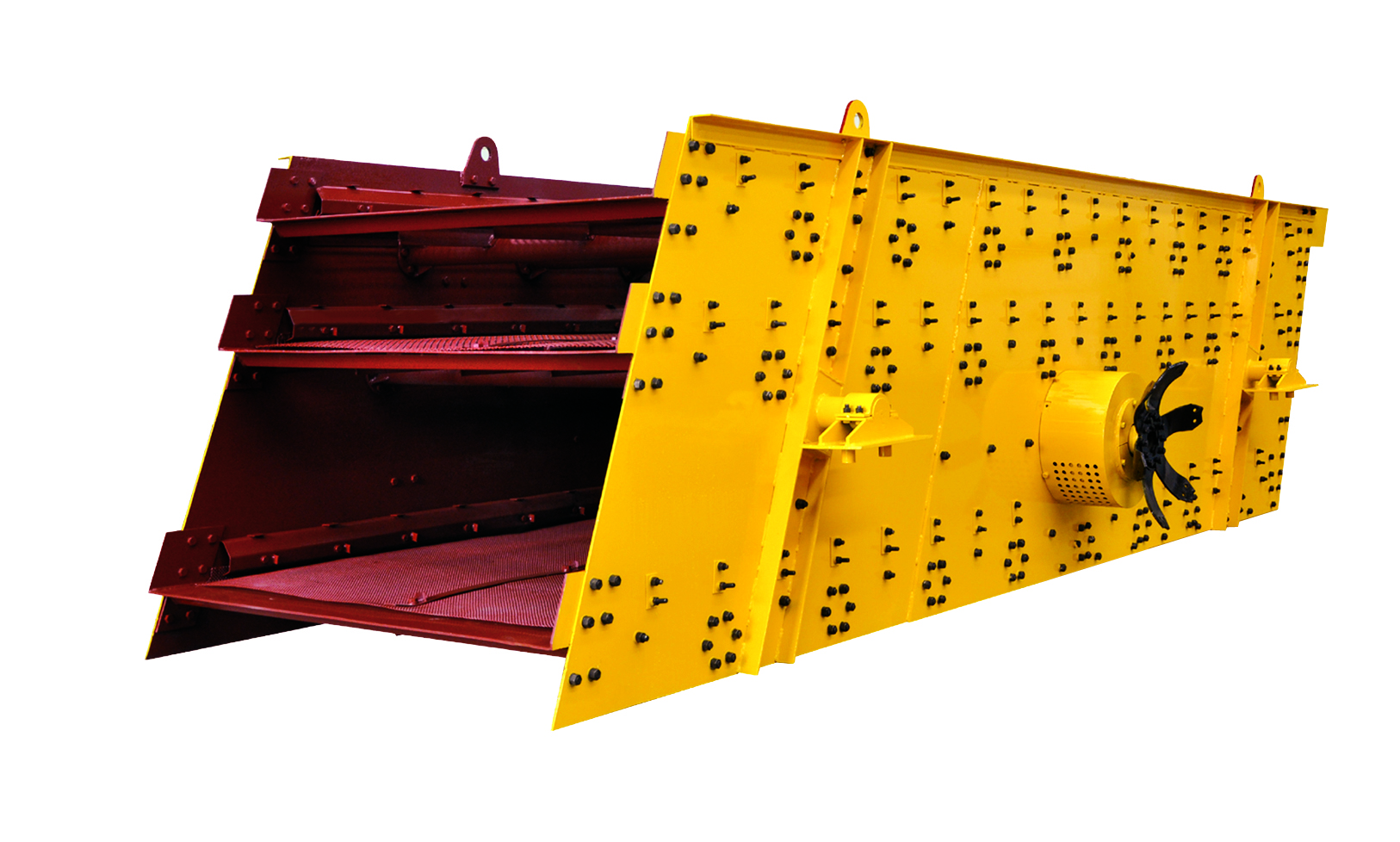
- Screening. Circular vibrating screens that split material into finished fractions and return oversize to the crusher.
- Sand making and shaping. A vertical shaft impact (VSI) unit when a 0–5 mm manufactured sand fraction or improved cubical shape is required.
- Optional washing. Wheel bucket or spiral sand washers when mud content or dust must be reduced for concrete and asphalt use.
- Conveying and control. Belt conveyors, centralized control, dust suppression or enclosure, and electrical equipment adapted to local voltage.
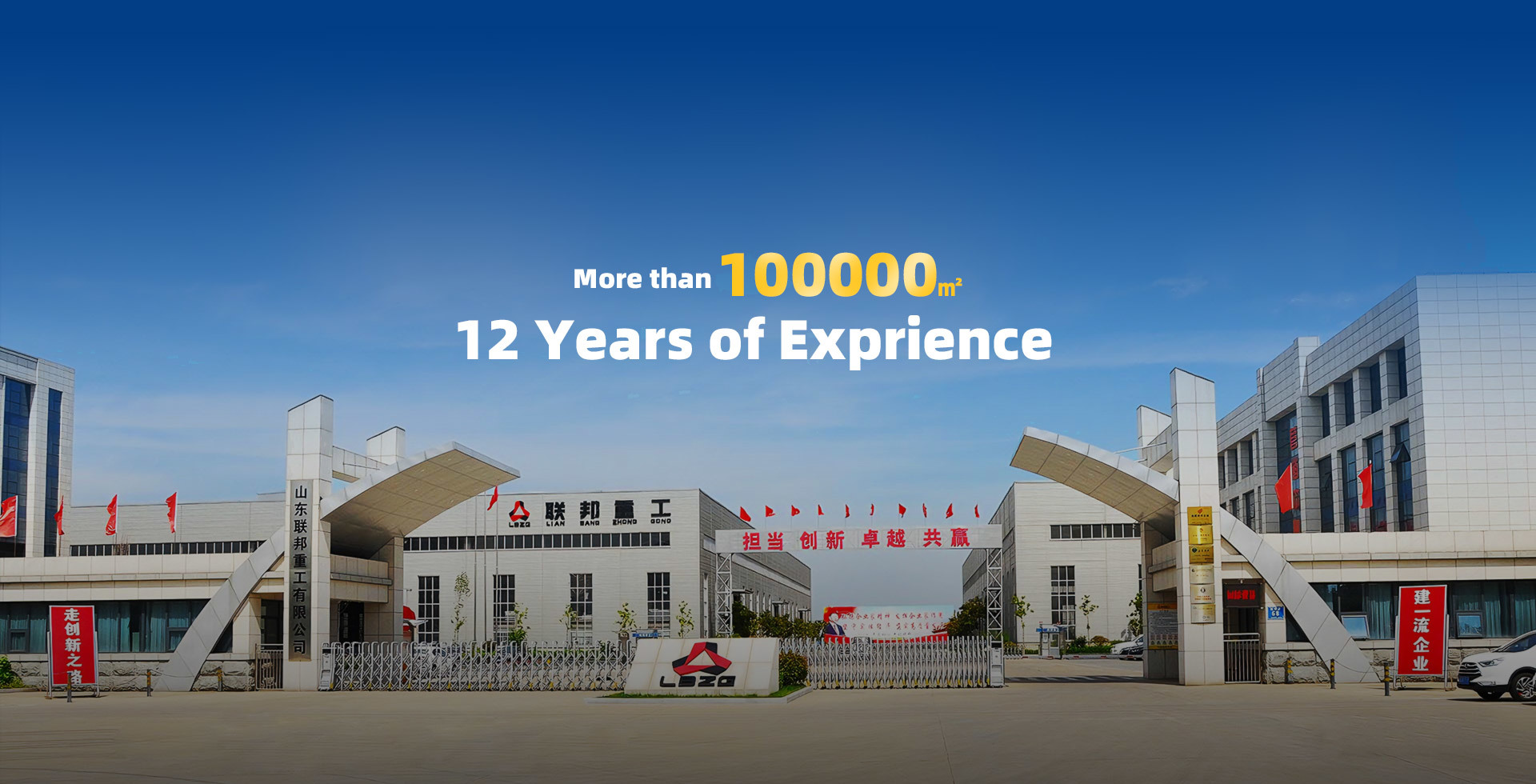
Shandong Lianbang Heavy Industry Co., Ltd. — trading under the brand Shanyuan LBZG — is a Chinese manufacturer established in 2013 that builds stone crushing, sand-making and solid waste recycling equipment, including complete crushing and screening lines and mobile crushing stations. Its product scope is relevant here because the rest of this guide uses published LBZG model ranges to show how capacity bands and crusher duties line up in practice.
The problem: most plant problems are configuration problems, not equipment problems
Buyers rarely fail because a crusher was badly built. They fail because the line was configured for the wrong rock, the wrong capacity, or the wrong site conditions. Four failure modes account for most of the avoidable cost:
1. Crusher type chosen by habit instead of lithology
Impact crushers produce good cubical aggregate from medium-soft rock such as limestone, but blow bar wear rises sharply on hard abrasive rock. Cone crushers use laminated inter-particle crushing, take smaller feed and deliver better particle shape, which is why they are used in medium and fine crushing of granite, basalt, quartzite and river pebble rather than as a first-stage machine. Choosing the secondary crusher by preference rather than by compressive strength and abrasion is the single most expensive configuration error in a plant.
2. Capacity matching ignored between stations
A primary crusher that is starved by an undersized feeder never reaches its rated output, while an undersized screen leaves qualified material circulating back into the crusher, raising power draw and wear without raising saleable tonnage. The plant, not the crusher, sets the production rate.
3. Site conditions discovered after shipment
Voltage and grid variation, tropical or arid climate, high altitude, dust regulation, water availability for washing, and the need to relocate between sites all change the specification. Overseas quarry and infrastructure projects, for example, may require adaptation to 380V, 440V, 415V or 660V supply, tropicalized or desert-rated options, multilingual manuals and remote service support.
4. Published capacity taken as a guarantee
Catalog ratings are established under standard test conditions. Actual throughput varies with raw material hardness, feed size, mud and moisture content, power supply stability, feeding continuity and the wear condition of consumable parts. Wear parts in direct contact with material — hammers, jaw plates, blow bars, screen mesh, spiral blades — are consumables and are normally excluded from warranty coverage. A buyer who plans around the catalog maximum instead of a realistic operating point will always be disappointed.
Industry background: why crushing capacity is being re-planned, not just re-bought
Three structural forces shape plant decisions today.
Demand is growing, and it is concentrated. Dataintelo’s 2025 market report values the global stone crusher market at USD 4.8 billion in 2025 and projects USD 8.9 billion by 2034, a CAGR of 7.4%, with Asia Pacific holding a 42.8% revenue share in 2025. Directionally, this means equipment supply is competitive and capacity is being added fastest in the region where most new aggregate demand sits. For a buyer, the practical implication is that supplier capacity and documentation quality matter as much as machine specification.
Environmental compliance is now a specification item, not an afterthought. In the United States, the EPA’s Mineral Mining and Processing Effluent Guidelines and Standards (40 CFR Part 436) cover wastewater discharges from mineral processing operations — which directly affects whether a washing circuit is specified, and how process water is handled. Buyers in regulated markets should confirm the applicable local water, dust and noise requirements before the layout is frozen, because enclosure, water recycling and settling capacity are cheapest to design in at the start.
Operation is a workforce question. The U.S. O*NET classification 51-9021.00 defines crushing, grinding and polishing machine setters, operators and tenders as the occupational family that runs this equipment, with stone named among the handled materials. Plant automation, centralized control and remote monitoring change how many of these roles a site needs and how quickly a fault is detected — a factor worth weighing when comparing a manually controlled layout with an instrumented one.
Note on data: the market figures above come from a published commercial research report and are used as directional context. Equipment capacity figures cited later come from manufacturer-published model data and should be confirmed against your own material test and site conditions.
The solution: one crusher type per duty, selected by rock and product
The workable rule set is short, and it resolves most configuration arguments before they start.
Primary stage: jaw crusher
Jaw crushers are used in the primary coarse crushing stage because they crush by compression and have a large feed opening. They accept feed material up to about 1,500 mm and discharge a coarse product of roughly 100–300 mm, which makes them suitable for rock of any hardness, for small and medium quarries, mines and construction and demolition waste processing, and for sites with limited space or budget. Their structure is simple, maintenance is straightforward and operating cost is comparatively low. The boundary matters just as much: a jaw crusher is not the right machine to produce finished material below 50 mm, it does not deliver premium aggregate with strict particle-shape requirements on its own, and it is not the usual choice for ultra-large capacity above 1,000 t/h, where a rotary crusher becomes a consideration for mines with very high daily output.
Secondary and tertiary stage: cone or impact, decided by hardness
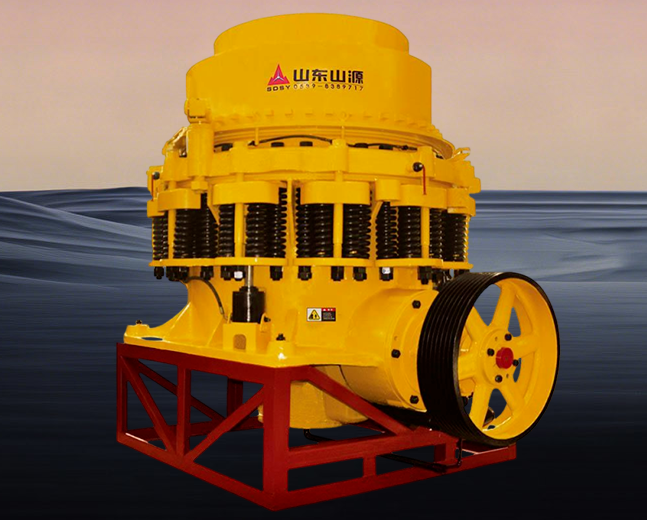
For hard rock such as granite, basalt or iron ore with compressive strength above 250 MPa, the recommended configuration is a PE series jaw crusher for primary crushing followed by a CS/PY series cone crusher for secondary crushing; at high production capacity the cone duty is often split into two fine crushing stages. Cone crushers operate in medium and fine crushing, produce roughly 10–50 mm discharge, use laminated inter-particle crushing, accept smaller feed and give better particle shape. They are not selected as a first-stage coarse crusher, and they are not suited to feed above 300 mm, soft or sticky material.
For medium-soft rock such as limestone or dolomite below 200 MPa, the recommended configuration is a PE series jaw crusher plus a PF series impact crusher, which produces cubical aggregate suitable for highway-grade specification. The trade-off is wear: on abrasive feed, impact blow bars are consumed faster than cone mantles and bowl liners.
Screening, sand and washing
Screening is where the plant’s commercial value is realised, because screens decide the finished fractions and control the circulating load. Circular vibrating screens with two to four decks are used for aggregate grading, with manganese steel mesh and capacities that depend on deck count, aperture and material condition. When a 0–5 mm manufactured sand product is required, a VSI sand maker is added for shaping; if only coarse and medium aggregate is sold, the VSI can be omitted and budget preserved. Washing follows the same logic: a wheel bucket washer removes mud and dust with lower water consumption and lower fine-sand loss, while a spiral washer applies stronger scrubbing for high-clay material.
Capacity matching across the line
The matching rule used in plant design is straightforward: feeder capacity at 1.1–1.2 times rated crusher capacity, secondary crusher at 1.0–1.1 times the actual primary output, screen capacity at 1.2–1.3 times line capacity, and belt conveyor at about 1.2 times maximum flow. Applied to a 150 t/h line with a PE-600×900 jaw crusher published at 50–150 t/h, this points to a feeder in the 165–180 t/h band — the ZSW-490×96 at 120–210 t/h fits — and a screen sized above the line rate, such as a 2YK-1854 at 15–200 t/h. At 500 t/h, the same logic is why feeder stations and screen banks are normally multiple units rather than one oversized machine.
Step-by-step: how to specify a stone crusher plant
- Fix the feed definition. Identify rock type or mixture, compressive strength, maximum lump size, clay content and moisture. This single step decides whether a cone or an impact crusher is viable at all.
- Fix the product definition. List required fractions, the sand fraction if any, and the particle-shape standard the buyer or the project applies. Shape requirements usually decide whether VSI shaping is included.
- Set a realistic operating capacity. Choose a target in tons per hour that you expect to hold in normal conditions, not the catalog maximum, then size the previous stage above it.
- Select the crushing stages. Jaw for primary; cone for hard rock, impact for medium-soft rock; add a third stage only where product size or shape demands it.
- Size the screen and conveyor stations. Apply the 1.2–1.3 times rule for screens and about 1.2 times for belts. Under-screening is the most common cause of a plant that cannot sell what it crushes.
- Specify the site interface. Local voltage and grid variation, climate class, enclosure or dust suppression, water supply and recycling, foundation or trailer mounting, and access for maintenance.
- Verify before committing. Ask for a material test, a factory test-run record and a full document set — and confirm what is excluded, because wear parts are consumables.
Use cases: where the same logic produces different plants
Quarry and aggregate supply
A standard quarry plant produces graded coarse and fine aggregate. The configuration is jaw plus cone for hard rock, or jaw plus impact for limestone, with multi-deck screens and a VSI only if sand is part of the sales mix.
Highway and railway projects
Infrastructure specifications tighten gradation and particle shape, and reference projects in this segment operate continuously. The Lunan High-Speed Railway project type requires railway ballast and high-strength concrete aggregate with stable grain-size control, cubic particle shape and fineness modulus compliance in the 2.3–3.0 band, typically with centralized control and dust removal.
Hydropower engineering
Dam and mass-concrete works need high-strength aggregate and long-term continuous production, often at remote or high-altitude sites where wear-resistant crushing chambers and serviceability matter more than headline capacity.
New town and airport construction
Municipal development and airport runway concrete require large volumes of consistent aggregate, with dust suppression treated as a permit condition rather than a convenience.
Construction and demolition waste recycling
Trailer-mounted mobile stations are used for on-site processing into recycled aggregate, with magnetic separation, low noise and low dust emission, no concrete foundation and rapid relocation between demolition sites.
Overseas quarry and Belt and Road projects
Export projects add voltage and climate adaptation, spare parts kits, multilingual manuals and long-distance service support to the standard specification — and make documentation quality a deciding factor at customs and on site.
Comparison tables
Duty stations and published LBZG model ranges
| Duty station | Example model series | Published capacity range | Selection note |
|---|---|---|---|
| Vibrating feeder | ZSW-380×96 to ZSW-600×130 | 96–400 t/h | Pre-screening function; size 1.1–1.2× crusher rating |
| Primary jaw | PE-250×400 to PE-1200×1500 | 5–800 t/h | Feed up to 1,000 mm on the largest model; discharge 150–350 mm |
| Hydraulic cone | CS-75, CS-160, CS-220 | 45–635 t/h | Hard rock secondary/tertiary; cavity choice sets the range |
| Spring cone | PYB-900 to PYB-2200 | 50–1,000 t/h | Budget alternative for hard rock secondary duty |
| Impact crusher | PF-1214, PF-1315 | 80–250 t/h | Medium-soft rock; cubical shape, faster blow bar wear |
| VSI sand maker | VSI-7611, VSI-8518 | 110–220 kW class | Add only where a 0–5 mm fraction or shaping is required |
| Circular screen | 2YK-1248 to 3YK-2470 | 15–200 t/h per unit | Deck count and aperture define the product mix |
| Belt conveyor | B400 to B1200 | 40–1,200 t/h | B1200 heavy-duty: 650–1,200 t/h |
| Sand washer | XS-2600 to XS-3200; FG-500 to FG-1200 | 20–150 t/h; 20–110 t/h | Wheel type for low clay, spiral type for high clay |
Fixed line versus mobile plant
| Decision factor | Fixed crushing line | Mobile crushing plant |
|---|---|---|
| Project duration and site pattern | Long-term operation (typically more than three years) at one site | Short duration (typically under two years), frequent relocation, dispersed material sources |
| Capacity and cost per ton | High capacity, lower per-ton operating cost, stable power supply assumed | Lower single-unit capacity; tyre and relocation costs add to per-ton cost |
| Civil works and installation | Requires land, foundations and a longer construction period | Trailer-mounted, no concrete foundation, short installation and commissioning |
| Typical applications | Quarry development, long-term aggregate supply, hydropower and rail projects | Construction and demolition waste, road and bridge sites, temporary quarries |
Rock type to configuration
| Feed material | Recommended configuration | Reason |
|---|---|---|
| Granite, basalt, iron ore (compressive strength above 250 MPa) | PE jaw + CS/PY cone, with VSI for sand or shaping | Cone lamination crushing extends wear-part life; jaw handles any hardness in primary duty |
| Limestone, dolomite (below 200 MPa) | PE jaw + PF impact | Cubical aggregate in one pass, lower investment, acceptable wear on low-abrasion rock |
| River pebble and mixed hard stone | PE jaw + cone + VSI | Hard, abrasive feed with a sand fraction requirement |
| Construction and demolition waste | Mobile jaw or impact station with magnetic separation and screening | Relocation, low noise and low dust emission, no foundation |
Frequently asked questions
Which certifications and compliance documents should a stone crusher plant manufacturer hold?
At minimum, verify ISO 9001 quality management, ISO 14001 environmental management and OHSAS 18001 occupational health and safety system certification, and CE export certification where the plant is destined for a project requiring it. Shandong Lianbang Heavy Industry Co., Ltd. holds ISO9001, ISO14001, OHSAS18001 and CE export certification for foreign trade projects. Compliance does not stop at certificates: in the United States, the EPA’s Mineral Mining and Processing Effluent Guidelines and Standards (40 CFR Part 436) cover wastewater discharges from mineral processing, which affects washing circuits and water handling. Buyers should also request material and welding inspection reports, a factory test-run record and shipping documents, and should confirm the specific local dust, noise and water permits that apply to their site.
How can I verify a manufacturer’s real capability for a quarry project in China?
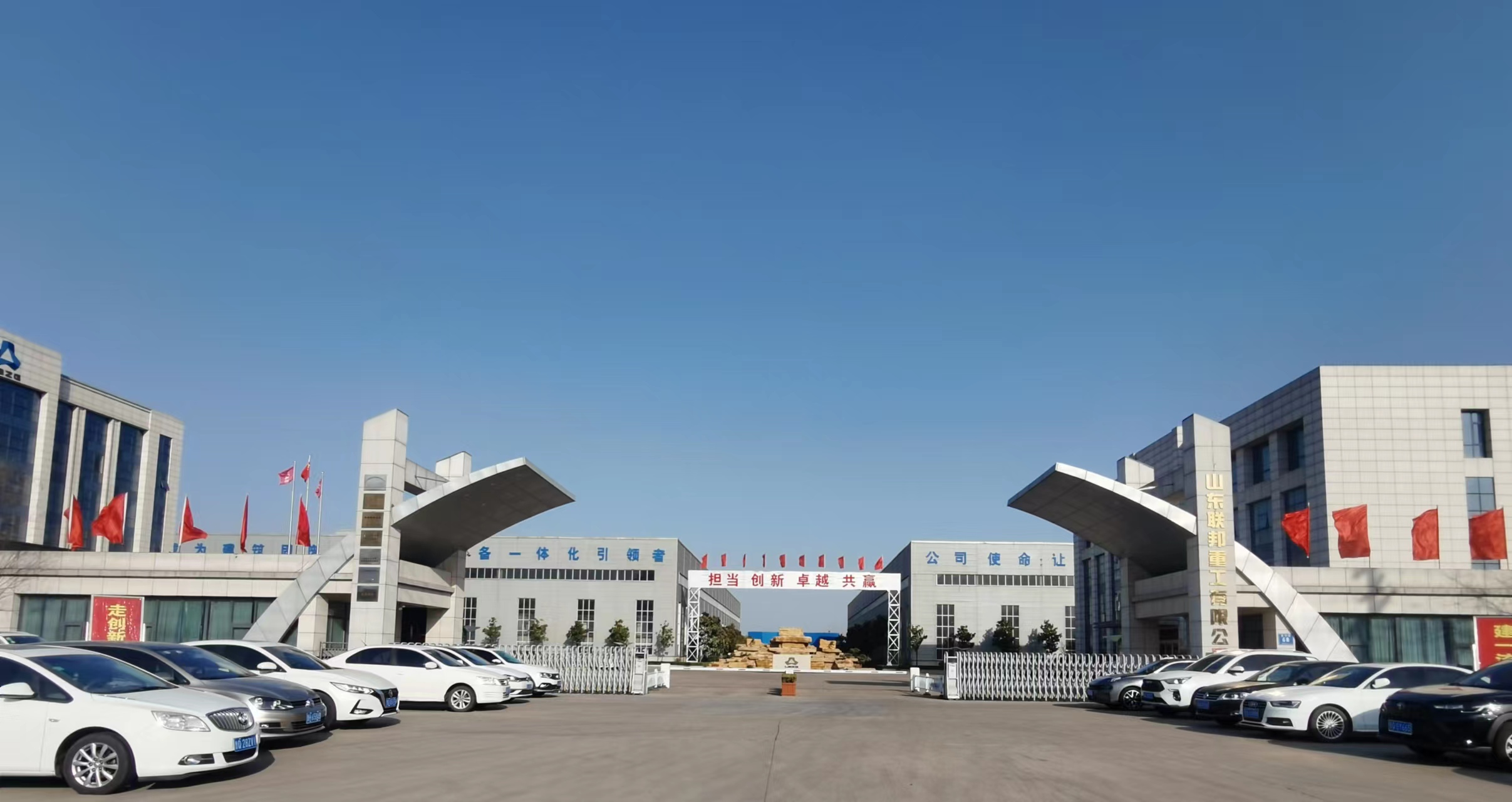
Check four things: physical production space, equipment count, engineering resource and verifiable reference work. Shandong Lianbang Heavy Industry Co., Ltd., established in 2013 and trading as Shanyuan LBZG, operates two production bases covering 120,000 m² in total, including 40,000 m² of standard workshops, with a listed manufacturing facility area of 100,000 m², more than 150 sets of processing equipment, approximately 110 staff and an annual production capacity of 2,000 units. Its scope covers standalone equipment, EPC contracting for complete sand and stone lines, construction and solid waste treatment solutions, and mobile crushing and screening equipment, with products sold across all Chinese provinces and to more than 40 overseas countries. Reference project types include the Lunan High-Speed Railway, hydropower, new town and airport construction, and overseas quarry and infrastructure work. Ask for the equipment list, the workshop footprint and the project references that match your rock type and capacity band.
What drives the budget of a stone crusher plant?
The number of crushing stages drives everything else. A two-stage jaw plus impact line for medium-soft rock is materially cheaper than a three-stage jaw plus cone plus VSI line for hard rock with a sand product. Beyond the crushers, budget is driven by screen deck count and area, conveyor length and belt width, enclosure and dust suppression, water supply and recycling for washing, voltage and climate adaptation for export sites, the spare parts kit, and whether the plant is fixed or trailer-mounted. Operating cost is a separate line: wear parts in direct contact with material, such as jaw plates, blow bars, hammers, screen mesh and spiral blades, are consumables excluded from standard warranty coverage, so their consumption rate on your specific rock matters more than the purchase price alone.
Can I test my rock before committing to a plant configuration?
Yes, and it is the cheapest risk reduction available. Send a representative sample of roughly 50 kg for test crushing so that product shape, fines content and wear-part consumption can be checked before the model is finalised. A sample test answers the questions a specification sheet cannot: how your specific rock fractures, how much sand it yields, and how fast consumables will be used. For hard rock lines, the sample result is also the point at which a cone configuration can be confirmed over an impact alternative, or vice versa.
How are delivery, documentation and commissioning prepared — and what is the next step?
Once the configuration is fixed, the manufacturer prepares the equipment scope, material and welding inspection reports, a factory test-run record or video, and the shipping documents needed for customs clearance, together with English technical documentation and multilingual manuals where the site requires them. Overseas projects additionally require confirmation of local voltage (380V, 440V, 415V or 660V) and climate class, plus a service and spare parts plan. The practical next step is to send your feed material data and target product fractions for a configuration proposal and a test-crushing arrangement; the LBZG product catalogue is available for download below.
Conclusion: specify the plant, not just the crusher
A stone crusher plant performs only as well as the weakest station in the flow. The decisions that matter are made before any purchase order: identify the rock and its abrasion, define the product fractions and shape standard, choose a realistic operating capacity, assign one crusher type to each duty, and size the feeder, screens and conveyors above the line rate rather than at it. Buyers who do that end up with a plant whose tonnage is predictable, whose consumable cost is visible in advance, and whose compliance documents are ready before the first shipment — which is exactly what distinguishes a working asset from an expensive assembly of machines.
Next step: sample test, configuration and quotation
Share your rock type, maximum feed size, target tons per hour and required product fractions, and the LBZG team will propose a matching configuration and advise on a test-crushing arrangement.
Email: lbzg@lbcrusher.com · WhatsApp: +86 139 5388 7097 · Tel: +86 158-6693-8525
Website: www.sypsj.cn · Address: No. 68 Lianbang Road, Economic-Technological Development Zone (Yihe New District), Linyi City, Shandong Province, China
Download the full product catalogue: Shandong Lianbang Heavy Industry catalogue (PDF)
Have Questions or Need More Details?
Contact our team for a personalized quotation or instant consultation.
Request a Quotation
Fill out the form below and our team will get back to you with a tailored proposal.
WhatsApp Direct Chat
Prefer to chat in real-time? Message us on WhatsApp for instant assistance & quick answers.
- Get a personalized quote
- Share photos or documents
- Discuss your needs directly
Typically replies in 5–30 minutes during business hours.