
Stone Crusher Plant: Components and Configuration Basics
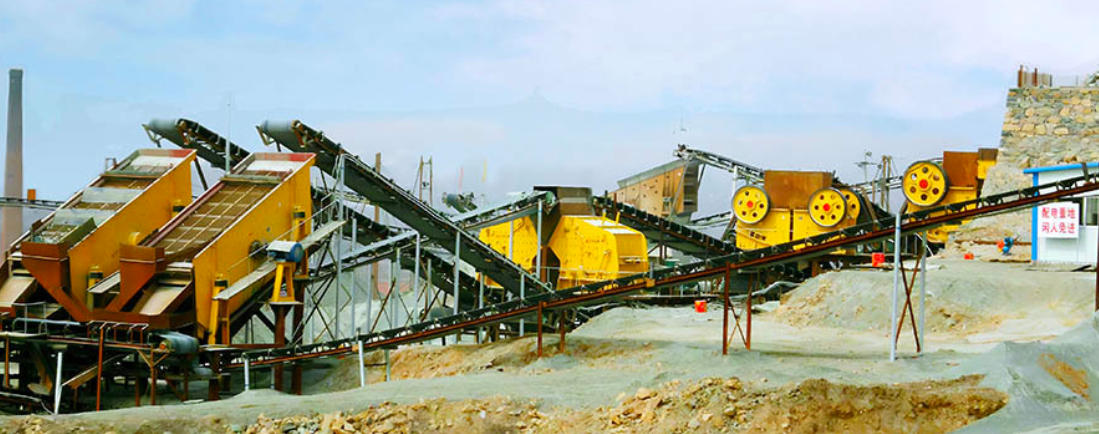
A stone crusher plant is an integrated production line that converts run-of-quarry rock into sized aggregate and manufactured sand. It is not a single machine. The standard circuit runs through feeding, primary crushing with a jaw crusher, secondary crushing with a cone or impact crusher, screening, sand making with a VSI crusher, and optional washing. Configuration is matched to four inputs: feed material hardness, maximum feed size, required capacity in tons per hour, and final product specification.
Most buyers who search for a stone crusher plant are not shopping for one box. They have a quarry licence, a demolition contract, a concrete supply order or an infrastructure package, and they need to understand what the plant boundary actually contains before anyone can quote it. This guide sets out the plant as a system: what each stage does, which crusher suits which rock, how the units are matched to each other, and where the common configuration mistakes are made.
The reference manufacturer used throughout is Shandong Lianbang Heavy Industry Co., Ltd. (brand: Shanyuan LBZG), a Chinese manufacturer established in 2013 in Linyi, Shandong Province, specialising in sand-stone crushing, sand-making and solid waste recycling equipment, including mobile crushing and screening stations. Model data quoted in the tables below is the manufacturer's published specification.
Why “stone crusher plant” is a harder question than it looks
The phrase describes a system, but search results and catalogue pages usually describe components. That mismatch produces four predictable errors in the awareness and research stage.
Error one: sizing by tonnage alone. A buyer states 150 t/h and receives three crusher models. Capacity is only one of four matching inputs. A jaw crusher rated for 150 t/h cannot accept the same feed size as a cone crusher rated for 150 t/h, and a plant designed around the wrong feed size will either stall or run half empty.
Error two: ignoring the product specification. Jaw crushers discharge a coarse product of roughly 100–300 mm. They are not used for direct production of finished material below 50 mm, for premium aggregates with strict particle-shape requirements, or for ultra-large capacity above 1,000 t/h. If the buyer's revenue depends on a 5–25 mm concrete aggregate with controlled flakiness, the plant needs a secondary and often a tertiary stage — not a bigger jaw.
Error three: leaving screening and conveying un-matched. Screening is where the product split is actually made. A crusher that is correctly sized but feeds an undersized screen simply circulates oversize material and loses throughput. Conveyors, similarly, have their own capacity ceiling that has nothing to do with crusher rating.
Error four: treating compliance as paperwork. Water discharge, dust generation and electrical safety are design inputs. In the United States, the EPA's Mineral Mining and Processing Effluent Guidelines (40 CFR Part 436) cover wastewater discharges from mineral processing operations. A plant layout that ignores water management becomes a permitting problem long before it becomes an equipment problem.
Industry background: demand is growing, and so is the compliance load
Third-party market research frames the equipment category as a steady-growth market. Dataintelo's Stone Crusher Market Size, Share & Forecast Report 2025 to 2034 values the global stone crusher market at USD 4.8 billion in 2025 and projects USD 8.9 billion by 2034, equivalent to a 7.4% CAGR over the period. The same report places Asia Pacific at 42.8% of 2025 revenue, which is consistent with where aggregate demand and manufacturing capacity are concentrated.
Three demand drivers sit behind those figures, and each one changes what a plant has to do:
- Aggregate substitution. As natural sand sources are restricted, manufactured sand becomes a specification item rather than a by-product. That pushes plants toward VSI sand making and washing, not just crushing.
- Urban renewal and demolition. Construction and demolition waste processing favours mobile or semi-mobile configurations that can be relocated to the demolition site, with magnetic separation and dust control built in.
- Infrastructure specifications. Railway ballast, airport runway concrete and high-strength dam concrete impose gradation and particle-shape requirements that decide the crushing circuit before capacity is even discussed.
Labour and operation are the fourth, quieter driver. The US O*NET system classifies crushing, grinding and polishing machine setters, operators and tenders under occupation code 51-9021.00 — a dedicated occupation rather than a general labour role. Plants that depend on operator judgement for consistent output carry a staffing risk; that is one reason centralised control and monitoring options have moved from premium extras to standard expectations on larger circuits.
The five-stage circuit, stage by stage
A complete stone crushing production line processes raw rock into sized aggregates and manufactured sand through a staged flow: feeding, primary crushing with a jaw crusher, secondary crushing with a cone or impact crusher, screening, sand making with a VSI crusher, and optional washing. Each stage has a defined job and a defined limit.
Stage 1 — Feeding
The vibrating feeder does two jobs: it meters rock into the primary crusher at a controlled rate, and in most configurations it pre-screens fines past the crusher. Lianbang's ZSW range covers this role, from the ZSW-380×96 at 96–160 t/h through the ZSW-490×110 at 80–220 t/h with pre-screening, up to the heavy-duty ZSW-600×130 at 250–400 t/h for large primary stations. Getting the feeder wrong is expensive in both directions: too small and the crusher idles; too large and the downstream circuit is flooded.
Stage 2 — Primary crushing
Jaw crushers are the primary coarse-crushing stage. They crush by compression, have a large feed opening, accept material of any hardness, and discharge a coarse product of roughly 100–300 mm. The class is the default first choice; a rotary crusher is considered as a replacement only for large-scale mines with a daily output above 1,000 tons. The jaw crusher's advantages are structural: simple design, easy maintenance and low operating cost — which is why it remains the first stage in small and medium quarries, mines, construction and demolition waste processing, and projects with limited space or budget.
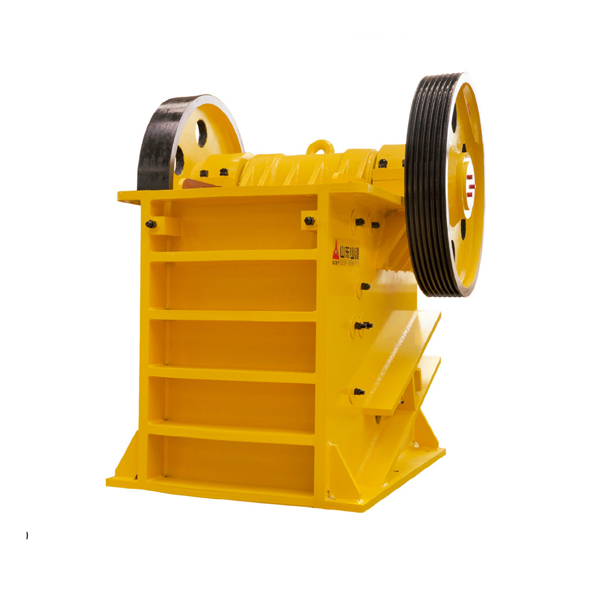
Model-level figures are what matter at selection. The PE range spans the PE-250×400 at 5–20 t/h up to the PE-1200×1500, which has a 1200×1500 mm feed opening, accepts feed up to 1,000 mm, discharges 150–350 mm and is rated at 300–800 t/h on a 200 kW drive.
Stage 3 — Secondary (and tertiary) crushing
The secondary stage is where the circuit becomes rock-specific. Two families compete for the role, and the choice is decided by hardness and abrasiveness, not by preference.
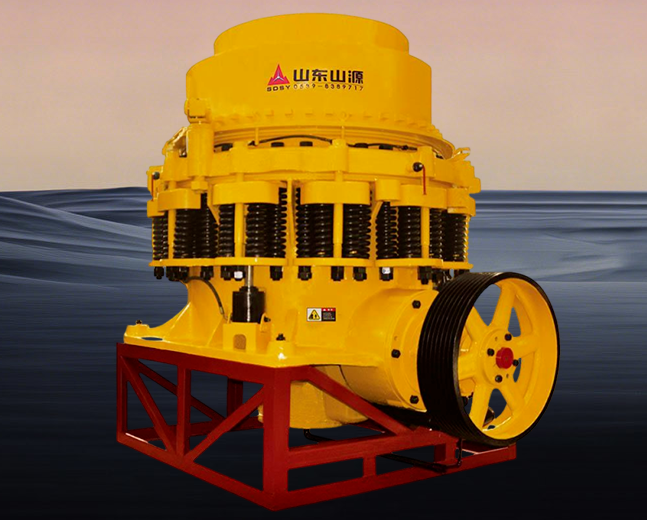
Cone crushers are applied in medium and fine crushing with output of approximately 10–50 mm. They use laminated inter-particle crushing, take a smaller feed, and produce a better particle shape than a jaw. They are not selected as the first-stage coarse-crushing equipment, and they are not applicable to coarse crushing of feed above 300 mm or to soft or sticky materials. Where they win is hard material, high-abrasion working conditions, medium and large plants above 100 t/h, and long-term projects that are sensitive to operating cost — because laminated crushing extends wear-part life. For granite, basalt and river pebble, this is the reason a cone is recommended rather than an impactor.
Impact crushers take the secondary role in medium-soft rock such as limestone or dolomite, where the requirement is cubical aggregate for highway-grade production. The PF series is specified in a jaw plus impact configuration for that duty. The trade-off is wear: blow bars in an impactor work by percussion, so abrasive feed shortens their life in a way that a cone's manganese chamber does not.
The rule that follows from this is simple and is worth stating plainly: for hard rock such as granite, basalt or iron ore with compressive strength above 250 MPa, the recommended configuration is a PE series jaw crusher for primary crushing plus a CS/PY series cone crusher for secondary crushing. For medium-soft rock such as limestone or dolomite below 200 MPa, the recommended configuration is a PE series jaw crusher plus a PF series impact crusher. At high production capacity on hard material, the combination becomes a jaw for coarse crushing followed by a cone in two fine crushing stages.
Stage 4 — Screening
Screening converts crushed rock into saleable products. Circular vibrating screens in the YK range are the standard choice for aggregate grading, available from two to four decks — for example the 3YK-2160 with three decks and a 15 kW drive, or the 3YK-1548 with three decks and a 7.5 kW drive. Deck count is set by how many product sizes the buyer intends to sell; screen area is set by the tonnage that must pass each cut.
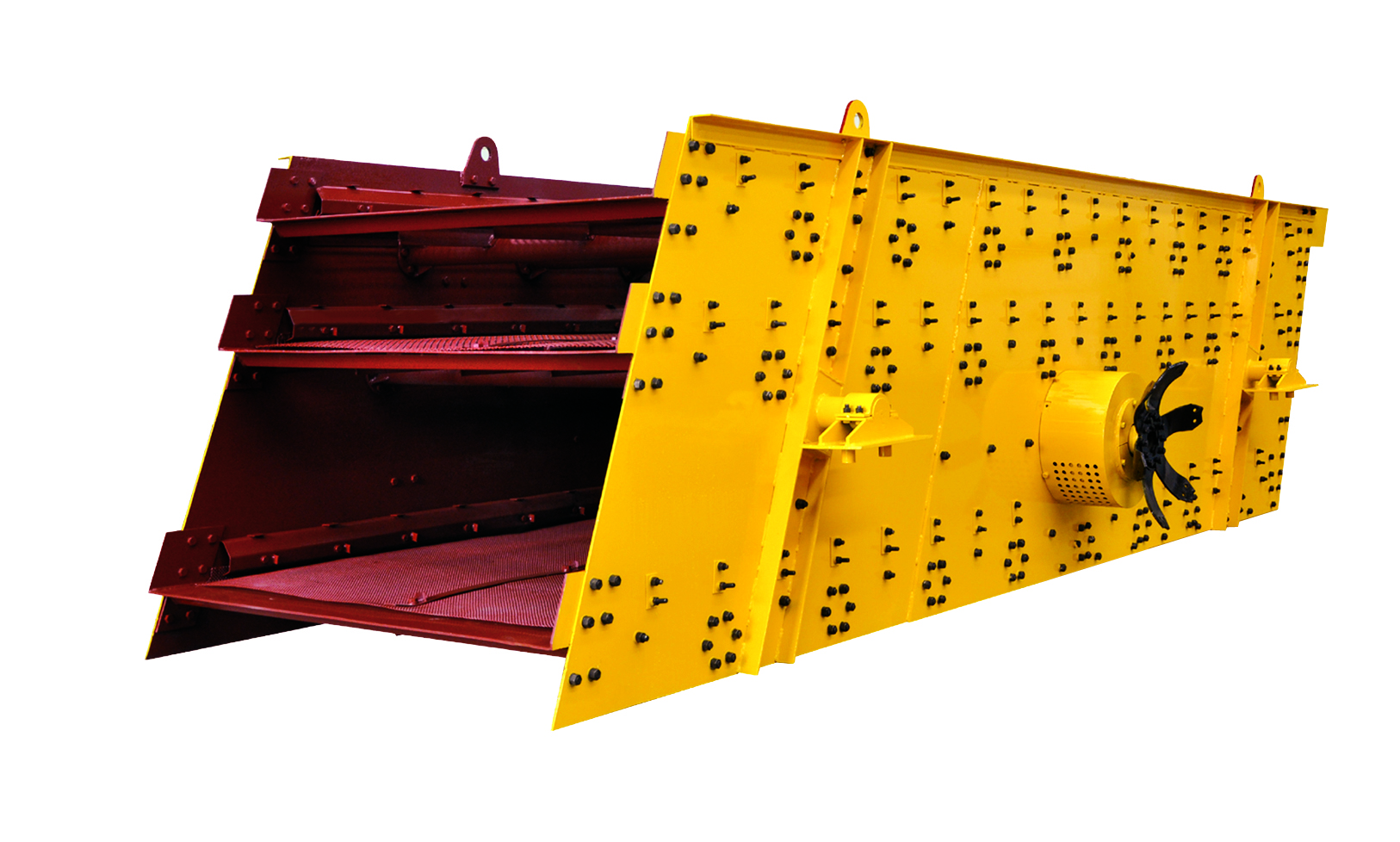
Screen performance is also the most common source of disappointment after commissioning. Mesh clogging or wear, high material moisture, altered excitation force and ageing springs all degrade separation. This is one reason manufacturer guidance is to use original spare parts and not to adjust vibration motor parameters without authorisation.
Stage 5 — Sand making and washing
Where manufactured sand is part of the product mix, a vertical shaft impact crusher closes the circuit. The VSI-7611 runs on 110–150 kW with a maximum feed of 35 mm (soft) or 30 mm (hard) and uses a rock-on-rock principle; the VSI-8518 runs on 180–220 kW for larger sand plants. The EIS dry-type system is an alternative architecture for dry sand production, with models such as the EIS-1200 at 160–220 kW, feed size up to 50 mm and a fineness modulus of 2.3–3.0, and intelligent monitoring built into the specification.
Washing is optional and is added when mud content or dust has to be controlled. Wheel-type XS washers suit lower-clay material with low water consumption and low fine-sand loss — the XS-3200 handles 80–150 t/h on a 15 kW drive. Spiral FG washers apply stronger scrubbing for sticky material, from the FG-500 at 20 t/h to the FG-1200 at 70–110 t/h.
How to configure a plant in seven steps
Configuration is a sequence, not a menu. Working through it in order prevents the most expensive mistake — buying a correctly sized crusher for the wrong circuit.
- Define the rock. Record compressive strength or Mohs hardness, maximum lump size, silica content and moisture. This single step decides whether the secondary stage is a cone or an impactor, and therefore decides the majority of the capital and wear cost.
- Define the products. List every finished size, the required gradation envelope and any particle-shape requirement. Railway ballast, airport concrete aggregate and general fill have completely different implications for the circuit.
- Set the target capacity with margin. State the required tons per hour at the finished-product end, not at the crusher inlet. Then apply an engineering margin so the plant runs at part load rather than at its ceiling.
- Choose the crushing stages. Apply the hardness rule: jaw plus cone for hard and abrasive rock, jaw plus impact for medium-soft rock, and a third stage (cone or VSI) when the product needs shaping or sand.
- Match feeder, screen and conveyors to the crushers. A widely used matching logic is feeder capacity at roughly 1.1–1.2 times the primary crusher's rated capacity, secondary crusher at 1.0–1.1 times the actual primary output, screen at 1.2–1.3 times line capacity, and conveyor at about 1.2 times maximum flow. Rated capacity is measured under ideal feed conditions; actual output is typically a fraction of it, so selection should be made against realistic rather than catalogue throughput.
- Decide fixed or mobile. This is a project-duration question, not a preference. Mobile stations suit short projects, frequent relocation and dispersed material sources; fixed lines suit long-life quarries and higher tonnage.
- Close the compliance and spares loop. Confirm the certification set, the dust and water management design, the wear-part list and the local voltage. Then validate the configuration on a sample of the actual rock before the order is fixed.
Two examples show how the sequence resolves. A 500 t/h hard-rock quarry sits comfortably inside the published envelope of the largest models — the PE-1200×1500 at 300–800 t/h and the PYB-2200 cone at 590–1,000 t/h — but the final cavity choice and product split still have to be calculated. A 150 t/h limestone line is a different circuit entirely: a PE-600×900 jaw (50–150 t/h) or PE-750×1060 jaw (100–180 t/h) feeding a PF-1214 or PF-1315 impactor, with YK screens closing the loop.
Where stone crusher plants are used
The same five-stage logic is reconfigured for each application. Six recurring cases cover most enquiries.
Quarry aggregate production
The baseline case: hard or medium-hard rock reduced to 5–31.5 mm construction aggregate, with two or three crushing stages and multi-deck screening. Overseas quarry and infrastructure projects add two variables that domestic plants do not face — local voltage (380V, 440V, 415V or 660V) and climate adaptation, including tropical and desert-rated options, multilingual manuals and a spare-parts kit shipped with the plant.
Construction and demolition waste recycling
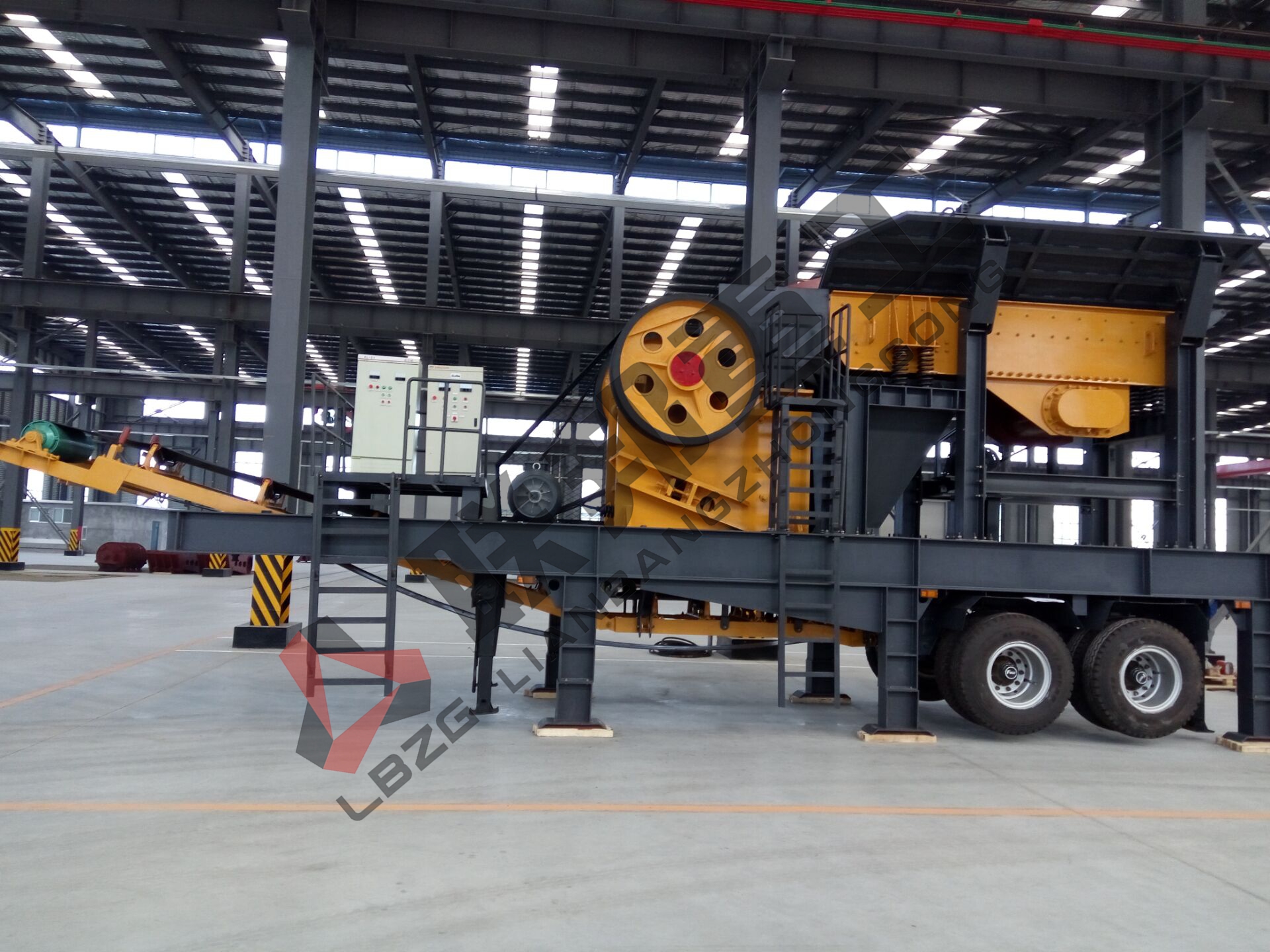
Demolition material is variable, corrosive and dusty, and the plant usually has to move to the waste rather than the reverse. Tyre-mounted stations address this: the YCG-J750 mobile jaw station, built on the PE-750×1060, is rated 110–230 t/h and needs no concrete foundation; the YCG-I1214 impact station covers 100–180 t/h; the YCG-C160 cone station 90–210 t/h; the YCG-VSI8518 sand station 100–180 t/h; and the YCG-S2460 screening station handles 80–300 t/h. Magnetic separation, low-noise operation and low dust emission are typical requirements.
Road and railway construction
These projects are specified rather than estimated. Railway ballast aggregate and high-strength concrete aggregate impose stable grain-size control, cubic particle shape and fineness modulus compliance, typically in the 2.3–3.0 band for manufactured sand. Lianbang's Lunan High-Speed Railway reference project is an official case for this configuration, running continuous production with a centralised control system.
Cement industry feed
Cement raw-material preparation favours high reduction ratio in a single pass. Hammer crushers in the PC and PCX ranges are applied to limestone, coal and similar medium-hard brittle material, with heavy models such as the PC-1500×1200 rated at 300–680 t/h and the PC-1600×1600 at 500–1,000 t/h. This is a different circuit philosophy from aggregate production and should not be mixed with it.
Hydropower and mass concrete
Dam concrete requires high-strength aggregate over a multi-year production window, so wear-resistant chambers and remote-site serviceability move up the priority list. Long-term continuous operation, rather than peak capacity, is the design criterion.
New town and airport construction
Airport runway and terminal work needs large output with stable quality and airport-grade aggregate specification, usually with mobile backup so that several sites can be supplied from one equipment fleet. Dust suppression is a standing requirement rather than a retrofit.
Comparison: which crusher belongs in which stage
The table below compares the crusher families by stage, typical duty and stated limits. All figures are the manufacturer's published specification.
| Stage | Family | Typical feed / output | Best fit | Stated limits |
|---|---|---|---|---|
| Primary | PE jaw crusher | Feed up to ~1,500 mm at the top of the class; discharge ~100–300 mm | Any hardness; small and medium quarries, mines, C&D waste; limited space or budget | Not for direct production below 50 mm; not for premium shape-critical aggregate; not for capacity above 1,000 t/h |
| Secondary / tertiary | CS / PY cone crusher | Discharge typically 10–50 mm | Hard, abrasive rock; plants above 100 t/h; long-term cost-sensitive projects | Not a first-stage crusher; not for feed above 300 mm; not for soft or sticky material |
| Secondary | PF impact crusher | PF-1214: max feed 400 mm, 80–180 t/h; PF-1315: max feed 500 mm, 100–250 t/h | Medium-soft rock such as limestone and dolomite; cubical highway-grade aggregate | Blow-bar wear rises sharply on hard or highly abrasive feed |
| Sand / shaping | VSI sand maker | VSI-7611: max feed 35 mm soft / 30 mm hard; VSI-8518: 40 mm / 35 mm | Manufactured sand and particle reshaping | Fine feed only; requires a preceding reduction stage |
| Screening | YK circular screen | 2–4 decks; e.g. 3YK-2160 on 15 kW | Aggregate grading and product splitting | Capacity falls with high moisture and mesh clogging |
Comparison: fixed line versus mobile plant
The second decision that shapes capital cost is whether the plant moves. It is answerable with project facts rather than preference.
| Criterion | Mobile crushing plant | Fixed crushing line |
|---|---|---|
| Typical project duration | Short duration, generally under 2 years | Long-term stable quarry, generally over 3 years |
| Site pattern | Frequent relocation, poor road transport, dispersed material sources | Single long-life site with stable power supply |
| Civil works | No concrete foundation required; short installation and commissioning | Land, foundations and a longer construction period required |
| Capacity profile | Single-unit capacity generally lower than a fixed line | Higher capacity, typically above 300 t/h when the site supports it |
| Cost structure | Lower civil cost and fast relocation, but higher diesel and tyre cost | Higher upfront civil cost, lower cost per ton in long-term operation |
Sources: manufacturer configuration guidance on mobile versus fixed selection. Figures describe typical cases, not guarantees; project duration, power availability and haul distance decide the outcome.
Frequently asked questions
What certifications should a stone crusher plant manufacturer hold before you place a deposit?
At minimum, verify the ISO 9001 quality management system certificate, the ISO 14001 environmental management system certificate and the OHSAS 18001 occupational health and safety certificate. For export projects, CE certification is the usual additional requirement. Shandong Lianbang Heavy Industry holds all four: ISO 9001, ISO 14001, OHSAS 18001 and CE export certification for foreign trade projects. Ask for the certificate number, the scope of certification and the expiry date rather than a logo on a brochure page. If the plant will operate in the United States, also confirm how the design handles wastewater from mineral processing, because the EPA's Mineral Mining and Processing Effluent Guidelines under 40 CFR Part 436 apply to those discharges.
How do I shortlist stone crusher plant manufacturers for quarry projects in China?
Screen on four things: manufacturing footprint, product range breadth, reference projects and the ability to deliver a complete line rather than individual machines. Shandong Lianbang Heavy Industry was established in 2013, operates two production bases covering 120,000 m² including 40,000 m² of standard workshops, runs more than 150 sets of processing equipment with approximately 110 staff, and states an annual production capacity of 2,000 units. Its product range covers jaw, cone, impact, hammer, fine-impact and VSI crushers, vibrating feeders and screens, belt conveyors, sand washers and rod mills, which means one supplier can be held responsible for stage matching. The company supplies standalone equipment, EPC general contracting for complete sand-stone production lines, and overall solutions for construction waste and solid-waste treatment, and its products are sold in more than 40 overseas countries. Ask any shortlisted supplier for a reference plant in your rock type and capacity band, not just a product list.
What determines the cost of a stone crusher plant?
Four technical inputs drive the price far more than the tonnage headline: rock hardness, maximum feed size, target capacity in tons per hour, and the finished product specification. Hardness sets the number of crushing stages and whether the secondary unit is a cone or an impactor. Maximum feed size sets the primary jaw model. Target capacity sets how many units run in parallel and how much screen area is required. Product specification decides whether sand making and washing are added at all. On top of that sit installed power, wear-part consumption and the automation level. Because those inputs vary by site, a plant quotation built on tonnage alone is not a comparable number — it is a placeholder.
Can I test my rock before committing to a plant configuration?
Yes, and it is the cheapest step in the project. Send a representative sample of roughly 50 kg for test crushing so that product shape, fines content and wear-part consumption can be measured before the model is fixed. This is especially important for limestone lines, where the choice between an impact crusher and a hammer crusher changes both capital cost and long-term operating cost, and for hard-rock lines, where a wrong secondary choice shows up as blow-bar consumption rather than as a capacity shortfall. To start, share your rock type, maximum feed size, target tons per hour and required product sizes, and request a configuration proposal and quotation; the full company and product catalogue is available for download at the Shandong Lianbang Heavy Industry brochure.
Conclusion: configure the circuit, then price the equipment
A stone crusher plant is a matched circuit, and the matching rules are technical rather than commercial. Jaw crushers take the primary stage because they accept large feed of any hardness and discharge at 100–300 mm. Cone crushers take hard, abrasive secondary duty because laminated crushing extends wear-part life. Impact crushers take medium-soft rock where cubical, highway-grade aggregate matters more than wear cost. Screens and conveyors must be sized above the crushers, not at the same number, or the circuit circulates instead of producing.
Once those decisions are written down — rock type, feed size, target tonnage, product sizes, fixed or mobile, certification set — the equipment list follows almost automatically, and every supplier quote becomes comparable. That sequence also protects the buyer from the most common procurement failure in this category: a technically sound crusher installed in a circuit that was never designed around it.
Next step: sample testing and configuration proposal
Send a 50 kg rock sample and your target product sizes, and Shandong Lianbang Heavy Industry will return a proposed circuit with model selection, rated capacity and wear-part list for review before any commercial commitment.
Shandong Lianbang Heavy Industry Co., Ltd. (Shanyuan LBZG)
Address: No. 68 Lianbang Road, Economic-Technological Development Zone (Yihe New District), Linyi City, Shandong Province, China
Email: lbzg@lbcrusher.com · Tel: +86-158-6693-8525 · WhatsApp: +86 13953887097
Website: www.sypsj.cn · Catalogue: download the company brochure
Have Questions or Need More Details?
Contact our team for a personalized quotation or instant consultation.
Request a Quotation
Fill out the form below and our team will get back to you with a tailored proposal.
WhatsApp Direct Chat
Prefer to chat in real-time? Message us on WhatsApp for instant assistance & quick answers.
- Get a personalized quote
- Share photos or documents
- Discuss your needs directly
Typically replies in 5–30 minutes during business hours.