
Stone Crusher Plant: How a Complete Crushing Line Is Built
Buyer guide · Stone crusher plant
A stone crusher plant is an integrated production line that converts run-of-quarry rock into sized aggregate and manufactured sand. It links a feeding unit, one or more crushers, vibrating screens, belt conveyors and, where the specification requires it, sand-making and washing equipment, so that every stage delivers material to the next at a controlled rate.
Because the plant is a system, buying one is a configuration decision rather than a single-machine decision. The same jaw crusher can be the right or the wrong purchase depending on the rock, the target tonnage and the fractions the local market will pay for. This guide explains what each stage does, which crusher type suits which material, how the capacities of the individual units are matched, and what to verify before ordering from a manufacturer such as Shandong Lianbang Heavy Industry Co., Ltd., whose brand trademark is Shanyuan LBZG.
What problem does a stone crusher plant actually solve?
Quarries and aggregate yards rarely fail at breaking rock. They struggle to break it at a predictable rate, in a predictable shape, at a cost per ton that leaves a margin. A properly configured plant addresses three recurring problems.
- Rate control. Feeding, crushing and screening must be balanced. If the screen is too small, oversize returns to the crusher and the line circulates material instead of producing saleable stock.
- Shape and grading. Highway, railway, concrete and asphalt buyers specify grading and particle shape. Those outcomes are decided mainly by crusher type and by the number of crushing stages, not by screen settings alone.
- Wear and operating cost. Crushing hard, abrasive rock with the wrong machine raises wear-part consumption. The lowest-priced machine on the quotation is rarely the cheapest per ton.
Most poor plant decisions trace back to one of these three, and all three are decided before the first quotation is issued, when the buyer defines the feed material and the product mix.
Industry background: a larger and more regulated market
Aggregate demand follows construction activity, and equipment purchasing has become more structured over the past decade. Dataintelo's stone crusher market report, published in 2026, values the global stone crusher market at USD 4.8 billion in 2025 and projects USD 8.9 billion by 2034, a compound annual growth rate of 7.4%. The same report places Asia Pacific at 42.8% of 2025 revenue, which is consistent with the region's concentration of quarrying and infrastructure work.
Two further shifts matter to buyers who are still at the research stage. First, compliance is now part of the specification rather than an afterthought. In the United States, the EPA's Mineral Mining and Processing Effluent Guidelines (40 CFR Part 436) set requirements for wastewater discharges from mineral processing operations, and other jurisdictions apply their own machinery-safety, dust and discharge rules. A buyer searching for an EPA compliant crushing plant should understand that compliance is established by the applicable permit and by documented design, not by a label on a brochure. Second, procurement is moving from single machines toward complete lines with a defined output, because a line supplied as one scope is easier to commission and easier to hold to a performance figure.
The line, stage by stage
A complete stone crushing production line processes raw rock into sized aggregates and manufactured sand through a staged flow: feeding, primary crushing with a jaw crusher, secondary crushing with a cone or impact crusher, screening, sand making with a VSI crusher, and optional washing. Line configuration is matched to feed material hardness, feed size, required capacity in tons per hour, and final product specification.
1. Feeding
Vibrating feeders do two jobs. They meter rock into the primary crusher at a steady rate, and in the ZSW configuration they pre-screen fines so that material already below target size bypasses the crusher. ZSW feeders in the Lianbang range span roughly 96 t/h to 400 t/h depending on trough size: for example ZSW-490×110 at 80–220 t/h and ZSW-600×130 at 250–400 t/h.
2. Primary crushing: the jaw crusher
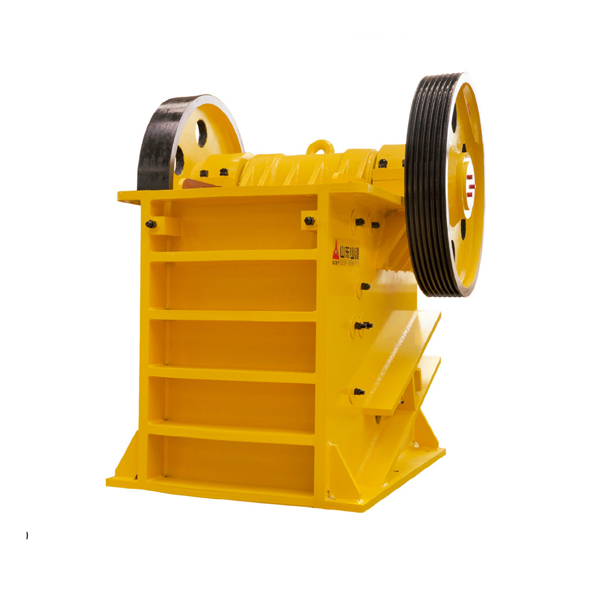
Jaw crushers are used in the primary coarse crushing stage. They accept feed material up to 1,500 mm and discharge coarse output of approximately 100–300 mm. Because they crush by compression and have a large feed opening, they handle material of any hardness and are the preferred selection for coarse crushing in small and medium quarries, mines, and construction and demolition waste processing. Their structure is simple, maintenance is straightforward, and operating costs are low.
Their limits are equally clear. A jaw crusher is not the machine to produce finished material below 50 mm, it does not on its own deliver premium aggregates with strict particle-shape requirements, and it is not the economic choice for ultra-large capacity above roughly 1,000 t/h, where a rotary crusher may be considered for large-scale mines with daily output above 1,000 tons.
Published models and capacities in the Lianbang PE range include PE-600×900 (feed opening 600×900 mm, maximum feed ≤520 mm, output 65–130 mm, capacity 50–150 t/h, 75 kW), PE-750×1060 (≤630 mm, 80–140 mm, 100–180 t/h, 110 kW), PE-900×1200 (≤800 mm, 100–230 mm, 180–280 t/h, 132 kW) and PE-1200×1500 (≤1000 mm, 150–350 mm, 300–800 t/h, 200 kW). Where a compact second-stage jaw is preferred, the PEX-250×1000 fine jaw takes up to 210 mm and adjusts between 25 and 60 mm with a 30 kW motor.
3. Secondary crushing: cone or impact?
This single decision affects operating cost more than any other in the plant.
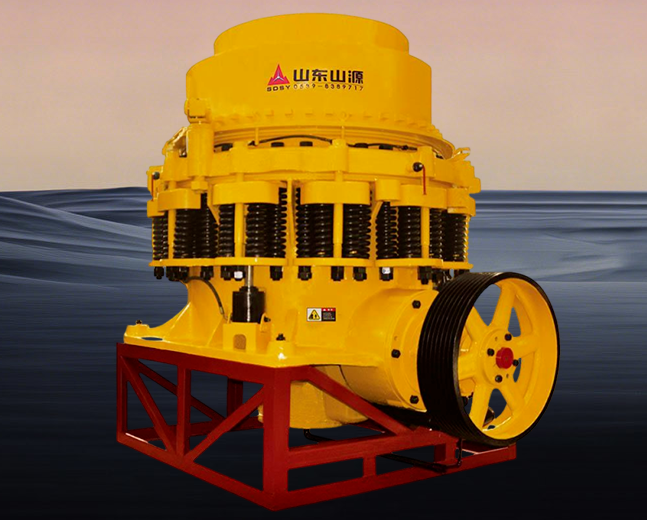
Cone crushers are applied in medium and fine crushing with output of approximately 10–50 mm. They use laminated inter-particle crushing, take a smaller feed, and provide better particle shape. They are not selected as the first-stage coarse crushing equipment, and they are not applicable to coarse crushing of feed above 300 mm or to soft or sticky material. On hard, abrasive rock they are the cost-efficient choice because the crushing chamber wears slowly. The CS-160, for example, has a 1,295 mm cone, coarse-cavity output of 172–349 t/h, a closed-side setting range of 13–51 mm and a 185 kW motor; the larger CS-220 reaches 299–635 t/h in coarse cavity with a 240 kW motor. Spring-type PY machines such as the PYB-1750 cover 280–480 t/h and the PYB-2200 covers 590–1,000 t/h.
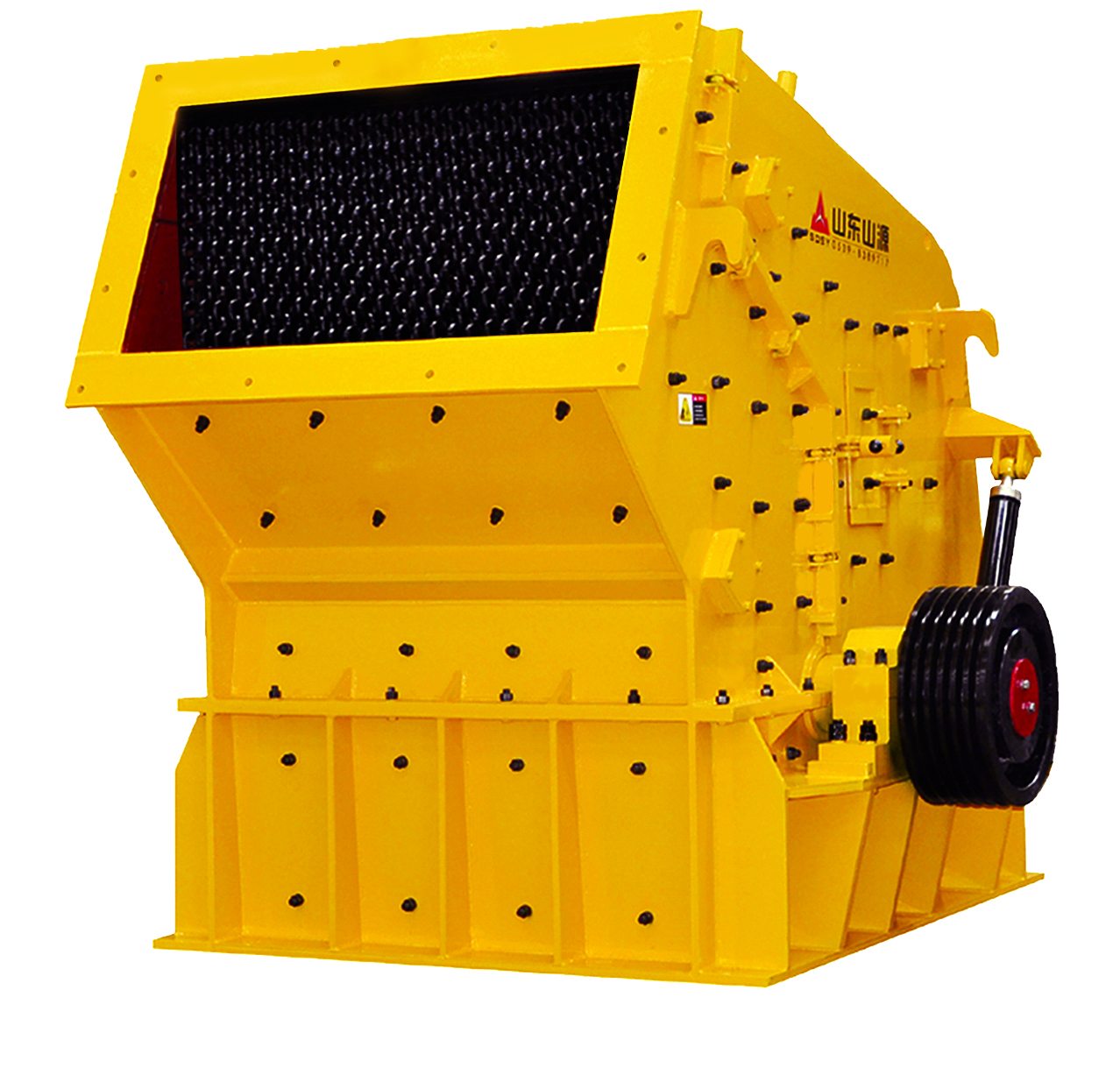
Impact crushers break material by high-speed impact and rebound. They produce a cubical product and handle medium-hard, brittle material well; the usual guidance is compressive strength up to about 350 MPa and moisture up to about 8%. They are widely used on limestone and dolomite and in construction waste recycling. On hard, high-silica rock, blow-bar consumption rises quickly, which is why an impact crusher is a poor substitute for a cone on granite or basalt. Published models include the PF-1214 (maximum feed 400 mm, 80–180 t/h, 132–160 kW) and PF-1315 (maximum feed 500 mm, 100–250 t/h, 160–200 kW).
4. Tertiary stage and manufactured sand
When the product mix includes manufactured sand, a vertical shaft impact crusher is added after the cone or impact stage. VSI machines use rock-on-rock crushing: the VSI-7611 runs at 110–150 kW with maximum feed of 35 mm on soft rock and 30 mm on hard rock, while the VSI-8518 at 180–220 kW serves large-scale manufactured sand plants.
Where a full sand specification is not required, fine impact and hammer-type machines are used instead. The PX-1822 fine impact crusher accepts up to 800 mm and discharges 5–20 mm; the PCX-1822 strong-impact hammer crusher delivers below 20 mm at 250–350 t/h with a 315 kW motor. Dry-process alternatives exist as well: the EIS-1000 and EIS-1200 intelligent environmental dry-type sand making systems run at 140–180 kW and 160–220 kW and include intelligent monitoring in their design.
5. Screening and conveying
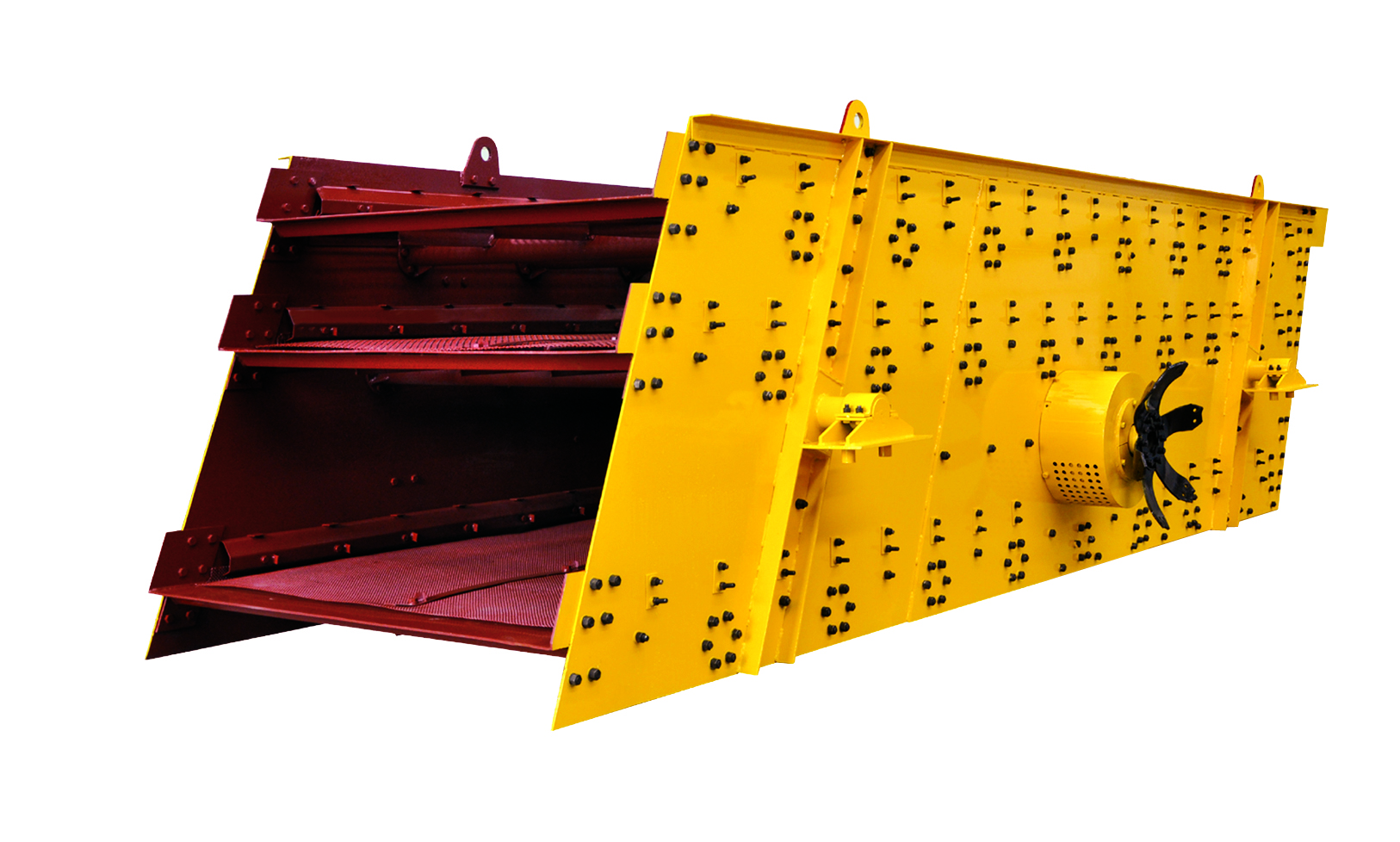
Circular vibrating screens classify crushed material into saleable fractions and return oversize to the crusher. YK screens are built in two-, three- and four-deck versions with screen openings below 50 mm; the 4YK-1854 is a four-layer unit rated at 15–200 t/h with an 11 kW motor, and the 3YK-2160 uses a 15 kW motor across three decks. Belt conveyors move material between stages and to stockpiles: the B800 belt is rated 280–500 t/h, the B1000 belt 430–850 t/h, and lengths are made to order.
6. Optional washing
Where the specification limits fines or clay, a washing stage turns the line into a stone crushing and washing plant. Wheel bucket washers such as the XS-3200 process 80–150 t/h, spiral washers such as the FG-1200 handle 70–110 t/h, and for manufactured sand from weathered material a wet rod mill in the MB series reaches 200–300 t/h at the MB-3.2×4.5 size. Washing brings water management and effluent handling into the project scope, which is precisely where jurisdiction-specific discharge rules apply.
Crusher type comparison
| Crusher type | Stage | Typical feed | Typical output | Where it fits | Limits to respect |
|---|---|---|---|---|---|
| Jaw (PE / PEX) | Primary (PEX for secondary fine) | Up to 1,500 mm | Approx. 100–300 mm | Any hardness; quarry, mine, C&D waste; limited space or budget | Not for finished product below 50 mm; not for premium shape alone; not for ultra-large capacity above about 1,000 t/h |
| Cone (CS / PY) | Secondary and tertiary | Up to about 300 mm | Approx. 10–50 mm | Hard, abrasive rock; plants above 100 t/h; long-term projects sensitive to operating cost | Not a first stage; not for soft or sticky material |
| Impact (PF) | Secondary | Up to 500 mm | Cubical aggregate | Medium-hard brittle rock up to about 350 MPa, moisture up to about 8%; highway aggregate; C&D waste | Blow-bar wear accelerates on hard, high-silica rock |
| Hammer (PC / PCX) | Secondary and fine | Brittle material up to about 200 MPa | Fine to 10–25 mm | High reduction ratio in one pass; lower investment; cement raw material and backfill | Hammer wear; poor behaviour with wet or sticky feed |
| VSI | Tertiary sand making and shaping | 35–40 mm maximum | Manufactured sand | Cubical sand fraction, particle reshaping | Cannot take coarse feed; requires a prepared feed |
Rock type to configuration: a short decision table
| Feed material | Recommended configuration | Typical arrangement |
|---|---|---|
| Granite, basalt, iron ore (compressive strength above 250 MPa) | PE series jaw crusher for primary crushing plus CS/PY series cone crusher for secondary crushing; a second cone stage at high capacity | Feeder → PE jaw → CS/PY cone → screen → optional VSI for sand |
| Limestone, dolomite (compressive strength below 200 MPa) | PE series jaw crusher plus PF series impact crusher | Feeder → PE jaw → PF impact → screen → optional VSI |
| Brittle limestone for cement raw meal or backfill | Jaw crusher plus PC/PCX hammer crusher for high reduction ratio | Feeder → jaw → PCX hammer → screen |
| Construction and demolition waste | Jaw or tyre-mounted mobile jaw, plus impact crusher and magnetic separation | Mobile station → impact → screen → magnetic separator |
| Weathered sand, river pebble, manufactured sand | Cone or impact stage plus VSI, or a wet rod mill with washing | Crusher → VSI or MB rod mill → screen → washer |
How to size a plant in eight steps
- Confirm the feed. Rock type, compressive strength or Mohs hardness, maximum lump size, moisture and clay content decide more of the layout than any other input.
- Fix the product mix and the target tonnage. State each fraction and the tonnage per hour the plant must sustain, not the peak the crusher can reach in ideal conditions.
- Choose the primary crusher by feed size. As a working rule, maximum lump should be roughly 0.8–0.85 of the feed-opening width, which leaves a margin for slabby rock.
- Choose the secondary crusher by hardness and abrasion. Cone for hard and abrasive, impact for medium-hard and brittle, hammer only where the material is genuinely brittle and dry.
- Decide whether sand is inside the scope. If 0–5 mm manufactured sand is a product, budget for a VSI stage and possibly a washer; if only 5–40 mm aggregate is required, the tertiary stage can be omitted.
- Size screens and conveyors, not only crushers. Screens are usually rated 1.2–1.3 times the line capacity and conveyors about 1.2 times the maximum flow.
- Plan the auxiliaries. Dust-removal equipment, centralized control, spare wear parts, and the local voltage (380V, 415V, 440V or 660V) all belong in the technical annex, together with multilingual manuals for overseas sites.
- Confirm documentation and commercial terms. General arrangement drawings, foundation loads, commissioning support, warranty scope and the exclusion list for consumables should be agreed before the order.
Worked example: about 150 t/h from granite
For a hard-rock quarry targeting roughly 150 t/h of graded aggregate, a two-stage jaw and cone arrangement with a single screening deck is representative of the sizes published in the catalogue.
| Unit | Model | Published duty | Role in the line |
|---|---|---|---|
| Vibrating feeder | ZSW-490×110 | 80–220 t/h | Metered feed with pre-screening of fines |
| Primary jaw crusher | PE-750×1060 | Max feed ≤630 mm; 100–180 t/h; 110 kW | Coarse crushing of quarry rock |
| Secondary cone crusher | CS-160, coarse cavity | 172–349 t/h; closed-side setting 13–51 mm; 185 kW | Secondary crushing of hard, abrasive rock |
| Vibrating screen | 3YK-2160 | Three decks; openings below 50 mm; 15 kW | Classification and oversize return |
| Belt conveyor | B800 | 280–500 t/h; custom length | Inter-stage and stockpile conveying |
The same principle scales. For a 500 TPH stone crusher plant in hard rock, the primary and secondary machines move up the range, for example a PE-1200×1500 primary paired with a PYB-2200 cone, but the practical ceiling of a single line is usually set by screening and conveying rather than by crushing, because individual YK screen units are catalogued at 15–200 t/h. Above that throughput, screening is normally split across more than one unit. Final selection should always be confirmed against the actual feed material rather than against the catalogue alone.
Capacity matching rules that prevent expensive rework. Follow an upstream-surplus, downstream-step-down approach: feeder capacity at 1.1–1.2 times rated primary capacity, secondary crusher at 1.0–1.1 times actual primary output, screen at 1.2–1.3 times line capacity, conveyor at 1.2 times maximum flow. Rated capacity is measured under ideal feed size, hardness and moisture; actual throughput is typically 70–85% of rated, so selection should target the actual figure, not the catalogue maximum.
Where these plants are used
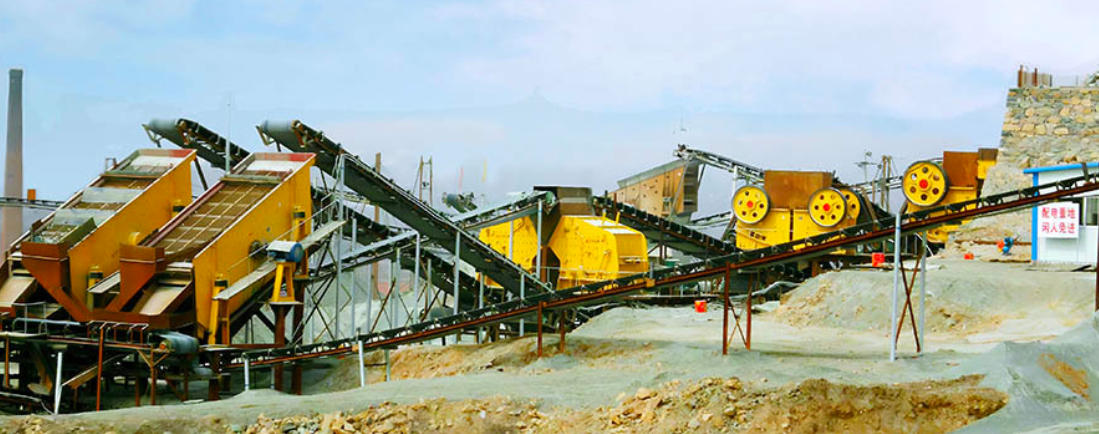
- Quarry and aggregate production. The core application: hard-rock quarries producing 5–31.5 mm aggregate and manufactured sand, with a quarry stone crusher plant typically built as feeder, jaw, cone, screen and conveyors.
- Road and railway construction. Ballast and high-grade concrete aggregate with strict grading and particle-shape requirements. Lianbang lists the Lunan high-speed railway as an official reference project, supplied with a centralized control system.
- Hydropower and water conservancy. High-strength concrete aggregate for dam construction and manufactured sand for mass concrete, with long-term continuous operation and high-altitude or remote-site serviceability requirements.
- Cement industry. Limestone feed for raw meal, where a jaw plus hammer configuration delivers a high reduction ratio and reduces the number of stages.
- Construction waste crushing. Demolition material processed into recycled aggregate, recycled bricks and recycled soil, usually with a mobile or portable stone crusher plant so the unit can move between demolition sites without concrete foundations.
- Sand and gravel crushing. River pebble and weathered sand lines combining a crusher, a VSI or rod mill and a washer to control fineness modulus.
- Overseas and mobile projects. Tyre-mounted stations integrate the crusher, feeder and conveyor on a trailer; the YCG-J750, built on a PE-750×1060 host, is rated 110–230 t/h and supports 380V or 440V supply with no foundation required.
Uptime: the three problems buyers ask about most
Plant selection discussions usually end with the same practical questions, and the answers are diagnostic rather than promotional.
- Output drops suddenly on a jaw crusher. The common causes are a blocked discharge opening, worn jaw plates, slipping drive belts or insufficient motor load. The sequence is to check the discharge setting and cavity, then jaw-plate wear (replace when tooth height falls below about 65% of original), then belt tension and voltage stability.
- Discharge becomes coarser on a hammer crusher while the screen is intact. Hammer wear reduces the effective striking radius and the gap between rotor and screen plate grows. Restoring the rotor-to-screen clearance to its design value, usually 10–25 mm, is the standard correction.
- Strong vibration on an impact crusher. Rotor imbalance, uneven blow-bar wear, loose foundation bolts or off-centre feed are the usual causes; blow bars on the same circle should be matched in weight and the foundation bolts re-torqued to specification.
These points matter at the research stage because a supplier who can explain them before the sale is more likely to support the plant after commissioning.
About the manufacturer
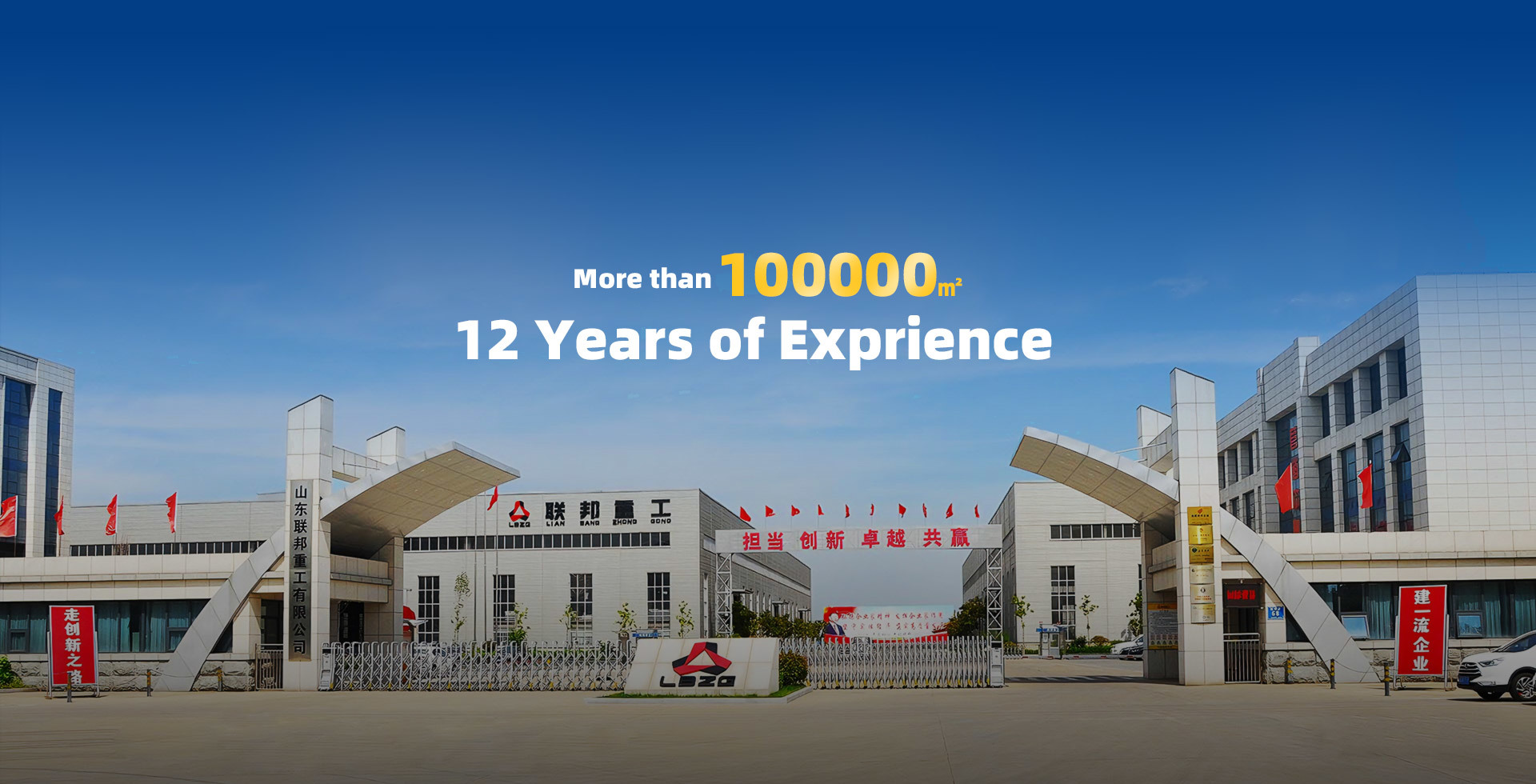
Shandong Lianbang Heavy Industry Co., Ltd. was established in 2013 and has more than 10 years of operating experience. The company specialises in sand-stone crushing, sand-making and solid waste recycling equipment, supplies mobile crushing and screening equipment, and builds complete plants as well as individual machines under the Shanyuan LBZG trademark.
The company owns two production bases covering a total area of 120,000 m², including 40,000 m² of standard workshops, with a manufacturing facility area listed at 100,000 m², more than 150 sets of processing equipment, approximately 110 staff and an annual production capacity of 2,000 units. It holds ISO9001 Quality Management System, ISO14001 Environmental Management System and OHSAS18001 Occupational Health and Safety System certifications, and CE export certification for foreign trade projects. Products are sold across all provinces in China and to more than 40 overseas countries, with markets including Saudi Arabia, the United Arab Emirates, Iraq, Qatar, Russia, Kazakhstan, Uzbekistan, Indonesia, Malaysia, Vietnam, the Philippines, Nigeria, Kenya and Ghana.
Next step: size the plant against your rock, not against a brochure
Send the rock type, maximum feed size, target tons per hour and required fractions, and the Lianbang team will confirm a configuration with the model numbers, motor ratings and screen arrangement that fit. A 50 kg sample for test crushing is the fastest way to verify product shape, fines content and wear-part consumption before the model is fixed.
Email: lbzg@lbcrusher.com | Website: www.sypsj.cn | WhatsApp: +86 13953887097 | Address: No. 68 Lianbang Road, Economic-Technological Development Zone (Yihe New District), Linyi City, Shandong Province, China
Company brochure (PDF, public download): Shandong Lianbang Heavy Industry catalogue
FAQ
What certifications should a stone crusher plant manufacturer in China hold for an export quarry project?
At minimum, look for ISO9001 Quality Management System certification, because it covers design, production, inspection and after-sales processes in a documented way. Environmental and occupational-safety systems are also relevant to plant approval: Shandong Lianbang Heavy Industry holds ISO9001, ISO14001 and OHSAS18001, plus CE export certification for foreign trade projects. Certification is not the same as site compliance, however. Dust, noise, wastewater and electrical requirements are set by the jurisdiction where the plant will operate, and in the United States the EPA's Mineral Mining and Processing Effluent Guidelines (40 CFR Part 436) address wastewater discharges from mineral processing. Ask the supplier which documents they can issue for your market before the order, not after shipment.
Can a Chinese manufacturer supply a complete crushing and screening plant for a hard-rock quarry, not just individual machines?
Yes, and for hard rock the scope is well defined. A complete stone crushing production line runs through feeding, primary crushing with a jaw crusher, secondary crushing with a cone or impact crusher, screening, sand making with a VSI crusher, and optional washing. For granite, basalt or iron ore above 250 MPa, the recommended configuration is a PE series jaw crusher for primary crushing plus a CS/PY series cone crusher for secondary crushing, with a second cone stage where capacity is high. Lianbang supplies individual machines, complete lines and tyre-mounted mobile stations, and lists the Lunan high-speed railway among its reference projects, supplied with a centralized control system and a dust-removal system.
What drives the budget of a stone crusher plant?
Four variables dominate. The number of crushing stages is the largest: a two-stage jaw and impact line for limestone costs materially less than a three-stage jaw, cone and VSI line for hard rock and manufactured sand. The second is capacity band, because moving from a PE-750×1060 primary at 100–180 t/h to a PE-1200×1500 at 300–800 t/h changes every downstream unit. The third is auxiliary scope: dust removal, centralized control, washing with water treatment, and mobile rather than fixed installation. The fourth is wear-part strategy, since jaw plates, blow bars and hammers are consumables and their material specification should match the abrasiveness of the feed. A quotation that lists only crushers and omits screens, conveyors, steel structures, electricals and commissioning is not comparable to a complete-plant offer.
Can I test my rock before committing to a configuration?
Yes, and it is the recommended practice. Sending a sample of roughly 50 kg for test crushing allows the supplier to verify product shape, fines content and wear-part consumption before the model is fixed, which is far cheaper than correcting a mismatch after installation. The results also settle the crusher-type question objectively: whether the rock behaves as a brittle, low-abrasion material that suits an impact crusher, or as a hard, abrasive material that justifies a cone. For plants where the final product is manufactured sand, the test should also confirm the fineness modulus that the VSI or rod mill can hold.
How is lead time managed on a complete plant order?
Delivery depends on the configuration, the specific models selected and the destination, so the schedule should be confirmed against a defined scope rather than quoted generically. Three items shorten the risk. First, agree the technical annex early, including drawings, motor voltages such as 380V, 415V, 440V or 660V, and manual language, since late changes move the schedule. Second, include a spare wear-parts kit in the order; jaw plates, blow bars, hammers, screen meshes and liners are consumables, and in a plant with a screen rated 15–200 t/h, a stopped screen stops the whole line. Third, confirm who handles installation and commissioning support and what the warranty excludes, because consumables are normally outside warranty cover. Share your target date with the manufacturer at enquiry stage and ask for a written schedule tied to the agreed scope.
Conclusion
A stone crusher plant is a chain of decisions rather than a single purchase. Rock hardness determines whether the second stage is a cone or an impact crusher; feed size determines the primary jaw; the product mix determines whether a VSI and a washer belong in the scope; and capacity matching across feeder, crusher, screen and conveyor determines whether the line reaches its rated figure or circulates material. Buyers who settle those four points before requesting quotations get comparable offers, and they get a plant that produces the fractions their market actually buys.
Have Questions or Need More Details?
Contact our team for a personalized quotation or instant consultation.
Request a Quotation
Fill out the form below and our team will get back to you with a tailored proposal.
WhatsApp Direct Chat
Prefer to chat in real-time? Message us on WhatsApp for instant assistance & quick answers.
- Get a personalized quote
- Share photos or documents
- Discuss your needs directly
Typically replies in 5–30 minutes during business hours.