
Stone Crusher Plant: How to Configure a Crushing Line
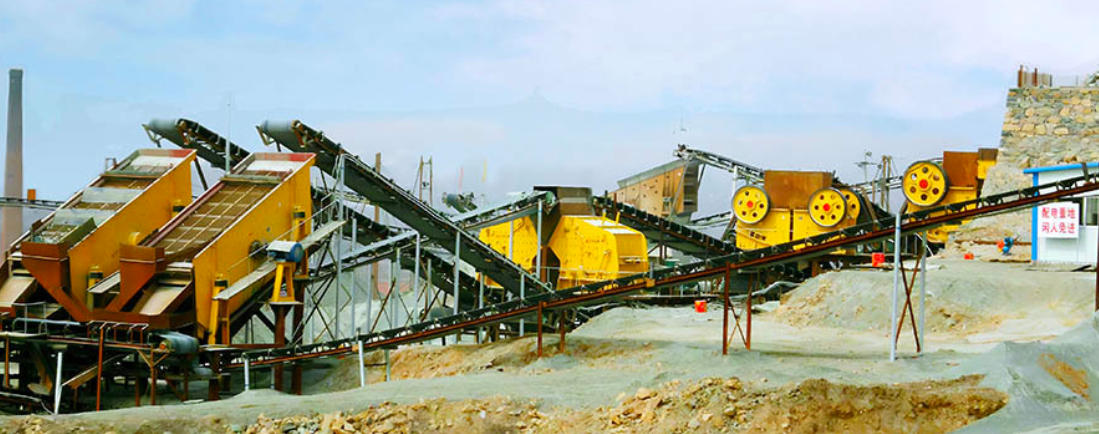
A stone crusher plant is a staged processing system that turns quarried rock into sized aggregate and, where required, manufactured sand. A complete stone crushing production line moves material through feeding, primary crushing with a jaw crusher, secondary crushing with a cone or impact crusher, screening, sand making with a VSI crusher, and optional washing. Crushing line configuration is matched to feed material hardness, feed size, required capacity in tons per hour, and final product specification.
This guide is written for quarry operators, aggregate producers, contractors, importers and plant engineers who are at the research stage of a project: they know they need a plant, they may not yet know how the stages fit together, and they want to ask suppliers better questions. It covers what a plant actually contains, how each stage is chosen, how capacity is matched across the circuit, what a 500 tph stone crusher plant looks like in hardware terms, and which documentation and certifications a buyer should ask for before signing.
Problem Definition: Why “Buying a Crusher” Is the Wrong Unit of Purchase
The most common early-stage mistake in aggregate projects is treating the crusher as the purchase and everything else as an accessory. In practice the crusher is one node in a circuit, and the circuit — not the machine — determines whether the plant hits its target gradation and tonnage.
Four variables drive every configuration decision. First, feed material: hardness, abrasiveness and maximum lump size. Second, capacity: the hourly tonnage the plant must sustain, not the tonnage it can reach on a good day. Third, product specification: which fractions the market or the project actually pays for, and how strict the particle-shape requirement is. Fourth, site conditions: available power, voltage, climate, footprint, and whether the plant will stay in one place or move.
When these four are not fixed before selection, three predictable failures follow. A secondary crusher that is too small becomes the bottleneck while the primary idles. A screen that is too small returns excess oversize to the crusher, inflating circulating load and wear cost. A conveyor that is too narrow spills and blocks, forcing operators to run the plant below design rate. None of these are equipment faults; they are matching faults.
The capacity matching rule
Published selection guidance for crushing and screening circuits follows a simple “upstream surplus, downstream step-down” logic, which can be applied directly when reviewing a supplier’s proposed flow sheet:
- Feeder capacity = 1.1–1.2 × rated capacity of the primary crusher.
- Secondary crusher capacity = 1.0–1.1 × the actual output of the primary stage.
- Vibrating screen capacity = 1.2–1.3 × line capacity.
- Belt conveyor capacity = 1.2 × maximum material flow.
The purpose of this margin is to keep each unit running at roughly 70–90% of rated load. Below that band, equipment is under-used; above it, the plant has no headroom for wet feed, harder rock or a worn crushing chamber. Note that rated capacity is measured under ideal feed conditions, while actual capacity is typically 70–85% of rated capacity once material properties and site operation are taken into account. A proposal that matches every unit at 100% of nominal tonnage has no margin anywhere.
Industry Background: Why Plant-Level Decisions Are Getting More Expensive to Get Wrong
Aggregate demand is structurally tied to construction, and the equipment that serves it is a long-life capital purchase. Commercial market research published in 2025–2026 values the global stone crusher market at USD 4.8 billion in 2025, with a forecast of USD 8.9 billion by 2034 at a compound annual growth rate of 7.4% (Dataintelo, stone crusher market report, 2025–2034). The same source reports that Asia Pacific held 42.8% of revenue share in 2025, which is consistent with the region’s concentration of aggregate production and of crushing equipment manufacturing.
Two structural shifts sit behind those numbers and affect how plants are specified.
Compliance is now a design input, not a permit formality. In the United States, the EPA’s Mineral Mining and Processing Effluent Guidelines and Standards (40 CFR Part 436) cover wastewater discharges from mineral processing operations, which means water use and wash-water handling have to be planned into the circuit rather than retrofitted. Dust is treated the same way in many jurisdictions: dust-removal systems are now listed as matched equipment in plant configurations rather than optional extras, and enclosed or negative-pressure arrangements are specified where the site is close to receptors.
Supply is international. A buyer in the Middle East, Central Asia, Southeast Asia or Africa is now routinely comparing Chinese-built plants against domestic or European options on configuration, documentation and service reach rather than on brand familiarity alone. Shandong Lianbang Heavy Industry Co., Ltd., which manufactures under the LBZG crusher brand, reports exports at around 30% of output and sales into more than 40 countries, with stated markets including Saudi Arabia, the United Arab Emirates, Iraq and Qatar; Russia, Kazakhstan and Uzbekistan; Indonesia, Malaysia, Vietnam and the Philippines; and infrastructure-focused markets in Nigeria, Kenya and Ghana. That footprint matters at the research stage because it determines whether spare-part and commissioning support is realistic for a given site.
Detailed Solution: The Crushing Flow, Stage by Stage
A complete stone crushing production line processes raw rock into sized aggregates and manufactured sand through a staged flow: feeding, primary crushing with a jaw crusher, secondary crushing with a cone or impact crusher, screening, sand making with a VSI crusher, and optional washing. Each stage has a defined job, a defined feed envelope and a defined limit.
1. Feeding
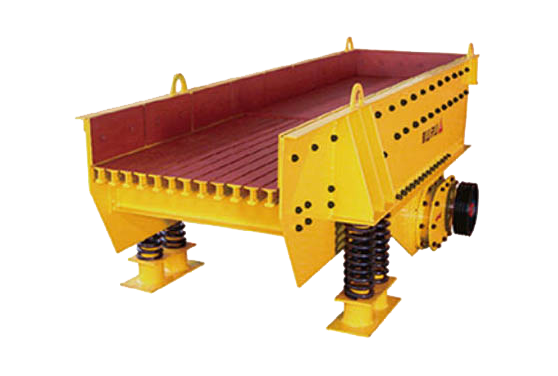
The feeder’s job is to deliver rock at a steady rate and, in most circuits, to pre-screen fines before they reach the primary crusher. Published capacities for vibrating feeders in this class range from around 96–160 t/h on smaller units up to 250–400 t/h on heavy-duty models, and units are commonly offered with a pre-screening function. Undersizing the feeder is one of the cheapest mistakes to make and one of the most expensive to fix, because a starved primary crusher idles while still drawing power and wearing its jaw plates.
2. Primary crushing: the jaw crusher stage
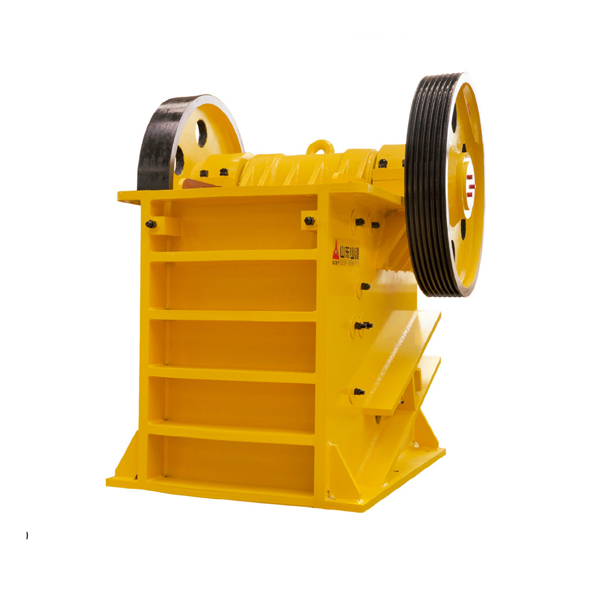
Jaw crushers are used in the primary coarse crushing stage. They accept feed material up to 1500 mm and discharge coarse output of approximately 100–300 mm. Because they crush by compression with a large feed opening, they handle material of any hardness, and their simple structure means easy maintenance and low operating costs. That combination is why the jaw crusher is the default first stage for quarries, mines and construction and demolition waste processing.
The boundaries are equally clear. A jaw crusher is not used to produce finished material below 50 mm, it is not the tool for premium aggregates with strict particle-shape requirements, and it is not the economic choice for ultra-large capacities above 1,000 t/h, where a rotary crusher is considered as a replacement only for large-scale mines with a daily output above 1,000 tons.
3. Secondary crushing: cone or impact, decided by rock hardness
This is the single most consequential decision in the circuit, and it is decided by compressive strength rather than by preference.
- Hard rock (granite, basalt, iron ore, above roughly 250 MPa): the recommended configuration is a PE series jaw crusher for primary crushing plus a CS/PY series cone crusher for secondary crushing. For hard material at high production capacity, the standard combination is a jaw crusher for coarse crushing followed by a cone crusher in two fine crushing stages.
- Medium-soft rock (limestone, dolomite, below roughly 200 MPa): the recommended configuration is a PE series jaw crusher plus a PF series impact crusher. The impact crusher produces cubical aggregate and suits highway-grade aggregate production.
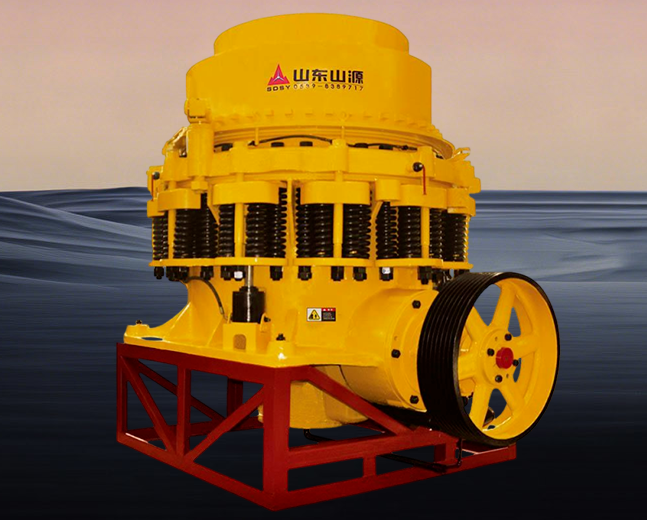
Cone crushers work by laminated inter-particle crushing. They take a smaller feed, are applied in medium and fine crushing with output of approximately 10–50 mm, and deliver better particle shape than a compression-only second stage. They are not selected as the first-stage coarse crushing equipment, are not applicable to coarse crushing of feed above 300 mm or to soft and sticky materials, and are not used as the first crushing stage. For hard, abrasive rock they are the wear-economical choice because the laminated action extends wear-part life and lowers operating cost — a factor that matters over a multi-year project.
4. Screening: where gradation is actually made
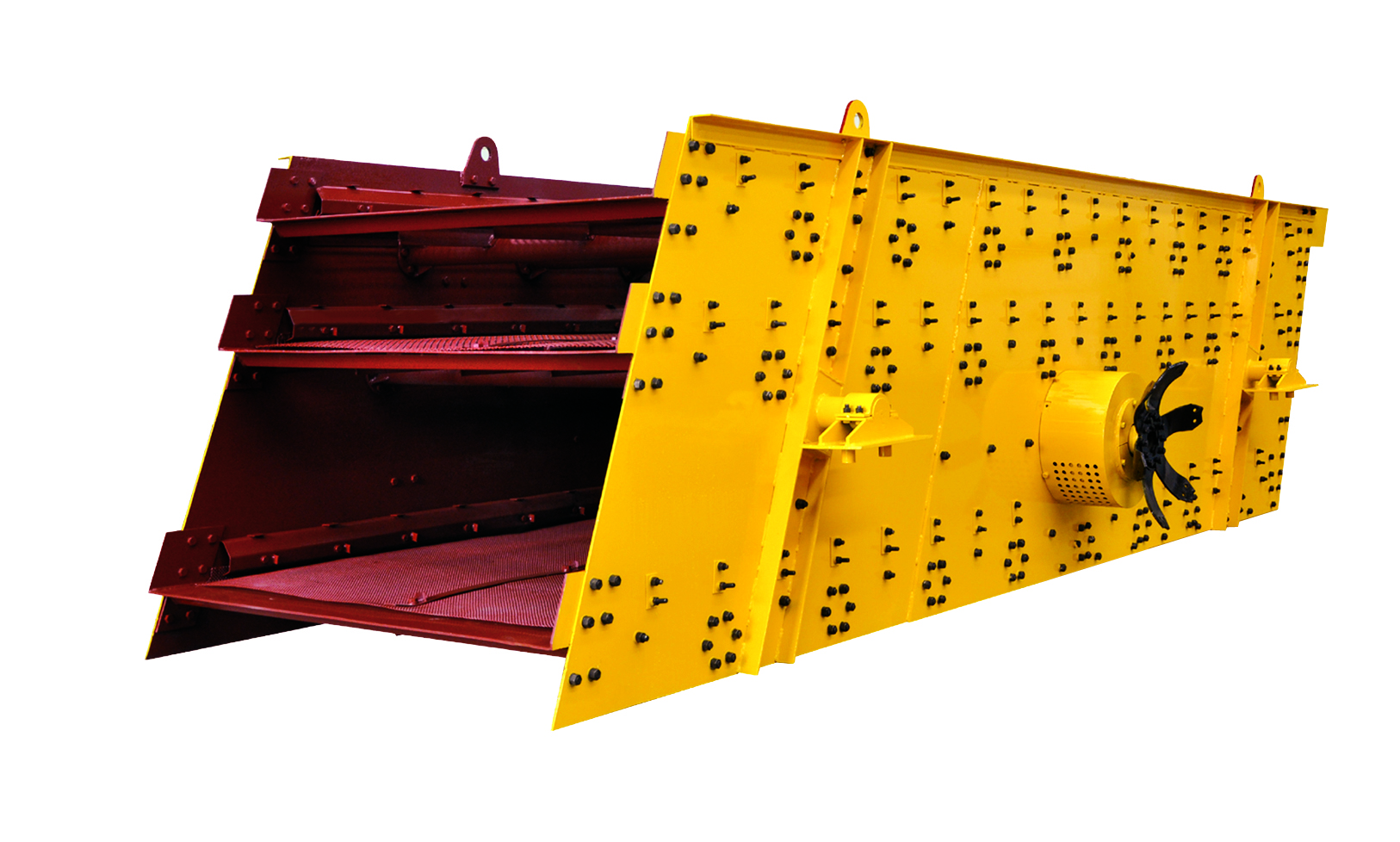
Customers do not buy tonnes; they buy fractions. Circular vibrating screens are supplied in two-, three- and four-deck configurations with screen openings up to about 50 mm, and published capacities per unit span roughly 15–300 t/h depending on model and deck arrangement. Because a single screen is rarely able to carry a large plant’s full flow, high-capacity circuits normally use several screens in parallel, with oversize returned to the secondary or tertiary crusher.
5. Sand making and washing (when the product mix requires it)
If the plant must produce manufactured sand rather than only coarse and medium aggregate, a vertical shaft impact (VSI) crusher is added as a tertiary stage. VSI units take a small feed — around 30–40 mm depending on the model and material — and reshape particles as well as produce sand. Where the material carries clay or the specification limits fines, a washer follows: a wheel-type bucket washer is used for low-clay material where water consumption and fine-sand loss must stay low, while a spiral washer is used where strong scrubbing is needed for high-clay, sticky feed.
Dry-process sand systems are an alternative where water is constrained. These are supplied as integrated units with dry-type production and intelligent monitoring, with published power ranges of roughly 140–220 kW and feed sizes up to 45–50 mm.
6. Controls, dust and site integration
Dust-removal systems and spare wear-part kits appear in plant-level equipment lists for a reason: they are part of the operating configuration, not afterthoughts. Larger reference projects also specify centralized control systems. For remote or export sites, configurations are adapted to local voltage (380V / 440V / 415V / 660V) and climate, with tropicalized or desert-rated options and multilingual manuals.
Step-by-Step: How a Quarry Project Actually Gets Configured
- Characterise the rock, not the quarry. Record compressive strength or Mohs hardness, abrasiveness (silica content), maximum lump size and moisture. This single step decides the secondary crusher type and the wear-part material.
- Fix the product mix. List the fractions the market will buy — for example 0–5, 5–10, 10–20, 20–31.5 mm — and note whether the specification restricts flakiness. A plant built for road base has different requirements from one built for ready-mix concrete aggregate.
- Set the sustained capacity, then add margin. Choose the hourly tonnage the plant must hold across a shift, and size the primary at 1.1–1.2× that figure. Rated capacity and actual capacity are not the same number.
- Select the primary from the feed envelope. Match maximum feed lump to the jaw feed opening with a safety margin, then check that the model’s capacity band brackets the target tonnage.
- Select the secondary from the hardness. Above roughly 250 MPa, specify a cone crusher; below roughly 200 MPa, an impact crusher is appropriate and gives better cube shape.
- Size screens and conveyors last, and size them up. Screens at 1.2–1.3× line capacity take 1.2× belt capacity; both are cheaper to oversize at purchase than to replace later.
- Decide sand, washing and mobility. Add VSI sand making only if manufactured sand is in the product mix; choose wheel or spiral washing by clay content; choose a tyre-mounted mobile station where the plant must relocate between sites or process demolition material on location.
- Confirm power, climate and documentation. Voltage, ambient conditions, spare-part kit, manual language and inspection documents should all be settled in the technical agreement, not at shipment.
Capacity Bands: What a 500 TPH Stone Crusher Plant Looks Like in Hardware
A 500 tph stone crusher plant is not a single model number; it is a combination of units whose published ranges bracket 500 t/h. The table below uses published model data from the LBZG range to show how that bracketing works. Actual output depends on rock type, feed gradation, moisture and operating practice, so these figures should be treated as selection ranges rather than guarantees.
| Stage | Model examples | Published capacity | Primary specification |
|---|---|---|---|
| Primary (jaw) | PE-600×900 | 50–150 t/h | Feed opening 600×900 mm; max feed ≤520 mm; 75 kW |
| Primary (jaw) | PE-750×1060 | 100–180 t/h | Feed opening 750×1060 mm; max feed ≤630 mm; 110 kW |
| Primary (jaw) | PE-900×1200 | 180–280 t/h | Feed opening 900×1200 mm; max feed ≤800 mm; 132 kW |
| Primary (jaw) | PE-1200×1500 | 300–800 t/h | Feed opening 1200×1500 mm; max feed ≤1000 mm; 200 kW |
| Secondary (cone) | PYB-1750 | 280–480 t/h | Crushing head 1750 mm; feed opening 215 mm; 155 kW |
| Secondary (cone) | PYB-2200 | 590–1000 t/h | Crushing head 2200 mm; feed opening 300 mm; 280 kW |
| Secondary (cone) | CS-220 (B220) | 299–635 t/h (coarse cavity) | Cone diameter 1676 mm; CSS 16–64 mm; 240 kW |
| Secondary (impact) | PF-1315 | 100–250 t/h | Rotor Φ1320×1500 mm; max feed 500 mm; 160–200 kW |
| Conveying | BS B1200 | 650–1200 t/h | Belt width 1200 mm; speed 1.0–2.0 m/s |
Use Cases: The Same Flow, Different Priorities
Quarry and aggregate supply
A standard quarry plant produces sized aggregate for concrete, asphalt and general construction. The design priority is gradation control and steady throughput across the shift. Jaw plus cone is the conventional circuit for hard rock; jaw plus impact where the rock is medium-soft and cube shape is paid for.
Road and railway construction
Railway ballast and high-strength concrete aggregate impose strict gradation and particle-shape requirements, and the plants run continuously. Reference projects in this segment specify stable grain-size control, cubic particle shape and fineness modulus compliance in the 2.3–3.0 range. One documented national key project of this type is the Lunan High-Speed Railway, supplied as a complete crushing and screening line with a centralized control system.
Cement industry
Cement plants and cement-raw-material lines often prefer a hammer crusher for limestone, because a heavy hammer unit can reduce large limestone directly to mill-feed size in a single pass and simplify the circuit. This is appropriate for brittle, low-silica limestone; where silica content or abrasiveness is high, an impact or cone circuit is the wear-economical alternative.
Mining and hard-rock processing
Metal and industrial-mineral operations use the same staged logic with tighter constraints on feed size and chamber selection. Granite, basalt, quartzite and iron ore are handled with jaw plus cone, and the plant is usually sized for years of continuous duty rather than for a project window.
Construction and demolition waste
Demolition material is variable, contaminated and often located in cities. Tyre-mounted mobile stations are used for on-site processing so that transport is eliminated, with screening stations and, where required, magnetic separation. Published capacities for mobile stations in this class run from about 90–230 t/h depending on the host crusher.
Sand and gravel, and manufactured sand
Where the product mix includes manufactured sand, the circuit gains a VSI tertiary stage and a washer. A rod mill can be added to a manufactured-sand plant where wet grinding of weathered sand or river pebble is required, with published capacities from 40–80 t/h up to 300–400 t/h depending on drum size.
Hydropower and large infrastructure
Dam and mass-concrete projects need high-strength aggregate and long-term continuous operation, often at remote sites with high altitude or difficult access. Configuration priorities shift toward wear-resistant chambers, a full spare-parts kit and serviceability rather than pure throughput.
Comparison Table: Selecting the Right Crusher for Each Stage
| Crusher type | Stage | Feed / output envelope | Best fit | Not suitable for |
|---|---|---|---|---|
| Jaw crusher (PE / PEX) | Primary coarse crushing | Feed up to 1500 mm; discharge about 100–300 mm | Material of any hardness; small and medium quarries, mines, C&D waste; limited space or budget | Direct production below 50 mm; premium shape-critical aggregate; ultra-large capacity above 1,000 t/h |
| Cone crusher (CS / PY) | Secondary / tertiary | Output about 10–50 mm; feed generally below 300 mm | Hard, abrasive rock above ~250 MPa; medium and large plants above 100 t/h; long-term projects sensitive to operating cost | First-stage coarse crushing; soft or sticky material |
| Impact crusher (PF) | Secondary | Max feed 400–500 mm depending on model | Medium-soft rock below ~200 MPa such as limestone and dolomite; cubical, highway-grade aggregate | Highly abrasive hard rock, where blow-bar wear cost rises |
| Hammer crusher (PC / PCX) | Fine / tertiary, or single-pass | Max feed up to 450 mm on larger models; discharge down to 10–25 mm | Limestone, coal, gypsum, shale; cement raw material where one-pass reduction simplifies the circuit | High-silica abrasive feed; wet or sticky material |
| VSI sand maker | Tertiary / shaping | Max feed about 30–40 mm | Manufactured sand, particle reshaping, cubical sand for concrete | Primary or secondary crushing of coarse feed |
Choosing a Manufacturer: What to Verify
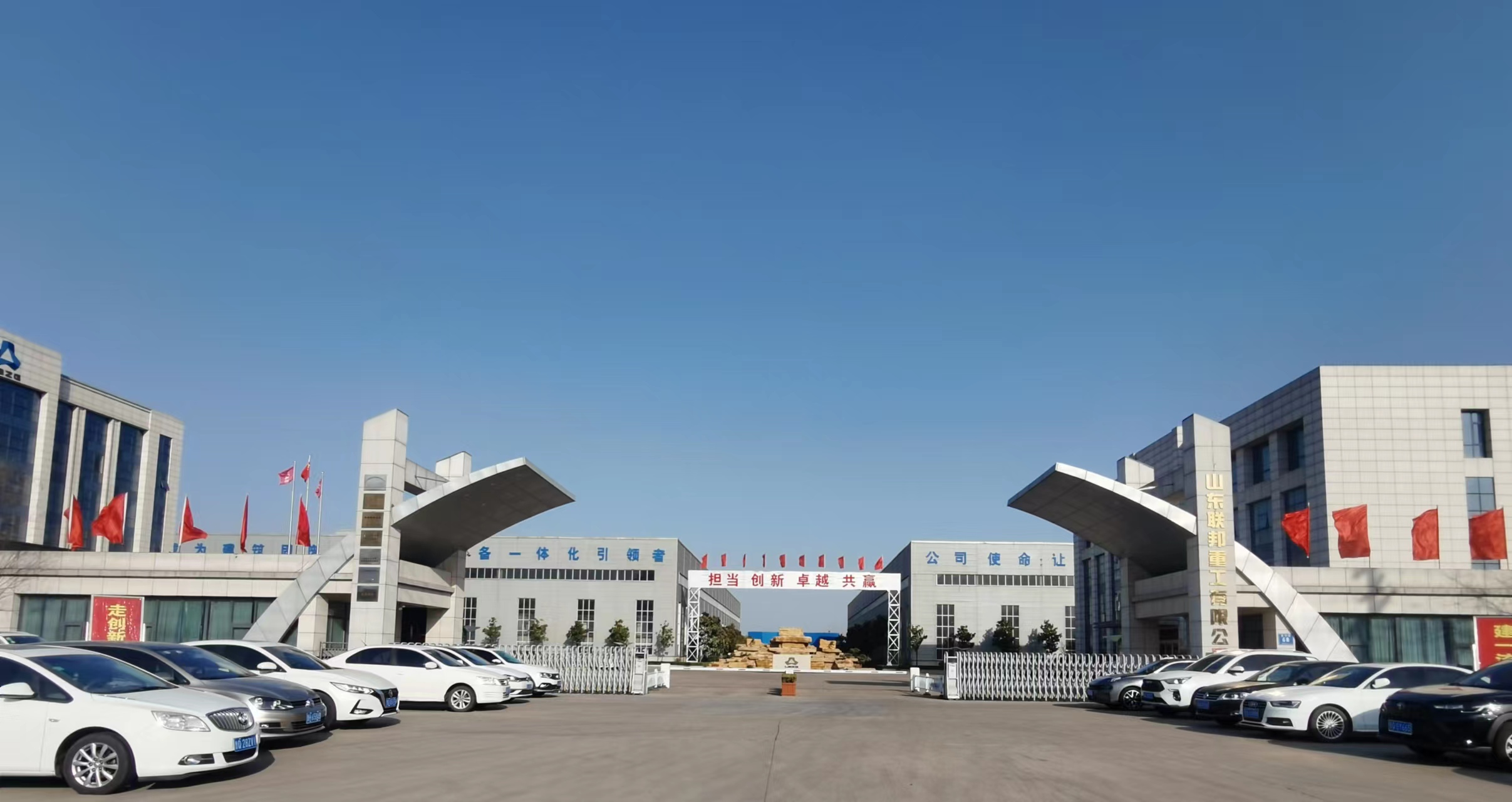
Shandong Lianbang Heavy Industry Co., Ltd. is a Chinese manufacturer of sand-stone crushing, sand-making and solid waste recycling equipment, registered in 2013 and operating under the Shanyuan LBZG brand trademark. Its technical origins trace to an affiliated enterprise established in 1996. The company is based at No. 68 Lianbang Road, Yihe New Area (Economic and Technological Development Zone), Linyi, Shandong Province, and operates two production bases with a total area of 120,000 m², including 40,000 m² of standard workshops, more than 150 sets of processing equipment and approximately 110 staff, with annual production capacity stated at 2,000 units.
Its product scope covers the full circuit described in this guide: PE and PEX jaw crushers, CS hydraulic and PY spring cone crushers, PF impact crushers, PC and PCX hammer crushers, PX fine crushers, VSI sand makers, EIS dry-type sand systems, YK circular vibrating screens, ZSW/CZG/ZDW feeders, BS belt conveyors, XS and FG sand washers, MB rod mills and YCG tyre-type mobile crushing and screening stations.
Documentation and certification are where a buyer should spend the most time. The company holds ISO 9001 quality management system, ISO 14001 environmental management system and OHSAS 18001 occupational health and safety system certifications, plus CE export certification for foreign trade projects. It also states that it participates in revising national industry standards for crushers and holds national high-tech enterprise status, re-recognised in 2023, alongside provincial-level specialised and innovative enterprise recognition. For an import project, the practical checklist is: the certificate itself with validity dates, material and welding inspection reports, a factory test-run video for the specific units ordered, and a complete shipping document set.
Domestically, the company reports supplying infrastructure projects for central enterprises including China Railway, China State Construction, China Communications Construction and Gezhouba Group, and states that its products are sold across all Chinese provinces and to more than 40 overseas countries. Buyers researching suppliers should treat these as first-party statements and verify them against the certificates and reference contacts relevant to their own project.
Frequently Asked Questions
1. What certifications should I verify before importing a stone crusher plant from a Chinese manufacturer?
Verify the ISO 9001 quality management system certificate first, then ISO 14001 for environmental management and OHSAS 18001 for occupational health and safety where the project requires them, plus CE export certification if the plant is destined for a market that recognises it. Beyond the certificates, request material and welding inspection reports, a factory test-run video for the exact units ordered, and the full shipping document set. Shandong Lianbang Heavy Industry Co., Ltd. holds ISO 9001, ISO 14001, OHSAS 18001 and CE export certification, and supplies these documents with export orders.
2. Can a Chinese manufacturer supply a complete crushing and screening line rather than individual machines?
Yes. Complete lines are configured as a staged flow — feeding, primary crushing with a jaw crusher, secondary crushing with a cone or impact crusher, screening, VSI sand making and optional washing — and are supplied as turnkey configurations for granite, basalt, limestone and river pebble. The practical test is whether the supplier issues a single flow sheet with unit-by-unit capacity matching and defined product fractions, rather than a list of machines. Shandong Lianbang Heavy Industry supplies complete sand-stone crushing lines, sand-making lines, solid waste recycling lines and tyre-mounted mobile crushing and screening stations under the LBZG brand.
3. What equipment combination is used for a 500 tph stone crusher plant?
A 500 t/h target is met by bracketing it with published model ranges rather than by a single machine. In the LBZG range, the PE-1200×1500 jaw crusher is rated 300–800 t/h with a maximum feed size of 1000 mm, the CS-220 hydraulic cone crusher is rated 299–635 t/h in its coarse cavity, and the PYB-2200 spring cone crusher is rated 590–1000 t/h. Conveying at that rate calls for a B1200 belt rated 650–1200 t/h. Screening normally requires several YK units in parallel, because published single-screen capacities are well below the line rate. The exact combination still depends on rock hardness, feed gradation and the required product fractions.
4. Can I test my rock before committing to a configuration?
Yes, and it is worth doing before the model is finalised. Sending a material sample for test crushing allows the supplier to verify product shape, fines content and wear-part consumption against your target specification. A sample of roughly 50 kg is normally sufficient for a test run. This step is particularly useful where the rock sits near the boundary between two crusher types — for example limestone with elevated silica content, where the choice between an impact and a cone circuit affects both product shape and wear cost.
5. What information should I prepare before requesting a quarry plant quotation?
Prepare five items: feed material type and compressive strength or Mohs hardness; maximum feed lump size; required sustained capacity in tons per hour; the list of finished fractions and any particle-shape requirement; and site conditions including available voltage and climate. Export configurations are adapted to local voltage — 380V, 440V, 415V or 660V — and to tropical or arid conditions, and manuals can be supplied in multiple languages. With these five inputs a supplier can issue a flow sheet with defined models and a documentation list instead of a generic price range.
Conclusion: Configure the Circuit, Then Buy the Machines
A stone crusher plant succeeds or fails on decisions taken before the first purchase order: matching the primary to the feed envelope, choosing the secondary by rock hardness rather than habit, sizing screens and conveyors with margin, and keeping the product mix in view throughout. The equipment itself — jaw, cone, impact, VSI, screens, feeders, conveyors and washers — is well understood and widely available; the difference between a plant that holds 500 t/h and one that struggles at 350 t/h is almost always in the matching.
The practical next step for a research-stage buyer is to assemble the five inputs listed in the FAQ, test a rock sample, and ask for a flow sheet that shows unit-by-unit capacity, product fractions and the documentation package. That is the point at which a quotation becomes comparable between suppliers.
Request a configuration review or a test-crush evaluation
Shandong Lianbang Heavy Industry Co., Ltd. (brand: Shanyuan LBZG) supplies complete stone crushing and screening plants, mobile stations, sand-making systems and wear parts from Linyi, Shandong Province, China.
- Email: lbzg@lbcrusher.com
- Tel: +86 158-6693-8525 | WhatsApp: +86 13953887097
- Website: www.sypsj.cn
- Download the company and product catalogue (PDF): Shandong Lianbang Heavy Industry catalogue
Send your rock type, maximum feed size, target tonnage and required fractions, and the team will return a stage-by-stage flow sheet for review.
Have Questions or Need More Details?
Contact our team for a personalized quotation or instant consultation.
Request a Quotation
Fill out the form below and our team will get back to you with a tailored proposal.
WhatsApp Direct Chat
Prefer to chat in real-time? Message us on WhatsApp for instant assistance & quick answers.
- Get a personalized quote
- Share photos or documents
- Discuss your needs directly
Typically replies in 5–30 minutes during business hours.