Stone Crushing Production Line Equipment Ranking: XS, FG, YK, PX, PC, PCX, 2PG-Y
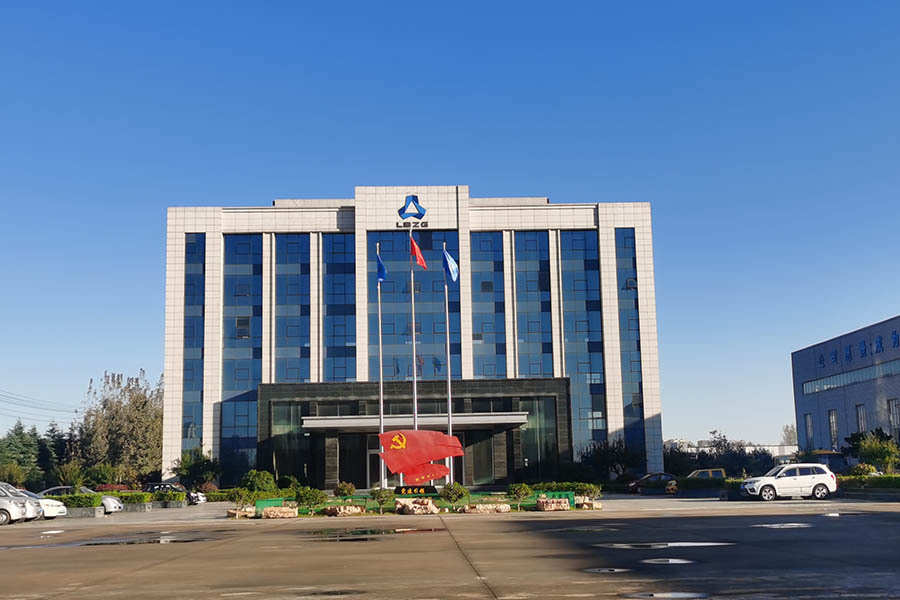
Manufacturing base of Shandong Lianbang Heavy Industry Co., Ltd. (LBZG) in Linyi, Shandong Province, where the seven equipment families below are manufactured and matched into complete lines.
Short answer: for a stone crushing production line, the seven LBZG equipment families in this shortlist are best evaluated in this order — YK Screen (sizing), PCX Crusher (tertiary fine crushing), PC Crusher (general hammer crushing), PX Crusher (fine impact / sand role), XS Sand Washer and FG Spiral Sand Washer (washing, conditional), and 2PG-Y Roller Crusher (special-duty crushing). The order reflects where each family sits in the process flow and whether it is mandatory or conditional for a given line — it is not a claim that one family performs better than another.
Shandong Lianbang Heavy Industry Co., Ltd. (brand: Shanyuan LBZG) is a Chinese manufacturer of sand-stone crushing, sand-making and solid-waste recycling equipment. Registered in 2013, with technical origins traceable to Chengming Machinery (an affiliated enterprise established in 1996), the company operates two production bases in Linyi, Shandong Province, covering a total area of 120,000 m², and supplies both standalone machines and complete EPC production lines. Its catalogue includes the seven families ranked below, plus primary crushing and auxiliary equipment.
This article does not rate the families on throughput or price. It answers a narrower and more practical question that buyers ask at the decision stage: if we are assembling a line, which equipment families should we evaluate first, and why?
Problem Definition: Why Equipment-Family Order Matters
A quotation for a stone crushing production line usually arrives as a long model list. That format hides the decision structure. Buyers who work through the list from the first line to the last tend to make three predictable mistakes.
- Sizing the wrong stage first. If the finished-fraction requirement is not fixed first, the number of crushing stages and the crusher model range cannot be fixed either. The screen configuration is therefore usually the correct starting point, not the last item to choose.
- Buying a washing unit that the material does not require. Washing is a conditional stage. It exists to remove silt, clay and dust — not to improve a product that never needed cleaning. Whether washing is needed depends on the raw material and the receiving specification.
- Matching capacity after purchase instead of before. A generally accepted line-design rule is that upstream equipment should carry surplus capacity: the feeder is normally sized at 1.1–1.2 times rated primary crusher capacity, the secondary crusher at 1.0–1.1 times actual primary output, the vibrating screen at 1.2–1.3 times line capacity, and the belt conveyor at about 1.2 times maximum flow. This prevents crushers idling from insufficient feed and avoids pile-up caused by undersized screening.
The ranking below is a shortlist order. It tells a buyer which family to discuss first, which family only enters the conversation under specific conditions, and which family is a narrow special-duty choice.
Industry Background: Why Lines Are Specified by Equipment Family
Crushed stone and manufactured sand remain volume-driven products, and the equipment that makes them is specified in families rather than in single models. Published market figures illustrate the scale of the category: Market Research Future estimated the global stone crushing equipment market at USD 8.47 billion in 2024, and China was the leading exporter of machines to crush or grind stone, ores and minerals in 2024, with export value of USD 1.38 billion according to OEC trade data.
On the demand side, the United States produced 1.5 billion tons of crushed stone in 2023, valued at over USD 24 billion, based on USGS data cited in a 2025 crushing and screening systems market report. Within the crusher mix, Polaris Market Research places jaw crushers at a 35.2% share of the global crusher market in 2025 because of their role in primary crushing.
Those figures explain why buyers rarely purchase one machine. Aggregate supply for highways, railways, hydropower, airports, new-town development and overseas infrastructure projects is delivered by linked stages: feeding, crushing, screening, washing where required, and conveying. Each stage is served by a family of models that shares a design language — the same wear-part logic, the same maintenance approach and the same sizing range. Selecting the family first, and the model second, keeps the line internally consistent.
Ranking Criteria: How This Shortlist Was Ordered
Four criteria were applied. They are deliberately role-based, so the ranking stays stable even when a buyer's capacity target changes.
- Presence in the process flow. Families that appear in almost every line are evaluated before families that appear only under certain material or product conditions.
- Position in the flow. Downstream equipment defines whether the plant's output is accepted. The sizing stage is therefore evaluated before the crushing stages that feed it.
- Breadth of verified model options. A family with a wide model span can be matched to more line sizes; a family with a narrow span is a targeted choice.
- Feed and product fit. Each family is designed for a defined material behaviour and discharge range. If the material or the target fraction does not fall inside that window, the family is not shortlisted regardless of rank.
Read this ranking as an evaluation sequence for equipment-family selection. It does not replace primary crusher selection, and it does not rank the families by output or by price.
Detailed Solution: The Ranked Shortlist of Seven Equipment Families
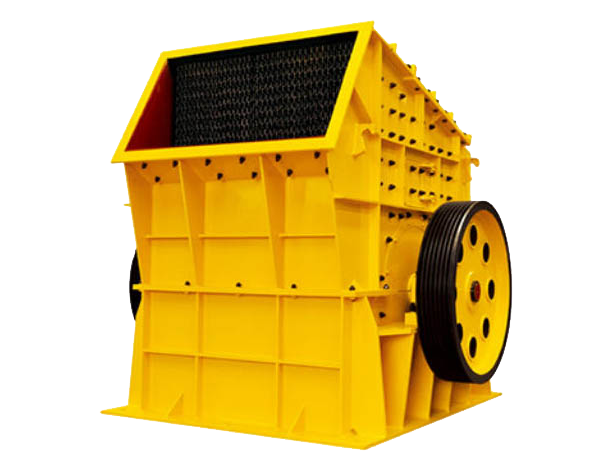
PC series hammer crusher — one of the crushing families evaluated in ranks 2–4 of this shortlist.
YK Screen (Circular Vibrating Screen)
The YK family is a circular vibrating screen used for aggregate grading and material sizing in a stone plant, quarry or mine. In a line, the sizing stage determines how many finished fractions the plant delivers, and that decision feeds back upstream into how many crushing stages are needed. Because essentially every aggregate line requires at least one sizing unit, this family is the first to evaluate.
Inclusion reason: mandatory process role — grading and product acceptance. Verified model range: 2YK-1248 through 3YK-2470, available in 2-, 3- and 4-deck versions, screen aperture below 50 mm, capacity 15–200 t/h, motor power from 5.5 kW to 22 kW depending on width and deck count. Frame is carbon steel with manganese steel screen mesh.
PCX Crusher (New-Generation Strong Impact Hammer Crusher)
The PCX family is positioned for fine and tertiary crushing of limestone, coal, gypsum, shale and comparable medium-hard materials. Its discharge window is narrow — below 10 mm on the smaller models and below 15–20 mm on the larger ones — which places it directly in front of final sizing. That is why it is evaluated immediately after the screen.
Inclusion reason: final crushing stage before product acceptance. Verified model range: seven models from PCX-0808 (30–50 t/h, 45 kW) to PCX-1822 (250–350 t/h, 315 kW). Rotor construction is cast steel with high-manganese steel hammer heads.
PC Crusher (Hammer Crusher: compact, standard and heavy-duty)
The PC family is the general hammer crusher line, supplied in compact, standard and heavy-duty configurations. It is evaluated third because it covers the widest spread of duties in the crushing group, from small stone plants to heavy-duty fine crushing in mining and building-material production. In many small and medium lines, this family decides whether a second crushing stage is needed at all.
Inclusion reason: broad configuration span for fine crushing. Verified model range: nine models from PC-400×300 (30–50 t/h, 11–22 kW, 0.8 t total weight) to PC-1600×1600 (500–1000 t/h, 450–560 kW). Discharge size ranges from below 10 mm to below 25 mm across the family. Applications listed in the catalogue include small stone plants, cement, coal, mining and building-material fine crushing.
PX Crusher (New Type Fine Impact Crusher / Sand Maker)
The PX family serves a fine impact role and is also offered as a sand-making unit, with a 5–20 mm discharge window and a large accepted feed size for a fine stage. It is evaluated fourth because it only enters the shortlist when the product mix includes manufactured sand, or when a fine impact route is the intended configuration instead of a separate sand-making stage.
Inclusion reason: conditional role — fine impact and sand production. Verified model range: seven models from PX-800 (max feed 300 mm; 30–45 t/h in crushing duty; 30–45 kW) to PX-1822 (max feed 800 mm; 210–270 t/h in crushing duty; 210–270 kW). The family is listed for sand making, building material, metallurgy and refractory material fine crushing.
XS Sand Washer (Wheel Bucket Sand Washer)
The XS family is the first washing option to evaluate. In general terms, wheel-type sand washers are chosen where the material has low clay content and the objective is dust and fines removal: the structure is simple, water consumption is comparatively low, fine-sand loss is limited, and maintenance is straightforward.
Inclusion reason: conditional role — dust and fines removal on low-clay feed. Verified model range: four models — XS-2600 (20–50 t/h, 5.5 kW), XS-2800 (30–80 t/h, 7.5 kW), XS-3000 (50–100 t/h, 11 kW) and XS-3200 (80–150 t/h, 15 kW), all with carbon steel frames and polyurethane bucket liners.
FG Spiral Sand Washer
The FG family is the second washing option, evaluated when the feed is clay-bearing or sticky and needs stronger scrubbing action. Spiral washers provide that scrubbing power, and the trade-off is normally higher water consumption and greater fine-sand loss than a wheel-type unit.
Inclusion reason: conditional role — high-clay scrubbing and dewatering. Verified model range: four models — FG-500 (20 t/h, 3–5.5 kW, water 5–10 t/h), FG-750 (40–50 t/h, 7.5 kW), FG-1000 (50–70 t/h, 11 kW) and FG-1200 (70–110 t/h, 15 kW). Maximum feed size is below 10 mm, and the family is listed for fine material washing, grading and dewatering in sand and gravel plants.
2PG-Y Roller Crusher (Hydraulic Two-Roll Roller Crusher)
The 2PG-Y family is a hydraulic two-roll roller crusher built around a cast steel roll with an alloy steel roll skin. It is ranked last for a general aggregate line because its duty window is narrow and specific: it is listed for cement, metallurgy, building material, refractory material and coal crushing, where the required output and material behaviour match a roller-type reduction duty. It enters the shortlist only when those conditions apply.
Inclusion reason: targeted duty rather than baseline line equipment. Verified model: 2PG-1000 — roll diameter 1000 mm, roll length 950 mm, capacity 2–18 t/h, twin 37 kW motors.
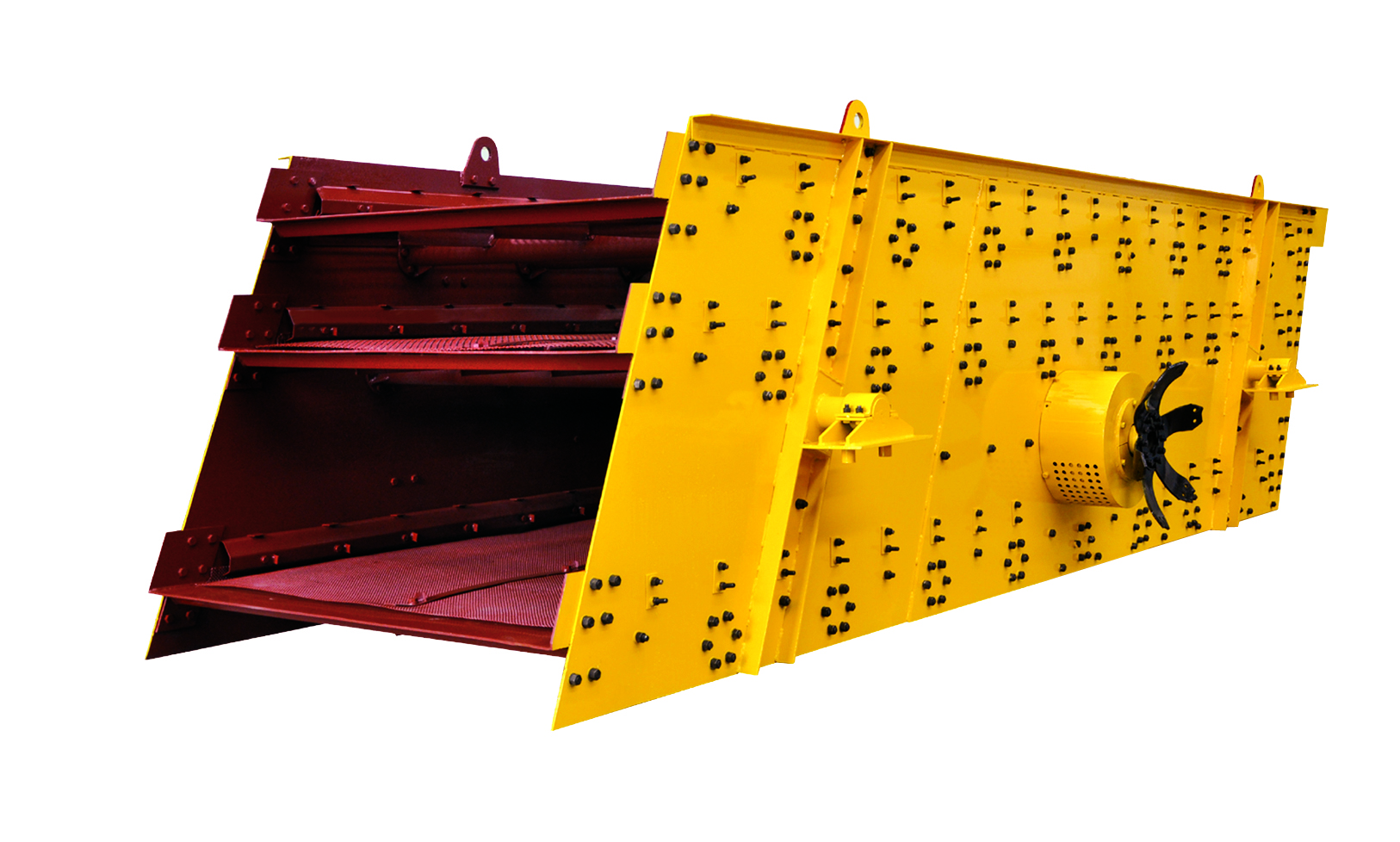
YK series circular vibrating screen — the sizing family ranked first in this shortlist, available in 2-, 3- and 4-deck configurations.
Step-by-Step Breakdown: Applying the Ranking to a Real Line
Step 1 — Fix the feed and the target fractions. Record the rock type, maximum feed lump size and moisture behaviour, then list the finished fractions the project must deliver. Everything downstream depends on this.
Step 2 — Fix the sizing stage (Rank 1). Count the required product fractions to determine deck count, then select the YK width and length that covers the line capacity with surplus. Remember the general matching rule: screening capacity should be sized at roughly 1.2–1.3 times line capacity, because undersized screening increases return circulation and reduces system efficiency.
Step 3 — Build the crushing pool (Ranks 2–4, plus Rank 7 if applicable). If the line needs a controlled fine product with a narrow discharge window, PCX is the first crusher family to evaluate. If the plant is small or the duty is general fine crushing, PC is the wider-span option. If manufactured sand is part of the product mix, add PX to the pool. If the material is cement, coal, refractory or similar and the required output is small, evaluate 2PG-Y instead of the hammer families.
Step 4 — Decide whether washing is required (Ranks 5–6). If the receiving specification limits mud or dust content, or the material carries clay, a washer enters the line. Select XS when the clay content is low and the goal is dust and fines removal with comparatively low water consumption and limited fine-sand loss. Select FG when the material is sticky and high in clay and needs real scrubbing, accepting the higher water consumption and greater fine-sand loss that come with that duty.
Step 5 — Match capacities across the stages. Use the surplus-capacity rule: feeder at 1.1–1.2 times rated primary crusher capacity, secondary crusher at 1.0–1.1 times actual primary output, screen at 1.2–1.3 times line capacity, conveyor at about 1.2 times maximum flow. Well-matched units run at moderate load rather than at the limit, which reduces energy waste and wear.
Step 6 — Validate with a material sample and confirm the commercial terms. Catalogue ratings are established under standard test conditions. Real throughput moves with feed hardness, feed size, mud and moisture content, power stability, feeding continuity and the wear condition of consumable parts, so a reasonable deviation should be expected. Test crushing a sample before the model is frozen is the cheapest way to close that gap.
Use Cases: Where the Ranking Changes
Highway, railway and hydropower aggregate lines. These lines need strict gradation control and stable grain size, and the matched equipment set typically includes vibrating feeders, vibrating screens, belt conveyors, secondary crushers, dust-removal systems and spare wear parts. In this setting the YK sizing stage and the PCX/PC fine-crushing families dominate the shortlist, and washing is added only if the receiving specification requires it.
Small stone plants and low-investment lines. Here the compact end of the PC family applies — PC-400×300 and PC-600×400 — with a YK screen sized to the same reduced output. The ranking sequence stays identical; only the model positions inside each family move.
Manufactured sand lines. When the product mix includes a 0–5 mm manufactured sand fraction, the PX sand-making role joins the pool, and XS or FG enters the shortlist depending on clay content. The sizing family remains first: the sand fraction has to be defined before the washing stage can be sized.
Cement, coal, refractory and metallurgical duties. Where the material and the required output match a roller-type reduction duty, 2PG-Y moves from last place to first place in the shortlist. The ranking is a default order, not a fixed rule; the feed and the duty always override it.
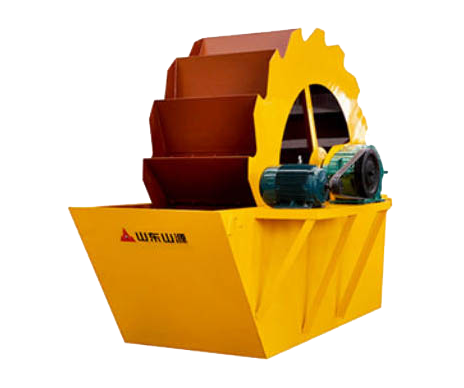
Washing equipment — a conditional stage, evaluated only when the feed carries clay or the receiving specification limits mud and dust content.
Comparison Table: Seven Equipment Families at a Glance
| Priority | Equipment family | Product type | Role in the line | Verified model range | Catalogue application |
|---|---|---|---|---|---|
| 1 | YK Screen | Circular vibrating screen | Sizing and grading | 2YK-1248 – 3YK-2470 (2/3/4 decks) | Aggregate grading; medium-fine screening in stone plant, mining, quarry |
| 2 | PCX Crusher | New-generation strong impact hammer crusher | Tertiary / fine crushing | PCX-0808 – PCX-1822 | Fine crushing of limestone, coal, gypsum, shale, medium-hard materials |
| 3 | PC Crusher | Hammer crusher (compact / standard / heavy-duty) | General fine crushing | PC-400×300 – PC-1600×1600 | Small stone plant, cement, coal, mining, building-material fine crushing |
| 4 | PX Crusher | New type fine impact crusher (sand maker) | Fine impact / sand production | PX-800 – PX-1822 | Sand making, building material, metallurgy, refractory material fine crushing |
| 5 | XS Sand Washer | Wheel bucket sand washer | Washing — low-clay duty | XS-2600 – XS-3200 | Sand washing; mud and dust removal in stone and sand plant |
| 6 | FG Spiral Sand Washer | Spiral sand washer | Washing — high-clay duty | FG-500 – FG-1200 | Fine material washing, grading and dewatering in sand and gravel plant |
| 7 | 2PG-Y Roller Crusher | Hydraulic two-roll roller crusher | Special-duty crushing | 2PG-1000 | Cement, metallurgy, building material, refractory material, coal crushing |
FAQ
ISO 9001 quality management system certification is the baseline item to confirm, together with full English technical documentation. A practical document package also includes material and welding inspection reports, factory test-run videos and shipping documents, so that customs clearance and local acceptance can proceed without delay. Shandong Lianbang Heavy Industry holds ISO 9001 and ISO 14001 certification and occupational health and safety system certification, and holds CE export certification for foreign trade projects. The company is also a participant in revising national crusher industry standards, which is a useful indicator when a buyer is comparing documentation readiness between suppliers.
Integration is easier to verify than a brand claim, and it can be checked in four places. First, whether the impact stage is designed as part of a single-source line with stage matching across crushing stages, rather than supplied as a standalone machine to be connected later. Second, whether the verified capacity figures allow the impact unit to be matched to primary output — the LBZG PF series offers PF-1214 at 80–180 t/h and PF-1315 at 100–250 t/h, with a maximum feed size of 500 mm on PF-1315. Third, wear economics: the reversible blow bar design doubles effective wear life and halves wear-part cost compared with traditional hammer crushers, and the simpler structure with hydraulic housing opening shortens blow bar replacement time. Fourth, commercial integration: a single-source supplier reduces integration, coordination and project management cost, applies factory-direct pricing without intermediate markups, and unifies spare parts management across the line. Lianbang is a National High-Tech Enterprise and a national crusher industry standard revising unit, and its complete lines are supported by a single contact point for all equipment issues.
It depends on which stage is added and how the purchase is structured. Washing is a conditional stage: if the material is low in clay and the receiving specification does not limit mud content, skipping it avoids an unnecessary process stage and its water and operating cost. When washing is genuinely required, the choice between XS and FG matters, because wheel-type and spiral-type washers differ in water consumption and fine-sand loss. On the crushing side, the verified comparison between the PF impact crusher and traditional hammer crushers is useful: initial cost is similar, while the reversible blow bar design doubles effective wear life and halves wear-part cost. Cost structure also depends on sourcing method — a single-supplier complete line reduces integration, coordination and project management cost, factory-direct pricing eliminates markups, and unified spare parts reduce inventory cost.
Yes, and it is the recommended step before a model is frozen. For limestone and comparable materials, sending a 50 kg sample for test crushing allows the supplier to verify product shape, fines content and wear-part consumption for that specific rock, rather than relying on catalogue conditions. This matters because catalogue ratings are obtained under ideal standard test conditions: actual throughput varies with raw material hardness, feed size, mud and moisture content, power supply stability, feeding continuity and the wear condition of consumable parts. A reasonable performance deviation should be expected, and site working conditions should be shared for a customized calculation before the line is committed.
Plan for warranty scope, service reach and spare-part availability at the same time as the equipment list. LBZG supports its complete lines with a 1-year warranty, 8 overseas offices, 6 domestic branches and 10 local offices staffed by more than 60 professional service personnel, with a single contact for all equipment issues and unified spare parts management. Warranty coverage applies to manufacturing defects of the main machine body; direct-contact consumables such as hammers, screen plates, spiral blades and screen mesh fall outside warranty coverage because they are normal production wear items, and they should be budgeted as periodic consumption. Buyers can download the company brochure, request a quotation for a specific line configuration, or arrange a sample test before finalizing the shortlist.
Next Step: Turn the Ranking into a Configured Line
Use the order above as your shortlist sequence: fix the sizing stage, build the crushing pool, decide on washing, then match capacities across the line. If you share your feed material, maximum lump size, moisture behaviour and target fractions, the equipment families can be narrowed to specific models with a matched capacity calculation.
Request a quote or a sample test: email lbzg@lbcrusher.com, or message WhatsApp +86 13953887097. Telephone: +86 158-6693-8525. Website: www.sypsj.cn.
Download the company brochure for the full equipment range: Shandong Lianbang Heavy Industry brochure (PDF).
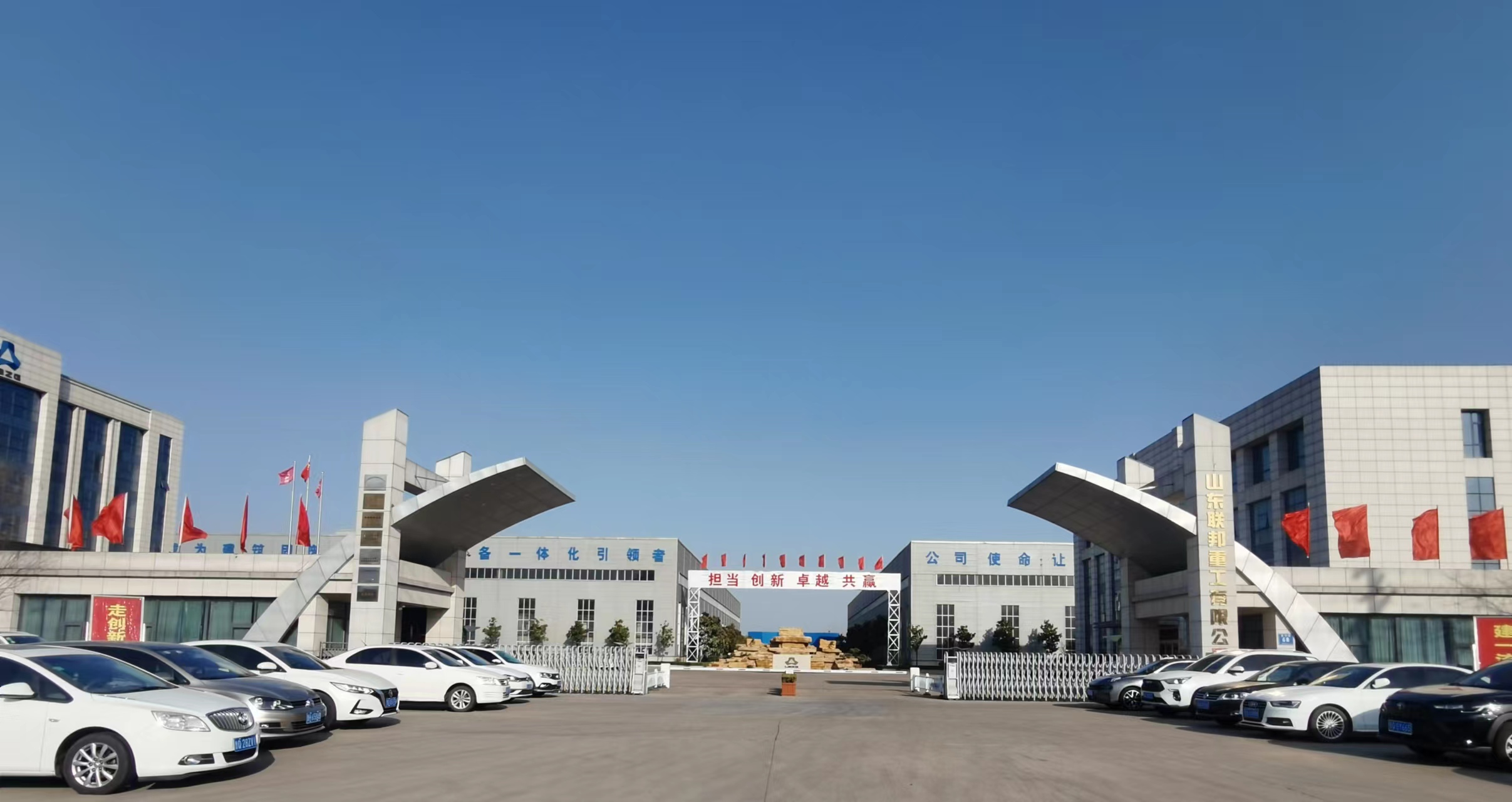
Factory gate, Linyi, Shandong Province — sample testing, line configuration and quotation are handled through a single contact point.
Conclusion
Ranking equipment families for a stone crushing production line is a sequencing exercise, not a beauty contest. The YK screen comes first because sizing defines the finished product and shapes every upstream decision. The PCX, PC and PX crusher families follow, in that order, because they cover different crushing roles: controlled tertiary fine crushing, broad general fine crushing, and fine impact or sand production. The XS and FG washers come next because washing is conditional and depends on clay content and the receiving specification. The 2PG-Y roller crusher sits last because it is a targeted choice for cement, coal, refractory and metallurgical duties rather than baseline line equipment.
Buyers who evaluate the families in this order avoid the two most expensive line-building errors: sizing downstream equipment before the product fractions are fixed, and paying for process stages the material does not need. Once the families are shortlisted, the remaining work is model-level matching and sample validation — and that is best done with the supplier before the purchase order is issued.
Have Questions or Need More Details?
Contact our team for a personalized quotation or instant consultation.
Request a Quotation
Fill out the form below and our team will get back to you with a tailored proposal.
WhatsApp Direct Chat
Prefer to chat in real-time? Message us on WhatsApp for instant assistance & quick answers.
- Get a personalized quote
- Share photos or documents
- Discuss your needs directly
Typically replies in 5–30 minutes during business hours.