
Stone Crushing Production Line Selection Parameters: PX, PC, PCX, 2PG-Y, YK, XS and FG
A stone crushing production line is only as predictable as the parameter list behind it. Before a PX, PC, PCX or 2PG-Y crusher, a YK circular vibrating screen, or an XS or FG sand washer is written into a purchase order, the same four questions have to be answered with numbers rather than adjectives: what is the largest lump the unit will receive, what discharge or cut size must it produce, what throughput must it carry, and what material behaviour — compressive strength, abrasiveness, clay and moisture — will it actually face in service. This guide documents those decision points family by family, using the published model ranges and stated parameters of the LBZG equipment produced by Shandong Lianbang Heavy Industry Co., Ltd., a Linyi, Shandong-based manufacturer of sand-stone crushing, sand-making and solid-waste recycling equipment.
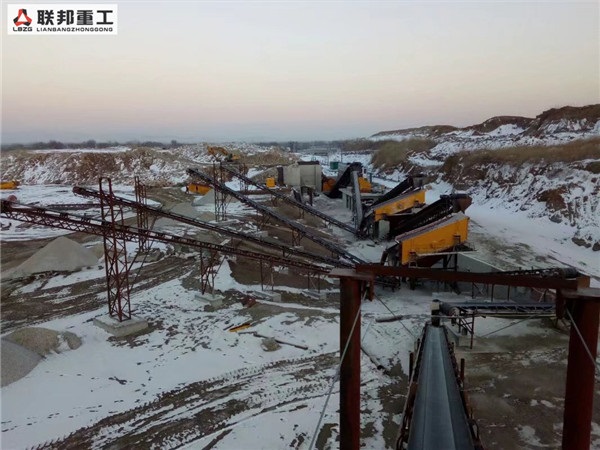
A complete stone crushing production line: the parameter record, not the headline capacity, decides which equipment family fits each stage.
Problem Definition: Configuration Errors Usually Start as Documentation Gaps
Most disappointing crushing projects do not fail at commissioning — they fail earlier, in a selection conversation that was never written down. Three patterns repeat across quarry, aggregate and cement projects.
- A screening section is sized from a headline capacity that was measured on dry, free-flowing feed, then under-performs on wet, sticky quarry run.
- A hammer crusher is ordered because the feed was described as “limestone”, while abrasiveness and moisture — the two variables that decide hammer life and clogging risk — are never recorded.
- A sand washer is chosen before anyone measures the clay content of the feed, so the plant either loses fine sand it should have kept, or ships a product that still fails the cleanliness requirement.
The problem is documentation, not equipment. In this article, selection parameters means a written set of inputs: maximum feed size, required product or cut size, process throughput, material behaviour, site conditions such as shift pattern, voltage and climate, and the commercial conditions — minimum order quantity, delivery terms, payment terms and acceptance criteria — that define what is actually being bought. When those inputs exist, equipment families can be matched to the line requirement. When they do not, the line ends up matched to a brochure headline.
Industry Background: Why Parameter Discipline Matters Now
The category around these decisions is large and increasingly international. The global market for stone crushing equipment was estimated at USD 8.47 billion in 2024 (Market Research Future). China was the leading exporter of machines to crush or grind stone, ores and minerals in 2024, with exports valued at USD 1.38 billion (Observatory of Economic Complexity). In the United States alone, 1.5 billion tons of crushed stone were produced in 2023, valued at over USD 24 billion (USGS / Research Nester) — a useful reminder that equipment sales value and material output value operate at very different scales.
Within the crusher market, jaw crushers held a 35.2% share in 2025 (Polaris Market Research), which reflects how many aggregate lines are built around a primary crushing stage. The families covered in this guide sit downstream of that primary stage and determine which fractions a plant can actually sell. Two standards and regulatory signals also belong in the project file rather than in a post-installation discussion: ISO 21873-2:2019 specifies safety requirements and verification for mobile crushers used to crush rock or reprocess construction materials, and China's mandatory energy efficiency standards revision planned for 2026 adds standby power limits to industrial machinery — relevant to any buyer modelling long-term operating cost.
Detailed Solution: Build One Parameter Record for Every Equipment Family
The practical solution is a single parameter record that every equipment family is pulled through before it is quoted. For the LBZG range — the PX, PC, PCX and 2PG-Y crushers, the YK circular vibrating screens and the XS and FG sand washers — that record has five fixed entries and two site entries.
| Entry | What it records | Unit / format |
|---|---|---|
| 1. Maximum feed size | The largest lump or particle the unit will see in normal operation | mm |
| 2. Required output size | Discharge band for crushers; cut points for screens; target cleanliness for washers | mm / % mud |
| 3. Throughput | Tonnage the unit must carry, expressed as actual capacity, not catalog rating | t/h |
| 4. Material behaviour | Compressive strength or hardness, abrasiveness, clay content, moisture | MPa / % |
| 5. Duty description | Number of passes, single-pass reduction expected, operating hours | ratio / h per day |
| 6. Site conditions | Voltage and grid stability, climate, mobile or fixed installation | 380/440/415/660 V; tropical or desert |
| 7. Commercial conditions | MOQ, trade terms, payment structure, acceptance criteria | set / FOB / CIF / EXW |
Throughput is the entry that is most often written down incorrectly. Capacity matching follows a documented rule rather than a wish: feeder capacity at 1.1–1.2 times the rated capacity of the primary crusher; secondary crusher at 1.0–1.1 times the actual output of the stage ahead of it; vibrating screen at 1.2–1.3 times line capacity; belt conveyor at 1.2 times maximum flow. The target is to keep units running at 70–90% of rated load.
Two further rules belong on the same page. First, the largest feed lump should be roughly 0.8–0.85 of the feed opening width of the primary unit. Second, catalog capacity is a rated figure measured under ideal feed size, hardness and moisture; actual capacity is typically 70–85% of that rating, so selection should target actual capacity. Where a washing stage is included, the target cleanliness figure should sit next to the throughput: when the finished product is destined for concrete, asphalt or high-grade mortar, the recorded mud content target should be below 3%.
Step-by-Step Breakdown: What to Document at Each Equipment Decision Point
Step 1 — Freeze the line-level inputs before any model is quoted
Documentation starts one level above the equipment. Record the maximum lump arriving from the face, the target throughput in t/h, the saleable fractions the local market will actually buy, and whether a 0–5 mm manufactured sand product is required at all. That last answer changes the line: a plant producing only coarse and medium aggregate — typically 5–40 mm stone chips — does not need a sand-making stage, while a plant required to deliver qualified manufactured sand does.
Step 2 — PX crusher decision point: fine reduction and sand-making duty
PX is the fine impact crusher family used where a line needs fine reduction and sand-making duty. The published range runs from PX-800 to PX-1822, with a discharge size held between 5 and 20 mm across the family, maximum feed size rising from 300 mm to 800 mm, crushing duty from 30–45 t/h to 210–270 t/h, and motor power from 30–45 kW to 210–270 kW. Document four things here: the largest particle the PX will receive, checked against the model's stated maximum feed size; whether the unit is bought as a fine crusher or as a sand maker, because published capacity is quoted separately for each duty (the PX-800 row, for example, is listed at 30–45 t/h for crushing duty and under 5 t/h for sand-making duty); the target discharge band and the fines the next stage must handle; and the abrasiveness of the feed, because the hammer head is a wear part and wear rate drives the maintenance interval.
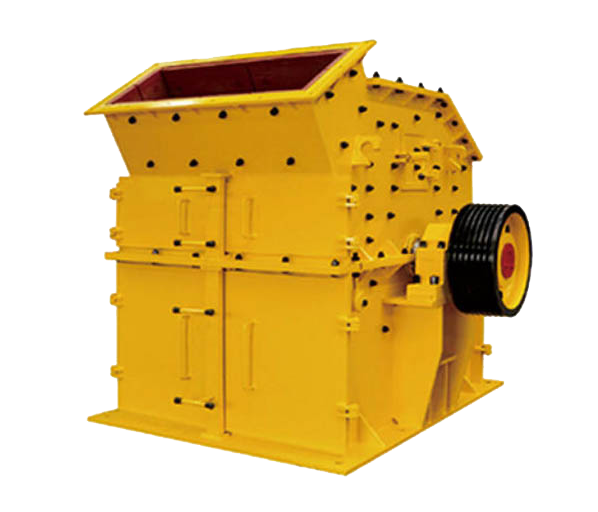
PX fine impact crusher family (PX-800 to PX-1822): document feed size, the 5–20 mm discharge band and whether the duty is crushing or sand making.
Step 3 — PC hammer crusher decision point: single-pass reduction on brittle feed
PC is the hammer crusher family, published in three configuration tiers. Compact models — PC-400×300 at 30–50 t/h and 11–22 kW, and PC-600×400 at 50–80 t/h and 18–30 kW — carry stated discharge sizes of under 10 mm and under 15 mm respectively. Standard models run from PC-800×600 (60–130 t/h, 45–55 kW) through PC-1000×800 (80–200 t/h, 90–110 kW) to PC-1000×1000 (100–260 t/h, 132–160 kW), all with a stated discharge size of under 15 mm. Heavy-duty models from PC-1250×1250 (150–360 t/h) to PC-1600×1600 (500–1,000 t/h) open the discharge band to under 20 mm, and to under 25 mm at the top of the range. Document at this decision point: the single-pass reduction the hammer stage is being asked to carry, the discharge band, the moisture behaviour of the feed, and the maintenance regime. Discharge size drifts with hammer wear and rotor-to-screen clearance; coarser product with an intact screen is normally a wear or clearance issue rather than a machine failure, and the practical correction — restoring the rotor-to-screen gap to roughly 10–20 mm and inspecting hammer wear on a fixed interval — should be written into the operating plan rather than improvised on site.
Step 4 — PCX decision point: fine and tertiary crushing
PCX is the strong-impact hammer crusher used for fine and tertiary duty. The range starts at PCX-0808 (30–50 t/h, 45 kW, discharge under 10 mm) and climbs through PCX-1010 (50–100 t/h, 90–110 kW), PCX-1212 (80–160 t/h, 130–160 kW) and PCX-1515 (100–200 t/h, 190–250 kW, discharge under 15 mm) to PCX-1518 (200–280 t/h, 240–340 kW) and PCX-1822 (250–350 t/h, 315 kW, discharge under 20 mm). Document at this decision point: the target discharge band at the fine end, the feed moisture and stickiness, and the wear-part consumption implied by the silica content of the feed. Where the feed is clean, low-abrasion and brittle, PCX converts a single stage into a fine product; where the feed is abrasive, that same one-pass advantage becomes a wear-cost decision that belongs in the record before the order, not after the first hammer change.
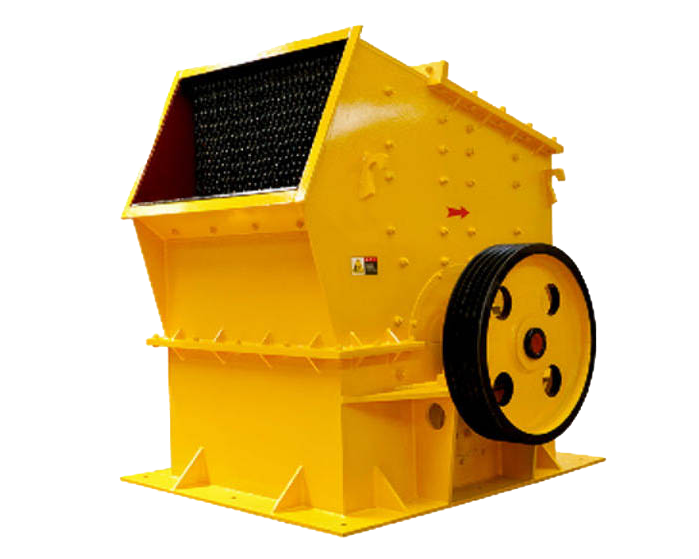
PCX strong impact hammer crusher (PCX-0808 to PCX-1822): document the discharge band, feed moisture and abrasiveness.
Step 5 — 2PG-Y roller crusher decision point: controlled low-tonnage reduction
The 2PG-Y roller crusher is a two-roll machine used for controlled fine reduction. The model documented in the published data is 2PG-1000, with a roll diameter of 1,000 mm, a roll length of 950 mm, a capacity range of 2–18 t/h and two 37 kW motors. Rolls are cast steel with alloy steel roll skins, and the stated application areas are cement, metallurgy, building material, refractory material and coal crushing. Document at this decision point: the exact duty tonnage — the stated capacity band is narrow, so this family belongs in small-volume or specialist circuits rather than in a mainline aggregate flow — the feed top size, the target product band, and the wear consumption of the roll skin against the abrasiveness of the feed.
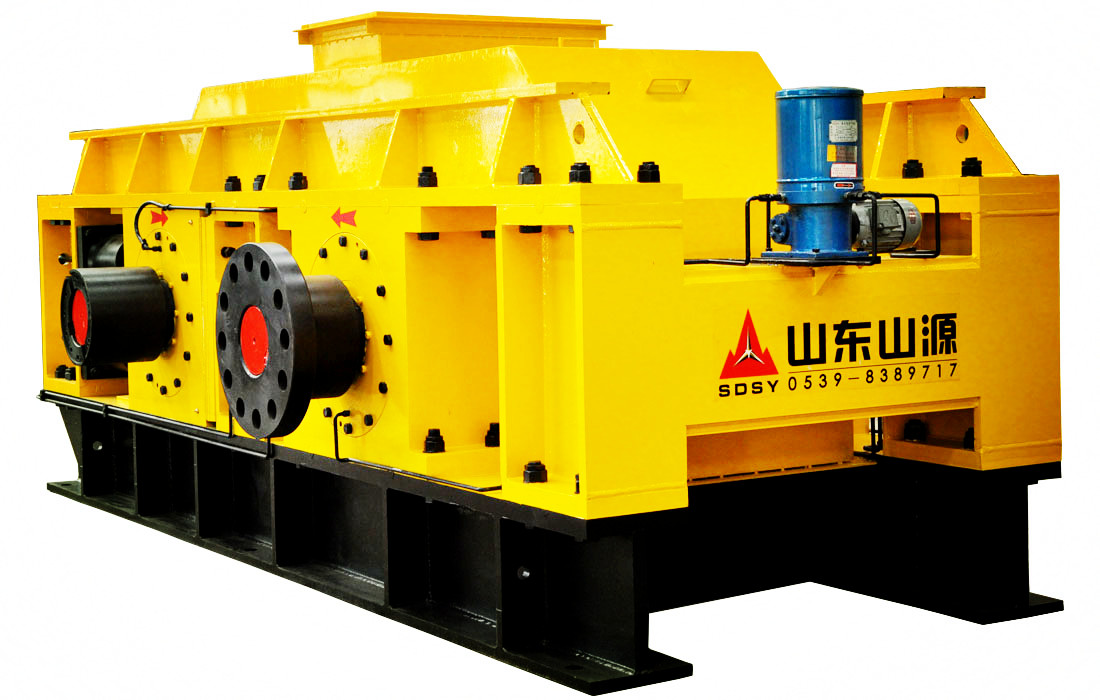
2PG-Y roller crusher (2PG-1000: 1,000 mm roll diameter, 2–18 t/h, two 37 kW motors): a low-tonnage, controlled-reduction decision point.
Step 6 — YK screen decision point: converting crushed material into saleable fractions
YK is the circular vibrating screen family that decides how many products the plant can sell. Published models run from 2YK-1248 through 3YK-1248 and 4YK-1248 and up the 1548, 1854, 2160 and 2470 deck sizes, in two-, three- and four-deck versions, with motor power from 5.5 kW to 22 kW, a stated screen hole size of under 50 mm, and a capacity range of 15–200 t/h. Document at this decision point: how many saleable fractions the market will take; the deck count and apertures that map to those fractions; the screen throughput against the 1.2–1.3 times line-capacity rule; and the moisture behaviour of the feed. Screening performance is affected by mesh clogging or wear, high material moisture, incorrect excitation force and aging springs — all of which belong in the record as operating conditions rather than as commissioning surprises.
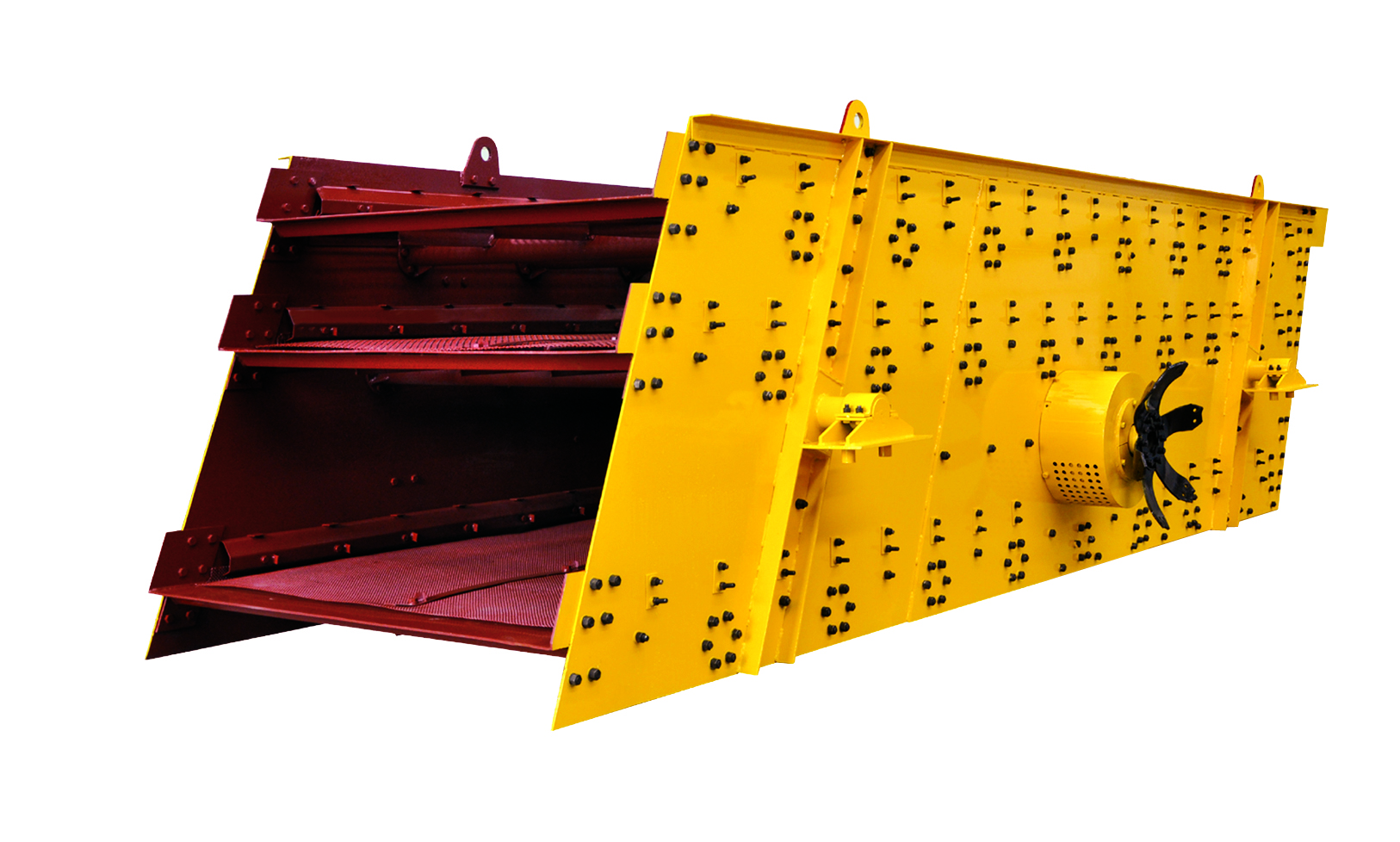
YK circular vibrating screens (2YK/3YK/4YK, 15–200 t/h, 5.5–22 kW): document deck count, apertures and moisture.
Step 7 — XS and FG sand washer decision point: clay content decides the machine
Sand washing is where the feed's clay content decides the machine, not the throughput alone. Two families are published.
XS is the wheel bucket washer, with models from XS-2600 (20–50 t/h, 5.5 kW) through XS-2800 (30–80 t/h, 7.5 kW) and XS-3000 (50–100 t/h, 11 kW) to XS-3200 (80–150 t/h, 15 kW); impeller rotation speed is 0.8–1.2 r/min and buckets are lined with polyurethane. The wheel type suits material that is low in clay and mainly needs dust and light mud removal, because it uses less water and loses less fine sand.
FG is the spiral sand washer, with models from FG-500 (20 t/h, 3–5.5 kW, 5–10 t/h of water) through FG-750 (40–50 t/h, 7.5 kW) and FG-1000 (50–70 t/h, 11 kW) to FG-1200 (70–110 t/h, 15 kW, 10–80 t/h of water). The maximum feed size across the family is under 10 mm. The spiral type is chosen where the feed is high in clay and needs strong scrubbing, accepting higher water consumption and greater fine-sand loss.
Document at this decision point: the measured clay content of the feed, the target mud content of the finished product, the throughput, the water available at site and the water the unit will consume, and the acceptable level of fine-sand loss.
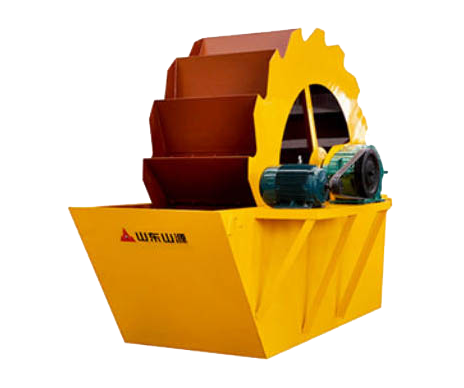
XS wheel bucket washers (20–150 t/h) and FG spiral washers (20–110 t/h, up to 80 t/h water): the selection record starts with measured clay content.
Use Cases: Three Documentation Profiles
Profile A — Sized aggregate only, no sand product
The line sells 5–40 mm fractions. Screens carry the specification load, so the YK deck count and apertures form the core of the record, and the 1.2–1.3 times line-capacity rule matters more than any crusher headline figure. A washing stage is added only where mud or dust removal is required; with low-clay feed, the XS wheel bucket washer is the usual starting point.
Profile B — Aggregate plus manufactured sand
A 0–5 mm product is required, so a fine stage is added: PX or PCX, matched to the feed size and the 5–20 mm discharge band, followed by screening and — where cleanliness matters — XS or FG washing against a recorded mud target. The record should link three numbers that are often chosen independently: crusher discharge band, screen cut points, and washer feed size, which is under 10 mm for the FG family.
Profile C — Cement raw material and specialist fine reduction
Where the market is a cement plant feed or a low-volume brittle-material duty, the PC hammer and PCX strong-impact hammer families are the ones documented, with single-pass reduction, discharge band and moisture limits recorded. For controlled, low-tonnage fine reduction in cement, metallurgy, building material, refractory or coal duties, the 2PG-Y roller crusher is documented against the exact duty tonnage rather than against an assumed flow.
Profile D — Overseas and remote sites
Where the line is exported, site conditions belong in the record. Published support includes 380 V / 440 V / 415 V / 660 V configurations, tropicalized or desert-rated options, multilingual manuals and a spare parts kit shipped with the equipment. Recording those items before the order is placed converts them from commissioning problems into line items.
Comparison Table: The Equipment Families and the Parameters They Anchor
| Family | Line role | What the buyer must document | Published range (LBZG data) |
|---|---|---|---|
| PX — new type fine impact crusher (sand maker) | Fine reduction and sand-making stage | Max feed size, crushing or sand-making duty, 5–20 mm discharge band, abrasiveness | PX-800 to PX-1822; max feed 300–800 mm; crushing duty 30–270 t/h; 30–270 kW |
| PC — hammer crusher | Secondary / medium-fine crushing of brittle, low-abrasion material | Max feed size, discharge band (under 10/15/20/25 mm by tier), moisture, hammer wear interval | PC-400×300 to PC-1600×1600; 30–1,000 t/h; 11–560 kW |
| PCX — strong impact hammer crusher | Fine and tertiary crushing | Target fine discharge band, feed moisture, silica content and wear cost | PCX-0808 to PCX-1822; 30–350 t/h; 45–315 kW; discharge under 10/15/20 mm |
| 2PG-Y — roller crusher | Controlled, low-tonnage fine reduction | Exact duty tonnage, feed top size, product band, roll skin wear | 2PG-1000; roll dia. 1,000 mm; roll length 950 mm; 2–18 t/h; 37 kW × 2 |
| YK — circular vibrating screen | Sizing and grading into saleable fractions | Number of fractions, deck count and apertures, throughput at 1.2–1.3 × line capacity, moisture | 2YK-1248 to 3YK-2470; 2–4 decks; 5.5–22 kW; screen hole under 50 mm; 15–200 t/h |
| XS — wheel bucket sand washer | Washing for low-clay feed with low fine-sand loss | Feed fines, clay content, water available, target mud content below 3% for concrete or asphalt sand | XS-2600 to XS-3200; 20–150 t/h; 5.5–15 kW; impeller 0.8–1.2 r/min |
| FG — spiral sand washer | Scrubbing for high-clay, sticky feed | Clay content, feed size under 10 mm, water consumption, accepted fine-sand loss | FG-500 to FG-1200; 20–110 t/h; 3–15 kW; water 5–80 t/h |
Long-Term Supply: Turning the Parameter Record into a Working Partnership
Sourcing a stone crushing production line is a multi-year commitment, and the parameter record is only half of it. The other half is the supply relationship behind the equipment, and it should be documented with the same discipline as the technical data.
- Commercial terms. The minimum order quantity is 1 set or 1 unit, which applies to pilot and test orders as well as volume orders. Delivery is arranged under FOB (Qingdao), CIF or EXW. Payment terms consist of a 30% T/T deposit and 70% T/T before shipment, with L/C available for large orders, and acceptance is defined as a pre-shipment factory test plus on-site installation and commissioning.
- Documentation pack. ISO 9001, ISO 14001 and OHSAS 18001 management system certifications and CE export certification for foreign trade projects, together with English manuals and spare parts lists, material and welding inspection reports, factory test-run videos, and sea-worthy packing and shipping documents. Shandong Lianbang Heavy Industry is also a participant in revising national crusher industry standards.
- Export footprint as a delivery signal. The company's products are sold across every province and municipality in China and to more than 40 overseas countries, with roughly 30% of products exported and export business accounting for 30% of total sales. Middle East markets include Saudi Arabia, the United Arab Emirates, Iraq and Qatar; Central Asian markets include Russia, Kazakhstan and Uzbekistan; Southeast Asian markets include Indonesia, Malaysia, Vietnam and the Philippines; African markets include Nigeria, Kenya and Ghana.
- Long-term support structure. A complete-line scope with a one-year warranty, unified after-sales service and a single contact for all equipment issues, spare parts managed as one inventory, and a service network of 8 overseas offices, 6 domestic branches and 10 local offices staffed by more than 60 service personnel. For remote sites, equipment is shipped with a spare parts kit.
- Continuity indicators. Two production bases covering a total area of 120,000 m² with 40,000 m² of standard workshops and more than 150 sets of processing equipment; annual output of 2,000 units; a company registered in 2013 whose technical origins trace back to Chengming Machinery, an affiliated enterprise established in 1996.
How to use this in a purchase file: attach the filled parameter record to the enquiry, ask for model-level confirmation against it, and make the delivery schedule, acceptance test and spare parts list contractual items. The parameter record becomes the reference document for the next ten years of operation, not just for the order.
FAQ
Which compliance documents should be verified before a stone crushing production line is ordered?
Buyers should verify the supplier's ISO 9001, ISO 14001 and OHSAS 18001 management system certifications, CE export certification for foreign trade projects, full English technical documentation including manuals, drawings and spare parts lists, material and welding inspection reports, factory test-run videos, and sea-worthy packing and shipping documents. Acceptance should be written into the contract as a pre-shipment factory test plus on-site installation and commissioning.
How do I confirm that a PX, PC, PCX or 2PG-Y crusher, a YK screen and an XS or FG washer actually match my line?
Match documents, not descriptions. Check the maximum feed size against the largest lump, the required discharge or cut size, and the throughput against the capacity-matching rule: feeder at 1.1–1.2 times the primary crusher's rated capacity, secondary crusher at 1.0–1.1 times the actual output of the stage ahead of it, screens at 1.2–1.3 times line capacity and conveyors at 1.2 times maximum flow. Published family ranges are PX-800 to PX-1822 at 30–270 t/h, PC-400×300 to PC-1600×1600 at 30–1,000 t/h, PCX-0808 to PCX-1822 at 30–350 t/h, 2PG-1000 at 2–18 t/h, YK screens at 15–200 t/h with two to four decks, XS-2600 to XS-3200 at 20–150 t/h and FG-500 to FG-1200 at 20–110 t/h. Catalog capacity is a rated figure, and actual throughput is typically 70–85% of that rating.
What commercial terms belong in the project budget?
Record the minimum order quantity, which is 1 set or 1 unit and covers pilot and test orders as well as volume orders; the delivery terms, which are FOB (Qingdao), CIF or EXW; the payment terms of a 30% T/T deposit with 70% T/T before shipment, with L/C available for large orders; and the acceptance criteria of a pre-shipment factory test plus on-site installation and commissioning. Budgets should be built on site-matched capacity calculations rather than catalog ratings, because rated figures assume ideal feed size, hardness and moisture conditions.
Can the configuration be validated before the order is placed?
Yes. A 50 kg sample can be sent for test crushing to verify product shape, fines content and wear-part consumption before the model is finalized, and site conditions such as voltage, climate and material data can be confirmed at the same time. This is the cheapest point in the project at which to change a discharge band, a screen deck count or a washer type. Buyers who want to start with a single unit can do so, because the minimum order quantity is 1 set or 1 unit.
How can I check that a Chinese stone crushing production line supplier will keep a reliable delivery schedule?
Base the check on written clauses and verifiable export activity rather than assurances. Put the production and delivery schedule, the pre-shipment factory test and the shipping documents into the contract, and confirm the trade terms and payment structure in writing. Export footprint is a practical indicator: Shandong Lianbang Heavy Industry Co., Ltd. sells across every province and municipality in China and to more than 40 overseas countries, with approximately 30% of products exported to Middle East markets including Saudi Arabia, the UAE, Iraq and Qatar, Central Asian markets including Russia, Kazakhstan and Uzbekistan, Southeast Asian markets including Indonesia, Malaysia, Vietnam and the Philippines, and African markets including Nigeria, Kenya and Ghana, supported by a spare parts kit and overseas service arrangements for remote sites. To request a delivery schedule for a specific line configuration, contact the LBZG team or download the company brochure below.
Conclusion: The Line Is Only as Good as Its Written Parameters
PX, PC, PCX and 2PG-Y crushers, YK screens and XS and FG sand washers are not interchangeable components; each family answers a different combination of feed size, product size, throughput and material behaviour. The selection work that prevents expensive surprises is not a longer specification document — it is a shorter, more disciplined one: four numbers per unit, a capacity-matching rule that keeps upstream surplus and downstream step-down, a measured clay content before any washer is chosen, and commercial terms that turn delivery, acceptance and spare parts into contractual items rather than promises. Buyers who document the parameters first can compare models on evidence; buyers who do not end up comparing brochures.
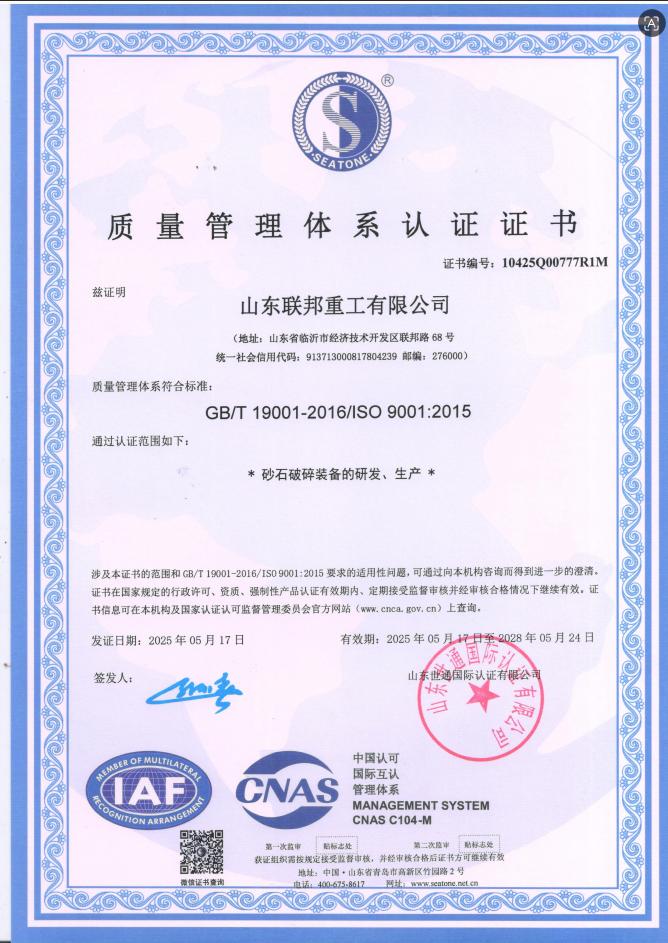
Compliance documentation — ISO 9001, ISO 14001, OHSAS 18001 and CE export certification — is part of the selection record, not an afterthought.
Next step: a documented line proposal
Send your maximum feed size, target throughput, required fractions, clay and moisture data, and site conditions. The LBZG team will return a matched configuration with model-level parameters for the PX, PC, PCX, 2PG-Y, YK, XS and FG equipment in the line, together with a delivery schedule and a spare parts list.
Email: lbzg@lbcrusher.com | WhatsApp: +86 139 5388 7097 | Website: www.sypsj.cn
Brochure download: Shandong Lianbang Heavy Industry product brochure (PDF)
Have Questions or Need More Details?
Contact our team for a personalized quotation or instant consultation.
Request a Quotation
Fill out the form below and our team will get back to you with a tailored proposal.
WhatsApp Direct Chat
Prefer to chat in real-time? Message us on WhatsApp for instant assistance & quick answers.
- Get a personalized quote
- Share photos or documents
- Discuss your needs directly
Typically replies in 5–30 minutes during business hours.