
Agriculture Pillow Block Bearings Ranked: Disk Harrow, Square Bore, and Round Bore Picks
Agricultural machinery rarely fails in a clean environment. It fails in a field, mid-season, with the replacement window measured in hours instead of weeks. That is why the bearing decision on a disc harrow, a planter or a grain conveyor is almost never about a headline catalogue number. It is about which bore interface, which sealing arrangement and which lubrication strategy will still be running at the next service interval.
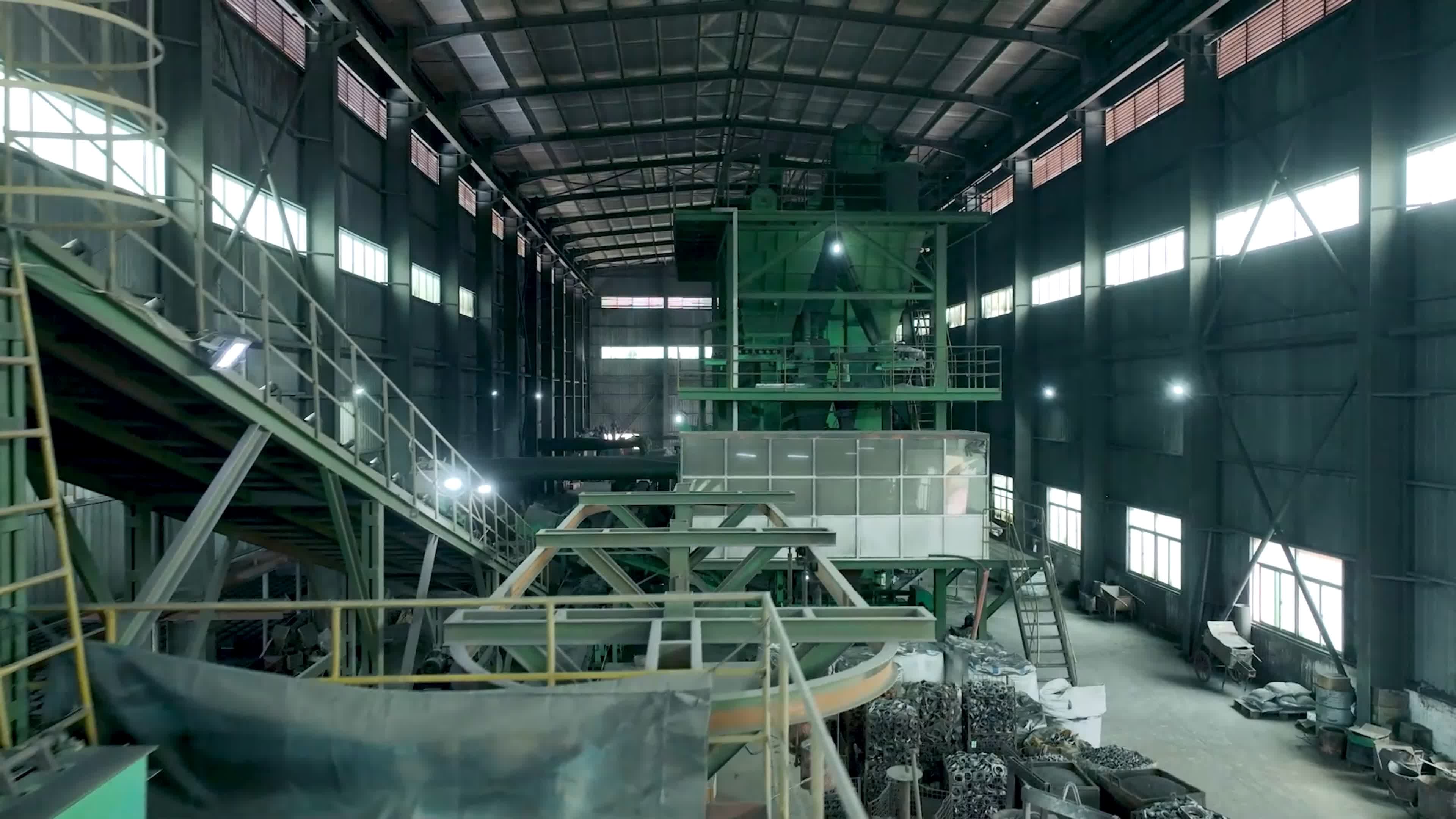
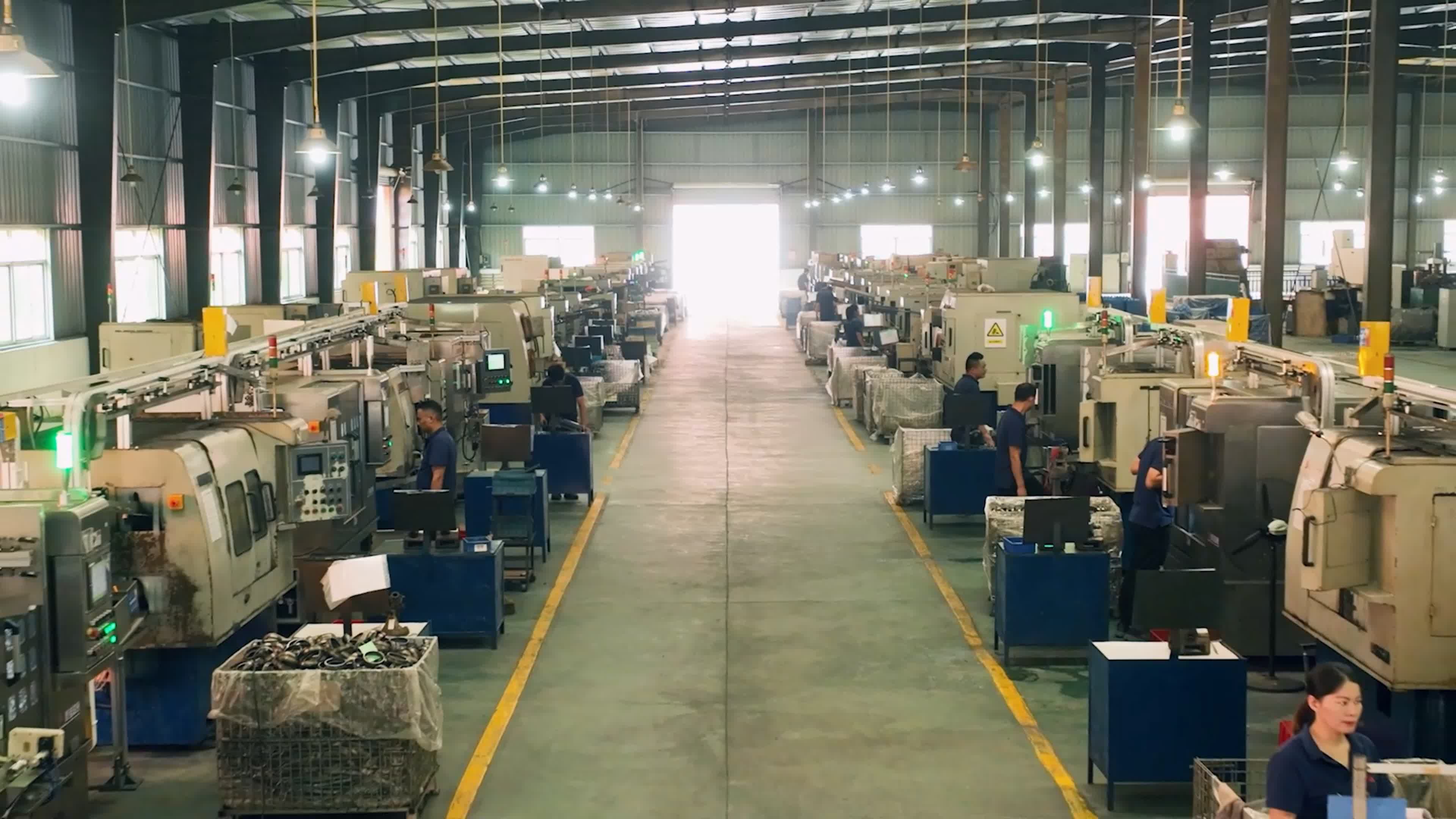
This ranking covers the three agricultural mounted bearing options buyers ask about most often: disk harrow bearings, square bore bearings and round bore bearings. All three families are supplied by LDK — Deyuan Smart Technology (Fujian) Co., Ltd., a bearing manufacturer established in 1986, operating a 90,000 m² facility in Fujian, China, with approximately 130 employees, 12 engineers and an annual output of 15,000,000 units.
A note on the word “ranked”. These three are not three grades of one product. They are three answers to three different shaft conditions. The order below reflects how much application-specific protection each option provides in the field, and how much specification risk it removes from the buyer’s side. A round bore bearing is not inferior to a disc harrow bearing — it is simply being asked to do a different job.
How This Ranking Was Built
Every position below is decided against five criteria that a buyer can verify from published product data, rather than from a sales claim.
- Shaft interface fit — does the bore geometry match the shaft directly, or does it need an adapter?
- Contamination defence — what sealing is actually specified for the unit?
- Serviceability — can the unit be relubricated in the field, or is it pre-lubricated and non-relubricable?
- Mounting configuration — is the bearing held in a dedicated structure, or does it mount directly onto the implement?
- Portfolio completeness — if the shaft or the bore changes, can the same supplier cover the transition without a second sourcing exercise?
One clarification on terminology, because it affects how the comparison should be read. The three families below are farm implement bearings rather than cast-iron housed pillow blocks. They appear together here because buyers evaluating mounted agricultural bearings compare them side by side, and because the same supplier portfolio covers both paths — implement bearings on one side, and the classic housed units (UCP, UCF, UCFL, UCT, UCPH, UCP3) on the other.
The Problem: Three Shaft Conditions, One Short Service Window
An agricultural bearing is usually specified under time pressure. A harrow is already in the yard, the season is already turning, and the shaft in front of the technician is either round, square or hex. Each of those shafts imposes a different mechanical problem.
A round shaft needs the inner ring locked against rotation, and that locking method — set screw, eccentric collar, concentric collar or adapter sleeve — becomes the first point of failure if it is chosen carelessly. A square shaft transmits torque through the bore geometry itself, which removes the locking problem but makes the bore tolerance and the seal the critical variables. A disc harrow hub adds a third constraint: the bearing is carried in a dedicated two-part stamping, so the bearing and its mounting structure have to be treated as one assembly rather than as separate line items.
The common mistake is selecting on “will it fit” rather than “will it survive”. A bearing that seats correctly on the shaft but cannot be relubricated in a position that is greased twice a season will fail on a predictable schedule, regardless of how well it was machined.
Industry Background: Why Agricultural Bearings Fail Differently
Agricultural bearings typically run at low rotational speed but absorb repeated shock loads alongside abrasive dust, mud and — in some facilities — regular washdown. In this environment, contamination ingress generally dominates the failure route rather than classical rolling fatigue. The practical consequence is that sealing and lubrication strategy carry more weight in the selection decision than the load rating alone.
That is precisely why all three families in this ranking specify a triple lip seal, and why all three use chrome steel (GCr15 / AISI52100) as the insert material. The seal and the steel are the shared baseline. What genuinely differs between the three is the bore interface, the mounting structure and whether the unit can be relubricated.
Manufacturing depth matters here as well. LDK produces both the bearing insert and the housing in-house, and its insert bearing bore range runs from 10 mm to 140 mm across more than 100 combinations of material and housing type. Roughly 60% of output is exported to Europe, North America, Latin America and Oceania, and manufacturing is carried out in IATF 16949 certified facilities — a quality management system certification issued by BV, valid from 26 January 2024 to 25 January 2027.
The Three Picks, Ranked
Disk Harrow Bearings — the highest application-specific protection
Best for: disc harrow disc replacement and other high-shock, high-dust implement positions where the bearing is carried in a dedicated two-part stamping.
This is the only one of the three families that combines a dedicated mounting structure with field relubrication, which is why it takes first place. A harrow bearing works close to the soil line, takes direct impact through the disc, and is usually serviced on a seasonal rhythm rather than a weekly one. A unit that can be re-greased during that service works with the maintenance schedule instead of against it.
It also carries the widest bore flexibility of the three: the range is published as available in round bore or square bore, so a single family can cover both shaft conventions on the same implement line.
LDK range: ST491A, ST491A-I, ST491A-II, ST491B, ST491B-I, ST491B-II, ST209-1 1/8, ST209-1 1/8-1, ST209-1 1/8-11, ST211-1 3/4, ST211-2 3/16, ST211-2 3/16-1, DHU40S-211, DHU45R-209, DHU55R-211, DHU55R-211-I, FD211-1 1/2
Type: disk harrow bearing units / farm implement bearing
Bore: round bore or square bore
Seal: triple lip seal
Mounting: mounted in two stampings
Lubrication: relubricable
Material: chrome steel (GCr15, AISI52100)
Application: agriculture machinery
Limitation to plan for: the two-stamping mounting is a system, not a drop-in substitute for a standard housed pillow block. Buyers replacing a complete hub should confirm that the stamping pair is included in the order, otherwise the bearing arrives without the structure that holds it.
Square Bore Bearings — the direct answer to a driven square shaft
Best for: driven shafts and implements where a square shaft must transmit torque without the inner ring slipping on the shaft.
A square bore removes the locking problem at its root. No set screw, no eccentric collar and no adapter sleeve has to be trusted to hold torque on a driven shaft, because the bore geometry does that work. For a planter drive or a powered implement shaft, that is a meaningful reliability gain.
The trade-off is serviceability, and it should be stated plainly: the square bore range is published as pre-lubricated and non-relubricable. Its service life is fixed by seal integrity and the initial grease charge, so correct seal selection at the specification stage carries more consequence than it does on a relubricable unit.
A separate hex bore variant within the same agricultural portfolio is published as relubricable. Where field re-greasing is mandatory on a non-round shaft, that variant is the closer match.
Square bore range: W208PPB13, W208PPB6, W208PP5, W208PPB5, W208PP8, W208PPB8, W208PPB11, W208PPB12, W209PPB5, W210PP4, W210PPB4, W211PP3, W211PPB3, W211PP5, W211PPB6
Hex bore variant: 205NPPB AH02, 206NPPB AH02, 206NPPB AH04, 207NPPB AH09, 207KPP3, 207KPP17, 207KPPB3
Seal: triple lip seal
Lubrication: pre-lubricated, non-relubricable (square bore); relubricable (hex bore)
Material: chrome steel (GCr15, AISI52100)
Limitation to plan for: because the square bore unit is sealed against re-greasing, the replacement interval has to be planned into the maintenance calendar rather than driven by observed condition.
Round Bore Bearings — the widest fit, the least differentiation
Best for: standard round shafts, general implement positions, and any application where interchangeability matters more than a dedicated mounting structure.
Round bore units fit the largest number of shafts, and that is simultaneously their strength and the reason they sit third here. They solve the fewest application-specific problems: on a round shaft, locking method and seal become the whole reliability story, and a plain round bore unit is pre-lubricated and non-relubricable in the same way as its square bore counterpart.
Where this family wins is inventory discipline. A single round bore reference can serve several implement positions across a fleet, which reduces the number of spare part numbers a dealer or a large farm has to stock.
LDK range: 205PPB7, W208PPB7, W208PP10, W208PPB23, W209PPB2, W209PPB4, W210PP2, W210PPB2, W211PP2, W211PPB2
Bore: round bore
Seal: triple lip seal
Lubrication: pre-lubricated, non-relubricable
Material: chrome steel (GCr15, AISI52100)
Limitation to plan for: on high-shock positions such as a disc hub, a plain round bore unit is not a substitute for the dedicated disc harrow family, because it lacks the two-stamping mounting structure.
Step-by-Step: Specifying the Right One
The sequence below turns the ranking into a specification decision that a maintenance planner or a purchasing engineer can defend internally.
Step 1 — Identify the shaft geometry. Measure the shaft across flats and across corners. A round shaft, a square shaft and a hex shaft each map to a different family, and a bore that “almost fits” will fail earlier than a bore that fits correctly.
Step 2 — Decide whether the shaft is driven. If torque passes through the shaft, the bore geometry has to carry it. That points to a square bore or a hex bore rather than a round bore with a locking collar.
Step 3 — Decide whether the unit will be relubricated in service. This single question changes the answer more often than any other. If a technician can reach the unit twice a season, choose within the relubricable options. If the unit is buried inside an assembly, choose a pre-lubricated design deliberately and plan the replacement interval instead.
Step 4 — Confirm the mounting structure. A disc hub needs the two-stamping arrangement. A general implement position may accept a direct-mount bearing. A conveyor or drive end may be better served by a cast-iron housed pillow block from the UCP or UCF series instead of an implement bearing.
Step 5 — Check the adapter path if the bore is tapered. Tapered bore inserts lock through an adapter sleeve rather than through the shaft, and the sleeve has to be ordered with the insert. This is covered in the next section.
Step 6 — Validate a small batch before the full order. Sealing performance and fit are best confirmed against the actual implement rather than against a drawing, particularly where a stamped hub has been in service and may have deformed.
Where Adapter Sleeves and Matching Bearing Inserts Fit In
Not every agricultural position resolves to a plain bore. Where a tapered bore insert is used — common on conveyor and drive ends — the locking element is an adapter sleeve rather than the shaft itself. Buying the insert without the sleeve is one of the more frequent ordering errors on mounted bearing projects.
LDK supplies adapter sleeves in H204–H222, H304–H322, H2304–H2356 and H3024–H3080 sizes. Each set is a quick sleeve with lock nut and lock washer, made in carbon steel, and is available in metric H sizes or in inch HE, HA and HS sizes. The matching inserts are the UK2 series, a spherical ball bearing with tapered bore and adapter sleeve locking covering a 20 mm to 80 mm shaft range, and the stainless steel SUK2 series covering 20 mm to 55 mm. Both are self-aligning and relubricable.
If the application is better served by a cast-iron housed unit, the same portfolio covers that route as well:
- UCP2 — two-bolt pillow block, set screw locking, 12 mm to 100 mm shaft, HT200 cast grey iron housing, self-aligning and relubricable.
- UCF2 — four-bolt flange unit, 12 mm to 90 mm shaft.
- UCFL2 — two-bolt flange unit, 12 mm to 90 mm shaft.
- UCT2 — take-up unit, 12 mm to 90 mm shaft.
- UCPH2 — high-centre pedestal base pillow block, 12 mm to 60 mm shaft.
- UCP3 — heavy duty two-bolt pillow block, 25 mm to 140 mm shaft.
Sourcing the agricultural insert, the adapter sleeve and the housed unit from a single manufacturer removes a real coordination risk: the sleeve tolerance, the insert taper and the housing seat are designed against one another rather than assembled from three catalogues.
Use Cases: Matching the Pick to the Job
Disc harrow refurbishment. The two-stamping disc harrow family is the direct match. Because the range is published in both round bore and square bore, the same order can cover implements from two different vintage fleets without splitting the purchase.
Driven square-shaft implements. Square bore units, ordered with the replacement interval built into the maintenance calendar because the units are pre-lubricated and non-relubricable. Where re-greasing is unavoidable on a non-round shaft, the hex bore variant is the closer fit.
Round-shaft conveyors and cleaning sections. Round bore units, chosen for interchangeability and stock rationalisation, with the understanding that the seal carries most of the reliability burden.
Grain handling and implement hubs with tapered bores. UK2 inserts with H-series or HE/HA/HS adapter sleeves, or a cast-iron UCP/UCF housed unit where the mounting face allows a bolted housing.
For buyers assessing whether a supplier can hold these conditions outside agriculture as well, LDK’s published project record includes stainless steel bearing units supplied for offshore processing equipment in the United States — 70,000 units, meeting a 500-hour rust-free requirement with RoHS/REACH compliance — and plastic bearing units supplied for sorting machinery in New Zealand, where corrosion resistance under frequent washdown and chemical exposure was the governing requirement. These are not agricultural applications, but they test the same two variables that decide agricultural bearing life: sealing and corrosion resistance.
Comparison Table
| Attribute | Disk Harrow Bearings | Square Bore Bearings | Round Bore Bearings |
|---|---|---|---|
| Rank in this review | 1 | 2 | 3 |
| Bore interface | Round bore or square bore | Square bore (hex bore variant available) | Round bore |
| Seal | Triple lip seal | Triple lip seal | Triple lip seal |
| Lubrication | Relubricable | Pre-lubricated, non-relubricable (hex bore: relubricable) | Pre-lubricated, non-relubricable |
| Mounting | Mounted in two stampings | Direct implement mounting | Direct implement mounting |
| Insert material | Chrome steel (GCr15, AISI52100) | Chrome steel (GCr15, AISI52100) | Chrome steel (GCr15, AISI52100) |
| Best suited to | Disc hubs and high-shock, high-dust positions | Driven square shafts transmitting torque | Standard round shafts and stock rationalisation |
| Representative models | ST491A, ST491B, ST209-1 1/8, ST211-2 3/16, DHU45R-209, DHU55R-211, FD211-1 1/2 | W208PPB13, W208PPB6, W210PPB4, W211PPB3; hex: 207KPP3, 207KPPB3 | 205PPB7, W208PPB7, W209PPB2, W210PP2, W211PP2 |
| Main limitation | Requires the two-stamping structure | No field relubrication on the square bore range | No dedicated mounting structure |
All specifications above are as published by LDK for the listed product families. Bore and shaft dimensions should be confirmed against the actual shaft before ordering.
Frequently Asked Questions
What compliance documentation is available for these agricultural bearings?
Manufacturing is carried out under IATF 16949:2016, certified by BV and valid from 26 January 2024 to 25 January 2027. Environmental and occupational health and safety systems are certified to ISO 14001:2015 (certificate CN-00225E33951R3M) and ISO 45001:2018 (certificate CN-00225S23739R3M), both issued by CQM with validity from 16 October 2025 to 6 November 2028. RoHS compliance is verified by SGS reports, including report XMNEC25002179201_1 issued by SGS SCTC Standards Technical Services Co., Ltd Xiamen Branch, which covers an extensive model scope across the UC200, UCX00, UC300, UK200, UK300 and related series and is valid to 22 September 2035. Thermoplastic bearing housings are additionally covered by a TÜV Rheinland test report (168263398a 001) against U.S. FDA 21 CFR requirements, valid to 7 May 2030. Buyers should request the certificate or report that matches their exact model and market before approval.
Can bore size, seal or locking method be customized?
Yes, within defined production limits. LDK operates both OEM and ODM production modes. OEM covers private labelling, custom packaging, quality compliance planning, traceability and 8D problem solving. ODM covers design-for-manufacturing support, 2D and 3D prototyping, durability, safety and performance testing, and NDA and intellectual property protection. Monthly capacity is 300,000 units, with a minimum order quantity of 5,000 units for OEM and ODM production. Customization requests should specify the bore interface, seal requirement and locking method so that the correct insert and housing combination is quoted.
What drives the cost of an agricultural bearing order?
Four factors dominate. The first is bore geometry — a square or hex bore requires different machining from a round bore and is not interchangeable in cost terms. The second is lubrication strategy: a relubricable unit carries additional features that a pre-lubricated, non-relubricable unit does not. The third is material and sealing: triple lip sealing and chrome steel GCr15 insert material are the shared baseline across this range, while stainless steel inserts and thermoplastic or stainless housings sit at a different cost level. The fourth is volume and packaging, since the OEM and ODM minimum order quantity is 5,000 units. Because pricing is quote-based, buyers should submit the model, quantity and destination market rather than request a catalogue price.
Can I evaluate samples before committing to a production order?
Sample and quotation requests are the normal entry point for a new agricultural bearing specification. Because the three families differ in bore interface, mounting structure and lubrication strategy, a sample evaluation is the practical way to confirm that a selected reference seats correctly and seals correctly on the actual implement. Buyers should provide the shaft dimensions, the mounting arrangement and the intended service interval when requesting samples, so that the sample matches the production intent rather than a generic reference. Brochure documentation is available for download, and a technical contact can confirm model availability before the sample request is placed.
What are the lead time and minimum order quantity?
Lead time is 30 to 90 days, and the minimum order quantity is 5,000 units for OEM and ODM production. Monthly production capacity is 300,000 units, which means a single agricultural season’s requirement can typically be absorbed within one to three production months depending on model mix. Buyers planning a seasonal replacement programme should place the order against the lead time rather than against the harvest date, since a mixed order across three bore types will be scheduled across several production runs. Technical remote support is available after delivery.
Conclusion: Choose the Bore Condition First, the Bearing Second
The ranking in this review is not a quality ladder. It is a decision order. Disc harrow bearings take first place because they combine a dedicated two-stamping mounting structure with field relubrication and a choice of round or square bore — the largest number of application-specific problems solved in one family. Square bore bearings take second place because they solve the driven-shaft problem outright, at the cost of field serviceability on the square bore range. Round bore bearings take third place because they fit the most shafts and differentiate the least, which makes them the right answer for stock rationalisation and the wrong answer for a high-shock disc hub.
Whichever family the application points to, three specification habits prevent most of the avoidable failures: confirm the shaft geometry by measurement rather than by assumption, decide the lubrication strategy before choosing the part number, and order the adapter sleeve together with the tapered bore insert rather than after it.
Next Step: Sample, Quote or Technical Confirmation
LDK supplies disk harrow bearings, square bore bearings and round bore bearings from the same manufacturing base, alongside adapter sleeves, UK2 tapered bore inserts and the UCP, UCF, UCFL, UCT, UCPH and UCP3 housed ranges. Share your shaft dimensions, mounting arrangement and service interval to receive a matched sample or quotation.
Email: kzhang@ldk-bearings.com | Tel: +86 592-5807618 | Web: www.ldk-bearings.com
Have Questions or Need More Details?
Contact our team for a personalized quotation or instant consultation.
Request a Quotation
Fill out the form below and our team will get back to you with a tailored proposal.
WhatsApp Direct Chat
Prefer to chat in real-time? Message us on WhatsApp for instant assistance & quick answers.
- Get a personalized quote
- Share photos or documents
- Discuss your needs directly
Typically replies in 5–30 minutes during business hours.