
Evaluating OEM Capability: From Rod End Precision to Full Spherical Plain Bearing Supply
Buyers sourcing rod ends and spherical plain bearings often start by comparing a single part number and its unit price. That approach breaks down when the same manufacturer must also deliver a full spherical plain bearing range in matching materials, tolerances, and delivery windows. OEM capability is not a single product attribute — it is the ability to hold precision at the smallest rod end and still control full-spectrum spherical plain bearing supply.
This guide sets out a practical evaluation framework for buyers who need one partner capable of handling both rod end precision and full spherical plain bearing supply. It draws on verifiable product data, certification documents, and application experience from LDK (Deyuan Smart Technology (Fujian) Co., Ltd.), a bearing manufacturer established in 1986 in Fujian, China, operating a 90,000 m² facility with in-house production of both bearings and housings.
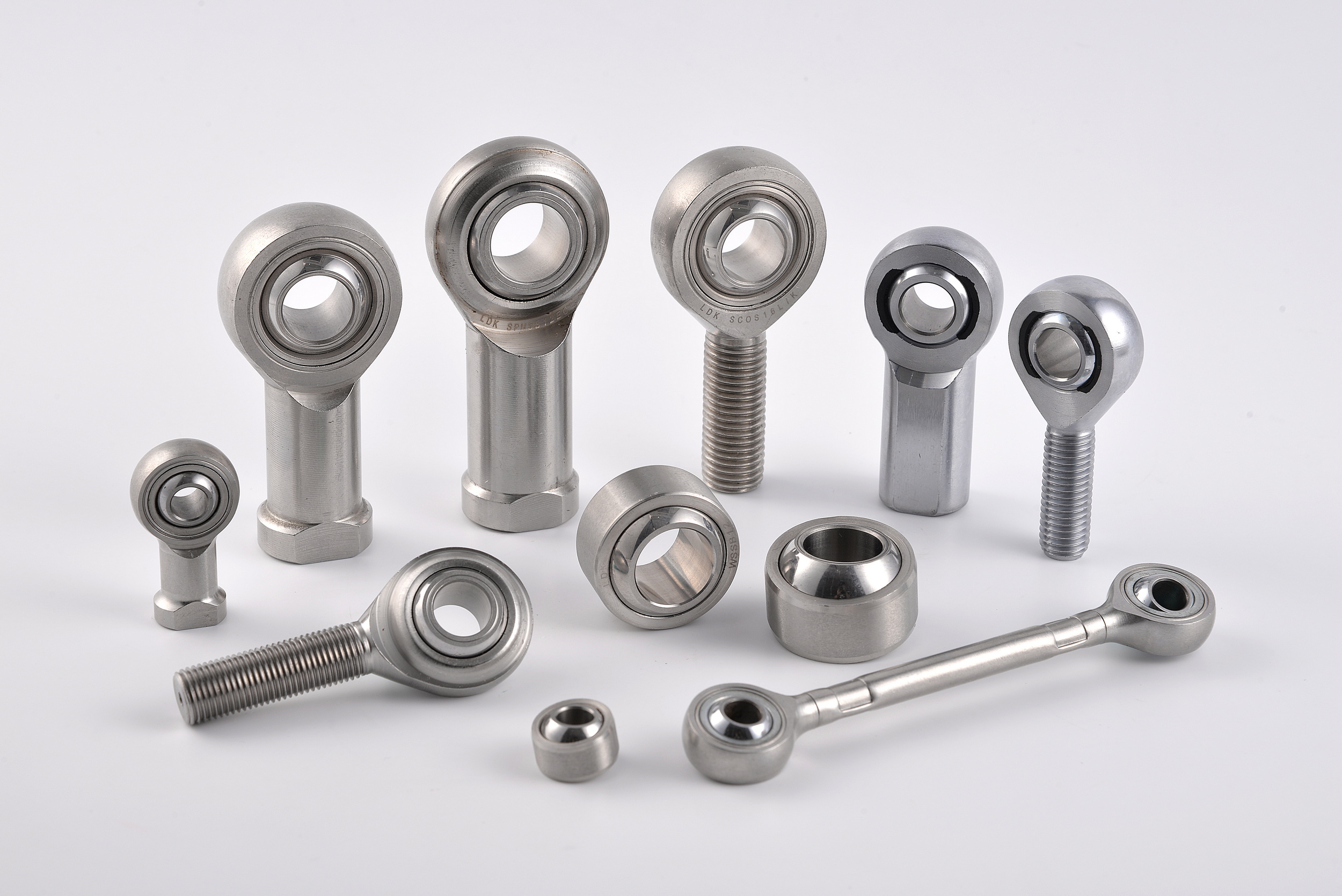
LDK rod end bearings and spherical plain bearings — a single supplier covering both product families.
The Single-Product Trap in OEM Sourcing
A supplier that quotes well on one rod end series may still fail the wider OEM programme. The failure modes are consistent:
- Material mismatch across families. A rod end body may be carbon steel with a brass race and a 52100 bearing-steel ball, while a spherical plain bearing in the same assembly uses GCr15 bearing steel rings hardened to different ranges. Sourcing these from two vendors creates tolerance stack-up and traceability gaps.
- Inconsistent heat treatment. Rod end balls are typically heat treated to HRC 56 minimum, while spherical plain bearing inner rings are hardened to HRC 58–64 and outer rings to HRC 54–60. A manufacturer must control multiple hardness windows within one facility, not outsource heat treatment per order.
- Broken size-range coverage. A buyer may need rod ends from 3 mm up to 80 mm and spherical plain bearings from 4 mm up to 300 mm or 320 mm. Suppliers that only cover part of the range force split orders, mixed lead times, and duplicate quality documentation.
- Fragmented certification. When two suppliers each hold different certificates, the buyer inherits the burden of proving RoHS, REACH, and IATF 16949 compliance across the combined bill of materials.
For buyers in the Research and Evaluation stages, the practical question is not "can this supplier make a rod end?" but "can this supplier make a rod end AND a full spherical plain bearing range, with one quality system, one traceability chain, and one delivery commitment?"
That standard is what the rest of this guide tests against.
Industry Background: Why Full-Spectrum Supply Matters
Third-party market data confirms the scale and the structural importance of these two product families together.
- The global plain bearing market was valued at USD 10.4 billion in 2024 and is expected to reach USD 17.8 billion by 2034, according to Dataintelo.
- The global rod ends market was valued at USD 1.79 billion in 2025, with Asia Pacific holding a 42.3% revenue share (Dataintelo).
- Automotive applications account for approximately 38.5% of rod end demand (Dataintelo, 2025).
- Spherical plain bearings are governed by international standard ISO 12240, covering radial (Part 1), angular contact (Part 2), thrust (Part 3), and rod ends (Part 4).
- China's bearing industry recorded revenue of CNY 231.5 billion in 2024, a 6.2% year-on-year growth, according to the China Bearing Industry Association.
The practical implication for OEM buyers is straightforward. Rod ends and spherical plain bearings are governed by a shared standard structure (ISO 12240), often used in the same mechanical assembly, and increasingly expected to come from a single qualified source. Buyers who treat them as two separate procurement exercises add cost, risk, and administrative overhead without improving the delivered assembly.
How to Evaluate True Full-Spectrum OEM Capability
The evaluation process below is structured around six evidence areas. Each one can be verified against documents, samples, and factory data — not marketing claims.
1. Product Range Breadth as Machining Evidence
A full rod end and spherical plain bearing catalogue is not a marketing list; it is a map of machining capability. Every distinct geometry implies a different turning, milling, grinding, or assembly operation. The wider the range, the more processes the factory must control in-house.
Consider what a single supplier covering both families must be able to produce:
- Rod end families: Metric and inch rod ends in 2-piece and 3-piece construction; male and female threads; right-hand and left-hand threads; forged or turned bodies; re-greasable and maintenance-free variants; studded types; loader-slot and injection-moulded types; hydraulic rod ends for welded cylinder applications; and pre-assembled rod end linkages.
- Spherical plain bearing families: Radial, angular contact, and thrust types; steel-on-steel with MoS2 treatment; steel-on-brass; steel-on-PTFE composite; steel-on-PTFE fabric; stainless steel variants; and self-lubricated designs — across metric and inch dimensions.
LDK's published product range illustrates the breadth required: rod end bearings in metric and inch series (including M, JM, JMX, JFX, NXF, NXM, NEXF, NEXM, NPOS, NPHS, PHS, POS, CHS, COS, SCHS, SCOS, SPHS, SPOS, SI, SA, NCOS, NCHS, CF, CM, JF, JM, F, and SJF/SJM series), hydraulic rod ends (SK, SF, SIR, SIGEW, SIQ), ball joints (SQ, SQZ, CS, R..G), spherical balls (TK, CBL..DP, HJMX, B..GE..C), and spherical plain bearings (GE..E(S), GEG..E(S), GEEW..ES, GEEM..ES-2RS, GE..C, GEG..C, GE..PW, GEBK..S, GE..ET-2RS, GEG..ET-2RS, GEZ..ES, GAC..S, GACZ..S, GAC..T, GX..S, GX..T, GE..ET-2RS, SGE..C, SGE..PW, SGE..ET-2RS, COM, SCOM, NSSB, WSSB, YSSB, MIB/AIB/SIB).
Buyer test: Ask the supplier to confirm which product families are manufactured in-house versus sourced. A genuine full-spectrum OEM can name the specific machining operations it performs internally — turning, heat treatment, grinding, phosphating, assembly, and testing — rather than listing categories.
2. Precision Across the Size Spectrum
Rod end precision and spherical plain bearing precision are not the same achievement. A manufacturer must hold tight tolerances at 3 mm bore on a miniature rod end and at 300 mm or 320 mm bore on a large spherical plain bearing. The smaller the part, the more sensitive the process is to variation; the larger the part, the more the process depends on heat-treatment stability and dimensional control after hardening.
The technical parameters below are drawn from LDK's published product data and show the range a full-spectrum supplier must control:
| Product family | Bore / shaft diameter range | Key material and hardness facts |
|---|---|---|
| Rod end bearings M series (M3–M16) | 4.826 mm to 25.4 mm (0.19"–1") | Carbon steel body, zinc plated, chromate treated; ball GCr15 heat treated HRC 56 min; race brass |
| Rod end bearings JM/JMX series | 4.826 mm to 25.4 mm | 3-piece ball+body+race; alloy steel body heat treated, zinc plated, chromate treated |
| Rod end bearings NPOS/NPHS | 5 mm to 30 mm | Carbon steel zinc plated body; ball GCr15 heat treated HRC 58–64, precision ground, polished; race nylon polymer |
| Rod end bearings SI..E(S) / SA..E(S) | 5 mm to 80 mm | Body carbon steel, zinc plated; mounted bearing GCr15 heat treated, surface phosphated |
| Hydraulic rod ends SIGEW..ES | 12 mm to 200 mm | Mild steel body; inner ring GCr15 HRC 58–64; outer ring GCr15 HRC 54–60, phosphated |
| Spherical plain bearings GE..E(S) | 4 mm to 300 mm | Outer ring GCr15 hardened HRC 54–60, phosphated; ball (inner ring) GCr15 hardened HRC 58–64 |
| Spherical plain bearings GEEW..ES | 12 mm to 320 mm | Outer ring GCr15 HRC 54–60, phosphated; inner ring GCr15 HRC 58–64, cylindrical extensions each side |
| Spherical plain bearings GE..ET-2RS | 15 mm to 300 mm | Outer ring GCr15 HRC 54–60, phosphated, with PTFE fabric liner; inner ring hard chrome plated |
| Spherical plain bearings GEZ..ES (inch) | 12.7 mm to 88.9 mm (0.5"–3.5") | Steel/steel, MoS2 treated; outer ring GCr15 HRC 54–60, phosphated |
| Spherical plain bearings GAC..S / GACZ..S | 25 mm to 200 mm (metric) / 12.7 mm to 82.55 mm (inch) | Angular contact; outer and inner rings GCr15 hardened HRC 58–64, phosphated |
| Spherical plain bearings GX..S / GX..T | 10 mm to 200 mm | Thrust type; steel/steel with MoS2, or steel/PTFE fabric for GX..T |
Additional evidence of range coverage includes sealed spherical plain bearing series such as GEEM..ES-2RS (20 mm to 80 mm) and GEG..ET-2RS (15 mm to 280 mm), stainless steel series such as SGE..C, SGE..PW, SGE..ET-2RS, and inch stainless series such as NSSB, WSSB, and YSSB (0.19" to 1"). A supplier that covers this range in one quality system is demonstrating more than catalogue breadth — it is demonstrating process control across hardness windows, surface treatments, and dimensional regimes.
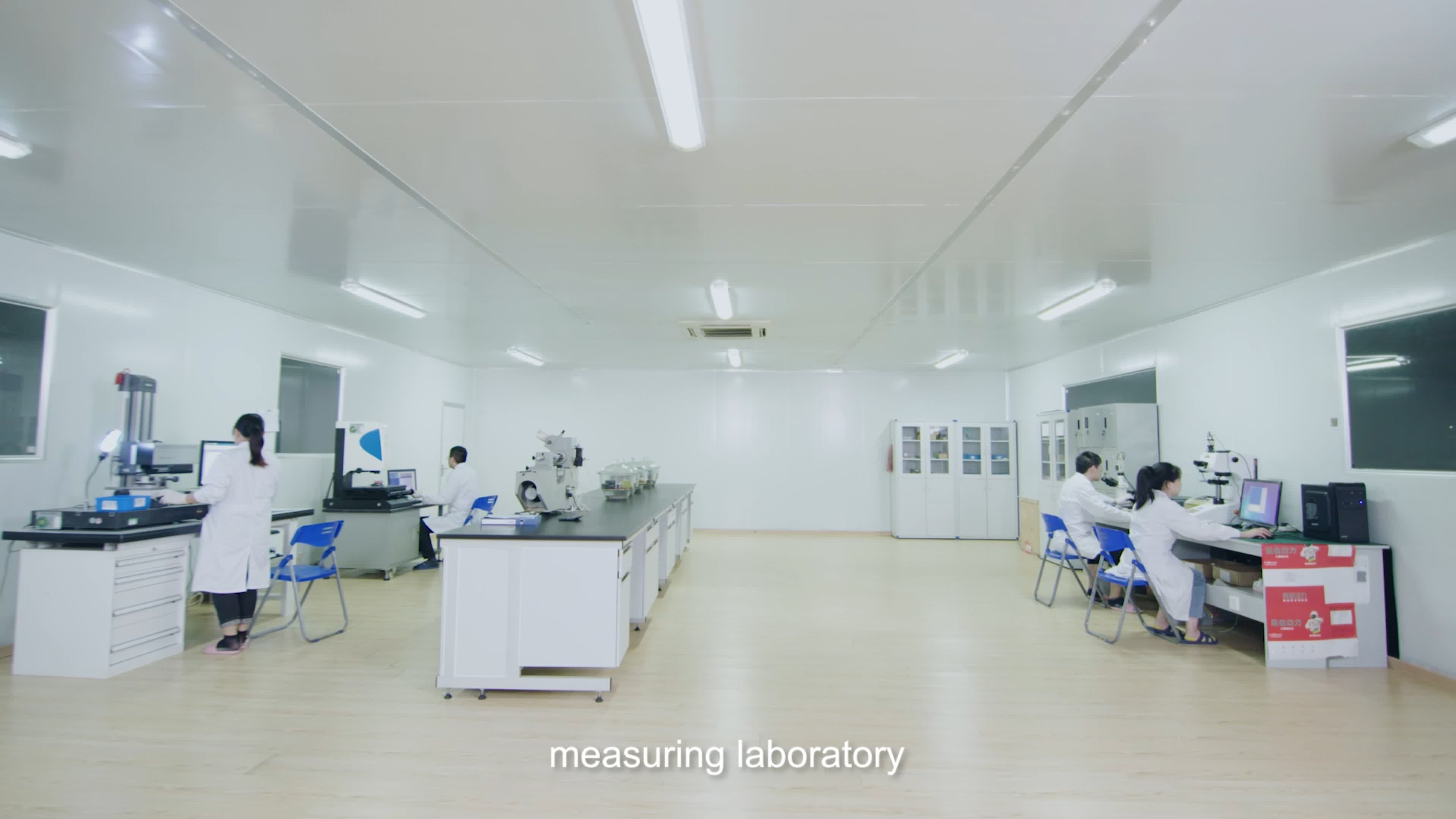
LDK measurement room — dimensional verification supports precision claims across the size range.
3. Dynamic Load Testing and Quality Consistency
Static dimensions are necessary but not sufficient. Rod ends and spherical plain bearings fail in service because of dynamic load, vibration, and wear — not because the bore was wrong at incoming inspection. A credible OEM must show evidence of dynamic and durability testing.
LDK's published capability list includes fatigue life testing, tensile strength testing, noise and vibration testing, and salt spray testing. These four tests correspond directly to the failure modes buyers care about:
- Fatigue life testing addresses the alternating load conditions that rod ends and spherical plain bearings experience in suspension, linkage, and actuator applications.
- Tensile strength testing verifies the body and thread strength of rod ends under pull-out or axial loading.
- Noise and vibration testing supports the low-noise, precise motion transfer required in industrial automation and HVAC applications.
- Salt spray testing supports corrosion-resistant claims for coated, phosphated, or stainless variants.
Documented application outcomes reinforce the testing discipline. For a heavy truck OEM in the United Kingdom, LDK supplied rod end bearings required to complete 5 million movements and withstand a temperature range of −40°C to 300°C in an engine-bay environment. For a fitness equipment customer in the Netherlands, LDK supplied rod end linkages verified to 20 million cycles, with a high-strength aluminium alloy replacing stainless steel to reduce weight by 30%.
For a cold storage application in New Zealand, LDK supplied customized bearing inserts with special grease verified to operate properly in −50°C environments. For a food processing OEM in the United Kingdom, the delivered solution achieved a 30% reduction in equipment ownership and maintenance cost, with grip-lock and solid-lube features used to prevent contamination and improve concentricity.
These are not laboratory claims. They are shipped application results, and they are the type of evidence buyers should ask for during evaluation.
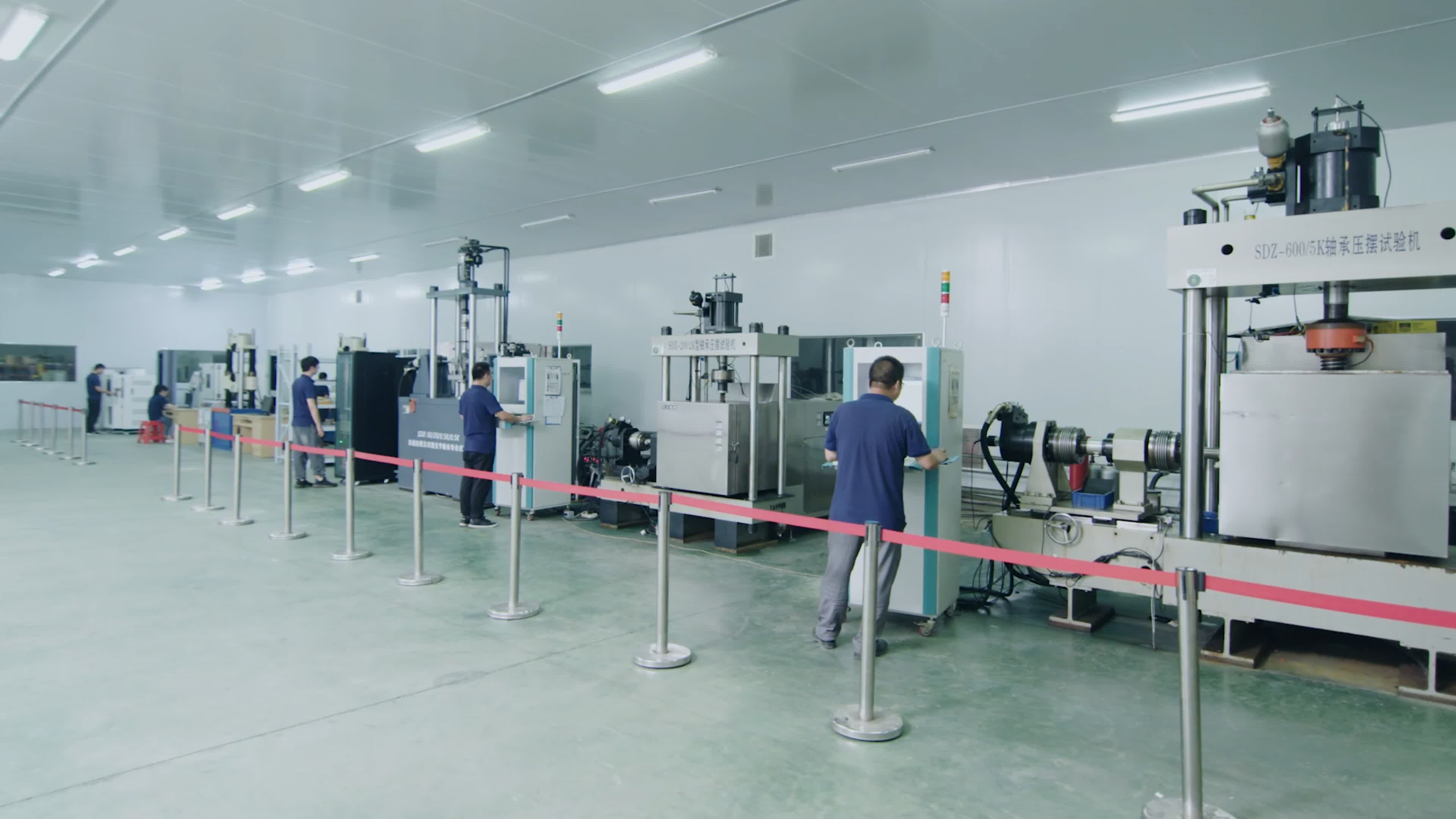
LDK reliability testing room — fatigue life, tensile strength, noise and vibration, and salt spray testing capability.
4. Stocking of Complete Size Ranges
Precision means little if the required size is not available when the production line needs it. Complete size-range stocking is a delivery assurance, not a convenience.
Evidence of complete range stocking can be assessed through:
- Published model designations covering the full range. LDK's published rod end model designations span 3 mm to 80 mm in metric series and 0.19" to 1" in inch series, while spherical plain bearing designations extend from 4 mm to 320 mm depending on series. A supplier that publishes contiguous model designations is signalling range coverage rather than cherry-picked SKUs.
- Monthly capacity and on-time delivery. LDK's published OEM capability includes monthly capacity of 300K units and an on-time delivery performance of at least 95%. For buyers planning production schedules, these figures indicate whether complete range supply can be sustained rather than filled in ad hoc.
- Lead time and MOQ structure. LDK's published lead time is 30–90 days with an MOQ of 5K units for OEM production. These are the commercial parameters buyers should compare against actual project timelines, not against idealised lead times.
- Export and logistics infrastructure. LDK's export ratio is 60%, with major markets including Europe, North America, Latin America, and Oceania. A supplier already shipping to these markets has established the freight, documentation, and customs processes required for repeat full-range supply.
5. Certification and Compliance as a Gate, Not a Bonus
For OEM buyers in regulated industries — automotive, food processing, medical, marine, and photovoltaic — certification is a gate. A supplier that cannot produce the certificate cannot be qualified, regardless of unit price.
The certification set below is drawn from LDK's published certification records. Buyers should verify each certificate's scope, issuing authority, and validity dates.
| Certification | Issuing authority | Certificate number | Validity | Scope |
|---|---|---|---|---|
| IATF 16949:2016 — Quality Management System | BV | IATF 16949 – FIRST EDITION | 2024-01-26 to 2027-01-25 | Global; manufacturing, permitted exclusions, design and development of products and services, product delivered, bearing and bearing housings |
| ISO 14001:2015 — Environmental Management System | CQM | CN-00225E33951R3M | 2025-10-16 to 2028-11-06 | Global; production and relevant management activities of ball bearing units, bearing housings and spherical plain bearings |
| ISO 45001:2018 — Occupational Health and Safety Management System | CQM | CN-00225S23739R3M | 2025-10-16 to 2028-11-06 | Global; production and relevant management activities of ball bearing units, bearing housings and spherical plain bearings |
| SGS RoHS Compliance Verification Report (GEG35ES-2RS) | SGS SCTC Standards Technical Services Co., Ltd Xiamen Branch | XMNEC25002178301_1 | 2025-09-22 to 2035-09-22 | EU market; EU RoHS Directive (EU) 2015/863 amending 2011/65/EU; covers GEG35ES-2RS and related GE/GEG/GEZ/GAC/GX/GEEW/GEEM/GEF/GE..XS/K/GEWZ/GEK series |
| SGS RoHS Compliance Verification Report (SIJK 20 C-R / CHS20) | SGS SCTC Standards Technical Services Co., Ltd Xiamen Branch | XMNEC25002178901_3 | 2025-10-16 to 2035-10-16 | EU market; covers SIJK 20 C-R (CHS20), PHS, POS, CHS, COS, PHS..EC, POS..EC, PHSB, POSB, CF, CM, CF..T, CM..T, SI..E/ES, SA..E/ES, SI..C, SA..C, JF, JM, GE..C, GEBK..S, GE..PW, COM, COM..T series |
Additional compliance-relevant facts include IATF 16949 certification of the manufacturing facility, a 12-engineer R&D team, and testing capability covering fatigue life, tensile strength, noise and vibration, and salt spray. LDK also states that its OEM capability includes quality compliance, IQC/IPQC/OQC capability, ROHS/REACH/FDA compliance, traceability, FMEA capability, 8D problem-solving capability, and private labelling with custom packaging.
Buyer test: Request the certificate number, issuing authority, scope, and validity dates for each certification. A supplier unwilling to provide these — or providing a certificate that expired — should be removed from the shortlist.
6. Capacity, Lead Time, and Traceability
The final evaluation area is the commercial and operational infrastructure that makes full-range supply repeatable.
LDK's published OEM capability includes a production mode covering OEM and ODM, monthly capacity of 300K units, lead time of 30–90 days, MOQ of 5K units, and an on-time delivery performance of at least 95%. Quality control is described as covering self-inspection and verification, second-party audit and inspection, and third-party audit and inspection. After-sales support is described as technical remote support.
The company profile adds that LDK was established in 1986, operates a 90,000 m² facility, employs approximately 130 people, has an annual output of 15,000,000 units, and exports 60% of production to Europe, North America, Latin America, and Oceania. The facility includes a well-equipped laboratory, a precision measuring room, and more than 10 workshops.
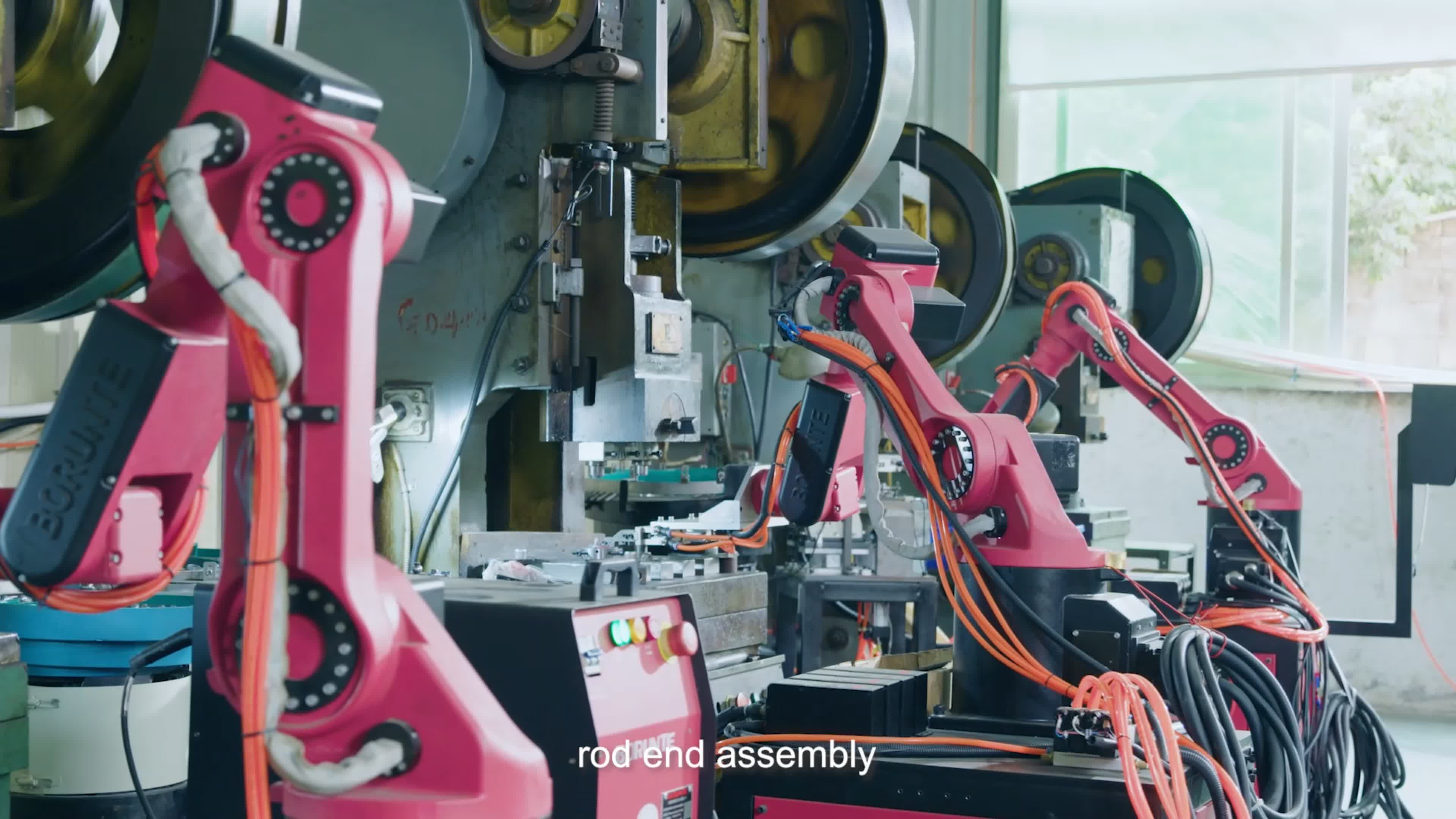
LDK automatic assembly workshop — in-house assembly supports full-range supply and traceability.
Step-by-Step Evaluation Checklist
Buyers can apply the following sequence. Each step produces a document, a sample, or a verifiable statement.
Use Cases Where Full-Spectrum Capability Matters
Full-spectrum OEM capability is not theoretical. It shows up in real programmes where rod ends and spherical plain bearings are used together or in adjacent assemblies.
Automotive EGR and Engine-Bay Linkages
A heavy truck OEM in the United Kingdom required rod end bearings to connect a pneumatic actuator to a lever within the exhaust system of large commercial vehicle diesel engines. The requirement included 5 million movements, operation from −40°C to 300°C, and resistance to typical road environment conditions. LDK supplied a maintenance-free, high-temperature-resistant, wear-resistant rod end from the SCHS stainless steel series (5 mm to 30 mm shaft diameter, PTFE composite sliding surfaces).
For an automotive OEM in Germany, LDK supplied rod end linkages for an EGR system required to support high-temperature environments, with a one-piece design providing robust durability and higher strength.
Food Processing and Hygiene-Critical Machinery
A food processing OEM in the United Kingdom required prevention of contamination, high concentricity, and low vibration. LDK supplied plastic bearing units and related components with grip-lock and solid-lube features, achieving a 30% reduction in equipment ownership and maintenance cost.
A Canadian ice machine manufacturer required improved clamping force and elimination of grease contact with food. LDK supplied stainless steel bearing units with concentric locking collars, triple-lip seals, food-grade solid lubricant, and electropolished surfaces. The concentric locking collar replaced conventional set screw, eccentric collar, or adapter sleeve locking; the solid lubricant removed the risk of occasional grease contact with food.
Cold Storage and Low-Temperature Conveyors
A New Zealand cold storage facility required conveyor bearings that would operate properly at −50°C. LDK supplied customized bearing inserts with special grease, appropriate internal clearance, silicon rubber seals, and special fit and alignment torque for high temperature. The result was stable low-temperature performance and extended service life.
Offshore and Corrosion-Critical Equipment
An offshore processing equipment customer in the United States required 500 hours of rust-free performance and RoHS/REACH compliance across 70,000 units. LDK supplied stainless steel bearing units with a patent-pending coating offering corrosion resistance beyond conventional stainless steel, reducing the cost of equipment ownership.
Industrial Automation and Fitness Equipment
A fitness equipment customer in the Netherlands required a lightweight, corrosion-resistant, conductive assembly rated for 20 million cycles. LDK supplied rod end linkages with high-strength aluminium alloy replacing stainless steel — a 30% weight reduction — and resolved an unstable electromagnetic interference issue through custom design and reliability verification.
Sorting Machinery and Washdown Environments
A sorting machinery OEM in New Zealand required high corrosion resistance, light weight, and tolerance of frequent washdowns, harsh chemicals, and high humidity. LDK supplied plastic bearing units (TP-SUCP, TP-SUEP, TP-SUCF, TP-SUEF, TP-SUCFL, TP-SUEFL series) with PBT thermoplastic housings and stainless steel 440 inner bearings, rated for operating temperatures of −35°C to 102°C.
Comparison: Single-Product Supplier vs. Full-Spectrum OEM Supplier
The table below summarises the practical differences buyers encounter when comparing the two sourcing models. All comparison dimensions are derived from the verified facts presented in this article.
| Evaluation dimension | Single-product supplier | Full-spectrum OEM supplier (LDK example) |
|---|---|---|
| Product families covered | Typically one family (rod ends or spherical plain bearings) | Both rod ends and spherical plain bearings, plus hydraulic rod ends, ball joints, spherical balls, and rod end linkages |
| Size range | Limited to the vendor's specialty SKUs | Rod ends from 3 mm to 80 mm (metric) and 0.19" to 1" (inch); spherical plain bearings from 4 mm to 320 mm depending on series |
| Material combinations | Usually one or two standard material sets | Carbon steel, alloy steel, stainless steel (304, 440, 17-4PH), brass, PTFE composite, PTFE fabric, nylon polymer, zinc base alloy, and GCr15 bearing steel |
| Heat treatment control | Often outsourced heat treatment per order | Multiple hardness windows controlled in-house: HRC 54–60 (outer ring), HRC 58–64 (ball/inner ring), HRC 56 min (rod end ball) |
| Dynamic testing | Limited or third-party per order | In-house reliability testing room supporting fatigue life, tensile strength, noise and vibration, and salt spray testing |
| Certification set | May hold one or two certificates | IATF 16949:2016, ISO 14001:2015, ISO 45001:2018, plus SGS RoHS verification for spherical plain bearings and rod ends |
| Monthly capacity | Typically lower and less documented | 300K units, with annual output of 15,000,000 units and on-time delivery performance of at least 95% |
| Lead time and MOQ | Variable; may change by product family | 30–90 days lead time; 5K units MOQ for OEM production |
| Quality control | Self-inspection often only | Self-inspection and verification, second-party audit and inspection, third-party audit and inspection |
| After-sales support | Limited to replacement sales | Technical remote support; FMEA and 8D problem-solving capability; traceability |
| Export experience | Domestic or limited export | 60% export ratio; major markets in Europe, North America, Latin America, and Oceania |
Frequently Asked Questions
1. What certifications can an OEM partner like LDK provide for rod ends and spherical plain bearings?
LDK holds IATF 16949:2016 (issued by BV, certificate number IATF 16949 – FIRST EDITION, valid 2024-01-26 to 2027-01-25, scope covering manufacturing, design and development, and delivered product of bearings and bearing housings). LDK also holds ISO 14001:2015 (CQM, CN-00225E33951R3M, valid 2025-10-16 to 2028-11-06) and ISO 45001:2018 (CQM, CN-00225S23739R3M, valid 2025-10-16 to 2028-11-06). For EU market access, LDK holds SGS RoHS Compliance Verification Reports: one for the GEG35ES-2RS spherical plain bearing and related series (certificate XMNEC25002178301_1, valid to 2035-09-22), and one for the SIJK 20 C-R (CHS20) rod end bearing and related PHS, POS, CHS, COS, and other series (certificate XMNEC25002178901_3, valid to 2035-10-16).
2. Can LDK handle both metric and inch rod ends and spherical plain bearings in one production programme?
Yes. LDK's published product range includes metric rod ends (M, PHS, POS, SI, SA, NPOS, NPHS, NCOS, NCHS, and others) and inch rod ends (JM, JMX, JFX, NXM, NXF, NEXM, NEXF, CF, CM, and others). Spherical plain bearings are also available in both metric series (GE..E(S) from 4 mm to 300 mm, GEEW..ES from 12 mm to 320 mm) and inch series (GEZ..ES from 12.7 mm to 88.9 mm, MIB/AIB/SIB from 0.19" to 1"). This means a single purchase order can cover multiple bore systems without splitting the order across suppliers.
3. What are LDK's MOQ, lead time, and monthly capacity for OEM production?
LDK's published OEM capability states a monthly capacity of 300K units, a lead time of 30–90 days, and an MOQ of 5K units. On-time delivery performance is stated at 95% or above. Annual output is 15,000,000 units from a 90,000 m² facility. These figures should be compared against project timelines and order volumes during supplier evaluation.
4. How can a buyer verify rod end precision and dynamic load performance before placing a full order?
Buyers can request sample parts and run incoming inspection covering dimensional accuracy, hardness, and coating thickness. LDK's published quality control process includes self-inspection and verification, second-party audit and inspection, and third-party audit and inspection. LDK's in-house reliability testing room supports fatigue life, tensile strength, noise and vibration, and salt spray testing. Documented application outcomes include 5 million movements from −40°C to 300°C for a UK heavy truck OEM, 20 million cycles for a Netherlands fitness equipment customer, and −50°C operation for a New Zealand cold storage application.
5. How does a buyer start an evaluation with LDK, and what is the next step?
Buyers can request a quote, sample, or product catalogue by contacting LDK directly. The company offers technical remote support after-sales, and its OEM capability includes private labelling, custom packaging, and ODM services covering R&D, DFM expertise, prototyping (2D and 3D), and testing for durability, safety, and performance under NDA and IP protection. The product catalogue is available for download, and sample evaluation is the recommended first step before committing to a full production order.
Conclusion
Evaluating OEM capability for rod ends and spherical plain bearings is not a single-question exercise. It requires evidence across six areas: product range breadth, precision across the size spectrum, dynamic load testing and quality consistency, complete size-range stocking, certification and compliance, and operational capacity with traceability.
LDK's published evidence addresses all six areas. The company was established in 1986, operates a 90,000 m² facility with in-house production of bearings and housings, holds IATF 16949:2016, ISO 14001:2015, and ISO 45001:2018 certifications, maintains SGS RoHS verification for both spherical plain bearings and rod ends, publishes rod end sizes from 3 mm to 80 mm and spherical plain bearing sizes from 4 mm to 320 mm, supports fatigue life, tensile strength, noise and vibration, and salt spray testing, and states a monthly capacity of 300K units with a 95% or higher on-time delivery performance.
For buyers in the Research and Evaluation stages, the practical next step is to request a sample set covering the full range of required sizes, run incoming inspection, and confirm certification scope and validity against the project's regulatory requirements. That produces a verifiable qualification decision rather than a price-based one.
Evaluate LDK for your rod end and spherical plain bearing programme
Request a sample, quote, or the full product catalogue to compare capability against your project requirements.
Download the LDK Product Catalogue (PDF)
Website: www.ldk-bearings.com | Email: kzhang@ldk-bearings.com | Tel: +86 592-5807618
Have Questions or Need More Details?
Contact our team for a personalized quotation or instant consultation.
Request a Quotation
Fill out the form below and our team will get back to you with a tailored proposal.
WhatsApp Direct Chat
Prefer to chat in real-time? Message us on WhatsApp for instant assistance & quick answers.
- Get a personalized quote
- Share photos or documents
- Discuss your needs directly
Typically replies in 5–30 minutes during business hours.