
Failed Linkage? Troubleshooting Guide for Misalignment and Premature Wear
Answer first: a failed rod end linkage is usually a joint-system problem, not a single bad bearing. The practical repair path is to verify full-travel articulation and alignment, confirm the lubrication mode, check for shock and contamination, and only then select a replacement rod end or spherical plain bearing construction. This guide is written for maintenance engineers, OEM buyers, and distributors who need to diagnose misalignment and premature wear without guessing at performance data.
The same joint can appear in a catalog as a rod end, spherical rod end, heim joint, rose joint, ball joint, or spherical plain bearing. That naming overlap is why troubleshooting should start from the drawing, the mating parts, and the duty cycle rather than from a catalog label alone.
Problem Definition: What a Failed Linkage Actually Tells You
A linkage failure is a loss of controlled articulation between a rod and its mating component. In service, the symptoms may appear as increased play, noise, harsh cylinder or steering response, a joint that binds before full travel, torn seals, a polished or discolored ball, liner wear, thread damage, or a loose connection at the clevis or rod end shank.
The first diagnostic question is not which bearing is strongest. It is which condition changed: alignment, lubrication, load direction, shock exposure, contamination, or the connection itself. A rod end that has been forced to correct a bent bracket will often show wear at the ball and race even when the bearing was correctly manufactured. A maintenance-free bearing that runs dry in a dirty environment can wear at the liner. A re-greasable steel-on-steel bearing that never receives grease can fail at the sliding surface. These are different corrective paths.
Industry Background: Why Rod Ends and Spherical Plain Bearings Are Sensitive to Installation
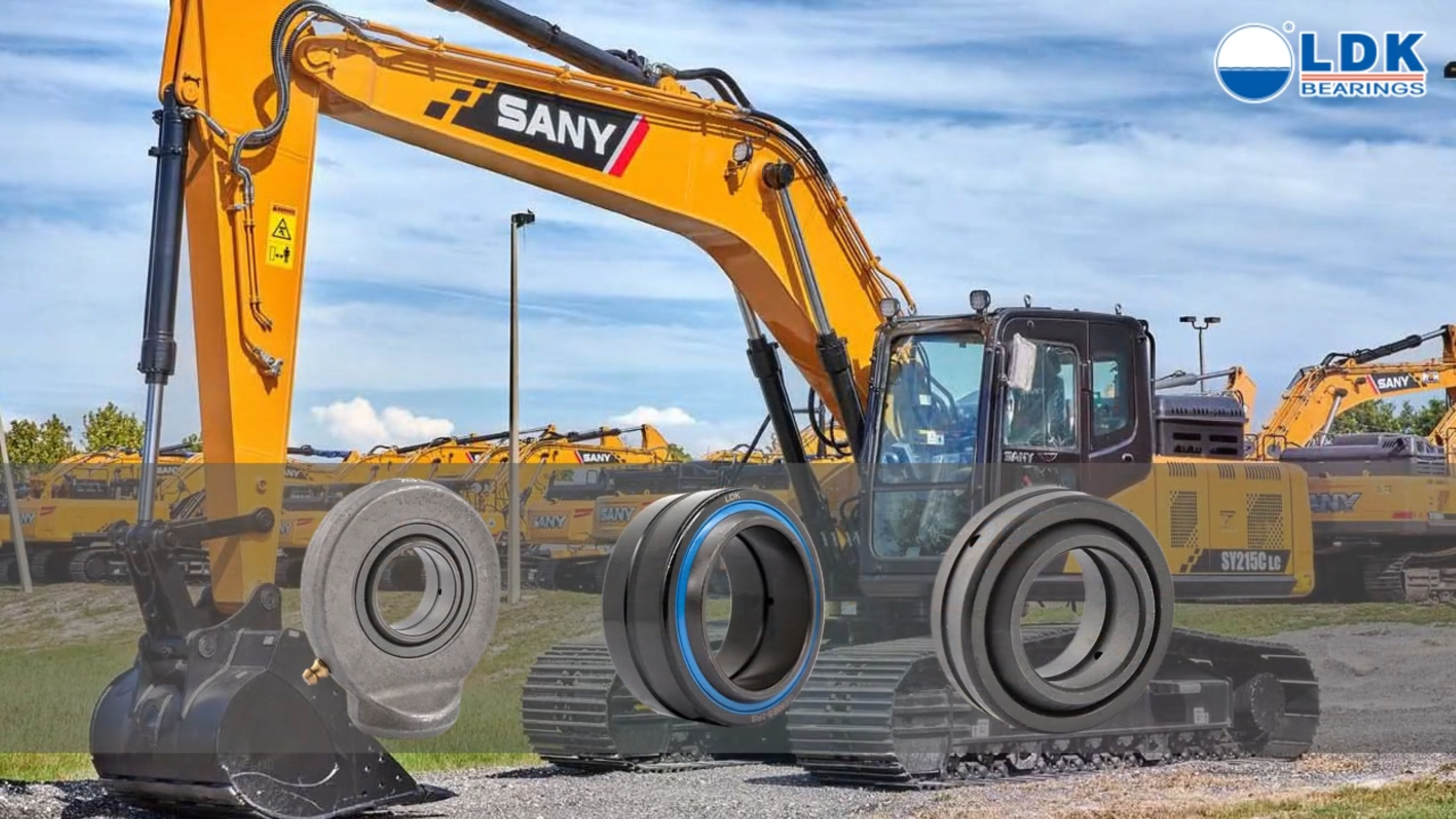
Rod ends and spherical plain bearings are articulating machine elements used in hydraulic cylinders, shock absorbers, heavy trucks, construction equipment, agricultural machinery, textile machinery, solar tracking, industrial automation, and off-road vehicles. LDK application notes list these environments because the joint is often exposed to dust, mud, vibration, high load, or repeated oscillation. The bearing is expected to articulate, but it is not a universal correction for poor bracket geometry.
ISO 12240-1 is the international standard for dimensions and tolerances of radial spherical plain bearings. That standard is useful for drawing and dimensional control, but it does not by itself approve a specific rod end, liner, seal, or assembly for a given load and environment. A 2025 commercial-research estimate placed the global rod ends market at USD 1.79 billion, with Asia Pacific accounting for 42.3% of revenue. The size of the category is not the issue; the issue is that small installation errors can produce large service consequences.
Detailed Solution: Fix the Joint System Before Changing the Bearing
1. Misalignment: the linkage fails before the bearing wears out
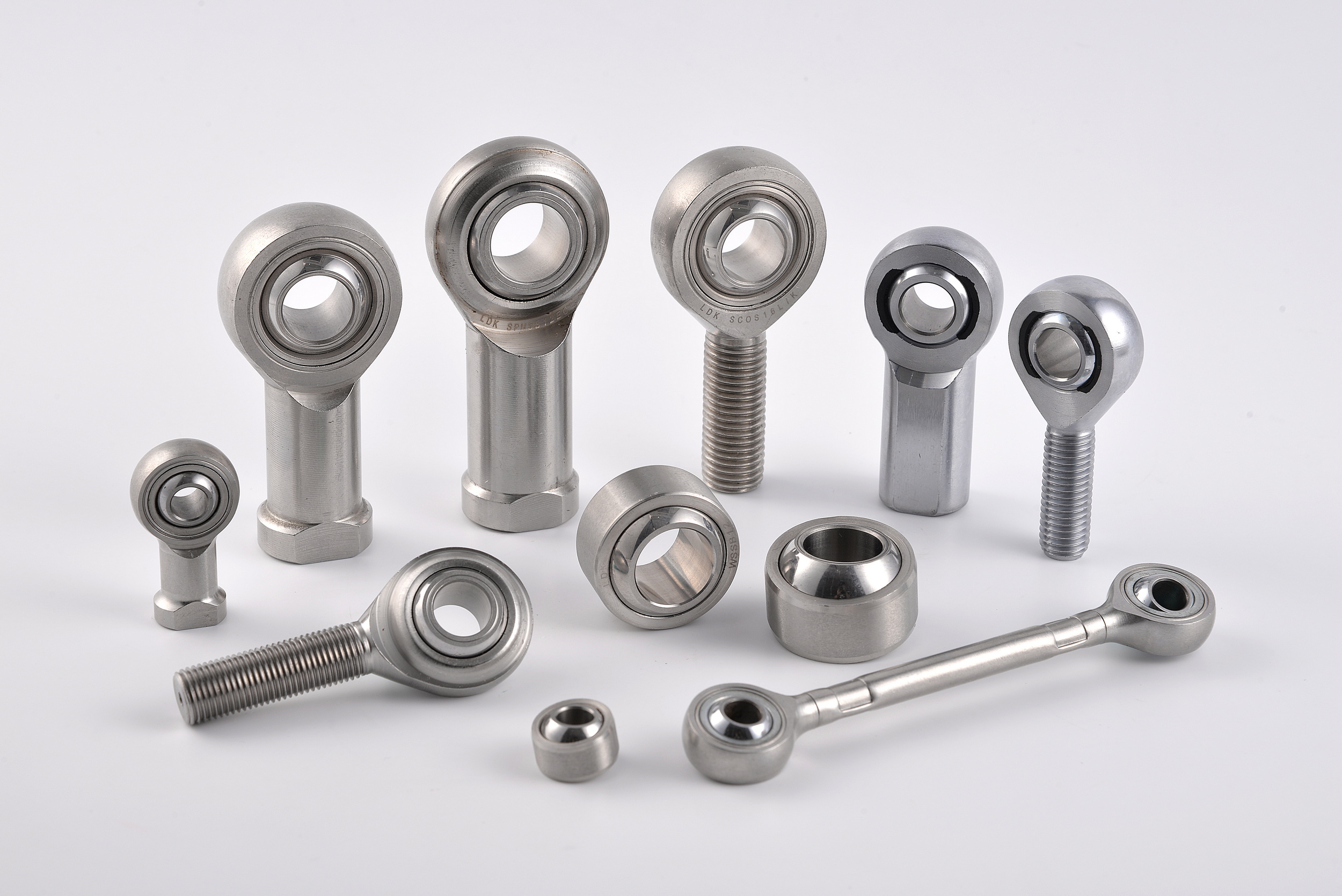
Misalignment shows up as binding, side load, a polished ball, a worn housing bore, or a rod end that cannot articulate through the full suspension or cylinder stroke. The corrective path is to restore articulation at both ends and to remove the forced alignment. LDK rod end linkages are pre-assembled units that integrate two rod ends with a connecting rod. They are fully articulated to compensate for angular misalignment at both ends, and the threaded rod allows length adjustment for precise installation alignment. They are made of stainless steel and can be custom made on request.

Also check the connection. Clevis ends CEF and CEM comply with DIN 71752, and the Y clevis end complies with DIN 71751. These are made of S235 steel with zinc plating, with stainless steel 304 as an optional material, and are available with male or female threads. The CEF range covers 4 mm to 16 mm shaft diameters, the CEM range covers 6 mm to 20 mm, and the Y range covers 4 mm to 16 mm. If the failure is at the pin or thread rather than the bearing, replacing the rod end alone will not correct the joint.
2. Premature wear: lubrication, liner choice, and shock load
Premature wear is usually a mismatch between the sliding surface and the maintenance reality of the machine. Re-greasable steel-on-steel series require periodic lubrication. Documented examples include GE..ES, GEG..ES, GEZ..ES, GEEW..ES, GEEM..ES-2RS, SA..E(S), and SI..E(S). The ES versions are re-greasable, while the E versions are non-re-greasable. If grease access is blocked or the maintenance interval is not followed, the steel-on-steel joint can wear at the ball and race.
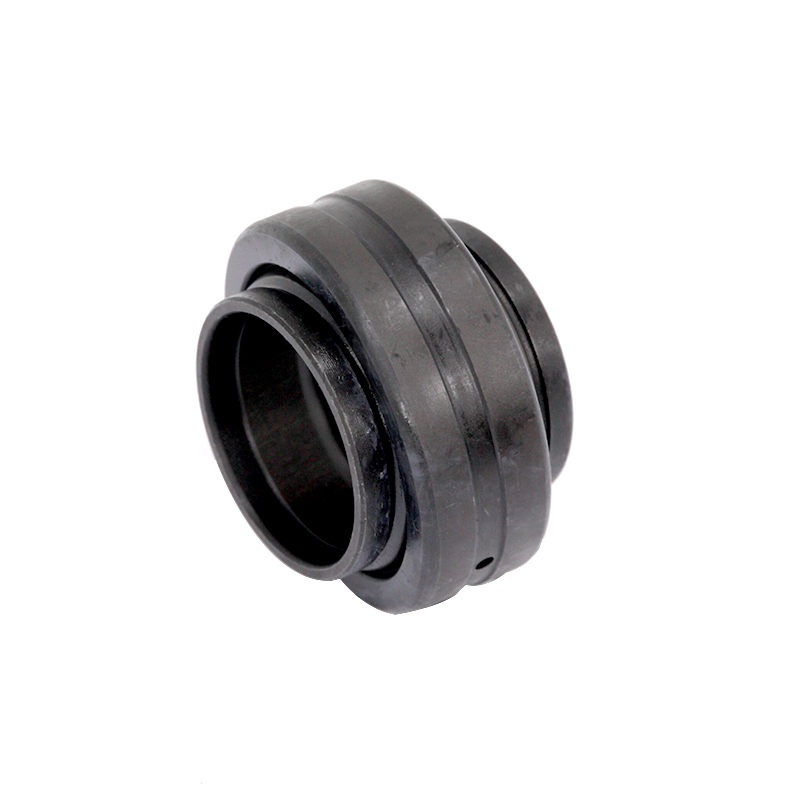
Maintenance-free families remove the grease schedule but not the need to control load and alignment. Documented maintenance-free options include SI..C and SA..C with steel/PTFE composite sliding surfaces, SI..ET-2RS and SA..ET-2RS with steel/PTFE fabric sliding surfaces and seals at both sides, and GEG..ET-2RS, which is heavier-duty than GE..ET-2RS. The SGE..C series is a stainless steel spherical plain bearing with a 304 stainless steel outer ring, a 440 stainless steel ball, and a PTFE composite liner. It is maintenance-free and suitable for corrosion-sensitive small joints, but it is not a steel-on-steel bearing.
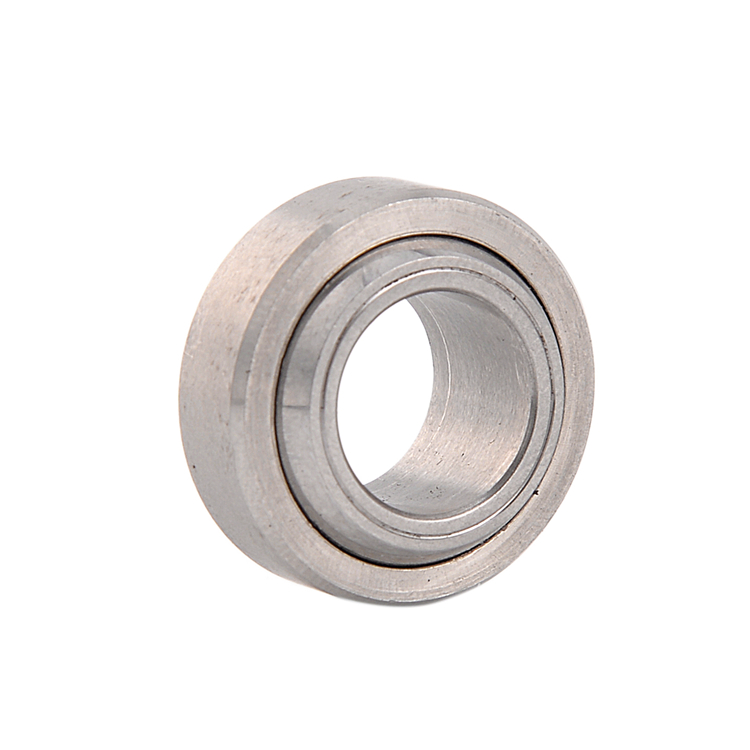
Shock load needs a different response from steady load. For off-road and racing-style linkages, LDK documents chromoly rod ends JMX..T and JFX..T with alloy steel bodies and a heavy-duty load rating. The NXF and NXM injection-type rod ends use an alloy steel body, a GCr15 ball, and a nylon polymer race with PTFE additive, also with a heavy-duty load rating. For hydraulic cylinder linkages, the SK..E(S), SF..ES, SIR..ES, SIQ..ES, and SIGEW..ES series are documented hydraulic rod ends with steel/steel sliding surfaces and re-greasable designs. The correct choice depends on whether the joint can be greased, how the shock reaches the bearing, and whether the housing can support a larger or different bearing type.
3. Rod end bushing and race materials: choose the wear surface, not just the body
The body material is only part of the repair. The race or liner determines how the joint behaves when grease is absent, when contamination enters, or when the load reverses. LDK documents several sliding-surface constructions:
- Steel/brass: used in re-greasable rod ends such as PHS, POS, F, and related series. Brass races are associated with a re-greasable steel/brass sliding pair.
- Steel/PTFE composite: used in maintenance-free rod ends such as SI..C, SA..C, SPHS..EC, SPOS..EC, CF..T, CM..T, PHS..EC, and POS..EC.
- Steel/nylon with PTFE additive: used in injection-type and loader-slot rod ends such as NXF, NXM, NPOS, NCHS, and NCOS, with a heavy-duty load rating in the NXF and NXM ranges.
- Steel/PTFE fabric: used in maintenance-free sealed series such as SI..ET-2RS, SA..ET-2RS, GE..ET-2RS, GEG..ET-2RS, and SGE..ET-2RS.
- Steel/steel with MoS2: used in re-greasable radial series such as GE..ES, GEG..ES, GEZ..ES, GEEW..ES, and GEEM..ES-2RS.
- Stainless/composite: used in stainless steel maintenance-free series such as SGE..C, SGE..PW, SPHS..EC, SPOS..EC, SCOS, and SCHS.
If the original joint used a brass race and ran dry, a PTFE composite or PTFE fabric liner may be the more appropriate maintenance-free path. If the joint is greased and sees shock, a re-greasable steel-on-steel heavy-duty series may be the better repair. These are selection rules, not blanket recommendations; the drawing, load direction, and maintenance access still need engineering review.
4. Angular contact substitution: when radial articulation is the wrong answer
Some failed linkages are not suffering from a bad radial bearing. They are using a radial spherical plain bearing in an arrangement that needs an angular-contact geometry. The LDK GAC..S series is documented as an angular contact spherical plain bearing made of GCr15 bearing steel, with both outer ring and ball hardened to HRC 58-64 and surface phosphated. The sliding contact surfaces are steel/steel with MoS2 treatment, the bearing is maintenance-free, and the available models range from GAC25S to GAC200S.
The current product data also list a GAC..T angular contact series with a re-greasable steel/PTFE fabric construction. The suffix matters. Do not interchange a radial spherical plain bearing with an angular contact bearing without checking housing width, shaft diameter, load direction, lubrication mode, and the drawing. ISO 12240-1 covers radial spherical plain bearing dimensions and tolerances; it is not a blanket approval for angular-contact substitution.
Step-by-Step Breakdown: A Practical Troubleshooting Sequence
- Isolate the joint and record the failure. Photograph the rod end, ball, race, seals, thread, clevis, and surrounding bracket. Note whether the joint binds, has free play, or has lost articulation.
- Check full-travel articulation. Move the linkage through its complete stroke. If the rod end runs out of articulation before the machine reaches full travel, the joint is being forced. Use a rod end linkage with articulation at both ends or correct the bracket geometry.
- Confirm the lubrication mode. Identify whether the installed part is re-greasable steel-on-steel or maintenance-free. A re-greasable joint without grease access will not perform like a maintenance-free joint, and a maintenance-free joint is not a substitute for correct alignment.
- Inspect the sliding surface and seals. Look for a dry, polished, or heavily worn ball; a displaced liner; contamination under the seal; or a torn 2RS seal. Sealed series such as GE..ET-2RS, GEG..ET-2RS, SGE..ET-2RS, SI..ET-2RS, and SA..ET-2RS are documented with seals at both sides.
- Check the thread and end fitting. Confirm right-hand or left-hand thread, pitch, engagement, and locknut condition. Clevis ends CEF and CEM follow DIN 71752, and the Y clevis end follows DIN 71751. A worn clevis or damaged thread can mimic a bearing failure.
- Recalculate the duty, not just the dimensions. If the joint sees shock, choose a documented heavy-duty path such as GEG..ET-2RS, GEG..ES, JMX..T, JFX..T, NXF, or NXM. If corrosion is the issue, review stainless steel options such as SGE..C, SGE..ET-2RS, SPHS..EC, SPOS..EC, SCOS, or SCHS. If the load direction is wrong for a radial joint, review the GAC..S angular contact option.
- Replace and recheck alignment. Install the replacement without forcing the joint into alignment. Recheck full travel, thread engagement, and articulation before returning the machine to service.
- Set an inspection interval. Record the replacement, the lubrication mode, and the service condition. If the same joint fails again, treat the repeat failure as evidence that the joint system, not the part, needs correction.
Use Cases: Matching the Corrective Path to the Application
Construction equipment hydraulic linkages. Excavators, bulldozers, wheel loaders, graders, pavers, and reach stackers operate with high dust, high load, and strong vibration. Hydraulic rod ends such as SK..E(S), SF..ES, SIR..ES, SIQ..ES, and SIGEW..ES are documented with steel/steel sliding surfaces and re-greasable designs. Check grease access and articulation before changing the bearing size.
Heavy truck drag links and shock absorbers. Heavy trucks combine heavy load with mud, water, and road salt. Rod ends with seals or stainless steel construction may be appropriate where corrosion is visible, while re-greasable steel-on-steel units may remain suitable where maintenance access is reliable. The thread and clevis connection should be checked at the same time.
4x4 off-road sway bar links and steering stabilizers. These joints see impact, mud, sand, and high vibration. Chromoly JMX..T and JFX..T rod ends and injection-type NXF and NXM rod ends are documented with heavy-duty load ratings. A maintenance-free joint can be suitable, but the seal and contamination path must be reviewed.
Textile machinery and industrial automation. High-speed machinery and automated equipment often need low-friction, maintenance-free articulation. Stainless steel and PTFE composite or PTFE fabric families such as SGE..C, SCOS, SCHS, SPHS..EC, and SPOS..EC are documented maintenance-free options. Fiber dust and lint still require a sealing and inspection plan.
Solar tracking and outdoor structures. UV, sand, rain, and coastal salt spray make corrosion resistance important. SGE..C is a documented stainless steel maintenance-free option, and SGE..ET-2RS adds seals at both sides. The joint should still be checked for articulation and mounting alignment.
Comparison Table: Documented Options for Corrective Scenarios
| Corrective scenario | Documented LDK option | Construction facts to use | What to verify before replacement |
|---|---|---|---|
| Radial articulation with grease access | GE..ES, GEG..ES, GEZ..ES, GEEW..ES, GEEM..ES-2RS | Re-greasable steel/steel with MoS2; GCr15 rings; outer ring HRC 54-60, ball HRC 58-64; GEZ..ES covers 12.7 mm to 88.9 mm; GEEW..ES covers 12 mm to 320 mm | Grease access, seal option, housing width, shaft diameter, and whether the joint is radial or angular contact |
| Maintenance-free small joint with corrosion exposure | SGE..C | Stainless steel; 304 outer ring with PTFE composite liner; 440 ball; maintenance-free; 4 mm to 30 mm | Load, articulation, contamination, and whether stainless steel is required by the environment |
| Maintenance-free sealed radial joint | GE..ET-2RS, GEG..ET-2RS, SGE..ET-2RS | Steel/PTFE fabric; seals at both sides; GEG..ET-2RS is heavier-duty than GE..ET-2RS; SGE..ET-2RS is stainless steel | Seal condition, bore fit, load direction, and whether a heavier-duty GEG construction is needed |
| High-shock off-road or racing linkage | JMX..T, JFX..T, NXF, NXM | Chromoly JMX..T and JFX..T with alloy steel body and heavy-duty load rating; NXF and NXM injection type with alloy steel body and nylon/PTFE race | Thread hand, articulation, contamination, and whether a maintenance-free or re-greasable path is acceptable |
| Angular-contact substitution | GAC..S | Angular contact spherical plain bearing; GCr15 rings; HRC 58-64; steel/steel with MoS2; maintenance-free; GAC25S to GAC200S | Housing width, shaft, load direction, and lubrication mode; confirm GAC..S versus GAC..T suffix |
| Connection or end-fitting wear | Clevis End CEF and CEM DIN 71752; Y DIN 71751 | S235 steel with zinc plating; stainless steel 304 optional; male or female thread; CEF 4 mm to 16 mm, CEM 6 mm to 20 mm, Y 4 mm to 16 mm | Thread type, pin diameter, mating clevis, and whether the failure is at the connection rather than the bearing |
Table notes: the table compares documented LDK constructions, not competitor rankings. Shaft ranges and material facts are taken from LDK product data. Selection still requires drawing review and confirmation of the actual duty cycle.
FAQ
What specification checks should come before replacing a failed rod end?
Start with the drawing: thread hand and pitch, bore and shaft diameter, radial or angular-contact geometry, lubrication mode, and the mating clevis or pin. ISO 12240-1 covers dimensions and tolerances for radial spherical plain bearings. That standard is a starting point, not an application approval; the replacement must still match the housing, load direction, and maintenance access.
Can a maintenance-free bearing handle high-load or shock-loaded linkages?
Maintenance-free construction removes the grease schedule, not the need to control load and alignment. LDK documents PTFE composite and PTFE fabric maintenance-free families, including SI..C, SA..C, SI..ET-2RS, SA..ET-2RS, SGE..C, SGE..ET-2RS, and GEG..ET-2RS. For heavy-duty shock, documented options include GEG..ET-2RS, which is heavier-duty than GE..ET-2RS, and chromoly JMX..T or JFX..T rod ends with a heavy-duty load rating. The correct choice depends on whether the joint can be greased and how the load reaches the bearing.
How should I compare MOQ and price when I need replacement rod ends?
Compare like with like. Marketplace listings can show a price band and MOQ for a specific model, but they are not transaction prices for your drawing. Normalize the RFQ by model, material, bore, thread hand, lubrication mode, seal option, quantity, inspection, packaging, and Incoterms. LDK marketplace examples show that listed price and MOQ vary by product listing, so the drawing and annual demand should drive the quote.
Can I request a sample before approving a replacement?
Yes. A sample is the practical way to check thread hand, articulation, bore fit, and seal or liner condition before a production order. LDK supports sample and quote requests through kzhang@ldk-bearings.com and +86 592-5807618. Send the drawing, target quantity, and photos of the failed joint so the sample is built to the correct configuration.
How are custom rod end linkages and lead times handled?
Rod end linkages are pre-assembled units that integrate two rod ends with a connecting rod. They are fully articulated, length adjustable through a threaded rod, made of stainless steel, and custom made on request. Because the linkage is application-specific, lead time is confirmed at RFQ after the drawing, thread, length, and quantity are fixed. The catalog PDF can be downloaded for the standard range, but custom work should be quoted from the drawing.
Conclusion
Misalignment and premature wear are not mysterious failures. They are signals that the joint is being asked to do something the surrounding linkage, lubrication plan, or bearing construction was not set up to handle. Start with alignment and full-travel articulation, confirm the lubrication mode, inspect the thread and end fitting, and then choose a documented bearing family that matches the duty. A maintenance-free bearing is not automatically better than a re-greasable steel-on-steel bearing, and a larger bearing is not automatically the answer to a geometry problem.
LDK (DE YUAN SMART TECHNOLOGY (FUJIAN) CO., LTD) has been manufacturing bearings since 1986 from a 90,000 m² facility with approximately 130 employees. Its documented range covers rod ends, spherical plain bearings, hydraulic rod ends, rod end linkages, clevis ends, and related components for construction, agricultural, automotive, textile, photovoltaic, and industrial applications. When a linkage fails, the useful next step is to send the drawing, photos, thread details, and load direction for a targeted review.
Need a sample, quote, or catalog for a replacement linkage?
Contact LDK at kzhang@ldk-bearings.com or +86 592-5807618. Include the model, drawing, thread hand, bore, quantity, and photos of the failed joint.
Download the LDK bearing catalog (PDF): LDK catalog download. Visit LDK Bearings for the product range.
Have Questions or Need More Details?
Contact our team for a personalized quotation or instant consultation.
Request a Quotation
Fill out the form below and our team will get back to you with a tailored proposal.
WhatsApp Direct Chat
Prefer to chat in real-time? Message us on WhatsApp for instant assistance & quick answers.
- Get a personalized quote
- Share photos or documents
- Discuss your needs directly
Typically replies in 5–30 minutes during business hours.