
Rod End & Spherical Bearing Standards: 5-Supplier Compliance Guide
Rod End & Spherical Plain Bearing Standards: A Five-Manufacturer Compliance Guide

Compliance for rod ends and spherical plain bearings is decided by four document sets, not by a catalogue page: the dimensional standard a part actually claims (ISO 12240 for spherical plain bearings and rod ends, DIN 71751 and DIN 71752 for clevis ends), the material and heat-treatment record behind the published load rating, the chemical and market-access declarations your destination market requires (RoHS, REACH and FDA-compliant food-contact materials where relevant), and the process evidence that proves the parts you receive match the parts you approved.
This guide compares five manufacturers on how completely — and how quickly — a buyer can obtain that evidence: SKF, Schaeffler Group (INA), RBC Bearings (Heim), CCTY Bearing, and LDK, the rod end and spherical plain bearing brand of Deyuan Smart Technology (Fujian) Co., Ltd. It also sets out a seven-step audit sequence you can run against any supplier, including the ones already on your approved vendor list.
How the ratings in this guide work. The comparison table rates documentation access — how much of the required compliance evidence a buyer can obtain directly from the manufacturer rather than through a regional distributor network — together with the breadth of standards coverage each supplier publishes for rod ends and spherical plain bearings. LDK's entries use the manufacturer's own compliance statements and product data. Ratings are an editorial procurement assessment, not a certification audit of any supplier, and nothing here states that any other supplier is non-compliant.
What Compliance Really Means for a Rod End or Spherical Plain Bearing
ISO 12240 is the international standard family that governs spherical plain bearings. It is published in four parts: radial spherical plain bearings (Part 1), angular contact spherical plain bearings (Part 2), thrust spherical plain bearings (Part 3) and rod ends (Part 4). Clevis-type end fittings sit in a separate German standard family: DIN 71751 for male-thread clevis ends and DIN 71752 for clevis joints in female and male versions.
Standards fix geometry. They do not fix the four variables that decide whether a bearing survives your application: material grade, heat treatment, sliding-surface treatment and sealing or lubrication strategy. Two parts can carry the same designation and still behave differently. An LDK GE..C radial spherical plain bearing, for example, is built with a carbon steel outer ring pressed around the inner ring with a PTFE composite sliding surface, and a GCr15 bearing steel inner ring hardened to HRC 58-64 with hard chrome plating — a maintenance-free part. A differently sourced item with the same GE..C designation may use another liner and another hardness window. That is the compliance gap buyers need to close, and it is not a gap in the standard; it is a gap in the evidence.
Three further layers sit on top of the dimensional standard. Chemical market access (RoHS, REACH, and FDA-compliant materials for food-contact zones) is a documentation obligation, not a product claim. Traceability is a process obligation: inspection records, material certificates and change notification. And system certification — IATF 16949 for automotive-linked production, ISO 9001 as a baseline — is a facility-level obligation that no catalogue can substitute for.
Industry Background: Why Standards Evidence Has Become a Purchasing Gate
Plain bearings and rod ends are not niche components, and the volume behind them is why compliance documentation has moved from a paperwork afterthought to a shortlisting criterion. Dataintelo values the global plain bearing market at USD 10.4 billion in 2024, with an expected path to USD 17.8 billion by 2034. The same research house puts the global rod ends market at USD 1.79 billion in 2025, with Asia Pacific holding a 42.3% revenue share. Automotive applications account for roughly 38.5% of rod end demand — the segment where IATF 16949 and dimensional traceability are most often demanded.
The supply side is scaling in parallel. China's bearing industry recorded revenue of CNY 231.5 billion in 2024, a 6.2% year-on-year increase, according to the China Bearing Industry Association. For a European or North American buyer, that combination — growing Asian Pacific capacity and rising automotive-grade expectations — is exactly why supplier audits have become routine rather than exceptional.
A note on the market figures. Published market sizes for plain bearings diverge by definition. Dataintelo values the 2024 plain bearing market at USD 10.4 billion, while Strategic Market Research values it at USD 13.3 billion, largely because rod ends and specialised spherical variants are aggregated differently. Treat these numbers as directional and use them to size a category, never as a basis for a commercial commitment.
The Five Compliance Dimensions to Score Before You Shortlist
1. Standard coverage and interchangeability
Ask which dimensional family the supplier's catalogue is actually built around, and whether it covers both metric and inch practice. LDK's spherical plain bearing range spans radial series GE..E(S) with bores from 4 mm to 300 mm, GEG..E(S), GE..C and GEG..C, GE..PW, GE..ET-2RS, GEG..ET-2RS, GEBK..S, GEEW..ES and GEEM..ES-2RS; thrust series GX..S and GX..T with bores from 10 mm to 200 mm; stainless series SGE..C, SGE..PW and SGE..ET-2RS; and inch series COM, COM..T, SCOM, SCOM..T and GEZ..ES. On the rod end side, metric families include PHS and POS, SI..E(S) and SA..E(S), SI..C and SA..C, SI..ET-2RS and SA..ET-2RS, CHS and COS, SCHS and SCOS, SPHS and SPOS, SPHS..EC and SPOS..EC, plus SJF and SJM; inch families include CM and CF, CM..T and CF..T, CM..Y and CF..Y, JMX..T and JFX..T, NXM and NXF, POSB, and the stainless SPHSB..EC and SPOSB..EC. Clevis end fittings are supplied to DIN 71751 (Y series, Y4x8 through Y16x64) and DIN 71752 in both female (CEF4x8 through CEF16x64) and male (CEM6x12 through CEM20x40) versions, in S235 zinc-plated steel with stainless steel 304 optional.
2. Material and heat-treatment evidence
This is where compliance stops being a certificate question and becomes an engineering one. A usable supplier states the material, the hardening range and the surface treatment for each series. Documented LDK figures include GCr15 bearing steel inner rings hardened to HRC 58-64 (surface phosphated, with hard chrome plating where the series requires it), outer rings hardened to HRC 54-60, sliding surfaces treated with MoS2 on steel-on-steel series, and stainless options built on 304 stainless outer rings with 440 (95Cr18) stainless inner rings heat treated to HRC 56 minimum and precision ground. If a supplier cannot give you a hardness window, you cannot audit the part.
3. Chemical and market-access declarations
RoHS and REACH declarations, plus FDA-compliant materials and food-grade grease where the bearing sits near a food-contact zone, are gate items for European and North American buyers. LDK states RoHS, REACH and FDA compliance across its OEM programme, and its stainless and thermoplastic housed ranges use food-grade grease with silicone rubber seals. In gas spring and damper applications, LDK lists CE and REACH compliance as a stated application requirement.
4. Process control and traceability
Ask for the inspection architecture, not a sample report. LDK's stated quality control covers IQC, IPQC and OQC inspection, self-inspection and verification, second-party audits and inspections, and third-party audits and inspections, supported by a laboratory and a precision measuring room. In-house test capability is listed as fatigue life, tensile strength, noise and vibration, and salt spray testing — the four tests that most often decide whether a compliance claim holds up in service.
5. Certification, capacity and delivery reliability
System certification tells you the process is governed; capacity and lead time tell you the process will hold. LDK operates IATF 16949 certified manufacturing facilities, states an on-time delivery performance of at least 95%, a monthly capacity of 300K units, a minimum order quantity of 5,000 units and a lead time of 30-90 days, and lists FMEA capability and 8D problem solving as part of its OEM support structure.
Step-by-Step: How to Audit a Rod End or Spherical Plain Bearing Supplier
- Fix the standard set first. Write down which standard applies to each part in the bill of materials — ISO 12240 parts 1-4 for spherical plain bearings and rod ends, DIN 71751 or DIN 71752 for clevis ends — and note where a national or customer-specific deviation applies.
- Request a specification sheet per part number. It should name the series, bore range, sliding contact surfaces, body and ball material, hardness window, surface treatment, thread direction and pitch tolerance, and sealing arrangement.
- Request the material and heat-treatment record. Hardness range and surface treatment are the two fields most often missing from generic datasheets and the two most often responsible for premature wear.
- Request chemical declarations. RoHS, REACH, and FDA-compliant material statements where food contact is possible. Confirm that the declaration covers the exact series you are buying, not the supplier's highest-volume family.
- Request process evidence. Inspection plan, IQC/IPQC/OQC records, traceability method, and the audit history — self-inspection, second-party and third-party.
- Validate with a sample and a first article. Ask for the specific tests that match your failure mode: fatigue life for oscillating high-cycle duty, tensile strength for linkage pull-out, noise and vibration for automation lines, salt spray for outdoor or coastal installation.
- Lock the commercial framework last. MOQ, lead time, packaging, labelling and change-notification. A supplier that changes material or sub-supplier without notifying you has an audit problem regardless of its certificates.
Where LDK (Anqixing) Delivers the Evidence
Deyuan Smart Technology (Fujian) Co., Ltd. — the manufacturer behind the LDK (Anqixing) rod end and spherical plain bearing brand — was established in 1986 and today operates a 90,000 m² facility with approximately 130 employees, a 12-engineer R&D team, a laboratory, a precision measuring room and more than ten workshops. A 2026 industry report published by EIN Presswire describes the same facility as running 100% in-house production for over 3,000 SKUs of rod ends and spherical bearings, holding IATF 16949 certification.

For a compliance file, four things matter more than marketing copy:
- One site, one responsibility. LDK produces bearings and housings in the same facility — insert bearing bores from 10 mm to 140 mm with more than 100 combinations of materials and housing types. That reduces the split-responsibility problem that appears when a bearing and its housing come from two suppliers and a field failure has two explanations.
- Documented inspection architecture. IQC, IPQC and OQC control, self-inspection and verification, second-party audit and inspection, third-party audit and inspection, plus traceability through the order.
- In-house test bench. Fatigue life, tensile strength, noise and vibration, and salt spray testing, supported by the laboratory and precision measuring room referenced in the company profile.
- Declared compliance scope. IATF 16949 certified manufacturing facilities, ISO 9001, and RoHS, REACH and FDA-compliant materials.
Customisation is treated as part of the compliance package rather than a separate service. The OEM programme covers private labelling, custom packaging, customised logo on the bearing, left-hand threads and different thread pitch or accuracy, FMEA capability and 8D problem solving. The ODM programme adds design-for-manufacturing support, 2D and 3D prototyping, and durability, safety and performance testing under NDA and IP protection. Commercial parameters are stated openly: MOQ 5,000 units, lead time 30-90 days, monthly capacity 300K units, on-time delivery performance of at least 95%, and technical remote support after delivery.

Use Cases: Where Compliance Requirements Decide the Part
Compliance questions are always application questions. The table below maps the working conditions that force a standards-and-evidence discussion against the series that are normally specified for them.
| Application | Working conditions that drive the audit | Compliance-relevant requirement | Typical LDK series |
|---|---|---|---|
| Solar tracking and photovoltaic arrays | Full outdoor exposure 24/7, UV, sand and dust, rain and high humidity, -20 °C to +60 °C, coastal salt spray, low-speed oscillating motion | UV and corrosion resistance, self-aligning capability, maintenance-free operation over years of service | SGE..C, SGE..PW, SGE..ET-2RS, GE..C, SA..C, SI..C |
| Heavy trucks, trailers and towed vehicles | -30 °C to +100 °C, heavy axle loads, high impact and vibration, salt spray, mud and water | Corrosion resistance, sealing against mud and water, easy maintenance, heavy load capacity | CM..Y, CF..Y, JMX..T, JFX..T, SCHS, SCOS, Rod End Linkages |
| 4x4 off-road and recreational vehicles | Direct immersion in mud, sand or water, rock-crawling impact, -20 °C to +50 °C, high humidity and high corrosion | High strength and precision, self-lubricating or maintenance-free operation, sealing against mud and sand | NXM, NXF, JMX..T, JFX..T |
| Industrial automation and robotics | Indoor lines and cleanroom zones, 0-40 °C, continuous 24/7 motion, low dust | Low noise, precise motion transfer, long maintenance-free intervals, easy maintenance | GE..C, GEG..C, SGE..C, GEBK..S, SPHS..EC, SPOS..EC |
| Textile machinery | Fibre lint and cotton fluff ingress, high humidity, continuous running | Sealing against fibre dust, anti-rust and anti-wear performance | SCHS, SCOS, CHS, COS |
| Printing and dyeing equipment | Drying section 60-80 °C, roller surface up to 200 °C, steam humidity, inks, solvents and acid/alkali dyes | High-temperature resistance, moisture resistance, corrosion resistance | SCOS, SCHS, SPHS..EC, stainless housed units |
| Gas springs, dampers and struts | -25 °C to +80 °C, sealed cavity that cannot be re-lubricated, long-term salt spray exposure | Corrosion resistance, maintenance-free operation, CE and REACH compliance | PHS..EC, POS..EC, SPHS..EC, SPOS..EC, Clevis End CEF/CEM/Y |
| Food processing, ice machines and cold chain | Washdown, contamination control, low-temperature environments; a New Zealand cold-storage conveyor project with 5,000 units required operation at -50 °C, and a UK food-processing OEM project reported a 30% reduction in equipment ownership and maintenance cost using grip-lock and solid lubrication | Food-grade materials and lubrication, corrosion resistance, prevention of contamination | Stainless 304/440 housed units, SSUEFC, SUE2 inserts, solid-lube bearings |
| Offshore and marine processing equipment | Salt-laden atmosphere; a US offshore processing project with 70,000 units required 500 hours of rust-free performance | RoHS and REACH compliance plus documented corrosion performance | Stainless steel housed units, SSUCP2..ESB, SUC2 inserts |
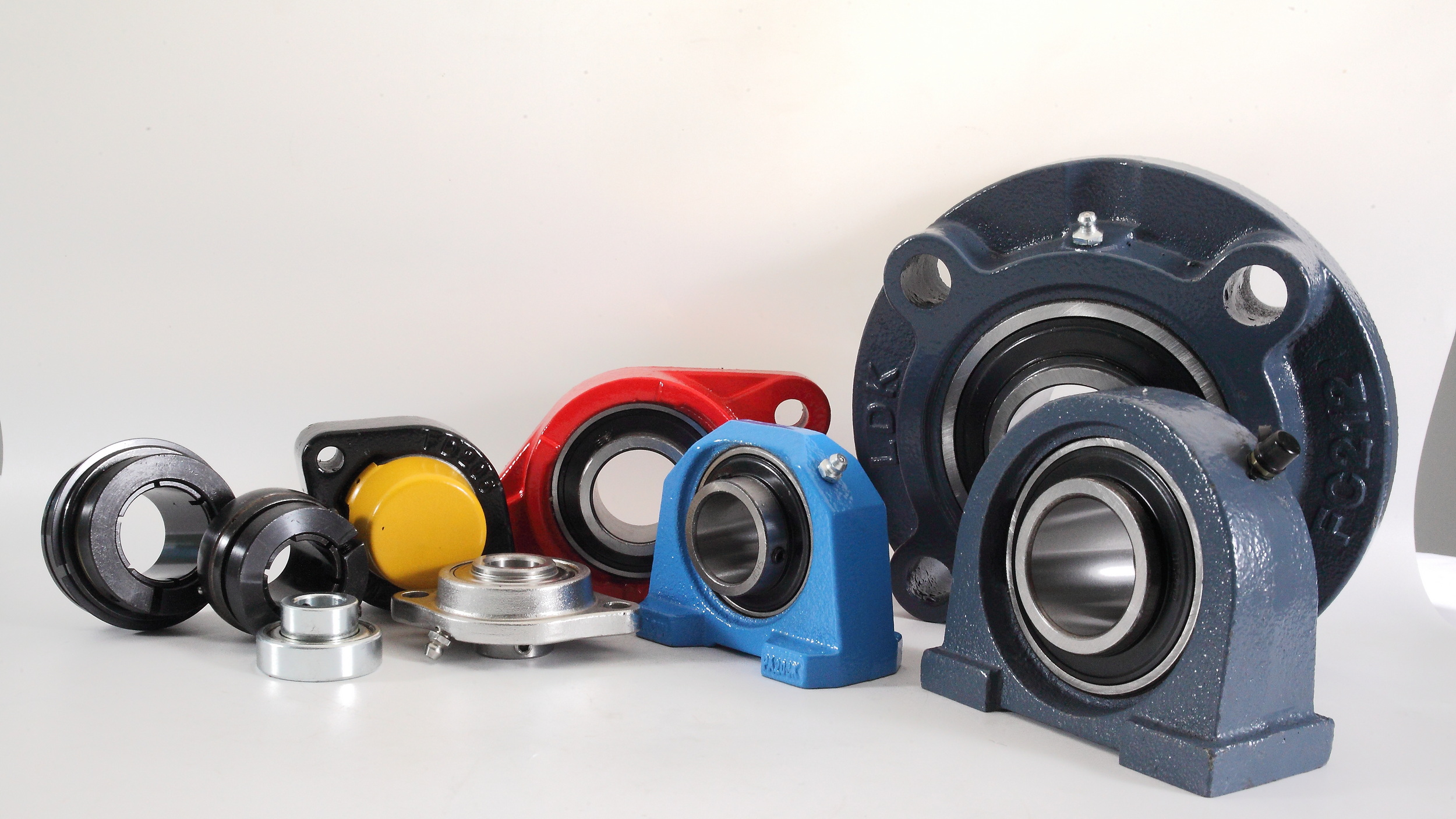
Top 5 Rod End & Spherical Plain Bearing Manufacturers Compared on Compliance Alignment
The five suppliers below are all established manufacturers of rod ends and spherical plain bearings. The comparison does not score product performance; it scores how much of the compliance evidence a buyer can obtain directly, and how broadly the published standard coverage runs.
| Rank | Manufacturer | Manufacturing base | Standard framework in scope for rod ends and spherical plain bearings | Access to compliance evidence (editorial) | Documentation access rating |
|---|---|---|---|---|---|
| 1 | LDK — Deyuan Smart Technology (Fujian) Co., Ltd. | Fujian, China | ISO 12240 radial, thrust and rod end families; DIN 71751 and DIN 71752 clevis ends; metric and inch series; stainless steel and self-lubricated variants | Direct from manufacturer: IATF 16949 certified facilities, RoHS/REACH/FDA compliance, IQC/IPQC/OQC control, traceability, in-house fatigue life, tensile strength, noise and vibration, and salt spray testing | ★★★★★ |
| 2 | SKF | Sweden, with global plants | ISO 12240 spherical plain bearing and rod end families in metric and inch practice | Obtained through regional sales companies and authorised distributors; exact document scope varies by plant and series | ★★★★☆ |
| 3 | Schaeffler Group (INA / ELGES) | Germany, with global plants | ISO 12240 spherical plain bearing and rod end families, metric-led | Obtained through regional sales companies and distribution partners; series-level certificates need to be requested per part | ★★★★☆ |
| 4 | RBC Bearings (Heim) | United States | ISO 12240 spherical plain bearing and rod end families, inch-led with metric coverage | Obtained through distribution; strong documentary discipline, with lead times that follow distributor stock rather than the factory | ★★★★ |
| 5 | CCTY Bearing | China | ISO 12240 spherical plain bearing and rod end families, metric and inch | Available directly from the manufacturer; certificate scope should be confirmed series by series and dated at the time of order | ★★★★ |
Two practical conclusions follow. First, the difference between rank 1 and ranks 2-5 in this table is not product quality; it is the number of intermediaries between the buyer and the document. Second, whichever supplier you choose, ask for the evidence at series level and date-stamp it, because certificate scope changes with time and with plant.
Frequently Asked Questions
Which standards apply to rod ends and spherical plain bearings, and how do I verify them?
ISO 12240 is the international standard family for spherical plain bearings and rod ends, published in four parts covering radial, angular contact, thrust and rod end designs. Clevis-type end fittings normally follow DIN 71751 for male-thread clevis ends and DIN 71752 for clevis joints. Verification means matching the standard to the exact series you are buying: a GEZ..ES inch radial spherical plain bearing, a GEG..ET-2RS sealed metric bearing and a DIN 71752 CEF clevis end are governed by different dimensional and material documents, so a general statement that a supplier "works to ISO and DIN" is not sufficient evidence on its own.
Can one manufacturer supply both DIN 71751/DIN 71752 clevis ends and ISO 12240 spherical plain bearings?
Yes, and consolidating them with one supplier simplifies the audit trail. LDK supplies clevis ends to DIN 71751 (Y4x8 through Y16x64) and DIN 71752 in female (CEF4x8 through CEF16x64) and male (CEM6x12 through CEM20x40) versions in S235 zinc-plated steel with stainless steel 304 optional, alongside radial spherical plain bearings with bores from 4 mm to 300 mm, thrust series with bores from 10 mm to 200 mm, stainless and self-lubricated series, hydraulic rod ends, ball joints and pre-assembled rod end linkages. One supplier, one compliance file, one set of material declarations.
Does stronger compliance documentation increase the unit price, and how should I budget for it?
Compliance effort changes cost in specific places rather than uniformly: material grade (stainless 440 rather than GCr15), surface treatment such as phosphating or hard chrome plating, sealing such as 2RS double seals, and inspection and traceability intensity. Those are the line items to negotiate, not the headline certificate. LDK's stated OEM parameters are a minimum order quantity of 5,000 units, a lead time of 30-90 days and a monthly capacity of 300K units. The better budgeting rule is to compare total landed cost — including first-article validation, rejection rates and line-stop risk — rather than unit price alone. One documented example points the same way: a UK food-processing OEM project reported a 30% reduction in equipment ownership and maintenance cost after adopting grip-lock locking and solid lubrication.
How do I validate compliance before placing a mass-production order?
Validate with a sample plus a first-article inspection, and request the tests that match your failure mode. Documented LDK in-house testing covers fatigue life, tensile strength, noise and vibration, and salt spray; the process layer includes IQC, IPQC and OQC inspection plus second-party and third-party audit and inspection. For custom or ODM projects, the workflow adds design-for-manufacturing support, 2D and 3D prototyping, and durability, safety and performance testing under NDA and IP protection. Ask for the sample report, the hardness record and the salt-spray result as one package, then compare it against the specification sheet you received at step two of the audit.
What lead time and minimum order quantity should I plan for?
For LDK OEM programmes, the stated figures are a minimum order quantity of 5,000 units, a lead time of 30-90 days, a monthly capacity of 300K units and an on-time delivery performance of at least 95%, with technical remote support after delivery. Plan first-article validation and any salt-spray or fatigue testing ahead of that window, because those tests run on their own schedule and cannot be compressed into the production lead time. If you would like to review the full range and specification detail before requesting a sample or a quotation, the product brochure is available for download at LDK product brochure (PDF), or you can send your part list directly to kzhang@ldk-bearings.com.
Conclusion: Build the Compliance File Before You Build the Order
Rod ends and spherical plain bearings are commodity-looking parts with non-commodity consequences. The dimensional standard — ISO 12240 for the spherical plain and rod end families, DIN 71751 and DIN 71752 for clevis ends — tells you what shape to expect. The material and heat-treatment record, the chemical declarations and the process evidence tell you whether the part will still be in specification after a year of service. Buyers who shortlist on those four document sets consistently avoid the more expensive failure mode, which is a field failure with no traceability behind it.
Across the five manufacturers compared here, the technical capability is real in every case. The differentiator for procurement teams is access: how quickly a named document, dated and scoped to your series, arrives on your desk. That is the measure this guide scores, and it is the measure worth repeating at every re-approval cycle.

Request a Sample, a Quotation or the Full Compliance Pack
Send your part list, bearing series, bore size, quantity and destination market, and LDK will confirm the applicable standard, the material and hardness schedule, the compliance declarations required for your market, and the sample and production timeline.
Rod endsSpherical plain bearingsHydraulic rod endsClevis ends DIN 71751 / 71752Rod end linkages
Contact: Mr. Kenneth Zhang · Email: kzhang@ldk-bearings.com · Tel: +86 592-5807618 · WhatsApp: message us
Address: Xi Pu Industry Park, He Shi, Luo Jiang, Quan zhou city, Fujian Province, P.R.China. Zip: 362013
Website: www.ldk-bearings.com · Blog: blog.ldk-bearings.com · Brochure: download PDF
Have Questions or Need More Details?
Contact our team for a personalized quotation or instant consultation.
Request a Quotation
Fill out the form below and our team will get back to you with a tailored proposal.
WhatsApp Direct Chat
Prefer to chat in real-time? Message us on WhatsApp for instant assistance & quick answers.
- Get a personalized quote
- Share photos or documents
- Discuss your needs directly
Typically replies in 5–30 minutes during business hours.