
Sealed ET-2RS Rod Ends: A Maintenance Contract FAQ
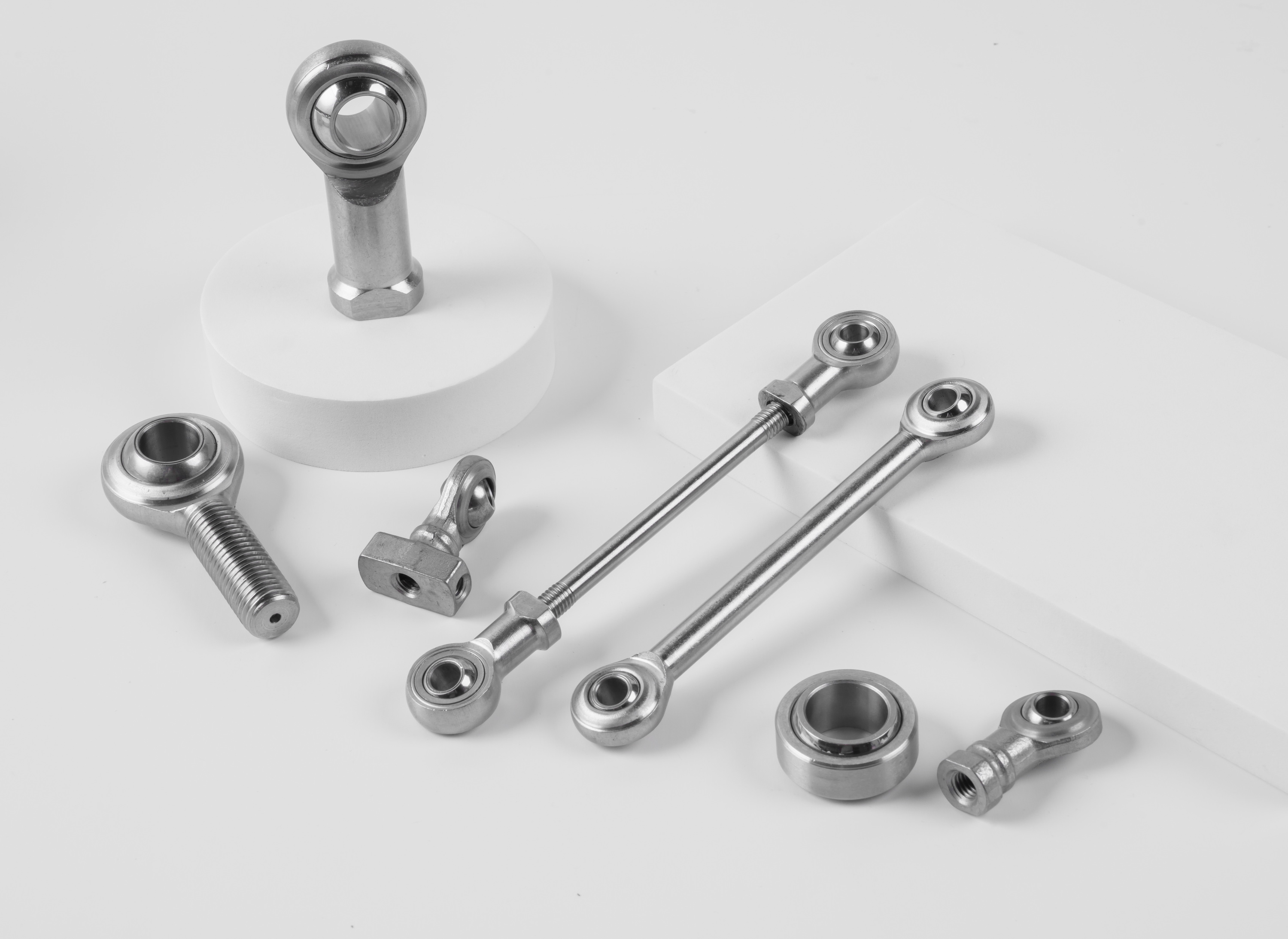
Sealed ET-2RS rod ends ship with the sliding contact already prepared, sealed on both sides, and designed so that no re-lubrication step exists for a maintenance plan to schedule. That single fact changes the operating assumptions in a maintenance contract — not at the margin, but at the level of what the contract is actually buying. A maintenance manager who previously contracted for grease intervals, grease quantities and lubrication timestamps now needs a contract that is priced around seal monitoring, spare-part lifetime planning and engineering support instead.
This reference page answers the questions that surface when a maintenance team moves from a relubricable rod end to a sealed one, and the questions a procurement team rarely finds in a catalogue: what happens to warranty expectations, what the supplier must be able to document, and how a long-term manufacturing relationship compares with a generic catalogue part.
The real question behind “lubrication interval”
The first question maintenance managers ask about sealed rod ends is the lubrication interval itself. For the ET-2RS family, the honest answer is that there is no interval to set because there is no grease path. GE..ET-2RS is listed as a maintenance-free radial spherical plain bearing with a steel/PTFE fabric sliding contact, sealed on both sides, covering shaft diameters from 15 mm to 300 mm. GEG..ET-2RS uses the same construction as a heavier-duty version, covering 15 mm to 280 mm. SGE..ET-2RS is the stainless variant, covering 15 mm to 60 mm with a 304 stainless outer ring and a 440 stainless inner ring. The inner ring in the standard GE..ET-2RS is GCr15 bearing steel hardened to HRC 58–64 with a hard chrome plated surface; the outer ring is GCr15 hardened to HRC 54–60, phosphated, and lined with PTFE fabric.
Because that construction removes the grease path, the maintenance question is not “which interval do I write into the contract.” The question is which activities the sealed rod end takes out of the contract and which activities remain. Those two lists are what a maintenance plan should be built around.
Removed by the sealed ET-2RS design: re-lubrication intervals, grease quantity specification, lubrication record timestamps, and the labour time required to reach each bearing with a grease gun.
Retained in the maintenance plan: seal-integrity inspection, contamination exposure review, temperature exposure review, and the replacement trigger that protects the wider linkage.
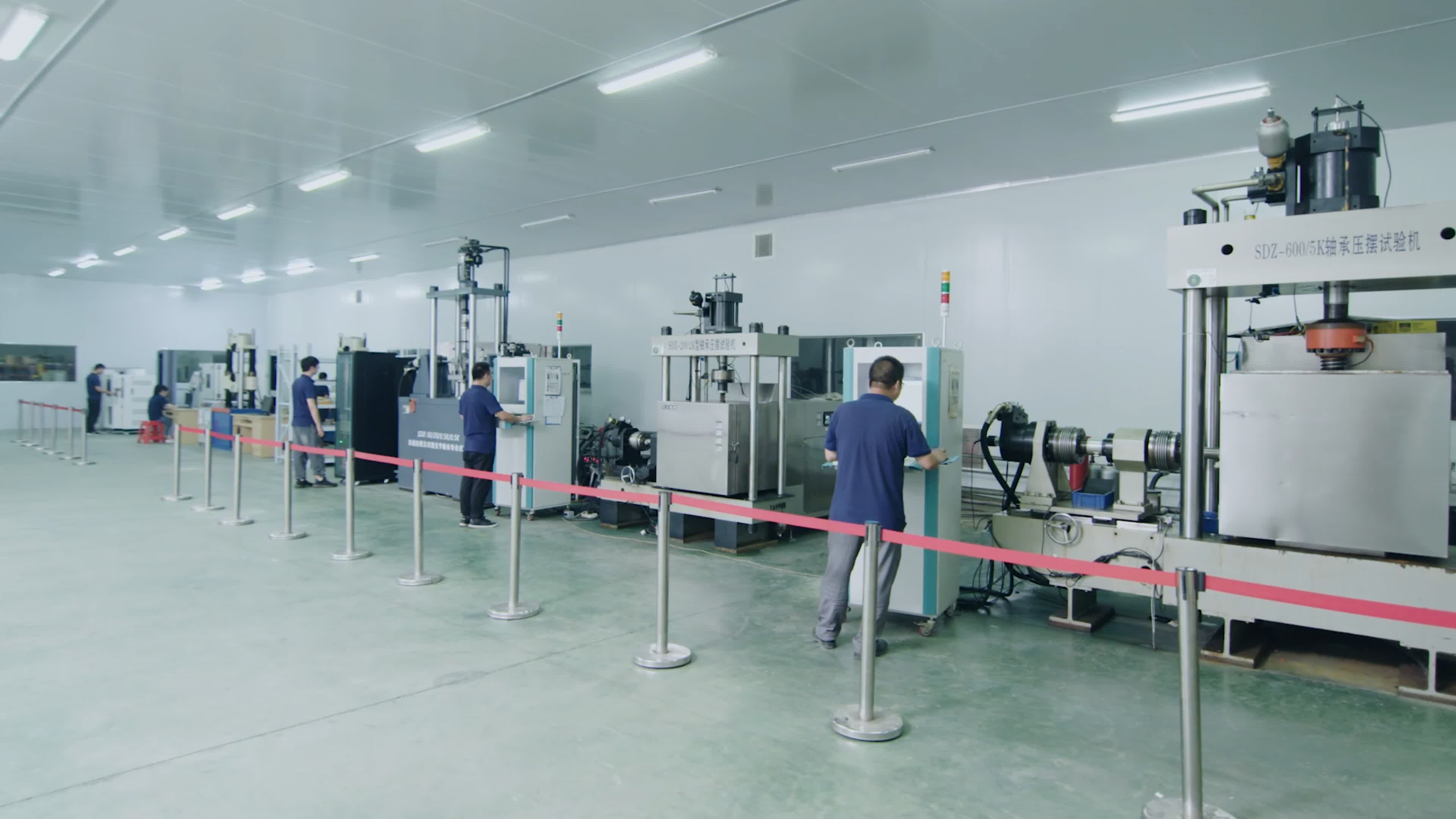
How the sealed ET-2RS design changes maintenance-contract structure
A maintenance contract written around relubricable rod ends and a maintenance contract written around sealed ET-2RS rod ends are not the same document with different wording. They price different activities. Three structural differences matter most.
Sealed ET-2RS moves the contact point from “grease” to “seal integrity.” With a relubricable series such as GE..ES — listed as re-greasable with lubrication holes, and available in a 2RS variant where seals are fitted at both sides — the maintenance crew has an activity it can perform. With ET-2RS, the only meaningful field observation is whether the seals are intact and whether contamination or temperature exposure has changed. The contract therefore has to specify what counts as a seal-integrity trigger, and who is responsible for confirming it.
Sealed ET-2RS removes the lubricant variable from the spare-parts baseline. When a bearing is field-greased, its service life depends partly on what the site actually injected and how often. That makes contractual lifetime predictions approximate. When the bearing arrives factory-sealed with a documented sliding contact and no field greasing step, the lifetime conversation moves back to the manufacturer and the application data. The contract can be built around the manufacturer’s stated construction and the site’s duty profile rather than around a site-controlled lubrication variable.
Sealed ET-2RS narrows what the site can inspect without disassembly. Maintenance teams that previously judged condition largely by grease appearance lose that signal. The replacement decision shifts to a combination of operating hours, duty profile, seal condition and linkage performance. That is a reasonable tradeoff for a maintenance plan that wants fewer interventions, but the contract has to name the replacement trigger explicitly, because the site will no longer be able to fall back on “add grease and reassess.”
Industry background: why sealed rod ends matter now
Sealed rod ends have become a decision point rather than an afterthought because two pressures converge on the maintenance budget at the same time. The first is schedule. Maintenance access windows are typically the highest-cost hours a plant books, and re-greasing has to happen inside that window. Removing a scheduled lubrication task from a linkage therefore removes both the labour and the downtime entry. The second is documentation. Buyers now expect supplier-side evidence to travel with the specification, including RoHS/REACH status for the products in scope. Without that evidence, the maintenance team carries the compliance risk on a spare part the supplier may never have validated.
The market has also continued to concentrate. Dataintelo estimates the global rod ends market at approximately USD 1.79 billion in 2025, with Asia Pacific accounting for about 42.3% of revenue that year. That concentration matters for maintenance contracts because it correlates with where the supply base actually sits, and therefore where spare-part lead times and engineering support will be decided.
What sealed ET-2RS specifications do and do not guarantee
The specifications a maintenance manager should be able to trace for a sealed ET-2RS rod end or spherical plain bearing cover construction, sliding contact, sealing and dimension range. LDK lists the following for the ET-2RS family:
- Maintenance mode: maintenance-free.
- Sliding contact: steel/PTFE fabric.
- Sealing: two seals, one at each side.
- Outer ring: GCr15 bearing steel, hardened to HRC 54–60, surface phosphated, with a PTFE fabric liner; the outer ring is fractured, and the XT design is axially split twice and held together by retaining rings.
- Inner ring: GCr15 bearing steel, hardened to HRC 58–64, hard chrome plated.
- Shaft diameter coverage: 15 mm to 300 mm for GE..ET-2RS, 15 mm to 280 mm for the heavier-duty GEG..ET-2RS, and 15 mm to 60 mm for the stainless SGE..ET-2RS.
What that specification set does not do is set a field service interval, a warranty duration, or a replacement interval in operating hours. Those are contract terms, not catalogue specifications. A maintenance manager who confuses the two and writes a replacement interval into the contract without the manufacturer’s application data has effectively accepted the risk without the support. The right sequence is to obtain the construction data first, then agree the contract terms against it.

On compliance, LDK holds an SGS RoHS Compliance Verification Report (report number XMNEC25002178301_1) issued by SGS SCTC Standards Technical Services Co., Ltd Xiamen Branch, valid to 2035-09-22, covering GEG35ES-2RS and a defined scope that includes GE..E, GE..ES(-2RS), GEZ..E, GEZ..ES(-2RS), GEG..E, GEG..ES(-2RS), GEEW..ES(-2RS), GEEM..ES-2RS, GAC..S, GACZ..S, GX..S, GEF..ES, GE..XS/K, GEWZ..ES(-2RS), GEGZ..ES(-2RS) and GEK..XS-2GS. A second SGS RoHS report (report number XMNEC25002178901_3, valid to 2035-10-16) covers rod end families including PHS, POS, CHS, COS, SI...E/ES and SA...E/ES. A purchaser buying specifically into the ET-2RS range should confirm scope alignment in writing at quotation rather than assume it.
Step-by-step: what to confirm before a long-term supply contract
The following seven checks are the practical sequence for a maintenance manager or purchasing engineer building a long-term supply contract around sealed rod ends. They are ordered from specification to release.
1Confirm the exact model code being bought
“Sealed rod end” is a category, not a specification. GE..ET-2RS, GEG..ET-2RS and SGE..ET-2RS are different constructions covering different shaft ranges. Before anything else, the contract should name the exact prefix this maintenance plan has standardised on. Mixing prefixes across a linkage introduces construction differences the maintenance team may not be able to see.
2Obtain the compliance report for that exact scope
The SGS RoHS reports LDK holds cover defined product families and model ranges. The correct request is a copy of the report whose listed scope includes the ordered model, not a general statement that the manufacturer is RoHS compliant. Compliance documentation should travel with the purchase order and be retained in the maintenance file, because it is evidence the site can present during audit years later.
3Agree the replacement trigger in writing
Because sealed ET-2RS has no grease-inspection signal, the contract should define what actually triggers replacement. The honest set of inputs is duty profile, operating hours, seal condition and linkage performance. The manufacturer can help build that list, but only the site knows the duty profile. Do not accept a single number from a generic catalogue in place of that conversation.
4Confirm what warranty covers and what it does not
Warranty terms vary between suppliers and between standard catalogue sales and contract engineering supply. The questions worth asking are narrow: does warranty cover the sealed assembly as delivered, does it cover seal degradation, and what documentation is required to open a claim. Ask for the answer in writing on the quotation, not in a general marketing brochure.
5Confirm engineering support boundaries during the maintenance phase
LDK provides technical remote support for OEM and ODM supply and lists R&D and design strength, DFM expertise, prototyping in 2D and 3D, testing for durability, safety and performance, plus NDA and intellectual property protection as core capabilities. A maintenance contract should state what that means in practice: who reviews a seal-failure report, who produces a replacement recommendation, and how long the response takes.
6Match lead time and order quantity to the spare-parts plan
For OEM production, LDK lists monthly capacity of 300,000 units, a lead time of 30–90 days, and a minimum order quantity of 5,000 units. For maintenance contracts that hold safety stock separately from OEM production, those figures define the replenishment cycle. They also define what the spare-parts buffer has to look like so a seal replacement does not become a line-stop event.
7Agree the seal-condition check trigger
The one field activity that still belongs to the maintenance team is the seal inspection. The contract should state when that inspection happens, who performs it, and what evidence is recorded. That single clause is what converts the sealed ET-2RS from “a bearing nobody needs to think about” into a genuinely managed component.
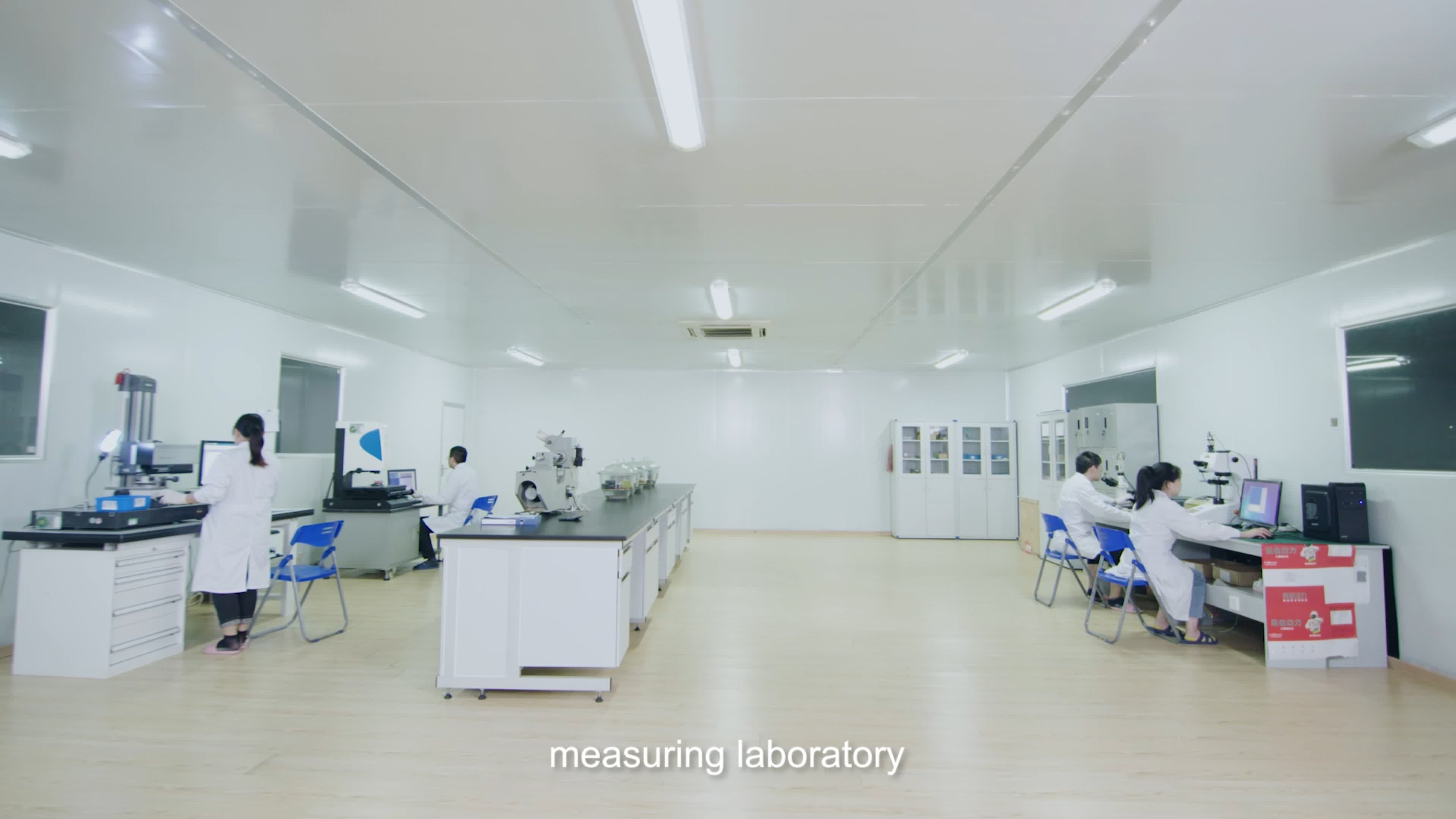
Application examples: where sealed and non-relubricated supply was tested
Rod ends do not sit alone in the LDK supply base. The company also supplies mounted bearing units, and the project record from those applications shows the same engineering-support pattern a maintenance contract is trying to buy.
Offshore processing equipment, United States. A project supplied 70,000 stainless steel bearing units used in offshore processing equipment. The units met 500 hours of rust-free performance and RoHS/REACH compliance, and the project was completed within two years. The patent-pending coating was highlighted as offering superior corrosion resistance compared with conventional stainless steel, which reduces equipment ownership cost. For a maintenance manager working offshore, the relevance is that the supplier carried the corrosion specification, not that the buyer discovered it after installation.
Sorting machinery OEM, New Zealand. A project supplied 110,000 units for sorting machinery applications, completed within 12 months. The product was selected for high corrosion resistance under frequent washdowns, exposure to harsh chemicals and high humidity. Those are exactly the environments where a sealed bearing’s ability to keep contamination out is tested over the full maintenance contract period.
Cold storage facilities, New Zealand. A project installed 5,000 units for low-temperature conveyor applications and completed within 12 months. The product worked properly at −50°C, with stable performance at low temperature and longer service life as key highlights. The relevance to a sealed rod end maintenance plan is that low-temperature performance is set by the grease and material combination, which is a manufacturer decision, not a field decision.
Comparing sealed ET-2RS against adjacent LDK designs
The right comparison is not “sealed versus unsealed” in the abstract. It is which LDK series fits which maintenance pattern. The table below uses only specifications listed for each series.
| Series | Maintenance mode | Sliding contact | Shaft diameter range | Listed characteristics |
|---|---|---|---|---|
| GE..ET-2RS | Maintenance-free | Steel / PTFE fabric | 15 mm – 300 mm | Two seals; outer ring fractured; XT design split twice with retaining rings |
| GEG..ET-2RS | Maintenance-free | Steel / PTFE fabric | 15 mm – 280 mm | Heavier-duty than GE..ET-2RS |
| SGE..ET-2RS | Maintenance-free | Stainless steel / PTFE fabric | 15 mm – 60 mm | 304 stainless outer ring; 440 stainless inner ring |
| GE..ES | Re-greasable | Steel / steel, MoS2 treated | 4 mm – 300 mm | Groove and lubrication holes; -2RS variant fitted with seals |
| GEG..ES | Re-greasable | Steel / steel, MoS2 treated | 4 mm – 300 mm | Heavier-duty than GE..ES |
| GE..C / GEG..C | Maintenance-free | Steel / PTFE composite | 4 mm – 30 mm | Outer ring pressed around inner ring; GEG..C heavier-duty |
Read this table from the maintenance side. Where the site can still perform a grease task and the duty profile rewards it, GE..ES or GEG..ES belongs in the contract. Where the site cannot, or where the maintenance plan has deliberately removed re-lubrication, ET-2RS is the correct family. The GE..C and GEG..C maintenance-free composite series sits in a smaller bore range and answers a different question.
FAQ
Are ET-2RS rod ends covered by a RoHS verification?
LDK holds SGS RoHS Compliance Verification Reports covering defined products. Report XMNEC25002178301_1 (issued by SGS SCTC Standards Technical Services Co., Ltd Xiamen Branch, valid to 2035-09-22) covers GEG35ES-2RS and a scope that includes GE..E, GE..ES(-2RS), GEZ..E, GEZ..ES(-2RS), GEG..E, GEG..ES(-2RS), GEEW..ES(-2RS) and related families. Report XMNEC25002178901_3 (valid to 2035-10-16) covers rod end families including PHS, POS, CHS, COS, SI...E/ES and SA...E/ES. A buyer ordering a specific ET-2RS model should confirm that the ordered model appears in the listed scope of the applicable report rather than assume it does. That confirmation should sit on the quotation.
Can LDK support a full sealed rod end and spherical plain bearing range across a maintenance contract?
LDK lists radial, angular contact and thrust spherical plain bearings in metric and inch sizes, with re-greasable and maintenance-free series and chrome steel and stainless steel options. The rod end range covers metric and inch rod ends, hydraulic rod ends, stainless steel rod ends, chromoly rod ends, loader slot rod ends, ball joints and rod end assemblies, and the company reports in-house production of both bearings and housings. The seal-selected family in this article — GE..ET-2RS, GEG..ET-2RS and SGE..ET-2RS — sits within that range. A joint long-term contract should list each series separately and confirm coverage rather than treating “sealed rod ends” as a single line item.
Which factors drive the long-term purchase price of a sealed rod end?
For OEM production, LDK lists monthly capacity of 300,000 units, a lead time of 30–90 days and a minimum order quantity of 5,000 units. The price-comparison conversation should therefore cover five items the catalogue cannot supply on its own: exact model code, material choice (chrome steel or stainless steel), the sealing construction, packaging and private labelling, and the order quantity and delivery terms. Payment terms for verified long-term OEM accounts can include usance L/C or O/A 30–60 days, finalised case by case after audit, and delivery terms are offered from FOB/CIF through to DDP/DDU. Those are contract variables, not catalogue prices, and a maintenance manager should not compare sealed rod ends on unit price alone.
Can a maintenance team validate a sealed ET-2RS rod end before committing to a full contract?
Yes, and it is the recommended sequence. LDK offers prototype and sample support as part of its ODM capability, with 2D and 3D prototyping and testing for durability, safety and performance, alongside NDA and intellectual property protection. Before a long-term contract is signed, the maintenance team should install a sample on the linkage that matters most, run it through the real duty profile, and check seal condition after a defined interval. The result of that trial is what the replacement trigger in the contract should be built from.
What lead time should a maintenance contract plan for on sealed rod end spares?
LDK lists a 30–90 day lead time for OEM production. A maintenance contract should plan spares against that range and not against the shorter cycles a local distributor might claim, because distributor stock is not the same supply path as manufacturer replenishment. The practical way to close the gap is to request a current quotation and lead-time confirmation in writing, agree a safety stock level that covers the replenishment window, and confirm the seal inspection schedule that ties the stock plan together. A quotation request submitted with the exact model code and duty profile will give the most useful answer; samples for the priority linkage can be requested at the same time.
Conclusion
Sealed ET-2RS rod ends are a maintenance design choice as much as a product choice. The family removes the lubrication interval from the contract entirely, which means the contract no longer prices grease, labour or timestamps. It prices the seal as the field observation, the manufacturer’s construction data as the lifetime baseline, and the engineering support relationship as the warranty and technical backstop. A maintenance manager who moves to sealed rod ends but keeps a contract written around relubricable rod ends will end up paying for both.
The practical route is the sequence set out above: confirm the exact model code, obtain the compliance report for the ordered scope, agree the replacement trigger, write the warranty and engineering support terms explicitly, then match the supply plan to the 30–90 day OEM lead time. A long-term manufacturing relationship supports that sequence. A generic catalogue part does not, because the catalogue part carries no application record, no compliance scope written to the maintenance contract, and no engineering support boundary the site can hold a supplier to.
Next step: sample and quotation
For sealed ET-2RS rod ends and spherical plain bearings, request a sample against the priority linkage in the maintenance plan, and a quotation covering the exact model codes, material choice, order quantity and delivery terms. LDK also publishes its full product and capability overview in the downloadable brochure.
Download the LDK product brochure (PDF) | Email: kzhang@ldk-bearings.com | Tel: +86 592-5807618

Have Questions or Need More Details?
Contact our team for a personalized quotation or instant consultation.
Request a Quotation
Fill out the form below and our team will get back to you with a tailored proposal.
WhatsApp Direct Chat
Prefer to chat in real-time? Message us on WhatsApp for instant assistance & quick answers.
- Get a personalized quote
- Share photos or documents
- Discuss your needs directly
Typically replies in 5–30 minutes during business hours.