
Stainless Steel vs Plastic Pillow Block Bearing Units: Which Housing Material Fits Your Application?
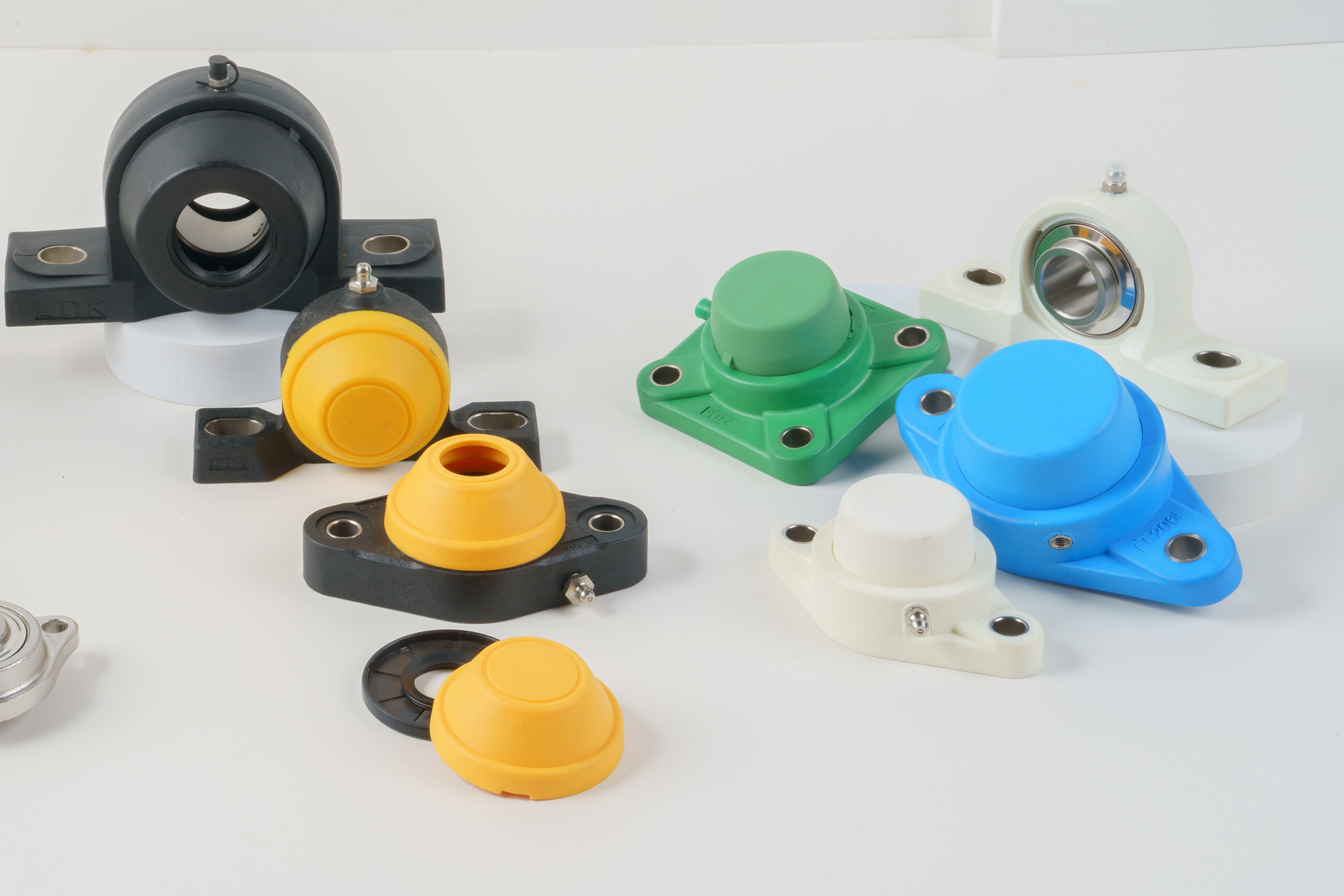
Choosing between stainless steel and plastic pillow block bearing units is a critical decision for engineers, maintenance managers, and procurement specialists. The housing material directly affects washdown capability, corrosion resistance, and mechanical strength. This guide compares LDK’s stainless steel units (SSUC, SSUCP, SSUCF, SSUCFL, SSUCT2) with plastic units (WP-SSBF, WP-SSBFL) to help you match the right housing to your specific application environment.
Problem Definition: Why Housing Material Matters
Bearing units operate in diverse environments—from food processing lines requiring frequent washdowns to offshore platforms exposed to salt spray. The housing material determines how well the unit resists corrosion, handles mechanical loads, and complies with hygiene standards. Selecting the wrong material can lead to premature failure, contamination risks, or unnecessary costs. Stainless steel offers superior strength and corrosion resistance, while engineered plastics provide lightweight, chemically inert, and cost-effective solutions for lighter duties. Understanding these trade-offs is essential for optimal equipment performance.
Industry Background: Market Trends and Standards
The global pillow block bearings market reached USD 2.8 billion in 2024 and is projected to reach USD 4.7 billion by 2033, growing at a CAGR of 5.7% (Dataintelo). Asia Pacific dominates the mounted bearing market with a revenue share of approximately 49.5%, driven by rapid industrialization (Fortune Business Insights). As industries demand more hygienic and corrosion-resistant solutions, the choice between stainless steel and plastic housings becomes increasingly strategic. LDK, a bearing manufacturer established in 1986, produces both material types under IATF 16949 certified facilities, offering over 100 combinations of materials and housing styles.

Detailed Solution: Stainless Steel vs Plastic Bearing Units
LDK offers a comprehensive range of stainless steel bearing units in various housing styles: SSUCP (two-bolt pillow block), SSUCF (four-bolt flange), SSUCFL (two-bolt flange), and SSUCT2 (take-up), all utilizing SSUC stainless steel insert bearings. These units feature a stainless steel 304 housing and stainless steel 440 insert bearing. They operate from -35°C to 102°C, come with food-grade grease and silicone rubber seals, and are self-aligning and relubricable. Shaft diameters range from 20 mm to 60 mm (3/4" to 2-7/16").
For lighter-duty and highly corrosive environments, LDK’s plastic bearing units WP-SSBF (four-bolt flange) and WP-SSBFL (two-bolt flange) use a PA6 thermoplastic housing with a stainless steel 440 insert. They share the same temperature range (-35°C to 102°C), food-grade grease, and silicone seals. Shaft diameters cover 20 mm to 40 mm (3/4" to 1-9/16"). The housing is available in black with an orange cover, with other colors customizable upon request.
The key difference lies in the housing material. Stainless steel 304 provides high mechanical strength and excellent resistance to a wide range of chemicals, making it suitable for heavy loads and harsh environments. PA6 thermoplastic is lightweight, inherently corrosion-resistant, and chemically inert, but it has lower load-bearing capacity. Both materials meet RoHS compliance, and the plastic units additionally hold a TÜV Rheinland food contact material safety compliance test report (report 168263398a 001), confirming suitability for direct food contact.
Step-by-Step Breakdown: Matching Insert, Housing, and Environment
Step 1: Determine the insert bearing type. Both stainless steel and plastic units use stainless steel 440 insert bearings, providing corrosion resistance and hygiene. If your application requires tapered bore or adapter sleeve locking, you may need to consider other series, but within this comparison, the insert is consistent.
Step 2: Select the housing style. Stainless steel units offer more mounting options: SSUCP (two-bolt pillow block), SSUCF (four-bolt flange), SSUCFL (two-bolt flange), and SSUCT2 (take-up). Plastic units are limited to WP-SSBF (four-bolt flange) and WP-SSBFL (two-bolt flange). If you need a pillow block or take-up configuration, stainless steel is the only choice.
Step 3: Evaluate washdown and corrosion exposure. Plastic housings are ideal for frequent washdowns with water and mild chemicals, as they do not rust and are resistant to many cleaning agents. Stainless steel 304 offers superior resistance to salt spray and aggressive chemicals, but may still corrode in certain chloride-rich environments. For offshore or marine applications, stainless steel is generally preferred.
Step 4: Assess load and speed requirements. Stainless steel housings can handle higher radial and axial loads, making them suitable for heavy machinery. Plastic housings are designed for light-duty applications where weight savings and chemical resistance matter more than load capacity.
Step 5: Verify compliance. If your application involves food contact, the plastic units’ TÜV food contact report provides assurance. For general industrial use, both material types comply with EU RoHS Directive (EU) 2015/863, verified by SGS reports.
Step 6: Plan maintenance. Both units are relubricable, but in food processing, solid lube options (available through LDK’s customization services) can eliminate contamination risks. Consider the operating temperature and cleaning regimen to choose the right lubrication.
Use Cases: Real-World Applications
Offshore Processing Equipment (USA): A customer required 70,000 units of stainless steel bearing units (SSUCP2..ESB) for offshore processing equipment. The units featured a patent-pending coating providing enhanced corrosion resistance, achieving 500 hours of rust-free performance and RoHS/REACH compliance. The project was completed within 2 years.
Food Processing Machinery (EU): For food processing machinery in the EU, 15,000 units of plastic bearing units (WP-SSBF) were delivered. The units feature grip lock and solid lube, preventing contamination and ensuring high concentricity/low vibration. The project achieved a 30% reduction in equipment ownership and maintenance cost, completed within 12 months.
Cold Storage Facilities (New Zealand): In New Zealand, 5,000 customized bearing inserts (product 4234) were installed for low temperature conveyor applications in cold storage facilities. The units operated properly in -50°C environments, with stable performance at low temperature and longer service life, completed within 12 months.
Comparison Table
| Feature | Stainless Steel Units (SSUC, SSUCP, SSUCF, SSUCFL, SSUCT2) | Plastic Units (WP-SSBF, WP-SSBFL) |
|---|---|---|
| Housing Material | Stainless steel 304 | PA6 thermoplastic |
| Insert Bearing | Stainless steel 440 | Stainless steel 440 |
| Available Housing Styles | Two-bolt pillow block, four-bolt flange, two-bolt flange, take-up | Four-bolt flange, two-bolt flange |
| Shaft Diameter Range | 20 mm – 60 mm (3/4" – 2-7/16") | 20 mm – 40 mm (3/4" – 1-9/16") |
| Operating Temperature | -35°C to 102°C | -35°C to 102°C |
| Seals | Food-grade grease + silicone rubber | Food-grade grease + silicone rubber |
| Self-Aligning | Yes | Yes |
| Relubricable | Yes | Yes |
| Corrosion Resistance | High (washdown, chemicals, marine) | Good (washdown, food zones) |
| Food Contact Compliance | RoHS compliant | TÜV food contact report, RoHS compliant |
| Typical Applications | Offshore, chemical processing, heavy food processing, marine | Food processing, sorting, packaging, car wash, light conveyors |

FAQ
1. What certifications do these bearing units hold?
LDK’s plastic bearing units WP-SSBF and WP-SSBFL have passed TÜV Rheinland food contact material safety compliance testing (report 168263398a 001) under U.S. FDA 21 CFR. Stainless steel units (SSUCP, SSUCF, SSUCFL, SSUCT2, SSUC) comply with EU RoHS Directive (EU) 2015/863, verified by SGS reports. All LDK manufacturing facilities are IATF 16949 certified.
2. Can LDK customize housing color or insert bearing?
Yes. As an OEM/ODM manufacturer, LDK offers customization options including housing color (standard: black with orange cover for WP-SSBF/WP-SSBFL; white, green, black for other plastic units) and insert bearing selection. Private labeling and custom packaging are also available.
3. How do stainless steel and plastic bearing units compare in cost?
Stainless steel units have a higher initial cost due to material and machining expenses. However, in corrosive environments, their longer service life reduces replacement and downtime costs. Plastic units offer a cost-effective solution for light-duty applications. In a UK food processing case, plastic units helped reduce equipment ownership and maintenance costs by 30%.
4. Can I request samples for testing?
Yes, LDK supports sample validation. Contact our sales team with your application details (shaft diameter, housing style, environment) to receive recommended samples for evaluation.
5. What is the lead time for orders?
Standard lead time is 30 to 90 days, depending on order volume and customization requirements. The minimum order quantity (MOQ) is 5,000 units.
Conclusion
Choosing between stainless steel and plastic pillow block bearing units depends on your specific application requirements. Stainless steel units (SSUC, SSUCP, SSUCF, SSUCFL, SSUCT2) provide superior mechanical strength and corrosion resistance for heavy-duty, marine, and chemical environments. Plastic units (WP-SSBF, WP-SSBFL) offer lightweight, chemically inert, and food-contact-compliant solutions for washdown and light-duty applications. Both material types share the same high-quality stainless steel 440 inserts and are manufactured under LDK’s IATF 16949 quality system. For tailored guidance, download our product brochure or contact LDK directly.
Next Step: Download the LDK bearing catalog for detailed specifications and selection guides: LDK Product Brochure (PDF).
Contact LDK: Mr. Kenneth Zhang | Email: kzhang@ldk-bearings.com | Tel: +86 592-5807618 | Website: www.ldk-bearings.com
Have Questions or Need More Details?
Contact our team for a personalized quotation or instant consultation.
Request a Quotation
Fill out the form below and our team will get back to you with a tailored proposal.
WhatsApp Direct Chat
Prefer to chat in real-time? Message us on WhatsApp for instant assistance & quick answers.
- Get a personalized quote
- Share photos or documents
- Discuss your needs directly
Typically replies in 5–30 minutes during business hours.