Steel-on-Steel vs. Service-Free: Navigating DIN/ISO Standards for Spherical Plain Bearings
Two spherical plain bearings can carry the same catalogue number, share identical bore and outer-ring envelope dimensions, and still behave as different products the moment they enter service. The reason is that dimensional standards and performance classes are two different layers of specification. ISO 12240 — the international standard family that governs spherical plain bearings — is organised into parts covering radial bearings (Part 1), angular contact bearings (Part 2), thrust bearings (Part 3) and rod ends (Part 4). That structure gives buyers a common dimensional language. It does not, on its own, decide whether a joint will run as a lubricated steel-on-steel bearing or as a maintenance-free, service-free unit.
Steel-on-steel and service-free designs are the two dominant performance classes across spherical plain bearings and rod ends. Steel-on-steel bearings place a hardened inner ring against a hardened outer ring, usually with a surface treatment such as chrome or zinc plating, and depend on an external lubricant film to keep the two surfaces apart. Service-free designs — also described as maintenance-free, self-lubricating or lined bearings — carry a self-lubricating liner or solid-lubricant system at the sliding interface, so the joint does not rely on routine re-greasing. Both classes can be supplied inside the same ISO 12240 envelope, and both are sold as standard catalogue items.
This guide is written for buyers, design engineers and procurement teams that are already past discovery and are executing a purchase, a re-qualification or a supplier consolidation. It explains where DIN and ISO references stop, which specification layers actually control performance, how material and tolerance classes affect cross-compatibility between suppliers, and what evidence a compliant supplier should be able to produce on request.
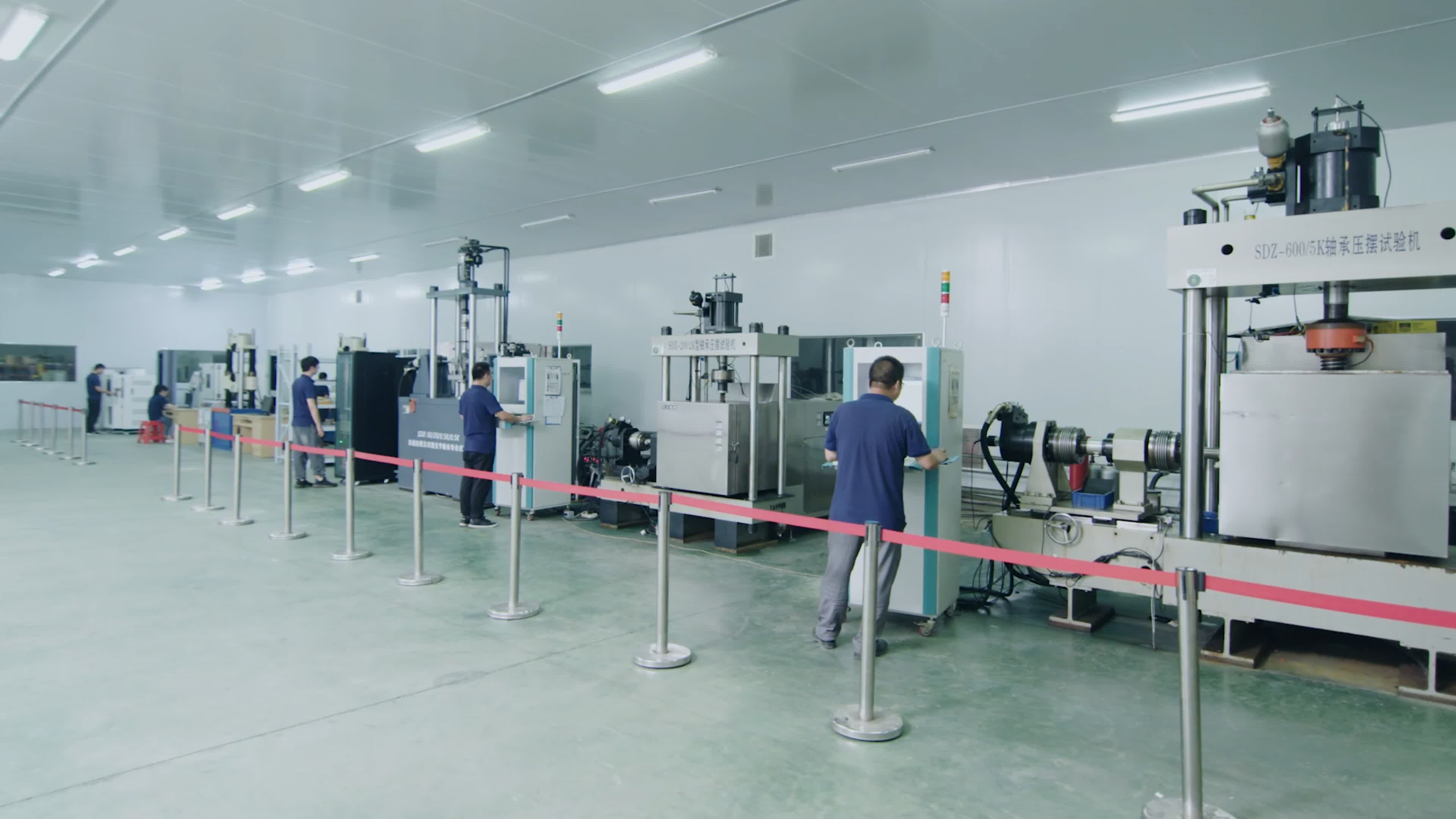
Reliability testing room where LDK validates spherical plain bearings and rod ends against fatigue, load and corrosion requirements before shipment.
Problem Definition: Where Dimensional Compliance Stops and Functional Compliance Begins
Procurement documents usually specify a standard and a part number. That combination guarantees the part will fit. It does not guarantee the part will perform like the one it replaces.
The distinction becomes concrete in three situations. In mixed-vendor assembly, an OEM qualifies two suppliers against the same ISO 12240 series, then discovers that parts from the two sources do not deliver the same internal clearance or wear behaviour in the same housing. In re-qualification, a design or supply change pushes a new supplier onto an existing drawing, and the buyer has no baseline for the material grade, tolerance class and lubrication layer the original part carried. In maintenance commitments, a machine sold with periodic greasing is re-sourced with a service-free bearing, or the reverse, and the service schedule, warranty terms and field-service cost all change even though the drawing number does not.
None of these is a standards failure — in each case the dimensional standard was met. What was not controlled is the set of layers behind it: material grade, heat treatment, tolerance and clearance class, surface treatment or liner system, and the documentation that proves all of the above. That gap is what buyers must close at the evaluation and execution stage.
Decision-stage rule: treat a cited standard as an entry gate, not as a comparison criterion. Once two candidates both pass the dimensional gate, compare them on material grade, tolerance and clearance class, lubrication or liner system, traceability, and documented test evidence.
Industry Background: A Growing Market Served by a Layered Standard System
Demand context explains why this distinction carries commercial weight. The global plain bearing market was valued at USD 10.4 billion in 2024 and is projected to reach USD 17.8 billion by 2034 (Dataintelo). The rod ends segment alone was valued at USD 1.79 billion in 2025, with Asia Pacific accounting for a 42.3% revenue share (Dataintelo). Automotive applications represent approximately 38.5% of rod end demand (Dataintelo). On the supply side, China's bearing industry recorded revenue of CNY 231.5 billion in 2024, a 6.2% year-on-year increase (China Bearing Industry Association).
Against that volume, standards operate as layers rather than as a single document set. ISO 12240 provides the dimensional layer for spherical plain bearings and is split across four parts. National and legacy systems — DIN being the reference most often encountered on European drawings and machinery documentation — carry long-established dimension tables and tolerances that many existing assemblies still cite. Around the dimensional layer sit material specifications, tolerance and fit conventions, surface treatment or liner specifications, lubrication requirements, and quality-system requirements such as IATF 16949 for automotive-linked supply chains.
A drawing that cites only the dimensional layer leaves every other layer open. Open layers are where interchange problems, warranty disputes and re-qualification costs originate — long before a bearing fails.
Detailed Solution: Five Layers That Decide Whether a Spherical Plain Bearing Interchanges
Layer 1 — Dimensional standard: ISO 12240 and its DIN counterparts
ISO 12240 defines the dimensional framework for spherical plain bearings, covering radial bearings (Part 1), angular contact bearings (Part 2), thrust bearings (Part 3) and rod ends (Part 4). When a buyer compares ISO 12240-1 dimensions for a radial series against a specific application requirement, the comparison answers a fit question: bore, outer diameter, ring width and chamfer will mate with the housing and the shaft. It does not answer load capacity, wear life, re-lubrication interval or corrosion behaviour, because those are governed by the layers beneath the dimensional one.
Layer 2 — Material standard: what the drawing usually does not state
Two bearings can be produced to the same dimensional drawing and differ in steel grade, heat treatment route, hardness depth and material purity. Under shock loading, contamination or moisture, those differences decide whether a bearing wears progressively or fails prematurely. A supplier sourcing under a controlled procedure — for example an IATF 16949 raw-material qualification and supplier audit process that requires a Mill Test Certificate (MTC) with every batch — can document this layer instead of asserting it. LDK (Deyuan Smart Technology (Fujian) Co., Ltd) operates a physical and chemical material analysis laboratory that inspects all incoming raw material and excludes second-hand or unknown-origin stock, which is the first point at which a material standard becomes verifiable rather than declarative.
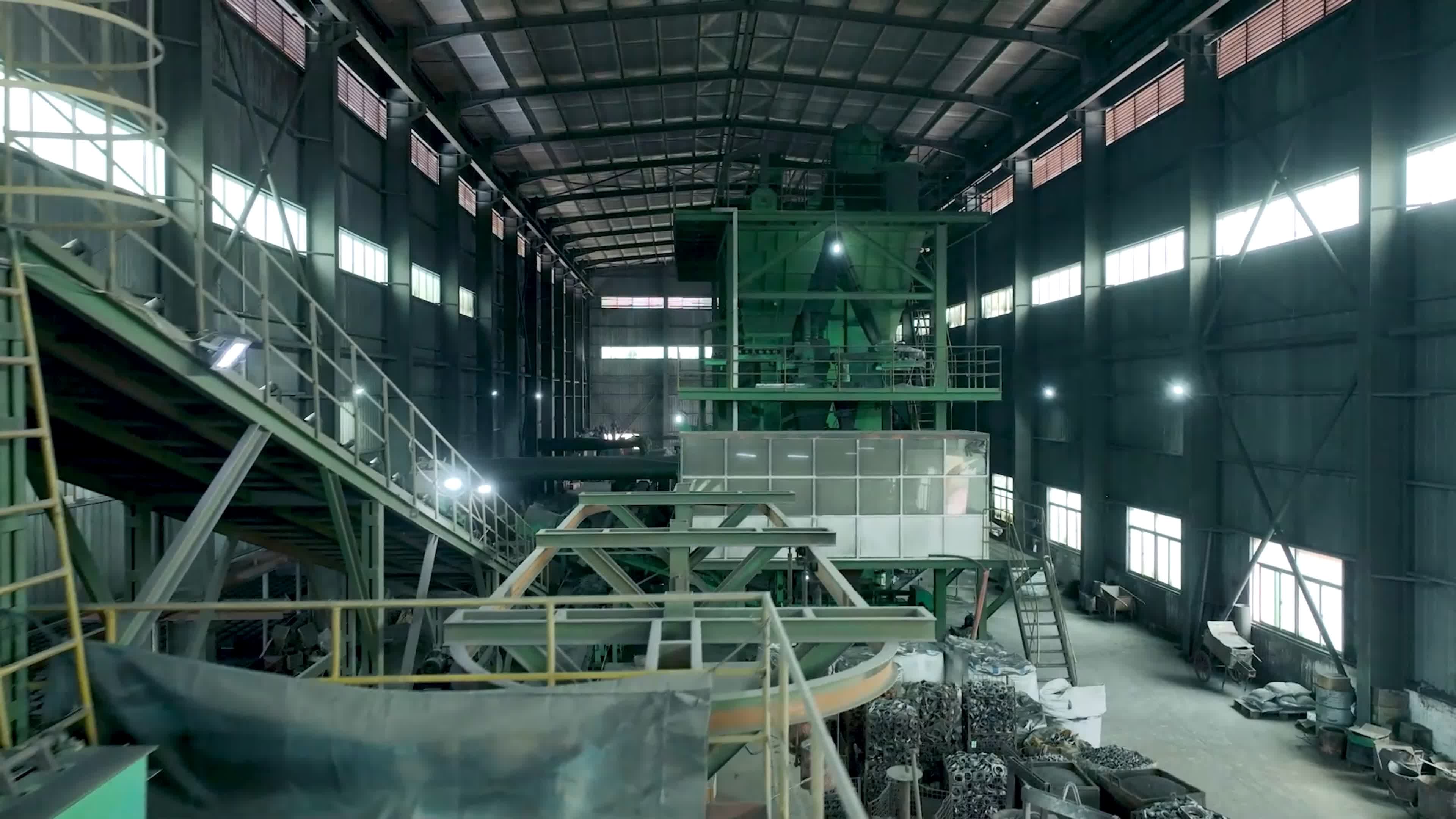
In-house casting and moulding capability keeps the material layer of the specification under one quality system.
Layer 3 — Tolerance and fit class: the real cross-compatibility gate
Cross-compatibility has two levels. Dimensional interchange means a part from one supplier physically enters an assembly designed for another supplier's part; this is normally guaranteed when both parties work to the same ISO 12240 series. Functional interchange means the part behaves the same way in service, and that depends on bore and outer-ring tolerance, internal clearance, roundness and surface finish. In a steel-on-steel design, clearance and surface finish influence how the lubricant film forms and how quickly the contact surfaces wear. In a service-free design, liner thickness, liner bond quality and press-fit conditions add further process-specific variables. Buyers executing a multi-source strategy should therefore request a written tolerance and clearance declaration, not only a dimensional conformity statement.
Layer 4 — Surface treatment and lubrication system
This is the layer where the steel-on-steel versus service-free decision is actually made, and it is a working-condition decision rather than a standards decision. Steel-on-steel spherical plain bearings are generally selected where re-lubrication is practical, where high static or shock loads are expected, and where the environment can be managed through sealing and scheduled greasing. Service-free bearings are generally selected where re-lubrication is impractical or unacceptable — sealed linkages, remote installations, hygiene-sensitive production lines, or joints that would require dismantling an assembly for maintenance access. Coating and material choices such as stainless steel bodies, chrome or zinc plating and heavy polymer components sit on top of both classes and determine corrosion behaviour; LDK's portfolio spans stainless steel, polymer and zinc/chrome-plated variants that are tested against neutral salt spray exposure.
Layer 5 — Evidence and documentation
Compliance becomes usable in procurement only when it is documented. The evidence set typically includes batch-level material certificates, dimensional and hardness inspection records, coating thickness or liner data, and test reports covering fatigue life, tensile strength, noise and vibration, high and low temperature, and salt spray. For OEM programmes, PPAP 3 documentation packages these records into an auditable release. Traceability closes the loop: when shipments carry production dates, barcodes and QR codes, a non-conformance can be isolated to a batch rather than triggering a full recall.
How LDK standardises across the five layers
LDK is a bearing manufacturer established in 1986 in Fujian, China, producing rod ends, spherical plain bearings and pillow block bearings from a 90,000 m² facility with IATF 16949 certified manufacturing, a 12-engineer R&D team, and a stated 100% in-house production flow covering casting, turning, heat treatment, grinding, super-finishing, injection moulding, painting and final assembly. The company reports more than 3,000 active SKUs across different material and surface-treatment combinations, and a first-year premature structural failure rate below 0.05%, compared with approximately 3.5% for standard competitors that rely on decentralised outsourcing, where more than 70% of production steps take place outside the supplier's own facility.
For a buyer navigating standards, the practical value is not catalogue size but the number of specification layers that can be quoted and verified from a single source. When dimensional series, material grade, heat treatment, tolerance class, coating and documentation all come out of one quality system, the compliance conversation shifts from a generic "what standards do you meet?" to a specific "what is your declared tolerance class, and which certificates will ship with this order?". LDK also reports an R&D sampling cycle of 1–2 weeks, compared with 6–8 weeks or longer where production steps are fragmented across vendors, which shortens the verification loop before a volume commitment is made.

One manufacturing base, one quality system: LDK's Fujian facility covers casting through final assembly for rod ends and spherical plain bearings.
Step-by-Step Breakdown: A Six-Step Compliance Sequence for Buyers
- Fix the standard reference and identify the exact part. Confirm which ISO 12240 part applies — Part 1 for radial spherical plain bearings, Part 2 for angular contact, Part 3 for thrust, Part 4 for rod ends — and record any DIN or legacy dimension table the drawing still cites. Ambiguity here is the most common cause of mismatched first articles.
- Select the performance class against the working condition. Decide between steel-on-steel and service-free on lubrication access, duty cycle, load type, temperature, contamination and washdown requirements. Record the decision and the reason, because re-sourcing later will otherwise default to unit price alone.
- Specify the layers the standard leaves open. Add material grade, heat treatment and hardness, tolerance and internal clearance class, surface treatment or liner system, sealing, and the required lubricant or solid-lubricant matrix.
- Require material and process evidence before quoting. Ask for batch-level MTCs, material analysis, PPAP 3 documentation where applicable, and test reports covering fatigue life, tensile strength, noise and vibration, temperature and salt spray.
- Verify cross-compatibility before volume release. Run first-article inspection and a pilot assembly, then confirm that a second supplier's part matches on tolerance and clearance, not only on envelope dimensions. Digital inspection records support skip-to-line audits and reduce incoming inspection workload.
- Lock the continuity frame. Agree MOQ, capacity, lead time, Incoterms and inventory support so the verified specification can actually be repeated. In LDK's programme, the minimum order quantity is 5,000 units, monthly production capacity is 300,000 units, and typical production lead time is 30 to 90 days, with Incoterms from FOB and CIF to DDP and DDU.
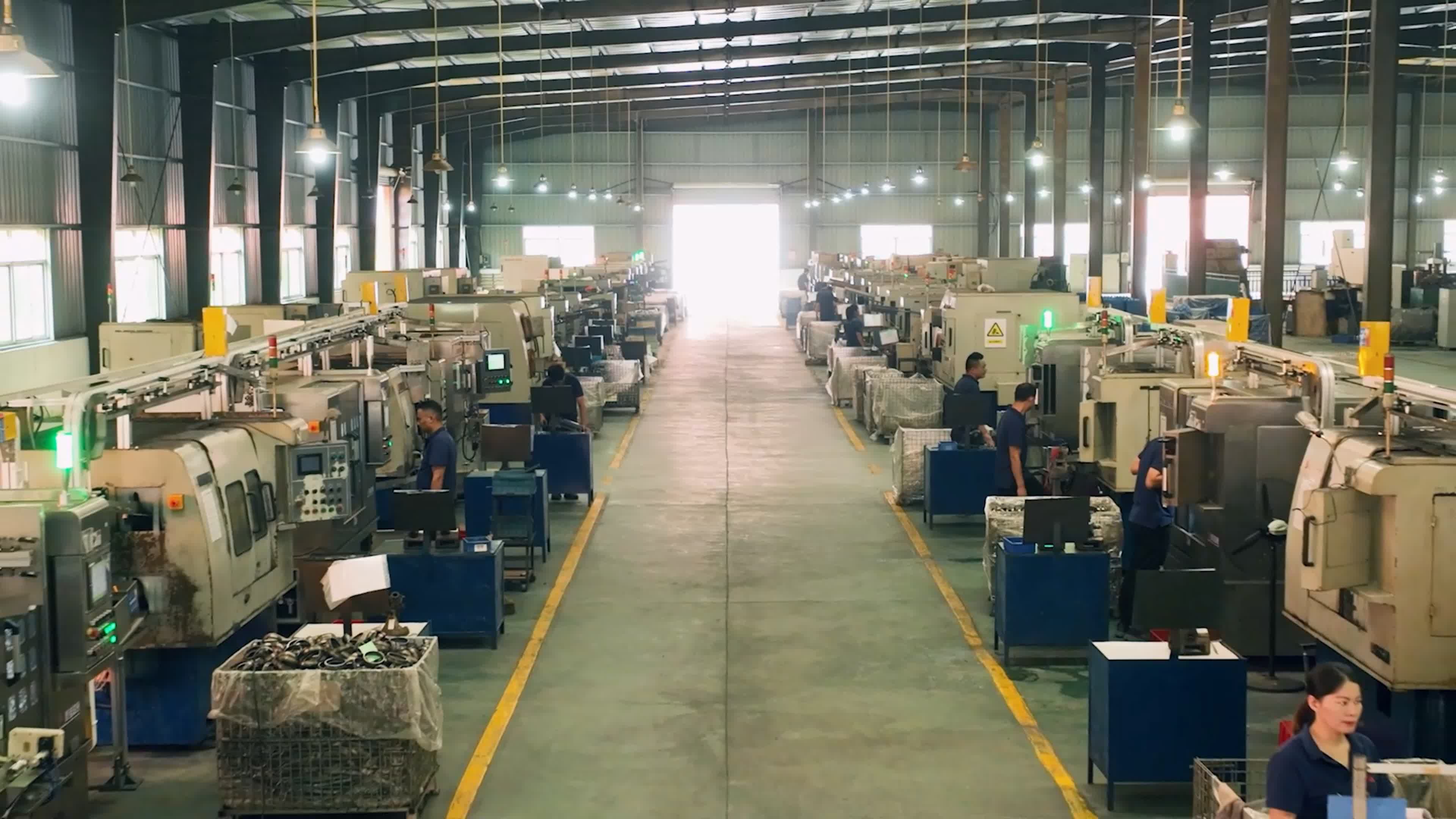
Grinding and finishing stages control the tolerance and surface-finish layer that determines functional interchange.
Use Cases: Where Each Class Earns Its Place
Hydraulic cylinders and rod end linkages
Hydraulic rod ends and cylinder linkages typically favour steel-on-steel or plated steel-on-steel constructions where the joint can be greased during scheduled service and where high push-pull loads are routine. Here the standards question concentrates on clearance and tolerance, because a loose fit accelerates wear under reversing load, and a tight fit can restrict articulation. The material layer still matters: a hydraulic joint that corrodes externally will seize long before the sliding interface wears out.
Heavy truck, off-road and chassis linkages
Chassis and suspension linkages combine shock loading, mud, grit and water. In these conditions material authenticity and sealing dominate performance, so buyers should treat batch-level MTCs and material analysis as core selection criteria rather than paperwork. The class choice usually stays steel-on-steel, protected by coating and sealing, because the joints are serviceable on a maintenance schedule.
Food, beverage and pharmaceutical production
Service-free designs are usually the default where washdown is frequent and grease contamination is unacceptable. LDK's documented food-processing comparison states a 0% grease contamination rate with a zero-leakage solid-lubricant matrix, 100% FDA/HALAL compliant materials, and reported washout resistance of roughly 4–5× the greased baseline. In this segment the specification decision is a hygiene decision: a greased joint that sheds lubricant at a critical control point is a compliance problem, not a maintenance problem.
Agricultural machinery and implements
Agricultural implements combine shock loads, abrasive crop wrapping and prolonged mud immersion. In LDK's documented agricultural comparison, verified refined steel and sealing systems reduced premature mud-seizure rates by 85% and cut field replacement frequency by 70% in hostile environments, with a verified steel sourcing premium of about 15% at the point of purchase. The trade-off is deliberate: buyers exchange a documented initial premium for fewer in-season failures. The class decision here is usually steel-on-steel with robust sealing, because field service access exists but harvest-season downtime does not.
Industrial conveying, printing and air-handling equipment
Radial spherical plain bearings inside industrial assemblies frequently sit in positions that are hard to reach. Where re-lubrication would require partial disassembly, service-free constructions simplify the maintenance plan; where access is straightforward and loads are high, steel-on-steel remains the pragmatic choice. LDK bearings are applied across agriculture, textile, mining, food and beverage, pharmaceutical, chemical processing, printing, dyeing, airport, aviation and air-conditioning equipment, plus conveying and rolling devices — a spread that reflects how often the class decision follows the maintenance plan rather than the load rating.
Comparison Table: Standards, Classes and Cross-Compatibility at a Glance
Table 1 sets out the ISO 12240 structure that buyers cite on drawings. Table 2 compares the specification layers that the dimensional standard leaves open for each performance class.
| ISO 12240 part | Bearing type | What citing it confirms for the buyer |
|---|---|---|
| Part 1 | Radial spherical plain bearings | Envelope dimensions for radial joints; the fit layer for most industrial and hydraulic linkages. |
| Part 2 | Angular contact spherical plain bearings | Dimensional framework for joints carrying combined radial and axial load. |
| Part 3 | Thrust spherical plain bearings | Dimensional framework where axial load is the governing direction. |
| Part 4 | Rod ends | Dimensional framework for threaded rod ends and linkage assemblies. |
Source: ISO 12240, which governs spherical plain bearings across radial, angular contact, thrust and rod end parts.
| Specification layer | Steel-on-steel | Service-free (maintenance-free) |
|---|---|---|
| Dimensional reference | ISO 12240 series (or DIN / legacy table), same envelope | ISO 12240 series (or DIN / legacy table), same envelope |
| Sliding interface | Hardened inner ring running against hardened outer ring | Self-lubricating liner or solid-lubricant matrix at the interface |
| Lubrication requirement | External lubricant film; re-greasing assumed in the maintenance plan | No routine re-greasing required; suited to closed or hard-to-reach joints |
| Dominant wear variables | Steel grade, hardness, clearance, surface finish, coating integrity | Liner chemistry and bond quality, substrate condition, press-fit control |
| Cross-compatibility risk in mixed sourcing | Dimensional interchange is likely; functional interchange requires matched material and clearance declaration | Higher risk: liner system and fitting practice are supplier-specific and not covered by the dimensional standard |
| Evidence to request | Batch MTC, dimensional and hardness records, coating data, salt spray and fatigue reports | Liner specification, substrate material data, washout and temperature test data, dimensional records |
| OEM documentation | PPAP 3 package on request; traceability via production date, barcode and QR code | PPAP 3 package on request; traceability via production date, barcode and QR code |
Table 2 compares specification layers, not brands. Statements describe typical engineering practice for each class; final requirements should be confirmed against the drawing and the supplier's technical documentation. LDK documentation references cover IATF 16949 manufacturing, PPAP 3, and fatigue, tensile, noise and vibration, temperature and salt spray testing.
FAQ: Compliance, Capability, Budget, Sample and Lead Time
1. Which standards apply to spherical plain bearings and rod ends, and how can a buyer verify compliance?
ISO 12240 is the international standard that governs spherical plain bearings: Part 1 for radial bearings, Part 2 for angular contact bearings, Part 3 for thrust bearings and Part 4 for rod ends. National and legacy references such as DIN still appear on many existing drawings and should be recorded alongside the ISO part. Compliance is verified through documentation rather than through a supplier statement: batch material test certificates, dimensional and hardness inspection records, and test reports covering fatigue life, tensile strength, noise and vibration, high and low temperature, and salt spray. LDK operates under IATF 16949 with additional ISO 14001, ISO 45001, RoHS, REACH and FDA-related compliance, and supports verification by named authorities such as BV, SGS or TUV.
2. Can a single supplier deliver both steel-on-steel and service-free designs within the same standard envelope?
Yes, where the supplier controls material, heat treatment and finishing in-house, because those are the layers that differ between performance classes. LDK states 100% in-house production covering casting, turning, heat treatment, grinding, super-finishing, injection moulding, painting and final assembly, with more than 3,000 active SKUs spanning stainless steel, polymer and plated variants, a 12-engineer R&D team, and PPAP 3 documentation for OEM programmes. The practical benefit is that a buyer can hold one dimensional standard while varying the performance layer without opening a second supply channel.
3. Does standards compliance change the commercial terms?
Compliance scope affects the part price, so it should be evaluated against lifecycle cost rather than unit price alone. In LDK's programme the minimum order quantity is 5,000 units, with flexible scheduling across low- and high-volume production, monthly capacity of 300,000 units, and a typical production lead time of 30 to 90 days. Incoterms span FOB and CIF through to DDP and DDU, and for verified long-term OEM accounts LDK cooperates with overseas distributors to hold vendor-managed inventory safety stock and arranges credit windows such as usance L/C or O/A terms on a case-by-case basis. In LDK's documented agricultural comparison, verified steel sourcing carries a stated initial premium of about 15%, offset by a reported 70% reduction in field replacement frequency in hostile environments.
4. How is a new or re-qualified part sampled and validated before volume release?
Validation starts with material and dimensional verification and ends with functional testing. LDK provides 2D/3D design support based on buyer concepts, samples or prints; reports an R&D sampling cycle of 1–2 weeks, compared with 6–8 weeks or longer for fragmented sourcing routes; and validates through fatigue life, tensile strength, noise and vibration, temperature and salt spray testing, supported by PPAP 3 documentation. Shipments can carry production dates, barcodes and QR codes, so if a defect occurs it can be isolated to a specific batch instead of affecting the buyer's wider installed base.
5. What lead time and supply continuity should be planned for?
Typical production lead time is 30 to 90 days, with monthly production capacity of 300,000 units and a minimum order quantity of 5,000 units. For repeat OEM accounts, LDK works with overseas distributors to establish vendor-managed inventory buffers and triggers a 24–48 hour regional emergency response when production spikes, which removes the need for rush air freight. To open a sample or quotation request for a specific ISO 12240 part, rod end or linkage assembly, share the drawing, the required performance class (steel-on-steel or service-free), the working condition and the target annual volume with the LDK engineering team at kzhang@ldk-bearings.com or through www.ldk-bearings.com.
Conclusion: Compliance Is a Layer Stack, Not a Certificate
ISO 12240 — and the DIN and legacy references that sit alongside it — gives buyers a reliable dimensional language for spherical plain bearings and rod ends. It is a necessary gate, and it is not a performance guarantee. The steel-on-steel versus service-free decision is made one layer below the standard, in the choice of sliding interface and lubrication concept, and it is confirmed two layers below that, in material grade, tolerance and clearance class, coating or liner system, and documentation.
For buyers in the execution stage, the working method is straightforward: confirm the ISO part, select the performance class against the working condition, specify the layers the standard leaves open, demand batch-level evidence, verify cross-compatibility before committing volume, and lock a continuity frame that can repeat the specification. Suppliers that control those layers in-house — as LDK does through IATF 16949 manufacturing, in-house casting through final assembly, and documented fatigue, tensile, noise and vibration, temperature and salt spray testing — make verification a matter of retrieving records rather than accepting assurances.

Measurement room verification: dimensional and tolerance records that ship alongside the order.
Next step: send your drawing, the standard reference (ISO 12240 part or DIN equivalent) and the working condition to LDK. The engineering team will confirm the dimensional series, the material and tolerance class, and whether a steel-on-steel or service-free construction is the right fit for the application.
Email: kzhang@ldk-bearings.com | Website: www.ldk-bearings.com | Brochure: https://cdn.socialarks.com/sbsp/24740/common/2026/0526/6a15036f9c1a2.pdf
Have Questions or Need More Details?
Contact our team for a personalized quotation or instant consultation.
Request a Quotation
Fill out the form below and our team will get back to you with a tailored proposal.
WhatsApp Direct Chat
Prefer to chat in real-time? Message us on WhatsApp for instant assistance & quick answers.
- Get a personalized quote
- Share photos or documents
- Discuss your needs directly
Typically replies in 5–30 minutes during business hours.