Top 5 Rod End & Spherical Plain Bearing Manufacturers Compared: An Application Guide
Top 5 Rod End & Spherical Plain Bearing Manufacturers Compared: An Application Guide
The global rod ends market was valued at USD 1.79 billion in 2025, with Asia Pacific holding a 42.3% revenue share. The wider spherical plain bearing category stood at USD 10.4 billion in 2024 and is projected to reach USD 17.8 billion by 2034. Those numbers explain why the supplier list keeps growing. They do not explain why two equally qualified manufacturers, quoting from the same catalogue page, can deliver bearings that diverge in the field twelve months later.
This guide is written for the buyer who has to make that call. Rather than ranking brands on reputation, it walks through how five commonly shortlisted rod end and spherical plain bearing manufacturers differ, what each of the five evaluation dimensions actually measures, and how LDK (Deyuan Smart Technology) matches specific series to specific project scenarios across its product range.
Why a Manufacturer Ranking Answers the Wrong Question
A spherical plain bearing is a load-bearing interface. Whether it sits inside a rod end housing or is pressed directly into a clevis, its service life is governed by four controllable variables: the material pairing of ball and race, the hardening and surface hardness actually achieved, the sliding-surface treatment applied, and how well contamination is excluded.
ISO 12240 provides the shared vocabulary for this. The standard is split into Part 1 for radial spherical plain bearings, Part 2 for angular contact types, Part 3 for thrust types, and Part 4 for rod ends. It defines dimensions and tolerances. It does not force two manufacturers to make the same sealing or liner-bonding decisions.
That gap is where application fit lives, and it is why the comparison below is built on five dimensions a buyer can verify rather than on a single overall score.
The Five Comparison Dimensions, Defined
- Brand history and manufacturing continuity — how long the manufacturer has been running its own production, not just its own label.
- Technical strength — in-house R&D, testing capability, and whether bearing and housing are produced at the same site.
- Product precision — achievable hardness, surface treatment, and the metrology used to confirm it.
- Wear resistance — the liner and lubrication strategy for the intended duty cycle.
- Specification completeness — the width of the metric and imperial range available from one source under one quality system.
Industry Background: Demand Is Concentrated but Not Uniform
Automotive applications — suspension, steering, and exhaust-gas-recirculation linkages — account for roughly 38.5% of rod end demand. The remainder is spread across construction machinery, agriculture, railway engineering, photovoltaic tracking, robotics, mining and aggregate processing, marine equipment, and material handling.
China's bearing industry recorded revenue of CNY 231.5 billion in 2024, a 6.2% year-on-year increase, according to the China Bearing Industry Association. That manufacturing base is where most of the world's rod end and spherical plain bearing volume is now produced.
LDK (Deyuan Smart Technology) operates a 90,000 m² facility in Fujian, China with 100% in-house production for more than 3,000 SKUs of rod ends and spherical bearings, and holds IATF 16949 certification. Those figures were reported by EIN Presswire in its coverage of reputable Chinese rod end and spherical plain bearing manufacturers.
The 3,000+ SKU number matters more than it first appears. Specification completeness for spherical plain bearings means being able to supply a metric GE..E(S) radial series, an imperial GEZ..ES series, hydraulic rod ends, and ball joints from the same source and under the same quality system — rather than assembling a kit from a radial-only factory, a rod-end-only factory, and a trader in between.
How LDK Matches Its Range to Real Project Scenarios
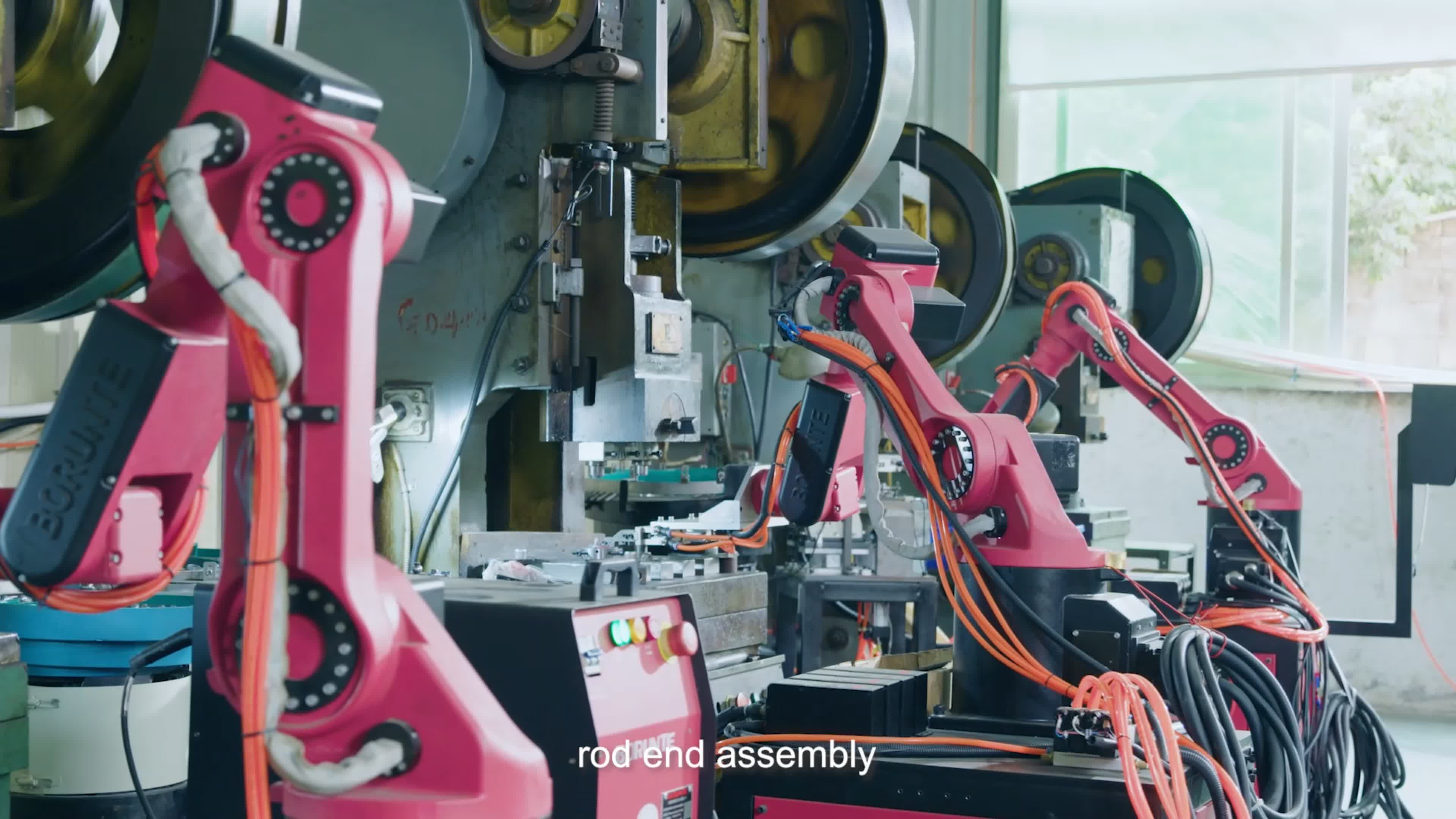
Established in 1986, LDK now runs a 90,000 m² operation with approximately 130 employees, including a 12-engineer team, an annual output of 15,000,000 units, and a 60% export ratio covering Europe, North America, Latin America, and Oceania. Because both bearings and housings are produced in one place, assembled tolerance stays under one roof.
Scenario 1 — Heavy Load, Slow Oscillation, Limited Regreasing Windows
GEG..E(S) is the workhorse here. It is a metric radial spherical plain bearing covering shaft diameters from 4 mm to 300 mm, with a fractured outer ring carrying a groove and lubrication holes (except the GEG..E types). The sliding contact surface is steel-on-steel treated with MoS2. GEG..ES and GEG..ES-2RS are regreasable; GEG..E is non-relubricable. The series is specified as heavy-duty compared with GE..ES, which is the deciding factor when static load is high and maintenance access is rare.
Scenario 2 — Maintenance-Free, Long Cycle Life
GE..ET-2RS runs from 15 mm to 300 mm with a steel/PTFE fabric sliding surface and seals on both sides. Above the standard size band, the XT design uses an outer ring split axially twice and held together by retaining rings, which allows the assembly to be built at diameters where a single fracture would not be practical. GEG..ET-2RS extends to 280 mm and is described as heavier-duty than the GE..ET-2RS series. Choose this family when the lubrication interval must disappear entirely from the maintenance schedule.
Scenario 3 — Hydraulic Cylinder Rod Ends
SIQ..ES covers shaft diameters from 12 mm to 100 mm. It is a locking-slot design: the housing is slotted and can be clamped by socket screws, the spherical plain bearing is fixed by snap rings, and the joint is regreasable through a grease nipple. The sliding surface is steel-on-steel. SK..E(S) is the welded variant — a weldable steel body with a dowel pin in the shank bottom and a 45° welding chamfer, spanning 10 mm to 80 mm, mounted with GE..E or GE..ES bearings. SK..ES regreases via nipple; SK..E does not. For larger cylinders, SF..ES spans 20 mm to 120 mm with a rectangular welding face and bearings retained by snap rings.
Scenario 4 — Linkages That Must Absorb Angular Misalignment
SQ..RS and SQZ..RS are the ball joint options. Both are maintenance-free, span 5 mm to 22 mm, and use a zinc base alloy body with a GCr15 bearing steel ball and a carbon steel, black-oxided stud. SQ..RS uses a winding-shape housing; SQZ..RS is the straight version. Either can be supplied with a left-hand thread on the housing shank.
Scenario 5 — Imperial Projects the Metric CAD Tree Cannot Absorb
This is where range breadth becomes a procurement decision rather than a convenience. GEZ..ES covers 12.7 mm to 88.9 mm (0.5" to 3.5") as an imperial radial spherical plain bearing — regreasable, extruded outer ring, steel-on-steel with MoS2, annular groove and lubrication holes in every bearing, and seals on both sides for the 2RS design.
Below that, the imperial options run in three parallel families:
- COM and COM..T — 4.825 mm to 25.4 mm (0.19" to 1"). COM is regreasable with an annular groove and lubrication holes; COM..T is maintenance-free with a PTFE composite or PTFE fabric sliding surface.
- MIB.. / AIB.. / SIB.. and MIB..T / AIB..T / SIB..T — 0.19" to 1", built on a 52100 bearing steel ball with three race options: MIB uses low carbon steel, AIB uses alloy steel, and SIB uses stainless steel. The MIB../AIB../SIB.. versions are relubricable; the T versions carry a PTFE fabric liner permanently bonded to the outer ring bore and are maintenance-free.
- WSSB, NSSB, YSSB — stainless steel, self-lubricating, 0.19" to 1" (YSSB covers 0.25" to 0.75"), with PTFE or Teflon fabric permanently bonded to the race bore. The V variants (WSSB-V, NSSB-V, YSSB-V) add a V-groove on the outer ring.
For stainless applications inside the metric range, SGE..C, SGE..PW, and SGE..ET-2RS cover 4 mm to 60 mm using a 304 stainless steel outer ring with a 440 stainless steel, heat-treated and precision-ground ball. SCOM and SCOM..T provide the equivalent stainless option in imperial sizes from 0.165" to 1".
A Step-by-Step Framework for Comparing Any Five Suppliers
Step 1 — Run the Compliance Gate First
Compliance eliminates more suppliers than price does, and it eliminates them cheaply. LDK holds IATF 16949:2016 (issuing body BV, valid 2024-01-26 to 2027-01-25), ISO 14001:2015 (valid 2025-10-16 to 2028-11-06), and ISO 45001:2018 (valid 2025-10-16 to 2028-11-06). Two SGS RoHS compliance verification reports are on file: one covering GEG35ES-2RS along with the listed GE..E, GE..ES(-2RS), GEZ..E, GEZ..ES(-2RS), GEG..E, GEG..ES(-2RS), GEEW..ES(-2RS), GEEM..ES-2RS, GAC..S, GACZ..S, GX..S, GEF..ES, GE..XS/K, GEWZ..ES(-2RS), GEGZ..ES(-2RS), and GEK..XS-2GS series, certificate XMNEC25002178301_1 (issued 2025-09-22, valid to 2035-09-22); and one covering SIJK 20 C-R (CHS20) along with the PHS, POS, CHS, COS, PHS..EC, POS..EC, PHSB, POSB, CF, CM, CF..T, CM..T, CF..TY, CM..TY, SI...E/ES, SA...E/ES, SI...C, SA...C, JF, JM, GE...C, GEBK...S, GE...PW, COM, and COM...T series, certificate XMNEC25002178901_3 (issued 2025-10-16, valid to 2035-10-16). Both reports cite the EU RoHS Directive (EU) 2015/863 amending 2011/65/EU.
What the certificate scope tells you is whether the specific part number on your drawing is actually covered. A supplier holding a RoHS report for one bearing and quoting a different family is not the same thing.
Step 2 — Map Series to Duty Cycle, Not to Price Tier
Write the application down before opening a catalogue. Shaft diameter, static and dynamic load, oscillation angle, cycle frequency, ambient temperature, and whether regreasing is physically possible. Then map to a family as in the five scenarios above. A buyer who starts from series selection rather than from price band usually ends up with fewer post-installation surprises.
Step 3 — Audit the Quality System Behind the Certificate
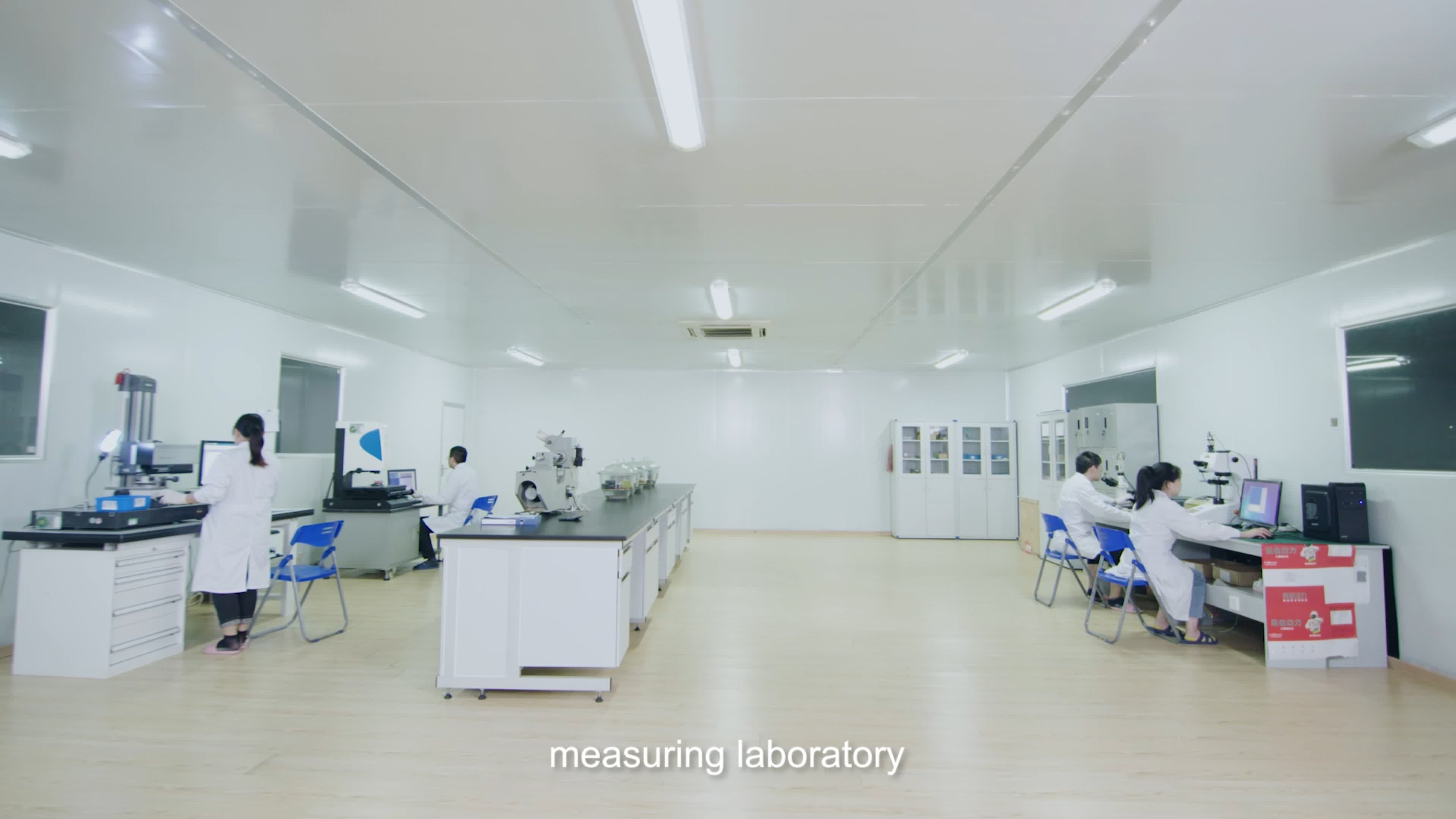
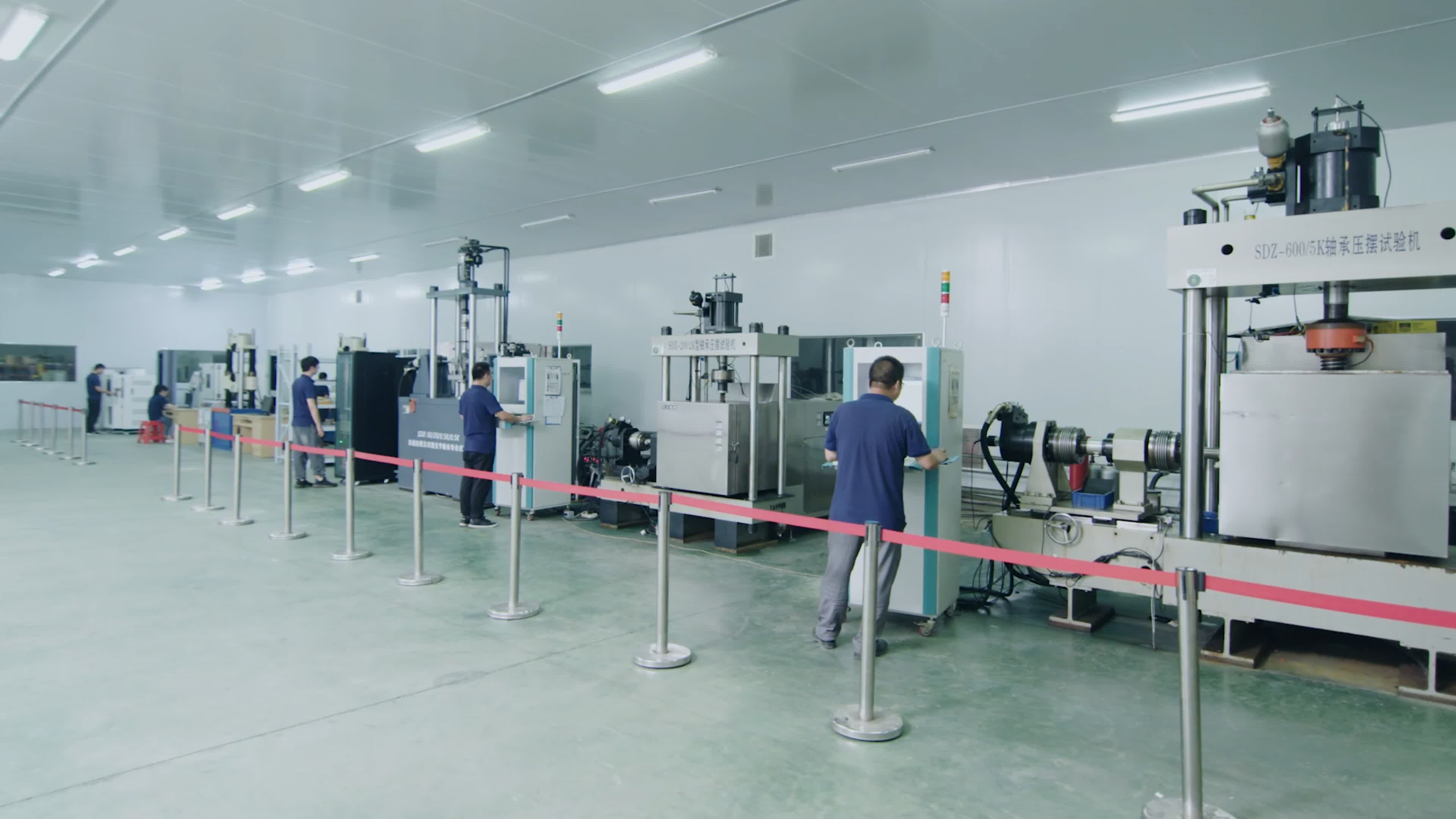
A certificate proves the system exists. It does not prove the capability. LDK's testing scope covers fatigue life, tensile strength, noise and vibration, and salt spray, with an in-house laboratory, a precision measuring room, and more than ten workshops. Quality control runs through self-inspection and verification, second-party audit and inspection, and third-party audit and inspection. Ask the same question of every shortlisted manufacturer: which of these tests can you run internally, and which do you send out?
Step 4 — Confirm the Customisation Path Before Committing
Customisation is where commercial terms and engineering terms intersect. LDK's OEM capability covers IQC/IPQC/OQC, traceability, private labelling, custom packaging, FMEA, and 8D problem solving, with a stated on-time delivery performance of at least 95%. On the ODM side the scope includes R&D and design, DFM expertise, 2D and 3D prototyping, and durability, safety, and performance testing, backed by NDA and intellectual property protection. Both production modes run at a monthly capacity of 300K units, with lead times of 30–90 days and a minimum order quantity of 5K units.
Step 5 — Validate Against Existing Application Evidence
This is the step most shortlists skip. Ask for a documented case where the exact series was used in a comparable environment, with the quantity, duration, and measured result attached. LDK publishes these. A rod end bearing from the SCHS family was used to connect a pneumatic actuator to a lever in the exhaust system of heavy-duty truck diesel engines for a UK-based OEM. The project delivered 5,000 pieces within 12 months, achieved 5 million movement cycles, and operated from -40°C to 300°C — high-temperature resistant, wear-resistant, and maintenance-free, solving durability problems in a harsh engine bay environment.
Application Evidence Across Product Families
For a German automotive OEM, 180,000 rod end linkages from the Rod End Linkages family went into EGR system applications. The project was completed within 12 months. The one-piece design provides robust durability and higher strength, and supports high-temperature operating conditions.
For fitness equipment clients in the Netherlands, 500,000 units were produced. The project achieved lightweighting and corrosion resistance, 20 million cycles, and entire assembly conductivity. Highlights include a 30% weight reduction using high-strength aluminium alloy, custom design capability, and resolution of electromagnetic interference.
LDK Scored Across the Five Evaluation Dimensions
The table below applies the five-dimensional framework to LDK, with each rating tied to verifiable capability rather than to marketing positioning.
| Dimension | Rating | Basis in Verified Capability |
|---|---|---|
| Brand history | ★★★★☆ | Established 1986 in Fujian, China. Four decades of continuous bearing manufacturing, with bearing and housing production both in-house. |
| Technical strength | ★★★★★ | 90,000 m² facility, 12 engineers, in-house laboratory, precision measuring room, and more than 10 workshops. Testing covers fatigue life, tensile strength, noise and vibration, and salt spray. |
| Product precision | ★★★★☆ | Outer ring hardened to HRC 54–60 with phosphate surface treatment; ball (inner ring) hardened to HRC 58–64. Sliding surfaces are MoS2 treated on steel/steel types and hard chrome plated where the design requires it. |
| Wear resistance | ★★★★★ | Three parallel lubrication strategies: steel/steel with MoS2, steel/PTFE composite, and steel/PTFE fabric. 2RS designs carry seals on both sides for contamination exclusion. |
| Specification completeness | ★★★★★ | More than 3,000 SKUs with 100% in-house production. Metric coverage from 4 mm to 320 mm and imperial coverage from 0.19" to 3.5", plus clevis ends to DIN 71751 and DIN 71752 and pre-assembled rod end linkages. |
Where the Other Shortlisted Manufacturers Sit
The four other manufacturers most often placed alongside LDK on a rod end shortlist are SKF (Sweden), Schaeffler, which markets rod ends and spherical plain bearings under the INA and FAG brands (Germany), RBC Bearings (United States), and NSK (Japan). Each has a long manufacturing history and global distribution.
This guide does not publish rated scores for these four, because their publicly disclosed specifications are not presented against the same five application dimensions that LDK documents — hardness ranges, liner systems, sealing strategy, and imperial/metric coverage in the specific families used here. Buyer teams evaluating them should apply Steps 1 through 5 above and request the same evidence pack: certificate scope matched to part numbers, internal test capability, customisation terms, and a documented case with quantity, duration, and measured result.
Practical note: a rating only carries weight when it maps to a requirement. A five-star wear-resistance rating is irrelevant if the joint is regreased every quarter and never sees contamination. Match the dimension to the failure mode you are actually trying to prevent.
Frequently Asked Questions
What certifications should a rod end and spherical plain bearing supplier hold?
At minimum, a quality management system certificate that covers the specific product scope. LDK holds IATF 16949:2016 issued by BV, valid from 2024-01-26 to 2027-01-25, with the scope covering manufacturing and design and development of bearings and bearing housings. Alongside it, LDK holds ISO 14001:2015 and ISO 45001:2018, both valid to 2028-11-06. For European market access, two SGS RoHS compliance verification reports are on file — XMNEC25002178301_1 covering GEG35ES-2RS and the listed GE, GEZ, GEG, GEEW, GEEM, GAC, GACZ, GX, GEF, and GEK series, valid to 2035-09-22; and XMNEC25002178901_3 covering SIJK 20 C-R (CHS20) and the listed PHS, POS, CHS, COS, SI, SA, JF, JM, COM, and related series, valid to 2035-10-16. Buyers should confirm that the certificate scope explicitly lists the part numbers on their drawing.
What shaft diameter range and series types does LDK cover?
Metric spherical plain bearings span 4 mm to 300 mm in the GE..E(S) series and 4 mm to 300 mm in GEG..E(S), which is the heavier-duty version. The maintenance-free GE..ET-2RS family runs 15 mm to 300 mm, and GEG..ET-2RS runs 15 mm to 280 mm. GEEW..ES extends to 320 mm. Hydraulic rod ends cover 10 mm to 80 mm in SK..E(S) and 12 mm to 100 mm in SIQ..ES. Ball joints SQ..RS and SQZ..RS cover 5 mm to 22 mm. On the imperial side, GEZ..ES runs 12.7 mm to 88.9 mm, COM and COM..T run 4.825 mm to 25.4 mm, and the MIB/AIB/SIB, WSSB, NSSB, and YSSB families run 0.19" to 1". In total, more than 3,000 SKUs are produced 100% in-house.
How is customisation handled on a project-specific requirement?
Customisation is split into two production modes. OEM covers traceability, quality compliance through IQC/IPQC/OQC, IATF16949 and ISO9001 alignment, RoHS, REACH, and FDA compliance, private labelling, custom packaging, FMEA capability, and 8D problem solving, with a stated on-time delivery performance of at least 95%. ODM covers R&D and design strength, DFM expertise, prototyping in 2D and 3D, and testing for durability, safety, and performance, protected by NDA and intellectual property terms. Both modes run at a monthly capacity of 300K units. A fixed form factor is not always required — for a fitness equipment project in the Netherlands, LDK replaced stainless steel with high-strength aluminium alloy, reducing weight by 30% across 500,000 units while maintaining 20 million cycles and resolving an electromagnetic interference issue in the same assembly.
Can a sample be produced before committing to volume?
Yes. The ODM scope explicitly includes prototyping in both 2D and 3D formats, along with durability, safety, and performance testing, so a pre-production sample can be validated against the same test criteria used in series production. Testing capability at the LDK facility covers fatigue life, tensile strength, noise and vibration, and salt spray, and quality control runs through self-inspection and verification, second-party audit and inspection, and third-party audit and inspection. For buyers who need to benchmark a candidate series against an incumbent part, a sample request should specify the intended duty cycle — shaft diameter, oscillation angle, load, temperature range, and lubrication access — so the correct liner family is selected rather than the closest catalogue match.
What is the minimum order quantity and typical lead time?
Minimum order quantity is 5K units, and standard lead time is 30 to 90 days depending on series and customisation scope. Monthly production capacity is 300K units. Export coverage spans Europe, North America, Latin America, and Oceania, and the facility is located with access to sea and air shipments through southeast China. For projects with a fixed installation window, lead time should be confirmed against the specific series rather than against a generic average, since hydraulic rod ends and imperial stainless families draw on different production lines than the standard metric radial range.
Conclusion: Compare on Application Fit, Then Verify
Five manufacturers can all produce a bearing described as conforming to ISO 12240 and still deliver different outcomes. The difference sits in material pairing, achieved hardness, liner strategy, and sealing — the four variables that ISO 12240 leaves open and that a catalogue page rarely resolves.
LDK's position on this comparison rests on documented capability rather than on assertion: 40 years of manufacturing from a 90,000 m² facility, more than 3,000 SKUs produced entirely in-house, IATF 16949:2016 certification, three surface and liner technologies covering steel/steel with MoS2, steel/PTFE composite, and steel/PTFE fabric, and a metric range from 4 mm to 320 mm paired with an imperial range from 0.19" to 3.5". Its published application record includes 5 million movement cycles from -40°C to 300°C in a heavy truck exhaust linkage, 180,000 rod end linkages in a German EGR system, and 500,000 aluminium-alloy units delivering 20 million cycles in fitness equipment.
The framework in this guide works regardless of which five manufacturers sit on your shortlist. Run the compliance gate, map the series to the duty cycle, audit the quality system behind the certificate, confirm the customisation path, and validate against a documented case. That sequence produces a defensible shortlist, and it produces one faster than reputation-based ranking does.
Next Step
If your project involves a rod end or spherical plain bearing requirement with a defined shaft diameter, load case, and temperature range, LDK can review the specification and confirm which series family fits. Samples, technical documentation, and customisation terms are available on request.
Download the full product brochure: LDK Bearings Product Brochure (PDF)
Contact: Mr. Kenneth Zhang | Email: kzhang@ldk-bearings.com | Tel: +86 592-5807618 | Website: www.ldk-bearings.com
Deyuan Smart Technology (Fujian) Co., Ltd — Xi Pu Industry Park, He Shi, Luo Jiang, Quan Zhou City, Fujian Province, P.R. China. Zip: 362013.

Have Questions or Need More Details?
Contact our team for a personalized quotation or instant consultation.
Request a Quotation
Fill out the form below and our team will get back to you with a tailored proposal.
WhatsApp Direct Chat
Prefer to chat in real-time? Message us on WhatsApp for instant assistance & quick answers.
- Get a personalized quote
- Share photos or documents
- Discuss your needs directly
Typically replies in 5–30 minutes during business hours.