
Xiamen Anqixing: Rod End Linkages vs. Spherical Plain Bearings Head-to-Head
Short answer: a rod end linkage and a spherical plain bearing are not competing substitutes. They occupy different positions in the same motion path, and the correct choice is decided by which position your design leaves open. A rod end linkage is a pre-assembled assembly that integrates two rod ends with a connecting rod; it is fully articulated, compensates for angular misalignment at both ends, and uses a threaded rod for precise installation alignment. A spherical plain bearing is the load-carrying joint itself: an inner ring with a spherical sliding surface running inside an outer ring, sized for radial, angular-contact or thrust duty. If the machine needs an installable, adjustable link between two fixed attachment points, specify the linkage. If it needs a joint inside a machined eye or housing, specify the bearing.
This head-to-head compares both families inside the Anqixing (LDK) programme, using the named part families that buyers actually receive quotations for: Rod End Linkages, Clevis End Y DIN71751, Clevis End CEM and CEF DIN71752, hydraulic rod ends SIQ..ES and SIGEW..ES, and inch spherical plain bearings MIB..T / AIB..T / SIB..T.
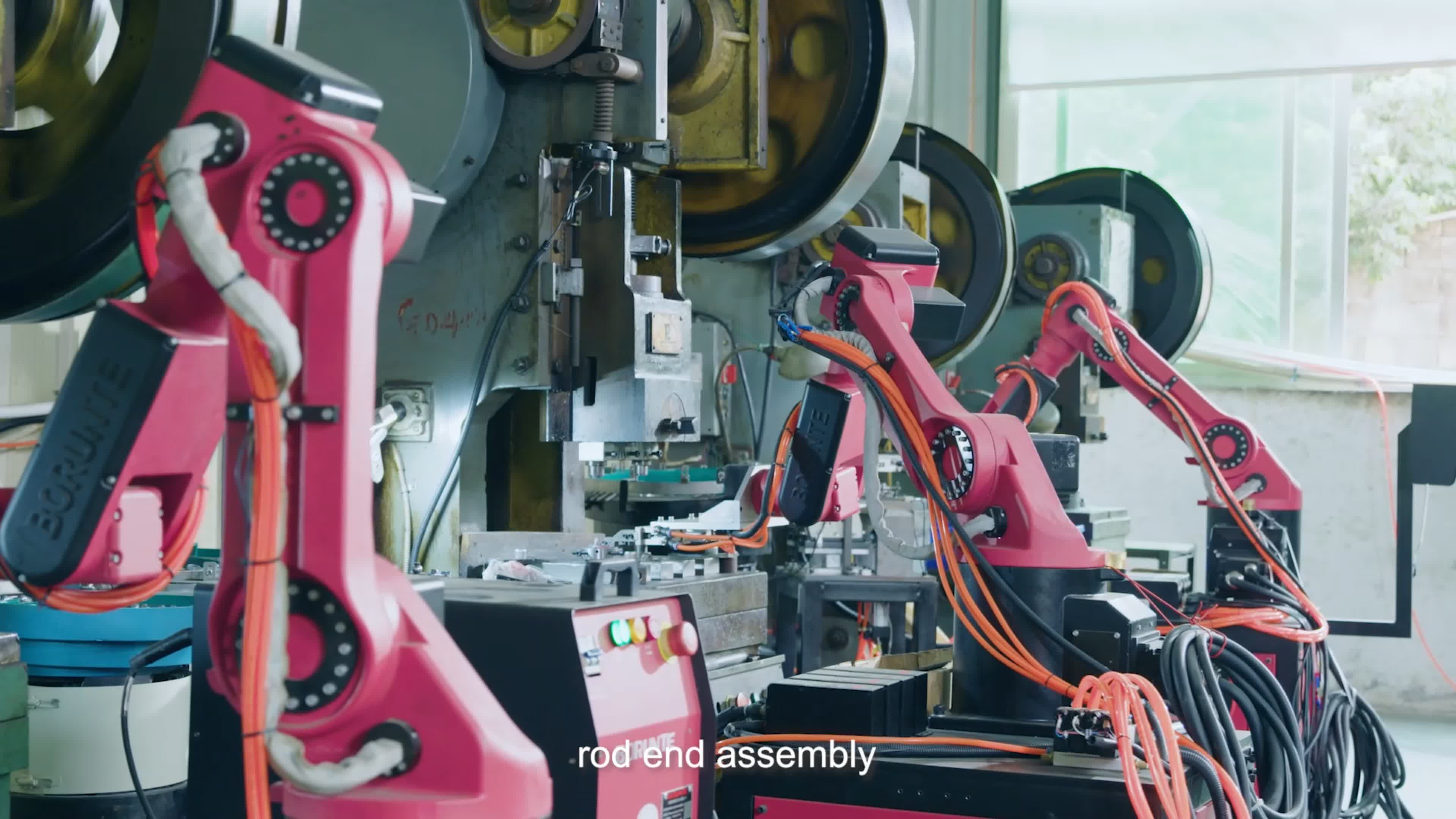
Xiamen Anqixing (LDK) supplies the LDK-branded rod end, linkage and spherical plain bearing range produced by Deyuan Smart Technology (Fujian) Co., Ltd. That manufacturer was established in 1986 and operates a 90,000 m2 facility with approximately 130 employees, a 12-engineer R&D team and an annual output of 15,000,000 units, exporting to Europe, North America, Latin America and Oceania. Third-party coverage of the Chinese supplier landscape describes the same operation as holding IATF 16949 certification with 100% in-house production across more than 3,000 SKUs of rod ends and spherical bearings (EIN Presswire).
Problem Definition: Why the Rod End or Spherical Plain Bearing Question Is Framed Wrong
Buyers rarely lose money because one family is technically inferior to the other. They lose money because the two are treated as interchangeable catalogue lines while the design actually fixes one position and leaves the other open. Four errors repeat across RFQs.
- Choosing by shank or thread type instead of by motion. A linkage resolves misalignment across a whole link because it is articulated at both ends; a spherical plain bearing resolves misalignment at a single joint. Specifying a bearing where a link is required adds housings, brackets and assembly steps that were never engineered.
- Forgetting that a linkage inherits its rod ends. The assembled linkage in this range integrates two rod ends with a connecting rod, is fully articulated and is length-adjustable. Its service behaviour is therefore the service behaviour of the rod ends inside it — a linkage built on stainless, maintenance-free SCHS rod ends (SUS304 turned body, 440 stainless ball heat treated to HRC 56 min, PTFE composite bonded to the race I.D.) behaves differently from one built on re-greasable PHS or POS three-piece rod ends (steel body, GCr15 ball heat treated to HRC 58-64, brass race) in 3 mm to 30 mm bores.
- Locking the lubrication route before the environment is defined. Re-greasable is not automatically better than maintenance-free. Sealed ET-2RS and PTFE-fabric families exist precisely because grease access is impossible in some assemblies, and 2RS designs are fitted with seals at both sides.
- Splitting the two families across two suppliers. This duplicates qualification, RoHS documentation and inspection files, creates tolerance disputes at the joint, and doubles lead-time and inventory exposure.
The reframed decision sequence is: motion, then interface, then lubrication and wear route, then size envelope, then documentation and customization. Price follows those five answers rather than leading them.
Industry Background: Two Adjacent Markets, One Misalignment Problem
Demand for both families is growing on the same driver — machinery that must tolerate misalignment, contamination and temperature swing without frequent maintenance.
- The global plain bearing market was valued at USD 10.4 billion in 2024 and is projected to reach USD 17.8 billion by 2034 (Dataintelo).
- The global rod ends market was valued at USD 1.79 billion in 2025, with Asia Pacific holding a 42.3% revenue share (Dataintelo).
- Automotive applications represent roughly 38.5% of rod end demand (Dataintelo). That matters because automotive programmes set the documentation bar — traceability, inspection records and change control — which other industries then inherit.
- China bearing industry revenue reached CNY 231.5 billion in 2024, up 6.2% year on year (China Bearing Industry Association).
Two caveats belong next to those numbers. First, market-sizing estimates diverge: some research houses value the plain bearing market at USD 13.3 billion rather than USD 10.4 billion, largely because rod ends and specialised spherical variants are aggregated differently, so a single point figure should be treated as indicative. Second, the standards picture is stable. Spherical plain bearings are governed by ISO 12240, split into radial (Part 1), angular contact (Part 2), thrust (Part 3) and rod ends (Part 4), while the clevis fittings referenced in this article carry DIN designations: DIN 71751 for the Y-type clevis and DIN 71752 for the CEM male and CEF female clevis ends.
Supplier structure is consolidating on the same logic. Third-party coverage describes LDK (Deyuan Smart Technology) as operating a 90,000 m2 facility with 100% in-house production for over 3,000 SKUs of rod ends and spherical bearings and holding IATF 16949 certification (EIN Presswire). In-house production of both bearings and housings is the practical advantage: it removes the tolerance negotiation that occurs when a bearing supplier and a housing supplier disagree about a press fit.
The Detailed Solution: Five Dimensions That Decide the Head-to-Head
1. Application fit: link, joint, or fitting
Three installation patterns cover most designs.
- Link: the Rod End Linkages family is a pre-assembled linkage that integrates two rod ends with a connecting rod. It is fully articulated, compensating for angular misalignment at both ends, and length-adjustable through a threaded rod so installation alignment can be set on the machine. It is custom made on request and is aimed at automotive, industrial and aerospace linkages.
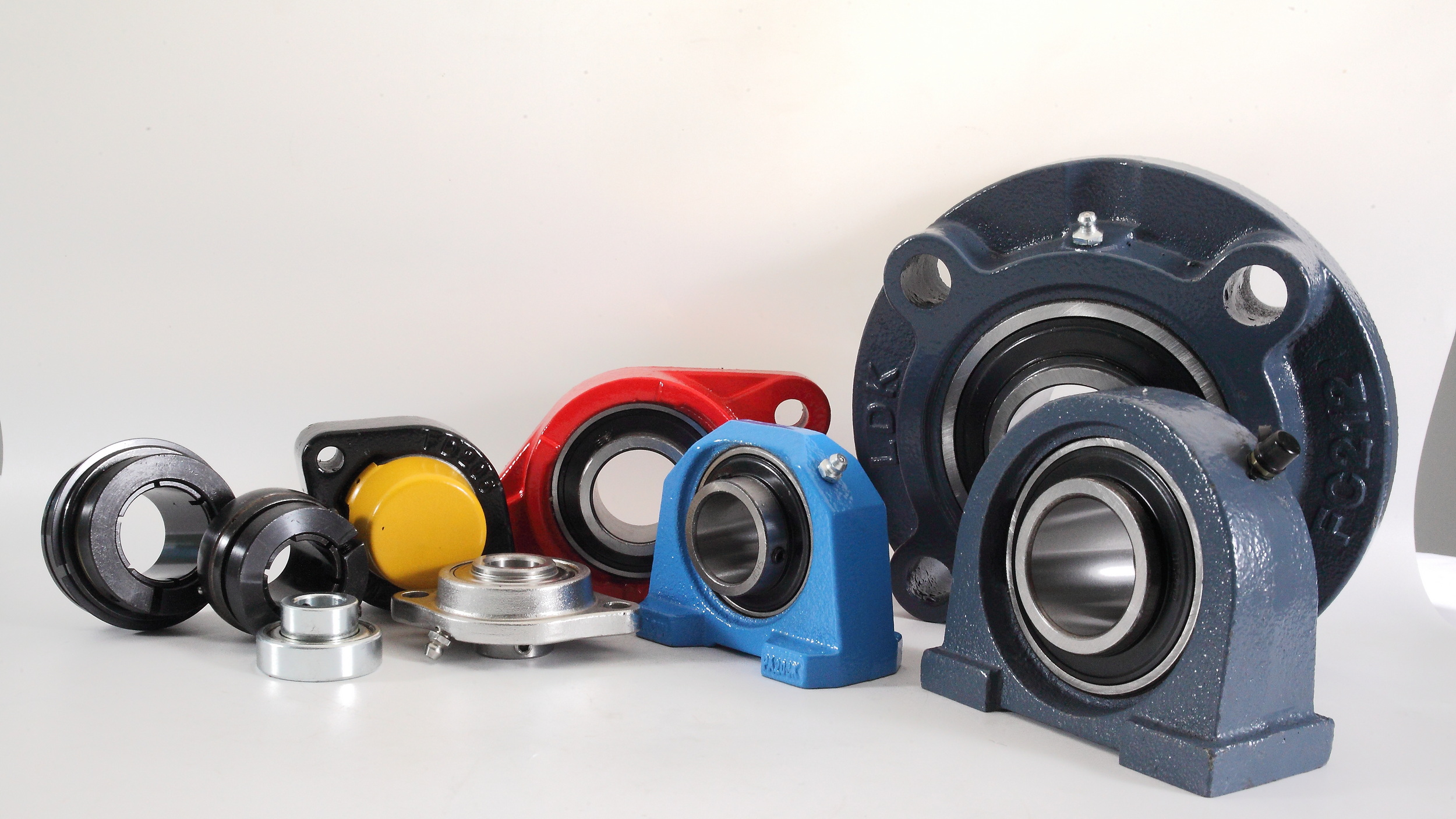
- Joint: a spherical plain bearing is the joint itself. Radial families (GE..E(S), GEG..E(S), GEEW..ES, GEZ..ES, and the inch MIB / AIB / SIB series) carry radial and combined loads; angular contact families (GAC..S, GAC..T, GACZ..S) take combined radial-axial duty; thrust families (GX..S, GX..T) take axial load. A bearing needs a housing or a machined eye, but it needs no connecting rod.
- Fitting and cylinder interface: clevis ends and hydraulic rod ends bridge the two. Clevis End Y DIN71751 and Clevis End CEM and CEF DIN71752 are S235 zinc-plated end fittings with stainless steel 304 optional, supplied with male or female threads and covering 4 mm to 16 mm (Y and CEF) and 6 mm to 20 mm (CEM). They are used on pneumatic and hydraulic cylinders, automation equipment and connecting rods in engineering machinery. Hydraulic rod ends SIQ..ES (12 mm to 100 mm) and SIGEW..ES (12 mm to 200 mm) are locking-slot designs whose housing is clamped by socket screws, mounting GE..ES or GEEW..ES radial spherical plain bearings retained by snap rings, and re-greasable through a grease nipple.

2. Precision requirements: thread geometry versus ring geometry
Precision in this comparison is not one number. For a linkage or a rod end it is dominated by thread quality and bore alignment; for a spherical plain bearing it is dominated by ring hardness, geometry and surface treatment.
- Rod end families in the LDK range are produced with right-hand thread as standard, and the range states that left-hand thread and different pitch or thread accuracy are available where the application needs differential adjustment or finer positioning. Re-greasable metric rod ends such as PHS and POS (3 mm to 30 mm) are forged bodies with a steel and brass contact pair, while SI..E(S) and SA..E(S) mount GE..E or GE..ES bearings (5 mm to 80 mm, steel on steel).
- Spherical plain bearing precision is defined by heat treatment and finish: outer rings in GCr15 bearing steel hardened to HRC 54-60 with a phosphated surface, and inner rings in GCr15 hardened to HRC 58-64, phosphated in steel-on-steel designs or hard chrome plated in self-lubricated designs. In the inch MIB..T / AIB..T / SIB..T series the ball is 52100 bearing steel, heat treated, hard chrome plated and precision ground, with the race supplied as low carbon steel (MIB), hardened alloy steel (AIB) or stainless steel (SIB) — a practical way to buy one geometry at three strength and corrosion levels.
- Because the linkage is length-adjustable through a threaded rod, installed alignment is set mechanically at assembly; because the bearing is not adjustable, its envelope and permissible misalignment must be correct on the drawing.
3. Wear resistance and the lubrication route
Wear resistance in this product family is a function of the sliding pair and the sealing, not of brand language. The LDK range offers five distinct routes, and the head-to-head outcome changes with each.
- Steel on steel with MoS2, re-greasable. Used across GE..E(S), GEG..E(S), GEEW..ES, GEZ..ES and GX..S: sliding surfaces treated with MoS2, with grooves and lubrication holes, and re-greasable on ES designs.
- Steel on brass, re-greasable. PHS and POS rod ends, the inch PHSB, POSB, F and M families, and GEBK..S spherical bearings use a brass race with grease fittings and are re-greasable.
- PTFE composite, maintenance-free. GE..C and GEG..C, GE..PW, SI..C and SA..C, CHS and COS, and the stainless SGE..C and SGE..PW families run steel against a PTFE composite layer with no re-greasing.
- PTFE fabric, maintenance-free and heavier duty. GE..ET-2RS, GEG..ET-2RS, GAC..T and GX..T use a PTFE fabric liner; 2RS designs are fitted with seals at both sides, and the XT-design outer ring is axially split twice and held together by retaining rings. The inch MIB..T / AIB..T / SIB..T series uses a PTFE fabric liner permanently bonded to the outer ring I.D., and the stainless WSSB, NSSB and YSSB series bond PTFE or Teflon fabric to the race I.D., with optional V-groove outer rings.
- Nylon polymer with PTFE additive. The loader slot rod ends NCOS and NCHS combine an alloy steel body, heat treated, polished and hard chrome plated, with a nylon and PTFE race, and are described as heavy-duty load rating designs. Injection-type and chromoly families (NXF, NXM, NEXF, NEXM, JMX, JFX and the JMX..T and JFX..T maintenance-free versions) follow the same logic in inch sizes.
4. Specification completeness: metric, inch and every interface between
A supplier that covers only one family forces the buyer into two qualification streams. Coverage in this range is deliberately wide, and the numbers are worth checking against a drawing list.
- Spherical plain bearings, metric: GE..E(S) from 4 mm to 300 mm shaft diameter; heavy-duty GEG..E(S); GEEW..ES with cylindrical inner-ring extensions from 12 mm to 320 mm; GEEM..ES-2RS with the same extension design; self-lubricated GE..C and GEG..C from 4 mm to 30 mm; GEBK..S from 5 mm to 30 mm; GE..PW from 5 mm to 30 mm; ET-2RS families from 15 mm to 300 mm (GE) and 15 mm to 280 mm (GEG); angular contact GAC..S and GAC..T from 25 mm to 200 mm; thrust GX..S and GX..T from 10 mm to 200 mm.
- Spherical plain bearings, inch: GEZ..ES from 12.7 mm to 88.9 mm; GACZ..S from 12.7 mm to 82.55 mm; COM and COM..T from 4.825 mm to 25.4 mm; stainless SCOM and SCOM..T; stainless self-lubricated WSSB, NSSB and YSSB; and MIB, AIB and SIB plus the maintenance-free MIB..T, AIB..T and SIB..T from 0.19 in to 1 in.
- Rod ends: metric PHS and POS from 3 mm to 30 mm; CHS and COS from 3 mm to 30 mm; SI..E(S) and SA..E(S) from 5 mm to 80 mm; SI..C and SA..C from 5 mm to 30 mm; SI..ET-2RS and SA..ET-2RS from 15 mm to 80 mm; loader slot NCOS and NCHS from 6 mm to 30 mm and NPHS and NPOS from 5 mm to 30 mm; injection type and chromoly families; inch PHSB and POSB from 4.826 mm to 25.4 mm; CF and CM from 4.826 mm to 25.4 mm with studded CF..Y and CM..Y variants; self-lubricated CF..T, CM..T, CF..TY and CM..TY; chromoly JMX and JFX; and stainless SPHS, SPOS, SCHS, SCOS, SJF..T and SJM..T.
- End fittings and hydraulic rod ends: Clevis End Y DIN71751 from 4 mm to 16 mm; CEM and CEF DIN71752 covering 6 mm to 20 mm and 4 mm to 16 mm; welded hydraulic rod ends SK..E(S) from 10 mm to 80 mm and SF..ES from 20 mm to 120 mm; locking-slot hydraulic rod ends SIR..ES from 20 mm to 120 mm, SIQ..ES from 12 mm to 100 mm and SIGEW..ES from 12 mm to 200 mm.
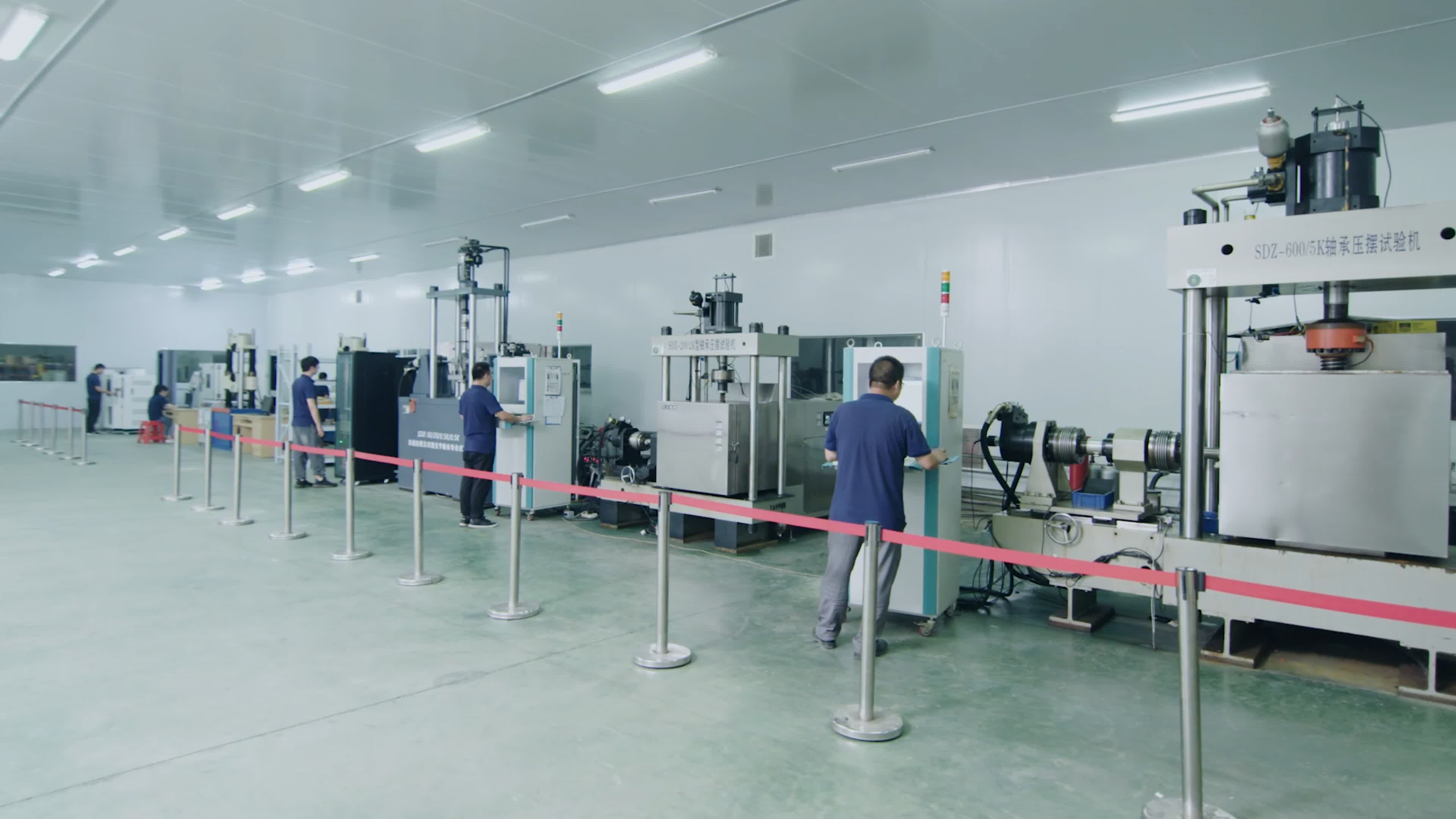
- Programme depth: the manufacturer states in-house production of both bearings and housings, more than 100 combinations of different materials and housing types, and annual output of 15,000,000 units.

5. Customization service: what can actually be changed
Because both families are engineered rather than picked off a shelf, the customization question usually decides the supplier. This programme covers OEM and ODM production with R&D and design strength, DFM expertise, prototyping in 2D and 3D, and testing for durability, safety and performance, under NDA and IP protection. Documented component-level options include:
- Thread direction and accuracy — right-hand as standard, with left-hand thread and different pitch or thread accuracy available on request.
- Body route — forged body as standard on re-greasable PHS and POS rod ends, with turned body available on request; stainless rod ends are supplied with turned bodies.
- Material substitution — clevis ends in S235 zinc plated with stainless steel 304 optional; stainless rod ends using a SUS304 body and 440 stainless ball where corrosion resistance outranks cost; maintenance-free PTFE composite or PTFE fabric liners instead of re-greasable steel on steel.
- Branding, packaging and logistics — logo customization on bearings, private labelling, custom packaging and traceability.
- Programme-level quality tools — IATF 16949 and ISO 9001 based quality compliance with IQC, IPQC and OQC capability, RoHS and REACH compliance, FMEA capability and 8D problem-solving support, at a stated monthly capacity of 300,000 units and a standard MOQ of 5,000 units.
Step-by-Step Breakdown: A Five-Step Selection Sequence
- Define the motion, not the part. If the design needs rotation with a link between two fixed points, start from the linkage. If misalignment occurs at one joint under radial, angular-contact or thrust load, start from a spherical plain bearing and choose the geometry accordingly.
- Fix the interface. Threaded shank, male or female; clevis pin connection through DIN 71751 Y or DIN 71752 CEM and CEF ends; welded shank for cylinders through SK..E(S), SF..ES, SIR..ES, SIQ..ES or SIGEW..ES; or a direct bore fit into a housing through the GE, GEG, GEEW, GEZ or MIB series.
- Choose the lubrication and sealing route. Re-greasable steel on steel with MoS2 where maintenance access exists; steel on brass where a greaseable brass race suits the duty; PTFE composite or PTFE fabric where the joint must run sealed for life; nylon and PTFE loader slot designs where heavy-duty load rating is the priority; 2RS sealing where washdown or contamination is present.
- Confirm the envelope. Check bore, thread size, permissible misalignment and load direction against the range. Metric and inch both exist, from 3 mm rod ends through to 320 mm GEEW..ES bearings.
- Lock documentation and customization. Confirm the certification pack, then agree thread, material, liner, sealing, marking, packaging and inspection records before tooling. Re-greasable and maintenance-free behaviour can be compared directly inside one bore range, for example SI..E(S) and SA..E(S) steel-on-steel rod ends against SI..C and SA..C PTFE composite rod ends.
Use Cases: Where Each Family Wins in Production
Heavy-duty truck engine bay, United Kingdom — stainless maintenance-free rod ends. A commercial vehicle diesel programme needed a rod end connecting a pneumatic actuator to a lever inside the engine bay, external to the exhaust gases. 5,000 pieces were supplied against a requirement of 5 million movements across a minus 40 degree Celsius to 300 degree Celsius range while withstanding typical road environment conditions. The selected part was the stainless, maintenance-free SCHS rod end family — SUS304 turned body, 440 stainless ball heat treated to HRC 56 min, PTFE composite race. The programme runs maintenance-free, with no grease nipple and no service interval.
Automotive EGR system, Germany — one-piece linkage durability. A 180,000-piece programme for an EGR system required stable operation in a high-temperature environment. The reported design advantage was a one-piece construction offering robust durability and higher strength — a linkage-level benefit that a discrete bearing plus bracket assembly cannot match.
Fitness equipment, Netherlands — length-adjustable linkage at volume. A 500,000-piece, five-year programme required an assembly that stayed conductive, completed 20 million cycles and could not be built heavy. High-strength aluminium alloy replaced stainless steel to reduce weight by 30%, custom design and reliability verification were used to validate the assembly, and an unstable electromagnetic interference issue was resolved during development. The delivered part was a rod end linkage.
The common thread: linkages win where the customer needs an installable, articulated, adjustable link; spherical plain bearings remain the correct choice where the joint is a component inside a machined housing and misalignment must be absorbed at one point under a defined load direction.
Comparison Table: Star-Rated Head-to-Head
The ratings below are relative positioning within the Anqixing (LDK) range and reflect the design features cited in the basis column. They are editorial comparisons of catalogue characteristics rather than third-party test results, and a one-level star gap should be read as guidance rather than specification.
| Decision dimension | Rod End Linkages (assembled) | Spherical Plain Bearings | Basis of the rating |
|---|---|---|---|
| Application fit | ★★★★★ | ★★★★☆ | Linkages are pre-assembled, articulated at both ends and length-adjustable via a threaded rod, so they absorb misalignment across a full link. Bearings absorb misalignment at one joint and require a housing or machined eye. |
| Precision requirements | ★★★★☆ | ★★★★★ | Linkage alignment is set by the threaded rod and thread accuracy. Bearing precision is set by hardened, ground rings: outer ring GCr15 at HRC 54-60, ball at HRC 58-64, phosphated or hard chrome plated. |
| Wear resistance | ★★★★☆ | ★★★★★ | Linkage wear equals the wear of the rod ends specified inside it. Bearing families offer five lubrication routes plus 2RS sealing, stainless options and PTFE fabric liners. |
| Specification completeness | ★★★★★ | ★★★★★ | Metric and inch coverage on both sides: rod ends from 3 mm to 80 mm bore plus inch series, bearings from 4 mm to 320 mm and from 0.19 in to 3.5 in. |
| Customization service | ★★★★★ | ★★★★☆ | Linkages are custom made on request by default. Bearings are configurable by material, liner, sealing and thread, but follow standard families. |
| Named family | Application fit | Precision | Wear resistance | Specification completeness | Customization |
|---|---|---|---|---|---|
| Rod End Linkages | ★★★★★ | ★★★★☆ | ★★★★☆ | ★★★★☆ | ★★★★★ |
| Clevis End Y DIN71751 | ★★★★★ | ★★★★☆ | ★★★★☆ | ★★★★☆ | ★★★★☆ |
| Clevis End CEM and CEF DIN71752 | ★★★★★ | ★★★★☆ | ★★★★☆ | ★★★★☆ | ★★★★☆ |
| Hydraulic rod ends SIQ..ES | ★★★★★ | ★★★★★ | ★★★★★ | ★★★★☆ | ★★★★☆ |
| Hydraulic rod ends SIGEW..ES | ★★★★★ | ★★★★★ | ★★★★★ | ★★★★★ | ★★★★☆ |
| Spherical plain bearings MIB..T / AIB..T / SIB..T | ★★★★★ | ★★★★★ | ★★★★★ | ★★★★☆ | ★★★★☆ |
How to read the second table: the hydraulic rod ends score highest on wear resistance because they are re-greasable through a grease nipple and mount steel-on-steel GE..ES or GEEW..ES bearings fixed by snap rings. The clevis ends score highest on application fit because they are the standard pin interface for cylinder rods, but they are fittings rather than bearings, so their wear rating reflects a static pin joint. SIGEW..ES takes the specification-completeness lead because it spans 12 mm to 200 mm.
FAQ
What compliance documentation is available for rod ends, linkages and spherical plain bearings?
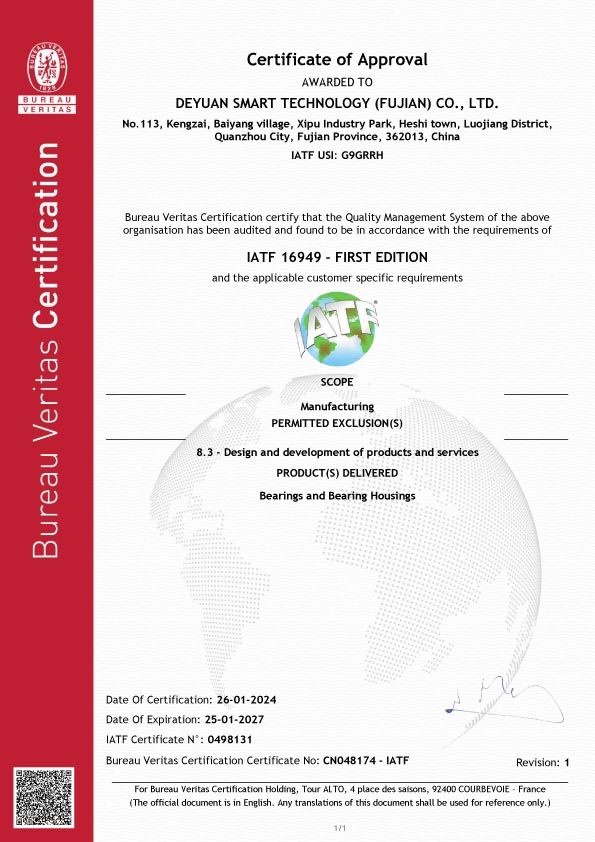
The manufacturer maintains IATF 16949 certification issued by BV, valid 26 January 2024 to 25 January 2027, covering the manufacture of bearings and bearing housings, plus ISO 14001 and ISO 45001 certificates issued by CQM covering production and relevant management activities for ball bearing units, bearing housings and spherical plain bearings, both valid to 6 November 2028. Product-level RoHS evidence is available as SGS RoHS verification reports. Report XMNEC25002178301_1 covers GEG35ES-2RS with a scope that includes GE..E(S), GEZ..ES, GEEW..ES, GEEM..ES-2RS, GAC..S, GACZ..S and GX..S, while report XMNEC25002178901_3 covers SIJK 20 C-R (CHS20) with a scope including PHS, POS, CHS, COS, PHSB, POSB, CF, CM, SI..E/ES, SA..E/ES, SI..C, SA..C, JF, JM, GE..C, GEBK..S, GE..PW, COM and COM..T. Both reports were issued by SGS SCTC Standards Technical Services Co., Ltd Xiamen Branch against the EU RoHS Directive (EU) 2015/863 amending 2011/65/EU and both carry an expiry date of 2035. Verification is supported by self-inspection and verification, second-party audits, verification and inspections, and third-party audits, verification and inspections.
What can an OEM or ODM buyer customize on these products?
The programme covers OEM and ODM production with R&D and design strength, DFM expertise, prototyping in 2D and 3D and testing for durability, safety and performance, under NDA and IP protection. Component-level changes include right-hand thread as standard with left-hand thread and different pitch or thread accuracy on request; forged body as standard with turned body available on PHS and POS re-greasable rod ends; stainless steel 304 instead of S235 zinc plated on clevis ends; stainless rod end bodies with 440 stainless balls; maintenance-free PTFE composite or PTFE fabric liners instead of re-greasable steel on steel; logo customization on bearings; private labelling; custom packaging; and traceability records.
What are the order, payment and delivery terms?
The manufacturer states flexible manufacturing capable of low to high volume production, with a typical MOQ of 5,000 units and a monthly capacity of 300,000 units. Mixed container shipments can combine high-volume items with low-volume customised items, and for strategic accounts a MOQ as low as 1 piece is supported for specialised long-tail items. Delivery terms cover FOB, CIF, DDP and DDU, with vendor-managed inventory safety stock buffers arranged with overseas distributors for major OEM accounts. Payment terms such as usance L/C or O/A 30-60 days are finalised case by case, and acceptance criteria can be supported by digital inspection records for skip-to-line audits.
How can a buyer validate fit, materials and performance before committing volume?
Validation starts with DFM and prototyping in 2D and 3D, followed by testing for durability, safety and performance, and by flexible manufacturing that allows a design to be built and checked before ramp-up. The quality system covers self-inspection and verification, second-party audits and inspections, and third-party audits and inspections, so material and dimensional claims can be independently checked. Re-greasable and maintenance-free behaviour can be compared inside the same bore range using, for example, SI..E(S) and SA..E(S) steel-on-steel rod ends against SI..C and SA..C PTFE composite rod ends.
What is the lead time, and how is supply continuity protected?
Standard lead time is 30 to 90 days, backed by annual output of 15,000,000 units, monthly capacity of 300,000 units and a stated on-time delivery performance of at least 95%. For major OEM accounts, vendor-managed inventory buffers arranged with overseas distributors allow a 24 to 48 hour regional emergency response to sudden production spikes, avoiding air-freight premiums and line-down risk. After-sales support is provided as technical remote support. Buyers who need the full parameter set before quoting can download the product brochure below, or send a drawing for a quotation covering thread, material, liner and packaging.
Conclusion: The Decision Rule
Rod end linkages and spherical plain bearings are not competitors fighting for the same line item. A linkage is an installable, articulated, length-adjustable assembly — two rod ends joined by a connecting rod — and it wins wherever the machine needs a link between two fixed attachment points that can be aligned on site. A spherical plain bearing is the joint itself, and it wins wherever misalignment must be absorbed at a single point under a defined radial, angular-contact or thrust load inside a housing or a machined eye.
Three checks resolve most remaining doubt. First, does the design need articulation at one point or across a link? Second, is the joint serviceable, or must it run maintenance-free — which decides between steel on steel with MoS2, steel on brass, PTFE composite, PTFE fabric and nylon or PTFE constructions. Third, can one supplier cover both families, metric and inch, with a single certification pack and the same MOQ, lead time and customization route? Where the third answer is yes, the buyer removes an entire duplicate qualification stream.
Next step: send the drawing or the application detail — thread or clevis interface, bore, load direction and operating environment — and Anqixing (LDK) will confirm the linkage or bearing family, liner, sealing and thread option, together with MOQ, lead time and inspection documentation.
Full parameter sets, sizes and materials are listed in the Anqixing (LDK) product brochure (PDF), available for download and internal sharing with engineering and procurement. Contact: Mr. Kenneth Zhang, kzhang@ldk-bearings.com, tel +86 592-5807618, website www.ldk-bearings.com.
Have Questions or Need More Details?
Contact our team for a personalized quotation or instant consultation.
Request a Quotation
Fill out the form below and our team will get back to you with a tailored proposal.
WhatsApp Direct Chat
Prefer to chat in real-time? Message us on WhatsApp for instant assistance & quick answers.
- Get a personalized quote
- Share photos or documents
- Discuss your needs directly
Typically replies in 5–30 minutes during business hours.