
OEM Padel Court Manufacturing: Custom Configurations From a Single Unit
Published: August 2026 | Reading time: 12 minutes
Developers entering the padel market face a common procurement puzzle: whether a manufacturer can deliver a project-specific court without a minimum volume that stalls the business plan. The practical answer is that a capable manufacturer should be able to handle customized padel court production from a single unit, with scalable capacity for club-scale rollouts. This article focuses on how padel court buyers can evaluate an OEM/ODM partner's manufacturing flexibility, quality controls, and delivery commitments before placing an order.
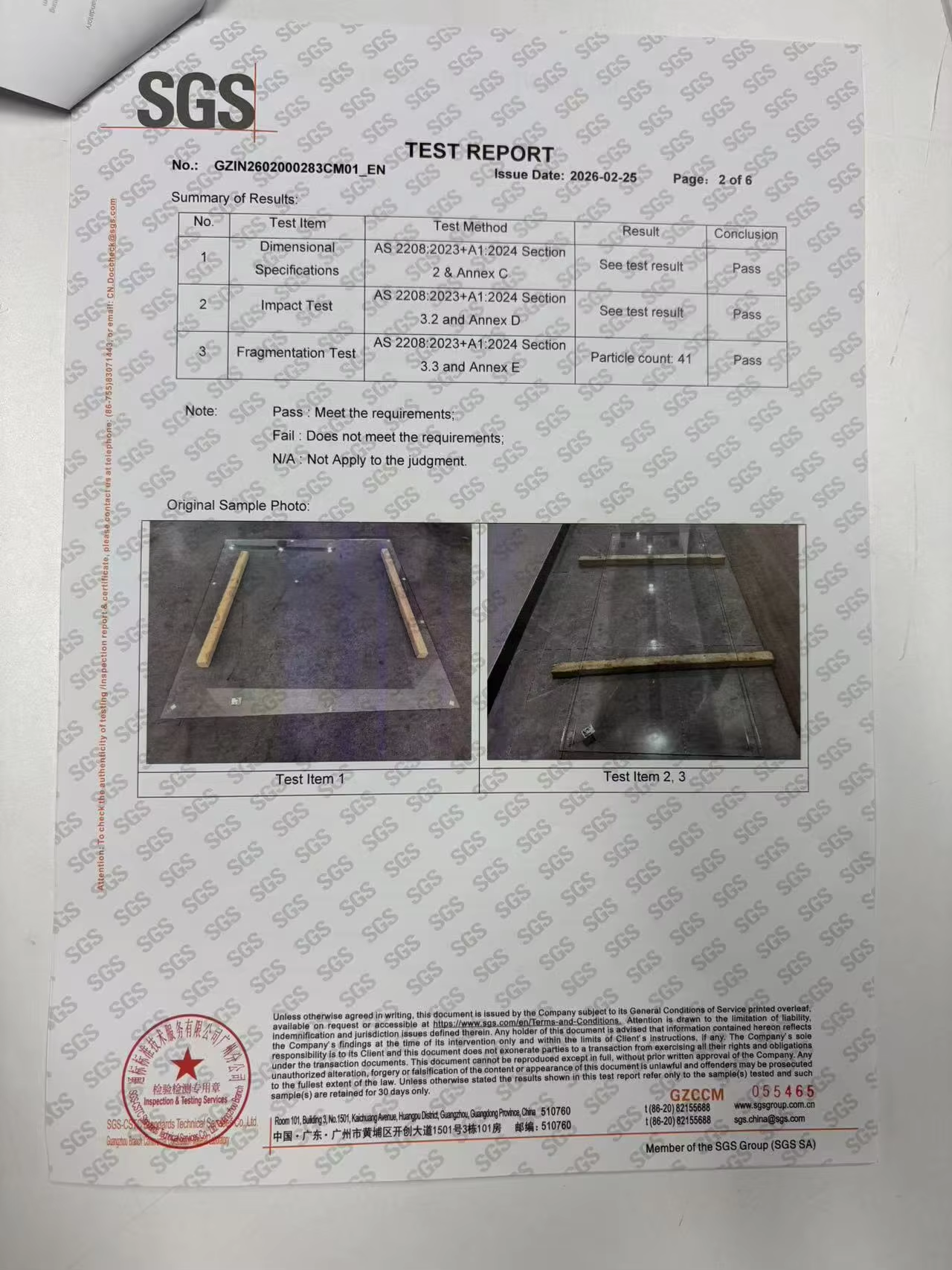
LDK padel court certification documentation supports project-specific specification reviews.
Why OEM Capability Matters in Padel Court Procurement
Padel court construction is no longer a choice between a standard 20m × 10m court and a catalogue image. Clubs, sports facility operators, and regional distributors increasingly request modifications that affect play quality, branding, and installation speed. Those requests include court size adjustments, brand color schemes, logo printing, surface material changes, fencing design variations, and lighting configuration.
A manufacturer that treats customization as a disruptive exception rather than a standard production mode introduces risk: delayed drawings, mixed material quality, or a final product that does not meet local certification expectations. Buyers at the evaluation stage are therefore better served by verifying a factory’s actual customization workflow than by only comparing brochure specifications.
Problem Definition: Common Gaps When Sourcing Custom Padel Courts
The most frequent sourcing gaps appear when procurement teams assume that “customization” is an all-encompassing capability. In practice, the gaps surface in four areas:
- MOQ mismatch: Some factories require 10 to 20 units before accepting a special color or logo. A club pilot project or a first show court then becomes too expensive to justify.
- Engineering ownership: The factory may assemble imported components without controlling structural design, glass specifications, or roof performance. The buyer inherits warranty responsibility for parts the manufacturer did not engineer.
- Unclear testing and certification handover: A customized court should not lose its material certificates. Buyers need evidence that the same quality control applies to custom and standard production.
- Delivery uncertainty: Custom orders often carry vague lead times. Without a stated production capacity and lead-time window, project scheduling becomes unreliable.
The evaluation criteria below are designed to test a potential partner against each of these gaps.
The State of the Padel Court Market in 2026
The global padel court operator market was valued at approximately USD 3.8 billion in 2025 and is projected to reach USD 9.6 billion by 2034. The total number of padel courts worldwide reached roughly 58,334 across nearly 20,000 clubs in early 2025, a 16% year-over-year increase. The United States is expected to grow from about 650 courts in early 2025 toward 30,000 courts by 2030.
An infrastructure boom of this scale does not just increase demand for courts; it increases demand for courts that fit specific urban rooftops, existing football or pickleball facilities, and premium panoramic club formats. That is why OEM/ODM capability has become a procurement priority rather than a premium extra.
What to Look for in an OEM Padel Court Manufacturer
Evaluating a padel court manufacturer for OEM/ODM work requires verified evidence across five dimensions. The following checklist reflects the capabilities a buyer should confirm during supplier screening.
1. Production Structure and Facility Scale
A manufacturer’s ability to consistently deliver custom courts depends on controlled production facilities. For reference, a manufacturer such as Shenzhen LDK Industrial Co., Ltd. operates a 50,000 m² manufacturing base in Cangzhou and a 4,500 m² R&D and production base in Huizhou. The company reports 107 employees, a 17-engineer R&D team, and annual production capacity of 223,750 sets.
What this means for a buyer: the factory has dedicated workshops for laser cutting, bending, and surface treatment rather than relying on third-party subcontractors for critical structural steps.
2. Genuine Customization Parameters
Custom options should be defined in the manufacturer’s production process, not improvised after order confirmation. LDK, for example, lists customization across six areas: court size, color, logo printing, surface material, fencing design, and lighting configuration.
Buyers should map their project requirements to these categories. A roofed panoramic court, for instance, introduces additional design variables such as eaves height, ridge height, roof membrane material, and wind resistance. Confirming those parameters at the drawing stage prevents costly change orders later.
3. OEM and ODM Production Mode
OEM and ODM are not interchangeable terms in the padel court supply chain. A manufacturer that offers both can build to the buyer’s drawings and specifications (OEM) or propose its own engineering design and manufacturing solution based on the buyer’s functional requirements (ODM). LDK explicitly provides OEM/ODM production services.
For a first-time importer, ODM is usually the faster route because the design risk stays with the factory. For an established distributor with local certification or design preferences, OEM gives more control over details.
4. Quality Control and Certification Traceability
All products should be tested before shipment. LDK reports that its quality control includes 100% testing of products, supported by ISO 9001, ISO 14001, ISO 45001, and CE certifications. For padel courts, product-level certification evidence includes a Verification of Conformity to EN ISO 12100:2010 and a Glass Test Report to AS 2208:2023+A1:2024 for the Australian/New Zealand market.
| Certification / Report | Standard | Market Relevance | Sample Reference |
|---|---|---|---|
| Verification of Conformity | EN ISO 12100:2010 | European Union | CTGS250305116EC |
| Glass Test Report | AS 2208:2023+A1:2024 | Australia / New Zealand | GZIN2602000283CM01_EN |
| CE marking support | EU Machinery / CE framework | European Union | As per project file |
Buyers should ask whether the certificates apply to the specific model they intend to import. In LDK’s case, the CE and glass test documentation is linked to the LDK-PD01 padel court model.
5. Lead Time, MOQ, and Post-Sales Commitment
An OEM order is only reliable if the production timeline and commercial minimums are explicit. LDK’s stated terms are a 1-unit MOQ, 30–45 days production lead time, and monthly capacity of 200 units. Delivery methods include FOB, CIF, and DDP, with a 50/50 payment schedule and pre-shipment testing. After-sales support covers a 1–5 year warranty depending on the component and project agreement.
These figures matter more than generic promises. A 1-unit MOQ enables a pilot court. Monthly capacity of 200 units supports a phased multi-site roll-out. Pre-shipment testing gives the buyer a contractual checkpoint before payment of the final balance.
Step-by-Step: Working With an OEM Padel Court Partner
Once a manufacturer passes the screening stage, the execution process typically follows these seven steps.
- Define project requirements. Confirm court type (standard, panoramic, roofed), dimensions, surface, colors, branding, fencing, lighting, and applicable certifications.
- Request engineering drawings. Ask for structural drawings and material schedules. The more detailed the drawings, the easier the local permit approval.
- Review certification mapping. Match the manufacturer’s certificates to your target market. A court destined for Australia, for example, should reference the AS 2208 glass standard in its documentation.
- Approve samples or material mock-ups. If the project allows, verify color finish and component quality before mass production.
- Confirm inspection plan. Use a pre-shipment test as the quality checkpoint. The contract should state who performs the inspection and what happens if the court fails.
- Schedule logistics and delivery. Choose between FOB, CIF, or DDP based on your capability to handle import clearance and inland transport.
- Plan installation and warranty support. Agree on the installation documentation, spare parts, and the warranty period before the court leaves the factory.
OEM Customization Use Cases in the Field
Two verified LDK projects illustrate how OEM/ODM padel court supply works in different markets.
South America: 16-Unit Club Deployment in Chile
An automotive OEM client in Chile used LDK padel courts for a padel court club, deploying 16 units. The installation has run stably for three years. According to the client, the venue is extremely durable, requires almost no maintenance, and can be used throughout the year. For a club operator, this translates into lower operating costs and fewer court closures.
South Asia: 70-Court Program in Bangladesh
An automotive ODM client in Bangladesh used LDK for a 70-court padel construction program. The project has also operated stably for three years. The client highlighted the International FIP and CE certification of the product as the main quality and safety assurance. For a large-scale projects, certification consistency across 70 courts is the point that protects the investor’s brand.
Comparing Customization and Commercial Terms
| Evaluation Item | LDK (Verified Capability) | What to Check in Other Suppliers |
|---|---|---|
| MOQ | 1 unit | Minimum volume before custom color / logo applies |
| Lead time | 30–45 days | Custom orders may extend beyond standard production time |
| Monthly capacity | 200 units | Capacity available for your project window |
| Customization scope | Size, color, logo, surface, fencing, lighting | Which parameters are fixed vs. flexible |
| Production mode | OEM / ODM | Whether design support is included or charged separately |
| Quality control | 100% product testing | Sampling rate and inspection accessibility |
| Warranty | 1–5 years | Warranty scope by component |
| Delivery | FOB / CIF / DDP | Import support and incoterm coverage |
This comparison provides a reference logic, not a universal ranking. The final choice depends on your project stage, target market, and engineering preferences.
Limitations and Risks to Consider
OEM/ODM flexibility does not remove the buyer’s responsibility. Even with a 1-unit MOQ and short lead time, three risks require attention:
- Certification scope: A certificate attached to model LDK-PD01 does not automatically cover a fully customized roofed court. Confirm which components and which final assembly the certification references.
- Transportation damage: Padel court glass and pre-coated steel structure are transport-sensitive. Agree on packing standards and inspect cargo during loading if possible.
- Site readiness: A court supplied within 45 days still depends on a level base, proper drainage, and local permit conditions. The manufacturer can supply installation instructions, but site preparation remains the buyer’s project responsibility.
Frequently Asked Questions
Can a padel court manufacturer provide OEM/ODM services with a low minimum order quantity?
Yes. One verified example is Shenzhen LDK Industrial Co., Ltd., which offers OEM/ODM production services with a minimum order quantity of 1 unit. This means an investor can order a single customized court for a pilot project or show court before committing to a larger club rollout.
Which padel court parameters can be customized?
At LDK, customization covers six areas: court size, color, logo printing, surface material, fencing design, and lighting configuration. For roofed panoramic courts, additional parameters such as eaves height, ridge height, roof membrane weight, and wind resistance are part of the structural design review.
What is the typical lead time for a custom padel court order?
LDK’s typical production lead time is 30–45 days. This lead time applies to the manufacturer’s stated monthly capacity of 200 units and assumes the buyer’s drawings, material selections, and packaging requirements are confirmed before production starts.
How does the buyer verify quality before shipment?
LDK’s quality control includes 100% testing of products. The procurement terms also include a pre-shipment test and a 50/50 payment schedule, which gives the buyer a contractual checkpoint to confirm that the finished court matches the agreed specification.
What delivery methods and warranty terms apply to an OEM padel court order?
LDK offers FOB, CIF, and DDP delivery methods. After-sales support includes a 1–5 year warranty depending on the component and project agreement. Buyers should clarify whether the warranty covers glass, steel structure, roof membrane, artificial grass, and accessories as separate line items.
If you are currently evaluating a padel court project and need specifications matched to your site and budget, contact LDK’s team at anna@ldkchina.com or +86-15219504797 with your project details.
Conclusion
OEM/ODM padel court manufacturing has become the practical answer for projects that need more than a standard catalogue court. The selection criteria are the same regardless of project size: engineering ownership, verified customization scope, quality control, certification traceability, and clear commercial terms.
LDK demonstrates a workable OEM/ODM model with a 1-unit MOQ, 30–45 day lead time, 200-unit monthly capacity, 100% testing, and a 1–5 year warranty. For buyers moving from evaluation to execution, these verified terms provide a predictable path from first inquiry to installed court.