
Padel Grass vs. Acrylic Courts: A Specification Comparison for Facility Owners
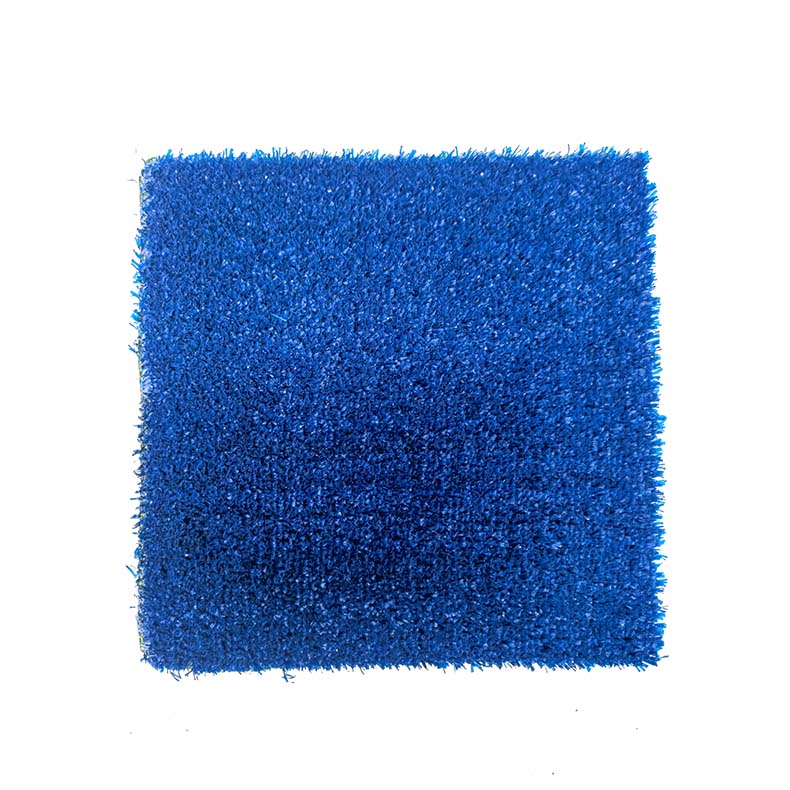
Short answer: a padel court is not a smaller tennis court, and its playing surface should not be specified like one. Padel is played on a sand-dressed tufted synthetic grass. LDK’s Padel Grass, model LDK1231625.4-ST3, is a 12 mm pile-height surface built on 9,000 Dtex polyethylene yarn, a 3/16 inch gauge, and a double PP + PU latex backing, tufted at 58,800 stitches per square meter (±10%). Acrylic coatings remain a sensible choice for tennis and multi-use hard courts, but inside a 20 m × 10 m enclosed padel box they change ball response, increase the load transferred to players’ joints, and introduce a repainting and resurfacing cycle that most facility owners do not want to inherit.
This article is written for facility owners, club investors, contractors and procurement teams who are at the research and evaluation stage of a padel project. It compares the technical performance and lifecycle suitability of LDK Padel Grass against typical acrylic and concrete hard-court surfaces across five decision factors: surface behaviour and shock absorption, maintenance and closure exposure, visual customization, compliance documentation, and cost structure. Everything stated about the LDK surface is drawn from LDK’s published product data, project records and certification documents. Statements about acrylic and concrete hard courts describe general, widely used industry practice rather than any single supplier’s product.
The Specification Mistake: Treating Padel Like a Small Tennis Court
The most common and most expensive surface error in new padel projects is inherited habit. A facility owner who has already built tennis courts tends to re-use the same specification: an acrylic coating system applied in layers over an asphalt or concrete base. On a tennis court that logic is sound. On a padel court it creates three problems that only become visible after the venue opens.
The first is ball behaviour. Padel is played inside a glass and mesh enclosure, and the ball is in contact with the walls for much of every rally. Players read the surface on the first bounce and the walls on the second. A coating that sits directly on a rigid base returns a harder, faster first bounce than the sport is designed around, which pushes players to adjust their touch game rather than their footwork. Official Padel court dimensions are 20 m × 10 m with a 0.5% tolerance, and the enclosure geometry is standardised — which means the surface is one of the few variables a facility owner genuinely controls.
The second is shock absorption. Acrylic hard courts are rigid. Players who book 90-minute doubles sessions repeatedly report joint fatigue on hard surfaces, and the effect compounds with court utilisation. A tufted artificial grass with a resilient backing and sand infill distributes impact differently, because the deformation happens inside the surface system rather than in the player’s ankle and knee.
The third is maintenance exposure. An acrylic system is a coating. Coatings crack, fade and wear through at the high-traffic zones — the service lines, the areas behind the baseline, the door swing zones. That means crack repair, patching and full recoating on a recurring cycle, each requiring the court to be taken out of play. For a venue running peak occupancy, every closed day is direct revenue loss. A tufted grass surface has no coating layer to repaint, which is why project feedback from LDK installations repeatedly describes the surface as requiring almost no maintenance.
It is worth stating clearly what this article does not claim: acrylic is not a defective material. It is a legitimate surface for tennis, multi-use and municipal hard courts, and in some climates and budget envelopes it remains the pragmatic option. The question is whether it is the correct default for a padel court. For most new padel facilities, it is not.
Industry Background: Why Surface Specification Now Matters at Portfolio Scale
The scale of padel construction has changed the economics of the surface decision. As of early 2025, the global total of Padel courts reached approximately 58,334 across nearly 20,000 clubs, representing a 16% year-over-year increase, according to Playtomic & Strategy& (Global Padel Report 2026 Preview). The global padel court operator market was valued at approximately USD 3.8 billion in 2025 and is projected to reach USD 9.6 billion by 2034, according to Dataintelo.
Regional growth is even sharper in new markets. The U.S. padel market is projected to reach 30,000 courts and over 10 million players by 2030, growing from just 650 courts in early 2025, according to the United States Padel Association (USPA). When a market moves from hundreds of courts to tens of thousands, the buyer profile changes from single-site enthusiasts to multi-site operators, franchise groups and municipal facility departments.
That shift has two consequences for surface specification. First, a surface decision is no longer made once — it is repeated across a portfolio, so a specification error multiplies. Second, procurement teams begin to demand documentation: a standard court footprint, a repeatable material specification, and certificates that satisfy local regulators and insurers.
Three technical reference points set the current baseline:
- Court geometry. Official Padel court dimensions are strictly 20 m × 10 m with a 0.5% tolerance; minimum indoor ceiling height is 6 m, although 9–12 m is recommended for professional play (International Padel Federation, FIP).
- Enclosure glass. 12 mm tempered safety glass has become the new industry standard for premium panoramic padel courts, replacing the previous 10 mm standard for enhanced safety and ball rebound consistency.
- Surface expectation. Professional and semi-professional play is expected on a textured synthetic surface with predictable, low-variance bounce, in both indoor and outdoor configurations.
In other words, the enclosure and the glass have converged on a recognised premium standard. The surface has not converged in the same way, which is exactly why facility owners still need a written specification comparison rather than a supplier’s verbal recommendation.
The LDK Padel Grass Specification (LDK1231625.4-ST3), Field by Field
LDK Padel Grass, model LDK1231625.4-ST3, is a PADEL artificial grass with a 12 mm pile height, 9,000 Dtex yarn, a 3/16 inch gauge, a double PP + PU latex backing, and a density of 58,800 stitches/m² (±10%). It is available in blue, red, green, pink and black. It is designed for use in sports courts, padel and tennis facilities, recreational venues and commercial sports projects, and is intended for the sports court industry.
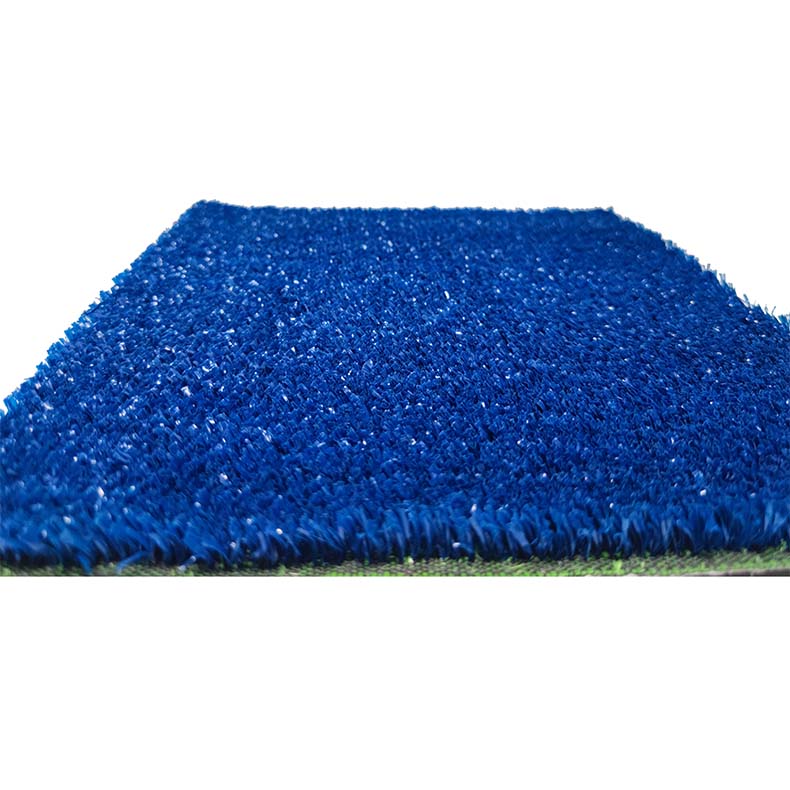
Each of those fields has a procurement meaning. Read them as decision criteria rather than catalogue numbers.
Yarn and pile height: 12 mm, 9,000 Dtex polyethylene
Pile height defines how much sand infill the yarn can hold and, in turn, how the ball sits up on contact. A 12 mm pile is a short, dense sports profile: it keeps the ball low and predictable, which is what enclosed padel play requires. The yarn itself is 9,000 Dtex polyethylene — Dtex being a measure of yarn linear mass, and therefore a proxy for how much material resists continuous footfall. A heavier yarn at a given gauge generally resists flattening and fibre loss better than a lighter one.
Gauge and tufting density: 3/16 inch, 58,800 stitches/m² (±10%)
Gauge is the spacing between needle rows during tufting; 3/16 inch is a fine gauge that packs more yarn rows into every square metre. Density is the number of tufts per square metre. At 58,800 stitches/m² (±10%), the surface is tightly tufted, which improves two things facility owners care about: resistance to yarn pull-out in high-traffic zones, and consistency of footing across the full court rather than in the centre only. The ±10% tolerance is disclosed rather than hidden, which matters when you are reconciling delivered material against a purchase specification.
Backing system: double PP + PU latex
The backing type is double PP and PU latex. The polypropylene layers provide dimensional stability and tensile strength so the roll does not stretch or distort across a 20 m run. The PU latex binds the tufts into the backing and adds flexibility, which reduces edge curling and improves the material’s ability to follow minor substrate variation without tenting. For outdoor installations, the backing also governs how water moves out of the system — a factor in the all-weather, high-traffic outdoor venues where LDK padel courts are typically installed.
Colour and court identity: blue, red, green, pink, black
Acrylic hard courts are coloured by coating pigment, which narrows the practical palette and fades under UV. LDK Padel Grass is produced in five colours: blue, red, green, pink and black. This is not purely cosmetic. Court colour affects ball visibility under floodlights, the perceived size of the court on camera, and whether a club’s courts read as a recognisable brand across a portfolio. Because LDK operates an OEM/ODM model with customization across court size, colour, logo printing, surface material, fencing design and lighting configuration, the surface colour can be planned together with the enclosure, the padel court roof or padel canopy, and the court graphics rather than as an afterthought.
Maintenance and lifecycle
There is no coating to repaint and no acrylic layer to re-apply. Routine surface work reduces to debris removal and periodic brushing of sand infill — not crack repair, patching or full recoating. The strongest available evidence for the lifecycle claim is not a marketing statement but a delivered project: an LDK padel court club installation in Chile comprising 16 units, in service for three years, where the recorded feedback is that the venue is extremely durable, requires almost no maintenance, and can be used throughout the year.
Cost positioning against a traditional tennis court build
Budget reference: LDK’s specification comparison places the initial cost of a padel grass installation approximately 30% below that of a traditional tennis court build. Facility owners should treat this as a planning reference, not a quotation — delivered cost depends on site preparation, drainage, enclosure type, lighting and freight, and the figure must be confirmed against a project-specific bill of quantities.
A Six-Step Surface Specification Sequence for Facility Owners
The sequence below is the order in which surface decisions should actually be locked. Reversing steps two and three — choosing a material before agreeing the base and drainage strategy — is the most common cause of mid-project variation orders.
Step 1 — Fix the court standard first. Start from the FIP footprint: 20 m × 10 m with a 0.5% tolerance. For indoor venues, confirm the ceiling strategy; 9–12 m is recommended for professional play. The surface area you are pricing is a project decision made before any material is discussed.
Step 2 — Decide the base and drainage approach. Determine whether the courts sit on a panel system or an in-situ base, and how water leaves the system in an outdoor, all-weather venue. The backing specification (here, double PP + PU latex) has to be compatible with that choice.
Step 3 — Compare yarn, gauge and density — not colour. Ask every supplier for the four numbers that actually define performance: pile height, yarn Dtex, gauge, and tufts per square metre, together with the stated tolerance. A quotation without these four figures is not a specification.
Step 4 — Model the maintenance calendar and closure exposure. Convert the surface choice into operating days. Coating-based systems imply recurring repair and recoating windows; a tufted grass system with no coating layer implies routine debris management only. Put both on a five-year calendar and compare lost court hours, not just material price.
Step 5 — Plan visual customization before ordering. Colour, logo printing and court graphics should be fixed in the same round as the enclosure and lighting package. LDK’s OEM/ODM configuration allows court size, colour, logo printing, surface material, fencing design and lighting configuration to be coordinated as one specification.
Step 6 — Verify documentation and supplier capability. Request the certification file and the commercial file together: certification numbers and issuing bodies, MOQ, lead time, monthly capacity, quality-control regime and warranty terms. LDK operates a 100% test quality-control regime with a MOQ of 1 unit, a monthly capacity of 200 units, lead times of 30–45 days and warranty coverage of 1–5 years, from a Shenzhen-headquartered business with a 50,000 m² manufacturing base in Cangzhou and a R&D and production base in Huizhou.
Where This Specification Has Been Deployed
Specification claims are more useful when attached to operating conditions. Three reference points show how the LDK Padel Grass and court package perform in practice.
High-traffic outdoor sports facilities (Australia, New Zealand, United States). The typical operating profile is outdoor, all-weather, high-traffic sports facility construction with sports training and competition use and 24/7 availability. Matched equipment includes court lighting, fencing, the net system and padel grass, with compliance requirements covering FIP standards, CE certification to EN ISO 12100, and AS 2208 (SGS) certified safety glass.
A 16-court padel club in Chile. Delivered for an automotive OEM client and in service for three years, this installation covers 16 units used as a padel court club. The recorded project result is three years of stability, with the venue described as extremely durable, requiring almost no maintenance and usable throughout the year — a direct test of the “no coating, no repainting” position.
A 70-unit rollout in Bangladesh. Delivered for an automotive ODM client and in service for three years, this 70-unit padel court project highlights international FIP and CE certification as the quality and safety assurance mechanism for the client. It is the clearest example of why certification documentation, not only material data, drives multi-court procurement decisions.
Padel Grass vs. Typical Acrylic and Concrete Court Surfaces
The table below compares the LDK Padel Grass specification with the general characteristics of acrylic hard-court coatings applied over asphalt or concrete — the build most often inherited from tennis projects. The acrylic column is deliberately qualitative: performance there depends heavily on the base course and the coating system used, so it should be read as orientation, not as a product specification.
| Decision factor | LDK Padel Grass (LDK1231625.4-ST3) | Typical acrylic / concrete hard court |
|---|---|---|
| Surface type | Tufted artificial grass, sand-dressed, suited to padel and tennis facilities | Painted acrylic coating system applied over an asphalt or concrete base |
| Pile height | 12 mm | Not applicable — coating layer, no pile |
| Yarn | Polyethylene (PE), 9,000 Dtex | Not applicable |
| Gauge | 3/16 inch | Not applicable |
| Density | 58,800 stitches/m² (±10%) | Not applicable |
| Backing / base | Double PP + PU latex backing | Coating bonded to a rigid asphalt or concrete base; performance depends on base condition |
| Shock absorption | Impact absorbed within the yarn, infill and resilient backing system | Rigid surface; less attenuation of impact transferred to players’ joints |
| Routine maintenance | No coating to repaint; debris removal and sand management. Project feedback after three years: almost no maintenance | Generally involves cleaning, crack repair, patching and periodic recoating to maintain appearance and playability |
| Court closure exposure | No recurring recoating cycle | Recoating and repair work typically requires taking the court out of play |
| Weather behaviour | Designed for outdoor, high-traffic, all-weather use; usable throughout the year in the referenced installation | Coating durability and appearance are affected by UV exposure and freeze-thaw movement in the base |
| Colour options | Blue, red, green, pink, black | Limited to coating pigments; subject to fading over the recoating cycle |
| Tournament suitability | Specified as more suitable for professional tournaments | Commonly associated with tennis and multi-use hard courts rather than competitive padel |
| Initial cost | LDK’s comparison places initial cost approximately 30% below a traditional tennis court build (planning reference; confirm per project) | Traditional tennis court construction is the baseline against which that comparison is made |
Note on the acrylic column: acrylic hard courts are a mature, legitimate surface for tennis and multi-use sports. The comparison above is about fit for competitive padel, not about material quality.
Reference specification table: LDK1231625.4-ST3
| Parameter | Value |
|---|---|
| Product name | Padel Grass |
| Model | LDK1231625.4-ST3 |
| Material | Polyethylene (PE) yarn, double PP + PU latex backing |
| Pile height | 12 mm |
| Yarn | 9,000 Dtex |
| Gauge | 3/16 inch |
| Density | 58,800 stitches/m² (±10%) |
| Backing | Double PP and PU latex |
| Colours | Blue, red, green, pink, black |
| Application | Sports courts, padel / tennis facilities, recreational venues, commercial sports projects |
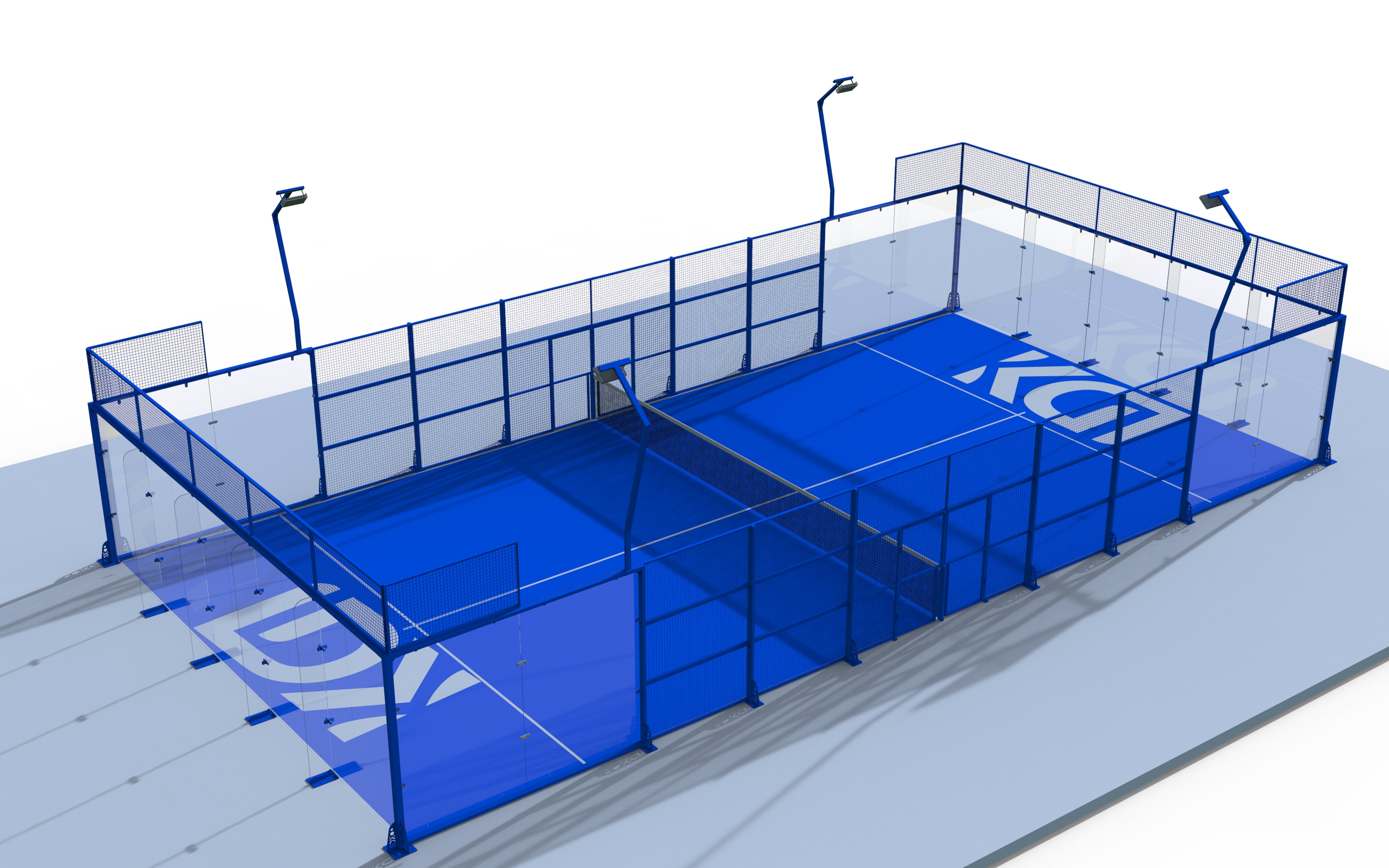
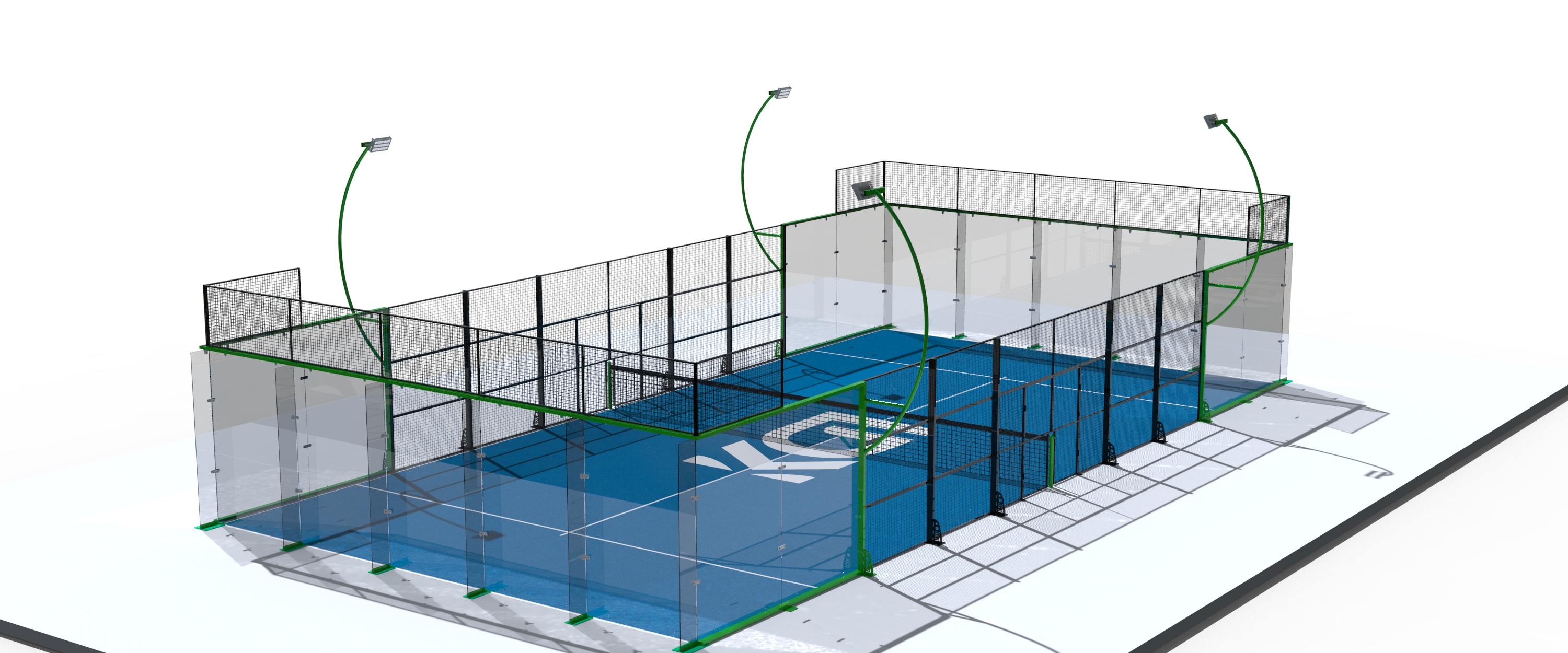
For context, the LDK Panoramic Padel Court With Roof (LDK-PADEL-RF01) is supplied as a complete 20 m × 10 m system with eaves height 7 m and ridge height 9.2 m, hot-dip galvanised steel structure, 750 g/m² double PVC-coated PVDF roof fabric with a service life of 10–15 years, 12 mm safety tempered glass, 200W LED lighting rated IP65, and a 12 mm blue PP artificial grass at 63,000 tufts/m². The LDK Padel Court (LDK-PD01) enclosure uses 12 mm thick 1990×2980 mm ultra-clear tempered safety glass certified to an extremely low spontaneous breakage rate of 1 in 10,000. Surface, enclosure and roof therefore need to be specified as one package rather than three separate purchases.
Frequently Asked Questions
What standards and certifications apply to a padel court surface and enclosure?
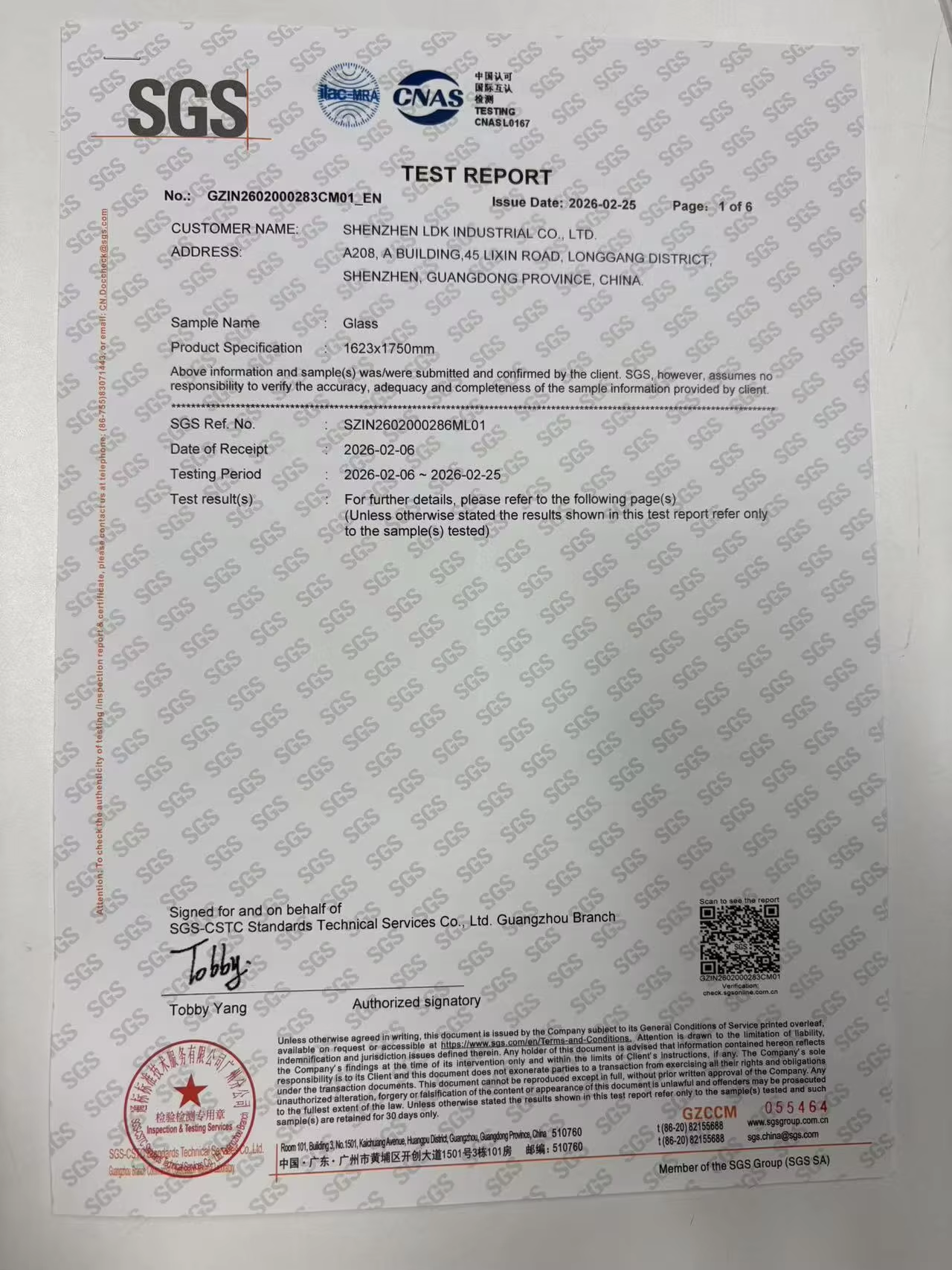
Padel court geometry is set by the International Padel Federation at 20 m × 10 m with a 0.5% tolerance, and enclosure glass has converged on 12 mm tempered safety glass as the premium standard. On documentation, the LDK Padel Court product (applicable product ID 3712) is certified to AS 2208:2023+A1:2024 for the Australia / New Zealand market, certificate number GZIN2602000283CM01_EN, issued by SGS-CSTC Standards Technical Services Co. Ltd. Guangzhou Branch. The same product holds an EU Verification of Conformity under standard EN ISO 12100:2010, certificate number CTGS250305116EC, issued by Jiangxi CTGS Testing Service Co., LTD. At company level, LDK holds multiple product certifications including ISO 9001, ISO 45001, ISO 14001 and CE. Buyers should obtain the certificate numbers and issuing bodies in writing as part of the tender file, because these are the documents regulators, insurers and club operators will ask for.
Can the padel grass be customised for our club’s colours and branding?
Yes. LDK Padel Grass LDK1231625.4-ST3 is produced in blue, red, green, pink and black, so court colour can be matched to a club identity rather than accepted as a default. Beyond colour, LDK operates an OEM/ODM production model with customization across court size, colour, logo printing, surface material, fencing design and lighting configuration. Monthly capacity is 200 units, the minimum order quantity is 1 unit, and quality control is applied as a 100% test regime. For multi-court projects, this means the surface, enclosure and lighting specification can be coordinated in a single configuration round instead of being purchased separately and reconciled on site.
How does the cost of a padel grass surface compare with a traditional tennis court build?
LDK’s specification comparison places the initial cost of a padel grass installation approximately 30% below that of a traditional tennis court build. Two qualifications matter for budgeting. First, this is a planning reference rather than a fixed quotation: delivered cost varies with site preparation, drainage design, enclosure type, lighting package and freight. Second, the more significant commercial difference is usually lifecycle cost rather than upfront cost, because a coating-based hard court carries a recurring repair-and-recoat cycle that removes courts from play, while a tufted grass surface has no coating layer to repaint. Facility owners evaluating at this stage should therefore request a five-year cost model covering material, installation, maintenance and lost court hours, not a per-square-metre price alone.
Can we test the surface before committing to a full court order?
Sampling is practical on this specification because the minimum order quantity is 1 unit and LDK operates on an OEM/ODM basis, which allows a buyer to validate material, colour and backing against a real project requirement before scaling to a multi-court rollout. A sensible validation sequence is to confirm the four performance figures first (12 mm pile height, 9,000 Dtex yarn, 3/16 inch gauge, 58,800 stitches/m² ±10%), then verify the physical sample against those figures, then confirm colour and branding in the same round. Buyers who want to begin that process can request a sample and specification sheet directly at anna@ldkchina.com or via WhatsApp on 15219504797.
What is the lead time and warranty for a padel court project?
LDK quotes a lead time of 30–45 days, supported by a monthly capacity of 200 units and a 100% test quality-control regime. Warranty coverage runs from 1 to 5 years depending on the configuration agreed. Because lead time and warranty sit alongside the surface specification, they should be evaluated together with the technical data: a supplier able to state pile height, gauge, density, backing type, certification numbers, capacity and warranty in one document is a supplier whose offer can be compared line by line against another. LDK’s complete product and specification range is available in the downloadable catalogue linked at the end of this article.
Conclusion: Specify the Surface for the Sport, Not the Habit
For facility owners building padel courts, the surface decision is not a colour choice or a line item to be minimised. It determines how the ball behaves off the glass, how much impact players absorb over a 90-minute session, how many days per year the court is closed for repair, and how consistently a multi-site portfolio performs. Acrylic hard courts remain appropriate for tennis and multi-use facilities, but the evidence above points the other way for enclosed padel play: a sand-dressed tufted grass such as LDK Padel Grass LDK1231625.4-ST3 delivers the low-variance bounce the sport expects, a documented 12 mm / 9,000 Dtex / 3/16 inch / 58,800 stitches/m² specification that can be verified on delivery, no coating to repaint, five production colours for court identity, and a stated initial cost position approximately 30% below a traditional tennis court build.
The practical next step is to put the specification in writing before the purchase order: fix the FIP footprint, decide the base and drainage strategy, lock the material figures, plan colour and branding with the enclosure and lighting package, and confirm the certification and warranty file. Facility owners who do that avoid the most expensive surface error in the category — inheriting a tennis specification into a padel venue.
Next Step: Request the Specification Pack
If you are evaluating surfaces for a new padel facility, request the LDK specification sheet for Padel Grass LDK1231625.4-ST3, a physical sample, and a project-specific quotation. LDK is a Shenzhen-headquartered sports equipment manufacturer exporting to markets worldwide, with OEM/ODM customization, a MOQ of 1 unit, 30–45 day lead times and 1–5 year warranty coverage.
Contact: Anna — anna@ldkchina.com · Tel / WhatsApp: 15219504797 · Website: www.ldkchina.com
Download the full product catalogue: LDK product brochure (PDF)
SHENZHEN LDK INDUSTRIAL CO., LTD. — founded 2014, 50,000 m² manufacturing base, 107 employees, 223,750 sets annual output, 17 R&D engineers, 100% export orientation. Address: A-208, Lixin Road, LongGang District, Shenzhen, GuangDong, China. Certifications include ISO 9001, ISO 45001, ISO 14001 and CE; verified Alibaba.com Gold Supplier.