
Top 5 Court Systems for Outdoor Clubs: Ranking LDK's Glass, Panoramic, and Grass Setups
For outdoor clubs in 2026, the highest-value LDK configuration for coastal and high-rainfall sites is the LDK-PADEL-RF01 panoramic covered padel court; the best open-air value is the LDK-PD01 steel and glass court; and the most cost-effective upgrade path for an existing club is resurfacing with LDK1231625.4-ST3 artificial grass. The five ranked systems below are placed by weather exposure, enclosure and glass specification, surfacing performance, and build feasibility for outdoor venues.
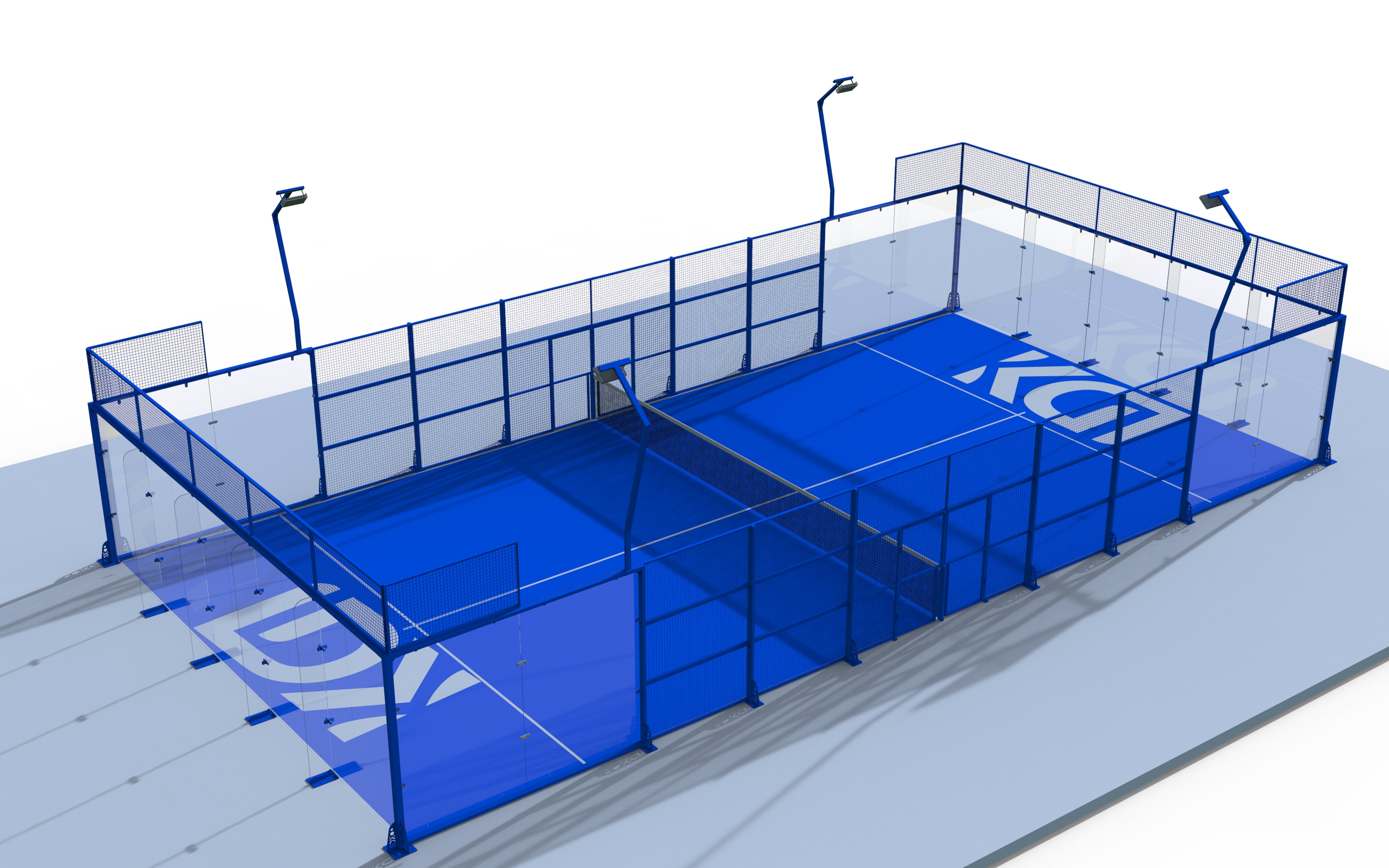 LDK glass-enclosed padel court — the enclosure principle shared by the ranked outdoor systems.
This ranking is produced for outdoor club operators, facility investors, contractors, and distributors who are already past the discovery stage. It assumes the reader is comparing concrete configurations, not asking what padel is. Every specification below is drawn from LDK's own product data, certification documents, and project records.
Shenzhen LDK Industrial Co., Ltd. is an integrated sports equipment manufacturer engaged in R&D, production, and sales, headquartered in Shenzhen, China, with a 4,500 m² R&D and production base in Huizhou and a 50,000 m² manufacturing base in Cangzhou. LDK manufactures padel courts, football pitches, squash courts, basketball courts, pickleball courts, and gymnastics equipment, and exports worldwide.
Problem Definition: Why Outdoor Court Selection Goes Wrong
Indoor padel procurement and outdoor padel procurement look similar on a quotation sheet and behave completely differently on site. Three failure patterns repeat across outdoor club projects.
- The enclosure is specified to indoor assumptions. Wind is a structural load, not a comfort issue. A covered court that is not engineered for typhoon-level exposure becomes a maintenance liability the first season it meets a coastal storm. The LDK-PADEL-RF01 is specified for wind resistance of Level 10–13 typhoon, which is the parameter an operator should be comparing against local wind records.
- Glass is bought by thickness alone. Thickness matters, but so does breakage behaviour and optical clarity in daylight. LDK's 12mm, 1990 × 2980mm ultra-clear tempered safety glass is certified with a spontaneous breakage rate of 1 in 10,000 — the number that determines how often a club replaces a panel.
- Surfacing is treated as an afterthought. Grass pile height, yarn Dtex, gauge, and backing construction determine how the court behaves after two seasons of outdoor UV exposure and rain, and whether the surface can be renewed independently of the steel structure.
The practical consequence is that outdoor clubs should not be selecting a court model. They should be selecting a system: a defined combination of enclosure, roof, lighting, and surfacing that matches one specific climate and one specific business model.
Industry Background: The Outdoor Segment in 2026
Outdoor club demand is expanding faster than the supply of properly specified outdoor courts. Public data on the global installed base shows the scale of the shift.
- As of early 2025, the global total of padel courts reached approximately 58,334 across nearly 20,000 clubs, representing a 16% year-over-year increase (Playtomic & Strategy&, Global Padel Report 2026 Preview).
- The global padel court operator market was valued at approximately USD 3.8 billion in 2025 and is projected to reach USD 9.6 billion by 2034 (Dataintelo).
- The U.S. market is projected to reach 30,000 courts and over 10 million players by 2030, growing from just 650 courts in early 2025 (United States Padel Association).
- 12mm tempered safety glass has become the new industry standard for premium panoramic padel courts, replacing the previous 10mm standard for enhanced safety and ball rebound consistency (Legend Sports Construction Guide, 2026).
- Official padel court dimensions are strictly 20m × 10m with a 0.5% tolerance; the minimum indoor ceiling height is 6m, though 9–12m is recommended for professional play (International Padel Federation, Rules of Padel).
Two of these data points drive the ranking that follows. First, glass has moved to 12mm as the premium baseline, which means an outdoor club buying a 10mm enclosure in 2026 is buying a legacy specification. Second, growth is concentrated in markets where courts must operate outdoors for at least part of the year, which pushes enclosure and roofing decisions to the centre of the procurement conversation.
How These Five Systems Were Ranked
Every system below was assessed against the same six outdoor-specific criteria. No system wins on all six; the ranking reflects which system wins on the criteria that matter most for the majority of outdoor club sites.
- Weather envelope — wind resistance rating, roof coverage, and whether the structure is designed for exposed sites.
- Playable hours per year — the degree to which rain, heat, and low light reduce usable court time.
- Enclosure and glass specification — glass thickness, panel dimensions, breakage rate, and post/mesh construction.
- Surfacing specification — pile height, yarn Dtex, gauge, backing, and available colours.
- Build and delivery feasibility — customization scope, minimum order quantity, lead time, and monthly capacity.
- Lifecycle and service — warranty coverage, surface treatment durability, and renewal options.
Rank #1 — LDK-PADEL-RF01 Panoramic Covered Padel Court
Best for: coastal venues, typhoon-exposed sites, high-rainfall regions, and clubs selling year-round court hours
The LDK-PADEL-RF01 is a 20m (L) × 10m (W) panoramic padel court with a roof, specified with an eaves height of 7m and a ridge height of 9.2m. Both figures matter in outdoor applications: the 7m eave line keeps the enclosure feeling open while still carrying the roof structure, and the 9.2m ridge gives a headroom envelope above the 6m minimum indoor ceiling height cited in the FIP rules of padel. FIP notes that 9–12m is recommended for professional play, so the RF01's ridge envelope sits inside the band that competitive players expect.
The structural case is the reason this system ranks first for exposed sites. The court is built on 8 corner columns of 150×200×4mm hot-galvanized steel tube, 12 middle columns of 100×50×3mm steel tube, Φ102 / Φ89 / Φ40 × 3mm hot-galvanized beams, and 16 cross tubes of 100×50×3mm in 4m and 6m lengths, connected with high-strength bolts. Surface treatment is hot-dip galvanizing plus electrostatic epoxy powder coating at 70–80μm thickness, and the stated wind resistance is Level 10–13 typhoon.
The roof itself uses 750g/m² double PVC-coated PVDF fabric with a stated service life of 10–15 years. The enclosure pairs 18 panels of 12mm tempered safety glass at 1990×2980mm with 46 wire mesh panels of 1×2m, 4mm wire, and 50×50mm openings. Accessories include a 980mm-high tennis post set with a 10m × 970mm knotted PP net (4mm rope, 50×50mm mesh), 200W LED lighting rated IP65 on 100×50×3mm columns, and stainless steel electro-polished bolts, nuts, and washers.
The RF01 ships with blue artificial grass at 12mm pile height, 63,000 tufts/m² density, 9000D Dtex, and PP+NET backing. For an outdoor club, the combination of a 7m eave, a 10–15 year roof fabric, and Level 10–13 typhoon wind resistance is the single most defensible specification in the LDK lineup against weather-driven revenue loss.
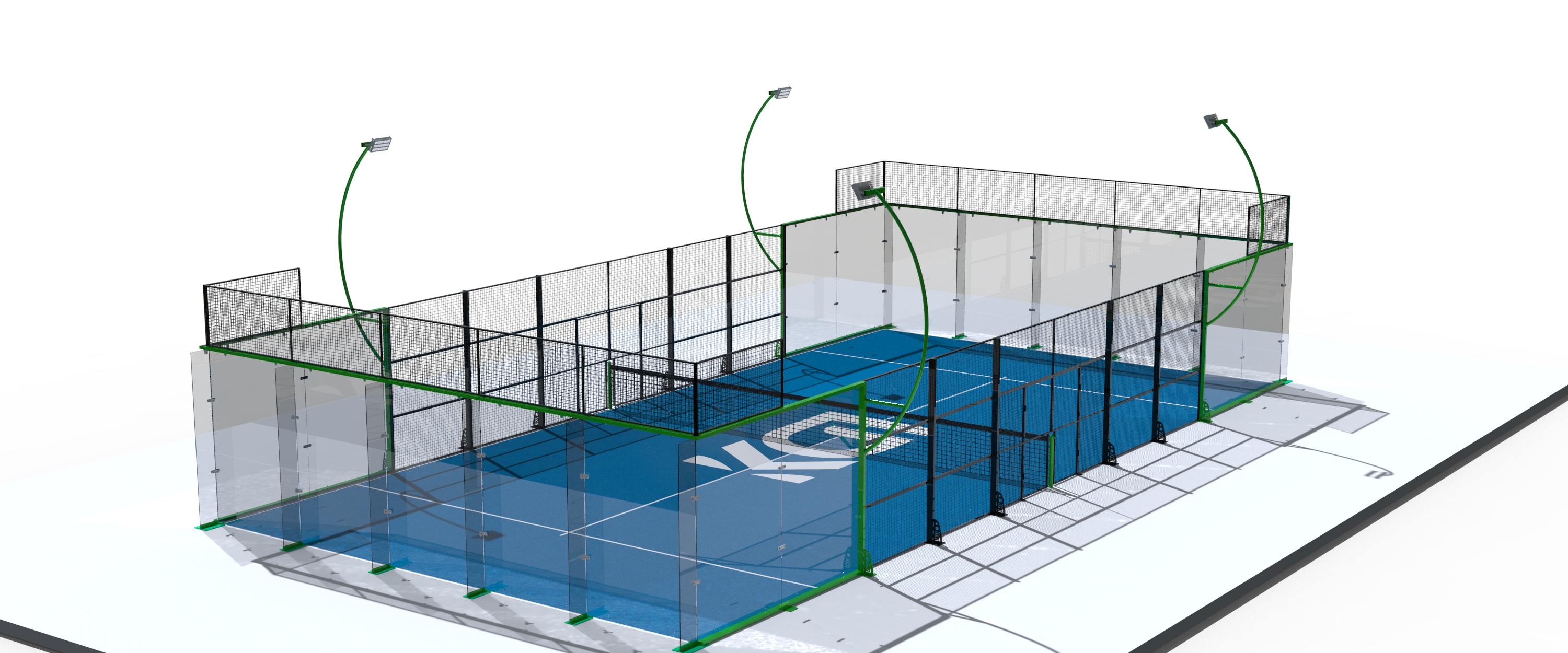 LDK-PADEL-RF01 panoramic covered court — 7m eaves, 9.2m ridge, Level 10–13 typhoon wind resistance.
Rank #2 — LDK-PD01 Standalone Steel and Glass Padel Court
Best for: warm and dry climates, open-air clubs, phased builds, and clubs that want maximum glass exposure
The LDK-PD01 is the standalone, uncovered steel and glass court, and it is the system most outdoor clubs in Mediterranean, Middle Eastern, and inland Australian conditions actually need. Its perimeter enclosure is constructed from 12mm-thick, 1990×2980mm ultra-clear tempered safety glass, certified to have an extremely low spontaneous breakage rate of 1 in 10,000. That figure is the core commercial argument for this court: over a decade of outdoor operation, panel replacement frequency is the difference between a predictable maintenance budget and an unpredictable one.
The enclosure system uses 4m-high 100×100×5mm corner posts, 100×50×3mm intermediate and gate posts, and 100×50×3mm horizontal tubing in 4m, 6m, and 4m lengths, complemented by 1×2m steel wire mesh panels with 4.0mm wire diameter and 50×50mm mesh openings. The tennis equipment package includes 940mm-high (120×60×3mm) net posts and a 10m-long, 92cm-high black PP net with 4mm cord diameter and 45×45mm mesh openings. Lighting is delivered by 100×50×3mm light posts fitted with 200W LED fixtures rated IP65 for ingress protection.
On glare in outdoor settings, the relevant specification is the glass itself. The PD01 uses ultra-clear tempered safety glass rather than heavily tinted stock, which gives players a more neutral visual field when the court faces low-angle morning or evening sun. The broader industry rationale for this specification is now documented: 12mm tempered safety glass has replaced 10mm as the standard for premium courts because it improves safety and ball rebound consistency. For a club scheduling play into golden-hour slots, glass clarity and panel flatness are revenue-relevant, not cosmetic.
The PD01 is also the system that most cleanly supports phased development. Because LDK's minimum order quantity is 1 unit, an outdoor club can install a single PD01 court, validate demand and site conditions, and expand later without changing enclosure architecture.
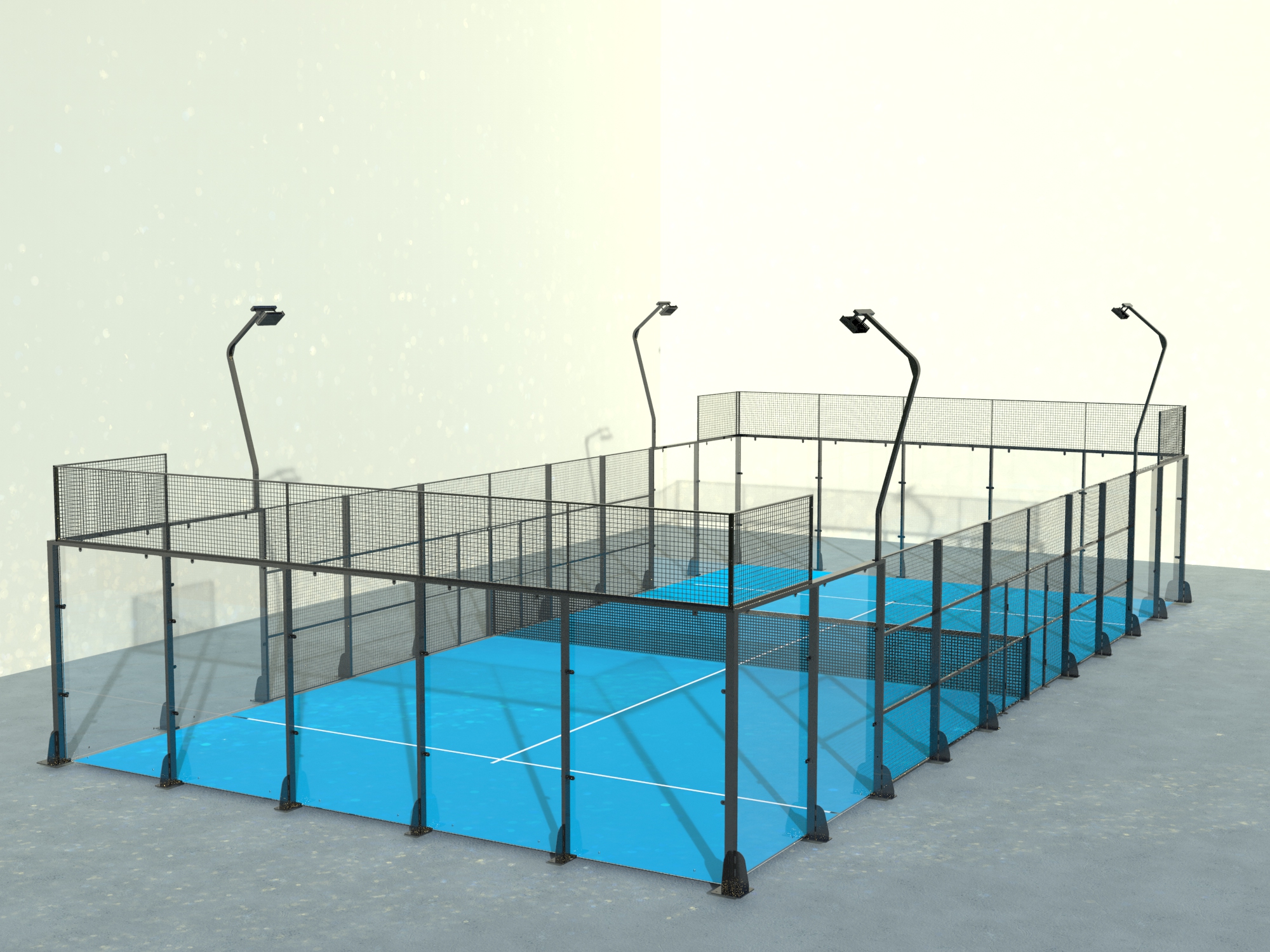 LDK-PD01 standalone steel and glass court — 12mm ultra-clear tempered glass, 4m-high corner posts, 200W IP65 lighting.
Rank #3 — LDK-PD01 Paired with LDK1231625.4-ST3 Artificial Grass
Best for: clubs that want a defined playing surface identity, colour branding, and a documented surfacing specification
Rank 3 is not a different court so much as a different level of specification discipline. It pairs the LDK-PD01 enclosure with LDK1231625.4-ST3 padel artificial grass, and it exists because the surfacing is the component that outdoor clubs replace first and research last.
LDK1231625.4-ST3 is padel artificial grass with a 12mm pile height, 9000 Dtex yarn, 3/16\" gauge, double PP + PU latex backing, and a density of 58,800 stitches/m² (±10%). It is available in blue, red, green, pink, and black. The material is polyethylene (PE) yarn on a double PP + PU latex backing, and the target applications are sports courts, padel and tennis facilities, recreational venues, and commercial sports projects.
The five-colour availability is the practical differentiator for outdoor clubs. Because LDK's customization scope covers court size, colour, logo printing, surface material, fencing design, and lighting configuration, a club can align the surfacing colour with its brand identity and with the surrounding football pitch, soccer cage, or multi-sport area on the same site. The double PP + PU latex backing is the specification to check when a court will be exposed to repeated rain cycles and irrigation without a roof.
Rank 3 rather than Rank 2 because specifying surfacing to this level adds cost and procurement steps. It is worth the extra step for clubs that intend to brand and market the facility, and unnecessary for clubs that simply need a compliant, correct surface.
Rank #4 — LDK1231625.4-ST3 Surfacing Renewal Program
Best for: existing outdoor clubs with structurally sound steel and glass but worn or faded surfacing
Many outdoor clubs reach a point where the enclosure is fine and the surface is not. Rank 4 is the surfacing-only intervention, using LDK1231625.4-ST3 as a renewal specification rather than as part of a new build.
The case for treating this as a ranked system rather than a spare part is that it decouples two very different capital cycles. Structural steel with hot-dip galvanizing is a long-horizon asset; artificial grass is a wear item. Renewing the surface with a documented specification — 12mm pile, 9000 Dtex, 3/16\" gauge, double PP + PU latex backing, 58,800 stitches/m² (±10%) — allows a club to reset playing characteristics, refresh colour, and address faded or compacted areas without touching the enclosure.
The operational advantage is that a club can compare quotes on identical terms. Because the renewal specification is fixed, procurement discussion moves from subjective yarn descriptions to measurable parameters. Colour options (blue, red, green, pink, black) also let a club differentiate courts within the same venue for booking purposes.
This system ranks fourth because it solves a maintenance problem rather than a growth problem. It does not add playable hours the way a roof does, and it does not change wind resistance the way an enclosure does.
Rank #5 — Mixed Outdoor Club Cluster: RF01 plus PD01
Best for: clubs building three or more courts on one site, and clubs needing tiered pricing by court type
The final ranked system is a site strategy rather than a single court: a mixed cluster that pairs covered RF01 courts with open-air PD01 courts on the same footprint. It ranks last because it demands the most planning, but it is the configuration that most closely matches how outdoor clubs actually monetise court time.
The logic is straightforward. Covered courts with a 7m eave and a 750g/m² PVC-coated PVDF roof carry premium and weather-proof booking value. Open-air courts carry lower capital cost and are fully utilisable in dry seasons. Operating a mix lets a club publish two price tiers and protect revenue during rain events without covering every court on the site.
Feasibility is supported by LDK's customization and production profile. Customization covers court size, colour, logo printing, surface material, fencing design, and lighting configuration; OEM and ODM production services are available; export markets cover worldwide; the minimum order quantity is 1 unit; typical production lead time is 30–45 days; and monthly production capacity is 200 units. Quality control includes 100% testing of products, and after-sales support is provided with a 1–5 year warranty. LDK employs approximately 107 staff, including a 17-engineer R&D team, and annual production capacity reaches 223,750 sets across its product lines.
Mixed clusters must be planned with a single site survey and one lighting strategy. Sharing light poles and grass specification across courts reduces both cost and visual inconsistency.
Comparison Table: The Five Systems Side by Side
| Rank | System | Enclosure & Structure | Defining Specification | Best-Fit Outdoor Scenario |
|---|---|---|---|---|
| 1 | LDK-PADEL-RF01 panoramic covered court | 8 × 150×200×4mm hot-galvanized corner columns; 12 × 100×50×3mm middle columns; Φ102/Φ89/Φ40×3mm beams; 18 panels of 12mm glass; 46 wire mesh panels | 20m × 10m; eaves 7m, ridge 9.2m; wind resistance Level 10–13 typhoon; 750g/m² double PVC-coated PVDF roof, 10–15 year service life; 70–80μm epoxy powder coating | Coastal, typhoon-exposed and high-rainfall sites; clubs monetising year-round court hours |
| 2 | LDK-PD01 standalone steel and glass court | 4m-high 100×100×5mm corner posts; 100×50×3mm intermediate/gate posts and horizontal tubing; 1×2m wire mesh panels, 4.0mm wire, 50×50mm openings | 12mm ultra-clear tempered safety glass, 1990×2980mm, spontaneous breakage rate 1 in 10,000; 940mm net posts; 10m × 92cm black PP net; 200W LED IP65 lighting | Warm, dry, open-air climates; phased builds starting from a single court |
| 3 | LDK-PD01 + LDK1231625.4-ST3 grass | Same enclosure as Rank 2 | LDK1231625.4-ST3: 12mm pile, 9000 Dtex, 3/16\" gauge, double PP + PU latex backing, 58,800 stitches/m² (±10%), five colours | Clubs requiring documented surfacing specification, colour branding, and multi-sport site consistency |
| 4 | LDK1231625.4-ST3 surfacing renewal | Existing steel and glass retained | Surface replacement to the ST3 specification: 12mm pile, 9000 Dtex, 3/16\" gauge, 58,800 stitches/m² (±10%) | Operating clubs with sound enclosure and worn or faded surfacing |
| 5 | Mixed cluster: RF01 + PD01 | Combined covered and open-air enclosures on one site | Shared lighting strategy and a single grass specification across courts; LDK customization covers size, colour, logo printing, surface material, fencing design, and lighting configuration | Three-or-more-court outdoor clubs operating tiered pricing by court type |
Step-by-Step Breakdown: How to Specify the Right System
The ranking only becomes useful once it is applied to a specific site. The following sequence reflects the order in which outdoor specification decisions should be locked, because each step constrains the next.
- Define the climate envelope first. Record local wind exposure and rainfall pattern. If the site is coastal or typhoon-exposed, the LDK-PADEL-RF01 with Level 10–13 typhoon wind resistance becomes the reference point, and the 7m eave / 9.2m ridge envelope should be checked against site line-of-sight and local planning rules.
- Fix the court footprint to the standard. Official court dimensions are strictly 20m × 10m with a 0.5% tolerance. The RF01 is built to 20m (L) × 10m (W). Lock this before discussing fencing or lighting, because it determines column spacing and mesh panel counts.
- Select the enclosure and glass specification. Choose between the covered RF01 structure and the open PD01 structure, then confirm the glass: 12mm, 1990×2980mm, ultra-clear tempered safety glass with a certified 1 in 10,000 spontaneous breakage rate. This is the single most consequential durability decision on an outdoor court.
- Choose the surfacing against measurable parameters. Compare pile height, Dtex, gauge, backing, and density. LDK1231625.4-ST3 specifies 12mm pile, 9000 Dtex, 3/16\" gauge, double PP + PU latex backing, and 58,800 stitches/m² (±10%). The RF01 ships with blue artificial grass at 12mm pile, 63,000 tufts/m², 9000D Dtex, and PP+NET backing.
- Configure lighting and accessories. Confirm 200W LED fixtures rated IP65 and the associated light posts — 100×50×3mm on both the PD01 and the RF01. For the RF01, the tennis post set is 980mm high with a 10m × 970mm knotted PP net; for the PD01, net posts are 940mm high (120×60×3mm) with a 10m-long, 92cm-high black PP net.
- Confirm customization scope and commercial terms. LDK customization covers court size, colour, logo printing, surface material, fencing design, and lighting configuration, with OEM and ODM services available. Confirm the minimum order quantity of 1 unit, delivery on FOB, CIF, or DDP terms, pre-shipment test acceptance, and the 50/50 payment structure.
- Plan the production and delivery window. Typical production lead time is 30–45 days, with monthly capacity of 200 units. For multi-court clusters, sequence installation so that covered courts are commissioned first.
- Record the warranty and renewal cycle. After-sales support is provided with a 1–5 year warranty, and the RF01 roof fabric carries a stated 10–15 year service life. Set a surfacing review date independent of the enclosure warranty.
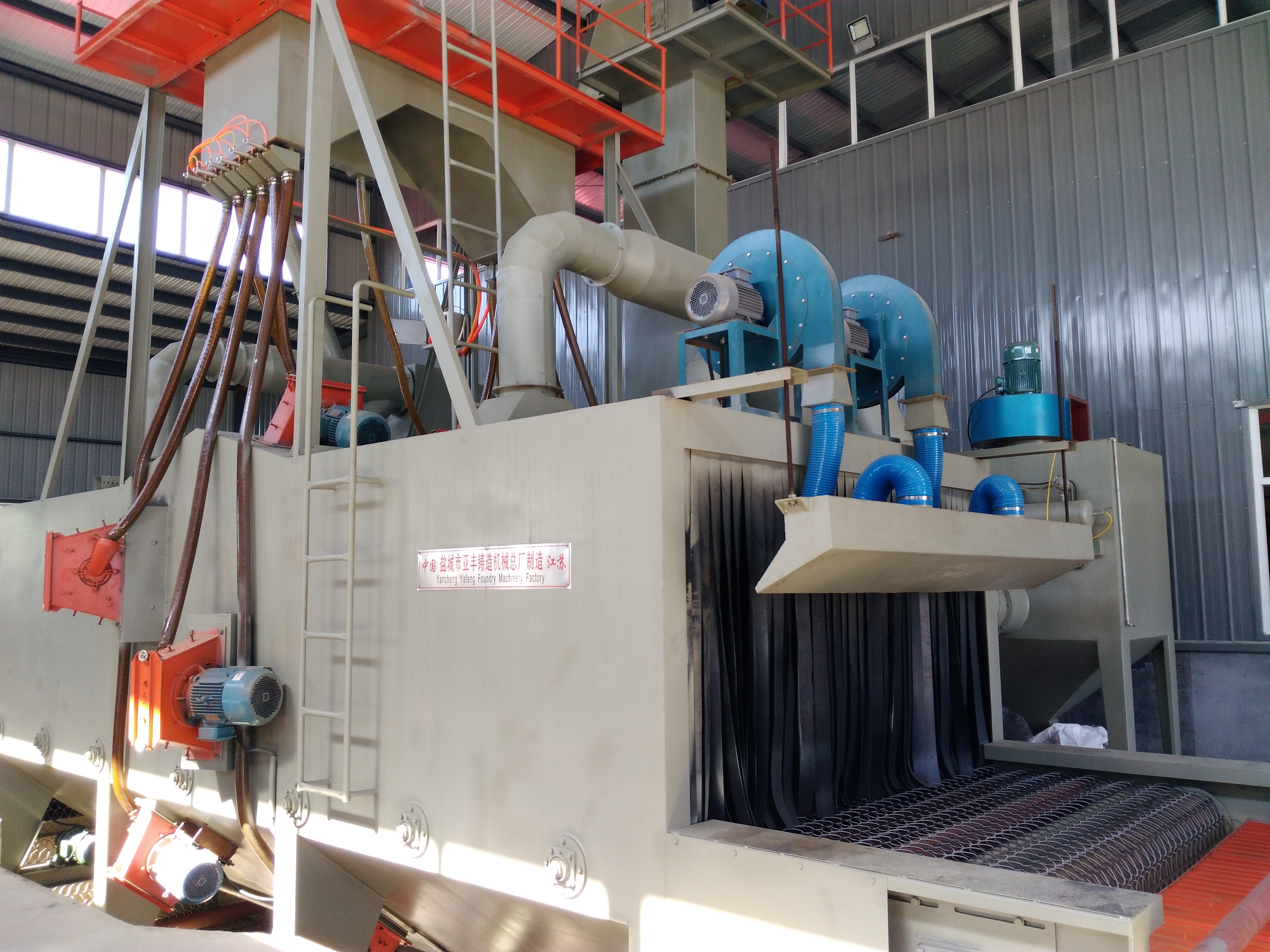 LDK manufacturing base — steel fabrication, surface treatment, and quality control for outdoor court systems.
Use Cases: Ranked Systems in Operation
Chile — 16-unit outdoor padel court club
In Chile, an automotive OEM client deployed the product for a padel court club, with 16 units installed. The installation has operated stably for 3 years, demonstrating durability and low maintenance requirements for year-round use. The client's own assessment was that the venue is highly durable, requires almost no maintenance, and can be used throughout the year. For outdoor club operators, the relevance of this record is the length of stable operation combined with the low-maintenance outcome — the two variables that determine whether an outdoor venue stays profitable after the novelty period.
Bangladesh — 70-court deployment
In Bangladesh, an automotive ODM client utilised the product for the construction of 70 padel courts. The project has been stable for 3 years and holds international FIP and CE certifications for quality and safety. A 70-court programme is a useful reference for outdoor clubs because it demonstrates repeatable production and consistent specification across units rather than a single bespoke installation.
Coastal and typhoon-exposed clubs
For sites where wind loading is the governing constraint, the RF01's Level 10–13 typhoon wind resistance, 150×200×4mm hot-galvanized corner columns, and 70–80μm epoxy powder coating form the specification set to quote against. The 750g/m² double PVC-coated PVDF roof fabric with a stated 10–15 year service life addresses the second failure mode on coastal sites: roof replacement cost.
Retrofit and renewal clubs
Clubs that already operate open-air courts can use LDK1231625.4-ST3 as a renewal specification. Because the parameters are fixed (12mm pile, 9000 Dtex, 3/16\" gauge, 58,800 stitches/m² ±10%), quotes from different contractors can be compared on identical technical terms.
Certification and Compliance Evidence
Certification is where outdoor club procurement most often meets a documentation gap. The following certificates apply to LDK's padel court systems.
- Glass Test Report — AS 2208:2023+A1:2024. Certificate number GZIN2602000283CM01_EN, issued 25 February 2026 by SGS-CSTC Standards Technical Services Co. Ltd. Guangzhou Branch, for the Australia / New Zealand market. The scope covers the glass used on the LDK-PD01 padel court.
- Verification of Conformity — EN ISO 12100:2010. Certificate number CTGS250305116EC, issued 13 March 2025 by Jiangxi CTGS Testing Service Co., LTD, for the European Union. It applies to the LDK-PD01 padel court.
- Company-level certifications. LDK holds ISO 9001, ISO 45001, and ISO 14001, among others.
- Project-level certification. The Bangladesh 70-court project holds international FIP and CE certifications for quality and safety.
The same 12mm, 1990×2980mm tempered safety glass specification used on the LDK-PD01 also forms the 18-panel enclosure of the LDK-PADEL-RF01.
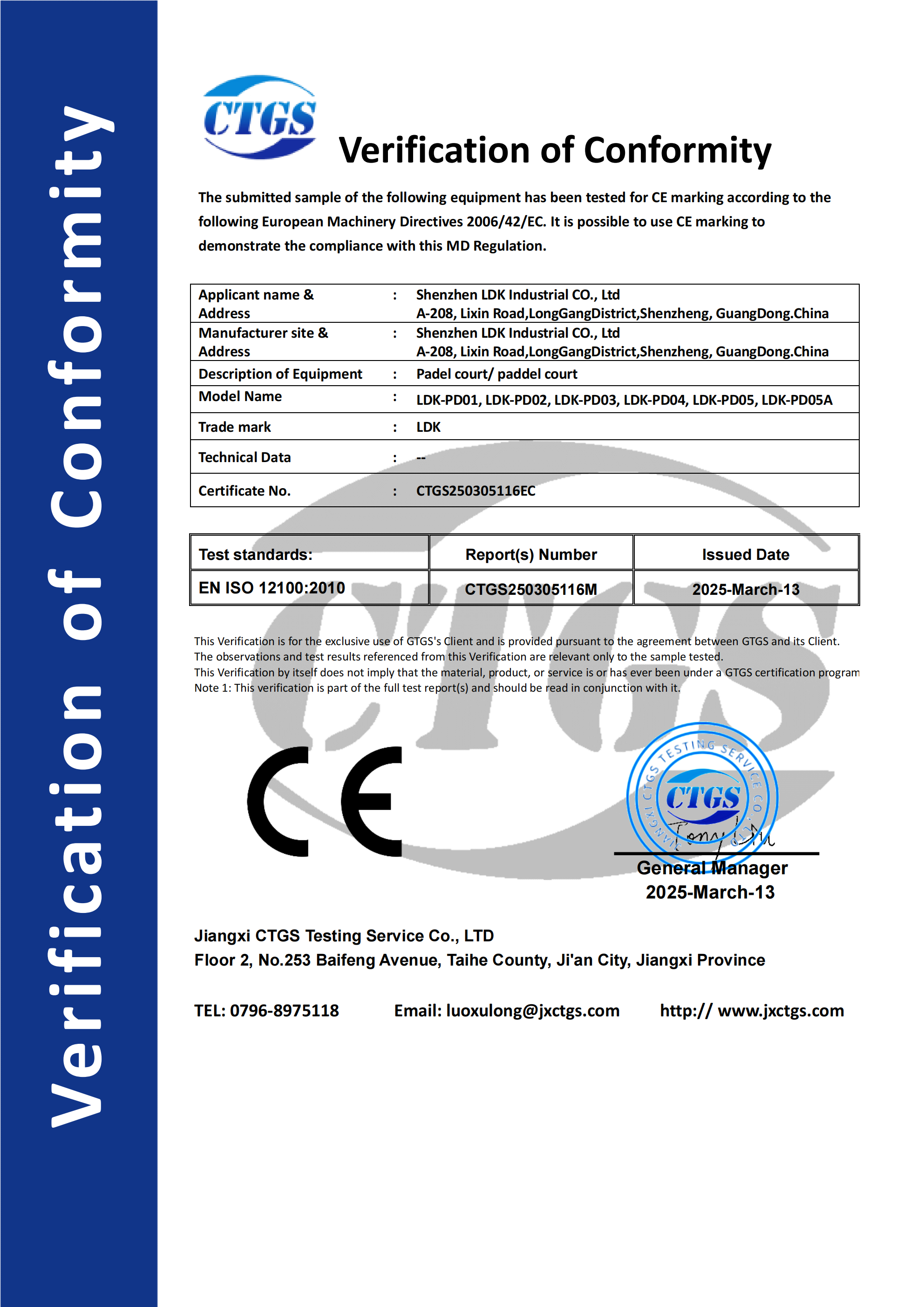 Verification of Conformity, certificate CTGS250305116EC (EN ISO 12100:2010), issued for the European Union.
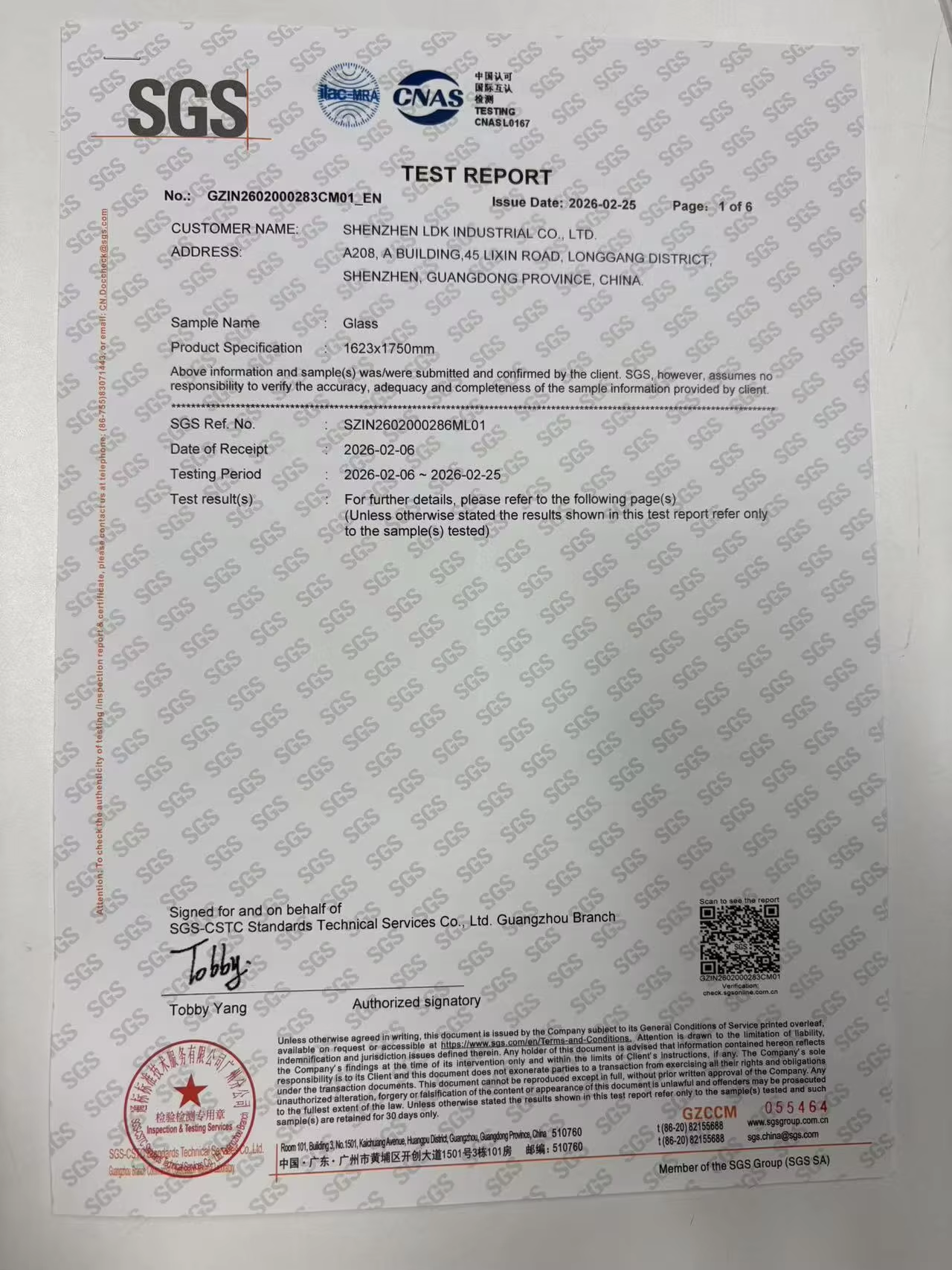 Glass Test Report GZIN2602000283CM01_EN to AS 2208:2023+A1:2024, issued by SGS-CSTC Standards Technical Services Co. Ltd. Guangzhou Branch.
Frequently Asked Questions
The 12mm tempered safety glass used in LDK court enclosures is covered by a Glass Test Report to AS 2208:2023+A1:2024, certificate number GZIN2602000283CM01_EN, issued on 25 February 2026 by SGS-CSTC Standards Technical Services Co. Ltd. Guangzhou Branch for the Australia / New Zealand market. The LDK-PD01 padel court also holds a Verification of Conformity, certificate CTGS250305116EC, issued on 13 March 2025 by Jiangxi CTGS Testing Service Co., LTD under EN ISO 12100:2010 for the European Union. At company level, LDK holds ISO 9001, ISO 45001, and ISO 14001, among others.
The LDK-PADEL-RF01 panoramic covered court is specified for wind resistance of Level 10–13 typhoon. Its structure uses 8 corner columns of 150×200×4mm hot-galvanized steel tube, 12 middle columns of 100×50×3mm steel tube, Φ102/Φ89/Φ40×3mm hot-galvanized beams, and high-strength bolt connections, with hot-dip galvanizing plus electrostatic epoxy powder coating at 70–80μm. The roof uses 750g/m² double PVC-coated PVDF fabric with a stated service life of 10–15 years, and the court dimensions are 20m × 10m with eaves at 7m and a ridge at 9.2m.
Cost is driven by configuration rather than a single list figure. The variables that move an outdoor project are the enclosure glass specification (12mm ultra-clear tempered safety glass), the steel structure and its surface treatment (hot-dip galvanizing plus 70–80μm electrostatic epoxy powder coating on the RF01), the roof fabric specification (750g/m² double PVC-coated PVDF with a 10–15 year stated service life), and the surfacing specification (12mm pile with 63,000 tufts/m² on the RF01 grass, or 58,800 stitches/m² ±10% on LDK1231625.4-ST3). Commercial terms are FOB, CIF, or DDP, with a minimum order quantity of 1 unit and a 50/50 payment structure.
Yes. LDK's minimum order quantity is 1 unit, so a club or its contractor can install a single court as a validation unit before committing to a full rollout. Acceptance is based on pre-shipment testing, and quality control includes 100% testing of products. After-sales support is provided with a 1–5 year warranty. LDK also offers OEM and ODM production services and customization covering court size, colour, logo printing, surface material, fencing design, and lighting configuration.
Typical production lead time is 30–45 days, with a monthly production capacity of 200 units. LDK operates a 50,000 m² manufacturing base with a 17-engineer R&D team and approximately 107 staff, and annual production capacity reaches 223,750 sets across its product lines. Export markets cover worldwide. To map a ranked system onto your site conditions, send your dimensions, wind exposure, and court count to anna@ldkchina.com or reach the team on phone or WhatsApp at +86-15219504797.
Conclusion: Match the System to the Site, Not the Catalogue
The five systems ranked above are not alternatives competing for the same project. They are answers to five different site conditions. A coastal club exposed to typhoon-level wind should be evaluating the LDK-PADEL-RF01 on its Level 10–13 wind resistance, 7m eave, 9.2m ridge, and 750g/m² PVDF roof with a 10–15 year stated service life. A warm-climate open-air club should be comparing the LDK-PD01 on 12mm ultra-clear tempered glass with a certified 1 in 10,000 spontaneous breakage rate and 4m-high corner posts. Clubs that want a documented, brandable surface should pair that enclosure with LDK1231625.4-ST3 grass, and clubs with sound structures and tired surfaces should treat ST3 as a renewal specification rather than a rebuild.
What separates an outdoor club court from an indoor one is that outdoor specification errors are exposed every season. Wind, rain, UV, and daylight do not negotiate. The ranking framework above exists so that the specification conversation happens before the quotation, not after the first storm.
Next Step: Request a Configuration Review
Send your site conditions — court count, climate exposure, and whether a roof is required — and LDK will map them to the appropriate ranked system. Minimum order quantity is 1 unit, lead time is typically 30–45 days, and delivery is available on FOB, CIF, or DDP terms.
Email: anna@ldkchina.com | Phone / WhatsApp: +86-15219504797 | Website: www.ldkchina.com
Download the full product catalogue and specification sheets: LDK Product Catalogue (PDF)
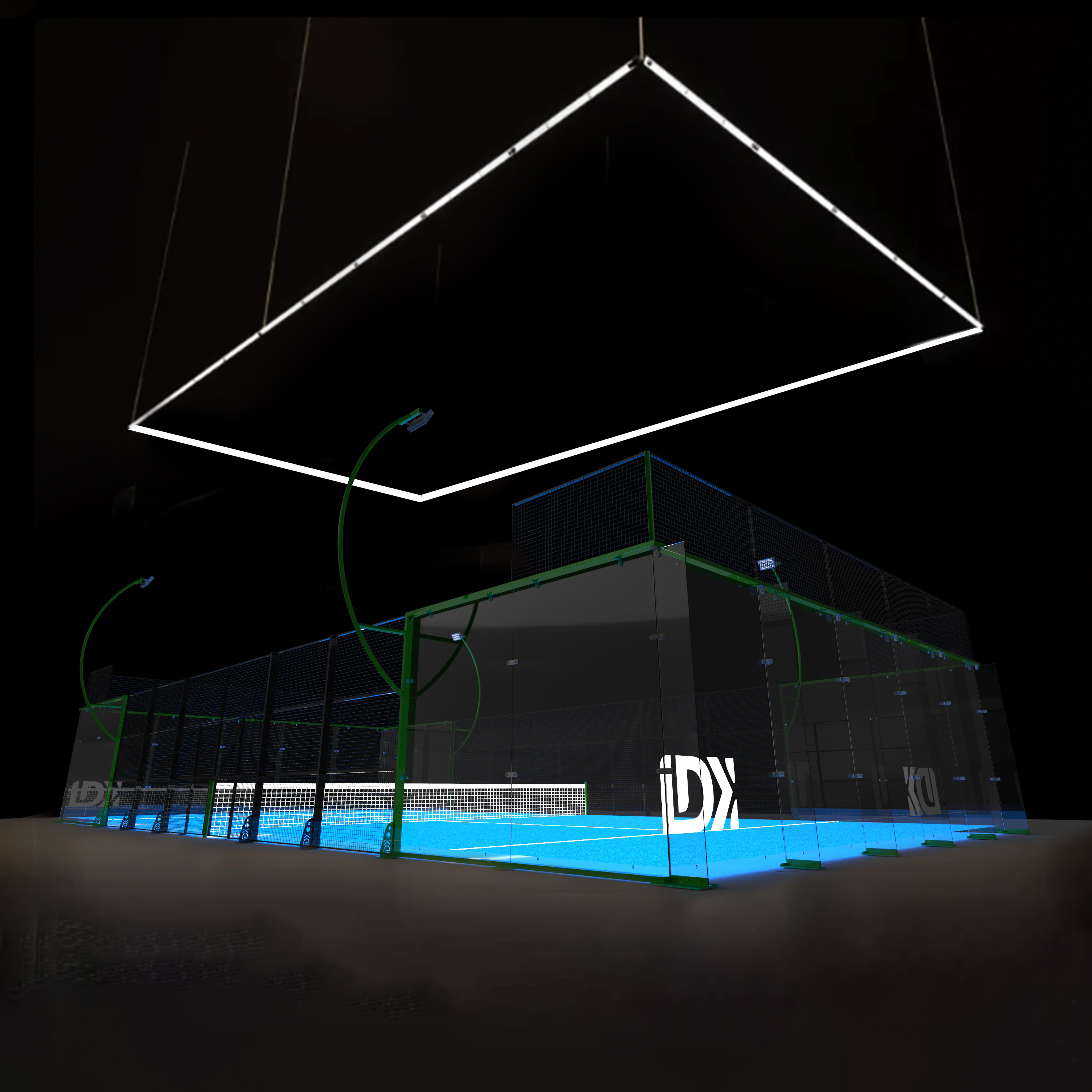 LDK panoramic padel tennis court — available for configuration review, sample validation, and multi-court club rollout.