
A Homeowner’s Technical Guide to Window Cleaning Robot Specifications: Water Feed vs. Edge Sensors
Two groups of specifications decide whether a window cleaning robot actually works on your glass: how it feeds water onto the surface, and how its edge sensors decide where the window ends. Water feed controls how dirt is loosened and how evenly the pad glides across the pane. Edge sensing controls whether the robot holds a steady path up to the frame, or stops safely short of an open glass edge. Almost everything else on a product page is a supporting detail.
This guide explains those two specification families in plain language, then shows how they behave differently on framed windows and on frameless glass. It is written for homeowners comparing models, and it deliberately avoids unit-by-unit numbers: on most listings those numbers are missing anyway, and it is the behaviour behind them — not the digits — that determines the cleaning result.
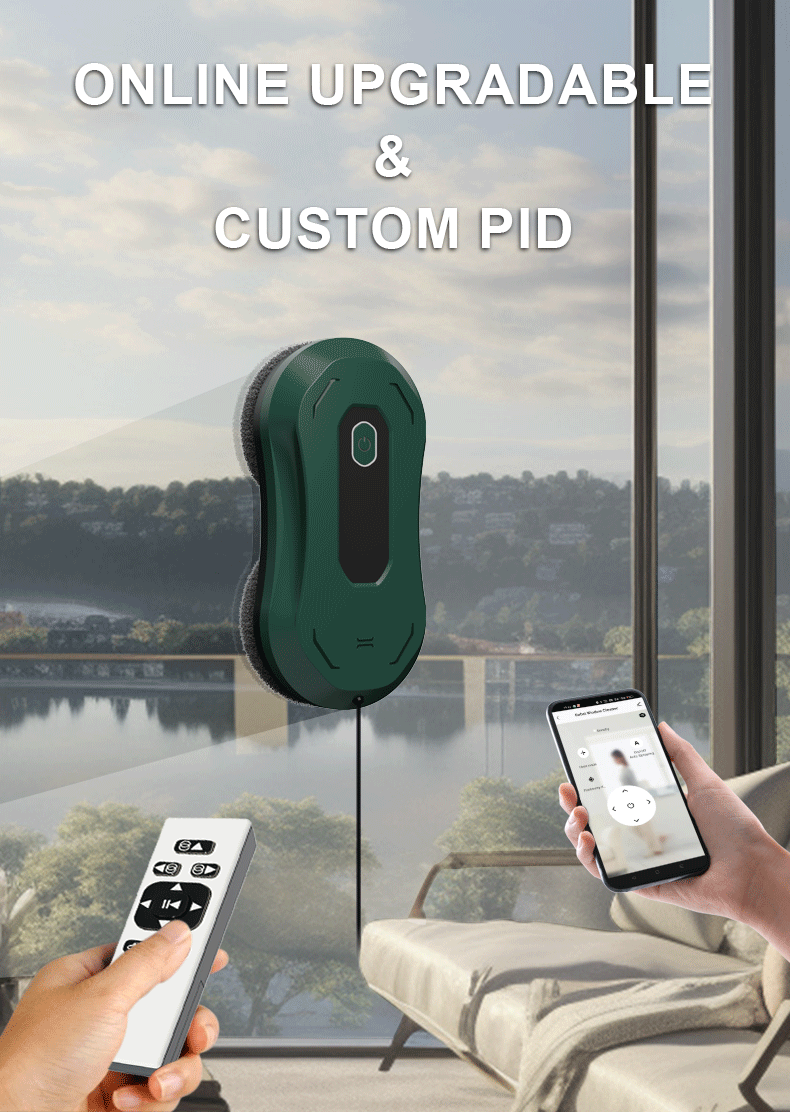
The Problem: One Specification List, Many Types of Window
Window cleaning robots are usually described with the same short list of parameters, whether the device will be used on a small framed bathroom window or on a floor-to-ceiling frameless glass wall. Listings mention spray nozzles, sensor arrays, safety tethering and battery cycles, but they rarely say which of those parameters will change what you actually see on the glass.
The result is predictable. Two buyers read the same page — one owns framed sliding windows, one owns frameless balcony glazing — and only one of them ends up satisfied with the purchase.
Three questions decide the outcome, and none of them is answered by a single figure:
- How does water reach the glass, and how evenly is it spread?
- How does the robot know where the glass ends?
- What keeps the robot on the glass if something goes wrong mid-cycle?
Everything else — display panels, app control, chassis styling — is a convenience layer sitting on top of those three.
The distinction that changes priorities most is frame type. A framed window has a visible sash or surround in aluminium, uPVC, wood or similar material, so the robot can treat that frame as a physical stop and even as a guide rail. A frameless window — structural glazing, frameless balcony panels, some shopfront-style installations — offers no such stop, so the boundary has to be identified by sensors and software logic instead.
Industry Background: Why These Two Specifications Come First
The window cleaning robot category grew out of two older tools: the hand squeegee and the spray bottle. The first robotic devices simply automated the wiping motion while the human still did the wetting. As vacuum adhesion and small onboard pumps became common, water delivery and edge logic moved inside the device, and those two systems became the specification groups that genuinely separate one product from another.
Manufacturers tend to describe these systems in general capability terms rather than fixed numbers, because the outcome depends on the window, the cleaning pad, the humidity and how soiled the glass is. A robot that performs well on a lightly dusty interior pane may behave differently on exterior glass exposed to pollen, road dust or hard-water spotting. Specification language is deliberately broad for that reason, and homeowners should read it as a description of behaviour rather than a laboratory measurement.
Lincinco — formally Dongguan Lingxin Intelligent Technology Co., Ltd. — is a smart cleaning robot manufacturer founded in 2018 that designs, develops, produces and sells robot vacuums, wet-dry vacuums, window cleaning robots, pool cleaning robots, hair dryers and lawn mowers. Its window cleaning robots, pool cleaning robots, hair dryers and lawn mowers are produced at the Hengyang, Hunan facility, which covers more than 25,000 square metres, while its 50,000 square metre Dongguan base focuses on robot vacuums and wet-dry vacuums. Across the product images for the window cleaning line, the visible hardware spans dual-spray and four-nozzle designs, round and square chassis shapes, and models with an integrated display.
That background matters to a homeowner for one reason: the vocabulary used in this category is a manufacturer’s vocabulary. Translating it into “what happens on my windows” is the buyer’s job — and it becomes a short job once the two core systems are clear.
The Detailed Solution: How Water Feed and Edge Sensing Work
Water Feed: Three Ways Water Reaches the Glass
Water in a window cleaning robot has three jobs: to dissolve the film that bonds dust to the glass, to carry particles away from the surface, and to reduce friction so the cleaning pad glides and the drive system does not skip.
- Manual pre-spray. The glass is wetted by hand before the robot starts. This is simple and effective when the robot carries no reservoir of its own; the trade-off is that a person must be present at the start of every cycle.
- Onboard reservoir with pump-fed nozzles. The robot carries water and sprays as it travels. Coverage depends on how many nozzles there are and where they sit — a dual-spray layout generally wets a wider band per pass than a single-nozzle layout.
- Hybrid. A small onboard reservoir supplements a light pre-spray when the glass is heavily soiled.
More water is not automatically better. Excess water on a framed window can pool along the frame and run onto the sill; on a frameless panel it can continue down the glass and drip below the panel. A controlled mist generally dries faster and leaves fewer streaks than a heavy spray, and it also reduces the number of passes the robot needs to finish the pane.
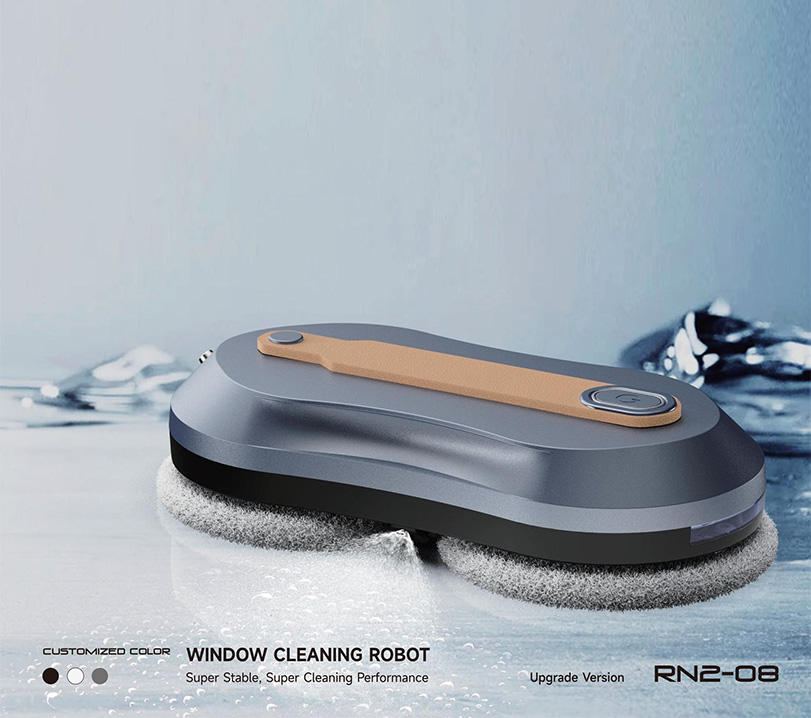
Edge Sensors: What the Array Is Actually Measuring
Edge sensing answers one question: where is the boundary of the glass?
On a framed window, the frame itself is the boundary. A contact sensor or bumper can confirm that the robot has arrived, and the frame can act as a guide rail that the robot’s path follows.
On a frameless window there is no guide rail. The robot has to detect the edge of the glass optically, or through a combination of detection methods, and the software has to decide how close to that edge it is willing to work.
“Sensor array coverage” describes how many detection points the robot has and where they sit — front edge, corners, sides. Wider coverage generally means steadier boundary behaviour, because the robot has more than one confirmation before it commits to a turn at the glass edge. Sensor cleanliness matters just as much: a water film, dust or a smear across a detection window can affect optical sensing, which is why routine pad and sensor cleaning is part of normal use rather than an optional extra.
Tethering Mode: The Fall Protection Layer
Almost every window cleaning robot stays on the glass through vacuum adhesion, and almost every one pairs that adhesion with a safety tether anchored indoors. The tether is a backup, not a cleaning feature, and it should be treated that way when a model is compared against another.
Two practical points about tethering mode:
- Slack management. A taut tether pulls on the robot and can distort the cleaning path. The anchor point should be positioned so the line stays slack through the full travel of the device.
- Backup suction. Some designs include a backup battery that keeps the vacuum running briefly if mains power is interrupted mid-cycle. On high or hard-to-reach glass, this is the specification worth confirming before purchase.
Battery Cycling: Runtime, Charging and Storage
Battery specification is normally given as runtime and charging time, and both are affected by how the robot is used. A robot that sprays continuously draws more power than one wiping a lightly damped surface, and low temperatures reduce usable capacity in most lithium-ion designs.
For household use, the practical rules stay simple:
- Charge fully before a cleaning session rather than topping up mid-cycle.
- Do not store the robot for months at complete discharge — that is the fastest way to shorten battery life.
- Expect gradual capacity loss across charge cycles, the same pattern as any other rechargeable smart home device.
- For a handful of windows, battery runtime is rarely the limiting factor; water capacity and pad condition usually run out first. Runtime becomes a real specification only for large glass areas or multi-room sessions.
Framed vs. Frameless: How the Two Specifications Interact
On framed windows, water feed tends to matter more than sensor sophistication. The frame already provides the boundary, so attention belongs on spray coverage, water control and how the pad handles the corners where two frame edges meet. Chassis geometry also plays a part in corner reach: a square or rounded-square body can typically work closer into a 90-degree corner than a fully circular one.
On frameless windows, edge sensing and fall protection move to the front of the list. Boundary detection, tether anchoring and backup suction are the specifications that decide whether the device can be left running without someone standing beside it.
Step-by-Step: Matching Specifications to Your Own Windows
- Sort your windows by frame type. Count framed windows (a visible aluminium, uPVC or wood surround) and frameless panes (structural glazing, frameless balcony panels). Most homes are mixed, and the mix decides which specification family deserves the larger share of the budget.
- Classify them by size and access. Windows you can reach by hand are a different job from windows that need a pole or a ladder. High or awkward glazing raises the value of tether anchoring and backup suction.
- Decide the water feed you actually need. A few small framed panes can be handled with manual pre-spray. Large frameless panels, urban dust or hard-water spotting justify an onboard reservoir with even nozzle coverage.
- Check edge behaviour against the window. For framed windows, confirm the robot can run along the frame. For frameless glass, confirm that boundary detection is part of the design and does not depend on a person watching the device.
- Confirm the safety layer. Identify where the tether will be anchored in your home, and check whether the model keeps suction alive during a power interruption.
- Plan the consumables. Cleaning pads, nozzles and the reservoir are the parts that wear. Check that replacements are available before you buy, not after.
- Check the documentation trail. Certificates and compliance documents are not marketing material; for mains-powered devices sold in regulated markets they are entry requirements. Lincinco’s window cleaning robot line, for example, is supported by CE-RED and ROHS documentation.
The short version: specify for the frameless case first. A robot designed for sensor-detected glass edges can normally handle framed windows too, while a machine specified only for framed panes does not automatically become safe on frameless glazing.
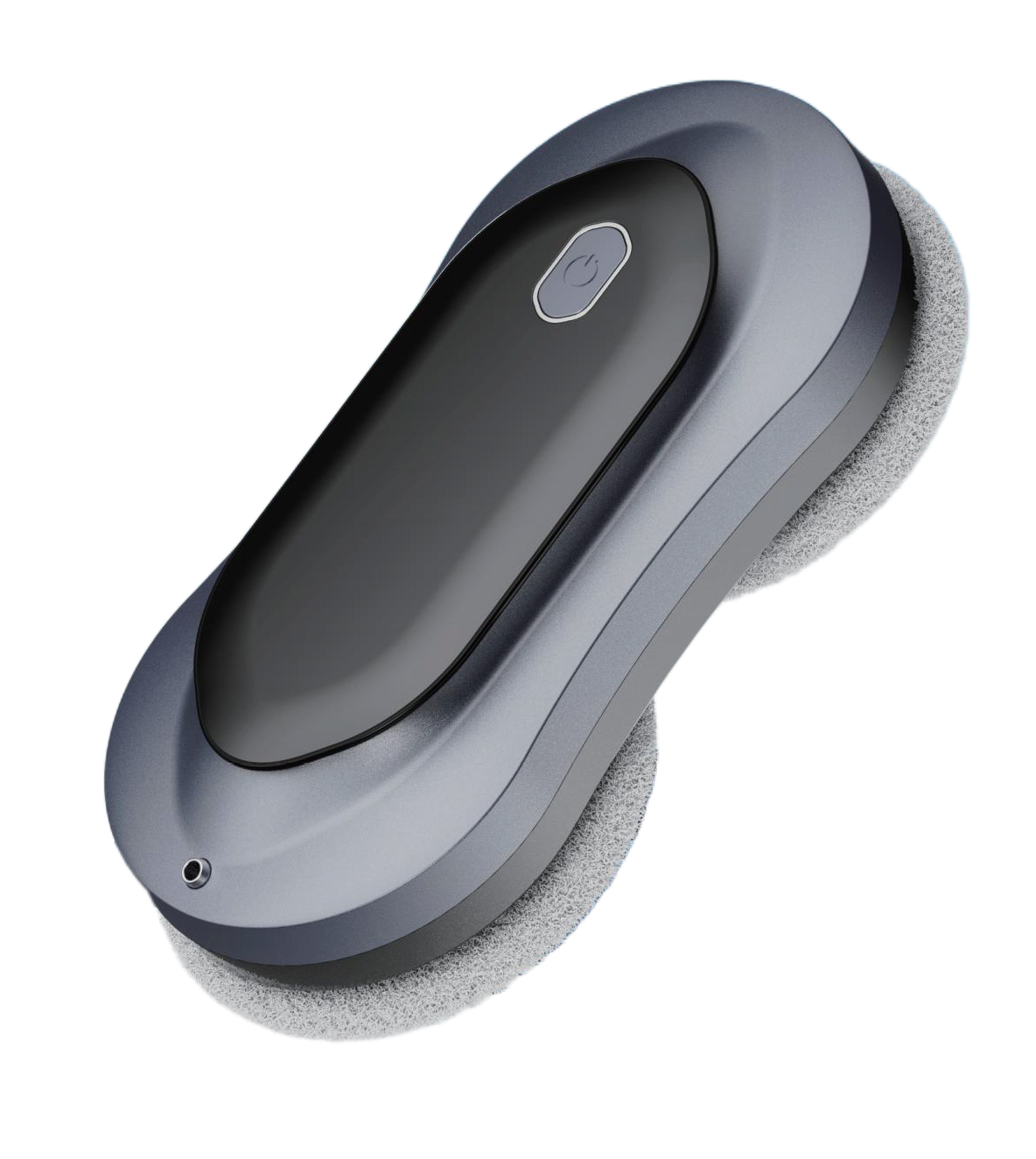
Use Cases: Five Window Situations and What Each One Demands
1. Framed sliding windows in apartments. The frame does most of the boundary work, so water control and pad condition dominate the result. An onboard spray system reduces the number of times a cycle has to be restarted by hand.
2. Frameless balcony glazing. No frame, no guide rail. Edge sensing, tether slack and backup suction are the specifications that keep an unattended session safe.
3. Floor-to-ceiling living-room glass. Large surface area makes water capacity and battery routine the practical limits, and a display panel helps a homeowner monitor the session instead of guessing when the pad has dried out.
4. Exterior glass in dusty or hard-water areas. Film removal matters more than sensor count. A controlled mist plus more frequent pad cleaning usually outperforms a heavier spray, because the pad — not the water volume — is what lifts the film off the glass.
5. Mixed homes with both frame types. Prioritise the frameless glass when choosing, then let the same machine cover the framed windows.
For brand owners and distributors evaluating the same category, the checklist shifts in emphasis: spray configuration, chassis options, documentation readiness and production capacity become the deciding factors rather than domestic convenience.
Comparison Table: Water Feed vs. Edge Sensing at a Glance
| Specification group | What it controls | Framed windows | Frameless windows |
|---|---|---|---|
| Water feed (onboard spray) | How evenly water reaches the glass and how quickly it dries | Reduces manual pre-spray and helps on wide sashes | Useful on large panels; over-spray can run below the glass |
| Nozzle configuration and coverage | The width of the wetted band per pass | Dual-spray and four-nozzle layouts cover wider bands than a single nozzle | Even coverage reduces the number of passes and the risk of dry patches |
| Edge / boundary sensing | How the robot identifies the end of the glass | The frame acts as a physical stop; contact sensing confirms arrival | The boundary must be detected by sensors and software; coverage and clean sensors matter most |
| Tethering and backup suction | Whether the robot stays on the glass if something goes wrong | Standard precaution | Essential; anchor placement and backup suction should be confirmed before purchase |
| Battery cycling | Runtime per session and long-term battery life | A limited number of windows per charge is rarely a constraint | Large glass areas make runtime and charging routine a real specification |
| Chassis geometry | How close the pad reaches into corners and along edges | Square or rounded-square bodies reach closer into 90-degree corners | Shape influences path planning at the glass edge |
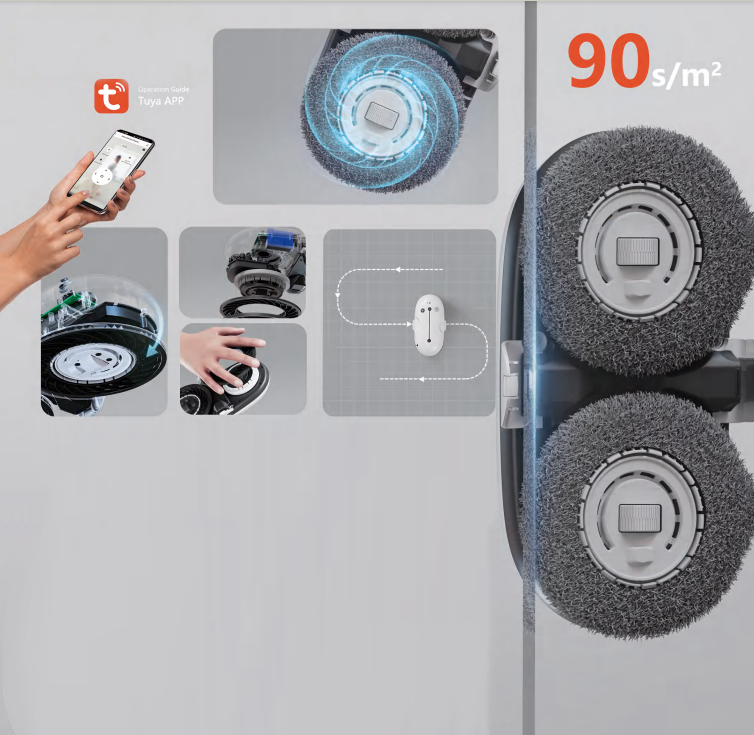
Frequently Asked Questions
Do window cleaning robots need certification documents for home use?
For a mains-powered device, market-entry documentation matters even for a single household purchase, because it is what allows the product to be legally sold in that market in the first place, and it is usually what a warranty claim depends on. The relevant documents differ by region. Lincinco’s window cleaning robot line is supported by CE-RED and ROHS documentation, and the current certificate set can be requested directly from the manufacturer. If you are buying through a distributor or setting up a retail programme, ask for the certificate files rather than a logo printed on the box — the file itself and the scope it covers are what a compliance team will actually check.
Which specification matters more — water feed or edge sensors?
It depends on the window. On framed windows the frame supplies the physical boundary, so water feed usually determines the visible result and spray coverage deserves the attention. On frameless glass there is no frame to stop the robot, so edge sensing, tether anchoring and backup suction become the specifications that decide whether the device can run unattended. In a home with both types of glazing, specify for the frameless case and let the framed windows follow.
What actually drives the price difference between basic and feature-rich window cleaning robots?
Feature cost concentrates in four areas: the water system (reservoir, pump and nozzle count), the sensing system (how many detection points the robot has and where they sit), the safety system (backup suction and tether hardware), and the control layer (display, connectivity and path logic). A basic model with manual pre-spray and simple boundary detection covers framed windows in a small apartment. A model with onboard spray, wider sensor coverage and backup suction earns its cost on large frameless glazing. Matching the specification to the window is normally cheaper than buying the top configuration for glass that never needed it.
Can a sample be evaluated before committing to a larger order?
Yes. For distributors, brand owners and importers, Lincinco provides sample units so that spray behaviour, boundary handling and build quality can be tested on real windows before a programme is placed. Sample requests are handled through the company’s normal channels: www.cleverobot.com, molly@cleverobot.com, or WhatsApp +86 13424841625.
What production capacity and lead-time assumptions should a buyer plan around?
Lincinco operates two production bases — Dongguan, covering 50,000 square metres and focused on robot vacuums and wet-dry vacuums, and Hengyang in Hunan, covering more than 25,000 square metres and producing window cleaning robots, pool cleaning robots, hair dryers and lawn mowers. Together the two plants employ more than 600 people and are equipped with independent mold rooms, hundreds of injection molding machines and standardized production lines, with an annual production capacity that can reach 5 million units per year. That capacity indicates what the factory can absorb; the actual lead time for a specific order still depends on model, customisation scope and order volume, so it should always be confirmed in writing before a launch date is fixed.
Conclusion: Specify the Window, Not the Brochure
Water feed and edge sensing are the two specification groups that decide real-world performance on home glazing. Water feed governs how dirt is loosened, how evenly the pad glides and how quickly the pane dries. Edge sensing governs whether the robot understands the boundary of the glass — a physical frame on one window, a sensor-detected edge on another. Nozzle counts, display panels and app features are refinements layered on top of those two foundations, and they are worth paying for only when the window in front of you needs them.
The decision rule is short. On framed glass, follow the water system. On frameless glass, follow the sensing and safety system. If your home has both, choose for the frameless panes.

Need specifications you can actually test on real glass?
Lincinco (Dongguan Lingxin Intelligent Technology Co., Ltd.) designs and manufactures smart cleaning robots and supplies window cleaning robots for OEM and ODM programmes. If you are a homeowner, the specification checklist above is yours to take to any brand. If you are a brand owner, importer or distributor evaluating the category, request a sample unit or the current specification and certification set and validate the water feed and edge behaviour on the windows that matter to your market.
Website: www.cleverobot.com | Email: molly@cleverobot.com | Mobile / WhatsApp: +86 13424841625
Have Questions or Need More Details?
Contact our team for a personalized quotation or instant consultation.
Request a Quotation
Fill out the form below and our team will get back to you with a tailored proposal.
WhatsApp Direct Chat
Prefer to chat in real-time? Message us on WhatsApp for instant assistance & quick answers.
- Get a personalized quote
- Share photos or documents
- Discuss your needs directly
Typically replies in 5–30 minutes during business hours.