
Round vs. Square Window Cleaning Robots: An OEM Decision Guide
Round versus square is the first effectively irreversible decision in a window cleaning robot OEM program, and it is usually made before anyone measures a pane of glass. The short answer: a square chassis wins on corner coverage and on cleaned area per pass across rectangular glazing; a round chassis wins on seal continuity, rotational navigation, and tooling simplicity. The correct choice is the one that matches the geometry of the glass your brand will actually be sold against.
Lincinco is the brand of Dongguan Lingxin Intelligent Technology Co., Ltd., a smart cleaning robot manufacturer founded in 2018 with production bases in Dongguan, Guangdong and Hengyang, Hunan, China. Its window cleaning robot platform is built on a square chassis, with models that include F19-02, RN2-06, RN2-08, LS26, RN2-03, RO3 and HCR10. That makes the round-versus-square question practical rather than academic: a brand owner comparing form factors needs to know what a square platform buys, what it costs, and in which programs a round design would have been the better decision.
One-line decision rule: match chassis geometry to the corner radius, frame depth and gap clearance of the target glazing first; then confirm that the seal and drop-protection architecture can be validated before the mold is cut.
Why Chassis Geometry Is a One-Way Decision
Form factor is cheap to debate at concept stage and expensive to change after tooling. A chassis decision propagates into at least six downstream items, and each of them carries its own lead time.
- Mold and tooling. The housing mold, the seal channel and the corner radii are cut for one geometry only.
- Consumables. The cleaning pad die and its cutting yield are geometry-specific.
- Firmware. The navigation model, edge-turn logic and frame-detection thresholds are written around a body that either carries a heading or does not.
- Safety architecture. Tether anchoring, anti-drop sensor placement and battery-backup behavior are laid out inside the housing envelope.
- Compliance file. A geometry change alters edge detection and retention behavior, so re-verification has to be scheduled rather than assumed.
- Packaging and logistics. Carton dimensions, cushioning and container loading are set by the outer envelope.
An OEM program that switches chassis shape after tooling pays for a second mold, a second pad die, a firmware re-validation cycle and a compliance review before a single unit ships. That is why the shape question belongs in the first procurement meeting rather than the last one.
What the Category Data Says About Form Factor Competition
Demand is expanding fast enough that form factor has become a positioning decision rather than a niche preference. Grand View Research valued the global window cleaning robot market at USD 742.2 million in 2024 and projects a 24.5% CAGR through 2030. In China, the household window cleaning robot segment reached 1.14 billion yuan in 2024, a 35.7% increase year on year, according to the China Household Electrical Appliances Association and TechSci Research.
The supply side is concentrated. China's cleaning robot exports, including window cleaners, reached 7.75 billion yuan in the first quarter of 2024 and accounted for nearly 70% of the country's total robot exports, according to General Administration of Customs China data reported by China Daily. Asia Pacific is the leading regional market, with China and Japan as primary manufacturing hubs (TechSci Research). For an OEM buyer, that means the supplier base is deep and the differentiation battle is fought at design level — chassis geometry, seal strategy, edge behavior — rather than at category level.
One structural fact shapes that battle. Vacuum suction technology held the largest share of the category at approximately 52.3% in 2025 (Market Intelo). Once most of the market adheres by vacuum rather than by tracked or magnetic systems, the seal becomes the governing performance variable, and the seal is a direct function of chassis geometry. Round and square designs are therefore not cosmetic variants of the same machine; they are two different answers to the same physics problem.
Round vs. Square, Dimension by Dimension
1. Corner Reach and Edge Geometry
The area a robot cannot clean is the area its pad cannot press against. A square chassis with a square pad can place pad material into the corner of a rectangular pane, provided the pad overhang and the frame-detection tolerance are controlled tightly enough that the pad does not ride up the frame. A round chassis inscribes a circle inside the pane: the four corners fall outside the contact circle, and the uncleaned area scales with the chassis radius.
That gap is not automatically disqualifying. Round-platform designers can compensate with an offset pad element, a protruding edge feature or a corner-biased travel pattern, and those approaches can close most of the difference. The point that matters for an OEM is that whether they close it is a validation result measured on the actual glazing profile, not something the geometry promises. Any supplier claim about corner performance should be tied to a specific pane size, frame depth and corner radius.
Frame constraints can override the shape argument entirely. Where glazing sits in deep frames or is surrounded by narrow gaps, a low-profile body is a precondition. Lincinco's window cleaning robot platform is specified for façades with narrow gaps below 60 mm, an ultra-low-profile design under 60 mm, and a working range of 10 °C to 40 °C across indoor and outdoor glass surfaces, including high-rise windows.
2. Suction Stability and Seal Integrity
For a given enclosed footprint, a circle has the shortest possible perimeter. That single geometric fact explains most of the round chassis's structural advantage: less sealing line exposed to leakage, no corner where stress concentrates, and an even load distribution around the seal. A square seal has four straight runs, which are easy to control, and four corners, which are where a seal typically lifts first — at frame transitions, sealant beads and imperfectly flat glass. A square platform therefore usually needs a stiffer housing, a higher suction margin or a more compliant seal profile to reach the same retention confidence.
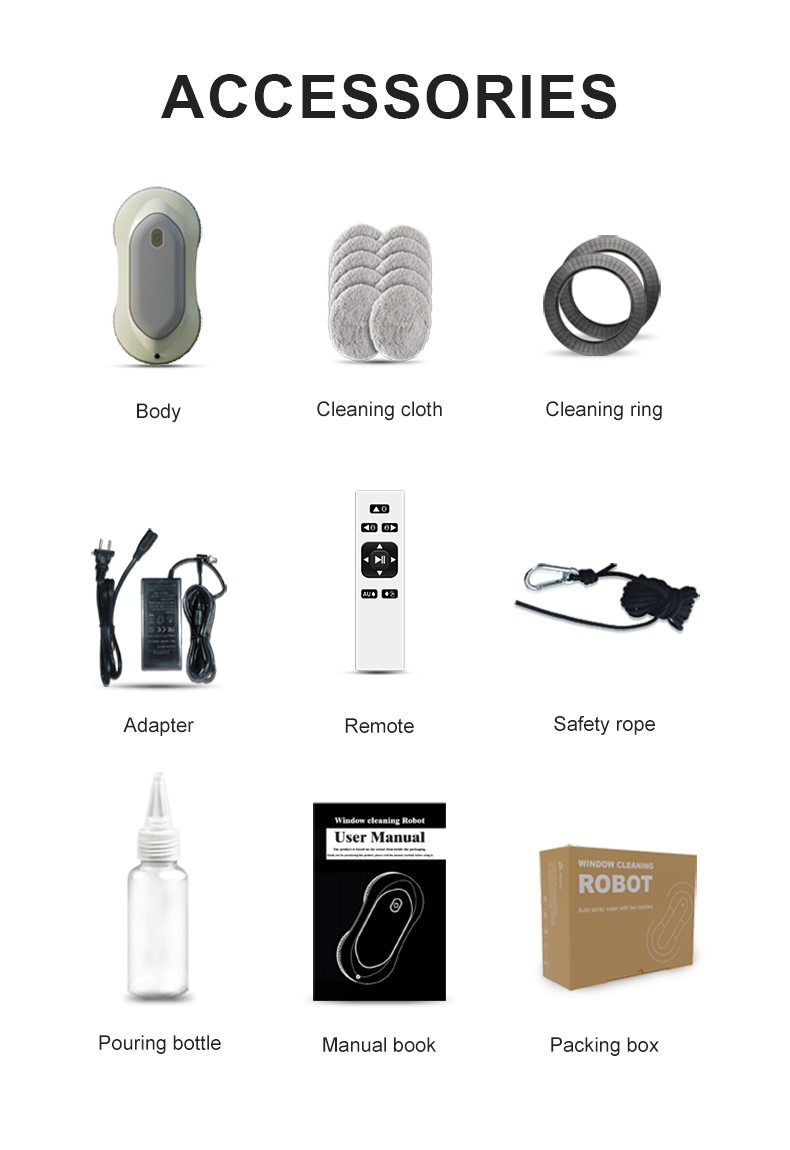
Seal behavior is also a safety question, not only a cleaning-quality one. IEC 63327 governs robotic cleaning machines internationally, and CSA 22.2 No. 336 covers the North American equivalent; both address how a robotic cleaning machine is required to remain attached and to fail in a controlled way. On the Lincinco square platform, retention is supported by a 3500Pa+ brushless-motor suction system in a high-strength ABS/PC engineering plastic housing, combined with anti-drop sensors, a high-tenacity safety tether and a 30-minute UPS battery backup that keeps the robot attached and able to report during a power interruption.
3. Navigation Layout and Path Planning
A square body has a heading. It must know its orientation relative to the frame, execute turns at the edges, and avoid stalling where two frame faces meet. Lincinco's platform manages this with smart path planning on Z- and N-shaped routes plus frame detection, at a working noise level of ≤65 dB and a cleaning speed of approximately 2.4 min/m².
A round body has no preferred heading, so in-place rotation and edge escape are kinematically simpler. What a round body does not remove is the need for frame detection: the coverage pattern still has to be planned against a rectangular pane, and the edge-search behavior still has to be tuned. Round simplifies one part of the navigation problem and leaves the rest intact.
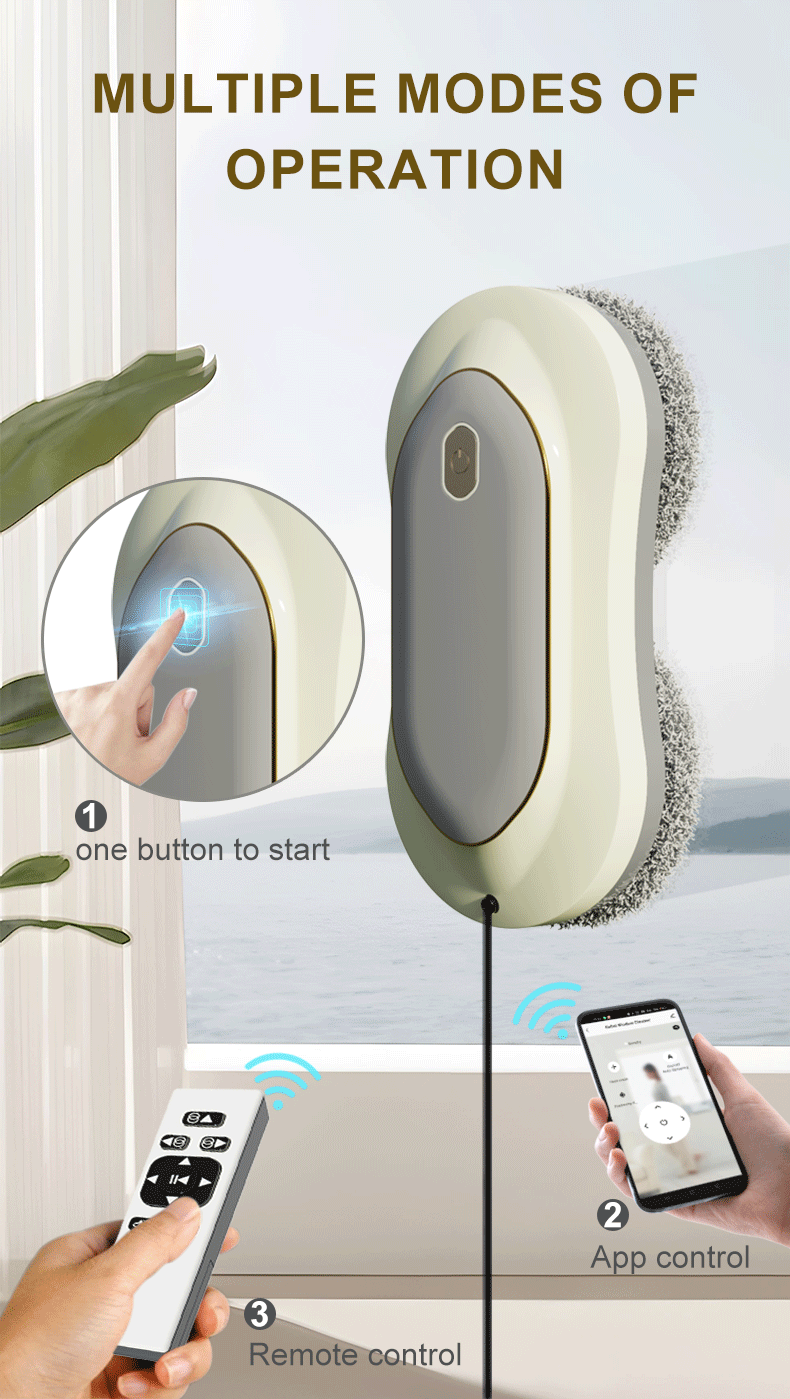
Firmware is where OEM differentiation is cheapest to add and hardest to reverse. The platform is remote-control and App-ready with Tuya/Smart Life support, and an external control interface via API/SDK is available as a customization item for brands that want their own app, a local cloud or integration into a wider smart-home ecosystem.
4. Target Market Fit
Residential smart home is the segment where corner performance is judged most directly. A homeowner watching a robot on a balcony door or a bedroom window sees the corners, and a missed corner reads as an incomplete product regardless of how well the rest of the pane was cleaned. That perceptual bias favors square geometry in retail-facing residential channels.
Commercial property management, office maintenance, hotel operations and professional window cleaning companies weigh the trade-off differently. Large panes with regular mullions reward throughput and predictable coverage, and a shape that reduces edge-stall events has operational value. Both form factors appear in these settings; the difference is which failure mode the buyer would rather manage — a missed corner strip or an edge-handling incident.
For distributors and white-label brands, shape is also a shelf decision. A square body reads as a pane-matching appliance; a round body reads as a compact rotational device. Neither read is wrong, but packaging, product photography and app UI all follow from it, and those costs land in the launch budget.
5. Manufacturing Trade-offs
Mold cost is not symmetrical. A square housing carries four corner features at controlled radii plus a seal channel that must follow four straight runs into four corners, which typically means more mold detail and tighter tolerance stacking. A round housing is simpler to tool but demands concentric seal geometry and a housing that stays round under molding stress.
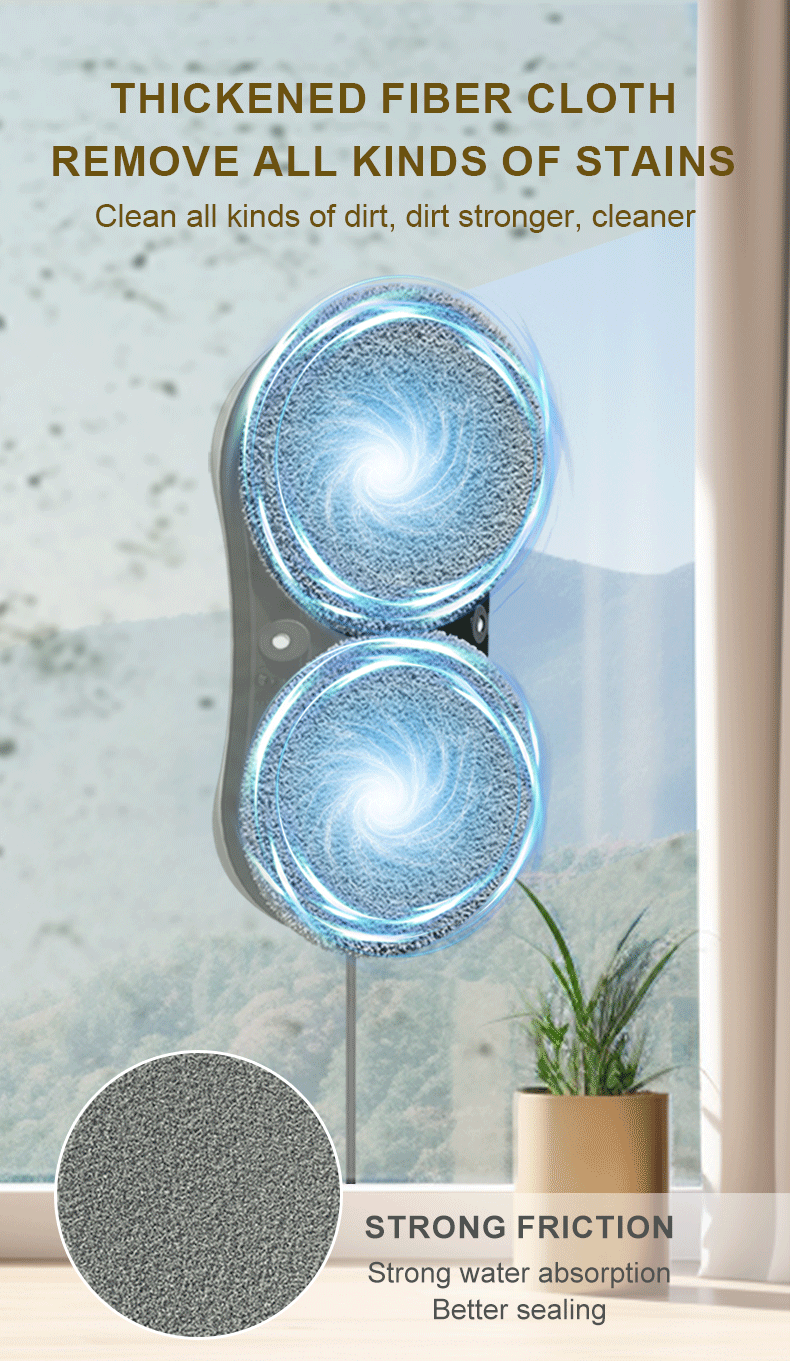
Consumables follow the same logic. Square pads nest from roll stock with rectangular cutting patterns; circular pads are die-cut and typically generate more trim waste per pad. Packaging runs the opposite way: square cartons fill a container more efficiently, while round units usually need more void fill and cushioning to survive transit intact.
Individually these are second-order costs, but they compound across a program. A supplier with existing tooling for one geometry can quote a lower entry cost than one starting from a blank mold — which is why the sourcing question and the design question should be answered together. Lincinco runs OEM/ODM production with a standard MOQ of 300 units, small-batch orders supported on selected models, a monthly capacity of over 250,000 window cleaning robots, and an overall annual production capacity of 5 million units across two production bases: a 50,000 m² facility in Dongguan and a facility of over 25,000 m² in Hengyang, staffed by 600+ employees with 65+ engineers. Production units pass a 100% pre-shipment test.
A Seven-Step Decision Sequence for OEM and Brand-Owner Teams
The sequence below front-loads the decisions that are expensive to reverse and defers the ones that are not.
- Inventory the glazing, not the market. Before comparing shapes, record pane dimensions, corner radius, frame depth, gap clearance, glass thickness and any film or coating on the target installations. Geometry that has not been measured cannot be specified.
- Write the corner requirement as an acceptance criterion. Express it as a measurable residual: how much uncleaned area at each corner is acceptable on your pane size. A criterion makes round and square comparable; a preference does not.
- Choose the seal and retention strategy against the applicable standard. Decide early whether the program will be verified against IEC 63327, CSA 22.2 No. 336 or the relevant market equivalent, and let that determine how much suction margin and seal compliance the chassis needs.
- Lock navigation and firmware before tooling. Confirm the route pattern, frame-detection approach, edge-turn behavior and app or cloud integration. Adding an API/SDK requirement later reopens the control board, not just the app.
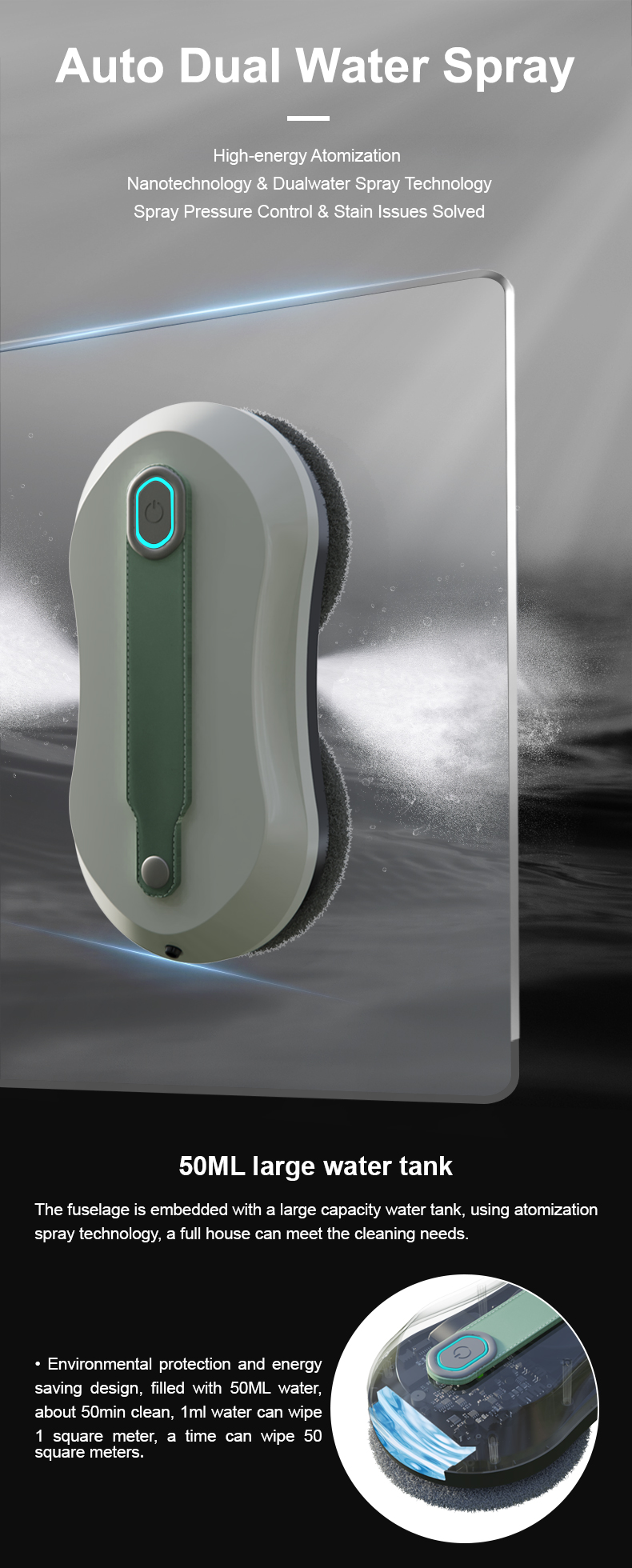
- Specify the water system and consumable together with the chassis. A dual-nozzle ultrasonic atomizing spray with constant moisture control behaves differently beneath a square pad than beneath a circular one, because leading-edge contact and dwell time differ. Fix the pad die at the same time as the chassis mold.
- Freeze the compliance file early. A chassis change alters drop-protection geometry, so plan re-verification inside the tooling timeline rather than treating it as a documentation update afterwards.
- Plan tooling, MOQ and ramp against real demand. Match the order model to the channel: pilot quantities for a new market, standard MOQ for a retail listing, and booked capacity ahead of a seasonal peak.
Where Each Form Factor Fits
Residential brand launching a retail range on rectangular glazing
Square geometry aligns with how a homeowner evaluates the result. Corners on balcony doors, bedroom windows and fixed living-room glazing are visible, and an edge-to-edge finish is the expectation the product is judged against. A square chassis with a controlled pad overhang gives the brand a defensible corner story, while a dual-nozzle atomizing spray and microfiber pad support the streak-free finish this channel sells on.
Facility or property management buying for high-rise glazing
Operational risk dominates here. Large panes with regular mullions reward predictable coverage, and the retention architecture — anti-drop sensors, safety tether, 30-minute UPS battery backup — carries more weight than the corner residual. A square platform reduces missed strips on wide panes; a round platform reduces edge-turn events. Both are valid; the buyer should decide which failure mode the cleaning team can absorb with the least disruption.
Regional distributor building a white-label line
Shape drives the sell sheet, the carton and the shelf presence. A distributor sourcing from an automatic window cleaning robot manufacturer should confirm that housing color, logo printing and packaging customization are available without a chassis change, because those are the levers that create local differentiation at the lowest cost. Housing design, localized app and packaging are all listed customization options on the Lincinco platform.
Smart-home ecosystem brand integrating cleaning into an app
For brands that treat the robot as one device inside a wider ecosystem, control-layer flexibility matters more than chassis shape. App-ready operation on Tuya/Smart Life plus an external control interface via API/SDK allows the device to sit inside a brand app or a property-management platform. Locking that requirement at concept stage avoids a control-board redesign after the chassis is tooled.
Round vs. Square Chassis: Comparison Table
| Decision dimension | Round chassis | Square chassis | What it means for an OEM program |
|---|---|---|---|
| Corner coverage | Contact circle inscribes inside the pane; corners fall outside unless an edge feature compensates | Pad can reach pane corners within frame-detection tolerance | Measure residual corner area on your own pane before committing to either shape |
| Seal geometry | Shortest perimeter for a given enclosed area; no corner stress points | Four straight runs plus four corners; corners lift first on uneven glass | Square programs typically need more suction margin or a stiffer housing to hold the same retention confidence |
| Retention and safety | Must satisfy the applicable standard for attachment and controlled failure | Lincinco square platform: 3500Pa+ brushless suction, anti-drop sensors, safety tether, 30-minute UPS backup | Budget verification against IEC 63327 or CSA 22.2 No. 336 before tooling, not after |
| Navigation | Heading-free; simple in-place rotation; frame detection still required | Orientation-aware; Z- and N-shaped routes with frame detection | Firmware cost sits with the geometry you choose and is hard to reverse later |
| Tooling | Simpler mold; concentric seal tolerance | Corner tooling with a tighter tolerance stack | Changing shape after tooling means a second mold and a second pad die |
| Consumables | Die-cut pads with typically higher trim waste | Rectangular nesting from roll stock | Pad cost recurs on every order; mold cost does not |
| Packaging and freight | More void fill and cushioning usually required | Better carton volume efficiency | Affects landed cost per unit at container scale |
| Residential fit | Compact, rotational product read | Pane-matching read; corners are what owners notice | Retail positioning and product photography follow the shape |
| Commercial and high-rise fit | Fewer edge-turn events | Fewer missed strips on wide panes | Choose the failure mode the operating team can absorb with least disruption |
The table compares geometry, not brands. Whatever shape a program selects, the platform-level customization available on the Lincinco square chassis — external control interface via API/SDK, battery capacity, housing color and design, logo printing, localized app on Smart Life or a custom app, and packaging — can be applied without changing the chassis itself. Programs already executed on this platform include 120,000 units for a top-tier global brand, 504 units per model for a national tender and volume orders of 50 units for regional pilots, under a standard one-year warranty that can be extended up to two years.
FAQ: Round vs. Square Window Cleaning Robot Decisions
What compliance requirements should be settled before we commit to a chassis shape?
IEC 63327 governs robotic cleaning machines internationally and CSA 22.2 No. 336 covers the North American equivalent. Because chassis geometry changes edge detection and drop-protection behavior, settle the target markets and the verification route before the mold is cut. On the hardware side, the retention architecture has to fit inside the chosen housing: the Lincinco square platform uses anti-drop sensors, a high-tenacity safety rope and a 30-minute UPS battery backup for exactly this purpose.
Can we customize a square-platform robot without changing the chassis?
Yes. Documented customization items on the Lincinco window cleaning robot platform include an external control interface via API/SDK, battery capacity, housing color and design, logo printing, a localized app on Smart Life or a custom app, and packaging. These run under an OEM/ODM model, so a brand can change the control layer, the appearance and the retail packaging while leaving the chassis geometry, seal design and safety architecture in their validated state.
What drives the cost difference between a round and a square program?
Four cost drivers dominate: mold detail and corner tolerance, pad die cost and trim waste, packaging volume and void fill, and re-verification cost if the shape changes late. Entry cost is lowest when the supplier already holds tooling for the selected geometry. On the Lincinco platform the standard MOQ is 300 units, selected models support small-batch orders, sample preparation takes approximately 5 days and mass production runs 25–35 days, which lets a brand price a pilot before committing to volume.
How long does a sample take, and what should we validate on it?
Sample preparation takes approximately 5 days. Validate five things on the physical sample: residual uncleaned area at each corner of your own pane size, seal behavior across frame transitions and sealant beads, working noise against the ≤65 dB specification, cleaning speed against the approximately 2.4 min/m² reference, and route pattern plus app pairing on the Tuya/Smart Life control layer. Also confirm tether anchoring and anti-drop response before signing off the tooling.
What is the production lead time and how much capacity is available?
Mass production runs 25–35 days after sample approval, with a monthly capacity of over 250,000 window cleaning robots and an overall annual production capacity of 5 million units across two production bases in Dongguan and Hengyang. Every production unit passes a 100% pre-shipment test, and quality control is aligned with the audit standards used by global appliance brands. To confirm capacity for a specific launch window, contact the Lincinco team directly at molly@cleverobot.com or +86 13424841625 and request a quote against your chassis choice, volume and target market.
Conclusion
Round and square are not competing philosophies; they are two trade-off bundles. A square chassis buys corner reach and per-pass coverage on the rectangular glazing that dominates residential and fixed-pane commercial installations, at the cost of more tooling detail and a seal design that has to manage four corners. A round chassis buys seal continuity, heading-free navigation and simpler tooling, at the cost of an inscribed-circle coverage gap that must be closed by an edge feature and proven by measurement.
The decision should be made from the glass, not from the styling. Measure the pane, the corner radius, the frame depth and the gap clearance; write the corner residual as an acceptance criterion; settle the compliance route against IEC 63327 or CSA 22.2 No. 336; then choose the geometry whose manufacturing trade-offs your program can carry for the life of the tool.
Next Step: Validate the Shape on Your Own Glass
Lincinco supplies square-platform window cleaning robots under OEM/ODM terms, with customizable control interface, battery capacity, housing design, logo, app and packaging. Sample preparation takes approximately 5 days; mass production runs 25–35 days.
Send your target pane dimensions, frame depth and gap clearance for a form-factor recommendation and a quotation.
Email: molly@cleverobot.com | Tel / WhatsApp: +86 13424841625
Factory: No. ST121-1-B, Industrial Park, Santang Town, Hengyang City, Hunan Province, China
Office: No.8 Yuanmei Road, Nancheng District, Dongguan City, Guangdong Province, China
Website: www.cleverobot.com | Product platform: F19-02 window cleaning robot | Window cleaner manufacturer
Have Questions or Need More Details?
Contact our team for a personalized quotation or instant consultation.
Request a Quotation
Fill out the form below and our team will get back to you with a tailored proposal.
WhatsApp Direct Chat
Prefer to chat in real-time? Message us on WhatsApp for instant assistance & quick answers.
- Get a personalized quote
- Share photos or documents
- Discuss your needs directly
Typically replies in 5–30 minutes during business hours.