
What Is a Window Cleaning Robot? How Suction, Navigation, and Safety Systems Work
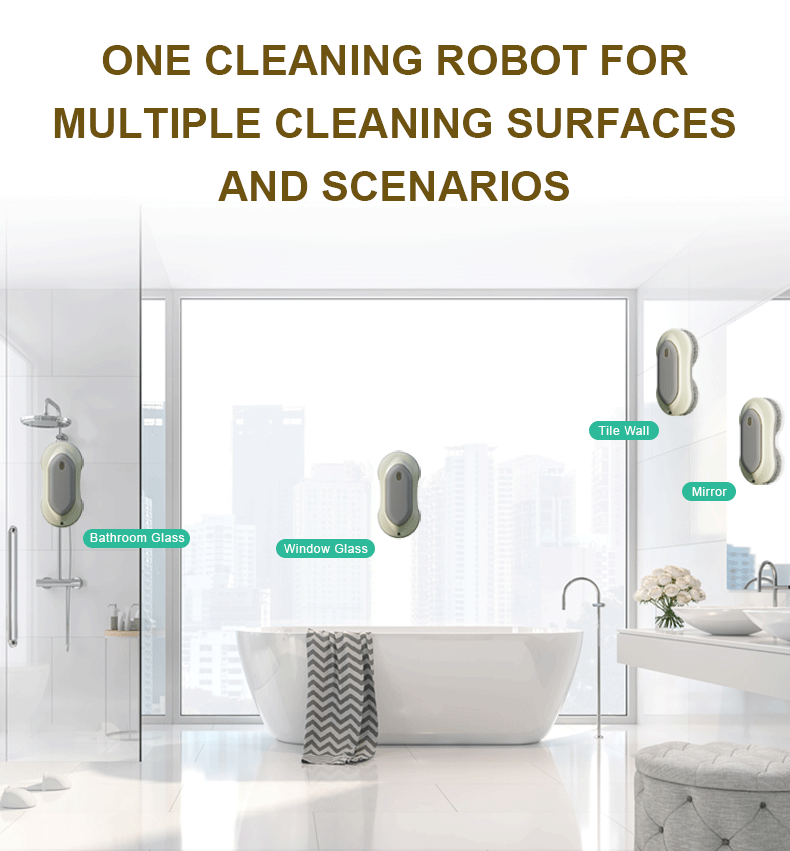
A window cleaning robot is a compact cleaning device that attaches to a vertical glass surface, moves across the pane, and cleans with a combination of suction, a cleaning pad, and often a water spray. For a new buyer, the important question is not only whether the robot can wipe glass. It is how the machine stays attached, how it decides where to go, and what happens if suction, power, or edge detection is interrupted. This guide explains those systems in plain language.
Problem Definition: The Real Buyer Concern Is Trust
Manual window cleaning works, but it depends on reach, ladder safety, and consistent technique. A squeegee and spray bottle are simple tools, yet the work becomes difficult on floor-to-ceiling windows, balcony glass, high interior panes, and commercial glass corridors. Streaks often come from uneven water control or a dirty blade. The bigger issue is access: some windows are hard to reach safely, and some cannot be cleaned from the outside without professional equipment or fall protection.
A window cleaning robot is designed to reduce that repetitive work. The buyer’s real problem is trust. Will the robot stay on the glass? Will it stop at the frame? Will it fall if the power goes out? Will it clean the full pane or leave a border? These are mechanism questions before they are brand questions. A clear understanding of suction, navigation, and safety helps a buyer compare products without relying on marketing labels.
Industry Background: Where Window Cleaning Robots Fit in the Smart-Life Market
Window cleaning robots sit within smart life and consumer innovation, alongside robot vacuums and other home cleaning devices. Early products focused on adhesion and basic wiping. Current designs commonly add path planning, frame detection, water spray, remote control, and app connectivity. The category is no longer only a novelty gadget; it is a small appliance category used in homes, property management, hospitality, and professional cleaning services.
Vacuum suction is one of the dominant adhesion approaches in the category. That matters for buyers because suction affects both grip and safety. The category also has a manufacturing side: many products are supplied through OEM and ODM programs, where a brand owner asks a factory to adapt housing design, app localization, packaging, or control features. LINICINCO, the brand of Dongguan Lingxin Intelligent Technology Co., Ltd., is a smart cleaning robot manufacturer founded in 2018. Its product lines include robot vacuums, wet-dry vacuum cleaners, window cleaning robots, pool cleaning robots, and hair dryers, with OEM/ODM support for window cleaning robot projects.
Detailed Solution: How Suction, Navigation, and Safety Work Together
A window cleaning robot is not one system. It is a set of systems that must work together: adhesion keeps the robot on the glass, cleaning removes dirt, navigation decides where the robot moves, and safety systems limit the consequences of a fault. If one system is weak, the others cannot fully compensate.
Suction and Adhesion: How the Robot Stays on Glass
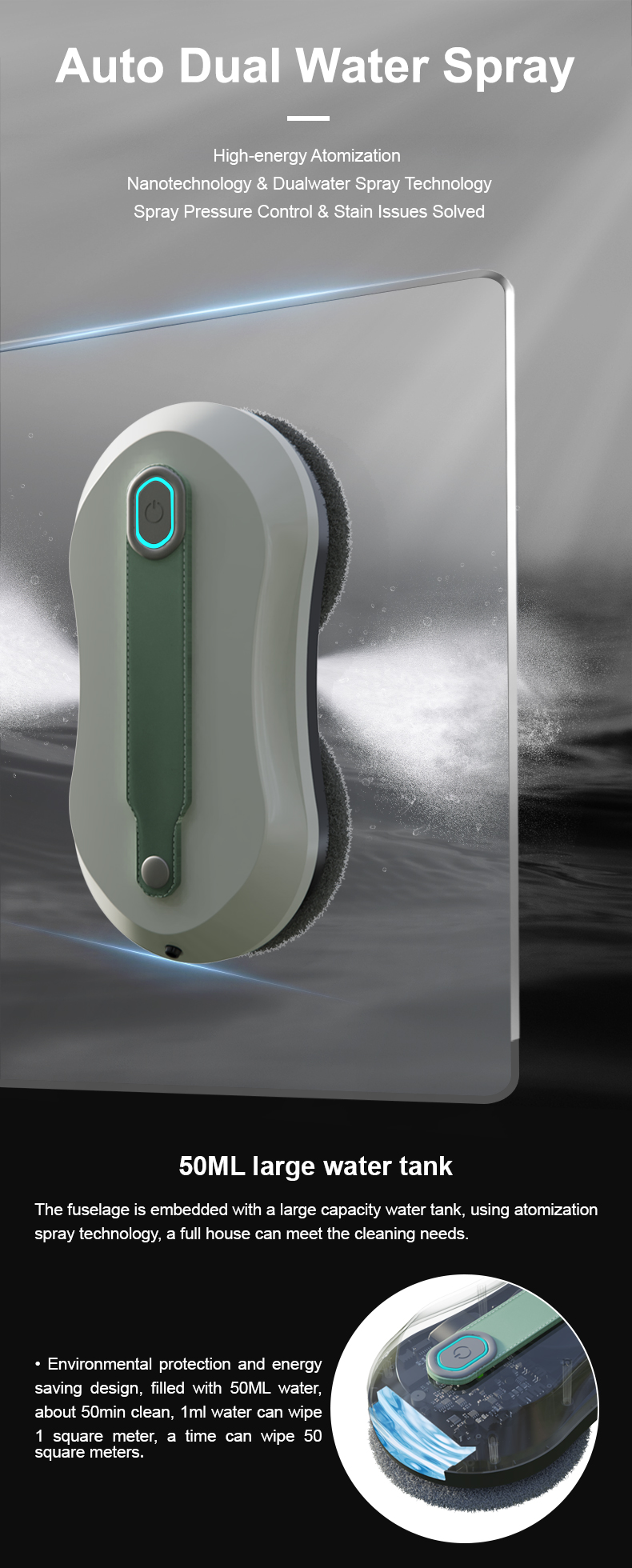
Most window cleaning robots use a vacuum suction system. A brushless motor drives a fan or pump that lowers air pressure inside a sealed area between the robot and the glass. Outside air pressure pushes the robot against the pane. A seal around the base helps hold the vacuum. In simple terms, the robot is pressed onto the glass by a pressure difference, not by glue or magnets.
Suction does two jobs. First, it holds the robot against vertical glass. Second, it creates friction so the drive system can move the cleaning pad across the surface. If the seal is broken by a rough frame, a deep scratch, loose putty, or a dry cleaning pad, the robot may lose grip. That is why suction should be judged together with the glass condition, the seal design, and the safety backup. A buyer should not look at suction as a single number on a specification sheet. It is a system that depends on the motor, the seal, the surface, and the control logic.
Cleaning and Water Control: How the Robot Removes Dirt
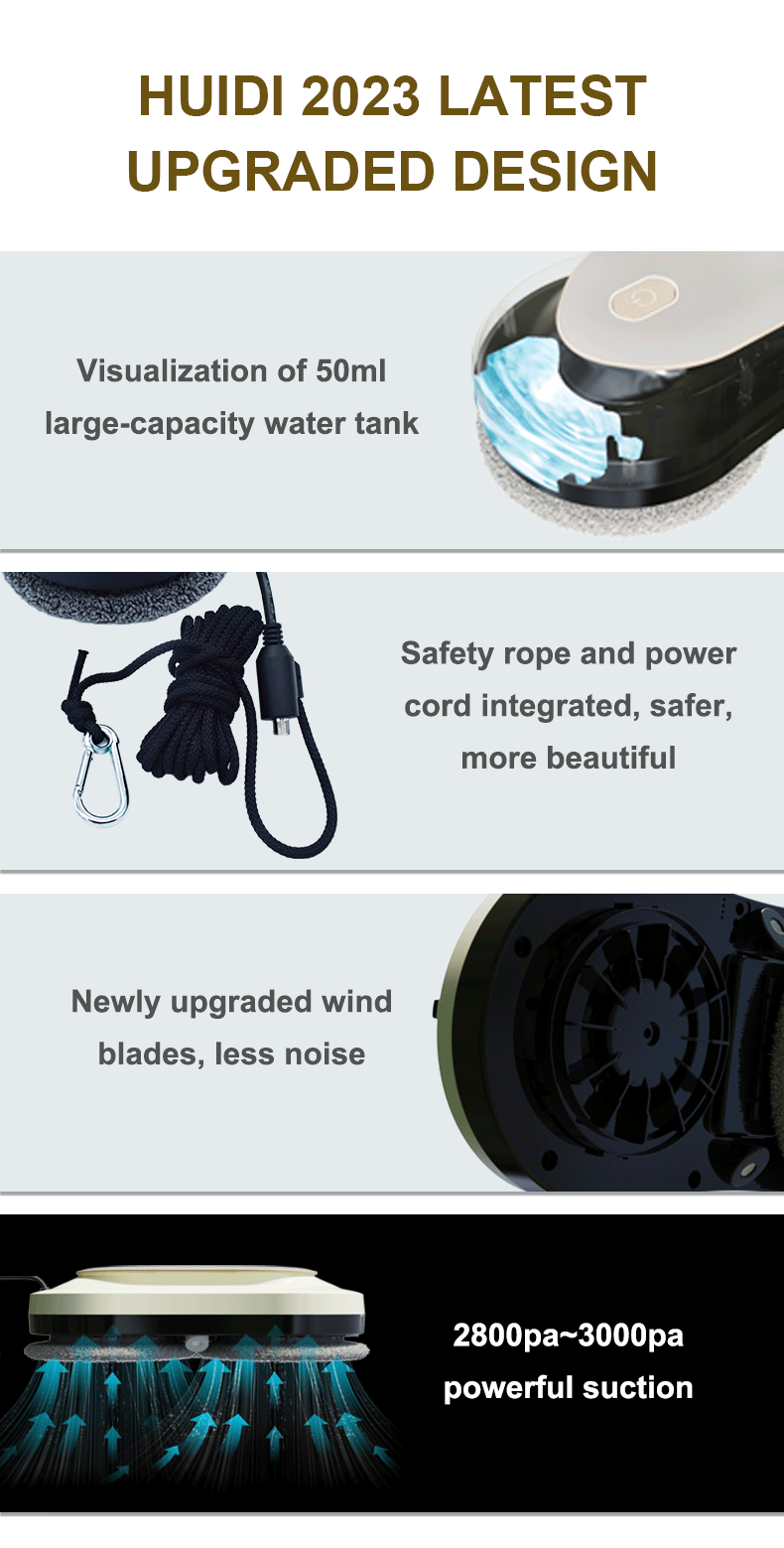
Cleaning usually combines a microfiber pad with motion. The pad picks up dust, fingerprints, and light film as it moves across the glass. Some robots also use a water spray system. A dual-nozzle ultrasonic atomizing spray breaks water into fine droplets, so the glass is dampened without heavy runoff. The robot then moves the pad over the damp surface to lift dirt and finish the pane.
Water control matters because too much water can leave streaks, drip onto frames, or create a slipping risk. Too little water can make the pad drag and spread dust. A good cleaning cycle wets the glass evenly, keeps the pad in contact, and overlaps passes so dirt is picked up rather than pushed to the edge. Buyers should check how the tank is filled, how the spray is triggered, whether the pad is washable, and whether the robot can run a dry pass when needed.
Navigation and Edge Detection: How the Robot Decides Where to Go
Navigation is the robot’s movement logic. Many window cleaning robots use path planning with Z-shaped or N-shaped routes. A Z-shaped route moves across the window in connected horizontal passes. An N-shaped route follows a similar coverage pattern with turns at the frame. The goal is systematic coverage rather than random movement.
Frame detection tells the robot when it has reached the window frame. Edge sensors detect the glass boundary and help prevent the robot from moving off the pane. The control system uses those signals to turn, reverse, or stop. Remote control and app-ready operation can give the user a manual override or a way to start a cycle, but the core navigation still depends on sensors and route logic. A buyer should ask how the robot behaves at corners, narrow frames, and obstacles such as handles or sealant lines.
Safety and Backup Systems: What Happens When Something Goes Wrong
Safety systems are the most important part of the category. A window cleaning robot commonly uses three layers of protection. First, a safety tether connects the robot to an indoor anchor. The tether is a mechanical backup if suction is lost. Second, anti-drop sensors detect the edge of the glass and stop movement before the robot leaves the pane. Third, a UPS battery backup keeps suction active for a short time during a power interruption, giving the robot time to hold position or be retrieved.
These systems do not replace correct use. The tether anchor must be secure. The glass must be free of cracks and loose material. The robot must be placed within its intended surface range. The user should follow the manual for starting, stopping, and retrieval. Buyers should check how the backup behaves, how the tether is attached, and whether the sensors are tested before shipment.
Step-by-Step Breakdown: What Happens During a Cleaning Cycle
- Inspect the glass and frame. Check for cracks, deep scratches, loose putty, peeling sealant, and protruding objects. Do not use a window cleaning robot on broken or unstable glass. Confirm that the frame can support the safety tether anchor.
- Attach the safety tether. Connect the tether to a secure indoor anchor according to the manufacturer’s instructions. The tether should be short enough to prevent a fall but long enough to allow the robot to move across the pane.
- Place the robot on the glass. Position the robot within the cleanable area and start the suction cycle. Wait for the robot to hold before releasing it. If the seal does not hold, stop and check the glass surface and seal.
- Prepare the cleaning pad and water tank. Fit the microfiber pad correctly and fill the water tank if the model uses spray. Do not overfill. Use the water type and cleaning solution specified by the manufacturer.
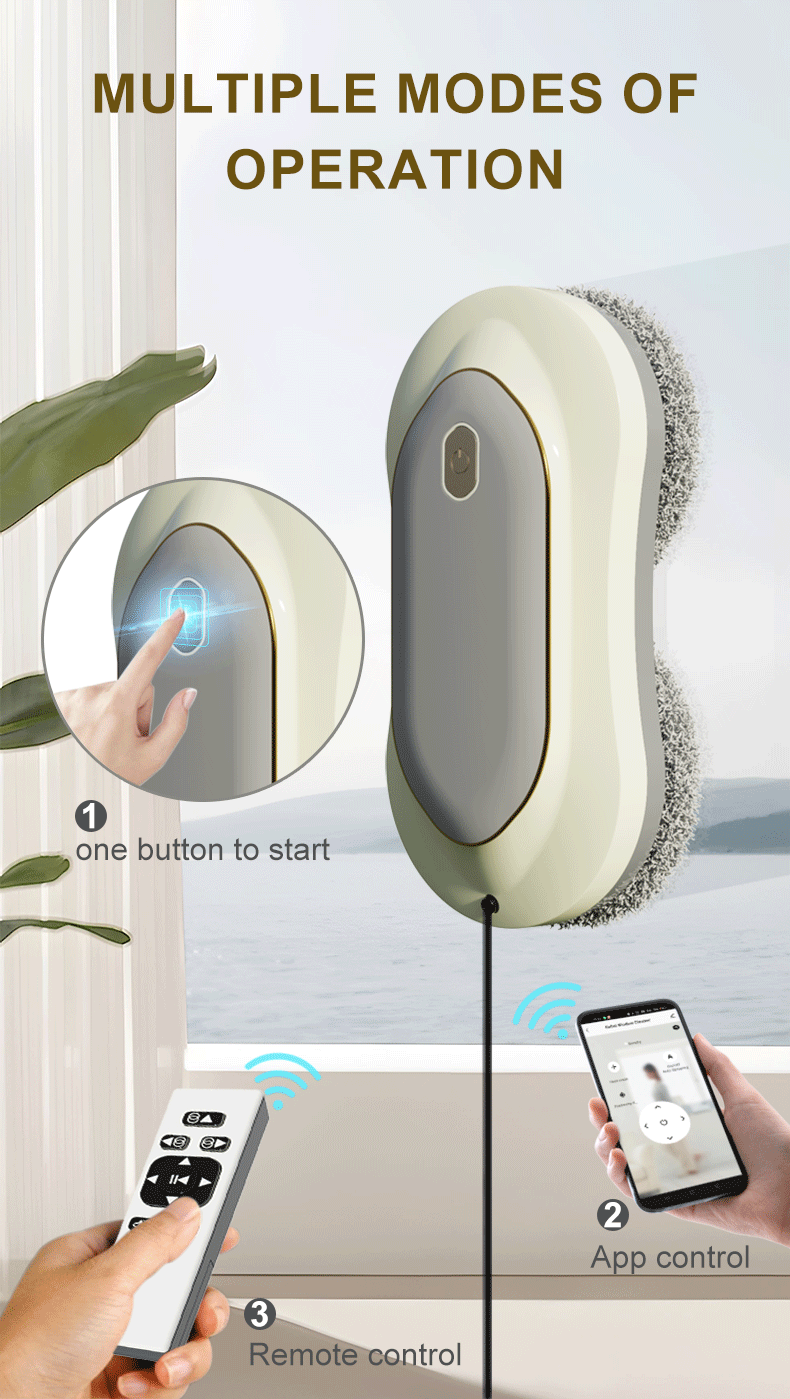
- Start the cleaning route. Select the automatic route or use the remote or app control. The robot moves in a planned pattern, sprays water if equipped, and detects the frame at the edges.
- Monitor the first cycle. Watch the robot’s behavior at corners, frames, and obstacles. Check for slipping, streaking, or repeated passes. Stop the cycle if the robot loses suction or behaves unexpectedly.
- Retrieve and clean the robot. Stop the cycle, remove the robot from the glass, and wash the pad. Empty or clean the water tank if applicable. Store the robot and tether according to the manual.
Use Cases: Where the Mechanism Fits
Residential smart home. A window cleaning robot can handle interior floor-to-ceiling windows, balcony glass, and panes that are difficult to reach by hand. It is most useful when the glass is flat, the frame is sound, and the user can safely attach the tether. It is not a substitute for safe access when exterior glass requires professional equipment.
High-rise property management. Property teams can use robots for routine cleaning of accessible common-area glass, such as lobby partitions and corridor windows. For exterior high-rise glass, the site still needs a safety plan, trained operators, and compliance with local work-at-height rules. The robot reduces repetitive work, but it does not remove the need for site control.
Professional cleaning services. Cleaning companies can use window cleaning robots as a supplement to manual work, especially for repeated maintenance of interior glass. The value comes from consistent coverage and reduced time on repetitive panes. The operator still needs to inspect glass, set the tether, and manage water and pads.
Commercial office maintenance. Interior glass partitions, meeting-room windows, and storefront glass can be cleaned with a robot when the surface is suitable. The buyer should check noise, water control, and the ability to clean around frames and furniture. For exterior commercial façades, the robot should be part of a broader access and safety plan.
Comparison Table: Core Systems and Buyer Checks
| System | What it does | Why the buyer should care | What to verify |
|---|---|---|---|
| Suction and seal | Creates a pressure difference that holds the robot to glass and supports movement. | Weak suction or a poor seal can cause slipping or loss of grip. | Glass compatibility, seal condition, surface limits, and backup behavior. |
| Cleaning pad | Contacts the glass and lifts dust and light film as the robot moves. | Pad condition affects cleaning quality and suction stability. | Pad fit, washability, replacement supply, and dry or wet use. |
| Water spray | Applies a fine mist to dampen the glass for wet cleaning. | Too much or too little water can cause streaks or drag. | Tank filling, nozzle spray pattern, and water type. |
| Navigation | Plans a Z-shaped or N-shaped route across the pane. | Coverage and turn logic determine whether edges are missed. | Route pattern, corner behavior, and manual override. |
| Frame detection | Senses the window frame and tells the robot to turn or stop. | Poor frame detection can cause repeated passes or contact with the frame. | Sensor placement, frame types, and obstacle handling. |
| Anti-drop sensors | Detect the glass edge and stop movement before the robot leaves the pane. | This is a primary safety layer during normal operation. | Sensor response, edge test, and stop behavior. |
| Safety tether | Provides a mechanical backup if suction is lost. | The tether limits the consequences of a fall. | Anchor point, tether length, and attachment method. |
| Battery backup | Keeps suction active briefly during a power interruption. | It gives the user time to respond before grip is lost. | Backup behavior, maintenance, and retrieval steps. |
| Remote or app control | Starts, stops, or adjusts the cycle. | Control helps with setup and exception handling. | Pairing, manual override, and app support. |
What This Means for OEM, Custom, and Wholesale Buyers
For buyers sourcing from an automatic window cleaning robot manufacturer, the mechanism explains what to ask in a quote. A custom window cleaning robot project may change housing design, logo, packaging, app localization, or the external control interface. A robot window cleaner supplier should be able to explain how the suction seal, edge detection, and safety backup are tested before shipment. The same questions apply to a smart window cleaning robot factory and to a glass cleaner machine OEM and ODM program: the product must be safe before it is visually customized.
LINICINCO is a smart window cleaning robot factory and OEM/ODM supplier within Dongguan Lingxin Intelligent Technology Co., Ltd. The company provides window cleaning robots and supports customization for external control interface, battery capacity, housing color and design, logo printing, localized app, and packaging. Its window cleaning robot range is produced in a manufacturing environment that also serves global brand and distributor projects. For wholesale buyers, the practical next step is to match the mechanism to the market: choose a model with the right water system, navigation pattern, control method, and safety package, then confirm the documentation and packaging for the target market.
FAQ
What is a window cleaning robot?
A window cleaning robot is a device that attaches to vertical glass, moves across the pane, and cleans with a pad and, in many models, a water spray. It uses suction for adhesion, path planning for coverage, and safety systems such as a tether, edge sensors, and battery backup to reduce risk.
How does suction keep a window cleaning robot on glass?
A motor-driven fan or pump lowers air pressure inside a sealed area between the robot and the glass. Outside air pressure pushes the robot against the pane. The seal, motor, surface condition, and control system all affect how well the robot holds.
How does a window cleaning robot navigate and detect edges?
Most models use planned Z-shaped or N-shaped routes and frame detection to cover the pane. Edge sensors identify the glass boundary and tell the robot to turn or stop. Remote or app control can add manual override, but sensor logic remains the basis of navigation.
What safety systems should buyers check?
Buyers should check the safety tether and anchor, anti-drop sensors, battery backup behavior, and the instructions for use. The tether is a mechanical backup, the sensors stop the robot at the edge, and the backup keeps suction active briefly during a power interruption.
Who offers CE-RED certified automatic window cleaning robots?
Buyers should ask for model-specific CE-RED documentation rather than a generic certificate image. LINICINCO states that CE-RED certification applies to its Window Cleaning Robot range for the EU market. Before ordering, confirm the certificate number, model coverage, and that the certificate matches the exact configuration being quoted.
Conclusion
A window cleaning robot works through a simple idea with important engineering behind it. Suction holds the robot to glass, a cleaning pad and optional water spray remove dirt, navigation covers the pane, and safety systems limit the consequences of a fault. For new buyers, the best way to evaluate a product is to ask how those systems work together, not just how the robot looks on a specification sheet.
If you are moving from research to evaluation, LINICINCO supplies window cleaning robots and supports OEM/ODM, custom, and wholesale projects. You can request a sample, quote, or product catalog from the contact below.
LINICINCO | Dongguan Lingxin Intelligent Technology Co., Ltd.
Website: www.cleverobot.com
Email: molly@cleverobot.com
Phone / WhatsApp: +86 13424841625
Factory address: No. ST121-1-B, Industrial Park, Santang Town, Hengyang City, Hunan Province, China
Note: This article explains general mechanisms for product discovery. Users should follow the manufacturer’s manual and local safety requirements for every installation.
Have Questions or Need More Details?
Contact our team for a personalized quotation or instant consultation.
Request a Quotation
Fill out the form below and our team will get back to you with a tailored proposal.
WhatsApp Direct Chat
Prefer to chat in real-time? Message us on WhatsApp for instant assistance & quick answers.
- Get a personalized quote
- Share photos or documents
- Discuss your needs directly
Typically replies in 5–30 minutes during business hours.