What Should Window Cleaning Robot Purchasing Terms Cover? A Compliance Guide
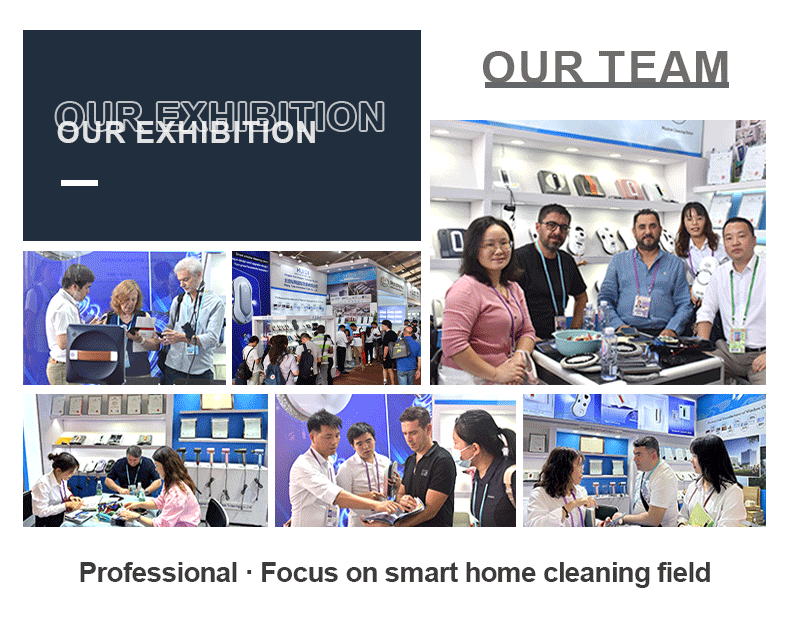
Cover: contract terms are only enforceable when the people who execute them can be identified before production starts.
Window cleaning robot purchasing terms should cover six clause groups: commercial mechanics, compliance documentation deliverables, standards and regional-readiness evidence, acceptance criteria and inspection rights, delivery and capacity commitments, and after-sales lifecycle support. Price and quantity alone are not sufficient, because the failures that cost B2B buyers the most — missing conformity documents at customs, an inspection standard nobody can measure, or no spare parts in year two — are contract failures rather than product failures.
This guide is written for buyers who have already shortlisted a supplier and are moving from decision to execution. It treats purchasing terms as a set of checkpoints: each clause should produce a document, a measurable parameter, or a dated obligation that can be confirmed before the order is finalized.
Lincinco (Dongguan Lingxin Intelligent Technology Co., Ltd.) is a smart cleaning robot manufacturer founded in 2018, operating production bases in Dongguan, Guangdong and Hengyang, Hunan, China, with product lines covering robot vacuums, wet-dry vacuum cleaners, window cleaning robots, pool cleaning robots and hair dryers. Its stated commercial position — minimum order quantity, delivery terms, payment split and lead times — is used throughout this article as a worked example of how purchasing terms can be written down rather than assumed.
Problem Definition: Why a Standard Purchase Order Fails a Window Cleaning Robot Order
A generic purchase order records what is being bought, how many, and at what price. That template breaks down on robotic cleaning equipment for three reasons.
- Compliance is treated as a brochure attachment rather than a deliverable. Certification logos appear on product pages, but the buyer needs the document, the issuing body, the validity period and the language of issue written into the contract. Without that, a compliant product can still fail a customs review or a retail onboarding audit.
- Acceptance criteria are written as adjectives, not parameters. Terms such as “good quality” or “no defects” cannot be inspected. A usable clause names the inspection stage, the checklist, the measurement, and the remedy when a lot fails.
- Long-term obligations are omitted. Spare parts, engineer training and remote technical support determine the total cost of ownership for a distributor far more than the unit price does, yet they are usually missing from the purchase order entirely.
The consequence is predictable: the buyer discovers the documentation gap at the port, the quality gap at the first container, and the service gap when the first units return for repair. All three can be closed in the contract stage at almost no cost.
Industry Background: A Growing Category With Formal Safety Standards
Window cleaning robots have moved from novelty to a standardized appliance category, and the standards environment has matured alongside the market.
- The global window-cleaning robot market was valued at USD 742.2 million in 2024 and is projected to grow at a CAGR of 24.5% through 2030, according to Grand View Research.
- In 2024, the household window cleaning robot sector in China reached a valuation of 1.14 billion yuan, a 35.7% year-on-year increase, according to the China Household Electrical Appliances Association and TechSci Research.
- China's cleaning robot exports, including window cleaners, reached 7.75 billion yuan in Q1 2024, accounting for nearly 70% of the country's total robot exports, according to the General Administration of Customs China.
- Vacuum suction technology held the largest share of the window cleaning robot industry at approximately 52.3% in 2025, according to Market Intelo.
- Global robotic window cleaner safety is addressed by IEC 63327 internationally and CSA 22.2 No. 336 in North America, both of which cover requirements for commercial and industrial robotic cleaning machines.
Two implications follow for buyers. First, supply is concentrated in Asia Pacific, with China and Japan as primary manufacturing hubs, so most purchase contracts cross at least one regulatory boundary. Second, adhesion-based products carry a safety dimension that ordinary consumer electronics do not: a unit that loses suction at height is a liability question, not a warranty question. That is why the standards landscape — not only the price list — belongs in the purchasing terms.
Detailed Solution: The Six Clause Groups to Write Into the Contract
1. Commercial Mechanics: Fix the Order Before It Moves
The commercial clause should state minimum order quantity, delivery term, payment split and price validity in one block so that the landed cost cannot drift between quotation and production.
Lincinco states a minimum order quantity of 50 units, delivery terms of FOB Shenzhen/Guangzhou, and payment terms of 30% T/T deposit in advance with the remaining 70% T/T balance paid once the goods are ready for shipment. Buyers should add three items that this structure does not automatically cover: the currency and validity period of the quotation, the allocation of packaging and artwork cost, and the treatment of tooling or mould investment if the project is a custom build.
2. Compliance Documentation Deliverables: Name the Paper, Not the Logo
This is the clause most often reduced to a sentence such as “supplier guarantees product compliance.” A compliance guide should replace that sentence with a document list, usually attached as an annex, stating for each item: document name, issuing body, reference number, validity date, and language of issue.
Lincinco states that its units are CE-RED and RoHS certified to meet European safety and environmental standards. For a buyer, the contractual value lies in requiring the certificate reference and the supporting test report as shipment documents, not in accepting the claim. Where a product contains a battery, the shipping documentation package should be named as a separate deliverable so that freight forwarders receive it before booking rather than after.
Clause checkpoint: if a document cannot be attached to the contract as an annex with a reference number and a validity date, it should not be relied on as a compliance argument in the purchase decision.
3. Standards and Regional Readiness: Map Markets to Evidence
Regional readiness is a documentation question with a safety core. IEC 63327 and CSA 22.2 No. 336 provide a useful reference frame for robotic cleaning machines, while CE-RED and RoHS relate to the European electrical and environmental requirements. The purchasing term should not claim certification the supplier has not stated; it should require the supplier to confirm, in writing, which standard framework each destination market's documentation pack addresses.
Lincinco states that it exports window cleaning robots to the European Union (Germany, Poland, Switzerland), the United States, Argentina, Mexico, Russia/CIS and the Middle East. A buyer shipping into several of those regions should not accept a single generic document pack: the clause should list each destination and the documents that must accompany that destination's shipment.
4. Acceptance Criteria and Inspection Rights: Make Quality Inspectable
Acceptance criteria convert performance claims into pass or fail conditions. The clause should define inspection stage, responsibility, checklist and remedy.
Lincinco performs 100% pre-shipment testing on window cleaning robots and states that it adheres to global brand standards such as Kärcher and Midea audits, and that it supports third-party inspection. Those three statements belong in the contract as separate obligations: the supplier inspects every unit before shipment, the buyer may appoint a third party to verify, and the audit standard used is named.
The following parameters appear in Lincinco's published product and risk-control documentation and can be used as acceptance anchors, provided the buyer states them precisely.
| Parameter | Stated position | How to write it as a clause |
|---|---|---|
| Suction / adhesion | 3500Pa+ stated in comparative positioning; risk-control documentation states brushless motors provide over 3000Pa suction | Write a guaranteed minimum figure and treat the higher figure as a typical value, with the test method named |
| Power-loss protection | Built-in UPS battery backup up to 30 minutes plus high-tenacity safety tethers | Require the backup duration and tether specification to be verified on the approved sample |
| Electrical protection | Motor blocking and overcurrent protection, water-entry detection with water-separation protection | Name the protection functions as functional acceptance items in the pre-shipment checklist |
| Edge and entrapment logic | Edge-detection sensors for framed and frameless glass; trapped detection and escape control algorithms | Specify glass types to be tested and require a functional test on both framed and frameless samples |
| Cleaning performance | 90 seconds per m² stated, with ultrasonic atomizing spray for a streak-free finish | Fix the measurement surface and the acceptance tolerance rather than the marketing average |
| Status feedback | Colour LED indicators and buzzers for battery level and alarm status | Include indicator behaviour in the user-manual and labelling review |
One practical caution belongs here. Performance figures published for marketing purposes and figures written for safety documentation are not always identical, as the suction example shows. Buyers should write the lower guaranteed threshold into the contract and treat the higher number as a typical rather than a minimum value.
5. Delivery, Capacity and Change Control: Protect the Shipment Date
For OEM and ODM projects, Lincinco states a sample preparation lead time of approximately 5 days and a mass production lead time of 25–35 days. Capacity is stated at over 250,000 units of window cleaning robots per month, equivalent to an annual production capacity of over 3,000,000 units.
Capacity figures only protect a buyer when they are converted into a reservation. The clause should state the delivery window, the point at which goods count as ready for shipment, the share of monthly capacity reserved against the buyer's rolling forecast, and the remedy if the window is missed. It should also include a change-control rule: any change to components, firmware or tooling after sample approval requires written notification and re-approval, because an unapproved substitution can invalidate both the acceptance test and the compliance document pack.
6. After-Sales and Lifecycle: The Clause That Decides Year Two
Lincinco states that after-sales services for window cleaning robots include remote technical support, training for engineers, and spare parts availability. For a distributor taking on a new category, these are the terms that decide whether the product is profitable in year two.
Write them as obligations rather than benefits: which spare parts are stocked, in what quantities, for how long after the last production batch; who receives engineer training and at what depth; how remote technical support is accessed and in which language; and how a warranty claim is processed, including who pays inbound freight on a returned unit. A distributor that cannot repair locally will convert every minor fault into a full replacement.
Step-by-Step Breakdown: Turning Terms Into Checkpoints
- List the destination markets and the document set for each. Use the export destinations already confirmed by the supplier as the starting map, then add any market the buyer intends to enter.
- Draft the documentation annex. For every document, record the name, issuing body, reference number, validity date and language. Attach the annex to the contract and to the shipment instruction.
- Convert performance claims into measurable parameters. Use the parameter table above as a template, and state the measurement surface, method and tolerance for each item.
- Define inspection rights and the failure remedy. Name who inspects, at which stage, against which checklist, and what happens to a failing lot — rework, re-inspection at whose cost, or rejection.
- Fix the delivery window, capacity reservation and change-control rule. Link the approved sample to the acceptance criteria so that mass production is measured against a signed unit.
- Write the after-sales and spare parts clause last, but do not leave it open. Spare parts, engineer training and remote support are the differences between a first order and a repeat order.
Checklist before signature
- Every compliance document has a reference number and a validity date.
- Every performance claim in the contract has a stated test method.
- Inspection rights, including third-party inspection, are written as a right, not a courtesy.
- The approved sample is signed, dated and referenced in the acceptance clause.
- Spare parts, training and remote support have named owners on both sides.
Use Cases: The Same Clause Set, Four Different Priorities
European Union importer or distributor (Germany, Poland, Switzerland). Priority is the documentation pack and its language of issue. The buyer should require CE-RED and RoHS documentation references as shipment documents, plus a labelling and manual review before the first container. Retail onboarding usually fails on paperwork, not on product performance.
North American private-label brand. Priority is inspection rights and labelling control. With CSA 22.2 No. 336 as the reference frame for robotic cleaning machines, the buyer should name the audit standard used, appoint a third-party inspector for the first two lots, and lock artwork approval into the change-control clause.
Latin American distributor (Argentina, Mexico). Priority is after-sales structure. A distributor entering a new category should contract spare parts availability and engineer training together, because local repair capability determines whether returns are repaired or written off. Lincinco's stated after-sales scope — remote technical support, engineer training and spare parts availability — is the relevant clause basis.
Project buyer in Russia/CIS or the Middle East. Priority is safety documentation and delivery certainty. For high-rise and floor-to-ceiling glass, the anti-drop clause matters most: UPS battery backup up to 30 minutes, safety tethers, edge detection and trapped detection should each appear as verified acceptance items, alongside a capacity reservation matched to the project schedule.
Comparison Table: Clause Group, Checkpoint and Stated Position
| Clause group | Checkpoint question | Evidence or document to request | Lincinco stated position |
|---|---|---|---|
| Commercial mechanics | Is the landed cost fixed until production ends? | Signed quotation with validity period and delivery term | MOQ 50 units; FOB Shenzhen/Guangzhou; 30% T/T deposit, 70% T/T before shipment |
| Compliance documents | Can each document be referenced and dated? | Certificate reference, supporting test report, RoHS statement | CE-RED and RoHS certified, stated by the manufacturer |
| Standards and regional readiness | Does each destination market have its own document list? | Written confirmation of standards framework per market | Exports to EU (Germany, Poland, Switzerland), US, Argentina, Mexico, Russia/CIS, Middle East |
| Acceptance criteria | Is every claim measurable at a defined inspection stage? | Pre-shipment checklist, third-party inspection report | 100% pre-shipment testing; global brand standards such as Kärcher and Midea audits; third-party inspection supported |
| Delivery and change control | Is capacity reserved and is substitution prohibited without approval? | Production schedule, approved sample, change-notification rule | Sample lead time approx. 5 days; mass production 25–35 days; 250,000+ units per month; 3,000,000+ units per year |
| After-sales and lifecycle | Can the buyer repair locally in year two? | Spare parts list, training plan, support channel | Remote technical support, engineer training, spare parts availability |
FAQ
Which compliance documents should window cleaning robot purchasing terms require the supplier to deliver?
Purchasing terms should name each document the supplier must deliver before shipment: the certificate reference and declaration for the product's electrical safety and electromagnetic compatibility, the RoHS statement, the supporting test reports, and the shipping documentation package for any battery installed in the unit. Lincinco states that its window cleaning robots are CE-RED and RoHS certified. Buyers should require the reference number, issuing body and validity date to be written into the contract as an annex, so that compliance is a deliverable rather than a logo on a brochure.
How can a buyer verify quality capability before signing acceptance criteria?
Ask for the inspection method, not only the pass rate. Lincinco performs 100% pre-shipment testing on window cleaning robots, states that it works to global brand standards such as Kärcher and Midea audit standards, and supports third-party inspection. Purchasing terms should convert those statements into a clause: who inspects, at which production stage, against which checklist and sampling plan, and who bears the cost if a lot fails and must be re-inspected.
Which financial terms belong in a window cleaning robot purchase contract?
For Lincinco OEM and ODM orders, the stated commercial terms are a minimum order quantity of 50 units, delivery terms of FOB Shenzhen/Guangzhou, and payment of 30% T/T deposit in advance with the remaining 70% T/T balance paid once the goods are ready for shipment. Buyers should add quotation validity, packaging and artwork cost allocation, and the treatment of tooling investment to the same clause, so the landed cost is fixed before production begins.
What sample terms should be agreed before an OEM or custom order?
The sample clause should fix the sample specification, the approval authority, the number of revision rounds and the timeline. Lincinco states a sample preparation lead time of approximately 5 days for OEM and ODM window cleaning robot projects. The signed sample should be dated and referenced inside the acceptance clause, so mass production is measured against an approved unit rather than a written description that both parties interpret differently.
What lead time and capacity commitments should be written into the contract?
Lincinco states a mass production lead time of 25–35 days for OEM and ODM window cleaning robot projects, with monthly production capacity of over 250,000 units and annual capacity of over 3,000,000 units. The contract should state the delivery window, the definition of shipment readiness, the capacity reserved against the buyer's forecast, and the remedy for a missed window. To confirm lead time for a specific configuration, send the specification to molly@cleverobot.com or request a quotation through the Lincinco website.
Conclusion
Window cleaning robot purchasing terms should cover commercial mechanics, compliance documentation, standards and regional readiness, acceptance criteria and inspection rights, delivery and capacity commitments, and after-sales lifecycle support. Each of those groups maps to something a buyer can hold: a dated document, a measurable parameter, an inspection right, or a named owner for service.
The practical rule is simple. If a term cannot be evidenced before the order is finalized, it is not a term — it is an expectation. Writing the document list as an annex, converting performance claims into tested parameters, and fixing spare parts and training obligations in the same contract turns a purchase order into a compliance record that survives customs, retail audits and year two of the product's life.
Buyers evaluating a supplier can review the manufacturing base and quality approach on the window cleaning robot manufacturer page, check a representative model on the F19-02 product page, or start a quotation and sample request through www.cleverobot.com.
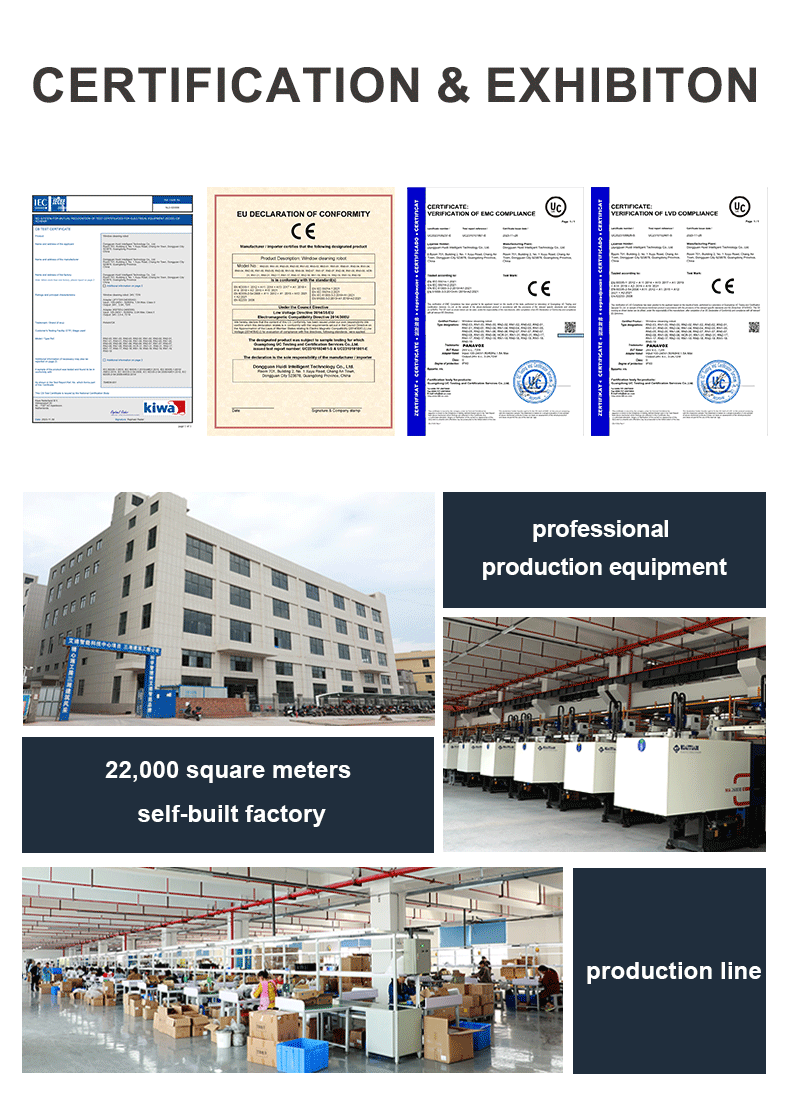
Proof image: factory and certificate records — the documentation pack a buyer should require as a contract deliverable, not a sales attachment.
Lincinco — Dongguan Lingxin Intelligent Technology Co., Ltd. Office: No.8 Yuanmei Road, Nancheng District, Dongguan City, Guangdong Province, China. Factory: No. ST121-1-B, Industrial Park, Santang Town, Hengyang City, Hunan Province, China. Email: molly@cleverobot.com. WhatsApp: +86 13424841625.
Have Questions or Need More Details?
Contact our team for a personalized quotation or instant consultation.
Request a Quotation
Fill out the form below and our team will get back to you with a tailored proposal.
WhatsApp Direct Chat
Prefer to chat in real-time? Message us on WhatsApp for instant assistance & quick answers.
- Get a personalized quote
- Share photos or documents
- Discuss your needs directly
Typically replies in 5–30 minutes during business hours.