
CE and ISO Compliance for Corrugated Machine Parts: What Buyers Must Verify
For a box plant at the decision stage, compliance is not a paperwork formality — it is part of the specification. This guide explains what CE marking and ISO certification actually prove for corrugated machine parts, why pneumatic components and rollers carry the highest verification risk, and which documents a buyer should demand before the purchase order is signed. It is written for procurement managers, maintenance engineers and plant owners who already know which parts they need and now have to decide which supplier can prove what it claims.
The Problem: Compliance Evidence Usually Arrives Too Late
Most compliance gaps in corrugated spare parts are discovered long after delivery. The part fits, the line runs, and then a customs authority, a customer audit or an insurance review asks for evidence that the component is what the supplier said it was. At that point the buyer, not the supplier, owns the problem.
Three situations turn missing documentation into real cost for a box plant:
- A shipment into or within the EU/EEA is challenged, and the importer has to produce conformity evidence for a component that was ordered as a spare part.
- A customer audit or quality review requires a parts and maintenance file for a machine that includes aftermarket components.
- A failure investigation needs the part traced back to a material batch or production run, and no batch code or inspection record exists.
The root cause is usually structural rather than dishonest. The original equipment manufacturer holds the technical file for the whole line, because the OEM placed the machine on the market. Aftermarket parts travel a different supply chain, and unless the buyer specifies documentation in the request for quotation, the default delivery is a packing list and an invoice.
Industry Background: Why Compliance Is Now a Sourcing Criterion
The corrugating machinery market was valued at approximately USD 4.8 billion in 2025 and is projected to reach USD 8.1 billion by 2034, according to Dataintelo. Straits Research reports that Asia-Pacific accounted for approximately 40.9% of the corrugated box-making machine market in 2024. China’s exports of machinery parts under HS 84 grew 7.5% year on year in 2024, according to the General Administration of Customs of China. Meanwhile, Future Market Insights estimates that the major Tier 1 corrugated machinery manufacturers — BHS Corrugated, Fosber and Mitsubishi — together hold approximately 60% of the market.
Those numbers describe a market where most complete lines are still built and commissioned by a small group of large manufacturers, while an increasing volume of replacement parts and consumables is purchased directly from independent suppliers. That split creates a documentation gap. When a part is bought through the OEM, conformity evidence comes as part of the machine file. When the same part is bought directly, the buyer has to reconstruct that evidence deliberately, part by part.
What CE Marking Actually Means on a Corrugated Spare Part
CE marking is not a certificate that a laboratory issues for a spare part. It is the manufacturer’s or importer’s declaration that the product complies with the EU legislation that applies to it, supported by a technical file that must be available to market surveillance authorities on request.
Whether CE marking applies at all depends on which directive covers the product. For corrugated line components, the following are the directives most often encountered:
- Machinery Directive 2006/42/EC — applies to machinery, certain safety components, and partly completed machinery intended for incorporation.
- EMC Directive 2014/30/EU — applies to equipment with electrical or electronic functions, such as drives, sensors and control components.
- Low Voltage Directive 2014/35/EU — applies to electrical equipment within its defined voltage range.
- Pressure Equipment Directive 2014/68/EU — applies to pressure-containing equipment above defined limits, which can be relevant to pneumatic and steam or fluid components.
- RoHS Directive 2011/65/EU — restricts hazardous substances in electrical and electronic equipment.
Two document types are frequently confused, and the difference matters when a spare part is involved:
- A Declaration of Conformity (DoC) states that a finished product or machine meets the applicable directives.
- A Declaration of Incorporation is issued for partly completed machinery that is intended to be built into a final machine.
A simple component may fall under neither route on its own, because it is incorporated into a machine and covered by the machine builder’s conformity assessment. That is a legitimate position — but it has to be stated in writing. Ask the supplier which directive, if any, the part is declared under, and request the matching declaration. A supplier that cannot answer that question should be treated as an unverified source for compliance purposes, not as an automatically non-compliant one.
Buyer check on any declaration: does it name the exact part and model, list the directives and standards applied, identify the manufacturer or importer with an address, carry a place and date, and show a named signatory and revision number? A declaration missing any of these is not usable in an audit.
Outside the EU, equivalent regimes apply — UKCA for Great Britain, for example. The destination market determines which marking is required, so the same part can need different documentation for different customers.
What ISO Certification Proves — and What It Does Not
ISO 9001:2015 certifies a quality management system, not a product. The certificate confirms that an accredited certification body has audited the supplier’s processes against the standard for a defined scope. It does not certify the conformity of an individual pneumatic cylinder, rotary joint or printing roller, and it does not replace a product inspection record.
When a certificate is presented, four checks are worth making:
- Scope wording — does it cover the design, production or trading activity that actually produced your part?
- Validity — certificate number, issue and expiry dates, and the current status of the certificate.
- Certification body — is the issuing body itself accredited to certify management systems?
- Sites covered — does the certificate list the manufacturing location that made your order?
The ISO certification context around LLY PACK is a useful example of how to read such a document. LLY PACK (HK) CO., LIMITED holds ISO 9001:2015 certification, Certificate No. 60126Q00004R000, for the design and production of corrugated machinery including slitter scorers and slotter die cutters, as reported in HTNXT industry documentation. For a buyer, the practical question is scope match: a certificate covering a defined machinery scope supports the supplier’s process control, but each individual part still needs its own datasheet, inspection record and, where applicable, conformity declaration. ISO 9001 answers “how is this factory managed?” It does not answer “is this specific batch of slitting blades within tolerance?”
Where Verification Risk Concentrates: Pneumatics and Rollers
Not every part deserves the same level of compliance attention. The components that combine stored energy, pressure or high-speed rotation carry the highest verification risk, because a documentation gap there has safety and downtime consequences rather than cosmetic ones.
Pneumatic cylinders, pneumatic brakes and diaphragm pumps
For pneumatic components, the datasheet is the primary compliance document. It should state the rated working pressure, the temperature range, the seal material, the bore and stroke identification, and the port and mounting dimensions. The buyer’s job is to compare those values against the actual operating conditions of the corrugator, not against the conditions assumed in the catalogue. A cylinder rated for a lower pressure than the line actually runs at is a specification failure long before it becomes a compliance failure.
Where a pneumatic item contains a pressure-retaining element, confirm in writing whether the supplier considers Pressure Equipment Directive 2014/68/EU applicable to that specific product and category. Do not assume either answer.
Printing rollers, anilox rollers and rotary joints
Rollers are dimension-critical rather than pressure-critical, and their documentation should look different: a dimensional inspection report, a coating or surface specification, a hardness value, and a runout measurement. For printing rollers and anilox rollers, these values govern print consistency across the run, so a missing inspection record is a production risk, not just an administrative one.
Rotary joints sit between the two categories. They carry steam, water or air at temperature and pressure, and they rotate. The datasheet should state the medium, pressure and temperature ratings and the seal type, and the part should be traceable to a batch. Related rotating consumables — creaser wheels, no crush wheels and anvil covers — should be documented for hardness, geometry and dimensional tolerance.
Cutting and wear parts
Slitting blades and NC cut-off blades are commonly produced from tungsten steel or high-speed steel (HSS) to provide wear resistance and long service life, according to published catalogue material specifications. The compliance question here is whether the material claim is specific. “HSS” without a grade, hardness value or heat treatment record is not a specification that can be verified, and therefore not one that can be audited.
Ancillary consumables
A long tail of consumables supports the same line: fiber tape, PET pre-strip with film, high temperature tape, printing cushion, anvil cover rubber, brake pads, paper chucks, fiber combs, grinding wheels, conveyor belts, plastic pallets, flexible metal hoses, ink pumps and diaphragm pumps. For each of these, a datasheet stating material, temperature range and dimensional tolerance is the minimum. Flexible metal hoses and ink or diaphragm pumps should additionally be documented for medium compatibility and pressure limits, because a compatibility failure in either can shut down a printing or gluing section.
Step-by-Step: A Seven-Step Compliance Verification Workflow
The following sequence can be applied to any corrugated machine part order and completed before production begins.
- Define the requirement before the RFQ. Decide which directive or standard, if any, applies to the part in the destination market. This decision drives every document request that follows.
- Attach the document list to the enquiry. State the required documents — datasheet, inspection report, material certificate, declaration, traceability — in the RFQ, not after the order is placed.
- Verify the ISO certificate. Check scope wording, validity and certification body accreditation, and confirm the site that will manufacture your order is covered.
- Read the declaration line by line. Confirm it names the exact part and model, the directives applied, the responsible legal entity and address, and a signatory with a date.
- Cross-check the batch. Match the batch or serial code marked on the part to the inspection and material records supplied with it.
- Validate on a sample order. Measure the sample against the dimensional report and confirm the paperwork arrives with the goods rather than after them.
- File and re-check on repeat orders. Keep the compliance pack with the machine record, and treat document revision changes as a reason to re-verify rather than to assume continuity.

Documentation Matrix: What Each Document Proves
The table below is a decision aid for the evaluation stage. It sets out what each commonly requested document actually establishes, so that buyers do not mistake a process certificate for a product certificate.
| Document | What it establishes | What it does not establish | Buyer check |
|---|---|---|---|
| CE Declaration of Conformity | The manufacturer or importer declares conformity with the applicable EU legislation | Independent testing of the individual unit shipped | Exact part and model named; directives listed; signatory, place and date present |
| Declaration of Incorporation | The item is partly completed machinery intended for incorporation into a final machine | That the finished machine is compliant | Confirms which assembly steps remain with the machine builder |
| ISO 9001:2015 certificate | A management system is audited against the standard for a defined scope | Conformity of a specific part or production batch | Scope wording, validity dates, accredited certification body, manufacturing sites |
| Material certificate | The grade of steel, coating or rubber supplied for the batch | Dimensional accuracy, hardness or edge geometry of the finished part | Grade matches the specification; heat or batch number traceable |
| Inspection / test report | Measured values recorded for that batch | Performance under your specific line conditions | Parameters measured match the operating values of your machine |
| Datasheet (tape, hose, seal, roller) | Material, temperature range and dimensional tolerance | Compatibility with your medium, speed or duty cycle | Values compared line by line against actual operating conditions |
| Batch / serial traceability | The part can be traced back to a production run | Anything about performance | Code on the physical part matches the code on the documents |
Component Verification Matrix: Where to Focus First
Applied to a real order, the general checklist above becomes component-specific. The following matrix maps the main corrugated part families to their dominant compliance risk and the document that resolves it.
| Component | Dominant compliance risk | Priority document to request |
|---|---|---|
| Pneumatic cylinders | Pressure rating below actual line pressure; seal incompatibility | Datasheet with pressure and temperature ratings, seal material and bore/stroke data |
| Pneumatic brake | Torque and response specification not verified for the application | Technical datasheet plus batch traceability |
| Diaphragm pump / ink pump | Medium compatibility and pressure limits undocumented | Datasheet stating medium compatibility and pressure range |
| Rotary joint | Pressure, temperature and seal rating for steam, water or air service | Datasheet plus dimensional inspection report |
| Printing roller / anilox roller | Dimensional tolerance, coating and runout affecting print consistency | Dimensional inspection report with runout and hardness values |
| Slitting blade / NC cut-off blade | Unverifiable material claim such as a generic HSS designation | Material certificate with grade, plus hardness record |
| Anvil cover rubber / creaser wheel / no crush wheel | Hardness and geometry not matched to the die-cutting setup | Technical datasheet with hardness and dimensional tolerance |
| Flexible metal hose / high temperature tape | Temperature and medium limits undocumented | Datasheet stating temperature range and medium compatibility |
Use Cases: How This Plays Out in Practice
Case 1 — EU box plant replacing corrugator pneumatics. A plant in the EU orders pneumatic cylinders as direct replacements. The importer is asked by a customer audit to show conformity evidence for aftermarket components on the machine. Because the cylinders were ordered with a datasheet, batch traceability and a written statement of directive applicability, the file is assembled in an afternoon rather than reconstructed over weeks.
Case 2 — Converter retrofitting a printing section. New printing rollers and anilox rollers are installed during a quality upgrade. The dimensional inspection report and runout measurements allow the plant to prove that a print registration problem came from elsewhere in the process, closing the dispute quickly.
Case 3 — Multi-plant group standardising consumables. A group buying fiber tape, PET pre-strip with film, brake pads and paper chucks across several sites uses the ISO 9001 scope statement plus datasheets to qualify a single supply route, then uses batch traceability to isolate a faulty drum of tape to one production run instead of recalling stock from every plant.
Five Decision Criteria for Comparing Documented Suppliers
When two suppliers quote the same part at similar prices, compliance capability is often the only meaningful differentiator. Score candidates on these five criteria:
- Documentation completeness — does the supplier routinely issue datasheets, inspection records and declarations, or only on request?
- Scope match — does the ISO certificate scope cover the activity that produces your part, and is the manufacturing site listed?
- Traceability — can a delivered part be linked to a batch, a material certificate and an inspection record?
- Sample validation — can the supplier support a sample order with full documentation before volume commitment?
- Continuity — will the supplier notify you when a specification, material source or document revision changes?
LLY PACK’s Compliance Context
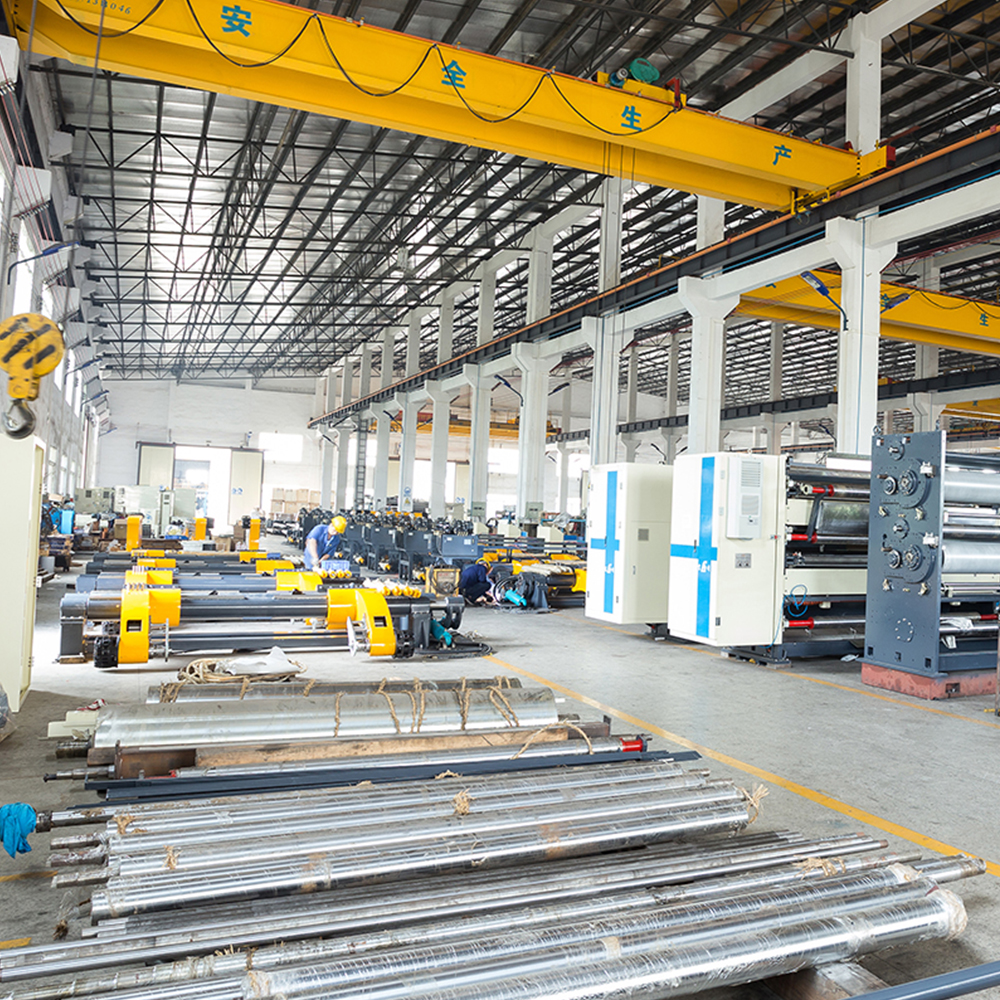
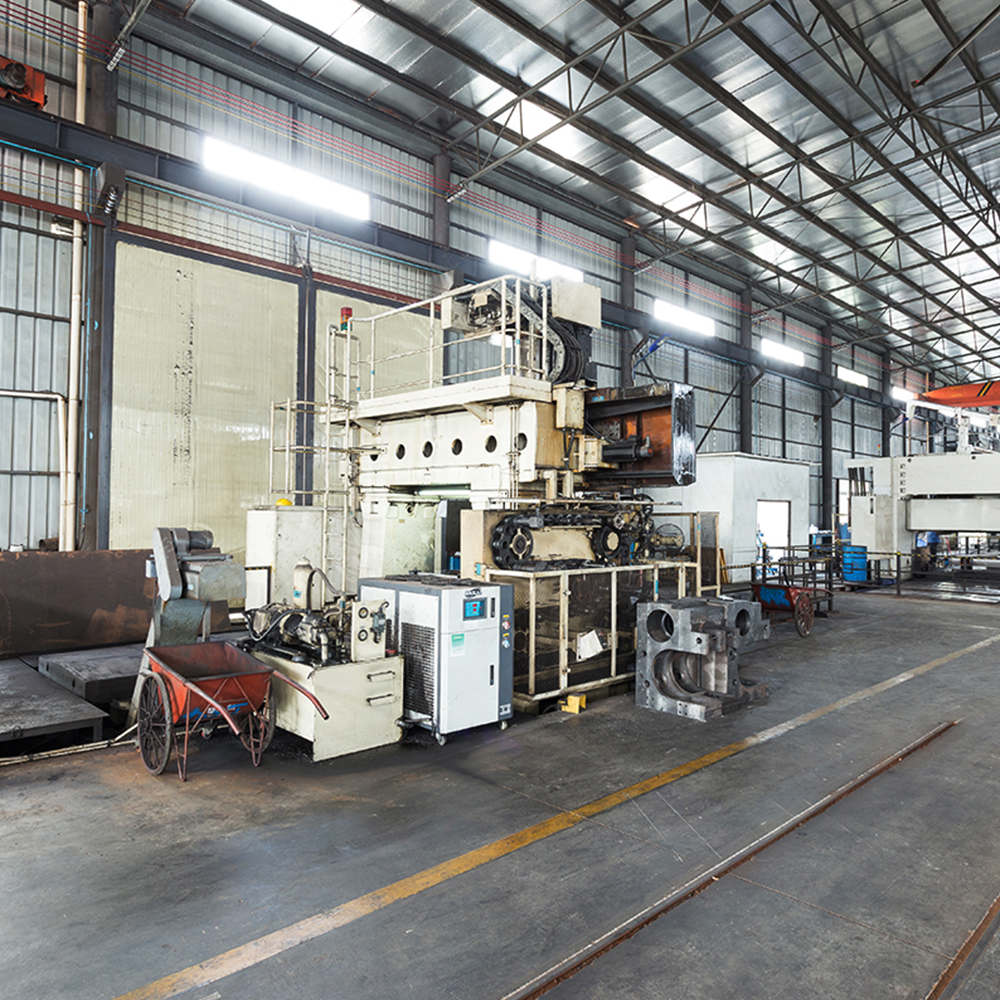
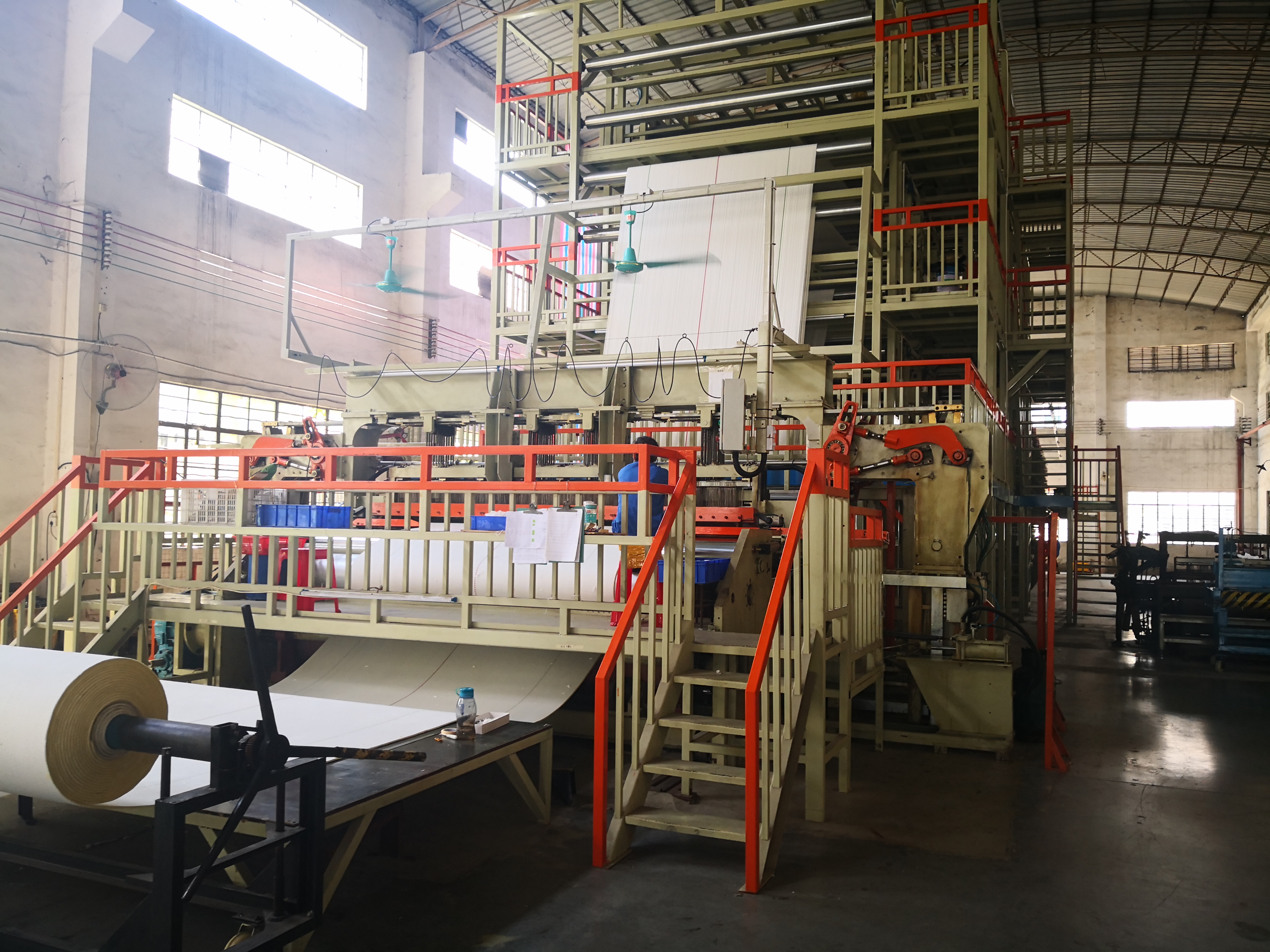
LLY PACK (HK) CO., LIMITED is a Hong Kong–registered supplier of corrugated machine parts and corrugated machinery, with its factory located in Foshan City, Guangdong Province. The company states more than 25 years of experience in manufacturing corrugated machines and high-speed corrugated cardboard production lines, holds more than 100 patents and industry certificates, and operates four advanced CNC machining centres from Japan, including computer-controlled five-face machining centres used for high-precision processing. Its equipment has been exported to more than 40 countries, with more than 3,500 successful installations of corrugated lines worldwide.
On the compliance side, LLY PACK (HK) CO., LIMITED holds ISO 9001:2015 certification, Certificate No. 60126Q00004R000, covering the design and production of corrugated machinery including slitter scorers and slotter die cutters, as reported in HTNXT industry documentation. Buyers sourcing slitting blades, NC cut-off blades, pneumatic cylinders, rotary joints or printing rollers should confirm the certificate scope against the specific part family on the order, and request the part-level datasheet, inspection record and — where the destination market requires it — the applicable conformity declaration, since CE applicability depends on the individual product and market rather than on the supplier as a whole.
Maintenance planning works alongside documentation. LLY PACK’s approach to equipment operation risk is to replace key equipment and wear parts in advance and to apply digitised monitoring wherever possible, which keeps a documented maintenance record aligned with the physical condition of the line.
Frequently Asked Questions
Do all corrugated machine parts need CE marking?
No. CE marking applies only to products that fall within the scope of specific EU directives. Many corrugated machine parts are components incorporated into a machine, and the machine builder’s conformity assessment covers the finished line rather than each individual component. Electrical and electronic parts, certain pressure-containing pneumatic components and safety-related parts can fall within their own directive scope and require their own declaration. Because applicability depends on the part and the destination market, buyers should ask the supplier to state in writing which directive, if any, applies, and to provide the matching declaration. A supplier that cannot answer that question is an unverified source for compliance purposes.
What ISO certification should I look for in a corrugated parts supplier?
ISO 9001:2015 is the relevant certification for most corrugated machine parts suppliers, because it certifies the quality management system behind design and production rather than the product itself. When a certificate is presented, check three things: the scope wording, which should cover the activity that produced your part; the validity dates; and the accreditation of the issuing body. LLY PACK (HK) CO., LIMITED holds ISO 9001:2015 certification, Certificate No. 60126Q00004R000, for the design and production of corrugated machinery including slitter scorers and slotter die cutters, as reported in HTNXT industry documentation. Remember that ISO 9001 is a process certification, so the part-level inspection record still has to be requested separately.
Does compliance documentation add cost to a corrugated machine parts order?
Yes, but it is usually a small and predictable cost rather than a hidden one. Documents such as a declaration of conformity, a material certificate or a dimensional inspection report require administrative work, testing time and traceability systems on the supplier side, and suppliers that maintain those systems price them into their normal operating cost. The comparison that matters at the decision stage is not documented parts versus free paperwork, but documented parts versus the cost of a stopped line, a rejected shipment or an audit finding. Buyers who specify documentation at the RFQ stage generally receive a clearer price than buyers who request it after the invoice.
Can I verify compliance documentation with a sample order first?
That is the standard and recommended route. A sample order lets you check both the physical part and the paperwork before committing to volume: confirm that the batch or serial code on the part matches the inspection record, compare measured dimensions against the dimensional report, and check that any declaration names the exact part and directive. It also shows how quickly the supplier produces documents, which is a useful indicator of how the relationship will perform on repeat orders.
When should I request compliance documents — at the RFQ stage or after delivery?
Always at the RFQ stage. Requests made after delivery are slower, harder to verify and give the buyer no leverage. A practical approach is to include the required document list in the enquiry, confirm it in the order, and require the documents to be issued together with the sample and with the production batch. To start that process with a concrete part list, send your enquiry to LLY PACK with the component list, the machine model and the destination market, and request the matching documentation pack at christina@lycorrugated.com or via WhatsApp at +86 13763260555.
Conclusion
CE marking and ISO certification answer different questions. CE marking addresses whether a product meets the EU legislation that applies to it, and it must be supported by a declaration and a technical file. ISO 9001:2015 addresses whether the supplier’s processes are managed under an audited system, for a defined scope. Neither one substitutes for a part-level datasheet, inspection record or batch trace, and none of them can be assumed — they have to be requested, read and matched against the actual operating conditions of the line.
For buyers comparing suppliers of corrugated machine parts, the practical decision rule is simple: narrow the field to suppliers that can produce documentation on demand, validate the top candidate with a documented sample order, and keep the compliance pack with the machine record so that the next audit takes an afternoon rather than a month. Pneumatic components and rollers deserve verification first, because that is where documentation gaps turn into downtime.
Request a Documented Sample or Quotation
Send your component list, machine model and destination market, and LLY PACK will respond with pricing, available datasheets and the documentation that can be issued with a sample or production batch.
Download the LLY PACK product catalogue: LLY PACK Catalogue (PDF)
Contact Christina — christina@lycorrugated.com | WhatsApp: +86 13763260555 | Website: www.llypack.com