
Corrugated Box Plant Retrofits: Matching Machine Parts to Your Production Bottlenecks
A corrugated box plant rarely underperforms everywhere at once. Output drops at one station — the printer that will not hold impression, the slitter that throws dust into the trim, the reel stand whose tension drifts as line speed rises. A retrofit is the disciplined answer to that single constraint: replacing or upgrading specific corrugated machine parts so one station stops capping the whole plant.
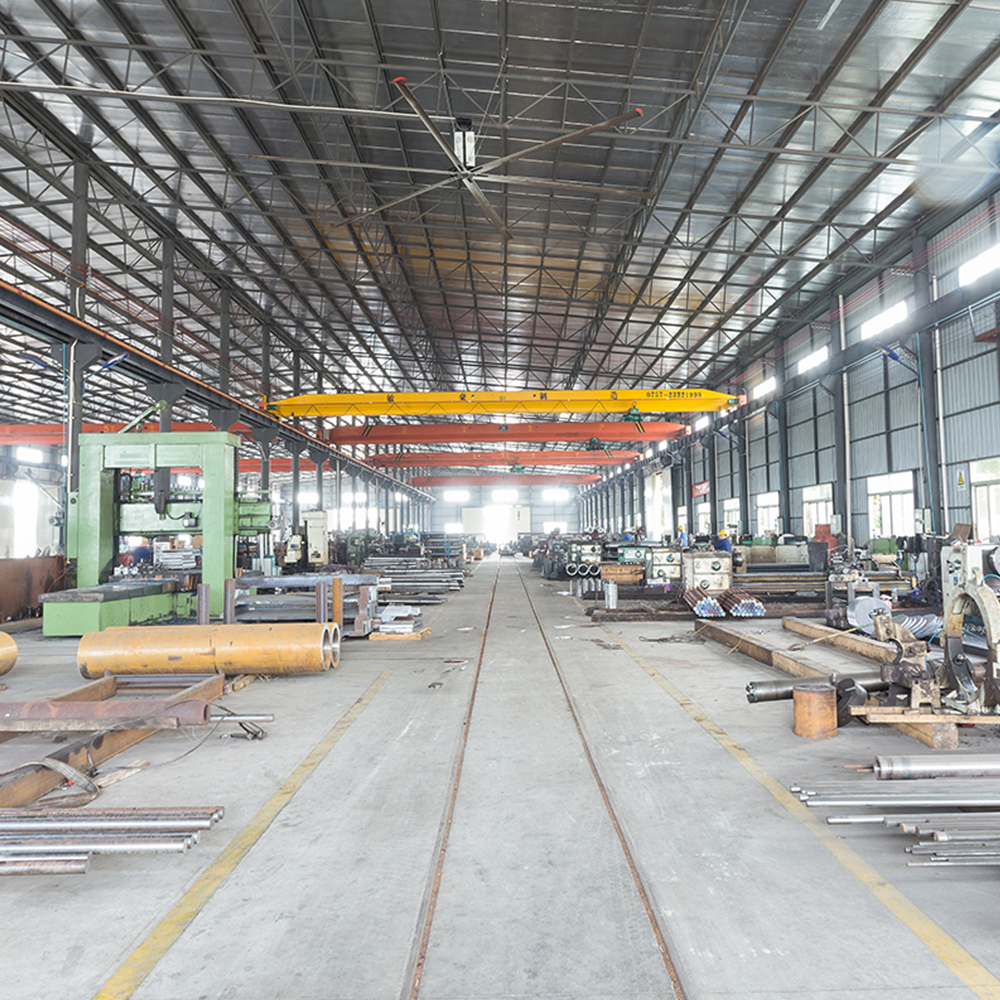
Retrofit planning starts on the floor: identify the station that caps output, then match the component to it.
Problem Definition: What a Retrofit Actually Is on a Corrugated Line
A retrofit is a targeted component replacement or upgrade on machinery you already run — a corrugator, a flexo printer-slotter-die cutter, a rotary die cutter, a folder-gluer or a material-handling line — carried out to remove a defined capacity or quality constraint. It is not a rebuild and it is not a machinery purchase. The scope is deliberately limited to the parts that create the symptom.
Retrofit work usually begins from one of these symptoms:
- Print that becomes light, mottled or gains dot area even though the printing plate is unchanged.
- Trim edges that tear, dust heavily or jam the slitter scorer.
- Sheet length variation and burrs at the cross-cut.
- Web wander, slack edges or an uneven bond across the width.
- Hanging waste and crushed flutes after rotary die cutting.
- Brake or cylinder response that changes as line speed increases.
Two decisions sit inside every retrofit: identifying which station is the constraint, and confirming that the replacement part is dimensionally and materially correct for that machine. Most disappointing retrofits fail on the second decision, not the first. A new roller that does not match the original outside diameter, inner diameter or hardness simply moves the defect somewhere else on the sheet.
Industry Background: Why Component-Level Retrofits Are Growing
Global demand for corrugating machinery continues to expand. The market was valued at approximately USD 4.8 billion in 2025 and is projected to reach USD 8.1 billion by 2034, according to Dataintelo. Published market sizes vary with the scope of equipment included, so the direction of growth is more reliable than any single figure. Asia-Pacific accounted for approximately 40.9% of the corrugated box-making machine market in 2024 (Straits Research), and China's exports of machinery parts in the HS 84 category grew 7.5% year on year in 2024, according to the General Administration of Customs of China.
Supply on the equipment side is concentrated. BHS Corrugated, Fosber and Mitsubishi together occupy roughly 60% of the global corrugated machinery market (Future Market Insights, 2025). For a box plant, that concentration has a practical consequence: most plants operate a mixed fleet — a major-brand corrugator alongside converting and handling machines from other builders — and the bottleneck is rarely the platform itself. It is a worn roller, a dull blade, a fading brake or a leaking joint. Sourcing those parts against drawing, in the correct material and hardness, is the retrofit problem this article addresses.
LLY PACK (HK) CO., LIMITED is a Hong Kong–registered supplier of corrugated machine parts and corrugated cardboard production lines. The company states a factory in Foshan City, Guangdong Province, more than 25 years of experience in manufacturing corrugated machines, four CNC machining centres from Japan, more than 100 patents and industry certificates, exports to over 40 countries, and more than 3,500 installations of corrugated lines worldwide.
Detailed Solution: The Four Bottleneck Families and the Parts That Address Them
Retrofit parts group into four families. Each family maps to a station and to a characteristic failure mode, which makes the matching exercise faster than working through a catalogue alphabetically.
1. Print quality: impression, ink film and plate support
The printing unit has three control points that wear independently. The Printing Roller applies impression pressure between the plate cylinder and the board; its outside diameter, thickness and hardness determine how much squeeze the printing plate sees. When impression drifts, the sheet shows dot gain, streaking or light print that no amount of ink adjustment corrects.
The printer anilox roller meters the ink film transferred to the plate. A worn or plugged anilox cannot deliver a consistent ink volume across the web, so density falls in some areas and not in others. Ink supply is the third control point: Ink Pump and Diaphragm Pump assemblies feed the chambered doctor blade, and pulsation, air entrainment or seal wear produces variation in ink delivery that looks like a print defect but is really a fluid-handling problem.
Printing Cushion is the compressible backing between plate and cylinder. It absorbs small geometry variation and lets the plate conform to board that is not perfectly flat. Before ordering print-unit parts, confirm the defect pattern — edge, centre or repeating — measure the removed component against the machine drawing, and specify the hardness and geometry the application requires. Customization is available for materials, outside diameter, inner diameter, number of holes, thickness and hardness.
2. Trim, die-cut and waste: edge quality decides waste
Waste in a box plant rarely has a single cause. It comes from edge condition at several stations at once. Slitting Blade and NC Cut-off Blade condition govern longitudinal trim and cross-cut quality respectively, and blades of this type for corrugated lines often use Tungsten Steel or High-Speed Steel (HSS) so that the edge resists wear across long runs. A dull edge does not merely cut poorly: it raises dust, increases jam frequency in the slitter scorer, and pushes operators to reduce line speed to keep the board running.
Downstream, the rotary die cutter adds its own waste sources. Rotary Die Board flatness and rule height, Anvil Cover Rubber condition, and Slotting Blade edges together decide whether a sheet leaves the die cutter clean or with hanging waste. PET Pre-strip With Film and Fiber Comb sit in the waste-removal path, where the objective is to release trim and die-cut waste from the sheet without tearing the board. Where waste will not strip cleanly, the cause is usually shared between the anvil surface and the stripping hardware rather than a single part.
Creasing belongs to the same discussion seen from another angle. Creaser Wheel and No crush wheel geometry decide whether the fold line forms cleanly or crushes the flutes beneath it — a mechanical outcome rather than a board-quality outcome. A Grinding Wheel programme that restores edge geometry on blades and knives between replacements keeps the whole waste picture stable.
3. Web tension, reel handling and heat transfer
Tension faults announce themselves as web wander, slack edges, baggy centres or an uneven bond across the width. Pneumatic Brake assemblies at the reel stand are usually where the fault is traced. Brake Pads wear changes braking response, and the change often appears first at high line speed, when the correction window is shortest. Paper chuck condition decides whether the reel is held square on the stand; a worn chuck lets the reel slip or shift laterally, and no amount of brake tuning compensates for that.
Pneumatic Cylinders handle actuation across the line — roll positioning, gate and platen movement, tension arms. Seal wear shows up as slow, jerky or inconsistent movement rather than a hard failure, which is exactly why cylinder condition is overlooked during a bottleneck investigation.
On the corrugator itself, heat transfer into rotating rolls depends on Rotary Joint and Flexible Metal Hose condition. A leaking joint or a fatigued hose changes the heat profile of the roll, and the symptom surfaces downstream as an uneven bond or board that curls.
4. Material flow and uptime consumables
conveyor belt and plastic pallet are rarely described as performance parts, yet they set the pace of material flow between stations and the condition in which bundles reach storage and shipment. High temperature tape is used in the heat-exposed zones of the corrugator, where the adhesive must hold at operating temperature rather than at ambient conditions.
Because retrofit parts must match an existing machine rather than a new design, sourcing capability matters as much as catalogue coverage. LLY PACK provides OEM production services and offers customization for materials, outside diameter, inner diameter, number of holes, thickness and hardness. Stated commercial parameters are a minimum order quantity of 100 pieces, a production lead time of 30–45 days, a monthly capacity of 1,000 pieces, 100% testing, and replacement for defective products. Export markets include South America, Southeast Asia, Africa and the Middle East, alongside the domestic market.
Component Index: Matching Parts to Station and Bottleneck
The index below is organised by component so that a plant engineer can move from a symptom to a shortlist in one pass. Each entry names the bottleneck the part typically addresses and the input needed to specify it correctly.
| Component | Bottleneck it addresses | Typical selection input |
|---|---|---|
| Slitting Blade | Ragged longitudinal trim, dust and jams at the slitter scorer | Edge material (Tungsten Steel or HSS where applicable), outside diameter, thickness, hardness |
| NC Cut-off Blade | Burrs and sheet length variation at the cross-cut | Edge material and hole pattern measured against the machine drawing |
| Slotting Blade | Ragged slot and flap walls, dust at the slotter | Geometry, material and edge hardness |
| Rotary Die Board | Inconsistent die-cut depth and hanging waste | Board flatness and rule configuration to the die layout |
| Anvil Cover Rubber | Poor cut quality, rule tracking marks, short cover life | Surface hardness and fit to the anvil cylinder |
| Creaser Wheel | Cracked or weak crease lines | Crease profile and wheel width |
| No crush wheel | Crushed flutes and caliper loss at the crease | Wheel geometry for thin board |
| Fiber Comb | Trim and waste that will not release cleanly from the die-cut sheet | Dimension and wear resistance |
| PET Pre-strip With Film | Hanging waste and poor ejection in rotary die cutting | Strip geometry matched to the die layout |
| Grinding Wheel | Blades and knives that lose edge geometry between replacements | Grit and dimension matched to the blade being sharpened |
| Printing Roller | Dot gain, streaking or light print caused by changed impression | Outside diameter, inner diameter, thickness, hardness |
| printer anilox roller | Uneven ink film, light patches, mottled print | Cell volume and surface condition required by the job |
| Printing Cushion | Impression variation caused by board thickness tolerances | Thickness and compressibility |
| Ink Pump | Inconsistent ink delivery to the printing unit | Fit, seal material and flow requirement |
| Diaphragm Pump | Pulsation, leakage and fluid-handling problems with ink and coatings | Diaphragm material and connection size |
| Pneumatic Brake | Web wander and unstable unwind tension | Torque requirement and mounting to the reel stand |
| Brake Pads | Brake fade and changing tension response at higher speed | Friction material and wear thickness |
| Paper chuck | Reel slip and lateral movement on the reel stand | Bore fit and grip surface for the reel core |
| Pneumatic Cylinders | Slow, jerky or inconsistent actuation | Bore, stroke and mounting per the machine drawing |
| Rotary Joint | Uneven roll heating caused by leakage or seal wear | Seal type, connection size and rotation speed |
| Flexible Metal Hose | Heat loss and leakage at moving steam or fluid connections | Length, end fittings and pressure rating per drawing |
| high temperature tape | Joint and edge protection in heat-exposed corrugator zones | Tape width and temperature class |
| Fiber Tape | Reinforcement and protection positions specified per machine | Width and backing type per drawing |
| conveyor belt | Sheet and bundle transfer between stations | Width, length and joint type matched to the conveyor |
| plastic pallet | Bundle support during stacking, storage and shipment | Load requirement compatible with the handling system |
Step-by-Step Breakdown: Running a Retrofit From Evaluation to Execution
The sequence below is written for plant managers and maintenance engineers who are already in the evaluation stage and need a repeatable way to reach execution.
- Baseline the constraint at the station. Record the defect pattern, the waste position on the sheet, or the speed at which tension destabilises. A baseline turns a retrofit from an opinion into a measurement, and it is the only way to confirm afterwards that the change worked.
- Convert the symptom into a component hypothesis. Use the component index above to narrow the list to the two or three parts that can physically produce the symptom at that station.
- Define the dimensional envelope. Measure the removed component or pull the original drawing: outside diameter, inner diameter, thickness, hole pattern and mounting features. Retrofit parts are matched to machines in service, so dimensions must come from the machine, not from a generic catalogue listing.
- Fix the material and hardness class. Cutting components and impression components fail for different reasons; specifying hardness and material for the application is what determines service interval, and this is the step where customization parameters do their work.
- Order against drawing with terms agreed up front. Confirm MOQ (100 pieces), delivery terms (FOB, CIF, EXW or DAP), payment terms (T/T), acceptance criteria (pre-shipment test) and lead time (30–45 days) before the order is placed, so installation can be scheduled around planned downtime.
- Verify against the baseline and set a re-order point. Re-measure the same metric recorded in step one. If the station is back inside specification, convert the retrofit into a stocking decision so the next wear cycle does not repeat the investigation.
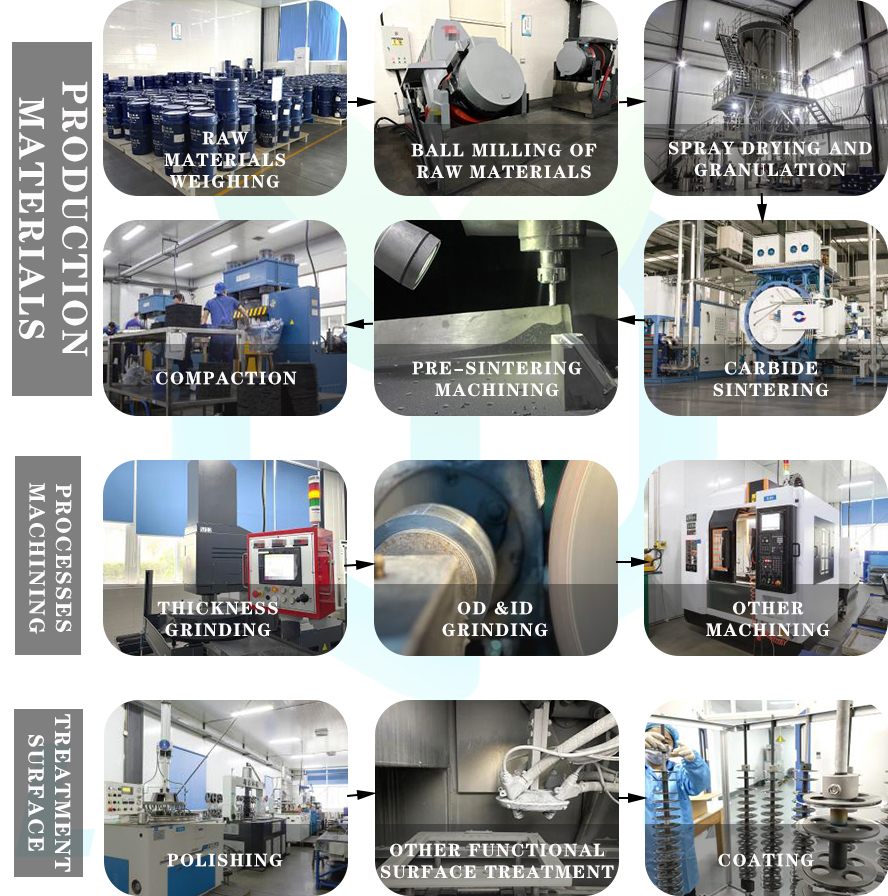
Slitting blades are produced to OEM specification, with material, outside diameter, thickness and hardness selected per application.
Use Cases: Three Retrofit Scenarios From the Floor
These scenarios describe typical bottleneck patterns in carton manufacturing. They are written as decision paths rather than as named case studies.
Scenario 1: Print degrades after a plate change on a printer-slotter-die cutter
The plate is new and proofed, yet density varies across the sheet and repeating streaks appear. The instinct is to adjust ink and, when that fails, to blame the plate. The productive path is to check impression geometry first: Printing Roller condition and hardness, then printer anilox roller ink volume, then Printing Cushion compressibility. If the pattern repeats at a fixed interval rather than varying across the width, the cause is rotating hardware; if it varies across the width, it is more likely ink film or impression.
Scenario 2: Web wander and uneven bond as corrugator speed increases
The web runs true at low speed and drifts at high speed — the signature of an unwind tension problem. Paper chuck grip and Pneumatic Brake response come first, with Brake Pads checked for wear-related fade. If tension is stable but the bond still varies across the width, the heat profile becomes the suspect, which points to Rotary Joint seals and Flexible Metal Hose condition on the rotating rolls.
Scenario 3: Hanging waste and crushed flutes after rotary die cutting
Sheets leave the die cutter with waste still attached and crease lines that show crushed flutes. This combination usually involves three parts of the same station: Anvil Cover Rubber condition, Rotary Die Board and rule configuration, and the stripping hardware — PET Pre-strip With Film and Fiber Comb. Changing only one of the three tends to move the defect rather than remove it.
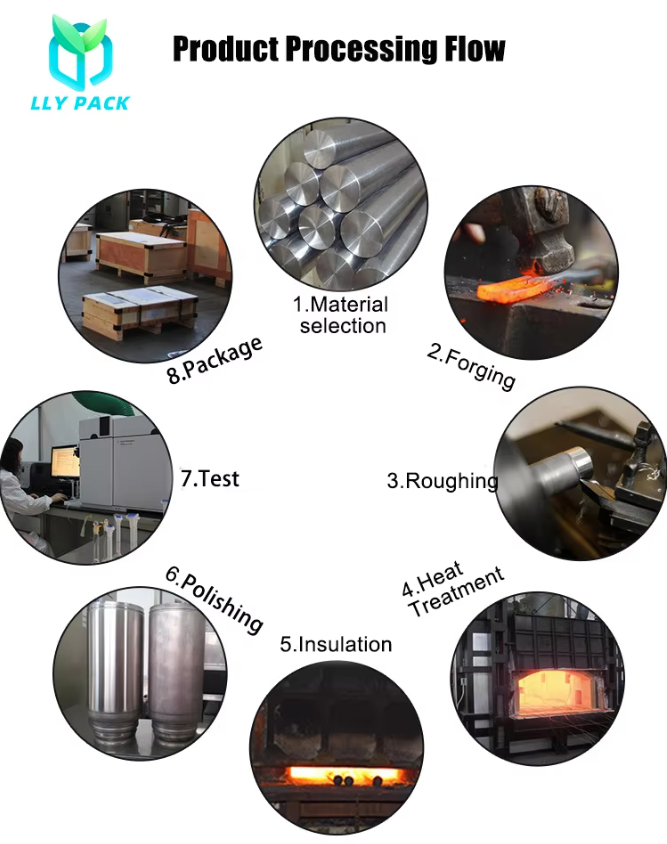
NC cut-off blades are supplied to drawing, so blade geometry matches the machine already in service.
Comparison Table: Which Retrofit Path Addresses Which Symptom
The table compares the five retrofit paths described above by symptom, the components they involve, and the verification step that prevents a mis-ordered part.
| Retrofit path | Bottleneck symptom | Components to review | Verify before ordering |
|---|---|---|---|
| Print unit refresh | Light or mottled print, dot gain, repeating streaks | Printing Roller, printer anilox roller, Printing Cushion, Ink Pump, Diaphragm Pump | Defect pattern, roller geometry against drawing, required hardness |
| Cutting and trim upgrade | Ragged trim, dust, burrs, sheet length variation | Slitting Blade, NC Cut-off Blade, Slotting Blade, Grinding Wheel | Edge material (Tungsten Steel or HSS where used) and blade dimensions |
| Die-cut waste and crease control | Hanging waste, crushed flutes, weak crease lines | Rotary Die Board, Anvil Cover Rubber, Creaser Wheel, No crush wheel, Fiber Comb, PET Pre-strip With Film | Die layout fit and anvil surface condition |
| Tension and unwind stabilisation | Web wander, slack edges, brake fade at higher speed | Pneumatic Brake, Brake Pads, Paper chuck, Pneumatic Cylinders | Torque requirement, reel core fit, mounting pattern |
| Heat transfer and uptime | Uneven bond, curl, leakage at steam or fluid connections | Rotary Joint, Flexible Metal Hose, high temperature tape | Seal type, hose pressure rating, connection size |
The commercial parameters are common across all five paths when parts are produced on an OEM basis: minimum order quantity of 100 pieces, delivery terms FOB, CIF, EXW or DAP, payment by T/T, acceptance criteria of a pre-shipment test, lead time of 30–45 days, monthly capacity of 1,000 pieces, 100% testing, and replacement for defective products.
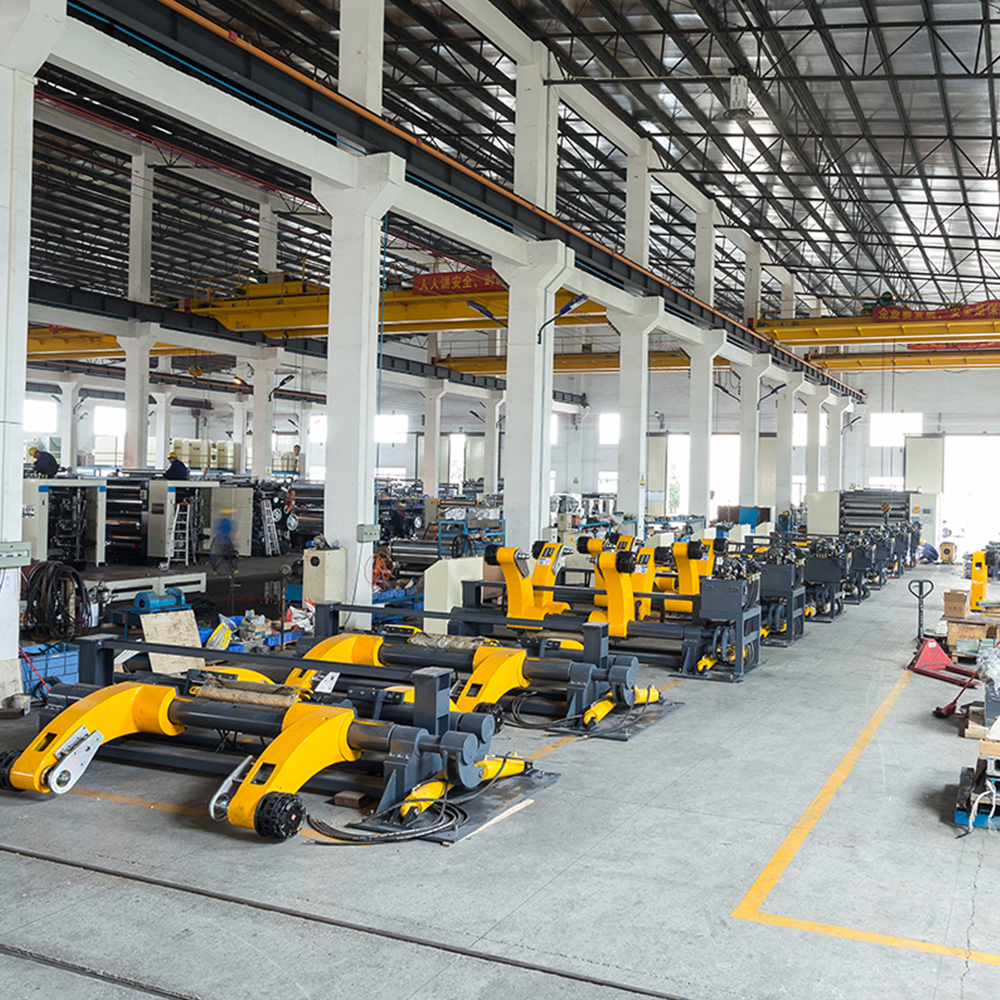
Unwind tension is a station-level retrofit: brake assemblies and paper chucks determine whether the web runs true at speed.
FAQ: Retrofit Sourcing Questions Box Plants Ask
Is LLY PACK certified for corrugated machine parts and machines?
Yes. LLY PACK (HK) CO., LIMITED holds ISO 9001:2015 certification, certificate number 60126Q00004R000, issued on 14 January 2026 and valid until 13 January 2029 by Guangdong Zhongjing Testing and Certification Co., Ltd. The certified standard is GB/T 19001-2016 / ISO 9001:2015, and the scope covers corrugated machinery and equipment including the corrugated cardboard production line, single facer, slitter scorer, slotter die cutter, stacker, stitching machine, strapping machine, auto splicer and double facer belt.
What can be customized on a retrofit part?
Customization is available for materials, outside diameter, inner diameter, number of holes, thickness and hardness. LLY PACK provides OEM production services, and its stated export markets include South America, Southeast Asia, Africa and the Middle East, alongside the domestic market. Because retrofit parts must fit a machine already in service, the customization parameters cover the dimensional and hardness variables that normally decide fit and service interval.
What are the order terms — MOQ, payment and delivery?
The minimum order quantity is 100 pieces. Delivery terms are FOB, CIF, EXW and DAP, and payment terms are T/T. The stated acceptance criterion is a pre-shipment test, which means the buyer should plan the acceptance step into the retrofit schedule before the parts are installed.
How is quality controlled before shipment, and what happens if a part is defective?
Production is 100% tested, and the acceptance criterion is a pre-shipment test. Defective products are replaced. For a retrofit, this matters most on cutting and impression components, where a dimension outside tolerance will not show up as a rejected part but as the same defect the plant was trying to eliminate.
What is the production lead time, and how does a retrofit order start?
Stated production lead time is 30–45 days, with a monthly capacity of 1,000 pieces. A retrofit order starts with the machine drawing, the model, or the component being replaced, plus a short description of the symptom observed at the station. Send that to christina@lycorrugated.com or WhatsApp +86 13763260555, and the part can be quoted and specified against the parameters above.
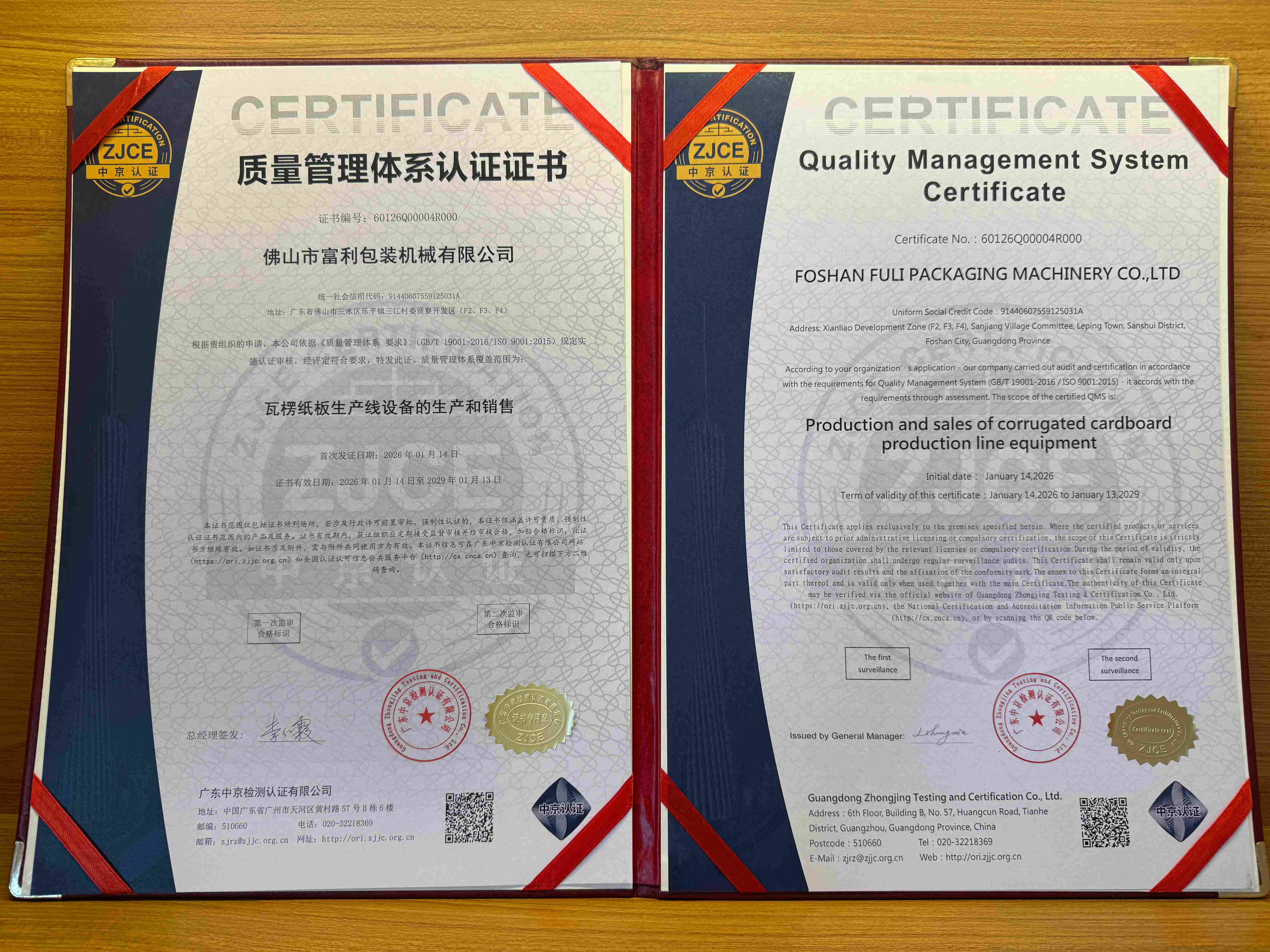
ISO 9001:2015 certification covers the design and production scope that retrofit parts fall under.
Conclusion: Match the Part to the Bottleneck, Then Standardise It
A retrofit succeeds when the symptom is traced to a station and the replacement part is matched to that machine in three dimensions — geometry, material and hardness. Print problems route to impression and ink-film components; trim and die-cut waste route to blade, die board and stripping components; tension problems route to brake, chuck and cylinder components; heat problems route to joint and hose components. Treated this way, a retrofit is not a purchase decision at all; it is a maintenance system that keeps a corrugated line inside specification without replacing the line.
Next Step: Send the Component You Need to Replace
The fastest route from evaluation to execution is to send the machine drawing, the model, or the removed component itself, together with the symptom observed at the station. LLY PACK produces corrugated machine parts on an OEM basis and customizes them by material, outside diameter, inner diameter, number of holes, thickness and hardness.
- MOQ: 100 pieces | Delivery terms: FOB, CIF, EXW, DAP | Payment: T/T | Acceptance: pre-shipment test
- Lead time: 30–45 days | Monthly capacity: 1,000 pieces | Quality control: 100% test | Defective products replaced
- Contact: Christina — christina@lycorrugated.com | WhatsApp: +86 13763260555
www.llypack.com · Download the LLY PACK product brochure (PDF)

Order terms for retrofit parts follow the stated commercial parameters: MOQ 100 pieces, T/T payment, FOB / CIF / EXW / DAP delivery.