
Corrugated Cardboard Machine Ecosystems: A Long-Term Sourcing and Distribution Playbook for 2026
Corrugated Cardboard Machine Ecosystems: A Long-Term Sourcing and Distribution Playbook for 2026
A corrugated cardboard machine is not a one-time purchase. It is the anchor of a production ecosystem that includes paper reel handling, corrugating, converting, finishing, spare parts, training, and after-sales risk control.
Introduction: Moving from Machine Price to Partnership Value
When procurement teams search for a corrugated cardboard machine, the opening question is usually line speed, price, or delivery time. In practice, the more important question is: “Can this supplier support my production and distribution plan for the next five to ten years?”
For distributors, carton manufacturers, and packaging investors in the Decision or Execution stage, the real goal is not simply to buy equipment. It is to build a repeatable production and commercial system. That system must be capable of handling raw paper, forming board, printing, die cutting, folding, gluing, stitching, bundling, strapping, and testing without creating avoidable interface risks.
This article explains what a long-term corrugated cardboard machine partnership should include, how to evaluate a complete-line manufacturer, and how to move from supplier review to execution in 2026.
Problem Definition: Why Single-Machine Procurement Fails in Long-Term Distribution
The most expensive surprises in corrugated packaging projects rarely come from one machine alone. They usually come from mismatched modules: an auto splicer from one vendor, a single facer from another, a slitter scorer from a third, and a stacker from a fourth. Each individual unit may perform well, but the system as a whole may suffer from inconsistent speeds, poor communication between modules, unpredictable changeovers, and scattered after-sales responsibility.
Distributors face an additional challenge. A distribution business needs more than a working machine. It needs documentation, spare parts, specification consistency, and a supplier that can explain the equipment to local buyers. If the supplier cannot provide a complete product ecosystem, the distributor inherits the integration risk.
The problem is not capability in a single production step. It is the absence of a system-level answer.
Industry Background: A Growing, Automation-Heavy Market
The corrugated box making machine market is expanding, and automation is playing a larger role in equipment decisions.
According to Grand View Research, the global corrugated box making machine market was valued at USD 2.21 billion in 2024 and is projected to reach USD 3.36 billion by 2033, growing at a compound annual growth rate of 4.8% from 2025 to 2033. Future Market Insights projects that China's corrugated box machine industry will rise at a 3.9% CAGR between 2026 and 2036, driven by China's position as a global manufacturing hub.
Automation is already the dominant demand pattern. As of 2026, automatic corrugated machines hold a 55.6% share of global demand by automation level. At the same time, China's broader machinery industry remains a major export force: total export volume exceeded USD 1 trillion for the fourth consecutive year in 2024, reaching USD 1.17 trillion, up 7.5% year on year.
Quality standards are also becoming more important. The FEFCO GMP standard and ISO 3037:2022 are primary global standards for ensuring quality and edgewise crush resistance in corrugated cardboard production. In the European Union, safety compliance for corrugated printing and converting machinery typically requires CE marking and adherence to standards such as EN ISO 12048 for compression testing.
The practical implication is clear: long-term buyers need suppliers that can combine complete-line capability, automation, export experience, and verifiable manufacturing evidence.
Detailed Solution: What a Long-Term Corrugated Cardboard Machine Partner Should Provide
The answer is a supplier with complete-line capability, engineering depth, and execution terms that reduce risk. LLY PACK (HK) CO., LIMITED is a China-based corrugated machine manufacturer with a factory in Foshan, Guangdong Province. The company specializes in corrugated machines and high-speed corrugated cardboard production lines, and reports more than 3,500 successful installations in over 40 countries.
Complete-Line Product Ecosystem
LLY PACK's main product range includes Corrugated Belt, Corrugating Roll, Single Facer, Auto Splicer, and Corrugated Paper Board Production Line. The company also presents a modular ecosystem that covers the full production flow: Hydraulic Reel Stand, Paper Reel Cutter, Paper Reel Conveyor, Auto Splicer, Single Facer, Corrugator line Glue kitchen, Slitter Scorer, Slotter Die Cutter, Folder Gluer, Stitching Machine, Strapping Machine, Boundle Machine, Pre-feeder, Stacker, Wrapping Machine, Waste Paper Baler, Carton testing instrument, and Cardboard Laminater.
For a distributor, this breadth reduces interface risk. Instead of managing separate vendors for the wet end, dry end, and finishing equipment, the buyer can evaluate one system. For example, the Corrugated Cardboard Production Line model CCPL-1 is listed with a maximum mechanical speed of 300 m/min, production line width of 1400 to 2800 mm, steam heating, steam pressure of 10 kg/cm², and boiler sizes of 2, 3, or 4 MT/H depending on line speed. The required space is approximately 110 m long, 14 m wide, and 6.5 m high. These are concrete parameters that can be checked against a plant layout.
Engineering and Manufacturing Evidence
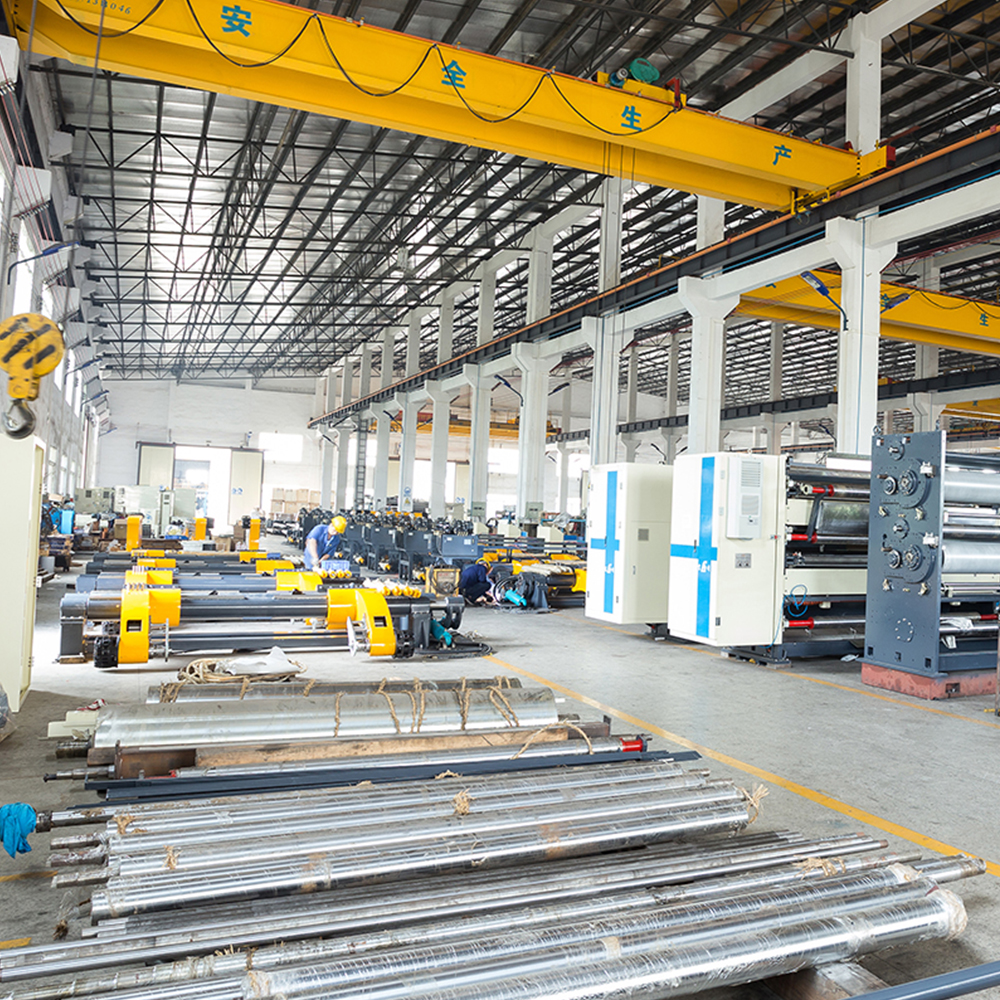
Long-term buyers should inspect not only the product list but also the production environment. LLY PACK is headquartered in Hong Kong and operates a factory in Foshan City, Guangdong Province. The company's official profile states that its factory has a total area of 57,000 square meters and that the company has more than 25 years of experience specializing in corrugated machines and high-speed corrugated cardboard production lines.
The company reports more than 100 patent rights and certificates from the industry, as well as four sets of advanced CNC centers from Japan. These include a five-face machine center with computer control to ensure high-precision processing. The R&D team has 30 members, and the company lists an annual output of 120,000 units. For an industrial buyer, these facts are useful evidence of engineering capacity, though they should still be verified through a factory visit or audit.
Procurement and Risk-Control Support
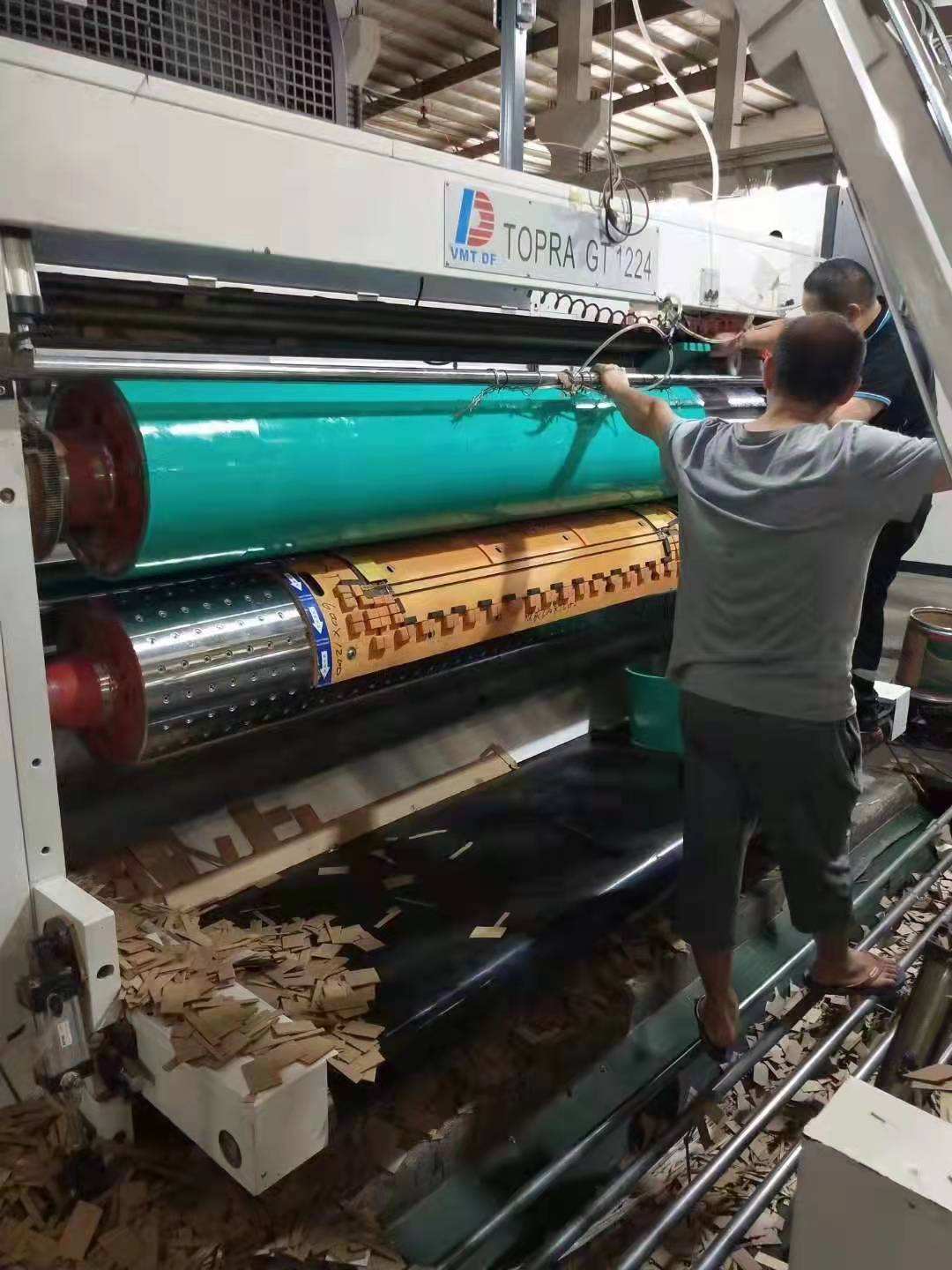
Execution terms matter as much as machine specifications. According to LLY PACK procurement data, the minimum order quantity is one set. Payment is made by T/T. Delivery can be arranged under FOB, CIF, EXW, or DAP. The standard acceptance method is pre-shipment testing. These terms give a buyer a clear execution framework: confirm the equipment list, agree on delivery terms, inspect before shipment, and then handle installation and commissioning.
LLY PACK also describes a practical risk-control approach: key equipment and wear parts are replaced in advance, and digitized monitoring is implemented wherever possible to mitigate operational risks. For a distributor, this reduces the chance of unplanned downtime and makes spare-part planning easier.
Step-by-Step Breakdown: From Supplier Review to Execution
Buyers in the Decision and Execution stage need a structured process. The following seven steps can be used as a checklist.
Step 1: Define the Commercial Model and Target Production Output
Identify whether you are buying for your own factory, for a turnkey project, or for distribution to local carton plants. This determines whether you need a single corrugated cardboard machine, a complete production line, or a broader equipment portfolio.
Step 2: Map the Full Production Journey
List every function from paper reel to finished bundle: reel handling, splicing, corrugating, gluing, slitting, scoring, printing, die cutting, folding, gluing, stitching, bundling, strapping, stacking, and testing. For each function, identify the corresponding module in the supplier's product range.
Step 3: Verify Product Specifications Against Your Box Types
Use concrete parameters. If you need high-speed single-face production, examine the Single Facer model SF-1, which is listed with a design speed of 250 m/min and a web width of 1400 to 2300 mm. If your line needs automatic splicing, the Auto Splicer AS-1 is listed with a speed of 300 to 400 m/min and paper width of 1200 to 2550 mm. If your plant needs high-speed finishing, review the Slitter Scorer SSC-1, Slotter Die Cutter SDC-1, Folder Gluer FG-1, Stitching Machine STM-1, and Strapping Machine SM-1 specifications.
Step 4: Inspect Manufacturing Evidence
Ask for factory details, machining equipment, R&D team size, patent or certificate lists, and installation references. For LLY PACK, available evidence includes the Foshan factory, 57,000 square meters of factory area, four CNC centers from Japan, an R&D team of 30, and more than 100 patent rights and certificates.
Step 5: Confirm Commercial and Delivery Terms
Check MOQ, payment method, delivery terms, and acceptance method. LLY PACK's standard terms are one set MOQ, T/T payment, FOB/CIF/EXW/DAP delivery, and pre-shipment testing. Confirm whether these terms match your project timeline and local import requirements.
Step 6: Build a Risk-Control and Spare-Part Plan
Ask how the supplier handles wear parts and unplanned stops. LLY PACK states that it replaces key equipment and wear parts in advance and uses digitized monitoring wherever possible. This type of approach is valuable for long-term operations because it reduces downtime and keeps the line predictable.
Step 7: Request a Written Execution Schedule
Lead time depends on line width, configuration, customization, and delivery destination. There is no safe generic number. A reliable supplier should provide a written delivery schedule and a pre-shipment test plan. Tie each milestone to the agreed delivery term and payment schedule.
Use Cases: Three Distribution and Production Scenarios
The value of a complete-line ecosystem becomes clearer when applied to real commercial scenarios.
Use Case 1: A New Distributor Entering the Corrugated Packaging Market
A distributor entering the market needs a product story backed by a complete line. Starting with the Corrugated Cardboard Production Line CCPL-1 and adding finishing modules such as Pre-feeder, Slotter Die Cutter, Folder Gluer, Stitching Machine, Strapping Machine, and Stacker allows the distributor to offer solutions rather than single machines. The procurement terms, including one-set MOQ, FOB/CIF/EXW/DAP delivery, and pre-shipment testing, make the first order easier to manage.
Use Case 2: An Existing Carton Factory Upgrading Speed and Automation
Automatic corrugated machines hold 55.6% of global demand by automation level as of 2026. A carton factory with an older line may upgrade by adding an Auto Splicer AS-1 and a Single Facer SF-1 to improve input stability, then add a Slitter Scorer SSC-1 and Stacker STA-1 to increase downstream throughput. This approach delivers automation without losing the existing facility layout.
Use Case 3: A High-Mix Box Plant Needing Flexible Finishing
Producers that handle many short-run orders need fast changeover and reliable finishing. Relevant specifications include the Slotter Die Cutter SDC-1 with a maximum die cutting speed of 5000 sheets per hour, the Folder Gluer FG-1 with a maximum gluing speed of 110 m/min, the Stitching Machine STM-1 with a speed of 450 nails per minute, and the Strapping Machine SM-1 with a capacity of 35 bundles per minute for a single strap. A Carton testing instrument CTI-1 can also be added to check burst strength, crush strength, and thickness in-house.

Comparison Table: Long-Term Supplier Evaluation Dimensions
The table below compares the evaluation dimensions that matter most for a long-term corrugated cardboard machine partnership. It combines third-party market context with verifiable evidence from LLY PACK.
| Evaluation Dimension | What to Verify | Third-Party Market Context | Example Evidence from LLY PACK |
|---|---|---|---|
| Market presence | Export footprint and installation base | BHS, Mitsubishi Heavy Industries, and Bobst are identified as leading global tier-1 manufacturers of corrugated production lines | Exports to more than 40 countries and more than 3,500 successful installations worldwide |
| Product ecosystem | Can the supplier deliver a complete line instead of isolated machines? | Automatic corrugated machines hold 55.6% of global demand by automation level | Main products include Corrugated Belt, Corrugating Roll, Single Facer, Auto Splicer, and Corrugated Paper Board Production Line, plus finishing modules from Pre-feeder to Wrapping Machine |
| Engineering depth | Machining capacity and R&D resources | China machinery exports exceeded USD 1.17 trillion in 2024 | R&D team of 30; four sets of advanced CNC centers from Japan; more than 100 patent rights and certificates |
| Quality and risk control | Factory environment, wear-part planning, and test procedures | FEFCO GMP and ISO 3037:2022 are primary global standards for corrugated board quality | Factory in Foshan with 57,000 square meters total area; key equipment and wear parts replaced in advance; pre-shipment testing |
| Commercial execution | MOQ, payment, delivery, and acceptance | None required | MOQ one set; T/T payment; FOB, CIF, EXW, and DAP delivery; pre-shipment test as standard acceptance |
Frequently Asked Questions
What compliance documents should a long-term corrugated cardboard machine partner provide?
For board quality, FEFCO GMP and ISO 3037:2022 are primary global standards. For the European Union, CE marking and standards such as EN ISO 12048 are commonly expected for compression testing. LLY PACK states that it holds more than 100 patent rights and certificates from the industry and uses pre-shipment testing, but a buyer should still request a certificate list mapped to the destination market before signing.
Can one supplier deliver a complete ecosystem instead of a single corrugated cardboard machine?
Yes, if the supplier has complete-line capability. LLY PACK's main products include corrugated belts, corrugating rolls, single facers, auto splicers, and corrugated paper board production lines. Its module list also covers slitter scorers, slotter die cutters, folder gluers, stitching machines, stackers, strapping machines, wrapping machines, waste paper balers, and carton testing instruments. The company reports over 3,500 installations and exports to more than 40 countries.
What payment and delivery terms should a distributor expect?
According to LLY PACK procurement data, the minimum order quantity is one set, payment is made by T/T, and delivery can be arranged under FOB, CIF, EXW, or DAP. The standard acceptance method is pre-shipment testing. The exact payment split and delivery milestones should be confirmed in the quotation.
Can I inspect equipment or run a test before placing a full order?
For heavy production equipment, the practical equivalent of a sample is a pre-shipment acceptance test. LLY PACK uses pre-shipment testing as its standard acceptance method. Since the factory is located in Foshan, Guangdong Province, a factory visit is also a reasonable step. Buyers should request a test plan and define the inspection checklist before payment.
How long does execution take after signing a distribution order?
Lead time depends on line width, configuration, customization, and destination. It is not published in the available product data, so it should be confirmed in writing during quotation. LLY PACK supports T/T payment, FOB/CIF/EXW/DAP delivery, and pre-shipment testing, which allows the buyer to link the delivery schedule to agreed milestones. The next step is to request a detailed quote, equipment list, and delivery schedule from LLY PACK's team.
Conclusion
A corrugated cardboard machine purchase should be treated as the beginning of a long-term production ecosystem. Distributors and carton manufacturers who focus only on the price of a single machine may miss the larger risks: interface mismatch, spare-part dependency, poor documentation, and weak execution control.
The more durable approach is to evaluate the whole system. Start with the production journey, verify manufacturing evidence, check real specifications, and confirm commercial terms such as MOQ, payment, delivery, and acceptance. A supplier like LLY PACK provides a useful example because it offers a modular product ecosystem, manufacturing evidence, and concrete procurement terms.
Next step for Decision and Execution buyers: If you are preparing a distribution or plant project, request the LLY PACK equipment list, specification details, and delivery schedule. You can download the company brochure or contact the LLY PACK team at christina@lycorrugated.com and WhatsApp +86 13763260555.