
Corrugated Machine Parts 101: What Each Component Actually Does on the Line
Component vocabulary for box plants
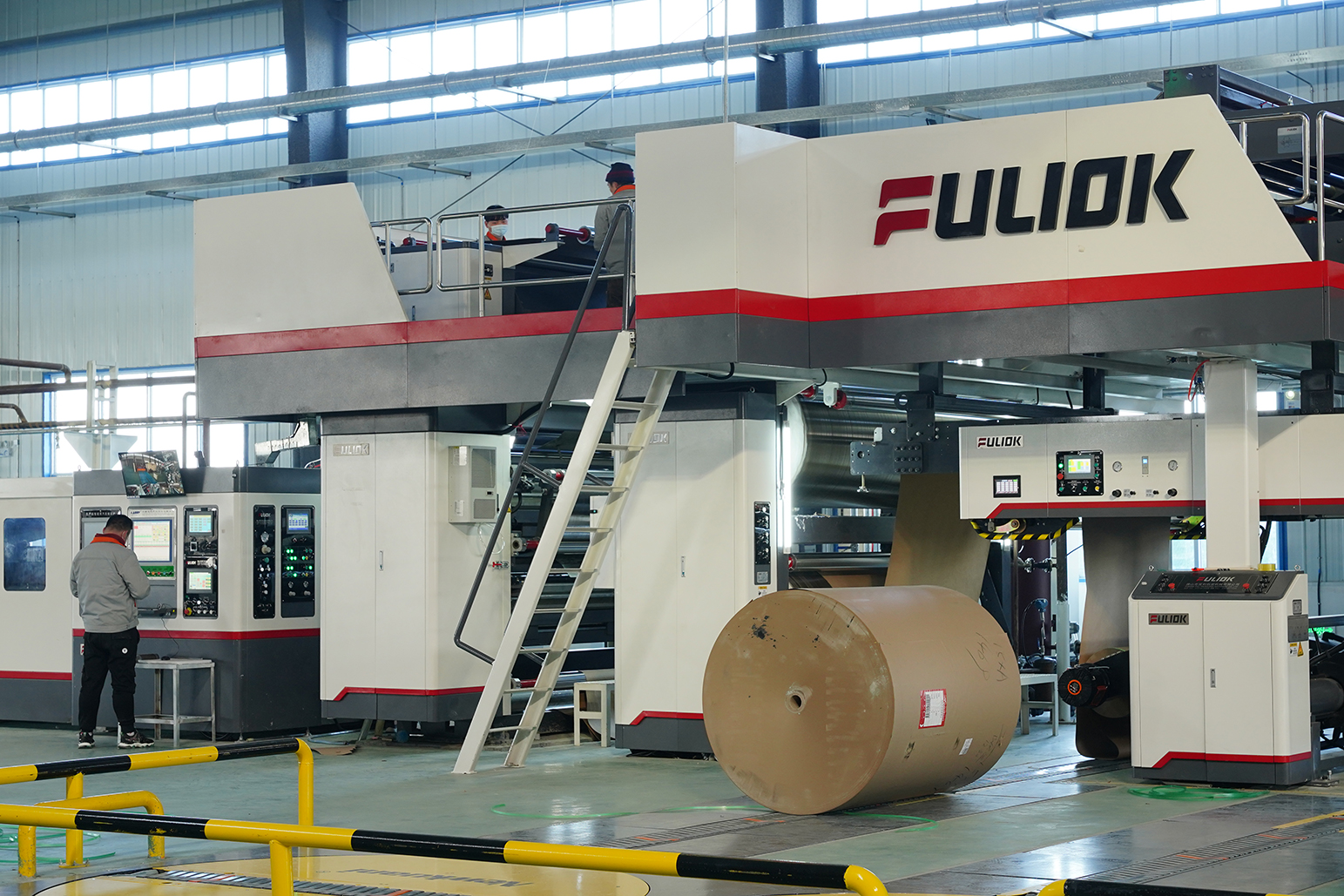
Corrugated machine parts are the replaceable and wear-prone components that keep a corrugator, printer, die-cutter and conveyor system working together. They include rollers that meter ink, rubber covers that support die-cutting, pumps that move ink or fluid, cylinders that create movement, belts that carry board, and chucks that hold paper reels.
This guide is a vocabulary builder for new buyers and operators. It explains what ten core parts actually do on the line: the Printing Anilox Roller, Printing Roller, Anvil Cover Rubber, Rotary Die Board, Diaphragm Pump, Ink Pump, Pneumatic Cylinders, Rotary Joint, Conveyor Belt, Double Facer Belt and Paper Chuck. It is not a ranking, a price guide or a supplier comparison. The goal is simpler: after reading, you should be able to look at a parts list and understand which part belongs to which job.
Problem Definition: Why Part Names Are Easy to Mix Up
New buyers and operators often meet part names before they meet the part itself. A quotation may list a Printing Roller, a Printing Anilox Roller and a Printing Cushion in the same email. A maintenance sheet may mention a Diaphragm Pump, an Ink Pump and a Rotary Joint without explaining which one handles ink, which one handles air, and which one handles a rotating supply line. The names sound technical, but they do not always explain the function.
That confusion matters because the line runs under high precision, high continuity, and high speed, as described in the application data for corrugated cardboard line parts matching. The same application data also notes special requirements for base paper adaptability and speed synchronization. A part that looks minor can affect the web, the print, the cut, the stack or the reel feed. Before comparing quotations, a buyer needs a simple map: what the part touches, what it moves, and what it controls.
A useful rule is to stop treating corrugated machine parts as one long list. Group them by the work they do. Some parts transfer ink or fluid. Some create motion or hold pressure. Some carry board or paper. Some form the cutting and printing geometry. Once the group is clear, the part name becomes easier to place.
Industry Background: A Line Is a Chain of Transfers
Corrugated board production converts raw paper into corrugated cardboard that meets specifications. The application data describes this function directly. The line can run in semi-automatic or fully automatic mode, and it depends on a sequence of transfers: paper reel to corrugator, liner to single facer, board to double facer, board to printing, board to die-cutting, and board to stacking or conveying.
Each transfer needs a component that either touches the material, controls the motion, or supplies a fluid. That is why a parts list can feel broad. A Printing Anilox Roller belongs to the printing transfer. A Double Facer Belt belongs to the board-bonding transfer. A Paper Chuck belongs to the reel-holding transfer. A Pneumatic Cylinder may sit in several sections because compressed air is used for clamps, guides, brakes, feed mechanisms and other movements.
In a corrugated line, parts also differ by failure mode. Some wear from contact with paper, ink or board. Some wear from pressure cycles or heat. Some wear from continuous rotation. The buyer does not need to memorize every failure mode, but the buyer does need to know which parts are consumable, which parts are motion components, and which parts are handling components. That is the vocabulary this article builds.
Detailed Solution: Three Families of Corrugated Machine Parts
1. Printing and cut-to-shape components
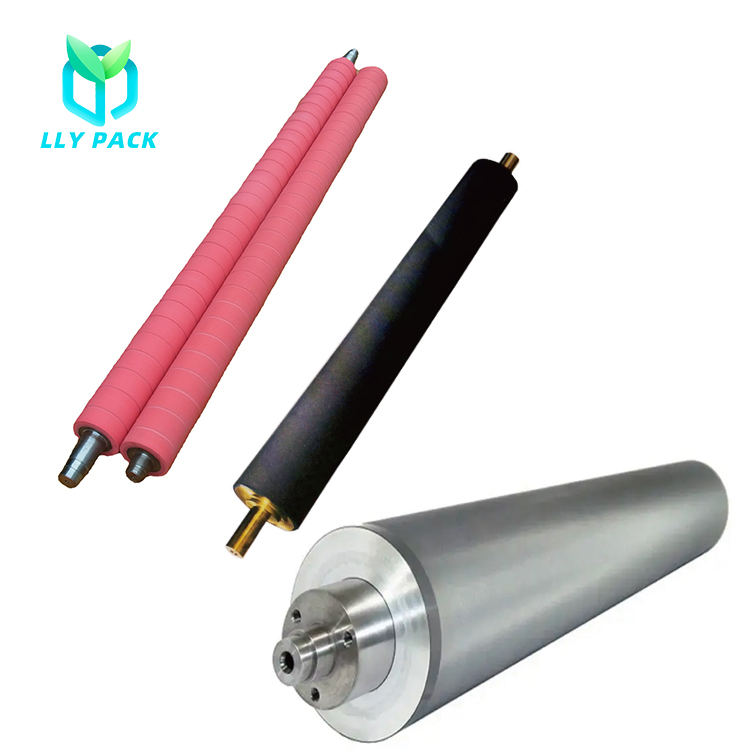
The Printing Anilox Roller is the ink-metering roller in flexographic printing. Its job is to carry a controlled film of ink from the ink supply to the printing plate. In everyday language, it is the roller that helps decide how much ink reaches the board. When a buyer hears the term anilox, it is usually a signal that the discussion is about print quality, ink transfer or roller condition rather than about board handling.
The Printing Roller is a steel roller used in carton printing. In the verified product data, Printing Roller PR-1 is listed with material Steel, application Carton Printing, and customization as drawings. That customization note matters because a printing roller is not a generic hardware item; it is matched to the printing unit and the job. The Printing Roller supports the print setup, while the Printing Anilox Roller meters ink.
The Anvil Cover Rubber is the rubber surface that sits under rotary die-cutting. It gives the cutting rule a resilient surface to press against, and it protects the anvil from direct wear. In practice, it is a wear part. Operators watch it because a worn or damaged cover can affect cut quality and can put stress on the die. The Rotary Die Board is the board that carries the cutting or forming geometry for rotary die-cutting. It is the tool side of the cut, while the Anvil Cover Rubber is the surface side.
These four names often appear together because they sit in the printing and die-cutting part of the line. They are not interchangeable. The Printing Anilox Roller and Printing Roller belong to ink transfer and print support. The Anvil Cover Rubber and Rotary Die Board belong to cutting geometry and cut support. A buyer who keeps this distinction clear can ask a more precise question: is the issue print transfer, cut quality, or wear on the anvil surface?

2. Fluid, ink and motion components
The Diaphragm Pump is a fluid-transfer component. In the verified product data, Diaphragm Pump DP-1 is listed with material Steel, pipe diameter 10, 12 and 20 mm, self-absorbing height 0.4 m, working air pressure 0.2 to 0.5 MPa, maximum air consumption 4 m3/h, flow rate 4 to 12 L/min, lift 4 m, and dimensions 210 by 155 by 255 mm. Its application is the corrugated carton packaging industry. For a new operator, the key idea is that this is an air-operated pump used to move fluid; the numbers describe its working envelope, not its brand value.
The Ink Pump is the component that moves ink from the reservoir to the printing unit and supports ink circulation. It is part of the ink supply loop rather than the print geometry. When print quality changes, the Ink Pump and the Printing Anilox Roller are often checked together: one moves the ink, the other meters it. The Diaphragm Pump and the Ink Pump are both fluid-related, but they are not the same part and should not be treated as interchangeable without checking the machine and the duty.
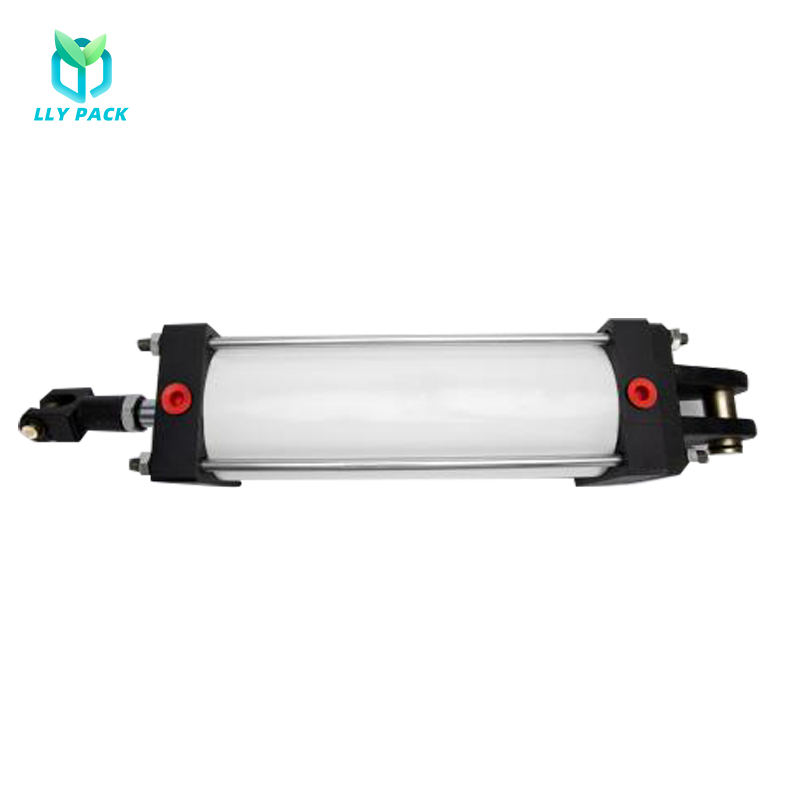
The Pneumatic Cylinders convert compressed air into linear movement. In the verified product data, Pneumatic Cylinders PC-1 are listed with material Steel, weight 2 kg, working temperature -25 to 80 degrees Celsius, proof pressure 12 bar, working pressure 1.5 to 8 bar, maximum stroke 1000 mm, bore size 32 to 400 mm, and port size PT1/2, PT3/4, P1 and P1/4. On a corrugated line, that linear movement can be used for clamps, guides, feed mechanisms, brakes or other positioning tasks. The cylinder is a motion part, not a wear surface that touches the board.
The Rotary Joint is the component that lets a rotating roller receive a supply medium such as steam, water or air without twisting the supply line. It is a small part with a clear system role: it connects the rotating and stationary sides of the line. LLY PACK lists Rotary Joint as a corrugated-machine spare-part category. For a buyer, the Rotary Joint is a reminder that not every important part is a roller or a blade; some parts keep the utility connection stable while the roller turns.
3. Handling and web-control components
The Conveyor Belt moves board or paper between stages. It is a handling component, and its job is transfer rather than forming or printing. In a corrugated plant, conveyor belts appear in different positions, so the same word can refer to different belt designs. The buyer should always ask where the belt runs and what it carries before comparing a quotation.
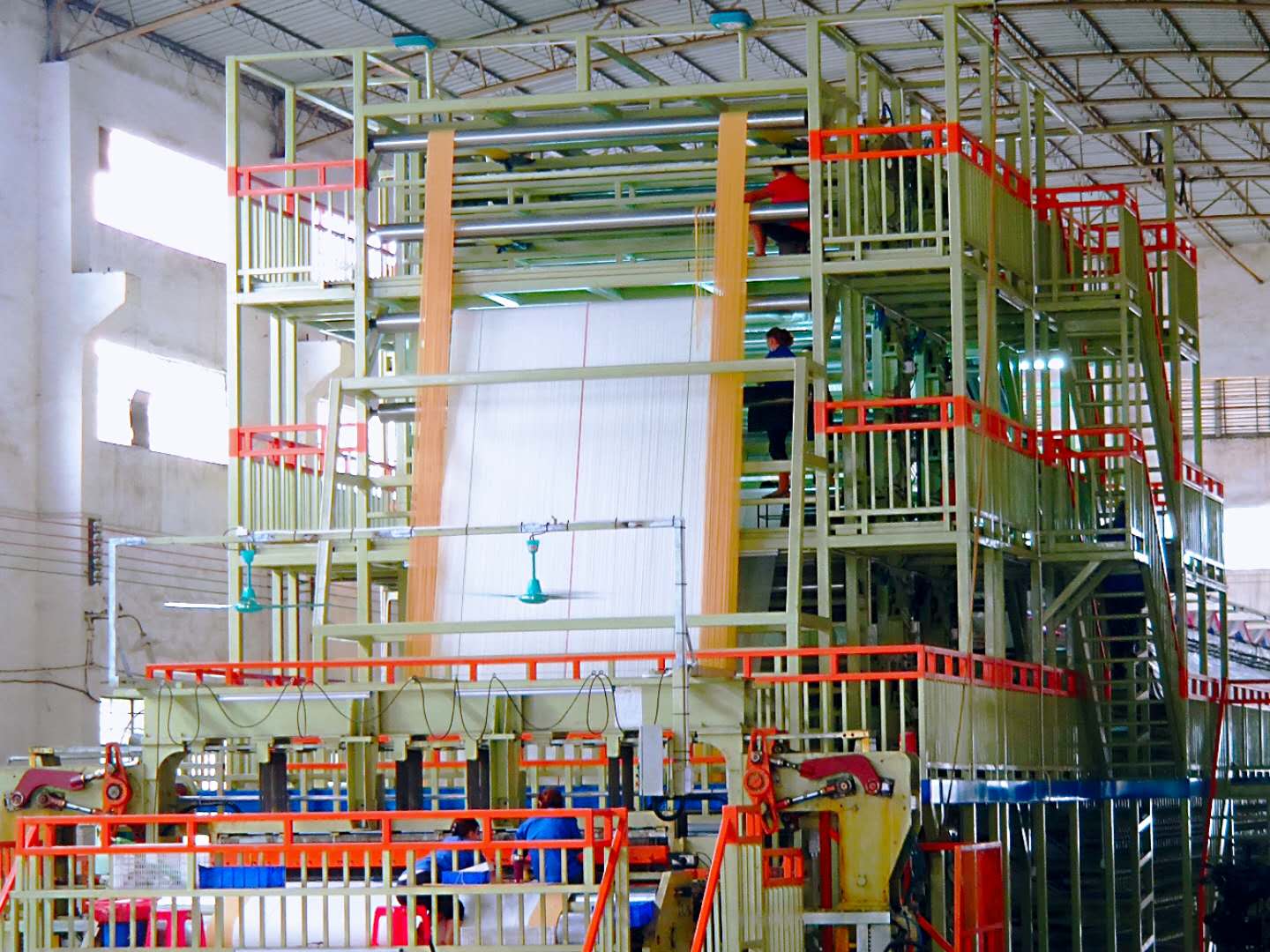
The Double Facer Belt is a special handling belt used in the double facer section. It holds the board against the hot plate area while the adhesive bonds and the board is kept flat. The verified factory image for this article shows a Double Facer Belt Production Factory, which is useful because it makes the part visible as a produced industrial belt rather than an abstract line item. When the double facer belt runs unevenly, the effect is not only belt wear; it can show up as bonding variation or board flatness problems.
The Paper Chuck holds and centers a paper reel. In the verified product data, Paper Chuck PCH-1 is listed with material Steel and customization. It is a handling component, not a printing or cutting part. Its job is to connect the reel to the reel stand and keep the paper feeding evenly. If a new operator learns only one thing about the Paper Chuck, it should be this: it belongs to the reel-handling side of the plant, and its fit matters as much as its material.
Other part names often appear beside these core components: slitting blade, slotting blade, NC Cut-off Blade, creaser wheel, grinding wheel, brake pads, fiber comb, no crush wheel, printing cushion, fiber tape, high temperature tape, PET Pre-strip With Film, flexible metal hose, and plastic pallet. They are all part of the wider vocabulary of corrugated machine parts. This article does not treat them as the main subject, but a buyer will meet them in the same spare-parts conversation. The grouping habit still works: ask whether the part cuts, creases, carries, seals, tapes, protects or supports.

Step-by-Step Breakdown: How to Read a Component on Your Line
- Locate the section. Start with the section of the line where the part sits: corrugator wet end, double facer, printing unit, die-cutter, conveyor or reel stand. The same part name can mean different things in different sections, so section comes first.
- Name the function. Decide whether the part transfers ink or fluid, creates motion, holds pressure, carries board, holds a reel, or forms a cut or crease. A Printing Anilox Roller meters ink. A Diaphragm Pump moves fluid. A Pneumatic Cylinder creates movement. A Paper Chuck holds a reel. A Double Facer Belt carries board through bonding.
- Record the model and drawing. Use the exact model where available, such as Diaphragm Pump DP-1, Pneumatic Cylinders PC-1, Printing Roller PR-1 or Paper Chuck PCH-1. If the part is customized, keep the drawing, dimensions, material and hardness in one place. The verified data for Printing Roller PR-1 and Paper Chuck PCH-1 both note customization, so the drawing is part of the identity of the part.
- Match the operating condition. The application data for corrugated cardboard line parts matching describes high precision, high continuity, and high speed, plus special requirements for base paper adaptability and speed synchronization. Use those conditions when you describe the duty. A part that works at one speed or paper grade may not be the right choice for another.
- Write a clean request. For OEM cutting parts, LLY PACK lists customization options such as material, outside diameter, inner diameter, number of holes, thickness and hardness. The same capability data lists monthly capacity 1000 pieces, MOQ 100 pieces, lead time 30 to 45 days, quality control 100 percent test, and after-sales replacement for defective products. Use those data points only when they match the part being requested; do not assume every part carries the same MOQ or lead time.
Use Cases: Matching the Vocabulary to a Real Scenario
High-speed corrugator with frequent paper changes
When the corrugator runs at high speed and changes paper grades, the handling and motion parts become easier to understand. The Double Facer Belt has to keep the board flat during bonding. The Paper Chuck has to hold and center the reel. The Rotary Joint has to keep the rotating supply connection stable. Pneumatic Cylinders may be used for positioning or clamping. The application data points to base paper adaptability and speed synchronization as special requirements, which is exactly why these parts should be described by duty, not only by name.
Flexo printing and ink circulation
In the printing section, the Printing Anilox Roller meters ink, the Printing Roller supports the print setup, and the Ink Pump moves ink through the circulation loop. The Diaphragm Pump is a separate fluid-transfer part with a defined air pressure and flow range. A new buyer should not merge these into one category called pumps and rollers. They belong to the same print area, but they do different jobs. If print quality changes, the operator may check ink supply, ink metering and roller condition in sequence.
Rotary die-cutting and stacking
In rotary die-cutting, the Rotary Die Board carries the cutting geometry and the Anvil Cover Rubber provides the resilient surface under the cut. After cutting, the Conveyor Belt moves board or stacks to the next stage. Pneumatic Cylinders and Pneumatic Brake may appear in the motion and drive side of the same equipment. The useful question is not which part is most important; it is which part is responsible for the symptom. A cut issue points to the die board, anvil cover or creasing area. A transfer issue points to belts, guides or motion components.
Comparison Table: Selected Components and Verified Data Points
| Component | Group | Verified data point | Basic role on the line |
|---|---|---|---|
| Printing Roller PR-1 | Printing | Material Steel; customized as drawings; application Carton Printing | Supports the carton printing setup. |
| Diaphragm Pump DP-1 | Fluid transfer | Material Steel; working air pressure 0.2 to 0.5 MPa; flow rate 4 to 12 L/min; lift 4 m | Moves fluid in corrugated carton packaging. |
| Pneumatic Cylinders PC-1 | Motion | Material Steel; working pressure 1.5 to 8 bar; proof pressure 12 bar; maximum stroke 1000 mm; bore size 32 to 400 mm | Converts compressed air into linear movement. |
| Pneumatic Brake PB-1 | Drive and brake | Torque range 0 to 400 Danm; maximum torque 2800 Nm; thermal power 3 kW at 100 rpm; service life around 42,000 working hours | Provides braking torque in carton manufacturing. |
| Paper Chuck PCH-1 | Handling | Material Steel; customized | Holds and centers a paper reel. |
| NC Cut-off Blade NCOB-1 | Cutting | Material Tungsten steel; customized | Cuts board at the cut-off station. |
| Creaser Wheel CWH-1 | Creasing | Material Steel; customized as drawings | Forms crease lines for folding. |
The table is deliberately limited to data points that exist in the verified product units. It does not assign prices, ratings or performance claims. Use it as a vocabulary aid: the data point tells you what the part is, while the role tells you where it belongs in the line.
FAQ
Which corrugated machine parts should a new operator learn first?
Start with three groups. The printing and die-cutting group includes the Printing Anilox Roller, Printing Roller, Anvil Cover Rubber and Rotary Die Board. The fluid and motion group includes the Diaphragm Pump, Ink Pump, Pneumatic Cylinders and Rotary Joint. The handling group includes the Conveyor Belt, Double Facer Belt and Paper Chuck. Grouping by function makes the line easier to read than memorizing an alphabetical parts list.
How do I tell a wear part from a drive part?
A wear part usually touches paper, ink, board or the cut. The Anvil Cover Rubber, Printing Anilox Roller and belts are examples of contact parts. A drive or motion part usually transmits force, pressure or movement. Pneumatic Cylinders, Pneumatic Brake and Rotary Joint belong to that side of the line. The distinction is useful because a wear symptom and a motion symptom are not diagnosed in the same way.
Can corrugated machine parts be customized?
Some parts are customized. Printing Roller PR-1 is listed as customized as drawings, and Paper Chuck PCH-1 is listed as customized. For OEM cutting parts, LLY PACK lists customization options such as material, outside diameter, inner diameter, number of holes, thickness and hardness, with 100 percent test and a lead time of 30 to 45 days. The correct approach is to confirm the drawing, material and quantity for the exact part before ordering.
What information should I prepare before asking for a sample or quote?
Prepare the machine section, part name, model or drawing, dimensions, material, quantity and operating condition. If the part runs in a high-speed or high-continuity section, say so. If paper grade changes or speed synchronization matter, include that too. A clear request helps the supplier check whether the part is a standard item or a made-to-order item.
What lead time should I expect for made-to-order parts?
LLY PACK lists a lead time of 30 to 45 days for OEM cutting parts, with MOQ 100 pieces and monthly capacity of 1000 pieces. Those figures are specific to that capability data and should not be applied automatically to every part. For the current schedule, contact the supplier with the exact part and quantity. A catalog download is a useful first step because it helps you match the part name to the correct category before you send an inquiry.
Conclusion: Build the Map Before the Shopping List
Corrugated machine parts become easier to understand when they are grouped by function. The Printing Anilox Roller meters ink. The Printing Roller supports carton printing. The Anvil Cover Rubber and Rotary Die Board belong to the cut. The Diaphragm Pump and Ink Pump move fluid. The Pneumatic Cylinders create movement. The Rotary Joint keeps a rotating supply connection stable. The Conveyor Belt and Double Facer Belt carry board. The Paper Chuck holds the reel.
If you can name the section, the function and the operating condition, you can read a parts list with more confidence and ask better questions. LLY PACK (HK) CO., LIMITED is a supplier of corrugated machines and corrugated machine parts, with a factory in Foshan City, Guangdong Province, China. You can reach the team at christina@lycorrugated.com or by WhatsApp at +86 13763260555, and the company website is www.llypack.com.
Next step: use the catalog to build your parts map
For a printable overview of the part categories covered in this guide, download the LLY PACK catalog and use it alongside your machine manual and drawings.
Download the LLY PACK catalog (PDF)
Contact: christina@lycorrugated.com | WhatsApp: +86 13763260555 | Website: www.llypack.com
Have Questions or Need More Details?
Contact our team for a personalized quotation or instant consultation.
Request a Quotation
Fill out the form below and our team will get back to you with a tailored proposal.
WhatsApp Direct Chat
Prefer to chat in real-time? Message us on WhatsApp for instant assistance & quick answers.
- Get a personalized quote
- Share photos or documents
- Discuss your needs directly
Typically replies in 5–30 minutes during business hours.