
Corrugated Machine Parts: Slotting vs. Slitting vs. NC Cut-off Blades
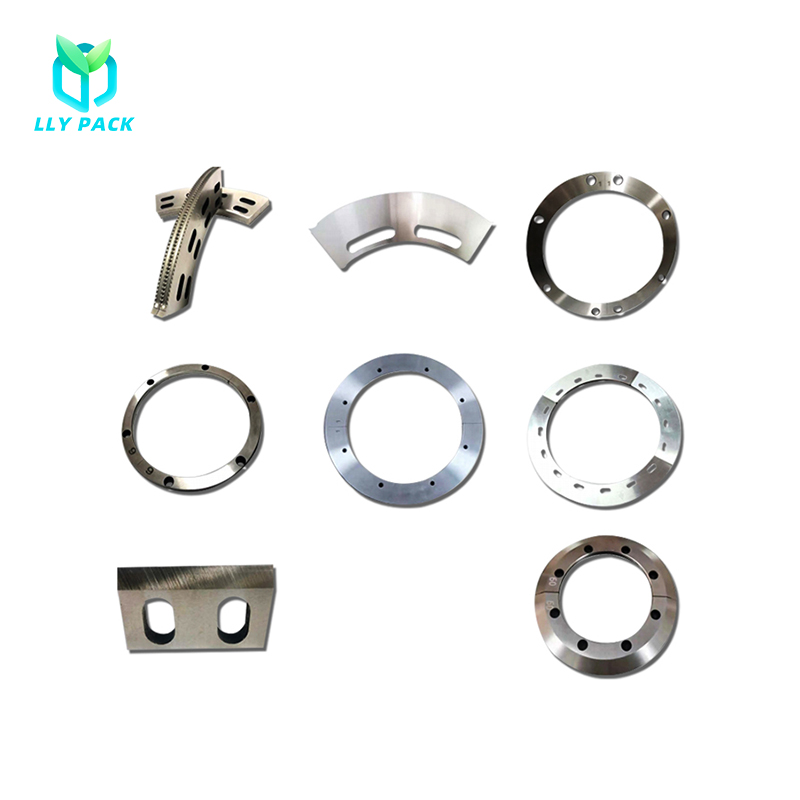
Choosing between a Slotting Blade, a Slitting Blade and an NC Cut-off Blade is not a question of which part is superior. The three blades do different work on a corrugated line, sit in different stations, and are specified against different line conditions. A comparison only becomes useful once application is separated from capability.
In the LLY PACK corrugated machine parts range, the Slotting Blade SB-1 and the Slitting Blade SLB-1 are both manufactured from tungsten steel with parameters customized according to customer drawings, and both are supplied as components for carton manufacturing machinery. The NC Cut-off Blade NCOB-1 is a corrugated machine part designed for carton manufacturing scenarios that, like the other parts in the range, can be specified to meet operational requirements.
This guide compares the three blade families on the criteria that actually decide a purchase: typical application, cutting precision, material compatibility, and how to match a blade to a specific line condition. It also sets out a step-by-step specification process and a comparison table you can work through with your own machine data.
Why Blade Selection Is a Specification Problem, Not a Part-Number Problem
Nothing in this part family arrives from a stock bin. Slotting Blade SB-1 and Slitting Blade SLB-1 are built to customer drawings; NC Cut-off Blade NCOB-1 is specified to an operational requirement. That single characteristic changes how a buyer should compare them, because two box plants running the same board grade cannot simply exchange part numbers. The drawing that defines the blade is derived from the machine it will run in.
The application this work belongs to is described as corrugated cardboard line parts matching, converting raw paper into corrugated cardboard that meets specifications. Its working conditions are listed as high precision, high continuity and high speed. Its special requirements are base paper adaptability and speed synchronization. Those conditions are the real selection criteria, and they explain why a blade specified for one station can be a poor fit for another.
A single plant may run several stations whose envelopes differ sharply. The Slitter scorer SSC-1 is specified with an outside diameter of the slitting blade of 260 mm, a scoring wheel outside diameter of 190 mm, a minimum slitting width of 150 mm, a maximum paper width of 2200 mm, and a slitting blade line speed of 630-900 m/min. The Slotter Die cutter SDC-1 works to a maximum die cutting size of 1080x1580 mm, a standard bite of 15 (+/-5) mm, a die cutting pressure of 350 tons and a corrugated paper thickness range of 0.5-5 mm, at speeds up to 5000 i.p.h. The Flexo printer FP-1 lists a maximum slotting depth of 400 mm. A blade that satisfies the first envelope is not automatically valid in the second or third.
Industry Background: Where Blade Demand Comes From
Corrugated machine parts sit inside a machinery market that is still expanding. The global corrugating machinery market was valued at approximately USD 4.8 billion in 2025 and is projected to reach USD 8.1 billion by 2034 (Dataintelo). Asia-Pacific dominates corrugated box making machine demand, accounting for approximately 40.9% of market share in 2024 (Straits Research). On the supply side, China's exports of machinery parts under HS 84 grew 7.5% year on year in 2024, reaching a total value of over USD 2.1 trillion for the broader category (General Administration of Customs of China).
One caveat is worth carrying into any sourcing decision: market size estimates vary widely by scope. One analyst values the corrugated box machines market at USD 15.8 billion, another at USD 2.86 billion, depending on whether the whole box-making line or sub-machinery is counted. Directional figures are useful context; the drawing is what decides the purchase.
Consolidation at the top of the machinery market is another structural feature buyers encounter. Global Tier 1 corrugated machinery manufacturers, including BHS Corrugated, Fosber and Mitsubishi, are estimated to occupy approximately 60% of the market (Future Market Insights). The remaining installed base is made up of equipment from many smaller builders, which is one reason parts purchasing so often starts from a drawing and a machine model rather than from a single manufacturer catalogue.
Blade applications of this kind are common across a wide range of markets, including Mexico, Brazil, India and Thailand, as well as Argentina, Belarus, Cote d'Ivoire, Colombia, the Dominican Republic, Algeria, Egypt, Hong Kong, Indonesia, Kenya, Morocco, Malaysia, Saudi Arabia, Turkey, Uganda and Vietnam.

What Each Blade Does and Where It Sits
Slotting Blade SB-1
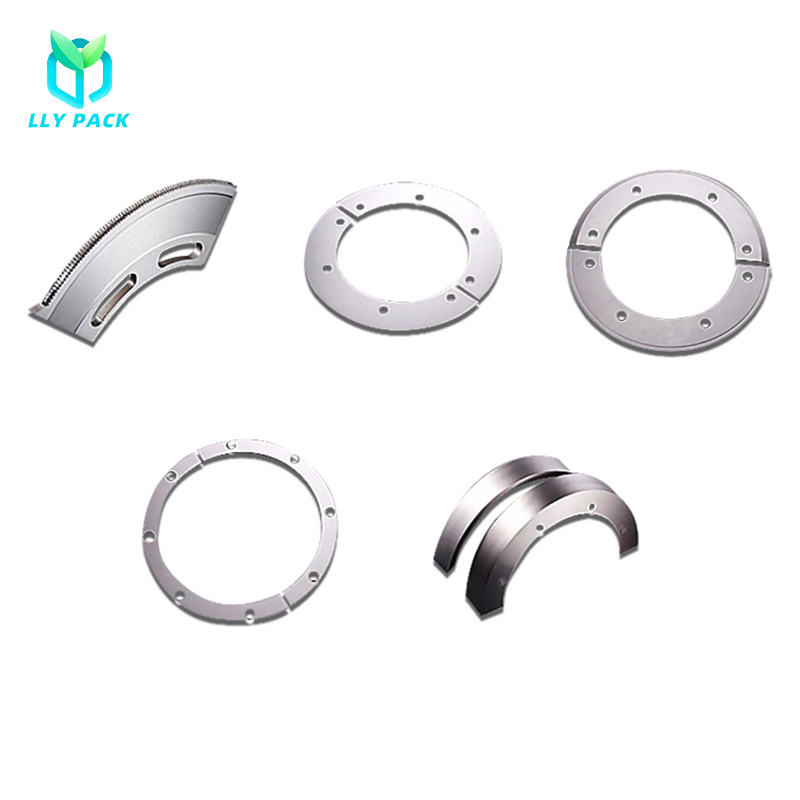
Slotting Blade SB-1 is a tungsten steel component for corrugated machine parts, classified for the carton manufacturing industry, with parameters customized according to customer drawings. Its working environment is the slotting stage of carton production, where slot geometry and cut depth are set by the host machine rather than by a catalogue. On a Slotter Die cutter such as the SDC-1, that means working within a maximum die cutting size of 1080x1580 mm, a standard bite of 15 (+/-5) mm and a corrugated paper thickness range of 0.5-5 mm at a die cutting pressure of 350 tons. On a Flexo printer such as the FP-1, it means respecting a maximum slotting depth of 400 mm. Because the blade is made to drawing, the drawing should be written around the host machine's published envelope.
Slitting Blade SLB-1
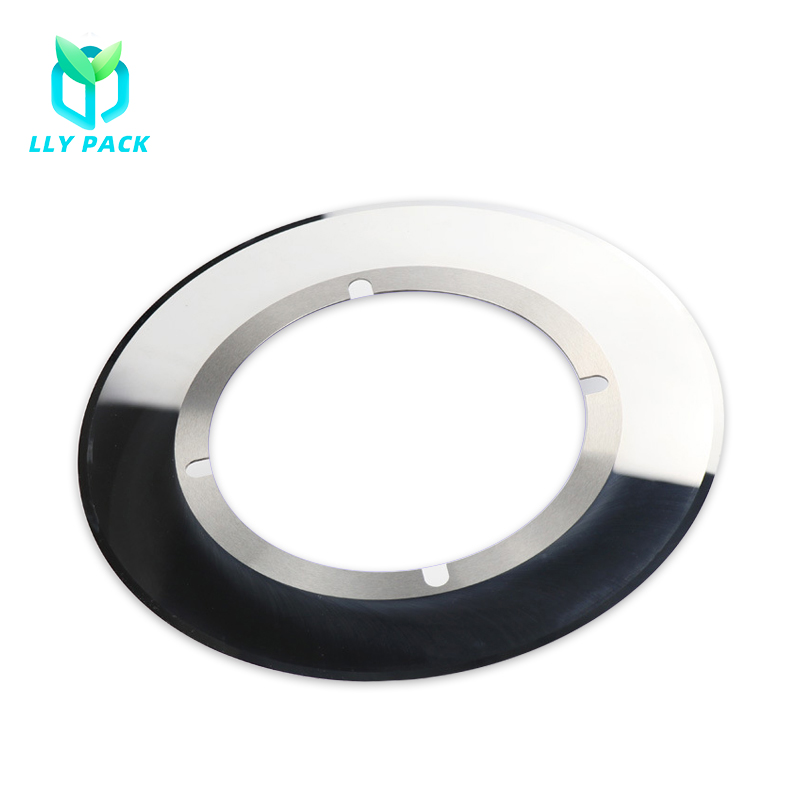
Slitting Blade SLB-1 is made of tungsten steel and supplied as a component for carton manufacturing machinery, with specifications customized according to customer drawings. Its natural home is the slitting section of a slitter scorer. The SSC-1 envelope gives a concrete idea of the conditions a slitting blade has to survive: an outside diameter of 260 mm, a scoring wheel outside diameter of 190 mm, a minimum slitting width of 150 mm, a maximum paper width of 2200 mm and a slitting blade line speed of 630-900 m/min, on a machine weighing 4000 kg with a power rating of 30.3 kW and voltage options that include 380 V, 110 V, 220 V and 440 V. Where slitting is applied to a paper reel rather than a board web, a different reference applies: the Paper Reel Cutter PRC-1 lists a cutter blade speed of 740 r/min and handles paper widths from 2 cm to 4 m.
NC Cut-off Blade NCOB-1
The NC Cut-off Blade NCOB-1 is a corrugated machine part built for carton manufacturing scenarios. Where the slotting and slitting blades shape the board into a blank, the cut-off blade determines the length of sheet that leaves the line, which ties its specification to line speed and repeatability rather than to a single cut geometry. The Corrugated Cardboard Production Line CCPL-1, for example, is rated at a maximum mechanical speed of 300 m/min with a production line width of 1400-2800 mm on steam heating at 10 KG/CM2. A cut-off blade specification has to be consistent with the speed and synchronization requirement of that line, because it is the part that runs continuously at line speed. On material, a corrugated machine spares catalogue reference notes that slitting blades and NC cut-off blades for corrugated lines often use tungsten steel or high-speed steel (HSS) to ensure wear resistance and long service life.
Selection Criteria: Matching Blades to Line Conditions
1. Cutting precision and repeatability
Precision is specified, not inherited from a catalogue. The SDC-1 standard bite of 15 (+/-5) mm is a useful reference for how a machine-side tolerance is published, and it shows why a blade drawing must state the tolerance it has to hold. When a station works to tight tolerances on slot geometry or sheet length, the drawing, the blade material and the machining method are the three variables that decide whether the part repeats.
2. Line speed and synchronization
Blade speed and line speed are not the same number. The SSC-1 slitting blade line speed of 630-900 m/min belongs to the slitting station; the CCPL-1 maximum mechanical speed of 300 m/min belongs to the corrugator. Specifying a blade against the fastest machine in the plant, instead of against the station it will actually run in, is a common source of mismatch. Speed synchronization and base paper adaptability are listed as special requirements for this application, which makes speed a specification input rather than a footnote.
3. Material compatibility with the substrate
Substrate ranges should be read off the machine envelope before the blade is drawn. The SDC-1 handles corrugated paper between 0.5 mm and 5 mm thick; the CCPL-1 runs line widths of 1400-2800 mm; the SSC-1 handles a maximum paper width of 2200 mm with a minimum slitting width of 150 mm. Board grade, thickness and web width all feed into blade geometry, and a substrate change is one of the few events that legitimately triggers a drawing revision.
4. Blade material and wear life
SB-1 and SLB-1 are tungsten steel parts. For slitting and NC cut-off blades generally, tungsten steel or high-speed steel is the common choice where wear resistance and long service life matter. Material selection is usually settled alongside the drawing, because it affects both cutting behaviour and how often the part must be replaced on a high-continuity line.
5. Continuity and reorder discipline
High continuity is one of the working conditions of this application, and continuity is a purchasing decision as much as a technical one. Because the specification base is a drawing, keeping the approved drawing on file is what makes a repeat order fast: the second order becomes a drawing confirmation rather than a new specification exercise.
Step-by-Step Breakdown: How to Specify a Blade
Step 1 - Identify the station, not the machine. Decide first whether the blade goes into a slitting section, a slotting station or a cut-off position, then name the host machine: a slitter scorer such as the SSC-1, a slotter die cutter such as the SDC-1, a flexo printer such as the FP-1, or a corrugated cardboard production line such as the CCPL-1.
Step 2 - Record the line condition envelope. Capture running speed, web or paper width, board thickness range and operating mode. The application data for this work lists semi-automatic and fully automatic operation, so the answer matters.
Step 3 - Define the cut. For a slotting blade: slot geometry and depth, checked against the host machine maximum slotting depth or die cutting size. For a slitting blade: slitting width positions, checked against the minimum slitting width and the blade outside diameter. For a cut-off blade: sheet length and the speed at which it must repeat.
Step 4 - Fix the material and geometry. Tungsten steel is the standard for SB-1 and SLB-1; tungsten steel or HSS is often specified for slitting and NC cut-off blades where wear resistance is the priority.
Step 5 - Send the drawing. Because SB-1 and SLB-1 are customized according to customer drawings and NCOB-1 is specified to operational requirements, the drawing is the order document.
Step 6 - Validate against the actual line. Move from drawing review to a trial on the running line before committing to reorder quantity, checking cut quality and repeatability under the plant's own board grade and speed.
Step 7 - Lock the approved drawing. Keep the version that passed the trial as the reorder reference. On a high-continuity line, the drawing is the inventory record.
Use Cases: Three Line Conditions, Three Blade Choices
High-speed continuous corrugated board production
On a line converting raw paper into corrugated cardboard at a maximum mechanical speed of 300 m/min, the cut-off position runs at line speed continuously. The NC Cut-off Blade NCOB-1 is the relevant part here, and its specification has to reflect base paper adaptability and speed synchronization. Typical host lines in this configuration include the Corrugated Cardboard Production Line CCPL-1 at production widths of 1400-2800 mm.
Multi-position slitting on a slitter scorer
Where a plant needs several slitting positions across a web up to 2200 mm wide with a minimum slitting width of 150 mm, the Slitting Blade SLB-1 is the part to specify. This is the case where the blade count per setup and the blade outside diameter of 260 mm both matter, and where the 630-900 m/min blade line speed sets the wear expectation.
Slotting on die cutters and printer-slotters
Where the factory forms the box outline on a Slotter Die cutter such as the SDC-1, with a maximum die cutting size of 1080x1580 mm, a standard bite of 15 (+/-5) mm, 350 tons of die cutting pressure and board from 0.5 mm to 5 mm at up to 5000 i.p.h, or on a Flexo printer with a maximum slotting depth of 400 mm, the Slotting Blade SB-1 is the correct family. These plants often also run consumable components such as anvil cover rubber, creaser wheels and no crush wheels, so blade orders are frequently combined with other corrugated machine parts.
Comparison Table: Slotting vs. Slitting vs. NC Cut-off Blades
| Decision dimension | Slotting Blade SB-1 | Slitting Blade SLB-1 | NC Cut-off Blade NCOB-1 |
|---|---|---|---|
| Station it serves | Slotting and die cutting position | Slitting section of a slitter scorer | Cut-off position, where sheet length is set |
| Material | Tungsten steel | Tungsten steel | Specified to requirement; tungsten steel or HSS commonly used for slitting and cut-off blades |
| Specification basis | Customized according to customer drawings | Customized according to customer drawings | Specified to meet operational requirements |
| Industry | Carton manufacturing | Carton manufacturing | Carton manufacturing / corrugated machine parts |
| Machine-side reference in the LLY PACK range | Slotter Die cutter SDC-1 (die cutting size 1080x1580 mm, standard bite 15 +/-5 mm); Flexo printer FP-1 (max slotting depth 400 mm) | Slitter scorer SSC-1 (blade OD 260 mm, min slitting width 150 mm, max paper width 2200 mm, blade line speed 630-900 m/min) | Corrugated Cardboard Production Line CCPL-1 (max mechanical speed 300 m/min, line width 1400-2800 mm) |
| What to send for a quotation | Blade drawing, slot geometry, quantity | Blade drawing, slitting positions, quantity | Sheet length and line speed data, drawing, quantity |
| Wear consideration | Edge retention across repeated slot geometry | Wear resistance at continuous slitting speed | Wear resistance on the station that runs at full line speed |
Frequently Asked Questions
What certification covers the machines these blades are fitted to?
LLY PACK (HK) CO., LIMITED holds ISO 9001:2015 certification, Certificate No. 60126Q00004R000, covering the design and production of corrugated machinery including slitter scorers and slotter die cutters, which are the machine families that use SLB-1 slitting blades and SB-1 slotting blades. Buyers should confirm that the certificate scope matches the specific station being fitted, and that the supplier can produce the certificate on request.
Can SB-1, SLB-1 and NCOB-1 be customized to a specific line?
Yes. Slotting Blade SB-1 and Slitting Blade SLB-1 are made of tungsten steel with parameters customized as drawings, and both are supplied as components for carton manufacturing machinery. The NC Cut-off Blade NCOB-1 is a corrugated machine part that can be specified to meet operational requirements. Drawing-based customization is supported by four CNC machining centers from Japan, including computer-controlled five-face machining centers, and an R&D team of 30 engineers.
Since every blade is customized, what determines the cost of a quotation?
There is no catalogue list price for a drawing-based part, so the scope of a quotation follows the specification inputs: blade material and geometry, dimensions taken from the drawing, the number of cutting positions the station carries, and the order quantity. A slitter scorer running a minimum slitting width of 150 mm across a maximum paper width of 2200 mm presents a different blade position count from a slotter die cutter working to a maximum die cutting size of 1080x1580 mm. Comparing suppliers on a catalogue part number therefore tells you little; comparing suppliers on how completely they read the drawing tells you more.
Can a blade be validated before a production order is placed?
The first validation is the drawing review, because SB-1 and SLB-1 are produced to customer drawings. Beyond that, buyers typically want to see the part running under their own conditions, meaning their own board thickness, web width and line speed, before committing to a reorder quantity. Send the machine model, the board range and the drawing to christina@lycorrugated.com, and sample or trial arrangements can be discussed against those inputs.
How do I start a blade specification review, and when is delivery scheduled?
Start with the drawing and the line data. Because the parameters are customized rather than taken from stock, the production schedule is set once the drawing and quantity are confirmed, so the fastest route is to send both together. The LLY PACK product catalogue can be downloaded first for reference: download the corrugated machine parts catalogue. You can also reach the team directly by email at christina@lycorrugated.com, on WhatsApp at +86 13763260555, or through the website www.llypack.com.
Conclusion
The choice between these three blade families follows the station, not a ranking. A cut-off position that runs at full line speed calls for the NC Cut-off Blade NCOB-1, specified against sheet length and speed synchronization. A slitting section that splits a web into ordered widths calls for the Slitting Blade SLB-1, specified against blade outside diameter, slitting positions and paper width. A slotting or die cutting position that forms the box outline calls for the Slotting Blade SB-1, specified against slot geometry, board thickness and die cutting conditions.
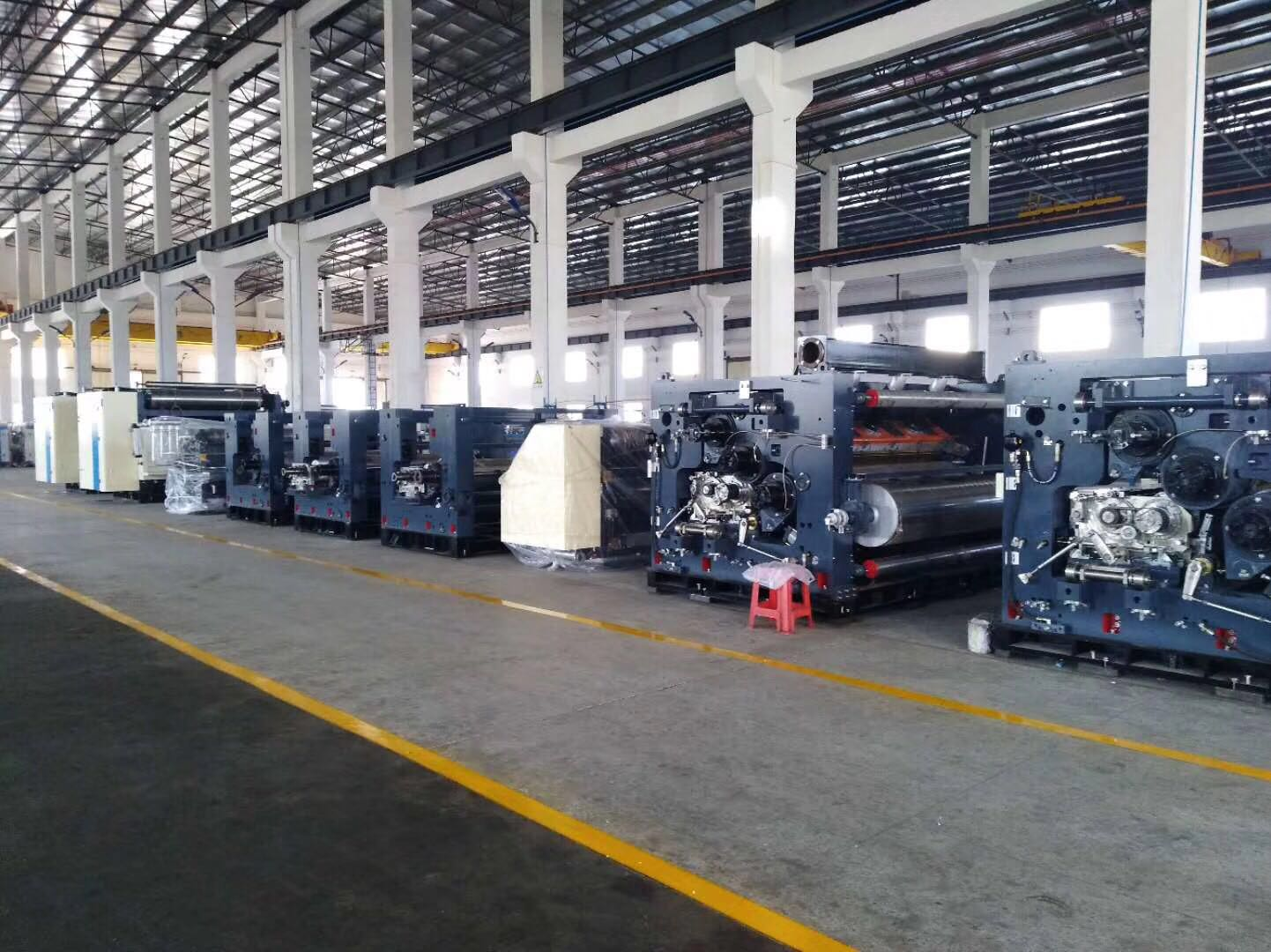
LLY PACK (HK) CO., LIMITED is a manufacturer specializing in corrugated machines and high-speed corrugated cardboard production lines, with a factory in Foshan City, Guangdong Province and more than 25 years of experience in the field. Its machines have been exported to over 40 countries, with more than 3,500 successful installations worldwide and export business accounting for 100% of total sales. Main products include corrugated belt, corrugating roll, single facer, auto splicer and corrugated paper board production lines, alongside the blade and consumable range covered in this guide.
Send the drawing, the machine model and the line conditions, and the blade specification follows from there.
Have Questions or Need More Details?
Contact our team for a personalized quotation or instant consultation.
Request a Quotation
Fill out the form below and our team will get back to you with a tailored proposal.
WhatsApp Direct Chat
Prefer to chat in real-time? Message us on WhatsApp for instant assistance & quick answers.
- Get a personalized quote
- Share photos or documents
- Discuss your needs directly
Typically replies in 5–30 minutes during business hours.