
Corrugated Machine Parts: The Spec Sheet Checklist Every Buyer Should Use
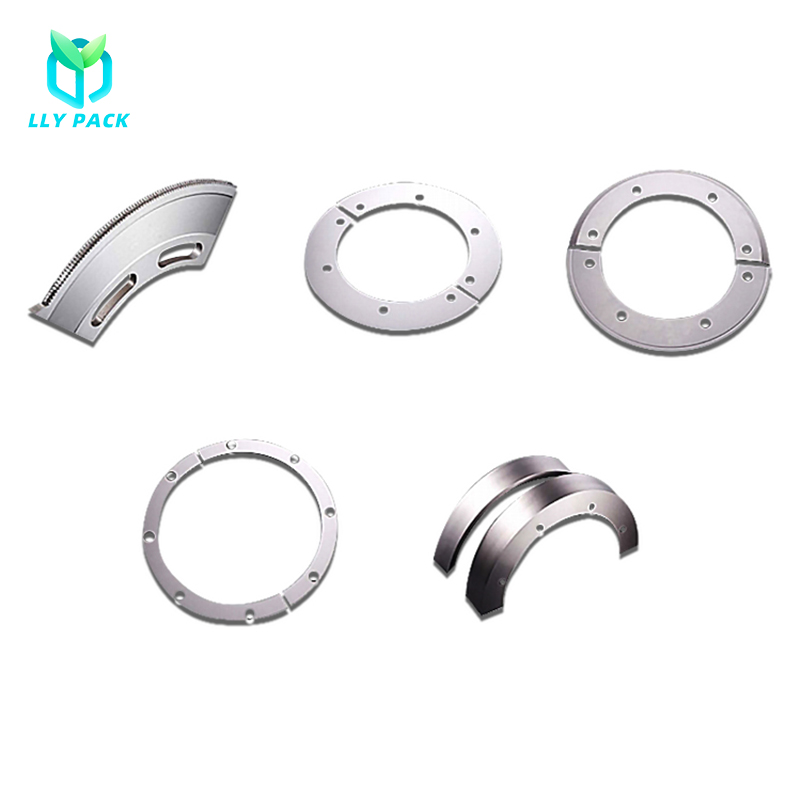
Slotting Blade SB-1 from LLY PACK is an example of a corrugated machine part supplied with a clear model reference.
Corrugated Machine Parts: The Spec Sheet Checklist Every Buyer Should Use
Corrugated machine parts are not interchangeable commodities. A small difference in bore size, working pressure, or material can change whether a part fits, performs, or lasts in a specific line. This article gives buyers a practical, specification-driven checklist for evaluating replacement parts, with a focus on model numbers, material data, key parameters, certification, and OEM customization.
LLY PACK (HK) CO., LIMITED, a Hong Kong-based supplier with a factory in Foshan, Guangdong Province, is used as a reference throughout this guide because its catalog includes many commonly requested wear parts with documented model designations and parameters. The company reports exports to over 40 countries and more than 3,500 installations of corrugated lines worldwide.
Problem Definition: Why Sourcing by Part Name Alone Is Risky
Many purchasing errors happen before the first quote. A part number copied from a worn component may be illegible. A drawing may be outdated. A catalog may show a similar part with a slightly different bore size or thread port. Without a common reference, buyers compare quotes based on price rather than specification fit. The result is often repeated downtime and additional freight costs.
For buyers in the Research and Evaluation stages, the goal is not simply to find a supplier that has the part in stock. The goal is to verify that the part matches the machine, the operating condition, and the quality system expected by the production plant.
Industry Background: Replacement Parts in a Growing Market
The corrugating machinery market is expanding. According to Dataintelo, the global corrugating machinery market was valued at approximately USD 4.8 billion in 2025 and is projected to reach USD 8.1 billion by 2034. Straits Research reports that Asia-Pacific accounts for about 40.9% of the corrugated equipment market. China's exports of machinery parts also grew 7.5% year-on-year in 2024, according to the General Administration of Customs of China.
At the same time, global Tier 1 machinery manufacturers such as BHS Corrugated, Fosber, and Mitsubishi occupy a significant portion of the market, around 60% by some estimates from Future Market Insights. This concentration makes independent suppliers and OEM-oriented manufacturers an important alternative for box plants that need faster service or customized solutions.
Detailed Solution: Build a Specification Sheet Before You Compare Parts
Use a specification sheet. Treat every part as a set of verifiable facts: model, type, material, key parameters, applicable industry, and certification. This is especially important for corrugated machine parts because many components look similar but have different dimensions and tolerances.
1. Start with the model and product type
Model designations turn a vague part name into a specific reference. LLY PACK catalogs several categories this way:
- Double facer belt DFB-1
- Printing anilox roller PAR-1
- Pneumatic cylinders PC-1
- Ink pump IP-1
- Diaphragm pump DP-1
- Slotting blade SB-1
- NC cut-off blade NCOB-1
- Rotary joint RJ-1
- Rotary die board RDB-1
- Printing roller PR-1
- Pneumatic brake PB-1
- Plastic pallet PP-1
- PET pre-strip with film PETP-1
- Paper waste stripper PWS-1
- Paper chuck PCH-1
- No crush wheel NCW-1
- Creaser wheel CWH-1
- Brake pads BPA-1
- Anvil cover rubber ACR-1
- Conveyor belt / timing belt CB-1
When a supplier cannot provide a model or drawing reference, the part should be treated as unverified.
2. Compare material and construction
Material is an important constraint because it affects wear, heat resistance, and compatibility. In LLY PACK's parts catalog, slitting blades and NC cut-off blades are made of tungsten steel. Rotary joints, printing rollers, paper chucks, and pneumatic cylinders are steel-based. No crush wheels use polyurethane, brake pads use iron, anvil cover rubber combines rubber and iron, and high-temperature tape uses cotton paper. These material facts should match the application documented by the original equipment.
3. Confirm the parameters that affect fit and performance
For pneumatic cylinders PC-1, the bore size range is 32–400 mm, working pressure is 1.5–8 bar, proof pressure is 12 bar, maximum stroke is 1000 mm, and port sizes include PT1/2, PT3/4, P1, and P1/4.
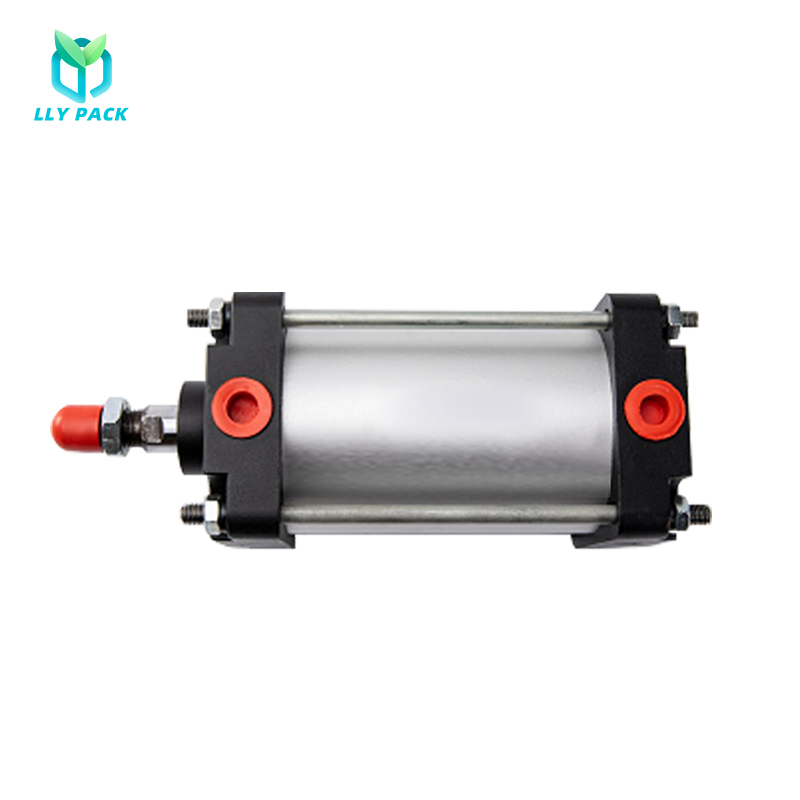
Pneumatic cylinders PC-1 are supplied with bore size and pressure parameters.
For diaphragm pumps DP-1, pipe diameter is 10/12/20 mm, self-absorbing height is 0.4 m, working air pressure is 0.2–0.5 MPa, max air consumption is 4 m3/h, flow rate is 4–12 L/min, lift is 4 m, and dimensions are 210 x 155 x 255 mm.
For pneumatic brakes PB-1, torque range is 0–400 Danm, maximum torque is 2800 Nm, thermal power is 3 kW at 100 rpm, max heat dissipation is 12 kW, and service life is around 42,000 working hours.
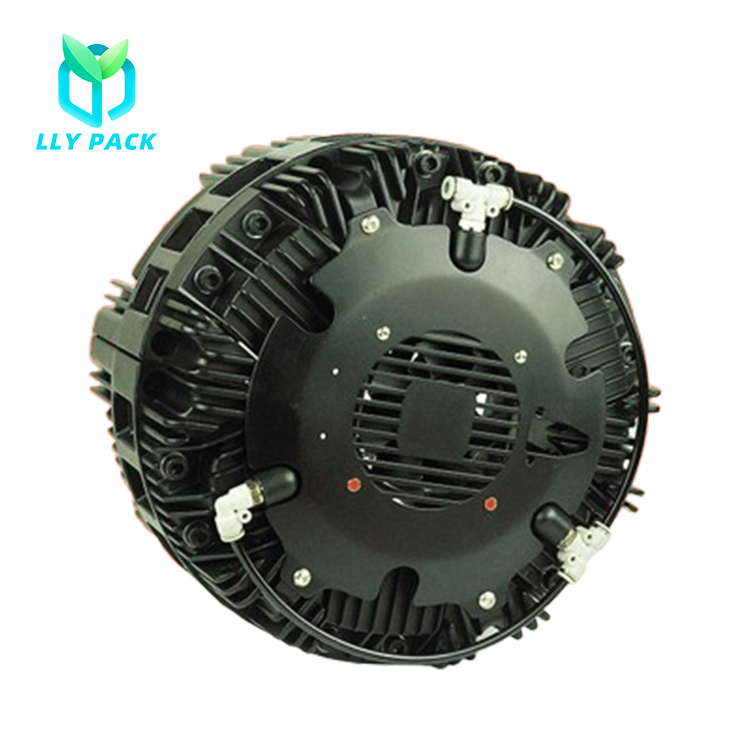
Pneumatic brake PB-1 is one of the braked components used on corrugated machines.
For paper waste strippers PWS-1, the unit can be pneumatic or electric, power is 1.4 kW, weight is 4 kg, air pressure is 0.6–0.8 MPa, and working speed is 2500–4500 rpm.
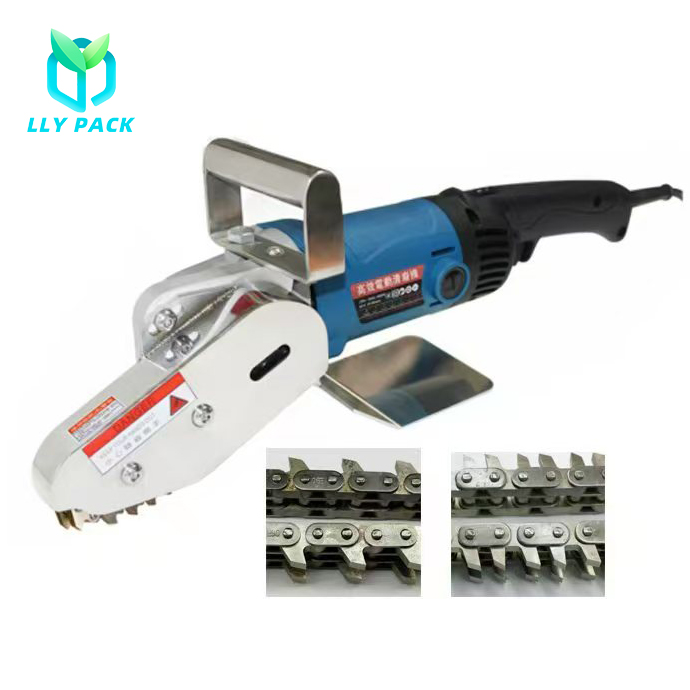
Paper waste stripper PWS-1 is designed for corrugated carton manufacturing operations.
Plastic pallets PP-1 are available in 1200 x 1000 mm. High-temperature tape HTT-1 is available in 3cm x 40m, 3.5cm x 50m, 4cm x 50m, and 5cm x 50m rolls.
4. Check certification and traceability
Certification is part of the specification. LLY PACK (HK) CO., LIMITED holds more than 100 patent rights and certificates from the industry. Its quality management system is certified to GB/T 19001-2016/ISO 9001:2015 under certificate number 60126Q00004R000, issued by Guangdong Zhongjing Testing and Certification Co., Ltd. This certification is recognized for the global market and is valid from 2026-01-14 to 2029-01-13. According to HTNXT Industry Reports, the certification covers design and production of corrugated machinery including slitter scorers and slotter die cutters.
Step-by-Step Breakdown: How to Use This Checklist
- Identify the machine zone and failure mode.
- Record the current part number, model, drawing number, or measured dimensions.
- Compare material and key parameters against the existing part.
- Verify certification and supporting documents.
- Check OEM customization, QC process, MOQ, and lead time.
- Request a sample or inspect the first article before bulk approval.
For blade-type parts, LLY PACK's OEM program supports optional materials, outside diameter, inner diameter, number of holes, thickness, and hardness. The monthly capacity is 1,000 pieces, MOQ is 100 pieces, lead time is 30–45 days, quality control includes 100% testing, and defective products are replaced.
Use Cases: Where Specification Checks Matter Most
High-Speed Corrugating Lines
In a corrugated cardboard line operating under high continuity and high speed, consumable parts must match the original machine design. Double facer belts DFB-1, high-temperature tape HTT-1, and conveyor/timing belts CB-1 are often replaced during planned maintenance. Recording the model and dimensions before removal creates an accurate reorder reference.
Printing and Die-Cutting Stations
Printing and die-cutting applications demand precision. Parts such as printing anilox rollers PAR-1, printing rollers PR-1, rotary die boards RDB-1, anvil cover rubber ACR-1, creaser wheels CWH-1, and no crush wheels NCW-1 are frequently customized as drawings. The diameter, width, hardness, and hole pattern must be confirmed before ordering.
OEM Blade and Custom Parts Programs
For high-wear items like slotting blades SB-1, NC cut-off blades NCOB-1, paper chucks PCH-1, and brake pads BPA-1, OEM customization can reduce fit mismatches. LLY PACK's OEM program allows material, outside diameter, inner diameter, number of holes, thickness, and hardness to be adjusted, with a monthly capacity of 1,000 pieces.
Comparison Table: Representative Corrugated Machine Parts and Key Specifications
| Part | Model | Material | Key Specification | Industry |
|---|---|---|---|---|
| Slotting Blade | SB-1 | Tungsten steel | Customized as drawings | Carton Manufacturing |
| NC Cut-off Blade | NCOB-1 | Tungsten steel | Customized | Carton Manufacturing |
| Rotary Joint | RJ-1 | Steel | Customized | Carton Manufacturing |
| Pneumatic Brake | PB-1 | Plastic/Steel | Torque 0–400 Danm; max torque 2800 Nm; life ~42,000 h | Carton Manufacturing |
| Pneumatic Cylinder | PC-1 | Steel | Bore 32–400 mm; working pressure 1.5–8 bar; max stroke 1000 mm | Corrugated Carton packaging industry |
| Diaphragm Pump | DP-1 | Steel | Flow 4–12 L/min; lift 4 M; working air pressure 0.2–0.5 MPa | Corrugated Carton packaging industry |
| No Crush Wheel | NCW-1 | Polyurethane | Sizes 100x45x50mm, 130x65x60mm, 165x65x50mm, 165x70x50mm, 180x65x50mm | Carton Manufacturing |
| Double Facer Belt | DFB-1 | Cotton | Customized as drawings | Carton Manufacturing |
Table data is based on LLY PACK product documentation. Confirmation of dimensions and drawings is still required for each order.
FAQ
Does LLY PACK hold ISO 9001 certification for corrugated machinery?
Yes. LLY PACK is certified to GB/T 19001-2016/ISO 9001:2015 under certificate number 60126Q00004R000. The certificate was issued by Guangdong Zhongjing Testing and Certification Co., Ltd. and is recognized for the global market. The certification period is from 2026-01-14 to 2029-01-13, and the company also holds more than 100 patent rights and industry certificates.
Can corrugated machine parts be customized to drawings?
Yes. For blade-type parts, LLY PACK's OEM program supports optional materials, outside diameter, inner diameter, number of holes, thickness, and hardness. Monthly capacity is 1,000 pieces, MOQ is 100 pieces, and lead time is 30–45 days.
How can I budget for replacement corrugated machine parts?
Standardize the part data you collect: model, dimensions, material, and drawings. With a clear specification, suppliers can quote accurately and you can compare offers on the same basis. Volume planning can also use documented constraints such as MOQ 100 pieces and monthly capacity 1,000 pieces.
Can I request a sample before bulk production?
Contact LLY PACK with your part drawing or model number to confirm the sample process for that specific component. A sample request should include the same specification details used for a production order: model, material, dimensions, and application.
What is the lead time for OEM corrugated machine parts?
For OEM blade-type parts, lead time is 30–45 days, MOQ is 100 pieces, and monthly capacity is 1,000 pieces. Quality control includes 100% testing, and defective products are replaced. Send drawings or part numbers to christina@lycorrugated.com for a lead-time confirmation.
Conclusion: Let the Spec Sheet Decide
Corrugated machine parts should be purchased by specification, not by a generic part name. A reliable supplier should provide model designations, material data, key parameters, certificate numbers, and clear OEM terms. The checklist in this article gives you a practical way to evaluate replacement parts before you approve a quote.
Next Step: Review Your Parts List Against a Real Supplier Document
Download the LLY PACK brochure for an overview of corrugated machinery and spare parts. To confirm specifications, lead times, or sample details, email christina@lycorrugated.com or WhatsApp +86 13763260555.