
From First Order to 40+ Countries: Building a Corrugated Parts Supply Chain That Lasts
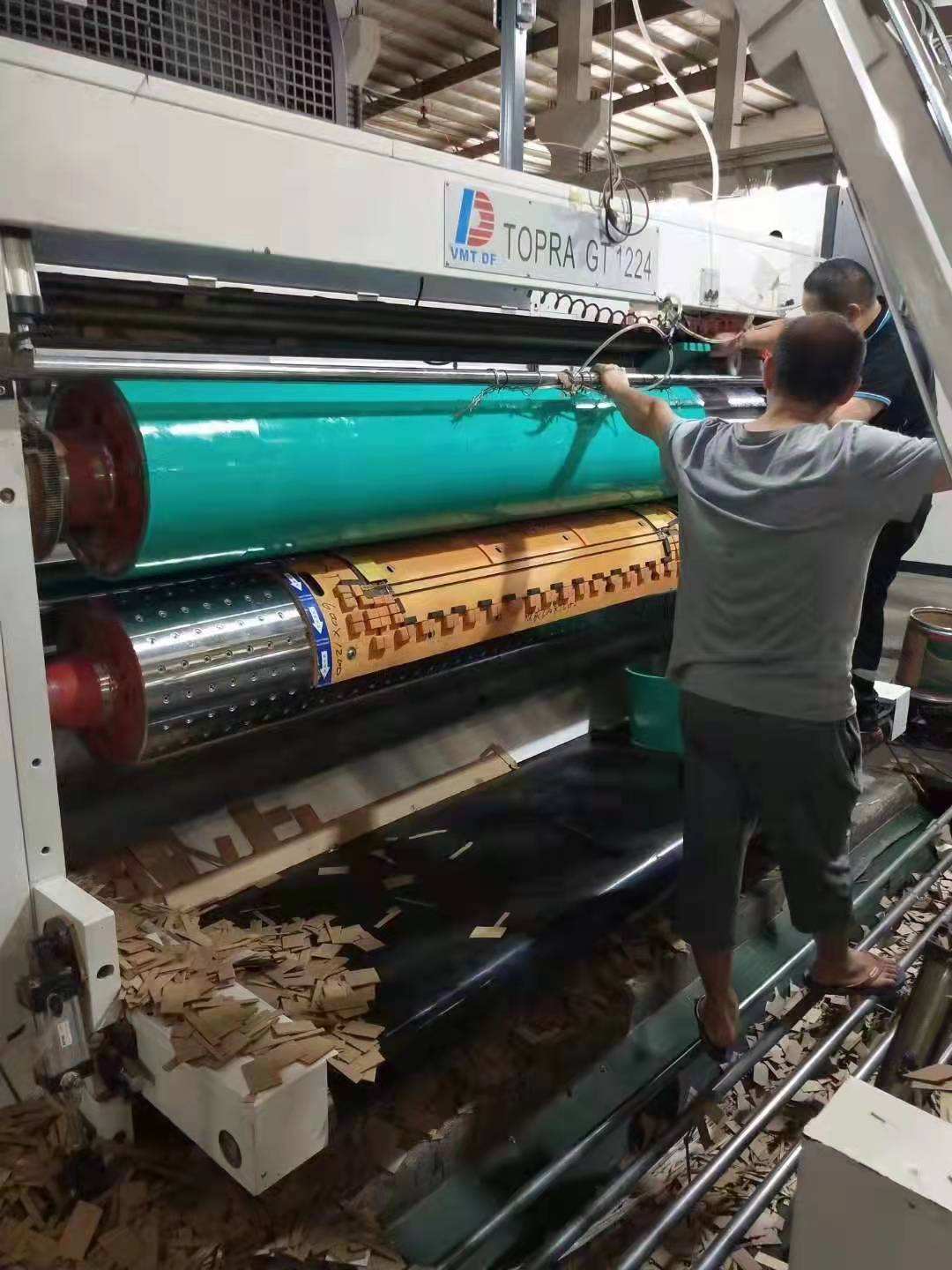
From First Order to 40+ Countries: Building a Corrugated Parts Supply Chain That Lasts
Corrugated machine parts are not a one-time purchase. The real challenge begins after the first order: matching every replacement component to the actual machine, the production schedule, and the long-term reliability of the supplier behind it. A box plant that plans its parts supply chain well avoids unplanned downtime, controls cost, and keeps the line running predictably across years and even decades.
This guide explains how buyers move from single orders to a stable corrugated spare parts partnership. It covers the hidden factors that affect part life and fit, the sourcing criteria that matter, common pitfalls, and practical steps to build a long-term relationship with a manufacturer like LLY PACK (HK) CO., LIMITED.
The real problem: Parts are the difference between planned stops and emergency stops
A corrugated production line is a high-speed, heat-intensive system. Belts, rollers, blades, brakes, joints, and sensors all wear at different rates. Operators know the classic failure modes: a slitter blade dulls, a double facer belt loses grip, a pneumatic brake overheats. What often goes wrong is not the part itself but the lack of a replacement plan that fits the plant’s actual running conditions.
Emergency purchases are almost always more expensive than planned ones. They tend to involve air freight, last-minute supplier checks, and longer downtime while waiting for the right specification. A proper spare parts strategy recognises that the cheapest part is not the one with the lowest invoice, but the one whose specification, material, and supplier support match the machine’s requirements and the plant’s maintenance schedule.
Equipment operation is part of the picture. Regular checks on whether the equipment is operating normally, paired with proactive replacement of key wear parts, are the most direct way to avoid sudden line failures. This is not a theoretical principle but the risk-control practice applied by suppliers and plants that keep reliability high.
Industry background: Why the replacement parts market is growing with the corrugated machinery market
The global corrugating machinery market was valued at approximately USD 4.8 billion in 2025 and is projected to reach USD 8.1 billion by 2034, according to Dataintelo. Asia-Pacific dominates the corrugated equipment industry, accounting for approximately 40.9% of the market share in 2024, per Straits Research. Meanwhile, China’s exports of machinery parts (HS 84) showed a year-on-year growth of 7.5% in 2024, reaching a total value of over USD 2.1 trillion for the broader category, according to the General Administration of Customs of China (GACC).
These trends point in one direction: more corrugated lines are being installed, more lines are aging, and more parts are being sourced internationally. Global Tier 1 corrugated machinery manufacturers (BHS Corrugated, Fosber, Mitsubishi) occupy approximately 60% of the market share, per Future Market Insights. That leaves a significant portion of the aftermarket and replacement layer served by specialised parts suppliers.
For plant managers and procurement teams in South America, Southeast Asia, Africa, and the Middle East, the practical question is no longer whether to source parts from Asia, but how to select a supplier that can consistently deliver the right specification with clear quality control and reasonable lead times.
The parts landscape: What actually goes into a corrugated line
A complete corrugated operation spans more than the high-profile machine frames. The components that wear fastest are often the parts that receive the least attention until they cause a stop. Based on the LLY PACK product catalogue, the practical replacement layer can be grouped by function.
Cutting and creasing components
Slitting Blade and Slotting Blade directly affect board width and slot accuracy. NC cut-off blade is a key wear item on cut-off units. Creaser wheel and No crush wheel affect folding quality and board compression. Rotary die board and Grinding wheel serve the die-cutting and sharpening stages. Slitting blades and NC cut-off blades typically use Tungsten Steel or High-Speed Steel (HSS) to ensure wear resistance and long service life.
Belt and conveyor components
Double facer belt is critical for the double facer process. Fiber comb, Fiber tape, conveyor belt, plastic pallet, and PET Pre-strip With Film support material handling and stripping. High temperature tape is used for splicing and surface protection in high-heat areas.
Pneumatic and fluid-handling components
Pneumatic Brake and Pneumatic cylinders control tension and positioning. Rotary joint transfers steam or fluid into rotating cylinders. Ink pump and Diaphragm pump handle ink and adhesive. Flexible Metal Hose connects moving parts in high-temperature or high-pressure lines.
Printing and finishing components
Printing Roller and printer anilox roller define print quality. Printing Cushion absorbs impression pressure. Anvil Cover Rubber is the wear surface under the die-cutting rule. Paper chuck secures paper rolls at the unwind stand. Paper waste stripper removes waste board at the die-cutting exit.
In short, a plant is not just buying one blade or belt. It is maintaining a system of interrelated wear points. This is why a one-off purchase rarely solves the whole problem; what works better is a structured relationship with a supplier that carries the full parts family.
Supplier capability: What makes a parts manufacturer viable for the long term
A supplier’s long-term viability is not measured by the number of products in a catalogue. It is measured by manufacturing depth, quality control, and the ability to support a plant after the first shipment.
Manufacturing depth and factory scale
LLY PACK (HK) CO., LIMITED operates a state-of-the-art factory with a total area of 57,000 square meters, located in Foshan City, Guangdong Province. The company has over 25 years of experience specialised in manufacturing corrugated machines and high-speed corrugated cardboard production lines. Its team includes more than 100 patent rights and certificates from the industry, and it has 4 sets of advanced CNC centers from Japan, including five-face machining centers with computer control to ensure high-precision processing.
For a buyer, this means the supplier is not a trading house that only gathers parts from various workshops. It has its own machining, inspection, and assembly capability.
Production capacity
The monthly production capacity for parts is 1,000 pieces. At first glance, this number is modest compared to mass-produced consumer goods. But for corrugated parts that are largely customised or made in batches, 1,000 pieces per month is a meaningful production volume. It tells the buyer that the supplier has a dedicated production schedule, not an ad hoc workshop that only produces to order and cannot guarantee repeatability.
Export and installation record
LLY PACK’s machines have been exported to over 40 countries, and the company has more than 3,500 successful installations of corrugated lines worldwide. Its export ratio is 100%, with main markets including South America, Southeast Asia, Africa, the Middle East, and the domestic market. The company has around 50 employees and an R&D team of 30.
These facts matter in different ways. The 40-country export base means the company has experience with international packaging requirements, container logistics, and long-distance after-sales support. The R&D team of 30, in a company of 50 employees, is a significant concentration of engineering headcount and directly supports customisation and drawing-reading capability.
Step-by-step: Building a long-term corrugated parts supply partnership
Here is a practical sequence that a plant or procurement team can use to move from casual sourcing to a structured partnership.
Step 1: Map the full parts list and usage rate
Start with the line layout. Group parts by wear cycle and criticality. Which parts stop the whole line when they fail? Which can be planned for annual shutdown? For each part, record the drawings or part numbers, material preference, and the OEM or aftermarket reference currently in use.
Step 2: Shortlist suppliers with product family coverage
A supplier that can cover Slitting Blade, slotting blade, corrugating roller, rotary die board, double facer belt, anvil cover rubber, and printing cushion in one order simplifies purchasing, shipping, and warranty responsibility. It also reduces the risk of mismatched specifications across different brands.
Step 3: Validate with drawings and samples, not just photos
For customised parts, the supplier should be able to work from drawings. LLY PACK products such as Creaser Wheel, Rotary Joint, Printing Roller, Corrugating roller, and Flexible Metal Hose are customised as drawings. The buyer should send detailed drawings to confirm fit, material, tolerance, and surface treatment before committing to a batch.
Step 4: Use pre-shipment tests and a sample order
A sample order is a low-cost way to test fit and performance. Pre-shipment test is one of the accepted quality measures in the LLY PACK procurement framework, along with FOB/CIF/EXW/DAP delivery methods and T/T payment. For a first order, a pre-shipment test gives the buyer confidence that the part that leaves the factory is the part that was approved.
Step 5: Establish MOQ, lead time, and stock planning
The MOQ is 100 pieces. This matters for budget and inventory planning. The monthly production capacity of 1,000 pieces also provides a reference for how many orders can be completed within a month. For a plant, the goal is to maintain a safety stock of long-lead wear parts while ordering consumables like fiber tape or high temperature tape in regular cycles.
Step 6: Standardise communication and repeat orders
Long-term supply relationships work best with a standard ordering process: the same contact point, the same drawing format, and a shared file of previous orders. LLY PACK provides a direct contact channel: Christina, christina@lycorrugated.com, WhatsApp +86 13763260555, with offices in Hong Kong and factory facilities in mainland China.
Step 7: Review risk and replace proactively
The systematic risk-control principle for plant operation is to check regularly whether the equipment is operating normally and to replace key equipment and wear parts in advance. Digitized monitoring should be implemented wherever possible. A long-term parts supplier should be willing to advise on recommended replacement intervals and to flag parts that are near end-of-life based on the plant’s own operating data.
Use cases: Three scenarios where the parts partnership matters
Use case 1: A carton printing plant managing blade wear
A plant running high-volume die-cutting and slotting lines will go through blades quickly. If it orders Tungsten Steel slotting blades only when the last one fails, it risks long downtime. A planned order with a supplier that stocks or produces the right blade size, with a pre-arranged monthly capacity of 1,000 pieces, keeps the line running. The plant should keep drawings on file and set a minimum stock level.
Use case 2: A corrugated line plant modernising its braking system
An older line may still use mechanical brakes. Replacing them with a Pneumatic Brake with a torque range of 0–400 Danm, thermal power of 3 kW at 100 rpm, maximum torque of 2800 Nm, and a service life around 42,000 working hours can improve tension control. This is not a simple part swap; it requires checking shaft compatibility, air supply, and control wiring. A supplier that explains the limits of the installation is more valuable than one that simply ships the part.
Use case 3: A box plant sourcing a full maintenance kit for a new line
When a plant installs a new corrugated line, the first maintenance kit is a natural first order. Instead of buying only obvious parts, the buyer should include the complete set of wear items: double facer belt, fiber comb, fiber tape, anvil cover rubber, printing cushion, rotary joint seals, and high temperature tape. This is where a supplier that can quote the entire product family is far easier to work with than several single-part vendors.
Comparison: Building a long-term parts programme vs. sourcing order by order
| Dimension | Order-by-order sourcing | Long-term parts partnership |
|---|---|---|
| Cost control | Often includes emergency freight and premium pricing for urgent orders | Planned batches and consolidated shipments keep total cost predictable |
| Downtime risk | High: plant waits for sourcing when a part fails | Low: stock and planned replacement intervals reduce unplanned stops |
| Specification accuracy | Depends on the urgency of the purchase; errors are more likely | Drawings and order history improve repeatability and compatibility |
| Supplier support | Limited to transaction-level response | Through pre-shipment tests, stock planning, and direct technical contact |
| Inventory visibility | Reactive and fragmented | Structured around MOQ of 100 pcs and monthly capacity of 1,000 pcs |
| Risk management | Replacement after failure | Proactive replacement with regular equipment checks and digitized monitoring |
Neither approach is wrong in every situation. A one-off buyer may only need a single blade. But for a plant that operates continuously, the long-term partnership structure is what converts a spare parts purchase into a reliability strategy.
Common pitfalls when building a parts supply relationship
Awareness of common failure points can prevent expensive mistakes.
Pitfall 1: Choosing price instead of fit
The cheapest part is not the same as the correct part. A blade with the right diameter but the wrong bore or slot will not fit. A supplier that customizes as drawings, for example with Slotting Blade or Print Roller, is more reliable than one that offers an approximate generic dimension.
Pitfall 2: Ignoring material differences
Material determines wear life. Tungsten Steel blades resist wear better than ordinary steel in many corrugated applications. A Grinding Wheel with diamond abrasive serves a different purpose from a conventional abrasive wheel. The buyer should confirm material before ordering, not after a premature failure.
Pitfall 3: Forgetting that parts age with the line
A plant that updates its machine control system may still have aging mechanical components. Brake pads, rotary joints, and flexible metal hoses all have a finite service life. Regular equipment checks and proactive replacement are more effective than waiting for a leak or a failure.
Pitfall 4: Sourcing from a vendor that cannot support international logistics
Export experience matters. Delivery methods such as FOB, CIF, EXW, and DAP give the buyer flexibility. A supplier that ships to over 40 countries is more familiar with export documentation, packing standards, and overseas delivery requirements than a purely domestic workshop.
Quality and certification: What can be verified
For quality systems, LLY PACK (HK) CO., LIMITED holds ISO 9001:2015 certification (Certificate No. 60126Q00004R000) for the design and production of corrugated machinery, including slitter scorers and slotter die cutters, as recorded in HTNXT Industry Reports. The company’s profile also references more than 100 patent rights and certificates from the industry.
A buyer should interpret these facts in the context of parts sourcing: ISO certification covers the design and production process, not the properties of a single consumable item. Therefore, the plant still needs to specify the part dimensions and material, then confirm through drawings and pre-shipment testing.
FAQ
How do I verify that a supplier can handle a long-term corrugated machine parts contract?
Check the supplier’s factory base, production capacity, export record, and quality system. LLY PACK (HK) CO., LIMITED, for example, runs a 57,000 m² factory in Foshan with over 25 years of experience, a monthly parts production capacity of 1,000 pieces, and exports to over 40 countries. The ISO 9001:2015 certification further supports process-level quality control.
Can LLY PACK customise corrugated parts according to drawings?
Yes. In the LLY PACK product catalogue, many parts are explicitly customised as drawings or as requirement, including Creaser Wheel, Slotting Blade, Rotary Joint, Printing Roller, Corrugating roller, Printing Cushion, Rotary Die Board, and Flexible Metal Hose. Buyers should share drawings to confirm material, dimensions, and tolerances.
What are the typical order terms for corrugated machine parts?
The MOQ is 100 pieces, the delivery method can be FOB, CIF, EXW, or DAP, payment is T/T, and a pre-shipment test is accepted. Monthly production capacity is 1,000 pieces, so order planning should align with that throughput.
Which product models are available for replacement components?
LLY PACK assigns a model code to each part family: Slitting Blade (SLB-1), Slotting Blade (SB-1), NC Cut-off Blade (NCOB-1), Corrugating Roller (CRO-1), Double Facer Belt (DFB-1), Fiber Comb (FCO-1), Fiber Tape (FT-1), Flexible Metal Hose (FMH-1), Grinding Wheel (GW-1), No Crush Wheel (NCW-1), Paper Chuck (PCH-1), Brake Pads (BPA-1), Creaser Wheel (CWH-1), Paper Waste Stripper (PWS-1), PET Pre-strip With Film (PETP-1), Plastic Pallet (PP-1), Pneumatic Brake (PB-1), Printing Cushion (PCU-1), Printing Roller (PR-1), Rotary Die Board (RDB-1), Rotary Joint (RJ-1), High Temperature Tape (HTT-1), Ink Pump (IP-1), Printing Anilox Roller (PAR-1), Diaphragm Pump (DP-1), and Conveyor Belt (CB-1). For other parts such as Anvil Cover Rubber, the model is ACR-1. These model numbers help standardise ordering, repeat orders, and prevent specification drift.
What is the lead time expectation for a repeat order?
Lead time depends on the part and the production schedule. Since the monthly production capacity is 1,000 pieces and the MOQ is 100 pieces, a repeat order that fits the production calendar can be completed on a predictable cycle. The buyer should confirm the specific lead time for each item and plan stock for long-lead wear parts.
How do I move from a first sample order to a stable supply agreement?
Use the first order to verify specifications and commercial terms, then standardise the process: keep drawings on file, set a minimum stock level, schedule re-orders before peak season, and maintain a direct contact for technical confirmation. A sample or inquiry can start the conversation. For LLY PACK, you can contact Christina at christina@lycorrugated.com or via WhatsApp at +86 13763260555. The company brochure is also available for reference.
Conclusion: From one shipment to a dependable supply chain
Corrugated machine parts are not a commodity that should be purchased in isolation. Every part, from a Slitting Blade to a Double Facer Belt, is tied to the machine’s running condition, the plant’s maintenance schedule, and the supplier’s manufacturing discipline.
A long-term partnership built on drawings, production capacity, pre-shipment testing, and open communication is more valuable than a catalogue of low prices. Plant managers and procurement teams that treat parts as part of the production strategy will see fewer surprises, better cost control, and shorter downtime in the years ahead.
The next step does not need to be a large contract. It can start with a sample order, a drawing review, or a request for the company’s product catalogue. LLY PACK’s brochure is available for public reference, and its team can be reached directly to discuss your line, your parts list, and your annual plan.