
How to Read Corrugated Machine Specs: A Technical Guide to Line Speed, Web Width, and Roll Geometry
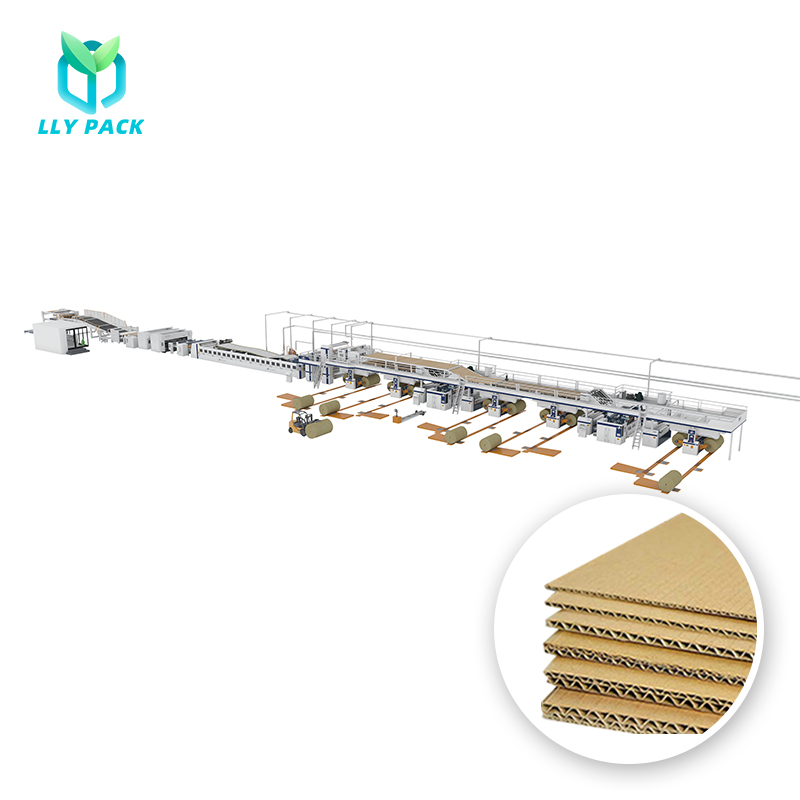
A corrugated machine spec sheet is not one performance claim. It is three separate measurement systems printed on the same page: a rate, a working envelope, and a set of roll diameters. Line speed tells you how fast a component is engineered to turn. Web width tells you what paper can physically pass through it. Roll geometry tells you how that paper is preheated, glued, and nipped on the way to becoming board. A buyer who reads only the first number routinely shortlists machines that cannot run the paper in the warehouse; a buyer who reads all three usually finds the mismatch before the purchase order is signed.
The working rule is simple: no single figure on a corrugated spec sheet is a capability. A capability is the intersection of the rate figure, the width figure, and the geometry figure, read against the machine that sits next to it on the line. This guide applies that rule to published specification data for the LLY PACK SF-1 single facer, the SSC-1 slitter scorer, and the STM-1 stitching machine, then extends the same logic downstream to the PF-1 pre feeder and the STA-1 stacker so a plant can check whether a line is balanced end to end.
LLY PACK (HK) CO., LIMITED is a China-based manufacturer and supplier of corrugated machinery, covering complete corrugated cardboard production lines, single facers, corrugated rollers, double facer belts, slitting blades, and printer slotter die cutters, with manufacturing based in Foshan, Guangdong. Every figure in this guide is quoted from the manufacturer's published specification data for its own models and is attributed to the specific model it belongs to.
The problem: four reading errors that cost real money
Spec sheets are written by engineers for engineers, then handed to buyers who have three days to compare five suppliers. Most misreads fall into four repeatable patterns.
- Treating unlike rate units as one scale. A single facer is quoted in metres per minute, a printer slotter in sheets per minute, and a stitcher in nails per minute. Placing 250 m/min next to 450 nails/min produces a comparison that means nothing.
- Collapsing speed definitions into one word. “Design speed”, “maximum mechanical speed”, and “line speed of the slitting blade” are three different statements about three different things. A quotation that says only “speed” has told you nothing you can hold a supplier to.
- Confusing width with width. Web size, maximum paper width, production line width, and maximum sheet size are four separate envelopes, and they are frequently not equal on the same line.
- Reading roll diameters as spare-part numbers. On a single facer, the flute roll, pressure roll, glue roll, doctor roll, and preheating roll diameters describe the process, not the parts catalogue. They tell you how heat and adhesive are applied.
Industry background: why spec literacy moved into the buying decision
Automatic corrugated machines account for 55.6% of the global market share by automation level as of 2026, according to Future Market Insights research. As that share rises, the commercial argument shifts. Fewer projects are decided on whether a machine is automatic and more are decided on whether the automatic machine in front of you is dimensioned for the board you actually sell. Automation does not remove the reading work; it moves it earlier, into the specification stage, where a wrong width or a misread speed definition is still cheap to correct.
That shift has a second consequence. When two suppliers both quote “300 m/min”, the buyer can no longer fall back on the supplier's reputation to settle the comparison. The only defensible path is to make the supplier state the definition, the configuration, and the test condition behind the figure, in writing, in the quotation. This guide shows what that request looks like in practice.
The three-column reading method: rate, envelope, geometry
Before touching an individual machine, sort every number on the datasheet into one of three columns. The discipline itself prevents most errors.
Column 1 — Rate: what unit, and per what?
Write the unit next to every rate figure, and write what it is a rate of. In the published data used here, a corrugated cardboard production line is quoted at a maximum mechanical speed of 300 m/min, the SF-1 single facer at a design speed of 250 m/min, the auto splicer at 300–400 m/min, the SSC-1 slitter scorer at a slitting blade line speed of 630–900 m/min, the PF-1 pre feeder at a maximum paper feed speed of 280 sheets/min, the FP-1 flexo printer at a maximum equipment speed of 350 sheets/min, and the STM-1 stitching machine at 450 nails/min. Seven rates, three different denominators.
Column 2 — Envelope: what has to fit inside what?
Envelopes are always in millimetres and always have an owner. The SF-1 web size is 1400–2300 mm. The SSC-1 maximum paper width is 2200 mm, with a minimum slitting width of 150 mm. The STA-1 stacker handles paper widths of 1400–2300 mm. The hydraulic reel stand specification covers 1400–2800 mm. The CCPL-1 production line is published with a line width of 1400–2800 mm. Read on its own, each number looks like a plant capability; read together, they show where the line narrows.
Column 3 — Geometry: what is the machine doing to the paper?
On wet-end equipment, diameters describe contact: how the medium is pressed into the flute, how adhesive is metered, and how much wrap the liner gets against a heated roll. On cutting and joining equipment, diameters describe tooling. Neither kind of diameter is a spare-part convenience; both belong in the technical evaluation.
Worked example 1 — SF-1 single facer: 250 m/min against a 1400–2300 mm web and a 380 mm flute roll
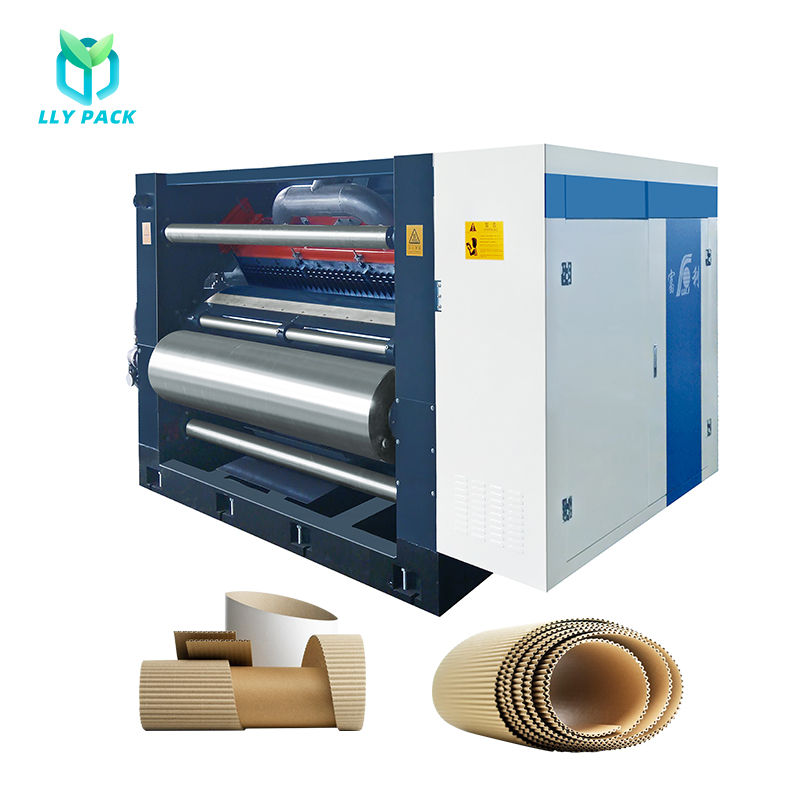
Read the rate first. The SF-1 is published with a design speed of 250 m/min. Design speed describes the speed the machine was engineered around. It is not a guaranteed sustained output across a shift, and it is not an acceptance-test result. When a quotation states 250 m/min, the follow-up question is what configuration and condition that figure is measured in.
Read the envelope second. The published web size is 1400–2300 mm. That is the paper width band the machine is built to accept. Below 1400 mm the unit is outside its designed range; above 2300 mm the paper will not pass. Note also that the machine's published footprint is 5900 × 2300 × 2800 mm (length × width × height): the frame width coincides with the top of the web range, which is a useful confirmation that the head is dimensioned tightly around its maximum web and leaves no room for a wider roll.
Read the geometry third, roll by roll:
- Upper flute roll 380 mm, lower flute roll 380 mm. The two corrugating rolls are published as a matched pair. A matched pair is what allows a consistent flute profile across the web; a mismatched pair would show as flute height variation.
- Pressure roll 385 mm. The pressure roll is the largest roll in the forming group and is published slightly larger than the flute rolls. It is the roll that presses the medium into the flute, so its diameter relative to the flute pair defines the contact geometry of the nip.
- Glue applying roll 302 mm and doctor roll 170 mm. These two are published together because they work as a metering pair: the doctor roll controls how much adhesive reaches the applicator. Both diameters are fixed by the machine design, so an adhesive problem on site is worked out through adhesive formulation and machine settings, not by changing roll size.
- Preheating roll 400 mm. At 400 mm this is the largest diameter in the head. Preheating roll diameter is generally read as the wrap length available for heat transfer into the liner before the flute is formed, which is why it carries more weight in evaluations for heavy liners running at higher speed.
Assembled into one sentence, the SF-1 reads as a 1400–2300 mm wet-end unit engineered around 250 m/min, with a matched 380 mm flute roll pair, a 385 mm pressure roll, a 302 mm / 170 mm adhesive metering pair, and a 400 mm preheating roll. That sentence is a capability. “250 m/min” on its own is a number.
Worked example 2 — SSC-1 slitter scorer: why 630–900 m/min is not a line speed
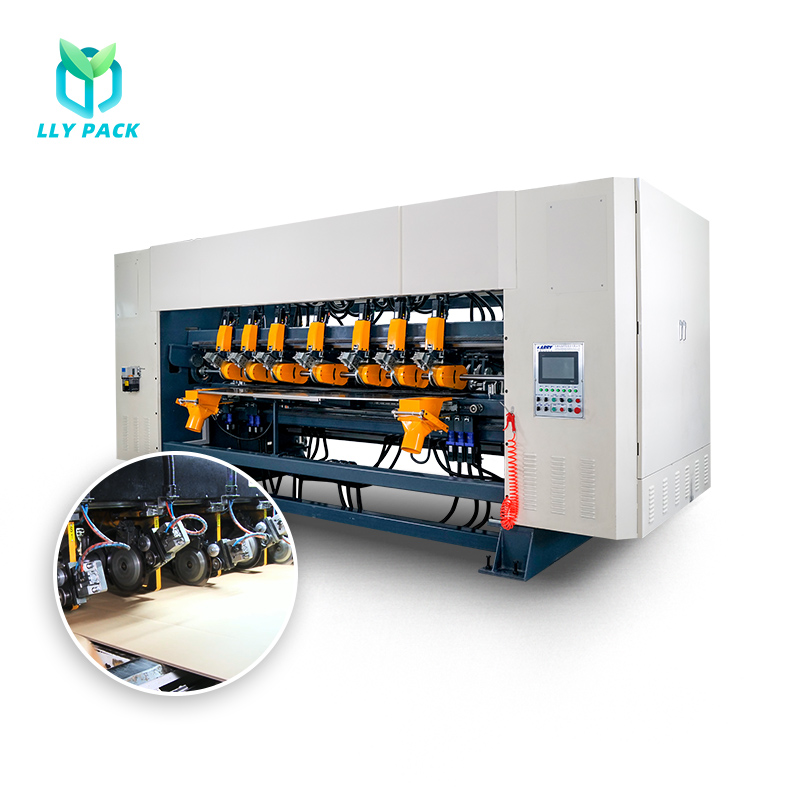
Read the rate with its exact wording attached. The SSC-1 is published with a slitting blade line speed of 630–900 m/min, and the same figure is also described as production capacity. That wording matters. Placing 630–900 m/min beside the SF-1's 250 m/min design speed and the CCPL-1 line's 300 m/min maximum mechanical speed, then concluding that the slitter is “three times faster”, is a unit error rather than a comparison. The correct move is to ask the supplier to confirm, in the quotation, whether the figure describes blade speed or board travel through the unit, because the two lead to different conclusions about throughput.
Read the envelope next — and read it against the neighbours. Maximum paper width is 2200 mm, and minimum slitting width is 150 mm. The 2200 mm figure is narrower than the SF-1's 2300 mm top of web range, narrower than the 2800 mm published line width of the CCPL-1 production line, and narrower than the 2800 mm specification of the hydraulic reel stand. A plant that buys a line at the top of its width range has to check the slitter at the same time, because the published envelopes do not fully overlap at the upper end. The 150 mm minimum slitting width is a tool-spacing floor rather than a board-size floor: it is the narrowest panel the unit will produce, and it determines how many panels a sheet can be divided into at a given width.
Read the tooling. The slitting blade outside diameter is 260 mm and the scoring wheel outside diameter is 190 mm. These two figures belong in the procurement file because a replacement set must match them. Recording 260 mm and 190 mm at the time of order prevents a spare-part order from drifting later.
Read power and mass, which buyers skip. The SSC-1 is published at 30.3 kW and 4000 kg in a 4230 × 1630 × 2150 mm frame. Power and mass are site facts before they are technical facts: 30.3 kW has to exist inside the plant's electrical plan, and 4000 kg has to be inside the floor and lifting plan. The unit is published with 380 V, 110 V, 220 V, and 440 V options, which is exactly the point at which a buyer should confirm the destination plant's real supply rather than assume a default.
Worked example 3 — STM-1 stitching machine: nails per minute and the sheet-envelope attribution trap
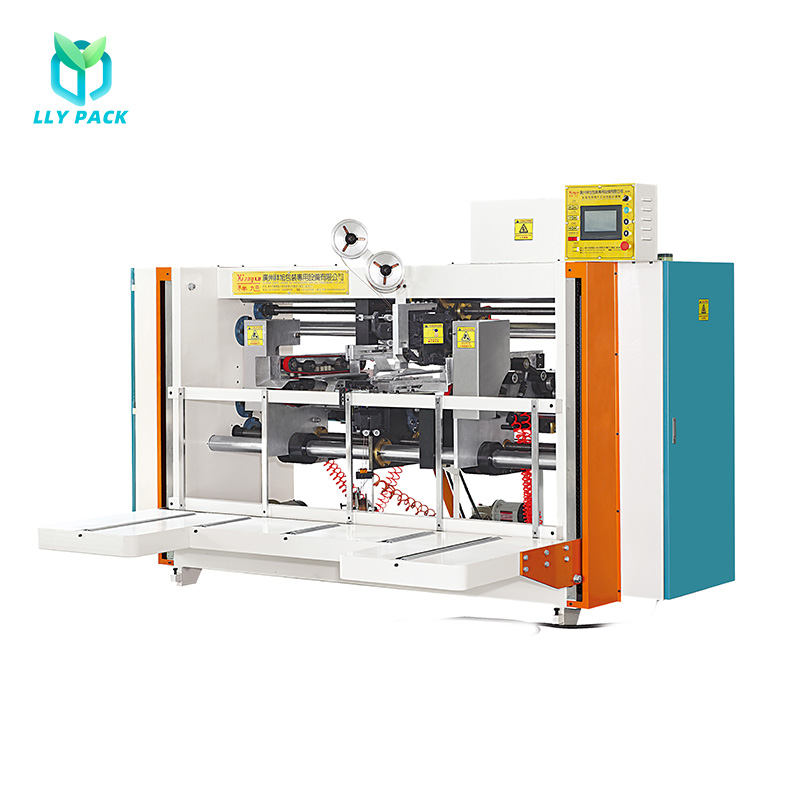
Read what the rate is per. The STM-1 is published at 450 nails/min. That is a stitching-head rate. It is not boxes per minute. The conversion is arithmetic and entirely yours to apply: box rate = stitching-head rate ÷ stitches per box. Because the machine's published programming range is 1–99 stitches and its stitch pitch range is 30–140 mm, the same 450 nails/min produces materially different finished-box rates on two different jobs. A quotation that offers only “450 nails/min” has not stated a box rate, and a comparison built on that single number is unfinished.
Read the join geometry. Stitch pitch of 30–140 mm sets the distance between successive stitches, and the 1–99 count sets how many the head will place. Together they define wire consumption per box and the clamp window the operator works inside. If your box programme mixes heavy-duty double-piece work with light single-piece work, both ends of the 30–140 mm pitch range will be used, and that range should be confirmed against your actual stitch patterns rather than assumed.
Read the frame as a floor plan. The STM-1 is published at 4000 mm length × 3300 mm width, 500 kg, on 220 V or 380 V. A 3300 mm width is a layout constraint before it is anything else: the unit has to sit downstream of the folder gluer or the printer slotter without blocking operator access or pallet movement.
Then handle the attribution trap. The sheet figures that commonly get attached to a stitcher discussion — 1600 × 3000 mm maximum and 300 × 600 mm minimum — are the PF-1 pre feeder's published sheet range, not the stitching machine's. This is the single most common error in corrugated spec interpretation: a figure that is true for one unit gets copied into the description of another, and the buyer evaluates the wrong machine. Read every sheet figure against the machine that actually touches the sheet, and confirm orientation convention — which dimension is width and which is length — in writing, because 1600 mm and 2300 mm are not the same width and the difference has to be resolved before the line layout is frozen.
Downstream matching: closing the line with the PF-1 pre feeder and the STA-1 stacker
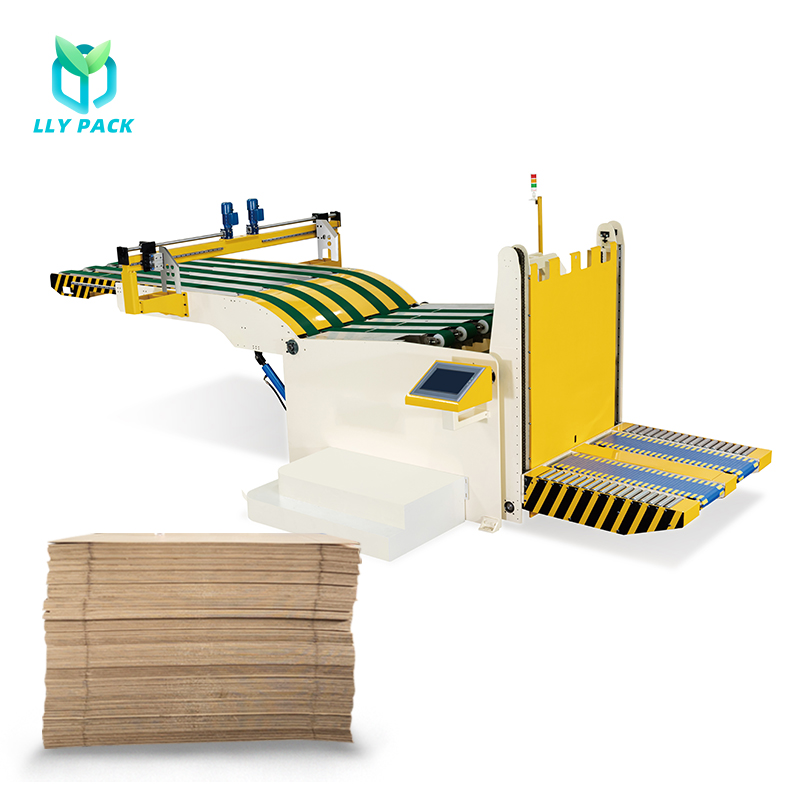
Matching downstream equipment is the same exercise repeated four times: line up the rate, line up the envelope, confirm the geometry that has to agree. The published data for the PF-1 pre feeder and the STA-1 stacker gives four clean checks.
Check 1 — the height chain closes. The PF-1 is published with a maximum stacking height of 1800 mm, and the STA-1 with a maximum paper height of 1.8 m. These are the same figure. This is the cleanest matched pair in the data set, and it is the check to run first, because a stack height mismatch between feeding and take-off is a handling problem that shows up on day one.
Check 2 — the rate chain has a clear bottleneck. The PF-1's maximum paper feed speed is 280 sheets/min. The FP-1 flexo printer's maximum equipment speed is 350 sheets/min. The feeder's ceiling sits below the printer's ceiling, so in that pairing the feeder sets the pace of the stage, with the printer running into headroom it cannot use. Either number can be the right purchase; what matters is knowing which one you are buying against.
Check 3 — the width chain needs a written resolution. The SF-1 web range is 1400–2300 mm and the STA-1 paper width is 1400–2300 mm, so the wet end and the stacker agree. The PF-1 is published with a maximum sheet size of 1600 × 3000 mm and a minimum of 300 × 600 mm. The 1600 mm figure and the 2300 mm figure are not the same width, so the orientation convention of the pre feeder's sheet figures must be confirmed against the board width the wet end produces before layout is signed off.
Check 4 — check the weight numbers against the right question. The PF-1's maximum feeding weight is 1600–1800 kg and its fork length is 1600–1800 mm; the STA-1's machine weight is 3000 kg. These measure different things — the load a mechanism lifts versus the mass of the equipment itself — and should never be lined up as if they were comparable. The PF-1's 1600–1800 kg is a stack duty; the STA-1's 3000 kg is a floor-loading and lifting duty. The PF-1's published footprint of 12267 × 4615 × 2395 mm and 13.7 HP power draw belong in the same site package as the stacker's 18500 × 3800 × 3500 mm frame.
Side-by-side: documented parameters across six units
The table below contains only published specification figures for the models named. It is not a ranking, and the rate column deliberately shows different units, because that difference is the lesson.
| Machine (model) | Documented rate | Envelope | Geometry / tooling |
|---|---|---|---|
| Single facer (SF-1) | 250 m/min design speed | Web size 1400–2300 mm | Flute rolls 380 / 380 mm; pressure roll 385 mm; glue roll 302 mm; doctor roll 170 mm; preheating roll 400 mm |
| Slitter scorer (SSC-1) | 630–900 m/min slitting blade line speed | Max paper width 2200 mm; min slitting width 150 mm | Slitting blade OD 260 mm; scoring wheel OD 190 mm; 30.3 kW; 4000 kg |
| Stitching machine (STM-1) | 450 nails/min | Stitch pitch 30–140 mm; 1–99 stitches | 4000 mm L × 3300 mm W; 500 kg; 220 V / 380 V |
| Pre feeder (PF-1) | 280 sheets/min max feed speed | Max sheet 1600 × 3000 mm; min sheet 300 × 600 mm; stack height 1800 mm | Max feeding weight 1600–1800 kg; fork length 1600–1800 mm; 13.7 HP |
| Stacker (STA-1) | No rate published for this unit | Max paper length 3.5 m; max paper height 1.8 m; paper width 1400–2300 mm | 3000 kg; 220 V |
| Production line (CCPL-1) | 300 m/min maximum mechanical speed | Line width 1400–2800 mm | Steam heating at 10 kg/cm²; approx. 110 m × 14 m × 6.5 m space |
Three project situations where this reading method changes the decision
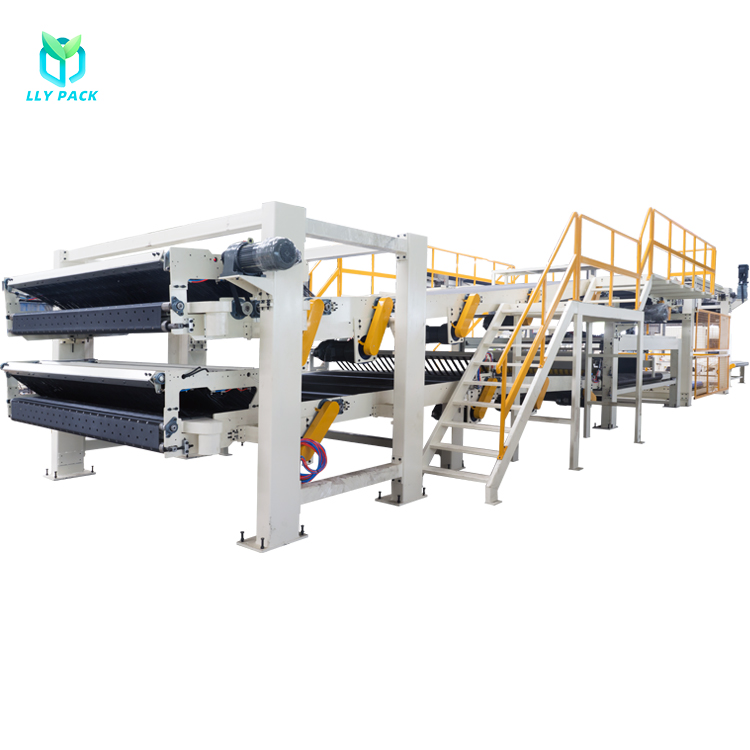
Situation 1 — Replacing a single facer in a plant that already owns a 2200 mm slitter. The wet end is published to 2300 mm and the slitter to 2200 mm. Buy the single facer at its full range and the plant will be producing board it cannot slit at the top of the range without a second handling step. The reading method surfaces the ceiling before the order, not after commissioning.
Situation 2 — Building a stitching section behind an existing printer. The printer is published at 350 sheets/min. The pre feeder is published at 280 sheets/min and the stitcher at 450 nails/min. Without converting nails to boxes using the planned stitch count, the stitcher's number looks like the fastest figure in the room. Converted, it may not be — and the feeder is likely to be the real pace-setter for that stage.
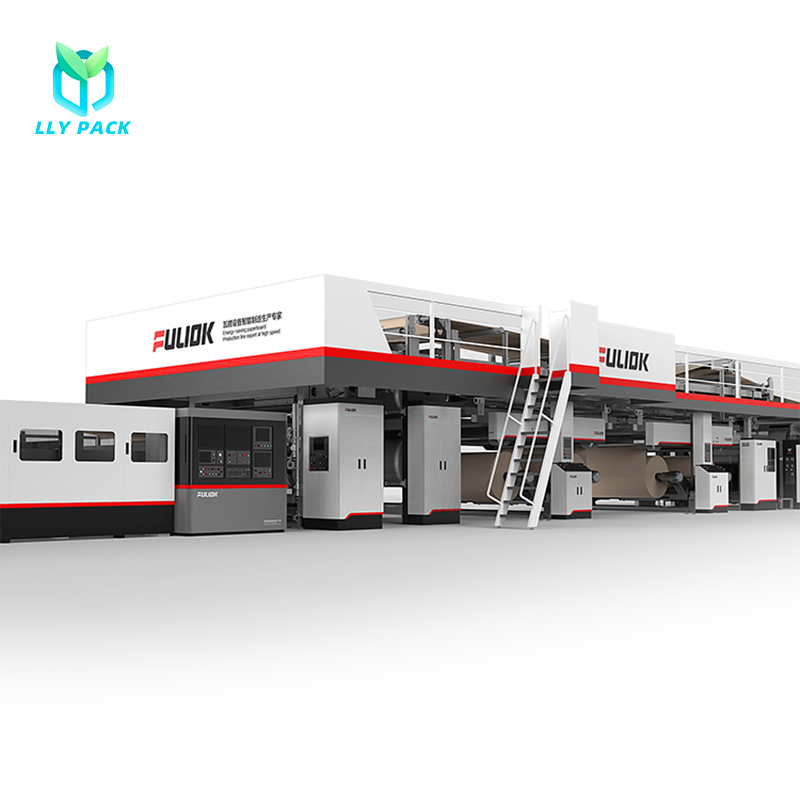
Situation 3 — Reviewing a full-line quotation quoted at 300 m/min. The CCPL-1 line is published at 300 m/min maximum mechanical speed, but its wet-end component, the SF-1, is published at 250 m/min design speed. A line banner figure and a component figure are not the same statement. Ask which machine the line figure is measured at, and ask the supplier to name the unit that limits sustained output. Corrugated board production in this class of scenario operates under high precision, high continuity, and high speed conditions, and the two recurring special requirements are base paper adaptability and speed synchronisation — both of which are properties of the line, not of any single machine, and both of which belong in the technical annex rather than the sales brochure.
Frequently asked questions
What certification evidence should I ask for alongside a corrugated machine spec sheet?
A spec sheet describes a design; a certificate describes a management system; neither replaces an acceptance test. Ask for the certificate number and its validity date so the document can be checked. LLY PACK holds ISO 9001:2015 certification under certificate number 60126Q00004R000, valid until 13 January 2029. Record that number in the procurement file next to the machine model and the quoted speed definition, because all three are needed to reconstruct what was agreed.
Does a 250 m/min design speed mean the machine will run at 250 m/min?
No. Design speed is the speed the machine was engineered around, and a maximum mechanical speed figure is likewise not sustained saleable output. Neither figure accounts for substrate, flute profile, board quality, changeover, or waste. The practical step is to have the supplier state the speed definition and the reference condition in the quotation, then verify it at acceptance against your own paper. This distinction applies across the whole line: the CCPL-1 production line is published at 300 m/min maximum mechanical speed, and that figure should be read as a rating, not a production forecast.
If my slitter scorer is rated 630–900 m/min and my single facer at 250 m/min, which one sets the line pace?
The single facer, on the published figures, because 250 m/min is the lower number and it sits at the wet end where the board is created. The 630–900 m/min figure is published as the slitting blade line speed, and the slitter works on board that has already been produced, so the two figures are not a like-for-like comparison. Confirm with the supplier whether the slitter figure describes blade speed or board travel through the unit before it is entered in any comparison table.
How do I compare two quotations when both simply say “300 m/min”?
Force the definitions to match before the numbers are compared. Ask each supplier to state what the speed figure is measured at, which machine in the line it belongs to, which width definition applies (web size, maximum paper width, or production line width), and which machines are inside the scope of supply. In the published data used in this guide, those three width concepts produce four different figures across the same line — 2200 mm, 2300 mm, and 2800 mm appear in the same equipment set — so an unqualified width comparison will mislead. No verifiable price data is published for these models, so the defensible commercial comparison is on identical definitions and identical scope, not on the headline number.
Can I run my own base paper before committing to a line?
That is the right request to make, because base paper adaptability and speed synchronisation are the two recurring special requirements in corrugated board production scenarios, and neither can be confirmed from a datasheet alone. Ask for a trial against your own liner and medium grades, and record the settings used. Equipment in this class can be configured for semi-automatic or fully automatic operation, which also changes how much of the run depends on operator intervention, so confirm which mode the trial reflects. The LLY PACK equipment catalogue is available as a downloadable PDF at this link, and trial or sample requests can be raised through www.llypack.com or by writing to christina@lycorrugated.com.
Conclusion: a spec sheet is a set of intersections
The three-column method does not require engineering training; it requires discipline. Sort every number into rate, envelope, or geometry. Attach the unit and the denominator to every rate. Attach an owner to every envelope. Read every diameter as a description of what the machine does to the paper. Then run the checks across machines: the width chain, the height chain, the rate chain, and the attribution of each figure to the correct unit.
Applied to the models in this guide, the method produces five concrete conclusions. The SF-1 reads as a 1400–2300 mm wet-end unit engineered around 250 m/min, with a matched 380 mm flute roll pair, a 385 mm pressure roll, a 302 mm / 170 mm adhesive metering pair, and a 400 mm preheating roll. The SSC-1's 630–900 m/min is a blade line speed that must be defined before it is compared with anything. Its 2200 mm maximum paper width sits below the 2300 mm web of the single facer and well below the 2800 mm published line width, which is the mismatch a buyer most often discovers too late. The STM-1's 450 nails/min becomes a box rate only after your stitch count is applied. And the PF-1's 1800 mm stack height lines up exactly with the STA-1's 1.8 m maximum paper height, while its 1600 mm maximum sheet width needs written confirmation against a 2300 mm board width.
LLY PACK reports more than 3,500 corrugated line installations and exports to over 40 countries; those are company-reported figures and should be checked as references rather than accepted as performance evidence. What a buyer can act on immediately is the specification data itself, read correctly, model by model, with every figure attributed to the machine it belongs to and every comparison made only between like definitions.
Next step: if you are reconciling a spec sheet against an existing line, send the board widths, liner grades, and stitch pattern you actually run to LLY PACK and request a quotation that states the speed definition and width definition for every machine in scope. The full equipment catalogue can be downloaded as a PDF here. Contact: christina@lycorrugated.com | WhatsApp +86 13763260555 | Flat/Rm 742, Star House 3, Salisbury Road, Tsim Sha Tsui, Kowloon, Hong Kong.
Have Questions or Need More Details?
Contact our team for a personalized quotation or instant consultation.
Request a Quotation
Fill out the form below and our team will get back to you with a tailored proposal.
WhatsApp Direct Chat
Prefer to chat in real-time? Message us on WhatsApp for instant assistance & quick answers.
- Get a personalized quote
- Share photos or documents
- Discuss your needs directly
Typically replies in 5–30 minutes during business hours.