
Long-Term Corrugated Machine Partnerships: What After-Sales Support Actually Looks Like
Long-Term Corrugated Machine Partnerships: What After-Sales Support Actually Looks Like
After-sales support in a corrugated machine partnership is not a warranty card and a phone number. In a working long-term relationship it is three defined commitments — a named response route, a pre-planned spare-parts position, and continuing technical guidance tied to the exact machines installed — and those commitments usually decide whether a line still runs at rated speed in year five or quietly loses output every quarter.
This article answers the questions packaging plant owners ask most often when they are choosing a partner rather than buying a single machine. Every technical point below is anchored to verified specifications from LLY PACK's own equipment: a single facer (SF-1) designed for 250 M/min, a slitter scorer (SSC-1) with a 630–900 m/min slitting blade line speed, and a stitching machine (STM-1) running at 450 nails per minute. Those numbers matter because support is only meaningful when it is measured against real machine parameters rather than sales language.
What After-Sales Support Actually Means in a Long-Term Corrugated Machine Partnership
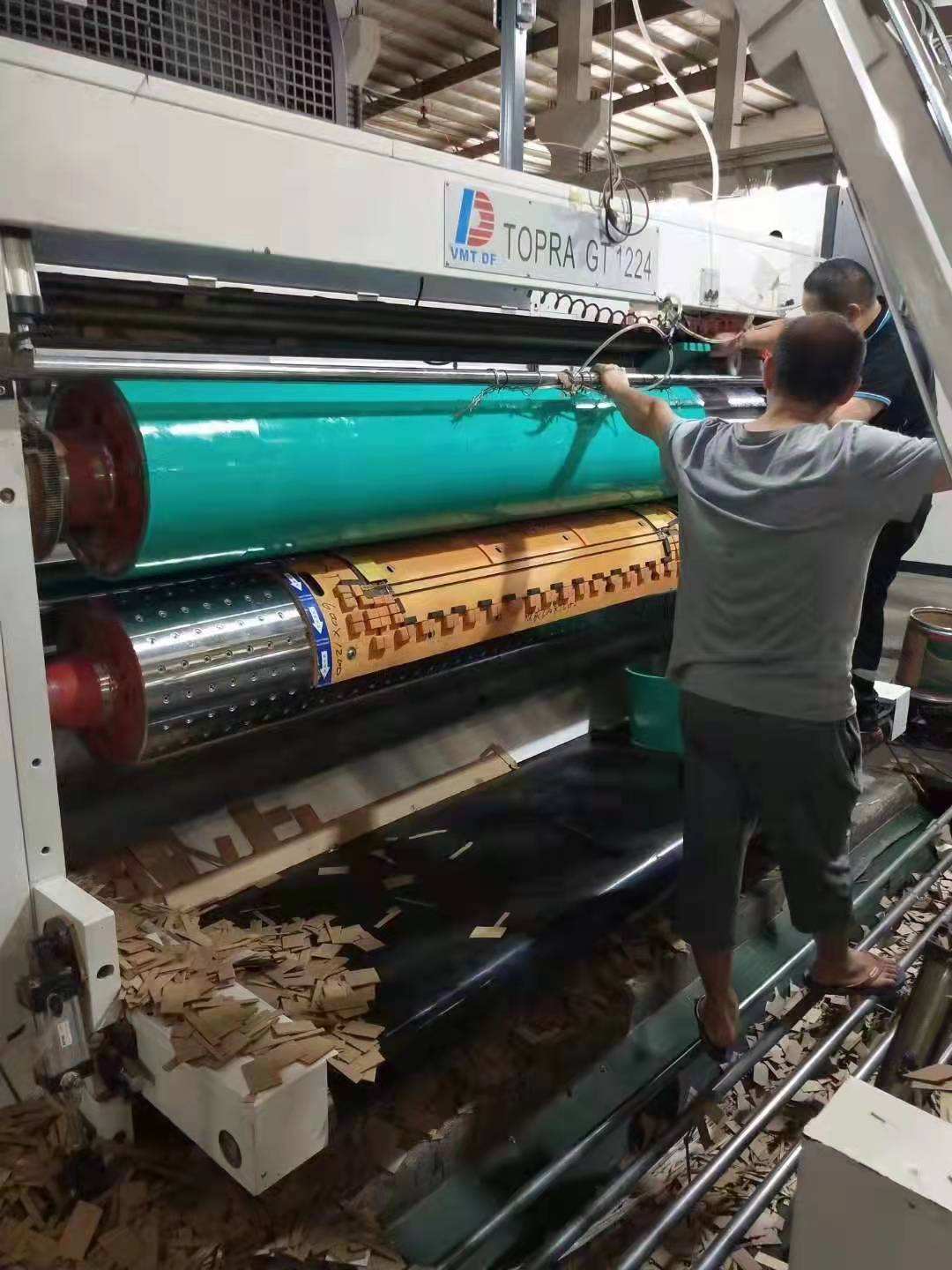
After-sales support is the structured service relationship that begins once a corrugated cardboard machine has been installed, acceptance-tested and handed over — and continues for as long as the equipment is in production. It covers everything that keeps installed capacity usable: diagnosis, repair, replacement parts, operator guidance and settings advice.
In a long-term partnership that commitment has three components a buyer can actually hold a supplier to:
- Response and diagnosis. A named technical contact, an agreed escalation path, and remote diagnosis before a site visit is booked. The purpose is to separate a setting problem from a mechanical failure without waiting for an engineer to travel.
- Spare-parts continuity. A written list of wear parts and critical components, a clear decision on which of them are held at the plant and which with the supplier, and a rule for replacing parts in advance of predictable failure.
- Technical guidance. Ongoing advice on running parameters, consumables, operator practice and line balancing as the order profile changes.
These three components look different at every module. On a slitter scorer (SSC-1), the consumables are a slitting blade with a 260 mm outside diameter and a scoring wheel with a 190 mm outside diameter, running at a line speed of 630–900 m/min and cutting to a minimum slitting width of 150 mm. On a single facer (SF-1), the wear geometry sits inside the machine: upper and lower flute rolls of 380 mm, a pressure roll of 385 mm, a glue applying roll of 302 mm, a doctor roll of 170 mm and a preheating roll of 400 mm. A supplier who cannot tell you which of those items is a consumable and which is a re-machining job is not offering a support programme — they are offering a call centre.
Why Support Commitments Decide Uptime More Than Purchase Price
A corrugated plant is a chain of processes, and a chain does not average out. The corrugator — represented in LLY PACK's range by the Corrugated Cardboard Production Line (CCPL-1), rated at a maximum mechanical speed of 300 m/min with a production line width of 1400–2800 mm — feeds the converting stage, where the slitter scorer (SSC-1) runs its blade line at 630–900 m/min and the stitching machine (STM-1) closes boxes at 450 nails per minute with a stitching pitch of 30–140 mm.
Three consequences follow from that structure, and all three push the buying decision toward support rather than price.
- Rated speed is a maintenance statement, not only a sales figure. A slitter scorer is a 630–900 m/min machine only while its slitting blades and scoring wheels are within tolerance; a single facer holds a 250 M/min design speed only while flute, pressure and glue rolls are in condition. Purchase price is paid once. Tolerance loss is paid every shift.
- The cost of a stop is measured in the modules behind it. When a converting module halts, stacked sheets, glue-mixed board and scheduled deliveries do not pause with it. This is why the existing LLY PACK risk-control approach treats equipment checks as routine rather than exceptional, and replaces key equipment and wear parts in advance instead of after failure.
- Higher automation concentrates risk in fewer hands. Automatic corrugated machines hold a dominant 55.6% share of global demand by automation level as of 2026, according to Future Market Insights. A more automated line needs fewer operators, but it also means the knowledge required to recover from a fault increasingly sits with the machine builder rather than on the shop floor.
The Industry Context Behind Long-Term Service Expectations
The global corrugated box making machine market was valued at USD 2.21 billion in 2024 and is projected to reach USD 3.36 billion by 2033, growing at a CAGR of 4.8% from 2025 to 2033, according to Grand View Research. In China, the corrugated box machine industry is projected to rise at a 3.9% CAGR between 2026 and 2036, driven by China's position as a global manufacturing hub, according to Future Market Insights.
Two structural facts sit behind those figures, and both shape what a buyer should reasonably demand from a long-term partner.
First, the installed base keeps shifting toward automation. The 55.6% automation share recorded for 2026 is not a description of new machines alone; it describes what the market now expects as standard. Every additional automated module — an auto splicer (AS-1) running at 300–400 m/min for paper widths of 1200–2550 mm, a pre feeder (PF-1) feeding sheets up to 1600×3000 mm at up to 280 sheets per minute, a stacker (STA-1) handling paper widths of 1400–2300 mm — adds a component whose failure mode is not obvious to an operator. Support quality becomes the practical knowledge layer of the plant.
Second, quality expectations are written into standards rather than negotiated case by case. ISO 3037:2022 and the FEFCO GMP standard are the primary global references for quality and edgewise crush resistance in corrugated cardboard production. Safety compliance for corrugated printing and converting machinery in the EU requires CE marking and adherence to standards such as EN ISO 12048 for compression testing. When a standard is revised, or when a customer audit asks for documentation of board quality or machine conformity, the supplier relationship is what produces that documentation quickly — or does not.
What LLY PACK's Support Model Covers in Practice
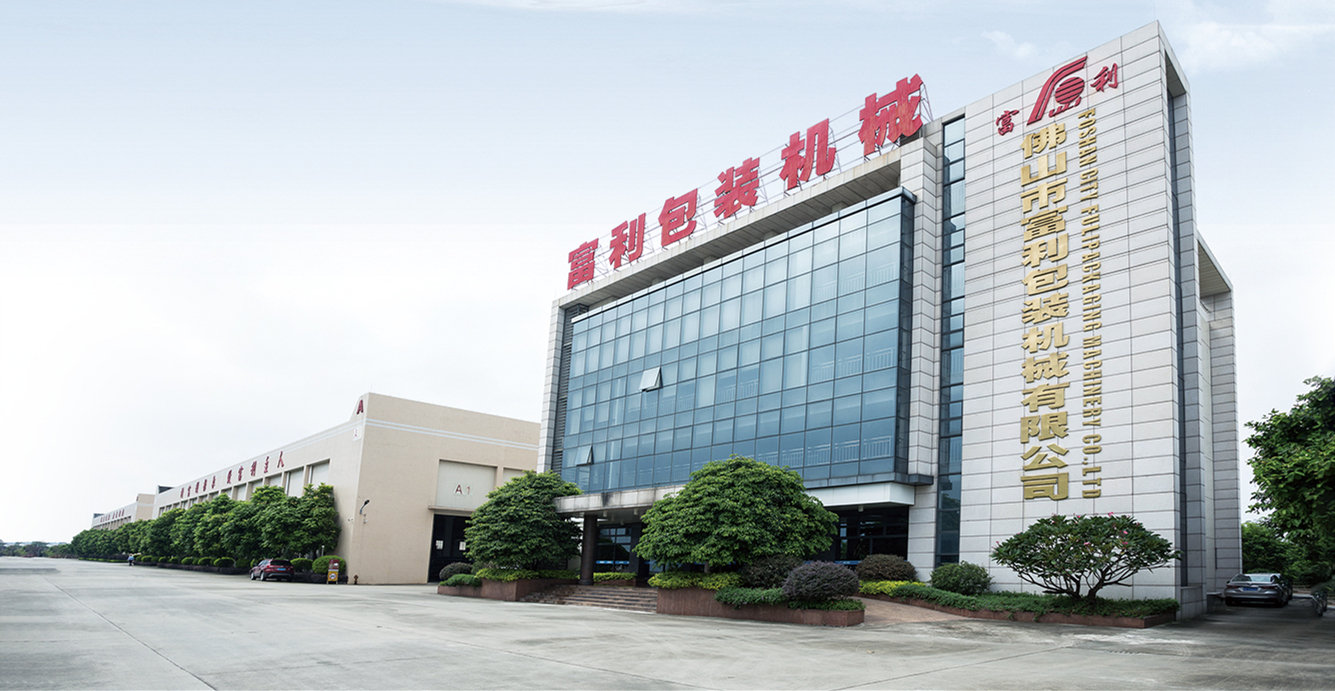
LLY PACK (HK) CO., LIMITED is a Hong Kong–registered corrugated machinery supplier whose manufacturing base is in Foshan City, Guangdong Province, China. The company manufactures single facers, corrugating rolls, corrugated belts, auto splicers and complete corrugated cardboard production lines, and states that it exports 100% of its output to markets that include South America, Southeast Asia, Africa and the Middle East.
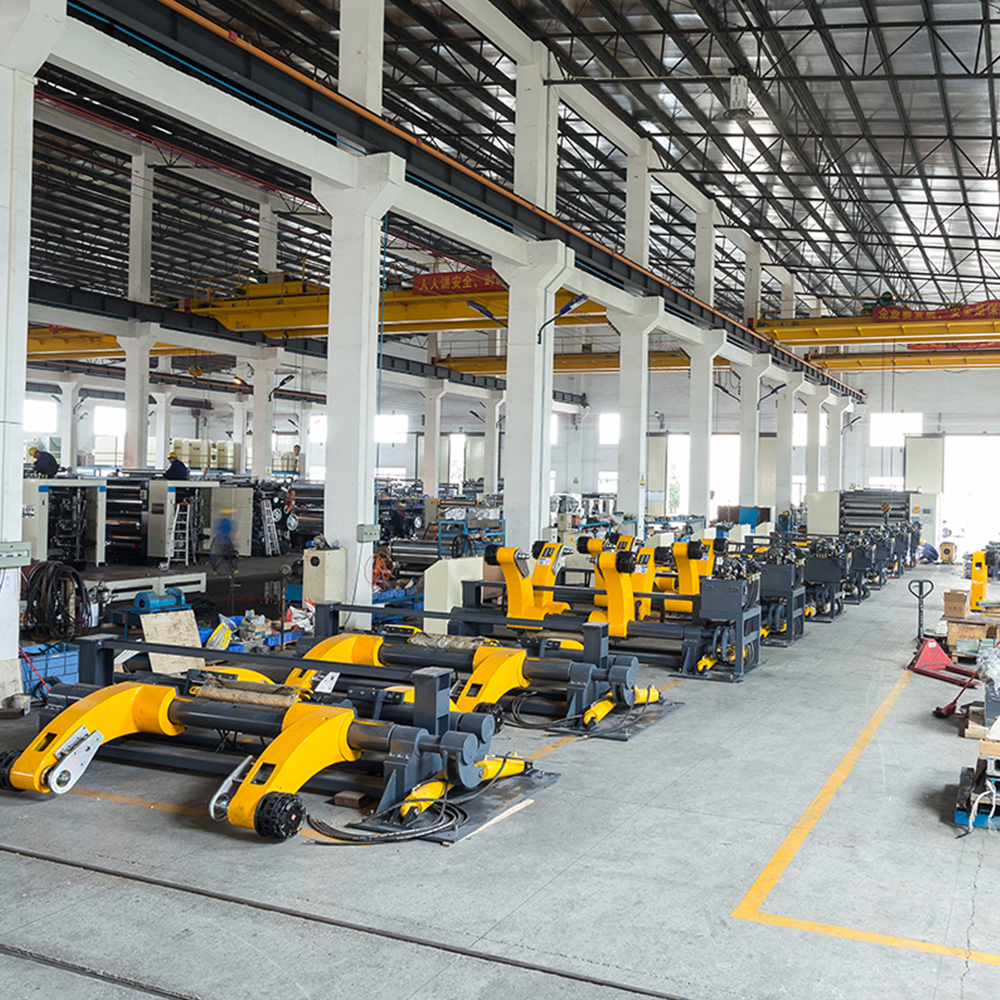
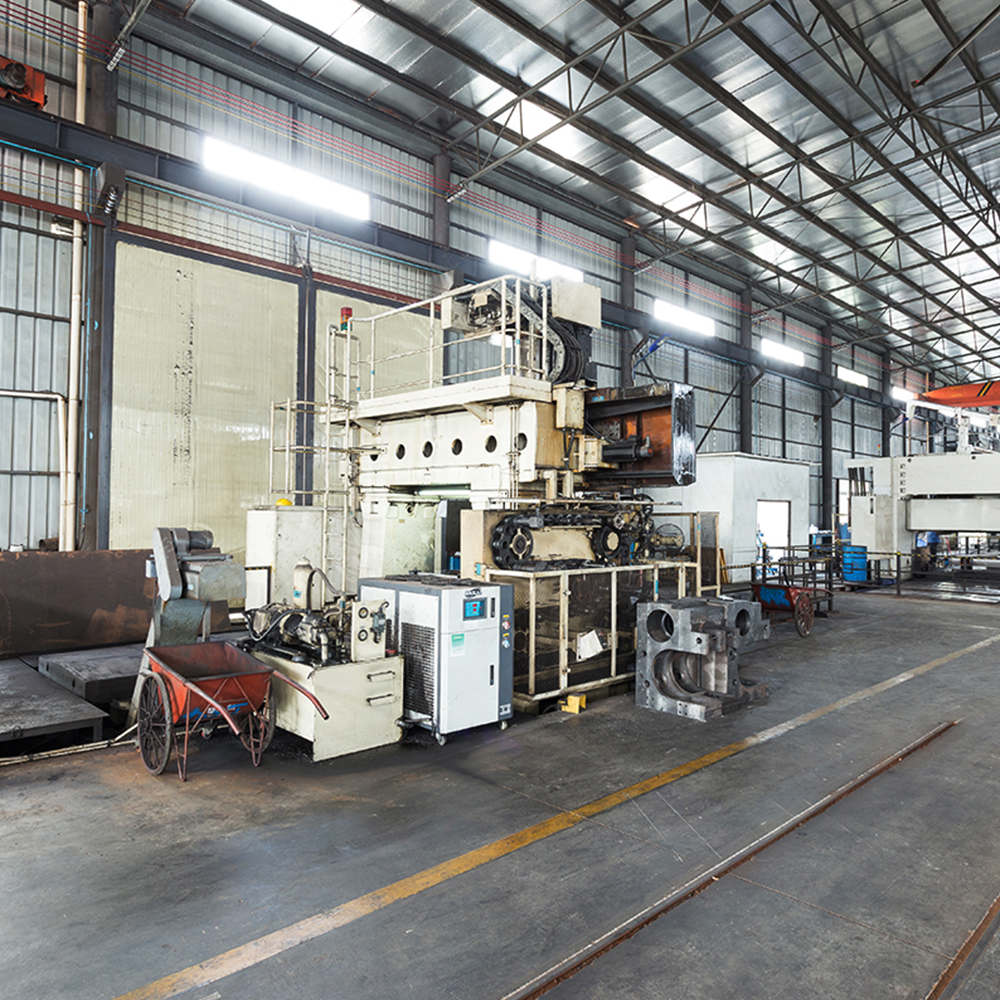
The scale behind the support model matters more than the wording of a warranty. The manufacturing operation has more than 25 years of experience in corrugated machines and high-speed corrugated cardboard production lines, has completed more than 3,500 installations of corrugated lines worldwide, and exports to over 40 countries. It holds more than 100 patents and certificates from the industry, runs a 30-person R&D team, and works with four sets of advanced CNC centres from Japan, including a computer-controlled five-face machining centre used for high-precision processing.
Where the programme becomes concrete is in the risk-control rule applied to equipment operation. Equipment is checked regularly to confirm it is running normally; key equipment and wear parts are replaced in advance rather than after a breakdown; and digitized monitoring is implemented wherever possible to reduce risk. That is a preventive model rather than a reactive one, and preventive maintenance is what protects uptime in a plant that runs multiple shifts.
The second concrete point is spare-parts sourcing. Corrugated belts and corrugating rolls are listed among LLY PACK's own main products alongside the single facer and the corrugated paper board production line. That matters over a ten-year horizon, because corrugating rolls and the double facer belt are wet-end wear items specific to the corrugator. When the machine builder also manufactures them, replacement does not queue behind a third party's production schedule.
Commercial terms form the third part of the picture and should always be confirmed in writing: minimum order quantity of 1 set, delivery on FOB, CIF, EXW or DAP terms, pre-shipment test as the acceptance method, and T/T payment.
Step-by-Step: How a Support Request Moves Through a Long-Term Partnership
A support commitment is only as good as the process behind it. In a well-structured partnership, a request follows seven steps — and the first four are completed before anything breaks.
- Record the baseline at commissioning. Because pre-shipment test is the acceptance method, the baseline should be captured against the nameplate data of each module: single facer design speed 250 M/min with a web size of 1400–2300 mm; slitter scorer blade line speed 630–900 m/min with a maximum paper width of 2200 mm and a minimum slitting width of 150 mm; stitching machine speed of 450 nails per minute with a stitching pitch of 30–140 mm and a stitch count range of 1–99. Without this record, 'it used to run better' can never be proven — or fixed.
- Build the wear-parts list by module, not by catalogue. Group the list by process stage: wet end (corrugating rolls, corrugated belt, reel stand components such as the HRS-1 with a 1500 mm maximum paper roll diameter), converting (slitting blades at 260 mm outside diameter, scoring wheels at 190 mm, stitching tooling for the STM-1), and finishing (strapping and wrapping consumables).
- Name the contact and the channel. Agree in advance who receives a fault report, through which channel, and who is authorized to escalate. A support relationship with no named counterpart on both sides is a support relationship with no accountability.
- Triage remote first, on-site second. Most stoppages on automated lines are setting, synchronization or consumable issues rather than structural failures. Remote diagnosis protects the plant against unnecessary travel time and protects the supplier against unnecessary call-outs — which in turn keeps the real emergencies prioritized.
- Replace with pre-positioned parts. This is the practical effect of the advance-replacement rule: the flute roll, the blade set or the belt is already at the plant or dispatched before the machine is opened up.
- Verify against the baseline and log the event. After the repair, the module should be brought back to its recorded parameter — line speed, board width, stitch pitch, slitting width — and the event logged with date, cause and part replaced. This log is what turns a support relationship into a maintenance history, and it is the first document an auditor or a buyer will ask for.
- Review the partnership on a schedule. A periodic review of consumption, repeat faults and capacity changes is what separates a long-term partner from a transactional vendor.
Use Cases: What Support Looks Like at Three Points on the Line
Use case 1 — Wet end: keeping a single facer at 250 M/min
A plant running a single facer (SF-1) at its 250 M/min design speed notices a slow drift in flute height and a rising glue consumption. Nothing has stopped; the line is simply producing more waste. In a preventive support model, the request is triggered by the trend, not by a failure: the flute roll condition is measured, the glue applying roll (302 mm) and doctor roll (170 mm) settings are reviewed, and a replacement flute roll set is scheduled into a planned stop. In a reactive model, the same situation ends in an unplanned stop with a full stacker and a truck waiting.
Use case 2 — Converting: a slitter scorer at 630–900 m/min
The slitter scorer (SSC-1) is usually the fastest module on the converting floor, with a slitting blade line speed of 630–900 m/min, a maximum paper width of 2200 mm, blade outside diameter of 260 mm and scoring wheel outside diameter of 190 mm. Blades and scoring wheels are consumables, and their condition sets both trim quality and the minimum slitting width the plant can quote (150 mm). Support here means a written blade-change interval, a stocked blade set, and guidance on whether a job should be re-scored rather than re-bladed.
Use case 3 — Finishing: a stitching machine at 450 Nails/Min
The stitching machine (STM-1) runs at 450 nails per minute with a stitching pitch adjustable between 30 mm and 140 mm and a stitch count from 1 to 99. It is a slower module, and buyers sometimes treat it as low-priority. It is not: a stitcher that stops means finished boxes stop leaving the plant, no matter how fast the corrugator upstream is running. Support for this module is mostly about tooling and setup — wire feed, pitch consistency and stitch count accuracy — and it is exactly the type of question that should be answered by the supplier rather than discovered by the operator.
Use case 4 — Expansion and channel partners
Long-term partnerships frequently move beyond maintenance. A plant adding capacity, or a distributor building a regional spare-parts position, needs a supplier whose line configurations scale — LLY PACK's documented portfolio covers 2 to 9-layer corrugated cardboard production lines — and whose module range (from a waste paper baler (WPB-1) handling 3–4 tons per hour to a wrapping machine (WM-1) with a 75 m/min maximum walking speed) can be added without redesigning the whole layout.
Comparing Support and Performance Positions: What to Verify Before You Sign
The table below sets out LLY PACK's documented position — including the company's own comparison against other high-end manufacturers of corrugated box production lines — next to the verification a buyer should request before treating any figure as a contract term. Within the global market, BHS Corrugated, Mitsubishi Heavy Industries (MHI) and Bobst are identified as the leading tier-1 manufacturers of corrugated production lines by Market Research Future; buyers evaluating any supplier, tier-1 or otherwise, should apply the same verification discipline.
| Comparison dimension | LLY PACK documented position | What a buyer should verify |
|---|---|---|
| Production efficiency | 15% higher production efficiency versus other high-end manufacturers, per company comparison documentation | Request acceptance-test output at your own plant, not a generic percentage |
| Service life | An additional 1–2 years of service life versus other high-end manufacturers | Ask which components the figure covers and what the wear-part replacement cycle is |
| Relative cost | 10% lower cost than other high-end manufacturers | Compare total cost including spare parts, freight, installation and commissioning |
| Maintenance behaviour | Less maintenance, reduced machine-stop frequency, higher degree of automation | Ask for the preventive maintenance schedule per module, not per line |
| Wear-part sourcing | Corrugated belts and corrugating rolls manufactured in house | Confirm quoted lead time for corrugating roll and double facer belt replacement |
| Commercial terms | MOQ 1 set; FOB / CIF / EXW / DAP; pre-shipment test acceptance; T/T payment | Confirm Incoterm, acceptance-test scope and payment schedule inside the contract |
| Installed base | More than 3,500 corrugated line installations; exports to over 40 countries | Ask for references in your region and in your layer configuration |
| Engineering base | 25+ years of experience; 100+ patents and certificates; 30-person R&D team; four Japanese CNC centres | Ask who signs off drawing changes and how technical queries are routed |
FAQ: Long-Term Corrugated Machine Support Questions Plant Owners Ask Most
1. What should an after-sales support commitment cover before we sign a long-term corrugated machine contract?
A support commitment should be written as five defined items, not a general promise. First, scope: which modules are covered, from the single facer (SF-1) through converting and finishing equipment such as the slitter scorer (SSC-1) and stitching machine (STM-1). Second, the wear-parts list, naming each consumable and its replacement trigger. Third, the response route — a named contact, the reporting channel and the escalation path. Fourth, the acceptance method: LLY PACK uses a pre-shipment test, which should be documented and used as the commissioning baseline. Fifth, the commercial frame: MOQ of 1 set, FOB / CIF / EXW / DAP delivery terms and T/T payment. On the compliance side, board quality expectations are anchored by ISO 3037:2022 and the FEFCO GMP standard, and corrugated printing and converting machinery destined for the EU requires CE marking and adherence to standards such as EN ISO 12048 for compression testing. Ask who produces that documentation when your customer audits you.
2. How should a partner respond when a single facer or slitter scorer stops mid-shift?
Priority should be given to the modules that gate the whole line. A single facer (SF-1) is designed for 250 M/min with a web size of 1400–2300 mm, and a slitter scorer (SSC-1) runs a slitting blade line speed of 630–900 m/min on paper up to 2200 mm wide — a stop at either point idles everything downstream. The practical response sequence is: report through the agreed channel to the named contact, run remote diagnosis to classify the fault as setting, consumable or mechanical, and only then schedule an engineer. LLY PACK's stated risk-control approach supports this by replacing key equipment and wear parts in advance and applying digitized monitoring wherever possible, so the common failures are covered by pre-positioned parts rather than by travel time. Any specific response-time target should be agreed in writing rather than assumed.
3. How should a packaging plant budget spare parts for a corrugated line?
Budget by wear class, not by machine list. Class one is fast-moving consumables: slitting blades with a 260 mm outside diameter and scoring wheels with a 190 mm outside diameter on the SSC-1, plus stitching tooling for the STM-1 with its 30–140 mm pitch range. Class two is wet-end wear: corrugating rolls and the double facer belt, both of which LLY PACK manufactures in house as part of its own product range, which shortens the sourcing path. Class three is module-specific components such as reel stand hydraulics (the HRS-1 uses a 3.7 kW power unit) and conveying parts. Each class carries three costs — the part, the freight, and the production time protected — and the third is usually the largest. Set the budget against the maintenance log, not against a percentage of machine price.
4. Can we validate a supplier's support quality before committing to a long-term agreement?
Yes, and it is worth doing in writing. Start with the acceptance method: a pre-shipment test gives you objective evidence of performance before the equipment leaves the factory, and it becomes the baseline for every later maintenance conversation. Second, ask for the wear-parts list as a deliverable before signature — a supplier who cannot list the consumables on their own machines cannot stock them. Third, since MOQ is 1 set, a plant can begin with a single module or a limited scope and expand once the support pattern is proven. Fourth, request references in your region and layer configuration; with more than 3,500 corrugated line installations and exports to over 40 countries, comparable installations usually exist. Finally, verify the published specifications yourself — 250 M/min, 630–900 m/min and 450 nails per minute are checkable facts, not claims.
5. What lead times should we expect for spare parts and service, and what is the next step?
Lead time is not one number; it depends on the part class. Off-the-shelf consumables such as blades and scoring wheels follow a different path from made-to-order components such as corrugating rolls and double facer belts, which are manufactured to the corrugator's specification. The practical approach is to agree a target lead time for each class in the contract and to keep the first class on site, so that a stoppage does not begin with an order. The next step is straightforward: send your line configuration — layer count, web width within the 1400–2800 mm range, target speed and current modules — and request a written support plan covering wear parts, response route and coverage scope. You can reach the LLY PACK team directly through Christina at christina@lycoriginated.com or WhatsApp +86 13763260555, and the full product catalogue is available for download below.
Plan your long-term support scope before you order
LLY PACK builds single facers, corrugating rolls, corrugated belts, auto splicers and complete corrugated cardboard production lines, with more than 3,500 line installations worldwide and a 30-person R&D team behind the technical guidance. Send us your current line layout and target output, and we will return a written support and spare-parts plan for the modules you actually run.
Download the LLY PACK product catalogue (PDF): Corrugated machine catalogue and specifications
Contact: Christina · christina@lycorrugated.com · WhatsApp +86 13763260555 · www.llypack.com

Conclusion: Support Is a Specification, Not a Promise
For a packaging plant owner making a decision that will still be running in ten years, after-sales support deserves the same scrutiny as machine speed. The specification tells you what the equipment can do — a single facer at 250 M/min, a slitter scorer at 630–900 m/min blade line speed, a stitching machine at 450 nails per minute. The support model tells you whether it will still do it in year five.
Ask for the wear-parts list, the named contact, the acceptance test, and the advance-replacement rule. Ask which wear components your supplier manufactures themselves. Then compare the answers, not the adjectives. That is what a long-term corrugated machine partnership looks like in practice — and it is the part of the purchase that keeps paying back.