
Selecting Pneumatic Cylinders for Corrugated Machine Parts: A Technical Guide to Model PC-1
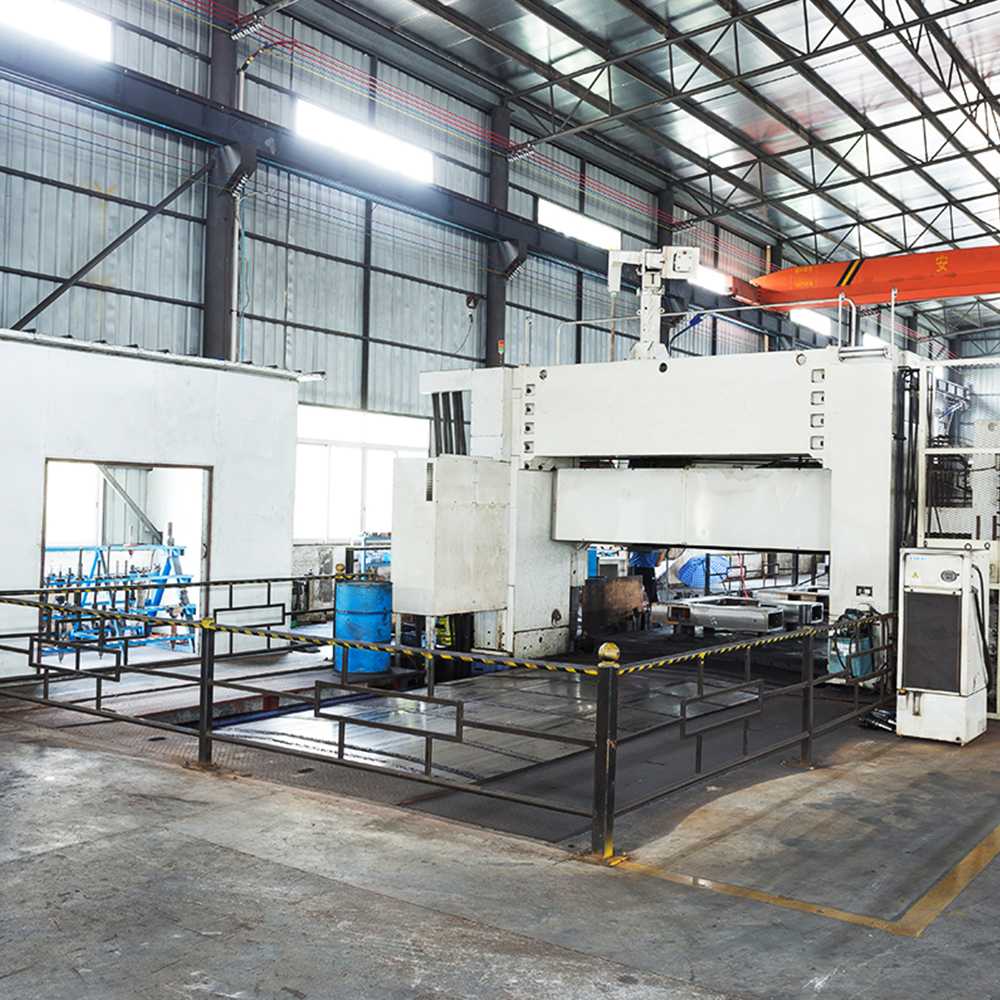
Corrugated cardboard production line factory — the installed base that specification-matched corrugated machine parts keep running.
Short answer: a pneumatic cylinder for corrugated carton packaging machinery is selected by matching five verified parameters to the station it drives. Model PC-1 covers bore sizes from 32 mm to 400 mm, port options PT1/2, PT3/4, P1 and P1/4, a maximum stroke of 1000 mm, a working pressure range of 1.5–8 bar, and a proof pressure of 12 bar. Match those values to the force, travel, connection and air supply of the station, and the cylinder behaves predictably in service.
Corrugated lines are built from dozens of small linear movements. A blade locks into position, a brake releases, a chuck grips a paper core, a stacker pushes a bundle forward. Most of those movements are powered by compressed air, and the component that converts that air into motion is the pneumatic cylinder.
Because the cylinder sits behind the visible action, a specification mistake is usually diagnosed late — as a quality fault, a jam or a repeated stoppage rather than as a cylinder problem. This guide is written for box plant engineers, maintenance planners and parts buyers who already know which station has failed and now need to specify the replacement correctly. It focuses on the PC-1 pneumatic cylinder and uses only its verified specification set: bore size, port options, maximum stroke, working pressure and proof pressure.
It also explains how LLY PACK (HK) CO., LIMITED — a Hong Kong registered company supplying corrugated machinery and corrugated machine parts, with production based in Foshan City, Guangdong Province — supports specification-based ordering rather than part-number guessing.
Problem Definition: Why Pneumatic Cylinder Selection Goes Wrong
Almost every incorrect pneumatic cylinder on a corrugated line fails for one of four reasons, and none of them is visible from the outside of the part.
1. Force mismatch (bore size)
A cylinder with too small a bore cannot produce enough force at the pressure actually available on the plant's air line. The symptom is not a broken cylinder but a slow, incomplete or inconsistent movement — a blade that does not lock fully, a clamp that slips under load. Oversizing the bore is not automatically safe either: it consumes more air, can shock the mechanism at the end of stroke, and may not fit the existing mounting pattern.
2. Travel mismatch (stroke)
Stroke determines how far the moving element travels. A stroke that is too short leaves the mechanism short of its end position; a stroke that is too long changes the mechanical geometry and can allow the rod to bottom out or over-travel. PC-1 supports strokes up to 1000 mm, which covers the long-travel duties found on wider corrugated lines.
3. Connection mismatch (port option)
The port is where the cylinder meets the existing fittings, hose assemblies and valves. PC-1 is offered with PT1/2, PT3/4, P1 and P1/4 port options. A cylinder that is mechanically and pneumatically correct but has the wrong port thread still stops the line, because it forces an adapter into a circuit that was designed without one.
4. Pressure mismatch (working range versus plant air supply)
The cylinder has to operate inside a defined pressure envelope. PC-1 is rated for a working pressure of 1.5–8 bar. A plant running its air system at the low end of that range needs a different bore selection than a plant running near the top of it, even for the same mechanical duty.
These four checks take less time than a single unplanned stoppage. The rest of this guide turns them into a repeatable selection sequence.
Industry Background: Why Specification-Matched Parts Matter More Than Ever
Demand for corrugated machinery continues to expand, which means more installed lines, more stations per line, and more replacement-part decisions per year. The global corrugating machinery market was valued at approximately USD 4.8 billion in 2025 and is projected to reach USD 8.1 billion by 2034, according to Dataintelo. Asia-Pacific is the largest regional market: Straits Research places the region at approximately 40.9% of the corrugated box-making machine market in 2024.
Market concentration matters for parts selection. Future Market Insights reports that Tier 1 corrugated machinery manufacturers — BHS Corrugated, Fosber and Mitsubishi — occupy approximately 60% of the market share. That leaves a large share of the world's corrugated capacity running on mixed-brand and retrofitted lines, where the replacement part has to be selected against the machine's actual operating condition rather than against a single builder's catalogue.
The practical consequence is straightforward: on most corrugated lines, a part number is not a specification. Bore, stroke, port and pressure have to be confirmed against the station. That is the difference between a cylinder that runs to its next planned maintenance window and one that returns as a repeat failure.
Detailed Solution: How the PC-1 Pneumatic Cylinder Is Specified
PC-1 is defined by five parameters. Together they determine whether the cylinder produces the right force, reaches the right position, connects to the existing air circuit, and survives the pressure it will see in service.
| Parameter | Verified PC-1 value | What it decides on a corrugated line |
|---|---|---|
| Bore size | 32 mm – 400 mm | Available force at a given air pressure, and the cylinder's mounting footprint |
| Port options | PT1/2, PT3/4, P1, P1/4 | Whether existing fittings and hose assemblies connect without adapters |
| Maximum stroke | 1000 mm | How far the moving element can travel before reaching its end position |
| Working pressure | 1.5 – 8 bar | The continuous operating envelope for the cylinder |
| Proof pressure | 12 bar | A verification figure for the cylinder body and seals, not an operating setting |
Table 1 — PC-1 pneumatic cylinder: verified specification set and its selection consequence.
Bore size (32–400 mm) is the primary force control. Force is generated by air pressure acting on the piston area, so bore and pressure must be considered together: a wide bore range means the same cylinder family can serve both a light clamping duty and a heavy push duty, without moving to a different product series.
Port options (PT1/2, PT3/4, P1, P1/4) exist because corrugated lines are rarely built from one pipe standard. Older lines, retrofitted lines and mixed-brand lines often carry different fitting types in the same plant. Selecting the correct port option at the ordering stage removes the adapter stack that otherwise becomes a leak point and a maintenance nuisance.
Maximum stroke (1000 mm) covers long-travel duties such as transferring or pushing a stack, and it also matters for shorter duties because a longer available stroke often means the cylinder can be mounted in a position that is easier to service.
Working pressure (1.5–8 bar) is the range in which the cylinder is intended to operate continuously. The lower limit matters as much as the upper one: a plant with a weak or long air network may sit closer to 1.5 bar than to 8 bar at the point of use, and that figure should drive the bore calculation, not the compressor's rated output.
Note on pressure terminology: the working pressure of 1.5–8 bar is the continuous operating envelope. Proof pressure of 12 bar is a verification figure used to confirm that the cylinder body and seals withstand pressure above the working range under test conditions. It is not a recommended operating setting, and it should never be used as a target for the plant air system.
Step-by-Step Breakdown: Six Steps to Select a Pneumatic Cylinder
The sequence below can be applied to any pneumatic cylinder selection on corrugated machinery. It is deliberately mechanical: work through the steps in order and the specification falls out of the station's requirements.
Step 1 — Describe the duty, not the part number
Start with what the cylinder has to do: which mechanism it moves, in which direction, against what resistance, and how often. Note whether the movement is a clamping action that must hold under load, a positioning action that must repeat accurately, or a simple push or lift. Record the failure symptom as observed on the line, because the symptom usually identifies which parameter was wrong.
Step 2 — Calculate the force, then size the bore
Force is the product of gauge pressure and effective piston area (F = p × A), with the effective area derived from the bore diameter. Two practical rules apply. First, calculate at the lowest pressure your plant can reliably guarantee at that point of use, not at the compressor's maximum. Second, leave working margin so the cylinder is not operating at the very edge of its capability on every cycle. PC-1's bore range of 32 mm to 400 mm allows the force requirement to be matched by changing the bore rather than by raising system pressure.
Step 3 — Set the stroke from the mechanical geometry
Stroke requirements come from the mechanism, not from the old cylinder. Measure the actual travel required, add clearance for mounting tolerance, and confirm that the selected stroke does not allow the rod to bottom out or over-travel the guided element. PC-1 covers strokes up to 1000 mm, which is sufficient for the long-travel duties found on wide corrugated lines.
Step 4 — Confirm the pressure envelope against plant air supply
Check that the cylinder's working pressure range covers the pressure actually available at the station, with margin at both ends. Where plant pressure is low, increase bore; where plant pressure is high, confirm that the seals and body are rated for it. For PC-1, the continuous operating range is 1.5–8 bar, with a 12 bar proof pressure figure for verification purposes.
Step 5 — Match the port option to the existing connection
Identify the existing fitting thread and hose or tubing size at the station, then select the corresponding PC-1 port option from PT1/2, PT3/4, P1 and P1/4. Confirming the port at the ordering stage costs nothing; discovering it at installation costs a production stop.
Step 6 — Plan inspection, spares and supplier verification
Decide how the cylinder will be inspected and replaced before the order is placed. On the supply side, LLY PACK applies a 100% test routine as its quality control step, and its stated after-sales policy for corrugated machine parts is replacement for defective products. Both points belong in the purchasing decision, because a cylinder that is cheap to buy but hard to replace reliably is expensive to operate.
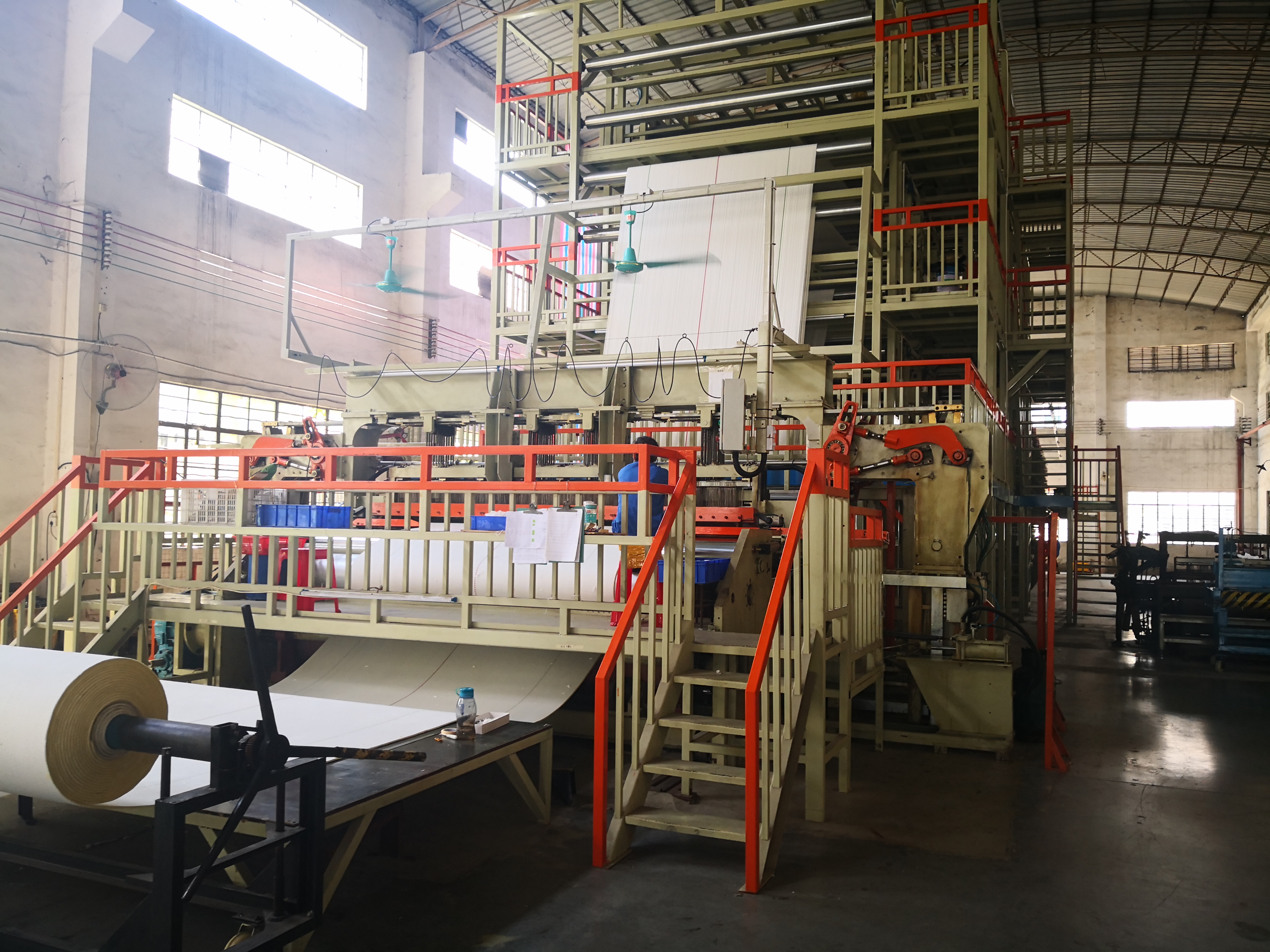
Production of corrugated machine parts at the LLY PACK facility in Foshan City, Guangdong Province.
Use Cases: Matching PC-1 to Corrugated Line Stations
The same five parameters apply across the line, but the parameter that matters first changes from station to station. The table below maps common corrugated line duties to the PC-1 parameter that should be confirmed first.
| Corrugated line station | Typical pneumatic duty | PC-1 parameter to confirm first | Parts commonly replaced together |
|---|---|---|---|
| Slitter scorer | Blade carrier positioning and locking | Bore size — force to hold under load | Slitting blade, creaser wheel |
| Rotary die cutter | Board clamping, die-board and anvil lift | Stroke — clearance and travel | Rotary die board, anvil cover rubber |
| NC cut-off | Knife actuation and return | Working pressure — cycle-to-cycle consistency | NC cut-off blade, grinding wheel |
| Corrugator drive and reel stand | Brake release and tension control | Bore size and port option — matches existing air circuit | Pneumatic brake, brake pads, paper chuck |
| Slotter | Slotting head positioning and clamp | Stroke | Slotting blade |
| Stacker and transfer | Bundle push, clamp and pallet handling | Stroke | Conveyor belt, plastic pallet |
Table 2 — Which PC-1 parameter to confirm first, by corrugated line station.
Two practical patterns emerge from this mapping. First, clamping and locking duties are bore-driven: they need force at a given pressure, and their travel is short. Second, transferring and positioning duties are stroke-driven: they need the correct distance more than they need maximum force. Ordering a cylinder by the old unit's part number silently skips both checks.
Not every linear movement on a corrugated line is pneumatic. Reel stands, for example, are commonly built with hydraulic actuation because they must hold very heavy paper reels under continuous load, while pneumatic actuation is generally preferred where speed, cleanliness and simple maintenance matter more than raw force. The selection logic is the same — duty first, then parameter — but the actuation type is decided by the machine builder's original design.
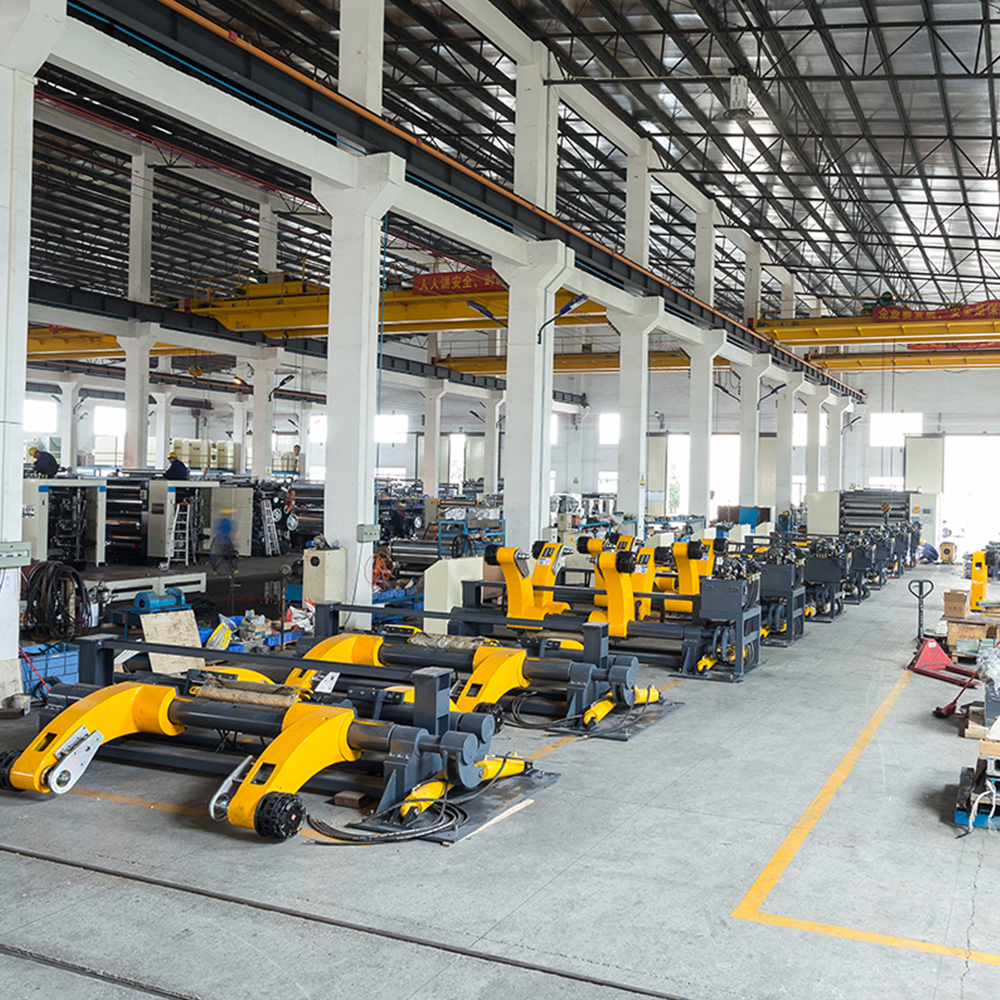
Hydraulic reel stand production — reel stands are one of the stations where actuation type is chosen by function and load, not by convention.
The same specification discipline applies to neighbouring corrugated machine parts. Rotary joints, printer anilox rollers and printing cushion are all selected against the machine's actual operating condition, and buying them purely by part number produces the same result as buying a cylinder purely by part number: a part that fits but does not perform.
Comparison Table: Actuation Types and Parameter Trade-Offs
When the duty is unusual, it helps to check whether pneumatic actuation is still the right choice for the station. The comparison below is a decision framework rather than a product ranking, and it is deliberately qualitative.
| Actuation type | Where it is typically used on corrugated lines | Strengths to plan around | Limits to plan around |
|---|---|---|---|
| Pneumatic | Clamping, locking, braking, positioning, stacking and transfer duties | Simple construction, fast action, relatively low maintenance, easy to service with plant air | Force is limited by available air pressure, so the bore has to be sized against the real pressure at the station |
| Hydraulic | Heavy continuous-load duties such as reel stands | High force density in a compact body | Requires hydraulic power and fluid maintenance; less suited to clean, fast, repeated light movements |
| Electric / servo | Positions where travel or timing must be precisely controlled | Programmable positioning and repeatability | Higher control complexity and different maintenance skills on the plant floor |
Table 3 — Actuation type selection framework for corrugated machine stations.
For the majority of corrugated machine part replacements, the original station design already indicates the actuation type — the useful decision is inside that type. For a pneumatic station, that means confirming bore, stroke, port and pressure against PC-1's verified specification set rather than against a catalogue photo.
Compliance and Supply Checks Before You Order
Specification is only half of a purchasing decision. The other half is whether the supplier's quality system and replacement policy support the maintenance plan the part is entering.
LLY PACK (HK) CO., LIMITED holds ISO 9001:2015 certification, certificate number 60126Q00004R000, issued on 14 January 2026 by Guangdong Zhongjing Testing and Certification Co., Ltd. and valid until 13 January 2029. The certification is held against the standard GB/T 19001-2016 / ISO 9001:2015. For buyers who maintain a vendor quality file, the certificate copy should be requested alongside the quotation and retained with the incoming inspection record.
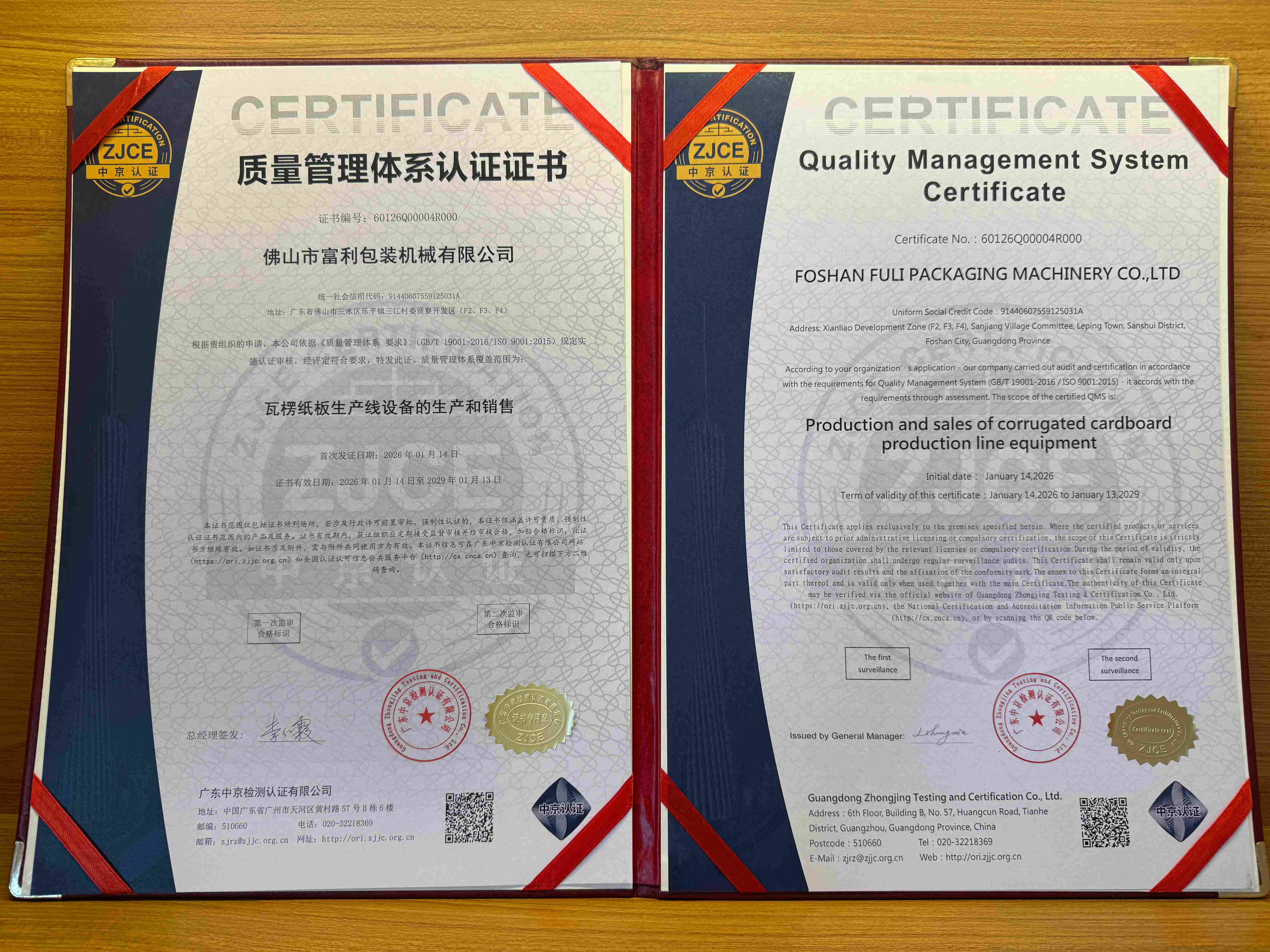
ISO 9001:2015 certification, certificate No. 60126Q00004R000, valid 14 January 2026 – 13 January 2029.
On the supply side, LLY PACK operates an OEM production model for corrugated machine parts, with production based in Foshan City, Guangdong Province, and machinery exported to more than 40 countries. The company's parts and machinery programmes are supported by an in-house R&D team, and the wider manufacturing operation is built on more than 25 years of experience in corrugated machines and high-speed corrugated cardboard production lines, including more than 100 patents and industry certificates. For a plant ordering cylinders as part of a wider spare-parts list, this matters: bore, stroke, port and pressure can be confirmed against a specification rather than negotiated from scratch on every order.
Frequently Asked Questions
Is the PC-1 pneumatic cylinder supplied under a certified quality system?
Yes. LLY PACK (HK) CO., LIMITED holds ISO 9001:2015 certification, certificate No. 60126Q00004R000, issued on 14 January 2026 by Guangdong Zhongjing Testing and Certification Co., Ltd. and valid until 13 January 2029, against the standard GB/T 19001-2016 / ISO 9001:2015. Buyers who need the certificate for their own quality or vendor records should request the copy together with the quotation, so it can be filed with the incoming inspection documentation.
Can PC-1 cylinders be customized for a specific corrugated machine or station?
LLY PACK runs an OEM production model for corrugated machine parts, with customization options covering material selection and dimensional parameters, produced against the confirmed drawing or operating condition. Because bore, stroke, port and pressure are interdependent, the practical route is to send the station data — required force, travel distance, available air pressure at the point of use, and the existing port thread — and let the specification be built around those inputs rather than chosen from a fixed list.
What drives the cost of a pneumatic cylinder for corrugated machinery?
Cost is generally driven by bore size, stroke length, port configuration, sealing and material selection, and order quantity. For budgeting purposes, the useful approach is to fix the required specification first and then compare quotations on the same specification. A cylinder quoted against an incomplete specification — wrong stroke, unmatched port, or a bore sized at ideal rather than actual plant pressure — usually costs more over its service life, because the difference is absorbed as adapters, repeat purchases, and unplanned downtime rather than as purchase price. A firm quotation requires the station data; a price list alone cannot answer this question.
How can a buyer validate a PC-1 cylinder before committing to a full order?
Validation should begin with the specification rather than the sample. Confirm bore, stroke, port and pressure against the station data in writing, then agree what inspection or test records will accompany the shipment. LLY PACK applies a 100% test routine as its quality control step, and its stated after-sales policy for corrugated machine parts is replacement for defective products. Sample and trial-order arrangements depend on the station and the quantity required, so they should be confirmed directly with the LLY PACK team before a first order is placed.
What is the minimum order quantity and lead time?
For custom corrugated machine parts, the current production programme states a minimum order quantity of 100 pieces and a lead time of 30–45 days. Lead time should be planned against the maintenance calendar rather than against the failure date: a plant that stocks one spare cylinder for its highest-cycle station usually avoids the 30–45 day exposure on that station entirely. Lead time for a specific PC-1 configuration should be reconfirmed with the supplier at the time of quotation.
Conclusion
Selecting pneumatic cylinders for corrugated machine parts is a five-point exercise, not a guess. Bore size decides force, stroke decides travel, the port option decides whether the cylinder connects, working pressure decides whether the cylinder survives the plant's air supply, and proof pressure confirms the body's verified limit rather than an operating target. On PC-1 those five values are fixed and checkable: 32–400 mm bore, PT1/2, PT3/4, P1 and P1/4 ports, up to 1000 mm stroke, 1.5–8 bar working pressure and 12 bar proof pressure.
The order of operations matters more than the numbers themselves. Describe the duty, calculate the force at the real available pressure, set the stroke from the mechanism, confirm the pressure envelope, then match the port to the existing connection. A cylinder selected this way fits the station and the maintenance plan; a cylinder selected by part number alone fits only the bracket.
Next Step: Confirm the Specification Before You Order
Send the station details — required force, travel distance, available air pressure and the existing port thread — and the PC-1 specification can be matched to your line. Including the machine model and a photograph of the failed unit is usually enough to confirm bore, stroke, port and pressure in a single exchange.
Download the catalogue: LLY PACK corrugated machine parts catalogue (PDF)
Email: christina@lycorrugated.com · WhatsApp: +86 13763260555 · Website: www.llypack.com