
Selecting Pneumatic Cylinders for Corrugated Machinery: Bore Size, Stroke, and Pressure Ratings
Selecting Pneumatic Cylinders for Corrugated Machinery: Bore Size, Stroke, and Pressure Ratings
A pneumatic cylinder on a corrugated machine is defined by three numbers — bore size, stroke and working pressure — plus the port size that feeds it and the temperature range it has to survive. Get those right and the cylinder becomes a repeatable, low-attention actuator. Treat them as interchangeable and it becomes a component that lags, drifts and wears early without ever failing cleanly.
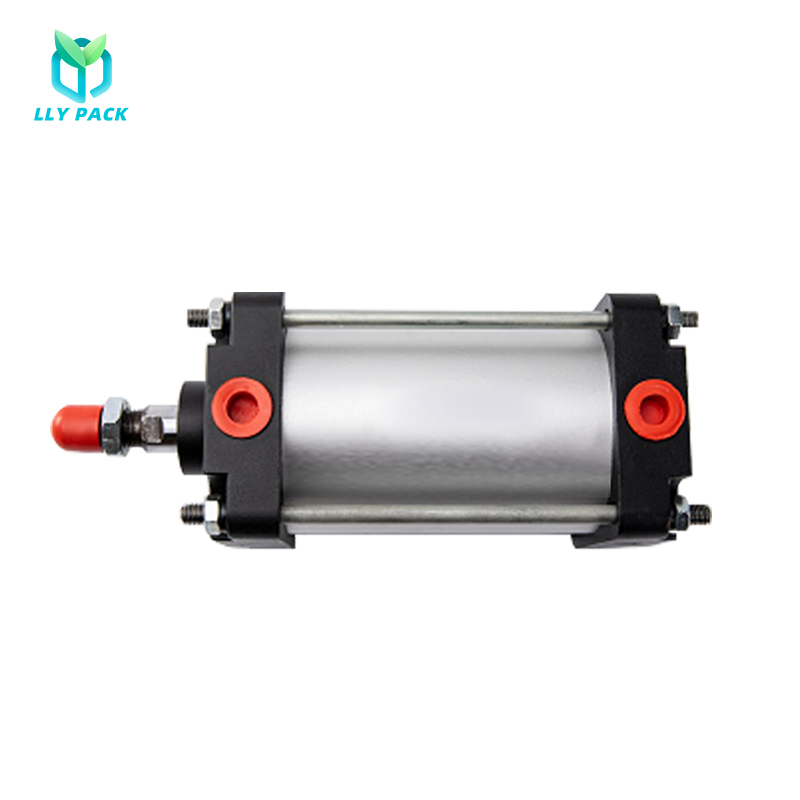
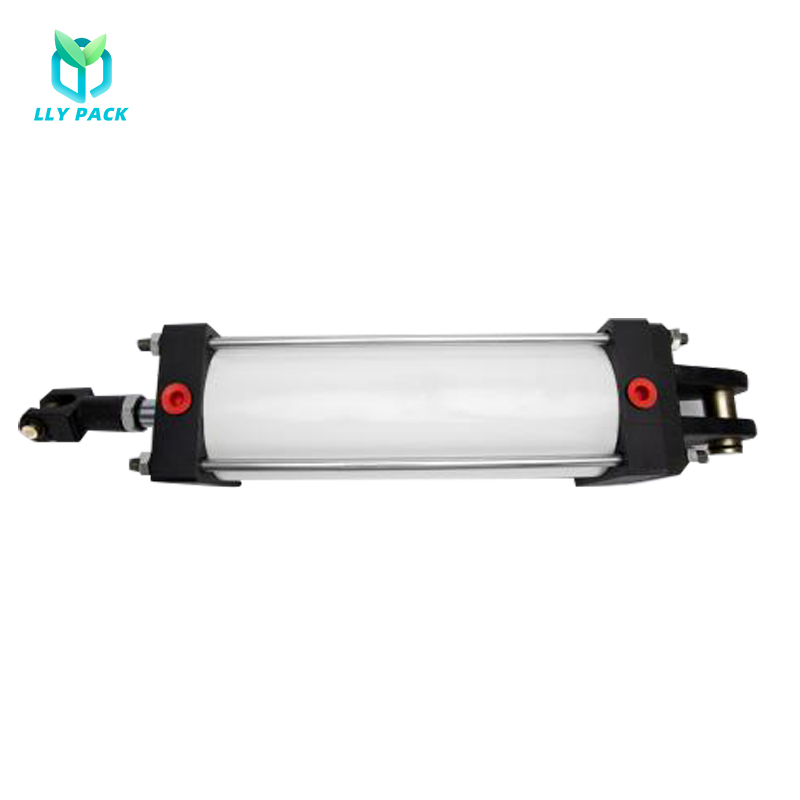
The PC-1 pneumatic cylinder from LLY PACK is a steel air cylinder specified for corrugated carton packaging machinery. Its published data covers bore sizes from 32 mm to 400 mm, a maximum stroke of 1,000 mm, a working pressure range of 1.5 to 8 bar, a proof pressure of 12 bar and a working temperature range of -25 to 80 °C, with port sizes PT1/2, PT3/4, P1 and P1/4. The sections below explain what each figure controls on a carton line, how the numbers constrain one another, and how to turn a machine requirement into a specification you can order against.
Why cylinder specification fails quietly on a carton line
Corrugated conversion runs on high precision, high continuity and high speed, with base paper adaptability and speed synchronization as standing requirements. Under those conditions, a cylinder that fits the bracket is not automatically the cylinder the mechanism needs, and the mismatch rarely announces itself.
Four symptoms cover most of the specification mistakes seen on box plants:
- Slow or soft stroke. The actuator reaches its position late, or only after the line slows. Bore size and port size are both candidates — a large bore fed through a small port can be slower than a smaller bore with adequate flow.
- Inconsistent holding or clamping. The cylinder is being asked for a force it cannot generate at the pressure actually available at that station, so performance shifts whenever another air consumer on the line starts up.
- Early seal and rod wear. A cylinder running outside its temperature band, or carrying a side load its guidance was never sized for, degrades long before it leaks badly enough to be flagged.
- Wrong-fit replacement. The failed part is matched by appearance rather than by the bore, stroke and port figures stamped on it, so the next cylinder arrives correct in shape but wrong in behaviour.
Each of these is a data-sheet question rather than a maintenance question. That is why this article starts with the specification instead of the failure.
Industry background: why specification literacy keeps gaining value
The global corrugating machinery market was valued at approximately USD 4.8 billion in 2025 and is projected to reach USD 8.1 billion by 2034, according to Dataintelo. Asia-Pacific accounted for approximately 40.9% of the corrugated box-making machine market in 2024, according to Straits Research. Growth on that scale leaves two things behind it: more installed lines, and continuous demand for correctly matched replacement components — pneumatic actuators among them.
Cylinders sit in the middle of the control chain on those lines. They set printing and metering positions, hold sheets, clamp stacks and drive short indexing movements, and they do it at line speed. Because they are wear components rather than structural parts, they are replaced more often than the machines they serve, which turns the accuracy of the replacement specification into a recurring cost decision rather than a one-off engineering task.
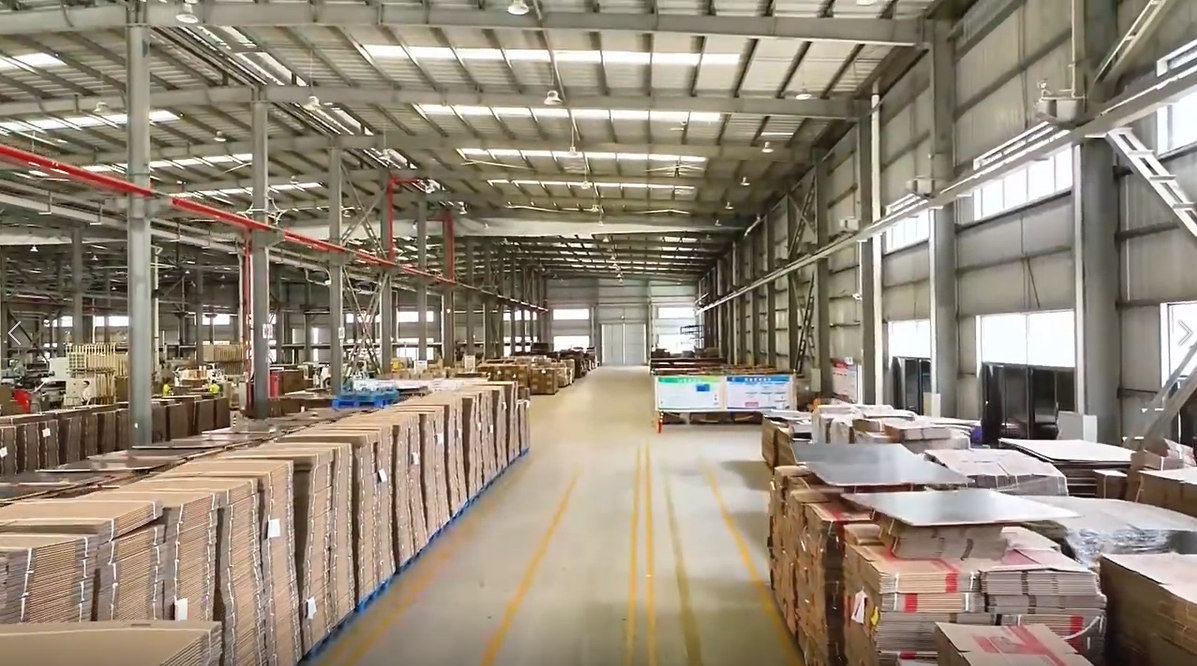
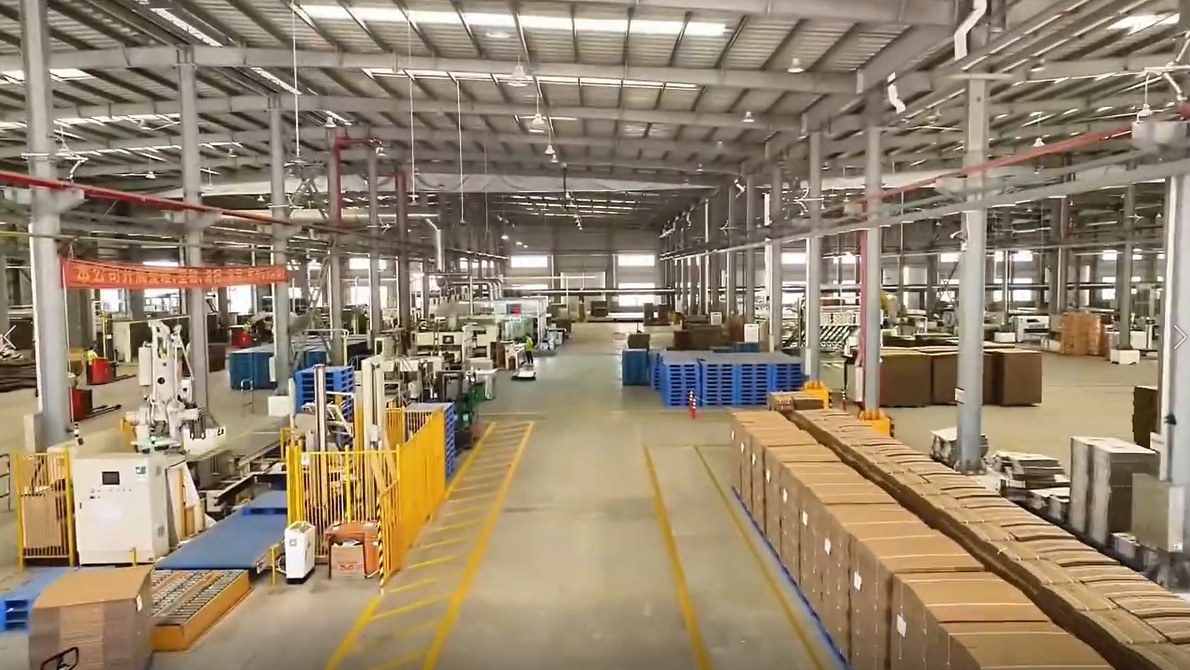
LLY PACK (HK) CO., LIMITED is a manufacturer specializing in corrugated machines and high-speed corrugated cardboard production lines, with more than 25 years of experience in the manufacturing of corrugated machines. Its machines have been exported to over 40 countries, with export business accounting for 100% of total sales, and the company reports more than 3,500 successful installations of corrugated lines worldwide.
Reading the PC-1 specification, figure by figure
Bore size 32–400 mm: the figure that decides force
Bore size is the inside diameter of the cylinder barrel, and it is the most consequential number on the sheet because it sets the piston area that converts air pressure into force. The relationship is the standard pneumatic equation: force equals gauge pressure multiplied by effective piston area (F = p × A).
A calculated example shows how quickly the figures move. A 63 mm bore has a piston area of roughly 3,117 mm². At 6 bar — 0.6 N/mm² — the theoretical extension force is about 1,870 N, or roughly 1.9 kN. Retraction force is lower, because the rod occupies part of the piston area on the retract side.
Two consequences follow for buyers. First, the pressure that matters is the pressure at the machine, not the maximum the cylinder can accept: the same 63 mm bore driven at 3 bar delivers roughly half the force it delivers at 6 bar. Second, bore range is what makes the PC-1 useful across a whole plant — small bores for metering and hold-down duties at 32 mm and upwards, large bores where clamping or pressing force is the requirement, up to 400 mm.
Maximum stroke 1,000 mm: travel distance, not available space
Stroke is the usable linear travel of the rod, and the PC-1 is rated to a maximum of 1,000 mm. The common error is to measure the gap between brackets and call it stroke. The mechanism's required movement is the number that matters; the measured space is only a sanity check.
Stroke also changes the physics of the application. Air volume consumed per cycle rises with stroke multiplied by bore area, which affects both cycle speed and running cost on high-frequency stations. Longer extension increases the demand on load guidance as well — where a long stroke is combined with a small bore, the rod and its bearing, rather than the piston, become the limiting elements. A long-stroke requirement is therefore a signal to review bore, mounting and guidance as one decision rather than to treat stroke as an isolated figure.
Working pressure 1.5–8 bar and proof pressure 12 bar
Working pressure is the band in which the cylinder is meant to run continuously: for the PC-1, 1.5 to 8 bar. Proof pressure is a qualification figure — 12 bar — that sits above the working band and is used to confirm pressure integrity rather than to describe an operating condition. The two figures are related but not interchangeable: 12 bar is 1.5 times the 8 bar maximum working pressure, which is consistent with the common practice of proof-testing a pneumatic component above its working range.
For the buyer, the useful end of the range is the bottom. A cylinder on a hold-down or metering station set at 2 bar produces the force available at 2 bar and nothing more. That is why the working pressure figure belongs on the requisition next to the bore size, together with the regulated setting the station will actually run at.
Port size PT1/2, PT3/4, P1 and P1/4: the flow limit that gets overlooked
Port size determines how quickly air can enter and exhaust the cylinder, and the PC-1 offers port sizes PT1/2, PT3/4, P1 and P1/4. A generous bore fed through a restricted port is one of the most easily missed specification errors: the cylinder will still generate its force, but it takes longer to get there, and pressure at the piston can sag below the regulator setting during fast movement. On a line running continuously at speed, that delay presents as a synchronization problem rather than an obvious actuator fault.
The working rule is straightforward: port size should increase with bore size and with the required cycle rate, not with the size of the fitting that happens to be in stores.
Working temperature -25 to 80 °C, including the note that matters
The PC-1 working temperature range is -25 to 80 °C, and the data sheet carries a specific note: the cylinder is not intended to operate under the freeze condition. On a corrugated plant floor the upper end of the band is the more common constraint — the corrugator area, steam-heated sections and the glue kitchen all run warm — while the lower end matters in unheated warehouses and cold-climate dispatch areas. Cylinders working in wash-down zones or adhesive-heavy surroundings should be reviewed against the temperature band and the local conditions before the order is placed.
Material, weight and the blank spaces on a data sheet
The PC-1 is a steel-bodied air cylinder with a catalogue weight of 2 kg, intended for the corrugated carton packaging industry. A specification sheet is a starting point rather than a complete order: mounting style, rod end and any position-sensing requirement are configuration decisions that have to be confirmed against the machine. Where a detail is not published, the correct move is to ask for it in writing rather than to assume it.
| Parameter | PC-1 specification | What it decides |
|---|---|---|
| Product type | Air cylinder, steel body, catalogue weight 2 kg | Duty and mounting load at the station |
| Bore size | 32–400 mm | Piston area, and therefore available force (F = p × A) |
| Maximum stroke | 1,000 mm | Travel per cycle and air volume consumed |
| Working pressure | 1.5–8 bar | Continuous operating band; the pressure to size force from |
| Proof pressure | 12 bar | Pressure-integrity qualification — not an operating value |
| Working temperature | -25 to 80 °C (not intended under the freeze condition) | Seal and rod life, and suitability for the plant area |
| Port size | PT1/2, PT3/4, P1, P1/4 | Flow into and out of the cylinder; cycle speed |
| Application | Corrugated carton packaging machinery | Fit with corrugated and carton conversion equipment |
Step-by-step: specifying a cylinder for a corrugated machine
- Describe the job before the part. Write down what the cylinder does — hold a sheet, clamp a stack, index a stop, apply metering pressure — and the load it must move or hold. A part number is the last step, not the first.
- Establish the guaranteed pressure at the valve. Verify the regulated pressure at the station, not at the compressor. This is the pressure the sizing calculation must use.
- Calculate the required force and select the bore. Apply F = p × A at the guaranteed pressure, add a margin for friction and load variation, then choose the bore from the PC-1 range of 32–400 mm.
- Set the stroke from the mechanism. Measure the movement the machine actually needs, within the 1,000 mm maximum, and include the end-of-stroke allowance. Check rod guidance for long strokes.
- Match the port size to the bore and the cycle rate. Select from PT1/2, PT3/4, P1 and P1/4 so the cylinder fills and exhausts fast enough to keep pace with the line.
- Confirm the environment. Check that ambient and process temperatures sit inside -25 to 80 °C and that the station is not exposed to freezing conditions.
- Record the full specification. Mounting, rod end and sensing are separate decisions from the three main figures — document everything so the next replacement is a match rather than a guess.
Use cases: where this class of cylinder is used
Corrugated cardboard line parts matching projects typically run under high-precision, high-continuity, high-speed conditions, and the same application pattern appears in Mexico, Brazil, India and Thailand as well as in the wider South America, Southeast Asia, Africa and Middle East markets that LLY PACK serves.
Corrugator and roll handling areas
Where base paper is converted into corrugated board that meets specification, the pace is set by speed synchronization and base paper adaptability. Actuation here is continuous, and the cylinder that keeps up is the one whose bore delivers the force and whose port size delivers the response time — not the largest cylinder that happens to fit the bracket.
Flexo printing and slotting stations
Engagement, hold-down and slotting movements are short-travel duties where repeatability matters more than raw force. A cylinder that sets a gap or a metering position has to return to the same place every cycle, which puts the emphasis on stroke accuracy and on a stable working pressure at the station.
Die cutting, bundling and end-of-line handling
Clamping, stripping, bundling and stacking stations cycle quickly and often continuously. On these duties cylinder life and air consumption per cycle become the cost drivers, so bore and stroke discipline pays back over the installed life of the part rather than at the point of purchase.
| Symptom on the line | Specification to re-check first | Reason |
|---|---|---|
| Stroke completes late, or only at reduced line speed | Port size, then bore size | Flow restriction limits how fast the bore can be filled and exhausted |
| Clamping or holding force varies during a shift | Bore size against the working pressure at the station | Available force follows the actual regulated pressure, not the catalogue maximum |
| Actuator stops short of or overshoots its position | Stroke and mounting arrangement | Travel must be measured from the mechanism, not from the space available |
| Seal or rod problems confined to one plant area | Working temperature range (-25 to 80 °C) | Thermal band and local conditions drive seal and rod life |
Frequently asked questions
Is LLY PACK certified for the production of corrugated machine parts?
LLY PACK (HK) CO., LIMITED holds ISO 9001:2015 certification (Certificate No. 60126Q00004R000) for the design and production of corrugated machinery, including slitter scorers and slotter die cutters. For a specific order, the certificate should be read together with the part specification, since it describes the scope of the quality management system rather than the dimensions of an individual component.
What bore sizes, strokes and pressures does the PC-1 pneumatic cylinder cover?
The PC-1 covers bore sizes from 32 mm to 400 mm, a maximum stroke of 1,000 mm, a working pressure range of 1.5 to 8 bar and a proof pressure of 12 bar. Port sizes are PT1/2, PT3/4, P1 and P1/4, and the working temperature range is -25 to 80 °C, with operation not intended under the freeze condition. The cylinder is a steel-bodied air cylinder specified for corrugated carton packaging machinery, with a catalogue weight of 2 kg.
What determines the price of a pneumatic cylinder for a corrugated machine?
There is no single list price for a cylinder of this class, because the part is defined by its configuration rather than by a product name. Bore size, stroke, port size and order quantity are the variables that change what is supplied, and therefore what is quoted. A price request that omits any of those four details cannot be answered accurately, so they are worth confirming from the drawing or from the part being replaced before the enquiry is sent.
How can a box plant verify that a cylinder will fit before ordering?
Confirm the four defining details — bore, stroke, port size and the pressure available at the station — against the machine drawing or the failed part, then check the working temperature against the -25 to 80 °C range for the area where it will be installed. Sending the machine model together with that specification lets the supplier review the configuration before production. LLY PACK's team handles this review for corrugated machine parts enquiries, and the product catalogue is also available as a PDF for reference.
What information shortens the delivery conversation?
Complete specifications (bore, stroke and port size), the quantity required, the destination country and any documentation requirement. LLY PACK's machines have been exported to over 40 countries, with export business accounting for 100% of total sales, so enquiries are routinely handled across different markets and standards. For cylinder specifications and quotations, contact the team directly at christina@lycorrugated.com or by WhatsApp on +86 13763260555.
Conclusion
Bore size decides force, stroke decides travel, working pressure decides what force is actually available, and port size decides how quickly either can be delivered. Around those four figures, the working temperature range (-25 to 80 °C, with the freeze-condition note) and the physical configuration complete the specification. A cylinder selected this way does not need to be the largest part in the catalogue — it needs to be the one whose numbers match the station it serves.
For corrugated machine parts buyers, the discipline is the same whether the line is in Mexico, Brazil, India or Thailand: measure the job, verify the pressure, size the bore, then order.
Need the PC-1 specification in writing?
Download the LLY PACK product catalogue (PDF): LLY PACK product catalogue
Email: christina@lycorrugated.com · WhatsApp: +86 13763260555 · Website: www.llypack.com
Send the bore, stroke, port size and quantity for your corrugated machine, and the team will confirm the configuration.