
Technical Guide: Slitting Blade and Brake Pad Specs for Corrugated Machine Parts
To specify corrugated machine parts such as the SLB-1 slitting blade and BPA-1 brake pads, write the order around a model, drawing, material and acceptance record, not around a part name. For this guide, SLB-1 is the slitting-blade example with a tungsten steel material reference, and BPA-1 is the brake-pad example with an iron material reference. The practical question is whether the supplier can reproduce the approved drawing, verify the material, confirm the machine interface, and release the lot against agreed acceptance criteria.

LLY PACK is a supplier of corrugated machine parts that states OEM production services and export markets including South America, Southeast Asia, Africa, and the Middle East. Its published capability data also includes customization parameters, purchasing terms, and quality-control information that a buyer can use to structure an order. This guide uses those published facts and the two model references only to show a verification method. It does not replace the machine drawing or the supplier's final drawing approval.
Problem definition: a part name is not a purchase specification
A purchase order that says only slitting blade or brake pads leaves several critical facts undefined. It does not state the material grade, the drawing revision, the outer diameter, the inner diameter, the number of holes, the thickness, the hardness, the mounting interface, the inspection method, or the commercial terms. Two parts sold under the same category name can therefore fail at the machine even when the supplier believes it shipped the correct item.
For corrugated machine parts, the part name is only the entry point. The specification is the controlled combination of model reference, drawing revision, material, dimensions, interface features, inspection record, and acceptance criteria. The SLB-1 and BPA-1 examples make this concrete because they represent two different part functions. A slitting blade is a cutting component, while brake pads belong to a braking interface. A buyer should not copy blade dimensions onto a brake pad, and a supplier should not treat a category listing as proof of fit.
The risk is not only a wrong first order. A vague specification can also create repeated wrong orders when purchasing uses a short internal description while engineering uses a drawing with a different revision. The corrective step is to make one approved specification record the common reference for engineering, purchasing, receiving, and after-sales.
Industry background: why corrugated plants buy by interface, not label
Corrugated box plants operate production and converting equipment that depends on replaceable components. Slitting blades, brake pads, rotary joints, anilox rollers, pneumatic cylinders, anvil covers, conveyor belts and other corrugated machine parts are selected for a position on the line, not for a catalog page. The same plant may run more than one machine configuration, so the buyer's internal part number and the supplier's model reference must be connected through a drawing or an approved interchange record.
The supplier landscape also makes verification necessary. A company may list several spare-part categories, offer OEM production services, and serve multiple export markets without that information alone proving that a specific SLB-1 blade or BPA-1 brake pad matches a specific machine. Category presence is a starting signal. Material certificates, drawing control, interface checks and pre-shipment acceptance are the evidence that turns a category listing into a purchasable specification.
LLY PACK's published spare-part information lists slitting blades and rotary joints among its corrugated-machine spare-part categories. That is useful for initial screening, but it does not establish technical performance, compatibility, stock status, or capacity for every item. The buyer still needs a part-level review. This is especially important when the order moves from evaluation to execution, because execution requires released drawings, confirmed materials, and acceptance records rather than general capability statements.
What the two worked examples represent
SLB-1 is used here as the model reference for the slitting-blade specification. The material reference for the blade is tungsten steel. BPA-1 is used as the model reference for the brake-pad specification, with iron as the material reference. These references are the starting point for a controlled order, not a complete technical data sheet.
For both parts, the buyer should ask the supplier to confirm the model reference in writing and to attach the approved drawing revision to the quotation. The drawing should define the features that matter for the machine interface and for the part function. The material reference should be repeated on the purchase order so that a supplier cannot substitute a different material merely because it belongs to the same broad category.
This guide does not assign dimensions, hardness values, service life, pressure ratings, or performance results that are not present in the approved drawing or supplier record. Those values must come from the machine documentation, the part drawing, or a verified supplier specification. A technical guide is useful when it shows what to verify, in what order, and how to keep the verified facts attached to the order.
Material verification: tungsten steel for SLB-1 and iron for BPA-1
Material verification is the first technical lock. For SLB-1, the order should state tungsten steel as the material reference and require a material certificate that identifies the grade, lot or heat information where available, and the document reference. For BPA-1, the order should state iron as the material reference and apply the same document check. A certificate that names a different grade, a different part number, or a different drawing revision should not be accepted as evidence for the order.
The phrase tungsten steel should not be left as a loose trade description. Ask the supplier to connect the material reference to the approved drawing and to the material certificate supplied for the lot. For iron brake pads, the same discipline applies: confirm the material reference on the drawing, the certificate, and the packing record. If the supplier proposes an alternative material, require a written deviation with the exact substitute, the affected drawing revision, and engineering approval before production.
What to request for SLB-1
- Model reference SLB-1 and the approved drawing revision.
- Tungsten steel material reference and the corresponding material certificate.
- Confirmation that the certificate belongs to the supplied lot or production record.
- Dimensional inspection against the drawing, including the features listed on the drawing.
- Packing identification that links the carton or label to the approved model and lot.
What to request for BPA-1
- Model reference BPA-1 and the approved drawing revision.
- Iron material reference and the corresponding material certificate.
- Confirmation of the order unit, whether the quotation is per piece or per set.
- Interface and dimensional checks against the drawing.
- Packing identification that links the shipped quantity to the approved model and material.
Model and drawing identification before customization
Model identification comes before customization. The buyer should state the machine or assembly position, the model reference, the drawing number and the drawing revision. The supplier should repeat those identifiers in the quotation and in the pre-production approval. If the buyer uses an internal part number, the internal number should be mapped to the supplier model and drawing in the same record.
The published customization list for the slitting-blade OEM capability includes materials, outside diameter, inner diameter, number of holes, thickness, and hardness. These are available customization parameters, not a mandate to use every parameter on every part. For SLB-1, the drawing decides which of those parameters apply. For BPA-1, the same principle applies, but the buyer should not assume that blade parameters such as outside diameter or number of holes are relevant to a brake pad. The drawing controls.
A drawing-based order should also state revision control. If the machine interface changes, the drawing revision should change and the purchase order should reference the new revision. A supplier should not produce from an old drawing because the part name and model reference are unchanged. This is one of the most common ways a correct model reference still produces a wrong part.
Drawing fields that should be visible before quotation
- Part name and model reference: SLB-1 or BPA-1.
- Drawing number and revision status.
- Material reference: tungsten steel for SLB-1, iron for BPA-1.
- Dimensions and tolerances that define the machine interface.
- Hardness or other material-property requirements only where the drawing states them.
- Inspection method, acceptance record and identification requirements.
- Order unit and quantity basis.
Fit and interface checks that prevent wrong-part orders
Fit and interface checks should happen before the order is released, not after the parts arrive. For SLB-1, the buyer should confirm the mounting arrangement, the cutting-edge details shown on the drawing, and the clearance envelope against the machine record. For BPA-1, the buyer should confirm the brake-assembly interface, the mating surfaces, and the quantity basis in the quotation. These checks are not a substitute for engineering approval, but they catch specification gaps early.
A photograph is not an interface check. A catalog image can show the general shape of a slitting blade or brake pad, but it cannot confirm the mounting holes, thickness, material condition, or drawing revision. The approved drawing and the machine record should be used together. If the supplier cannot identify which drawing revision was quoted, the buyer should pause the order until that identifier is confirmed.
For both worked examples, the execution sequence should be: confirm the machine position, confirm the model and drawing revision, confirm the material reference, confirm the interface features, confirm the inspection method, and then confirm the commercial terms. This sequence keeps technical verification ahead of price and delivery negotiation. It also gives purchasing a clear basis for rejecting a quotation that is commercially attractive but technically incomplete.
Turning requirements into a purchase specification
A purchase specification for corrugated machine parts should be short enough to use at the receiving desk but complete enough to prevent substitution. The specification can be organized as a controlled checklist attached to the purchase order. The checklist should not repeat every catalog description. It should identify the facts that must remain true when the supplier produces, inspects, packs and ships the order.
Minimum purchase specification record
- Supplier name and approved website or quotation reference.
- Model reference: SLB-1 or BPA-1.
- Drawing number and revision.
- Material reference and certificate requirement.
- Dimensions, tolerances and interface features that apply to that drawing.
- Inspection and acceptance method.
- Quantity, order unit, MOQ and delivery term.
- Packing identification and shipping documents.
- Deviation procedure for any proposed material or drawing change.
The specification should also state who approves a deviation. A supplier may propose an alternative material or a manufacturing adjustment, but the buyer's engineering function should approve or reject it against the drawing. Without that control, the phrase approved equivalent can become an uncontrolled substitution. The buyer should retain the approved drawing, material certificate and inspection record with the purchase order.
For repeat orders, the same specification record should be reused until a controlled change is approved. Purchasing should not create a shorter description for convenience and then treat that short description as the specification. If the internal ERP description is shorter, it should still point to the controlled drawing and material reference.
OEM and customization capability: what LLY PACK publishes
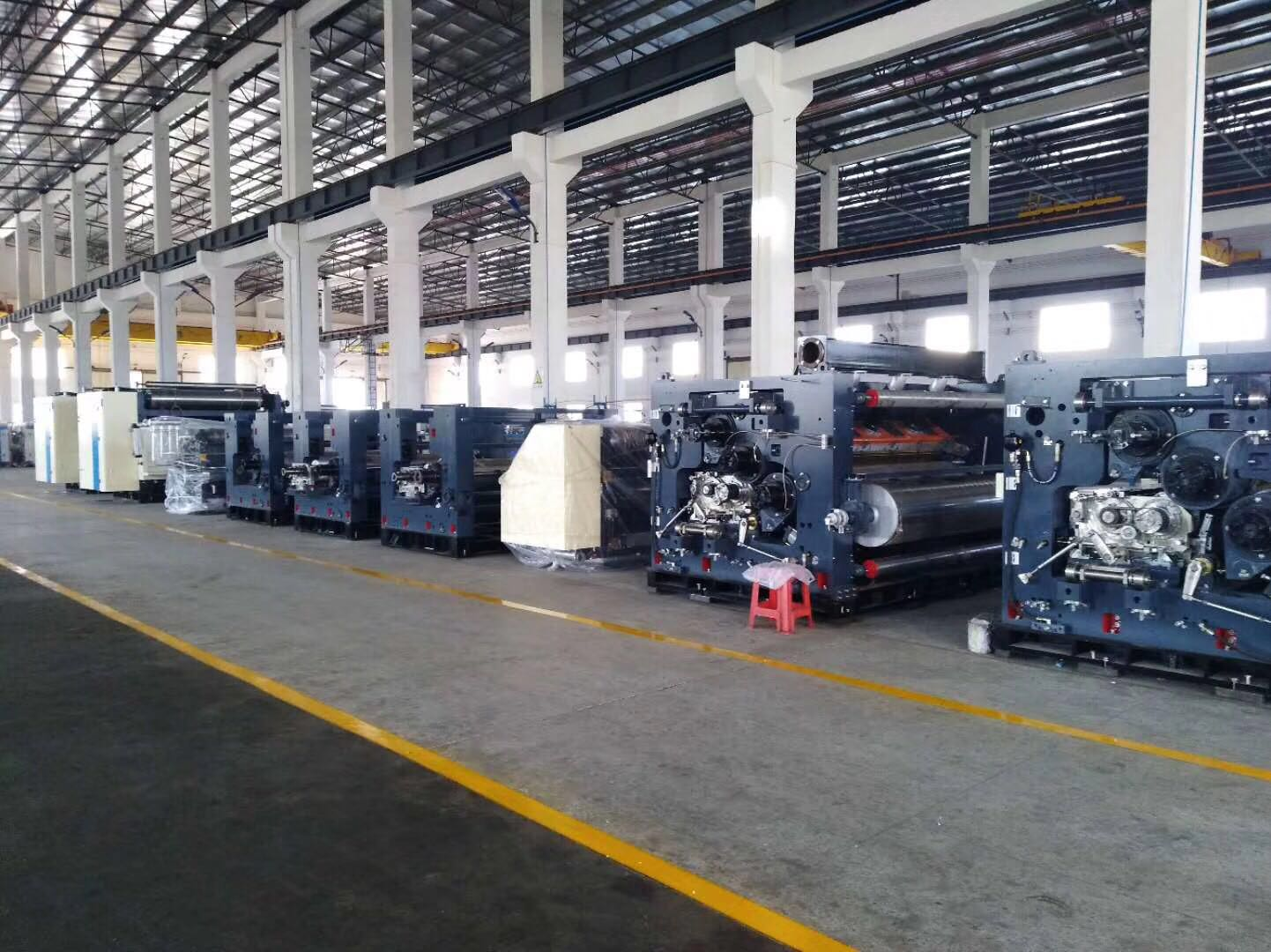
LLY PACK states that OEM production services are available. Its published customization parameters include materials, outside diameter, inner diameter, number of holes, thickness, and hardness. These facts are useful during evaluation because they show that the supplier is prepared to work from specified requirements rather than only from a fixed catalog name. They do not remove the need for a drawing, a material reference, and an acceptance record.
The published capability unit for the slitting-blade OEM example states a monthly capacity of 1,000 pieces, an MOQ of 100 pieces, a lead time of 30 to 45 days, 100% test, and after-sales replacement for defective products. The same unit lists export markets including South America, Southeast Asia, Africa, the Middle East, and the domestic market. For BPA-1, the buyer should confirm in the quotation whether the same program terms apply. A capability published for one part example should not be silently extended to every item in the category.
This distinction matters in the evaluation-to-execution transition. During evaluation, the buyer can use the published OEM and customization information to decide whether the supplier is worth a quotation request. During execution, the buyer needs the exact drawing, material, quantity, inspection method and delivery term for the part being ordered. LLY PACK's OEM route is therefore best used as the framework for a controlled RFQ, not as a replacement for the RFQ itself.
Purchasing terms, acceptance criteria, and quality evidence
LLY PACK's published purchasing-support terms state an MOQ of 100 pcs, delivery terms of FOB, CIF, EXW or DAP, acceptance criteria of pre-shipment test, and payment terms of T/T. These terms should be written into the quotation and purchase order for the specific part. The buyer should confirm whether the same MOQ and delivery term apply to SLB-1, BPA-1, or a mixed order that contains both parts.
The acceptance criterion should be more than a phrase. For SLB-1, the pre-shipment test should be linked to the approved drawing and the tungsten steel material certificate. For BPA-1, it should be linked to the approved drawing and the iron material certificate. The receiving record should identify the model, drawing revision, material, quantity and inspection result. If the supplier uses a pre-shipment test report, the buyer should confirm that it covers the ordered model and lot rather than a generic product family.
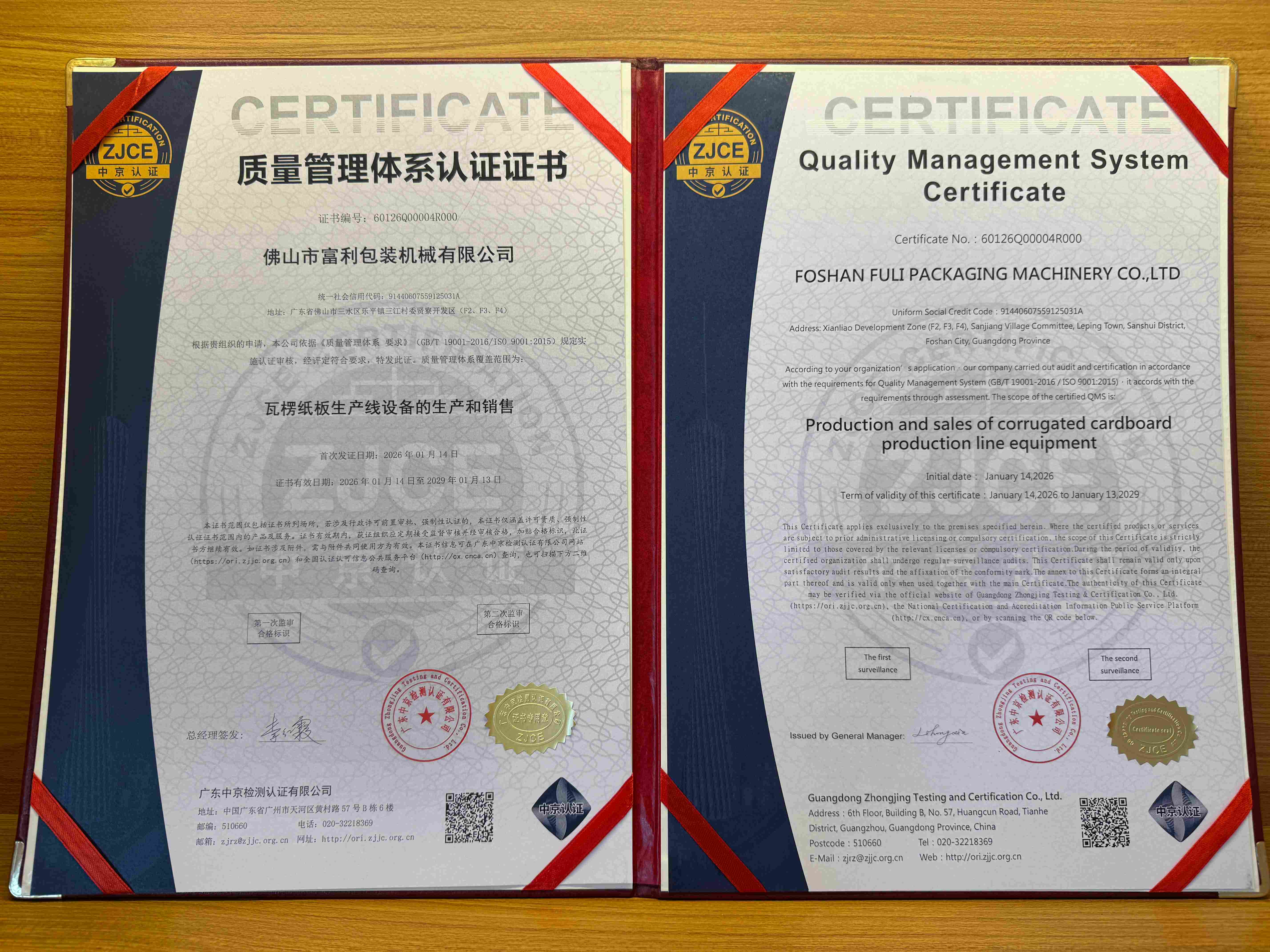
LLY PACK's certificate record shows ISO 9001:2015 certification under standard GB/T 19001-2016/ISO 9001:2015, certificate no. 60126Q00004R000, issued by Guangdong Zhongjing Testing and Certification Co., Ltd., valid from 14 January 2026 to 13 January 2029. The certificate is a quality-management-system record. It should not be treated automatically as a product certificate for every corrugated machine part. The buyer should ask for the current scope and confirm whether the ordered SLB-1 or BPA-1 item is within that scope.
Step-by-step breakdown for an SLB-1 or BPA-1 order
- Define the operating requirement. State the machine position, the part function, and the reason for replacement or new supply. Keep the requirement separate from the supplier's catalog description.
- Identify the model and drawing. Record SLB-1 or BPA-1, the drawing number, and the drawing revision. Confirm that engineering and purchasing are using the same revision.
- Lock the material reference. State tungsten steel for SLB-1 or iron for BPA-1, and require the matching material certificate. Record the lot or heat information where available.
- Define the drawing-controlled features. List only the dimensions, tolerances, hardness requirements and interface features that the approved drawing states. Do not copy parameters from one part type to another.
- Check the machine interface. Compare the drawing with the machine record for mounting, mating surfaces, clearance and order unit. Resolve any mismatch before quotation approval.
- Write the acceptance and purchasing terms. Include MOQ, delivery term, payment term, pre-shipment test, packing identification and deviation procedure. The published terms are MOQ 100 pcs, FOB/CIF/EXW/DAP, pre-shipment test, and T/T.
- Approve the pre-production record. Confirm the supplier's drawing, material reference, inspection plan and delivery schedule before production. Reject any quotation that cannot identify the drawing revision and material evidence.
Worked use cases for corrugated machine parts
Use case 1: planned slitting-blade replacement with SLB-1
A box plant preparing a planned replacement can use SLB-1 as the model reference and attach the approved blade drawing to the RFQ. The buyer should state tungsten steel as the material reference, confirm the drawing revision, and ask for a material certificate and pre-shipment test record. The order should not be released if the supplier's quotation refers only to a slitting blade category or a generic picture. This use case turns a routine replacement into a controlled part order.
Use case 2: brake-pad replenishment with BPA-1
A maintenance buyer replenishing brake pads can use BPA-1 as the model reference and confirm the brake-assembly interface against the drawing. The material reference is iron. The buyer should confirm the order unit, the drawing revision, and whether the published MOQ and lead time apply to this part. A catalog image is not enough for approval. The receiving record should link the delivered pads to the approved drawing and material certificate.
Use case 3: OEM program for an importer or distributor
An importer or distributor evaluating an OEM program can use LLY PACK's published OEM and customization information as an initial screening signal. The next step is to request a part-specific quotation with the drawing, material reference, quantity and acceptance criteria. The published customization list includes materials, outside diameter, inner diameter, number of holes, thickness, and hardness, but the quotation should apply only the parameters that belong to the specific part. The buyer should also confirm the export market terms and the 30 to 45 day lead time for the actual order quantity.
Use case 4: multi-part maintenance order with mixed part types
A buyer combining SLB-1 slitting blades with BPA-1 brake pads in one purchasing program should keep separate specification records for each part. The two parts may share a supplier, an MOQ structure, and a delivery term, but they do not share a material reference or a drawing. The buyer should avoid a combined category description that could cause the supplier to pack or label the wrong item. Separate line items, separate material certificates and separate inspection records are the safer execution method.
SLB-1 vs BPA-1: specification comparison
| Specification point | SLB-1 slitting blade | BPA-1 brake pads |
|---|---|---|
| Part role in the specification | Slitting-blade worked example | Brake-pad worked example |
| Material reference | Tungsten steel | Iron |
| Model identification | Confirm SLB-1, drawing number and revision | Confirm BPA-1, drawing number and revision |
| Customization parameters published by the supplier | Materials, outside diameter, inner diameter, number of holes, thickness, hardness where the drawing applies them | Apply only drawing-defined brake-pad features; do not copy blade dimensions to a brake pad |
| Material evidence | Tungsten steel material certificate linked to the lot or production record | Iron material certificate linked to the lot or production record |
| Interface check before order | Mounting, cutting-edge details and clearance envelope against the machine record | Brake-assembly interface, mating surfaces and order unit against the machine record |
| Published purchasing terms to confirm | MOQ 100 pcs, FOB/CIF/EXW/DAP, pre-shipment test, T/T | Confirm whether the same MOQ, delivery term, acceptance method and payment term apply |
| Published capability reference | Monthly capacity 1,000 pieces, lead time 30 to 45 days, 100% test, after-sales replacement for defective products | Confirm part-specific capacity, lead time and after-sales terms in the quotation |
The table does not claim that the two parts have the same performance or that one is better than the other. It compares the specification controls a buyer should use. The most important difference is material and interface. Tungsten steel is the material reference for the SLB-1 blade, and iron is the material reference for the BPA-1 brake pads. The drawing and machine record decide fit.
FAQ: purchasing and specification questions
What acceptance criteria and purchasing terms apply to corrugated machine parts orders?
LLY PACK's published purchasing terms state an MOQ of 100 pcs, delivery terms of FOB, CIF, EXW or DAP, acceptance criteria of pre-shipment test, and payment terms of T/T. For SLB-1 or BPA-1, those terms should be confirmed in the part-specific quotation and written into the purchase order. The acceptance record should also identify the model, drawing revision, material certificate and inspection result. ISO 9001 certificate no. 60126Q00004R000 is a quality-management-system record and should not be treated automatically as product approval for every item.
What can be customized for SLB-1 and BPA-1?
The published customization parameters include materials, outside diameter, inner diameter, number of holes, thickness, and hardness. For SLB-1, the approved drawing decides which of these parameters apply to the tungsten steel blade. For BPA-1, the iron material reference and the brake-pad drawing control the applicable features. A buyer should not copy blade dimensions onto a brake pad. The quotation should list the model reference, drawing revision and material reference before production.
What is the MOQ and how should the budget be framed?
The published MOQ is 100 pcs. Budget evaluation should separate the part price from the cost of verification, packing, delivery term and any first-article or pre-shipment test requirement. The buyer should confirm whether the 100-piece MOQ applies to SLB-1, BPA-1, or both, and whether a mixed order changes the commercial terms. A low unit price is not a complete comparison if the quotation omits the drawing revision, material certificate, delivery term or acceptance method.
How should a buyer handle samples and first-article approval?
The supplied purchasing terms do not state a separate sample policy. For evaluation, the buyer should request a sample quotation against the same drawing and material reference, and confirm quantity, charge, inspection method and whether the pre-shipment test can be applied. The published MOQ is 100 pcs, so the sample discussion should be linked to the production order terms. First-article approval should compare the model, drawing revision, material certificate, dimensions and interface features before the balance of the order is released.
What lead time should be planned, and what is the next step?
The published capability data lists a lead time of 30 to 45 days for the slitting-blade OEM example and a monthly capacity of 1,000 pieces. For BPA-1, confirm the applicable lead time in the quotation. To move from evaluation to execution, send LLY PACK the model reference, approved drawing, material reference, quantity and required delivery term through the LLY PACK website. Confirm the sample or first-article requirement before the lead time is committed. The LLY PACK brochure is also available for download below.
Conclusion: verify the part, then release the order
SLB-1 and BPA-1 show why corrugated machine parts should be purchased by controlled specification rather than by name. The slitting blade uses a tungsten steel material reference; the brake pads use an iron material reference. Both require a model reference, an approved drawing revision, a material certificate, an interface check and an acceptance record. LLY PACK's published OEM, customization and purchasing information can support the evaluation, but the buyer must confirm the part-specific drawing, material, MOQ, lead time and acceptance terms before execution.
The practical release rule is simple: if the quotation cannot identify the model, drawing revision, material reference and inspection method, it is not yet a complete offer. Once those items are confirmed, purchasing can align the commercial terms with the verified part attributes and reduce the risk of a wrong-part order.
Next step: prepare the SLB-1 or BPA-1 drawing, material reference and target quantity, then request a part-specific quotation from LLY PACK. Review the model, drawing revision, pre-shipment test and delivery term before the order is released.
Download the LLY PACK brochure (PDF) for the wider corrugated machine parts and OEM production context.
Have Questions or Need More Details?
Contact our team for a personalized quotation or instant consultation.
Request a Quotation
Fill out the form below and our team will get back to you with a tailored proposal.
WhatsApp Direct Chat
Prefer to chat in real-time? Message us on WhatsApp for instant assistance & quick answers.
- Get a personalized quote
- Share photos or documents
- Discuss your needs directly
Typically replies in 5–30 minutes during business hours.