
Top 5 Corrugated Cardboard Machines to Prioritize in a Packaging Line: A How-To Ranking Guide
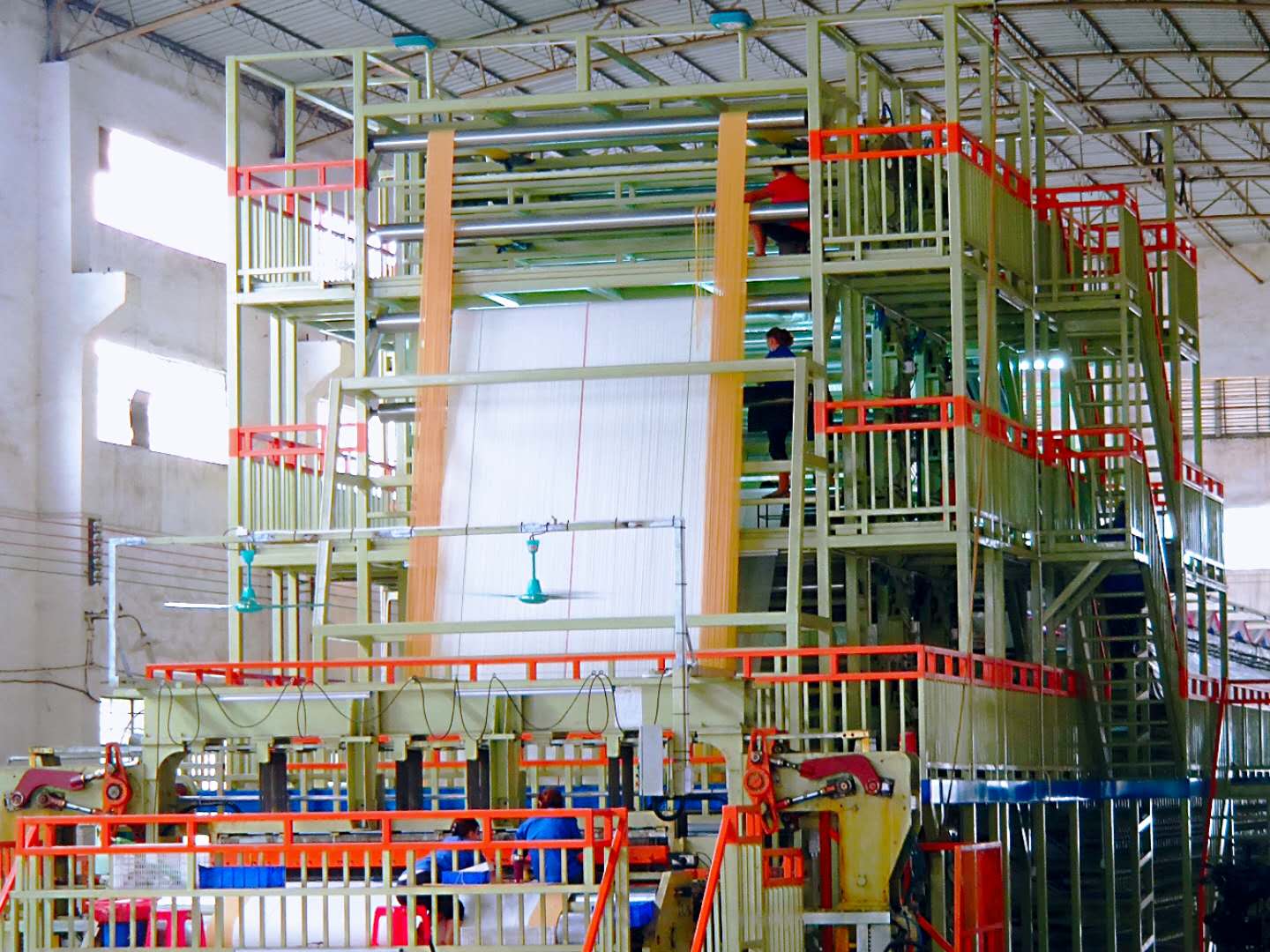
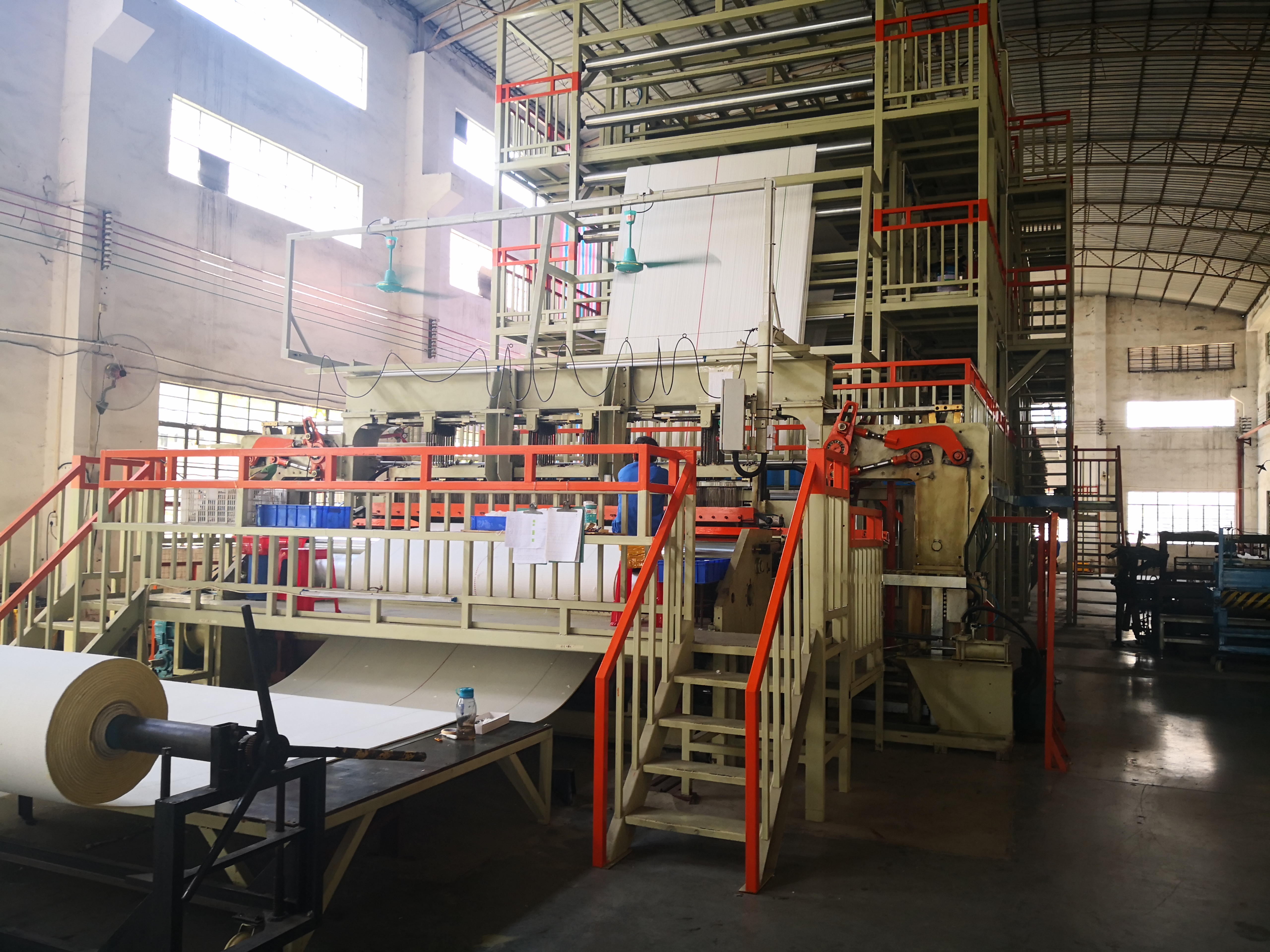
Production base in Foshan City, Guangdong Province, where LLY PACK corrugated machine components are manufactured.
Short answer: rank corrugated cardboard machines by the constraint each one places on the line, not by price and not by nameplate speed alone. On that test, five units decide most of the outcome: the SF-1 single facer (250 M/min design speed, 1400–2300 mm web), the SSC-1 slitter scorer (630–900 m/min blade line speed, 2200 mm maximum paper width), the PF-1 automatic pre-feeder (280 sheets/min, 1600–1800 kg maximum feed weight), the STM-1 stitching machine (450 nails/min), and the STA-1 stacker (3.5 m maximum paper length, 1.8 m maximum paper height, 1400–2300 mm paper width).
A typical corrugated cardboard production line contains far more than five units — hydraulic reel stands, auto splicers, glue kitchens, corrugators, slitter scorers, flexo printers, die cutters, stitchers, strapping machines, stackers and conveyors. Supplier catalogues present each of them with an impressive headline figure, which is exactly why the ranking question is difficult. The real question is not which machine is fastest. It is which machine to prioritize first, second and third, because the units do not contribute equally to throughput or to quality.
LLY PACK (HK) CO., LIMITED is a Hong Kong-registered supplier of corrugated machines and corrugated cardboard production line equipment, with its manufacturing base in Foshan City, Guangdong Province and more than 25 years of experience in manufacturing corrugated machines and high-speed corrugated cardboard production lines. Its range covers single facers, slitter scorers, stitching machines, pre-feeders, stackers, strapping machines, glue kitchens and complete lines built from those units. Every specification in this ranking is drawn from LLY PACK product documentation, so the ranking logic can be checked against published figures rather than reputation.
Quick Answer: The Five-Machine Priority Order
- SF-1 single facer — it sets the ceiling for board formation and for how fast the whole line can run.
- SSC-1 slitter scorer — it fixes dimensional accuracy and creates the first hard limit on web width at 2200 mm.
- PF-1 automatic pre-feeder — it removes manual sheet feeding, which is frequently the real-world cap on converting output.
- STM-1 stitching machine — it decides whether heavy-duty and double-piece boxes can be closed at rate, at 450 nails/min.
- STA-1 stacker — it is a buffer rather than a ceiling, until it fills and stops the corrugator.
This order is a starting position, not a rule of nature. It changes the moment your dominant product changes: a plant running wide board moves the slitter scorer up, a plant making heavy double-piece boxes moves the stitching machine up, and a plant fighting manual feeding moves the pre-feeder up. The three filters below explain why, and how to re-rank for your own line.
The Problem: Most Buyers Rank Machines by the Wrong Number
Three failure patterns account for most of the priority mistakes in corrugated line purchasing.
Failure one — speed shopping. Buyers compare nameplate speeds across machines that play different roles. A machine can carry the highest number in the catalogue and still not be the unit limiting your output, because design speed describes the machine in isolation, not the machine in sequence. The SSC-1 slitter scorer, for example, is rated at a blade line speed of 630–900 m/min, which is far above the speed at which corrugated board is typically produced upstream. Buying it as a "speed upgrade" would be a ranking error.
Failure two — width mismatch. Web and sheet widths are not interchangeable across a line. In the LLY PACK range, the SF-1 single facer accepts a web size of 1400–2300 mm, the SSC-1 slitter scorer has a maximum paper width of 2200 mm, the STA-1 stacker handles paper widths of 1400–2300 mm, and the CCPL-1 corrugated cardboard production line is built at a line width of 1400–2800 mm. A buyer who plans for the widest board available must confirm the quoted configuration at the slitting stage, because that is where the first width ceiling appears.
Failure three — sheet size and weight mismatch. The PF-1 pre-feeder has a maximum sheet size of 1600 × 3000 mm and a maximum feeding weight of 1600–1800 kg, while the FP-1 flexo printer accepts sheets up to 1600 × 3600 mm. Where a box program includes the longer sheet sizes, the feeding stage becomes the ranking decision, not the printing stage.
The underlying problem is that buyers rank machines by purchase order value, while lines fail by sequence. The unit that stops the line is rarely the unit that was ranked first.
Industry Background: A Larger Market Makes Prioritization Harder, Not Easier
Capacity continues to expand, which raises the cost of ranking badly. Grand View Research valued the global corrugated box making machine market at USD 2.21 billion in 2024 and projected it to reach USD 3.36 billion by 2033, a CAGR of 4.8% from 2025 to 2033. Future Market Insights projects the China corrugated box machine industry to grow at a 3.9% CAGR between 2026 and 2036, supported by China's position as a manufacturing hub.
Automation is the direction of that growth. Future Market Insights reports that automatic corrugated machines held a dominant 55.6% share of global demand by automation level as of 2026. China's machinery industry export volume exceeded USD 1 trillion for the fourth consecutive year in 2024, reaching USD 1.17 trillion, a 7.5% year-on-year increase, according to China Customs and the National Bureau of Statistics.
Quality expectations are also codified. ISO 3037:2022 and the FEFCO GMP standard are the primary global standards for edgewise crush resistance and board quality in corrugated cardboard production, while safety compliance for corrugated printing and converting machinery in the EU requires CE marking and adherence to standards such as EN ISO 12048 for compression testing. At the top of the manufacturing pyramid, BHS Corrugated, Mitsubishi Heavy Industries (MHI) and Bobst are identified by Market Research Future as the leading global tier-1 manufacturers of corrugated production lines.
More suppliers, more automation and more codified standards all point in one direction: the ranking decision has to be based on measured fit, not on brand familiarity.
The Ranking Method: Three Filters, Applied in Order
Filter 1 — Bottleneck relief
Ask whether the unit sets a ceiling or absorbs variation. A ceiling unit defines the maximum sustainable output of the line: when it slows down, everything behind it slows down. A buffer unit absorbs short stoppages and protects the ceiling unit from stopping. Ceiling units rank above buffer units, because a buffer can only protect capacity that already exists.
Filter 2 — Material fit
Check the unit against the board you actually run: web width, sheet length and width, feeding weight, and stacking height. A machine that fits your material is worth ranking; a machine that fits only your budget creates rework. In the LLY PACK range the relevant figures are a 1400–2300 mm web on the SF-1, 2200 mm maximum paper width on the SSC-1, a 1600 × 3000 mm maximum sheet and 1600–1800 kg maximum feed weight on the PF-1, and a 3.5 m maximum paper length with 1.8 m maximum stacking height on the STA-1.
Filter 3 — Throughput match
Compare each machine's rated output with the rated output of the units immediately before and after it, then discount both by your realistic operating hours. Matching does not mean identical numbers; it means knowing where the deliberate shortfall sits and deciding whether you can live with it. Apply the filters in sequence and the ranking becomes an engineering decision rather than a negotiation with a catalogue.
Step-by-Step: Ranking the Five Machines
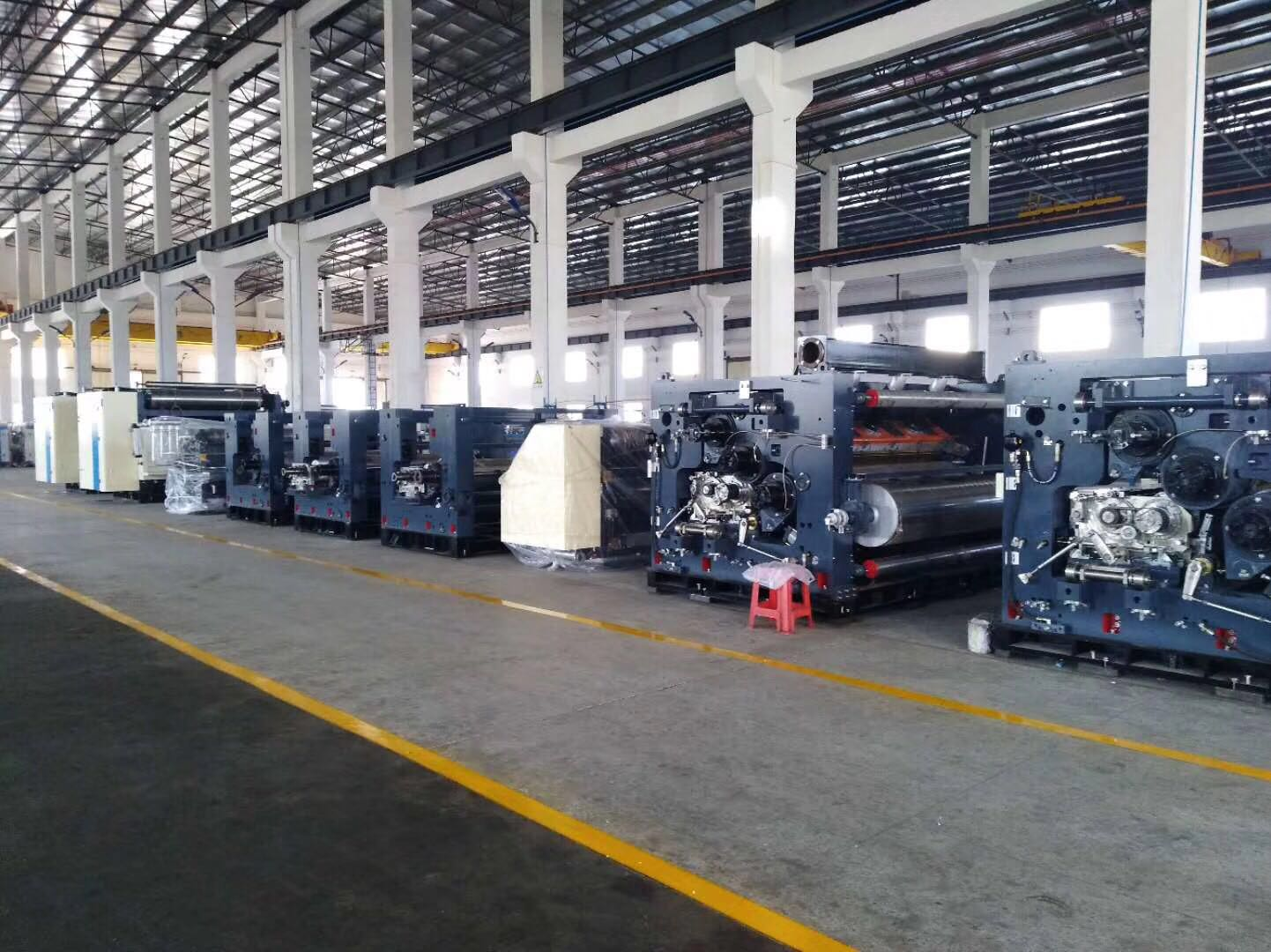
Corrugated machine factory: the five ranked units are built around the same line architecture.
Rank #1 — SF-1 Single Facer: The Machine That Sets the Line Ceiling
The single facer forms the fluted web and glues it to the liner, which means every downstream unit inherits the quality of that bond. Published specifications for the SF-1 single facer are a design speed of 250 M/min and a web size of 1400–2300 mm, with an upper flute roll of 380 mm, a lower flute roll of 380 mm, a pressure roll of 385 mm, a glue applying roll of 302 mm, a doctor roll of 170 mm and a preheating roll of 400 mm. Machine dimensions are 5900 × 2300 × 2800 mm.
Why it ranks first: the roll geometry and glue application control flute height and glue-line consistency, and no amount of downstream capacity can recover a poorly bonded board. It is the purest ceiling unit in the line.
Decision rule: match the single facer's design speed and web size to the corrugated cardboard production line it feeds. The CCPL-1 line is rated at a maximum mechanical speed of 300 m/min with a line width of 1400–2800 mm; the SF-1 is rated at 250 M/min design speed over a 1400–2300 mm web. Design speed is not the same as working speed, so confirm the quoted configuration against your intended operating speed rather than assuming the two headline figures are interchangeable.
Rank #2 — SSC-1 Slitter Scorer: The Dimensional Quality Gate
The slitter scorer cuts the board to width and forms the score lines that let the box fold squarely. Published specifications for the SSC-1 thin blade slitter scorer are a blade line speed of 630–900 m/min, a maximum paper width of 2200 mm, a minimum slitting width of 150 mm, a slitting blade outside diameter of 260 mm and a scoring wheel outside diameter of 190 mm. It draws 30.3 kW and weighs 4000 kg, with dimensions of 4230 × 1630 × 2150 mm.
Why it ranks second: it is the dimensional quality gate. Box blanks that are cut or scored imprecisely create folding faults, poor print registration on downstream units and jams in the folder gluer or stitching machine. Its 630–900 m/min blade line speed sits well above typical corrugating speeds, so throughput is rarely the issue — material fit is.
Decision rule: treat the 2200 mm maximum paper width as a fixed ceiling when you plan wide-board production, and treat the 150 mm minimum slitting width as a fixed ceiling when you plan narrow or multi-out layouts.
Rank #3 — PF-1 Automatic Pre-Feeder: Where Manual Work Silently Caps Output
Feeding is the stage most often upgraded last and complained about first. Published specifications for the PF-1 automatic pre-feeder are a maximum paper feed speed of 280 sheets/min, a maximum sheet size of 1600 × 3000 mm, a minimum sheet size of 300 × 600 mm, a maximum feeding weight of 1600–1800 kg, a maximum stacking height of 1800 mm, a fork length of 1600–1800 mm, 13.7 HP power and dimensions of 12267 × 4615 × 2395 mm.
Why it ranks third: manual feeding converts a machine-rate problem into a labour-rate problem. In many plants the printer or die cutter is rated well above the rate at which sheets can be placed by hand, and the pre-feeder is the unit that lets the converting stage run at its own pace. It also carries the heaviest loads in the converting area — up to 1600–1800 kg in a single lift.
Decision rule: compare feeding ratings with the machine being fed. The FP-1 flexo printer has a maximum equipment speed of 350 sheets/min, while the PF-1 is rated at 280 sheets/min. The two figures are not identical, so plan the sustainable sheet rate for the combination and decide whether the feeding stage should be upgraded in the same phase as the printer.
Rank #4 — STM-1 Stitching Machine: The Integrity Gate for Heavy-Duty Boxes
Published specifications for the STM-1 semi-automatic double-piece stitching machine are a speed of 450 nails/min, a stitching pitch of 30–140 mm and 1–99 stitches, with 220 V/380 V voltage, 500 kg weight and a 4000 L × 3300 W footprint.
Why it ranks fourth: for single-wall boxes that are glued, the stitcher sits outside the critical path. For heavy-duty and double-piece boxes, it is a hard integrity gate — if the joint fails, the box fails, regardless of how well the board was made. Its ranking rises sharply in plants whose product mix is dominated by heavy corrugated packaging.
Decision rule: convert nails/min into boxes/min using your stitch count and pitch, then compare that figure with the output of the converting stage upstream. The wide 30–140 mm pitch range and the 1–99 stitch count make the same machine suitable for very different box specifications, which is why the pitch setting, not the headline speed, should drive the capacity calculation.
Rank #5 — STA-1 Stacker: The Buffer That Decides Whether the Corrugator Keeps Running
Published specifications for the STA-1 stacker are a maximum paper length of 3.5 m, a maximum paper height of 1.8 m and a paper width range of 1400–2300 mm, with 220 V voltage, 3000 kg weight and dimensions of 18500 × 3800 × 3500 mm.
Why it ranks fifth: the stacker does not set a quality ceiling and rarely sets a speed ceiling — but it is the unit that decides whether the corrugator ever has to stop. A stacker that fills too quickly, or that cannot accept the full sheet length, converts a fast line into a line with frequent interruptions.
Decision rule: check the sheet length and stacking height against your longest product, and check the floor footprint. At 18500 × 3800 × 3500 mm, the STA-1 occupies more linear floor space than the slitter scorer and the stitching machine combined, so it belongs in the layout plan from the beginning, not the equipment list at the end.
If two units tie on bottleneck relief, break the tie with material fit, then with throughput match, then with floor space. Where the CCPL-1 line's 110 m × 14 m × 6.5 m space requirement is already tight, the unit with the smaller footprint that still matches the material wins the higher rank.
Comparison Table: The Five Machines Side by Side
| Priority | Machine (model) | Published key specifications | Primary role in the line | Why this rank |
|---|---|---|---|---|
| 1 | Single facer (SF-1) | Design speed 250 M/min; web size 1400–2300 mm; flute rolls 380 mm; pressure roll 385 mm; glue applying roll 302 mm; doctor roll 170 mm; preheating roll 400 mm; 5900 × 2300 × 2800 mm | Forms the fluted web and bonds it to the liner | Sets the quality and speed ceiling for the whole line |
| 2 | Slitter scorer (SSC-1) | Blade line speed 630–900 m/min; maximum paper width 2200 mm; minimum slitting width 150 mm; blade OD 260 mm; scoring wheel OD 190 mm; 30.3 kW; 4000 kg; 4230 × 1630 × 2150 mm | Cuts to width and forms score lines | Dimensional accuracy gate and first web-width ceiling |
| 3 | Pre-feeder (PF-1) | 280 sheets/min; maximum sheet 1600 × 3000 mm; minimum sheet 300 × 600 mm; maximum feed weight 1600–1800 kg; maximum stacking height 1800 mm; fork length 1600–1800 mm; 13.7 HP | Feeds sheets into the converting stage | Removes manual feeding as the practical output cap |
| 4 | Stitching machine (STM-1) | 450 nails/min; stitching pitch 30–140 mm; 1–99 stitches; 220 V/380 V; 500 kg; 4000 L × 3300 W footprint | Closes heavy-duty and double-piece boxes | Integrity gate; ranking rises with heavy-duty product mix |
| 5 | Stacker (STA-1) | Maximum paper length 3.5 m; maximum paper height 1.8 m; paper width 1400–2300 mm; 220 V; 3000 kg; 18500 × 3800 × 3500 mm | Buffers and stacks finished board | Buffer, not ceiling — until it fills and stops the line |
Use Cases: When the Ranking Order Changes
Building a line from scratch. In a greenfield project the ranking above holds, because every unit has to be specified at the same time and the ceiling unit should be fixed first. LLY PACK has delivered this kind of project: a fully automatic corrugated carton production line built from scratch, involving 9 units and a 10-year construction period, for corrugated paper carton manufacturers across Myanmar, Indonesia, Thailand, Turkey, Egypt, Singapore, Vietnam and Jordan.
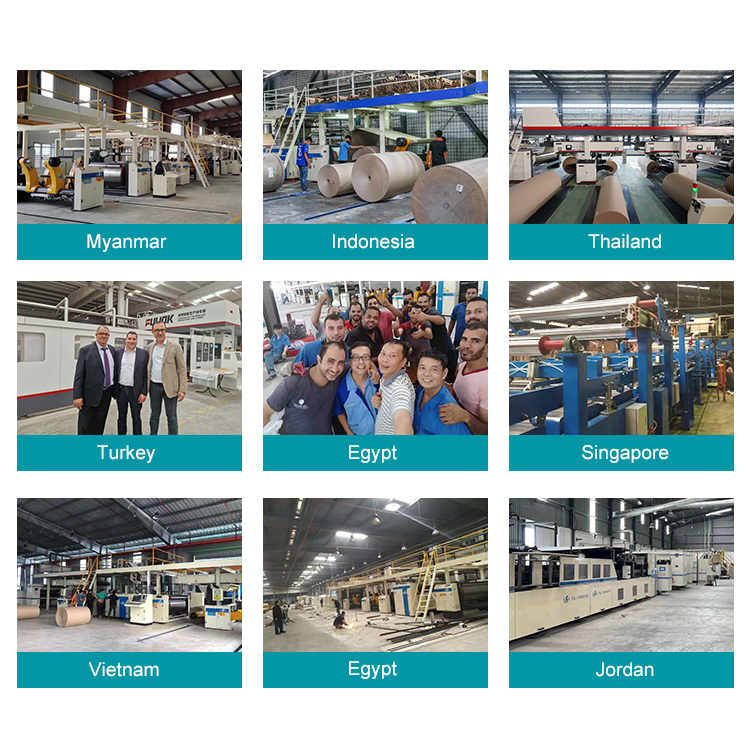
Installation example of a complete corrugated cardboard production line delivered to external markets.
Single-wall RSC programs at high volume. When the dominant product is a regular slotted carton in single-wall board, ranks 1 to 3 dominate the decision, and the stitching machine stays in reserve. The pre-feeder rises in importance because converting volume, not box integrity, is the constraint.
Heavy-duty and double-piece boxes. When double-piece and heavy corrugated boxes dominate the mix, the STM-1 stitching machine moves up the ranking, because a 30–140 mm stitching pitch range and 1–99 stitch counts are what allow one machine to serve very different joint specifications. Throughput then has to be recalculated from nails/min rather than read off the catalogue.
Wide-board production. When the box program requires board near the top of the available width range, the SSC-1 slitter scorer moves up, because the 2200 mm maximum paper width becomes the practical limit of the wide-board chain.
Labour-constrained plants. Where recruitment is difficult, the PF-1 pre-feeder moves up ahead of any further converting upgrade. Its 1600–1800 kg maximum feed weight also removes the heaviest manual handling task in the plant, which is an operational risk decision as much as a throughput decision.
FAQ: Ranking Corrugated Cardboard Machines
Does certification affect how you rank a corrugated cardboard machine?
Certification does not change a machine's physical position in the ranking, but it changes whether that machine can be delivered into a regulated market without rework. LLY PACK holds ISO certification under certificate number 60126Q00004R000, issued on 14 January 2026 and valid until 13 January 2029 by Guangdong Zhongjing Testing and Certification Co., Ltd., against the standard GB/T 19001-2016/ISO 9001:2015. On the product side, ISO 3037:2022 and the FEFCO GMP standard are the primary global references for board quality and edgewise crush resistance, and safety compliance for corrugated printing and converting machinery in the EU requires CE marking and adherence to standards such as EN ISO 12048 for compression testing. Buyers should therefore rank a machine that fits the intended market above an equivalent machine that does not.
Which specifications decide whether a single facer or slitter scorer deserves a higher rank?
For the single facer, the decisive figures are design speed and web size: the SF-1 is rated at 250 M/min design speed with a 1400–2300 mm web, and its roll geometry — 380 mm flute rolls, a 385 mm pressure roll, a 302 mm glue applying roll, a 170 mm doctor roll and a 400 mm preheating roll — governs board formation quality. For the slitter scorer, the decisive figures are blade line speed and width limits: the SSC-1 runs at 630–900 m/min blade line speed with a 2200 mm maximum paper width, a 150 mm minimum slitting width, a 260 mm blade outside diameter and a 190 mm scoring wheel outside diameter. A unit ranks higher when its ceiling sits above your target operating point and its limits sit outside your material range.
Where should budget go first across the five machines?
Fund the ceiling unit and the constraint unit first, then the buffer. In practice that means the single facer and the slitter scorer, followed by whichever unit your own data shows stopping the line most frequently — often the pre-feeder in labour-constrained plants and the stitching machine in heavy-duty plants. Configuration drives cost far more than category does, which is why this ranking deliberately contains no price figures: the same model can be quoted in different configurations, so a configured quotation is the only meaningful comparison.
Can you validate performance before committing to a machine?
Validation should be evidence-based rather than impression-based. The practical route is to compare published specifications against your own board grades and target run rates, confirm the quoted configuration matches the intended market's certification requirements, and review reference installations of the same model family. LLY PACK's track record for this purpose includes more than 3500 successful installations of corrugated lines worldwide and exports to over 40 countries, with a manufacturing base in Foshan City, Guangdong Province, a 30-person R&D team and four advanced CNC centres from Japan used for high-precision processing. The full technical brochure is available for download below.
Does lead time belong in the ranking decision?
Lead time should be ranked separately from technical priority, because the two can point in different directions. The units that rank highest technically — the single facer and the slitter scorer — are also the units that anchor the installation schedule, so they are usually ordered first in sequence rather than negotiated last on price. The correct approach is to build a written schedule around your target start of production and confirm each unit against it in the quotation, rather than assuming that a lower-priority unit will arrive faster.
Conclusion: Rank by Constraint, Then Commit
Ranking corrugated cardboard machines is a throughput and quality exercise before it is a purchasing exercise. Applied in order, the three filters — bottleneck relief, material fit and throughput match — produce a starting order of single facer, slitter scorer, pre-feeder, stitching machine and stacker, with the order shifting as soon as your web width, sheet size, box type or labour situation changes. What makes the ranking defensible is not the sequence itself, but the fact that each rank can be traced to a published specification: 250 M/min and 1400–2300 mm on the SF-1, 630–900 m/min and 2200 mm on the SSC-1, 280 sheets/min and 1600–1800 kg on the PF-1, 450 nails/min and 30–140 mm on the STM-1, and 3.5 m by 1.8 m by 1400–2300 mm on the STA-1.
Next step — configure the five machines against your own line. Send your board grades, web width, sheet sizes and target output, and LLY PACK will map them against the SF-1 single facer, SSC-1 slitter scorer, PF-1 pre-feeder, STM-1 stitching machine and STA-1 stacker, or against a complete CCPL-1 corrugated cardboard production line.
Contact: Christina | Email: christina@lycorrugated.com | WhatsApp: +86 13763260555 | Website: www.llypack.com
Download the technical brochure: LLY PACK Corrugated Machine Brochure (PDF)
Have Questions or Need More Details?
Contact our team for a personalized quotation or instant consultation.
Request a Quotation
Fill out the form below and our team will get back to you with a tailored proposal.
WhatsApp Direct Chat
Prefer to chat in real-time? Message us on WhatsApp for instant assistance & quick answers.
- Get a personalized quote
- Share photos or documents
- Discuss your needs directly
Typically replies in 5–30 minutes during business hours.