
Understanding Key Technical Specs for Slitter Scorers: Web Widths and Blade Speeds
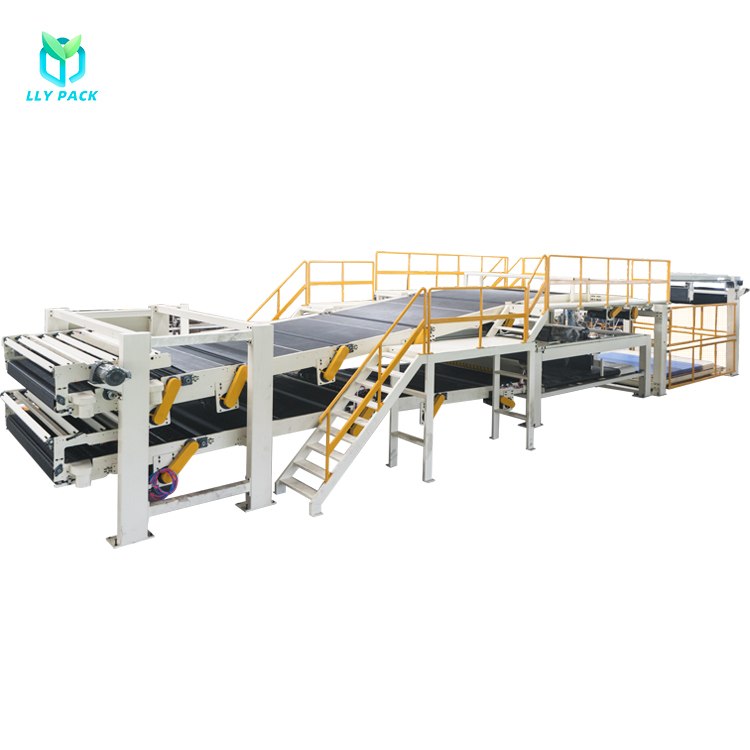
A slitter scorer datasheet is one of the shortest documents in a corrugated cardboard machine package, and one of the easiest to misread. Three numbers usually carry the weight of an early evaluation: maximum paper width, blade line speed and overall footprint. Read them correctly and the machine either fits the line or it does not. Read them as isolated headline figures and the mistake surfaces months later, when a board width cannot be produced, a production plan cannot be met, or the machine cannot be moved into the position the process needs. This guide works through the three parameters using the LLY PACK SSC-1 thin blade slitter scorer as a worked example: 2,200 mm maximum paper width, 630-900 m/min line speed of the slitting blade, and a 4,230 x 1,630 x 2,150 mm footprint.
Problem Definition: Why Slitter Scorer Specs Are Easy to Misread
A slitter scorer never runs alone. It is one module inside a corrugated cardboard production line whose function is converting raw paper into corrugated cardboard that meets the required specifications, and the working conditions for that application are typically described as high precision requirements, high continuity and high speed. Because the module is evaluated from a quotation sheet rather than from the line it will join, three reading errors repeat across projects.
Width is read as a single maximum. The SSC-1 publishes a maximum paper width of 2,200 mm and a minimum slitting width of 150 mm. The first number defines the widest web the machine accepts. The second defines the narrowest strip it can produce. A plant that records only the maximum may later find that a narrow blank cannot be produced at all, or that the trim layout has to be redesigned around a limit nobody wrote down.
Blade speed is read as line speed. The same datasheet states a production capacity of 630-900 m/min and describes the same range as the line speed of the slitting blade. A corrugated cardboard production line such as the CCPL-1 publishes a maximum mechanical speed of 300 m/min. The two figures do not contradict each other; they describe different quantities. Treating them as the same number is the most common error in early-stage technical review, which is why the phrase line speed should always be followed by the question: speed of what, measured where?
Footprint is read as floor area. Dimensions of 4,230 x 1,630 x 2,150 mm say how much floor a machine occupies. They do not say how much it weighs (4,000 kg for the SSC-1), what connected power it adds (30.3 kW), whether its height clears surrounding structures, or whether it can be moved into position after the building is finished.
A fourth, quieter problem sits underneath all three: units. Linear dimensions appear in millimetres on some datasheets and metres on others. Speeds appear in m/min for travelling webs and in R/min for rotating tooling. The LLY PACK PRC-1 paper reel cutter, for example, publishes a cutter blade speed of 740 R/min, which is a different quantity from the SSC-1 blade figure of 630-900 m/min. Before comparing anything, confirm both the unit and the physical thing being measured.
Industry Background: Why Spec Literacy Is Now a Buying Skill
The equipment category has been expanding steadily, and published market data makes that visible. Grand View Research estimates the global corrugated box making machine market at USD 2.21 billion in 2024 and projects USD 3.36 billion by 2033, a CAGR of 4.8% from 2025 to 2033. Future Market Insights projects a 3.9% CAGR for China corrugated box machine industry between 2026 and 2036, and reports that automatic corrugated machines hold a 55.6% share of global demand by automation level as of 2026. On the supply side, China machinery export volume exceeded USD 1 trillion for the fourth consecutive year in 2024, reaching USD 1.17 trillion, a 7.5% year-on-year increase, according to China Customs and the National Bureau of Statistics.
Three practical consequences follow for buyers:
- Components are increasingly specified as modules. A slitter scorer is evaluated as one item against a line rather than as part of a single supplier package, which makes module-level spec reading a procurement skill in itself.
- Automation is already the majority position. When 55.6% of demand is for automatic machinery, the cost of a misread parameter is not only capital; it is the manual workaround a plant has to build around a machine that cannot do what was assumed.
- Cross-border sourcing widens the range of voltages and compliance regimes. The SSC-1, for example, is published with voltage configurations of 380 V, 110 V, 220 V and 440 V - a spread that reflects export reality rather than one domestic grid.
LLY PACK (HK) CO., LIMITED, the manufacturer of the SSC-1, is a supplier specializing in corrugated machines and high-speed corrugated cardboard production lines. Its published record covers machines exported to over 40 countries with more than 3,500 successful corrugated line installations worldwide, and its stated research and development capability is supported by a team of 30 engineers. Its main product range includes corrugated belt, corrugating roll, single facer, auto splicer and corrugated paper board production line.
Compliance frames the same discussion. For board performance, ISO 3037:2022 and the FEFCO GMP standard are identified as the primary global references for edgewise crush resistance. For machinery safety in the EU, CE marking and standards such as EN ISO 12048 for compression testing apply. These are the standards a slitter scorer output will eventually be measured against - which is why a specification review should start with the quality target rather than end with it.
Detailed Solution: What Each SSC-1 Parameter Actually Constrains
Maximum Paper Width: 2,200 mm Is a Ceiling Inside a Width Chain
The SSC-1 published width figures are a maximum paper width of 2,200 mm and a minimum slitting width of 150 mm. Read alone, they describe one machine. Read against the line, they describe a constraint. A corrugated line is a chain of width capacities, and the chain is only as wide as its narrowest module.
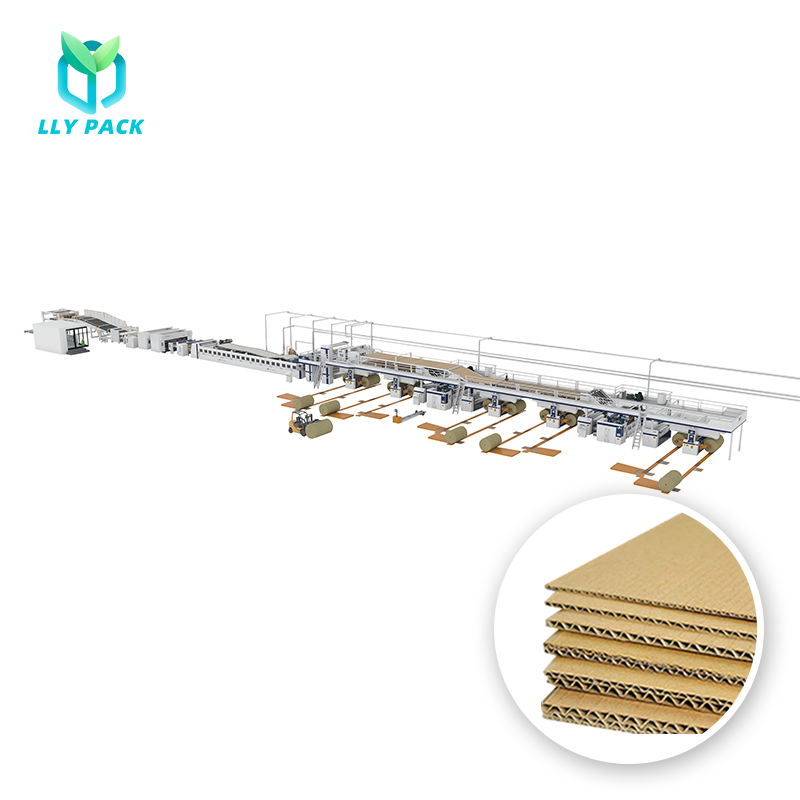
Published figures across the LLY PACK range show how the chain is built:
- Hydraulic Reel Stand HRS-1: specification 1,400-2,800 mm, handling paper rolls from 300 mm to 1,500 mm in diameter.
- Auto Splicer AS-1: paper width 1,200-2,550 mm, at 300-400 m/min.
- Single facer SF-1: web size 1,400-2,300 mm, design speed 250 m/min.
- Slitter scorer SSC-1: maximum paper width 2,200 mm, minimum slitting width 150 mm.
- Stacker STA-1: paper width 1,400-2,300 mm, maximum paper length 3.5 m.
- Corrugated Cardboard Production Line CCPL-1: production line width 1,400-2,800 mm, maximum mechanical speed 300 m/min.
The implication for a buyer is direct. A line configured with 2,800 mm class reel stands and a 2,800 mm line envelope does not automatically deliver 2,800 mm board if the slitter scorer sitting in the middle is published at a maximum paper width of 2,200 mm. Either the required board width sits comfortably inside 2,200 mm, or the slitter scorer is the planning constraint that defines what the wide end of the line is actually for.
The lower bound deserves equal attention. A minimum slitting width of 150 mm means the narrowest strip the machine will produce is 150 mm. A plant whose order book includes small cartons should map its narrowest finished blank against that floor before committing, because a 20 mm shortfall at the narrow end is not a performance issue - it is a product that cannot be made.
Three questions are worth putting to the supplier at this stage: whether 2,200 mm is the maximum web width entering the slitter scorer or the maximum finished board width leaving it; how the 150 mm minimum slitting width behaves across different board grades, flute profiles and thicknesses; and how many slitting and scoring positions can be set in a single setup, since that determines changeover time between orders.
Blade Line Speed: What 630-900 m/min Does and Does Not Tell You
The SSC-1 datasheet publishes a production capacity of 630-900 m/min and states the same range as the line speed of the slitting blade. The unit also publishes an outside diameter of 260 mm for the slitting blade and 190 mm for the scoring wheel.
The difficulty is that the word speed appears several times in one corrugated line, and the numbers are not directly comparable: the SSC-1 at 630-900 m/min for the slitting blade, the CCPL-1 corrugated cardboard production line at a maximum mechanical speed of 300 m/min, the SF-1 single facer at a design speed of 250 m/min, and the AS-1 auto splicer at 300-400 m/min.
An engineer who reads 630-900 m/min as the board travel speed of the line will conclude that the slitter scorer is more than twice as fast as the corrugator, and will then be surprised when production planning does not reflect that. The likelier reading is that the figure describes the cutting speed of the blade system rather than the linear travel of the board - which is exactly why the datasheet alone is not enough to plan output, and why the specification should be converted into explicit questions.
Useful questions at this point are mechanical rather than commercial:
- Does 630-900 m/min describe blade cutting speed, board travel speed, or the band within which cut quality is maintained?
- What is the minimum stable speed in production, and on which board grades was that minimum established?
- How is the slitter scorer synchronised with the corrugator? Base paper adaptability and speed synchronisation are the two special requirements named for this line-matching scenario, which suggests they are the variables that decide whether the module behaves in service.
- How do the published outside diameters - 260 mm slitting blade, 190 mm scoring wheel - relate to the usable diameter after tool reconditioning, and does the published speed range hold across that diameter range?
None of those questions can be answered from a datasheet. All of them can be answered by an application engineer, and the answers decide whether 630-900 m/min is a usable planning number or a headline number.
Footprint: 4,230 x 1,630 x 2,150 mm Is a Layout Decision
The SSC-1 is published with dimensions of 4,230 x 1,630 x 2,150 mm, a weight of 4,000 kg and 30.3 kW of power. Set against the CCPL-1 published space requirement of approximately 110 m (L) x 14 m (W) x 6.5 m (H), those figures become a layout exercise rather than a data point.
Arithmetically, the slitter scorer accounts for roughly 4 m of a 110 m line length and about 1.6 m of its 14 m width, and its 2.15 m height sits inside the 6.5 m building envelope described for the line. The static footprint, in other words, is rarely the problem. Three other numbers are:
- Weight - 4,000 kg. Floor loading, rigging access and installation sequence are decided by mass, not by plan area. A machine that cannot be moved into position after the roof and walls are finished is a layout constraint that appears late and costs the most to solve.
- Power - 30.3 kW. This is connected load added to the line electrical budget, and it belongs in the utility plan alongside the requirements of the other modules rather than in a separate conversation with the electrical contractor.
- Voltage configuration - 380 V, 110 V, 220 V, 440 V. Where the plant grid differs from the default, the voltage option is a specification decision rather than an afterthought. LLY PACK states South America, Southeast Asia, Africa, the Mid East and the domestic market as its major markets, and export business accounts for 100% of its sales.
Support Numbers That Decide Maintenance and Verification
Blade geometry is published as a pair of outside diameters: 260 mm for the slitting blade and 190 mm for the scoring wheel. Together with the 150 mm minimum slitting width, these define the geometry of the cut and score positions, and they are the numbers a maintenance plan has to be built around, because tool condition - not machine speed - is usually what changes first in the output.
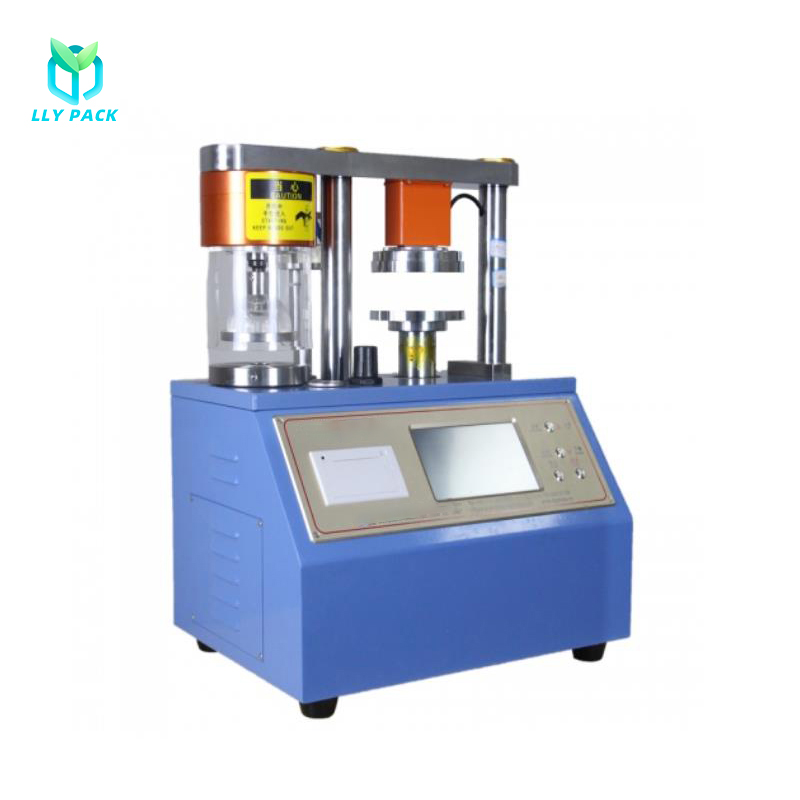
Verification closes the loop. The CTI-1 carton testing instrument publishes a burst strength measuring range of 250-5,600 kPa, a crush measuring range of 60-3,000 N, a thickness measuring range of 0.01-60 mm, an accuracy of +/-0.5% FS / 0.005 mm and a platen parallelism better than 0.05 mm. If the board quality standard is ISO 3037:2022 or FEFCO GMP, the measurement method should be agreed at the same time as the slitter scorer specification - otherwise a commissioning dispute has no shared reference point.
Step-by-Step Breakdown: A Six-Step Spec Review
Step 1 - Define the board widths you actually sell. Start from the order book, not the machine. Record the widest finished board your largest recurring order needs and the narrowest blank your smallest carton needs, then compare them with the SSC-1 published maximum paper width of 2,200 mm and minimum slitting width of 150 mm.
Step 2 - Trace the width chain across the line. List the published width figure for every module: HRS-1 at 1,400-2,800 mm, AS-1 at 1,200-2,550 mm, SF-1 at 1,400-2,300 mm, SSC-1 with a 2,200 mm maximum, STA-1 at 1,400-2,300 mm, and the CCPL-1 line envelope at 1,400-2,800 mm. The narrowest figure is the practical width of the line, whatever the quotation headline says.
Step 3 - Extend the chain downstream. Board width leaving the corrugator still has to survive the conversion equipment. The Pre feeder PF-1 publishes a maximum sheet size of 1,600 x 3,000 mm and a minimum of 300 x 600 mm. The Flexo printer FP-1 publishes a maximum feed size of 1,600 x 3,600 mm and a maximum printing size of 1,600 x 3,560 mm. If the slitter scorer is configured near its 2,200 mm ceiling, confirm the down-line sheet limits, not only the corrugator figure.
Step 4 - Separate blade speed from line speed. Collect every published speed with its unit and its subject: SSC-1 at 630-900 m/min for the slitting blade, CCPL-1 at 300 m/min maximum mechanical speed, SF-1 at 250 m/min design speed, AS-1 at 300-400 m/min. Then ask which of these is the production-planning number for a specific order.
Step 5 - Convert the footprint into a decision. Take 4,230 x 1,630 x 2,150 mm, 4,000 kg and 30.3 kW, and place them inside the line envelope of approximately 110 m x 14 m x 6.5 m. Confirm the voltage configuration - 380 V, 110 V, 220 V or 440 V - against the plant supply.
Step 6 - Set the verification plan before installation. Agree how board quality will be measured, using CTI-1 parameters referenced to ISO 3037:2022 or FEFCO GMP, and put base paper adaptability and speed synchronisation on the commissioning checklist. These are the two conditions named for this application scenario, and they are the ones that cannot be verified from a datasheet.
Use Cases: Where These Specs Change a Decision
Replacing a slitter scorer on an existing line. This is the most common upgrade decision. If the line was bought as a 2,800 mm envelope - matching the HRS-1 reel stand specification of 1,400-2,800 mm and the CCPL-1 line width of 1,400-2,800 mm - an incoming unit with a 2,200 mm maximum paper width redefines the usable width of the whole line. The first question to settle is whether the plant actually runs recurring orders above 2,200 mm.
Planning the layout of a new line. The slitter scorer accounts for roughly 4 m of a 110 m line, a small share of the total, but it sits inside a flow of much larger modules - the STA-1 stacker alone is published at 18,500 x 3,800 x 3,500 mm. Layout planning should treat length, width and height together: the SSC-1 height of 2,150 mm is modest against a 6.5 m building envelope, yet the modules on either side determine whether service access is realistic.
Exporting to a plant on a different grid. With published voltage options of 380 V, 110 V, 220 V and 440 V, the SSC-1 can be configured to more than one supply standard. For buyers in South America, Southeast Asia, Africa or the Middle East - the markets LLY PACK lists as major ones - confirming the voltage configuration at quotation stage avoids a re-engineering step at installation.
High-speed, high-continuity production. The application this slitter scorer serves is characterised by high precision requirements, high continuity and high speed, in semi-automatic or fully automatic operation. Those conditions raise the importance of the speed questions in Step 4: in a high-continuity environment, a misunderstood speed figure affects not one order but the whole shift pattern.
Board quality verification. Slitting and scoring set the geometry of the blank; burst and crush performance decide whether it survives handling and stacking. Using a CTI-1 to measure burst strength, crush resistance and thickness, referenced to ISO 3037:2022 or FEFCO GMP, connects the slitter scorer mechanical settings to the customer acceptance criteria.
Comparison Table: Published Width and Speed Figures Across the Line
Table 1 maps published width and speed figures for the modules that surround a slitter scorer in a corrugated cardboard production line. All values are as published by LLY PACK for the models named; the final column summarises what each figure constrains in planning terms.
| Module | Model | Published width figure | Published speed figure | What the figure constrains |
|---|---|---|---|---|
| Hydraulic Reel Stand | HRS-1 | Specification 1,400-2,800 mm; roll diameter 300-1,500 mm | - | Reel size the line can accept |
| Auto Splicer | AS-1 | Paper width 1,200-2,550 mm | 300-400 m/min | Web continuity at the wet end |
| Single facer | SF-1 | Web size 1,400-2,300 mm | Design speed 250 m/min | Flute formation and web width |
| Slitter scorer | SSC-1 | Max paper width 2,200 mm; min slitting width 150 mm | Line speed of the slitting blade 630-900 m/min | Board width split and scoring geometry |
| Stacker | STA-1 | Paper width 1,400-2,300 mm; max paper length 3.5 m | - | Sheet handling after slitting and scoring |
| Pre feeder | PF-1 | Max sheet 1,600 x 3,000 mm; min sheet 300 x 600 mm | Max feed 280 sheets/min | Sheet size accepted by conversion |
| Flexo printer | FP-1 | Max feed 1,600 x 3,600 mm; max printing 1,600 x 3,560 mm | Max equipment speed 350 sheets/min | Printing and slotting envelope |
| Corrugated line | CCPL-1 | Production line width 1,400-2,800 mm | Max mechanical speed 300 m/min | Overall line envelope |
Table 2 isolates the SSC-1 parameters discussed in this guide.
| Parameter | Published value | Why it matters in evaluation |
|---|---|---|
| Machine type | Thin Blade Slitter Scorer Machine | Category reference for line matching |
| Maximum paper width | 2,200 mm | Upper width limit of the module |
| Minimum slitting width | 150 mm | Lower limit; defines the narrowest strip |
| Line speed of the slitting blade | 630-900 m/min | Cutting-speed figure; clarify against board travel speed |
| Slitting blade outside diameter | 260 mm | Tool geometry and maintenance planning |
| Scoring wheel outside diameter | 190 mm | Tool geometry and maintenance planning |
| Machine dimensions | 4,230 x 1,630 x 2,150 mm | Layout, clearance and installation access |
| Weight | 4,000 kg | Floor loading and rigging |
| Power | 30.3 kW | Connected electrical load |
| Voltage | 380 V, 110 V, 220 V, 440 V | Grid matching for export plants |
Note on interpretation: the values above are published specifications. The comparison column describes what each parameter constrains during planning; it is not a performance ranking of any module.
FAQ
Which voltage and compliance details should be confirmed before ordering a slitter scorer?
Start with the plant supply, because the SSC-1 is published with voltage configurations of 380 V, 110 V, 220 V and 440 V - the correct configuration is a specification field, not a default. Compliance then runs on two levels. For machinery safety, EU requirements involve CE marking and standards such as EN ISO 12048 for compression testing. For board quality, ISO 3037:2022 and the FEFCO GMP standard are identified as the primary global references for edgewise crush resistance. The SSC-1 connected power of 30.3 kW should also be added to the line electrical budget at this stage, alongside the utility requirements of the other modules.
What are the key capability figures of the SSC-1 slitter scorer?
The LLY PACK SSC-1 is a thin blade slitter scorer with a maximum paper width of 2,200 mm and a minimum slitting width of 150 mm. Its published production capacity and line speed of the slitting blade are both stated as 630-900 m/min. Tool geometry is published as an outside diameter of 260 mm for the slitting blade and 190 mm for the scoring wheel. The machine weighs 4,000 kg, draws 30.3 kW, and measures 4,230 x 1,630 x 2,150 mm.
Which specification items drive the installation cost envelope?
The datasheet does not publish a price, but it does publish the physical and utility figures that shape an installation budget. A weight of 4,000 kg determines handling, rigging and floor preparation requirements. A connected power of 30.3 kW determines the electrical work needed at the point of installation. Dimensions of 4,230 x 1,630 x 2,150 mm, set against the line envelope of approximately 110 m x 14 m x 6.5 m, determine whether an existing layout can absorb the machine or has to be rearranged. Voltage configuration affects whether the unit matches the site supply or needs adaptation. Those are the cost-relevant facts available at specification stage, and they are the ones worth costing out before a quotation is compared on headline numbers alone.
How can we validate the slitter scorer against our own paper before committing?
Two conditions are named as special requirements for this line-matching scenario: base paper adaptability and speed synchronisation. Both are grade-specific, so validation should start from your own stock. Prepare the widest web you intend to run, up to the published 2,200 mm maximum paper width, and the narrowest slit you need, against the published 150 mm minimum slitting width. Then agree a measurement method: the CTI-1 carton testing instrument publishes a burst strength range of 250-5,600 kPa, a crush range of 60-3,000 N and a thickness range of 0.01-60 mm at +/-0.5% FS / 0.005 mm accuracy, which allows results to be referenced to ISO 3037:2022 or FEFCO GMP. Technical questions can go directly to LLY PACK: Christina, christina@lycorrugated.com, WhatsApp +86 13763260555.
What should be settled early so delivery and installation do not stall?
Four items, all visible in the published data. First, the width chain: confirm that the slitter scorer 2,200 mm maximum paper width fits the line it joins and that the 150 mm minimum slitting width covers your narrowest blank. Second, layout: the machine needs 4,230 x 1,630 x 2,150 mm of space and 4,000 kg of handling, positioned inside a line envelope of about 110 m x 14 m x 6.5 m. Third, utilities: 30.3 kW at a voltage matching the plant supply from the 380 V, 110 V, 220 V and 440 V options, plus the surrounding line requirements such as the steam pressure and boiler capacity stated for the CCPL-1 at 10 KG/CM2 and 2, 3 or 4 MT/H depending on line speed. Fourth, verification: fix the board test standard before commissioning. For the full equipment list and specifications across the LLY PACK range, download the product catalogue here: LLY PACK product catalogue (PDF), or send your line data and required board widths for a configuration review at www.llypack.com.
Conclusion: Three Questions Before the Spec Is Frozen
The SSC-1 datasheet contains many numbers, but three of them decide most of the early evaluation. Ask what the 2,200 mm maximum paper width means relative to every other module in the width chain, and confirm that the 150 mm minimum slitting width covers the narrowest product in your order book. Ask what the 630-900 m/min blade figure measures, and how it is synchronised with a corrugated cardboard production line whose published maximum mechanical speed is 300 m/min. Ask whether the 4,230 x 1,630 x 2,150 mm footprint, the 4,000 kg weight and the 30.3 kW load fit the plant you have, not the plant on the drawing.
Engineers who ask those questions before the specification is frozen get a slitter scorer that behaves predictably inside the line. Engineers who accept the headline numbers get a machine that meets its datasheet and still does not meet the production plan. The difference is rarely technical knowledge; it is the discipline of reading a specification as a set of constraints rather than a set of claims.
Next Step: Match the Slitter Scorer to Your Line
Send LLY PACK your required board widths, narrowest blank and plant voltage, and the engineering team can confirm whether the SSC-1 configuration fits your corrugated cardboard production line. Sample and configuration discussions are handled directly by the manufacturer.
Email: christina@lycorrugated.com | WhatsApp: +86 13763260555 | Website: www.llypack.com | Catalogue: Download PDF