
Brass Valve Basics: Core Types and Where They Fit in Piping Systems
Brass Valve Basics: Core Types and Where They Fit in Piping Systems
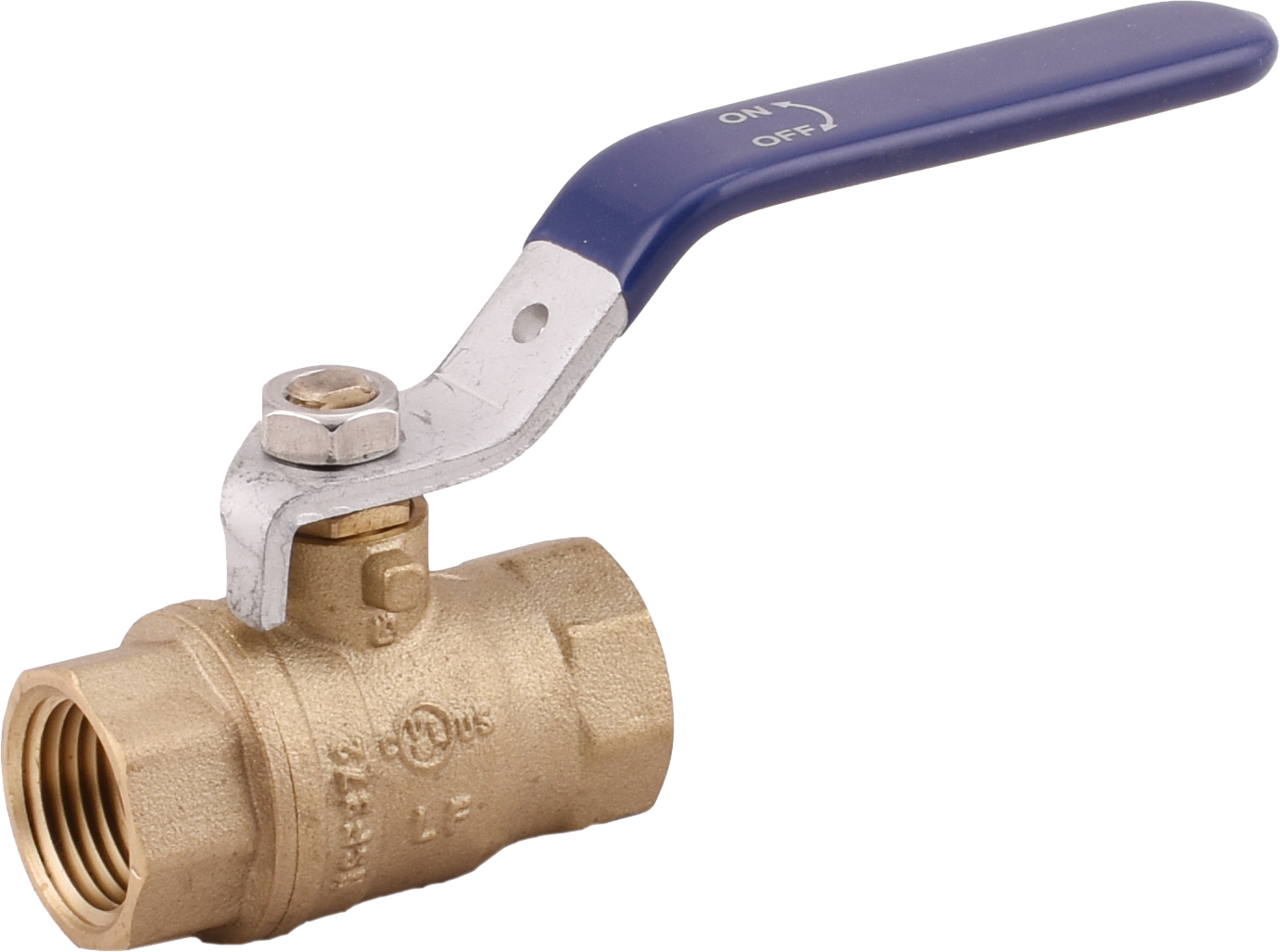
A brass valve controls the flow of water, gas, heating media or compressed air in a piping system. The term covers several product families rather than one design: a brass angle valve is not interchangeable with a brass check valve, and a full-port brass ball valve is selected for different reasons than a rising stem brass gate valve. Knowing the main families helps during early research and prevents specification errors later.
For first-time buyers, a useful starting point is to separate valves by function: shut-off valves stop or start flow; check valves prevent reverse flow; Y strainers remove particles; and brass fittings connect pipes, valves and fixtures. Compliance is the second layer, especially for drinking-water systems in North America, where lead-free brass requirements are mandatory. This article explains the common brass valve categories, their typical pressure and temperature ratings, lead-free certification terms, and the steps a buyer can use to compare options.
Concrete examples in this article come from the product range of Zhejiang Longda Technology Co., Ltd., a Chinese brass valve manufacturer established in 1993. The company is located in Yuhuan County, Zhejiang Province, and manufactures brass valves, fittings, bibcocks, faucets and other components for residential and commercial plumbing. Export business accounts for around 95% of sales, mainly to the EU, USA, Canada and South America.
Why a General Brass Valve Search Is Usually Not Enough
When a procurement person searches for a brass valve, the intended product may actually be a brass ball valve for a pump manifold, a brass angle valve for a toilet supply line, a brass gate valve for a municipal line, or a brass Y strainer for a chilled-water system. If the request is left generic, the supplier can only guess.
Each valve type carries different pressure, temperature, connection and certification parameters. For example, a brass ball valve may be rated at 600 WOG, while a brass supply stop is commonly rated at 125 psi. Checking these values early helps a buyer match a quotation to the project instead of comparing prices across unrelated valve designs.
Industry Context: Brass Valve Market and Compliance Trends
The market context confirms that brass valves are used across residential, commercial and industrial systems. According to Dataintelo, the global brass valves market was valued at USD 14.8 billion in 2025 and is projected to reach USD 24.1 billion by 2034, with a CAGR of 5.6%. Ball valves held the largest product-type share at 38.4% in 2025.
In international trade, China exported USD 22.6 billion in valves under HS code 8481 in 2024, according to OEC. Zhejiang and Guangdong provinces are the primary brass-valve manufacturing clusters in China. Zhejiang Longda operates in Zhejiang Province, within one of the regions where much of this manufacturing and export activity is concentrated.
Regulatory requirements also influence type selection. In the United States, lead-free alloys are mandatory for potable-water-contact products under the Safe Drinking Water Act, and common product certifications include NSF/ANSI 61, NSF/ANSI 372 and cUPC. In Europe, manually operated copper-alloy ball valves for drinking water are referenced in EN 13828:2003, while brass gas valves must comply with EN 331:2015. These rules make alloy and certification useful filters during research.
Main Brass Valve Types and How They Behave
This section uses Longda Brass Valve examples to explain the main categories in a practical way. The model numbers are illustrations of the specifications a buyer should read, not a complete product list.
Brass Ball Valve
A brass ball valve uses a quarter-turn handle to rotate a ball with a center bore. When the handle is parallel to the pipe, the valve is open; when it is perpendicular, the valve is closed. Full-port versions keep the bore diameter close to the pipeline diameter, reducing flow restriction. This design is common for frequent on/off service in plumbing, water supply, heating, gas and HVAC systems.
The Longda model 8081 is a two-piece full-port brass ball valve available in sizes from 1/2-inch to 4-inch (DN15 to DN100). It is rated at 600 WOG (4.1 MPa) and operates from -20°C to 150°C. The body is hot-forged brass in normal or lead-free brass, the ball is chrome-plated brass, and the seats are PTFE. For European specifications, Longda also offers the ART.60621 brass ball valve made from CW617N in compliance with EN12164 and EN12165 standards. That model has a nominal pressure of 30 bar and a temperature range from -20°C to 140°C, making it suitable for drinking water, domestic hot water, heating systems and compressed air networks.
Brass Gate Valve
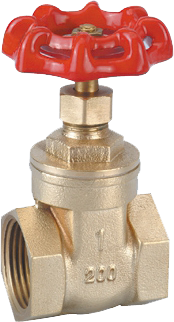
A brass gate valve opens by lifting a gate or wedge away from the flow path and closes by lowering it. Operation is multi-turn through a handwheel. This valve type suits infrequent full-open or full-closed service rather than frequent throttling. Because the flow path can be straight and full-bore, pressure loss is low when the valve is fully open.
The Longda T-22017A is a rising-stem, threaded, full-bore brass gate valve available in sizes from 1/2-inch to 4-inch (DN15 to DN100). It is rated at 200 WOG (1.4 MPa), operates from -20°C to 120°C, and is available with female NPT or BSP threads. The brass-to-brass metal seat avoids rubber seal aging. Lead-free versions are available and certified to NSF/ANSI 61 and NSF/ANSI 372 by IAPMO.
Brass Angle Valve and Brass Supply Stop
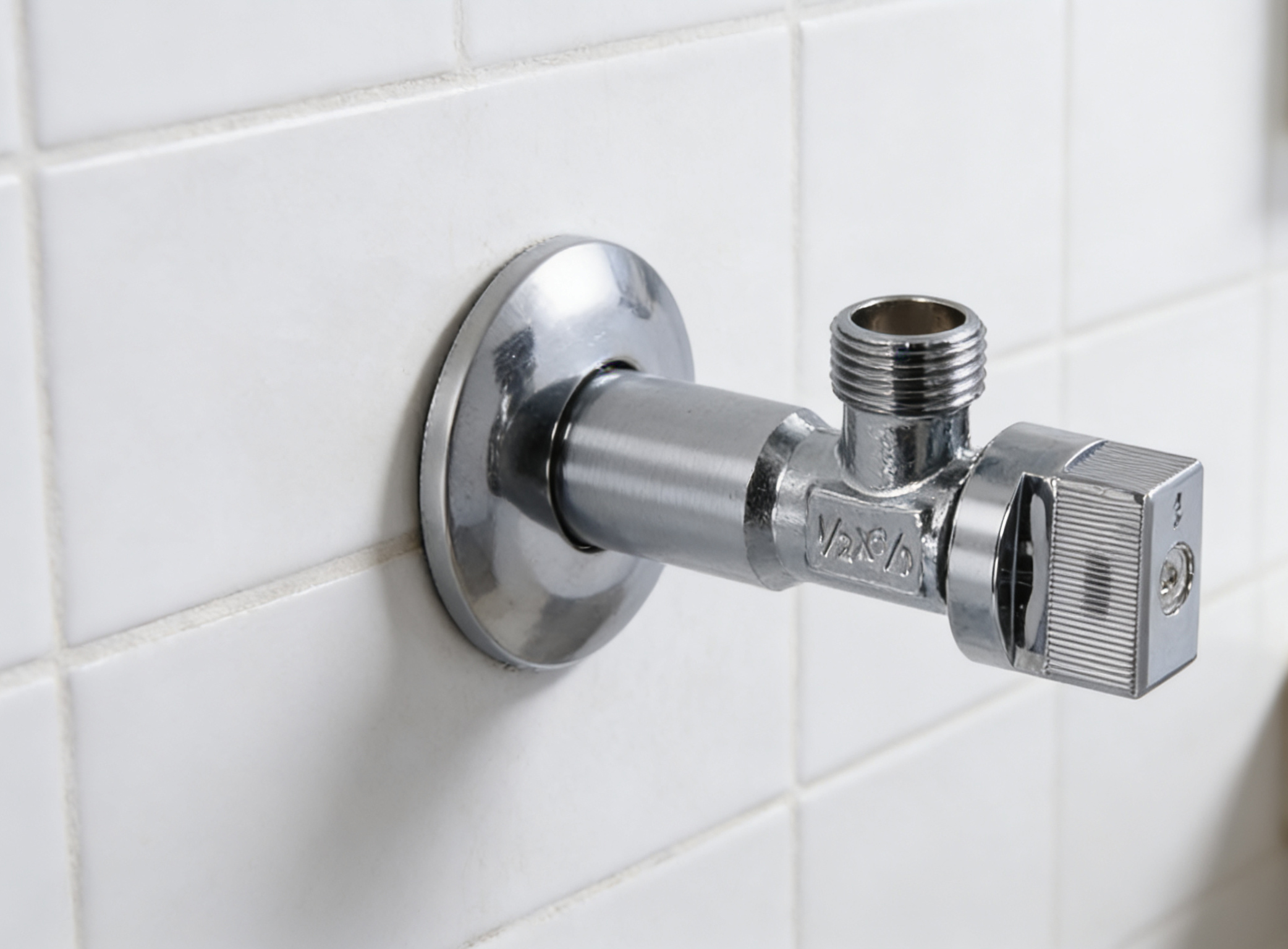
Brass angle valves and supply stops are point-of-use shut-off valves. A typical brass angle valve receives supply from a wall outlet and directs flow at a right angle to a fixture supply hose. A supply stop can be straight or angle when installed beneath a fixture. These valves allow maintenance of faucets, toilets, washing machines and water heaters without shutting off the whole building water supply.
Longda model 98023-LF is a lead-free quarter-turn supply stop valve, available in 1/2-inch by 3/8-inch and 1/2-inch by 1/2-inch configurations. It is rated at 125 psi and operates from -20°C to 120°C. The valve is available as angle or straight, quarter-turn or multi-turn, and with compression, FIP, PEX, sweat, threaded, press or push-fit connections. The lead-free version is certified to cUPC, NSF/ANSI 61 and NSF/ANSI 372. The ART.98011 brass angle valve is another example with a chrome-plated anti-corrosion finish and quarter-turn operation.
Brass Check Valve
A brass check valve prevents reverse flow automatically. It has no manual handle; the valve closes when flow changes direction. This makes it useful in pumping systems, water supply lines, boiler and heating circuits, agricultural irrigation and other fluid systems where backflow must be avoided.
The Longda LD 30303 is a brass swing check valve also available in spring-loaded inline versions. It is made in sizes from 1/2-inch to 2-inch (DN15 to DN50), rated at 200 WOG (1.4 MPa), and operates from -20°C to 150°C. The body uses high-quality lead-free and dezincification-resistant performance brass alloy, the disc is brass with a PTFE sealing face, and the spring is SS304 stainless steel. Connection options include FPT, MPT, Press, PEX, SWT and cold expansion.
Brass Y Strainer
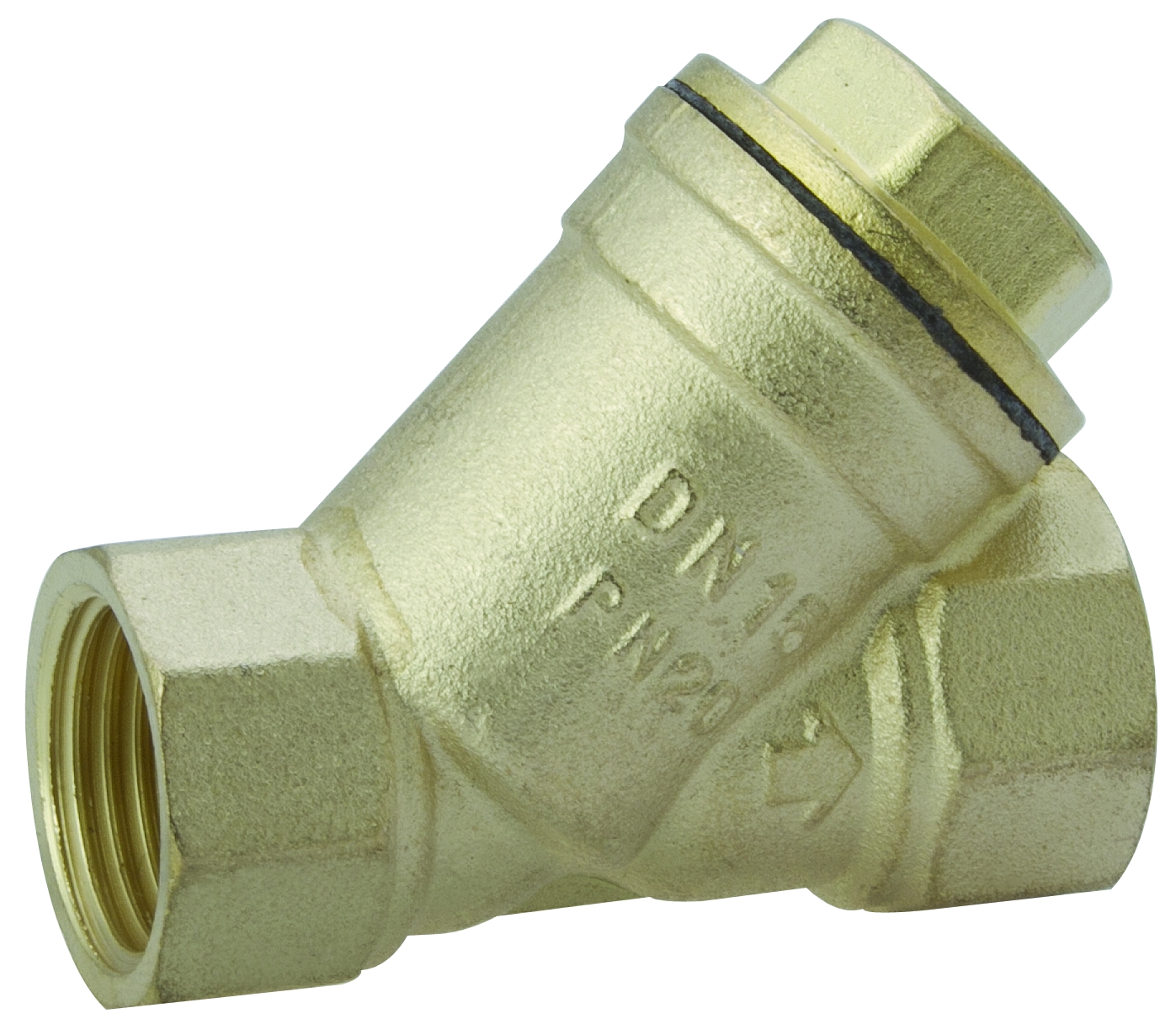
A brass Y strainer is a protection component rather than an isolating valve. It filters sand, sediment and weld debris from a pipeline before the fluid reaches downstream pumps, meters, ball valve seats or other sensitive equipment. The Y-shaped body allows the screen to be cleaned without removing the entire pipeline section.
The Longda LD.73154 is a brass Y-type strainer with a drain plug, available in sizes from 1/2-inch to 2-inch (DN15 to DN50). It is rated at 200 WOG (1.4 MPa) and operates from -20°C to 150°C. The screen is made of SS304 stainless steel and is available in 20, 40, 60 or 80 mesh. A blow-down drain plug enables fast cleaning, and the screen element can be replaced without disassembling the whole pipeline. Lead-free versions are available for potable-water systems.
Brass Fittings and Other Related Terms
Brass fittings complete a piping system by connecting pipes, valves and equipment. Common fitting types include adapters, couplings, nipples, elbows, tees, unions, caps and plugs. The Longda model 15111 series includes threaded, sweat, PEX, PEX-A, press and push-fit options in sizes from 1/4-inch to 2-inch, with pressure ratings up to 600 WOG. Lead-free options are available for potable water applications.
Supplier catalogs also use function-based names such as brass stop cock, brass hose bibbs or bibcocks, brass taps, brass radiator valves, brass heating valves, brass manual balancing valves, brass pressure reducing valves, brass safety relief valves, brass boiler or transformer drain valves, and brass diverter valves. When encountering these terms, it helps to ask whether the product is isolating, regulating, protecting, draining or redirecting flow before comparing price and specifications.
Step-by-Step Brass Valve Selection Process
The following checklist can be used during the awareness and research stages. It moves from system requirements to product-specific parameters.
- Identify the fluid and applicable water classification. For potable water systems in North America, select lead-free brass with a wetted-surface lead content not exceeding 0.25%. Check for NSF/ANSI 61 and NSF/ANSI 372 certification. Gas installations have separate safety requirements, such as EN 331:2015 in Europe.
- Define the function of the valve. Use a ball valve or gate valve for shut-off, an angle valve or supply stop for point-of-use isolation, a check valve for backflow prevention, and a Y strainer for filtration.
- Choose the end connection system. Threaded connections are often NPT or BSP. Modern plumbing systems may use PEX, PEX-A cold expansion, press, sweat or push-fit connections. Confirm that the valve is available in the connection format used by the project.
- Compare pressure and temperature ratings. Ratings differ across valve types. A full-port brass ball valve may be rated at 600 WOG, while a gate valve or check valve may be rated at 200 WOG. Fixture supply stops often carry a 125 psi rating.
- Check material and certification documents. For drinking-water systems, lead-free brass is important. Ask for material test reports, thread gauge inspection records, and product certifications before placing volume orders.
- Plan operation and maintenance. Quarter-turn ball valves are faster to operate; multi-turn gate valves are slower but offer a full-bore flow path. Y strainers require periodic screen inspection and cleaning. These operational details affect installation and long-term maintenance.
Common Installations and Typical Brass Valve Requirements
Residential and Commercial Fixture Supply
In bathrooms and kitchens, brass angle valves or supply stops are installed on fixture supply pipes to allow localized shut-off. These valves are usually chrome-plated, lead-free, quarter-turn and certified to cUPC plus NSF/ANSI 61/372. Model 98023-LF is one example that covers angle and straight configurations with multiple connection options.
PEX-A Whole-House Plumbing and Repiping
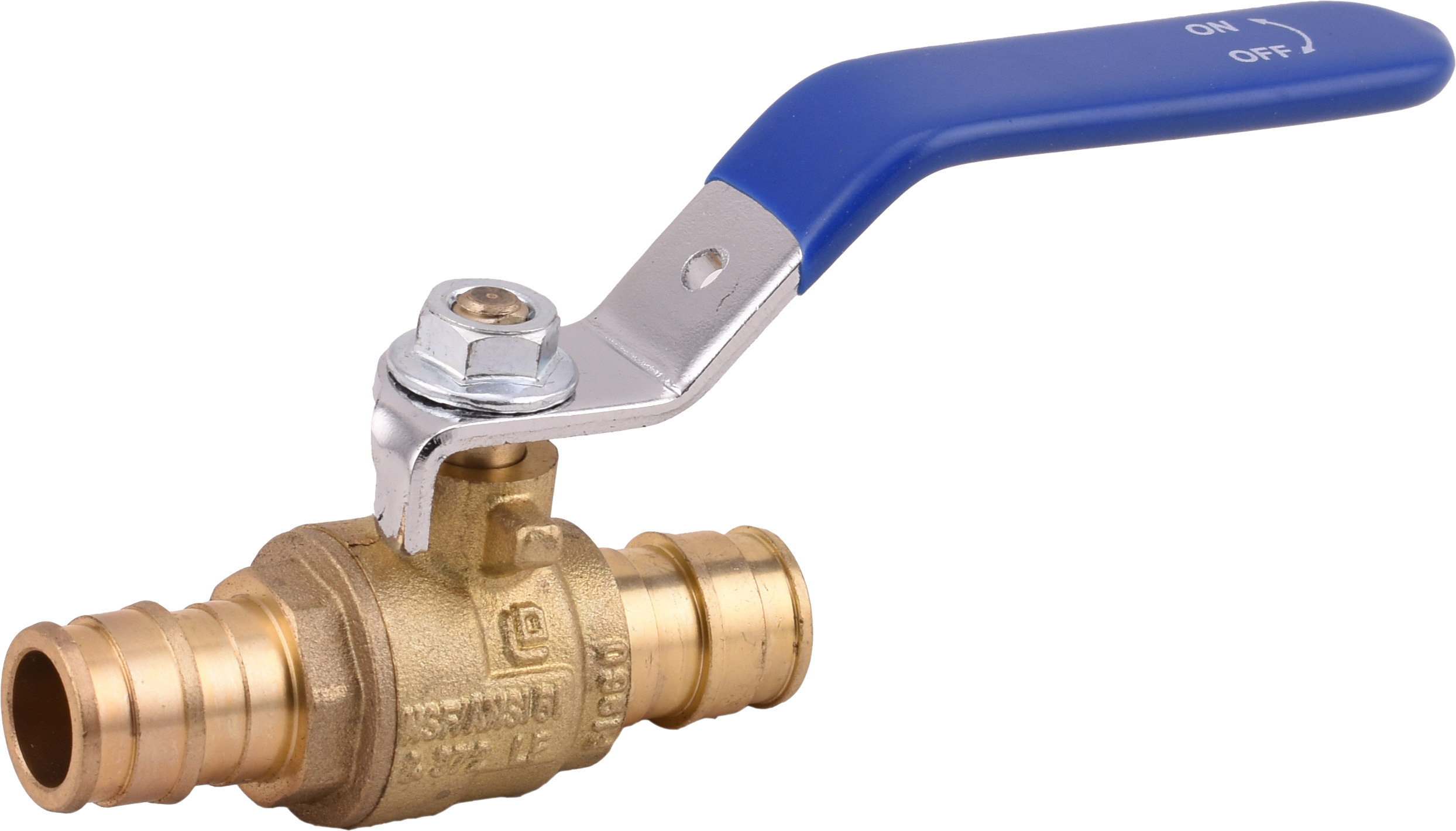
New residential PEX-A plumbing often uses cold-expansion connections to ASTM F1960. In this system, a PEX-A brass ball valve can connect PEX pipe to NPT-threaded equipment such as a water heater or manifold. The full-port body provides shut-off with minimal pressure drop, while the PEX-A connection forms a permanent joint without reducing the pipe inner diameter. For North American projects, the lead-free version should carry cUPC and NSF/ANSI 61/372 certification.
Pumping, Heating and HVAC Lines
Pumping systems use brass check valves to prevent reverse flow and protect pumps. Brass Y strainers protect downstream components in water supply, HVAC chilled water and gas piping by trapping particles before they reach sensitive equipment. In hydronic heating, brass manual balancing valves and radiator valves help distribute flow between circuits. Manual balancing valves still represent about 55–65% of unit demand in the Asia-Pacific hydronic balancing market, according to IndexBox.
Comparison Table: Common Brass Valve Types at a Glance
| Category | Typical Function | Example Model | Typical Size Range | Pressure Rating | Temperature Range |
|---|---|---|---|---|---|
| Brass Ball Valve | Quarter-turn shut-off | 8081 | 1/2-inch to 4-inch | 600 WOG | -20°C to 150°C |
| Brass Gate Valve | Multi-turn full-bore isolation | T-22017A | 1/2-inch to 4-inch | 200 WOG | -20°C to 120°C |
| Brass Check Valve | Automatic backflow prevention | LD 30303 | 1/2-inch to 2-inch | 200 WOG | -20°C to 150°C |
| Brass Angle Valve / Supply Stop | Fixture-level local shut-off | ART.98011 / 98023-LF | 1/2-inch by 3/8-inch and 1/2-inch by 1/2-inch | 125 psi | -20°C to 120°C |
| Brass Y Strainer | Particle filtration and system protection | LD.73154 | 1/2-inch to 2-inch | 200 WOG | -20°C to 150°C |
| Brass Fittings | Connecting pipes, valves and equipment | 15111 | 1/4-inch to 2-inch | Up to 600 WOG | -20°C to 150°C |
The table is not exhaustive. Gas valves, radiator valves, bibcocks, hose bibbs and drain-valve variants are selected by application and by the local code that governs the installation.
Frequently Asked Questions about Brass Valves
What is a brass valve used for?
A brass valve controls the flow of fluids in a piping system. Depending on the design, it starts, stops, regulates or protects flow in water, gas, heating and compressed-air lines. For example, ball valves provide shut-off, gate valves isolate flow, angle valves enable local shut-off under fixtures, check valves prevent reverse flow, and Y strainers remove particles from the line.
What is the difference between a brass ball valve and a brass gate valve?
A brass ball valve closes with a quarter-turn of a lever and is suitable for frequent operation. A brass gate valve closes by turning a handwheel multiple times and is used mainly for infrequent full-open or full-closed service. A full-port ball valve and a full-bore gate valve both minimize pressure loss, but the operating styles and time required to close differ.
Why is lead-free certification important for brass valves in drinking water systems?
For potable water contact in the United States, lead-free brass must have a wetted-surface lead content not exceeding 0.25%. Products that meet this requirement are often certified to NSF/ANSI 61 and NSF/ANSI 372, and many are also certified to cUPC. Longda offers lead-free versions of gate valves, ball valves, check valves, supply stops, angle valves, Y strainers and fittings with these certification references.
Which brass valve is commonly installed under a sink?
The shut-off valve under a bathroom or kitchen sink is usually a brass angle valve or a brass supply stop. It is used to isolate the faucet or toilet for maintenance without turning off the main water supply. Longda model 98023-LF is available as an angle or straight supply stop, in quarter-turn or multi-turn, and with compression, PEX, threaded, sweat, press or push-fit connections.
How can connection leakage, stem leakage or thread damage be reduced during installation?
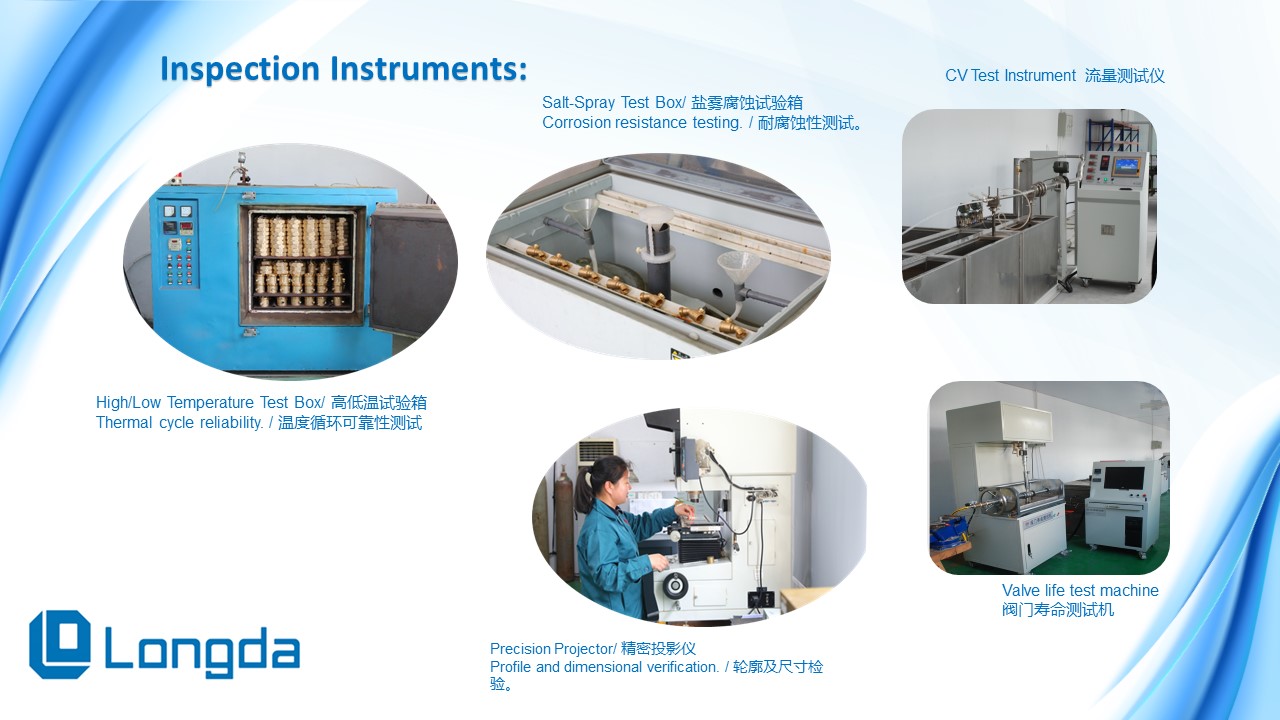
Choose a valve with PTFE seats and a stem sealing design that includes O-rings, and confirm that the product is 100% factory tested before shipment. Thread gauge inspection on every batch and a lead-free material test report help detect dimensional or material problems before installation. Longda provides these testing and documentation steps as part of its quality process.
What to Do with This Brass Valve Overview
Brass valve sourcing is more reliable when the request names function, connection and certification. If you are still in the research stage, start by listing whether the valve will isolate, regulate, prevent backflow, drain, filter or redirect flow. Then decide whether the application requires lead-free brass, which connection system is used, and what pressure and temperature rating is necessary.
Zhejiang Longda Technology Co., Ltd. is a manufacturer with in-house production in Yuhuan, Zhejiang Province. It was founded in 1993, covers 30,000 square meters, employs around 200 staff and has an annual output capacity of 7,500 tons. The company exports around 95% of products to the EU, USA, Canada and South America, and it offers OEM/ODM service on selected brass valve lines.
For a broader list of brass valve models, parameters and connection options, download the Longda catalogue.
Download Brass Valve CatalogueFor inquiries, contact Longda at sales@ld-valve.com or call +86 13506869135.