
Brass Valve Buyer's Guide: Gate vs. Ball vs. Check for Plumbing Projects
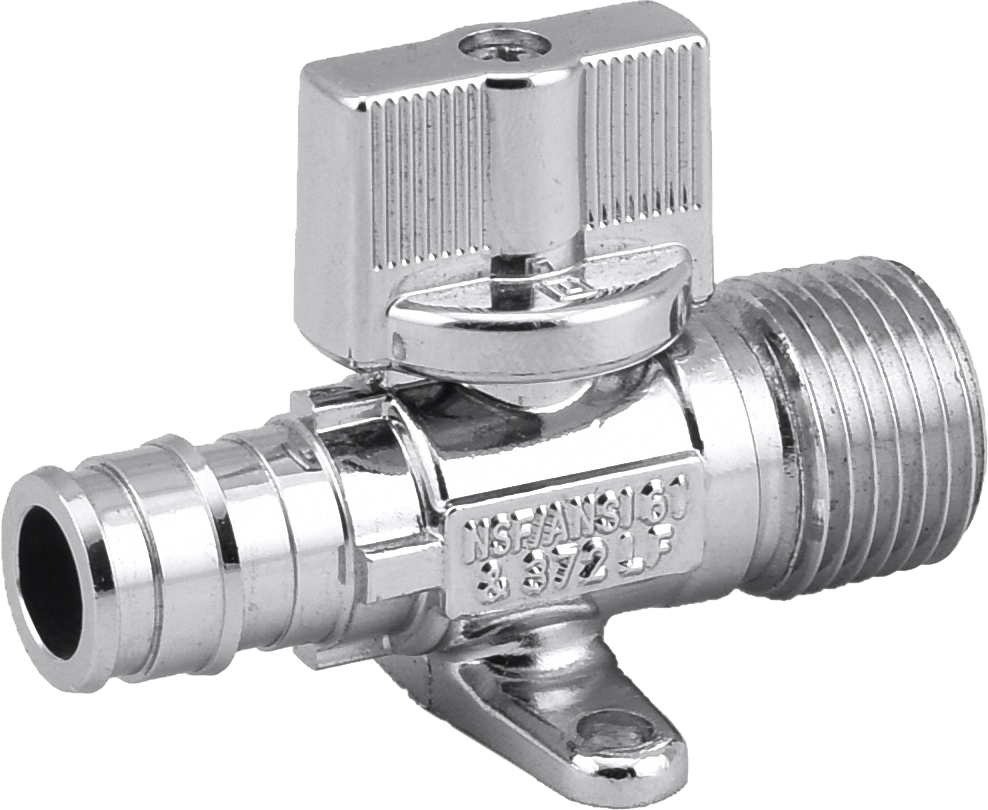
Brass Valve Buyer's Guide: Gate vs. Ball vs. Check for Plumbing Projects
Choosing the right brass valve for a residential or commercial plumbing project comes down to one main question: what is the valve expected to do? A gate valve is designed to isolate water flow in the fully open or fully closed position. A ball valve is designed for fast, quarter-turn shut-off. A check valve is designed to prevent backflow automatically. Distributors and contractors who understand these functional differences can select the correct valve type, reduce installation callbacks, and avoid specifying components that are not suited to the working pressure or temperature of the system.
This buyer's guide compares three representative models from LONGDA BRASS VALVE: the T-22017A brass gate valve, the 8081 brass ball valve, and the LD 30303 check valve. The comparison focuses on working pressure (200 WOG for the gate and check valves, 600 WOG for the ball valve), temperature range, connection options, and application fit for plumbing and heating systems.
Why valve type selection matters in plumbing projects
Specifying the wrong brass valve does not just affect cost. It can affect maintenance access, flow performance, and system safety. In residential plumbing, a shut-off valve that is rarely operated may be a gate valve; an appliance supply line that needs frequent service may be better served by a quarter-turn ball valve. In commercial systems, a check valve may be required by code on pump discharge lines or boiler feed lines to prevent reverse flow. Understanding the role of each type at the system level is the first step in procurement.
From a market perspective, brass valves continue to be a significant product category in global fluid control. The global brass valves market was valued at USD 14.8 billion in 2025 and is projected to reach USD 24.1 billion by 2034 (Dataintelo). Ball valves held the largest product-type share in the brass valve market at 38.4% in 2025. These figures indicate that brass valves, and especially ball valves, are widely specified across water supply, HVAC, and industrial plumbing networks.
Overview of the valves compared in this guide
T-22017A Brass Gate Valve
The T-22017A is a rising-stem, full-bore brass gate valve with female NPT or BSP threaded connections. Its nominal pressure rating is 200 WOG (1.4 MPa), and its working temperature range is -20°C to 120°C. It uses a brass-to-brass metal seat. It is available in sizes from 1/2"–4" (DN15–DN100). This valve is intended for on/off isolation—open fully or close fully—rather than for frequent throttling.
8081 Brass Ball Valve
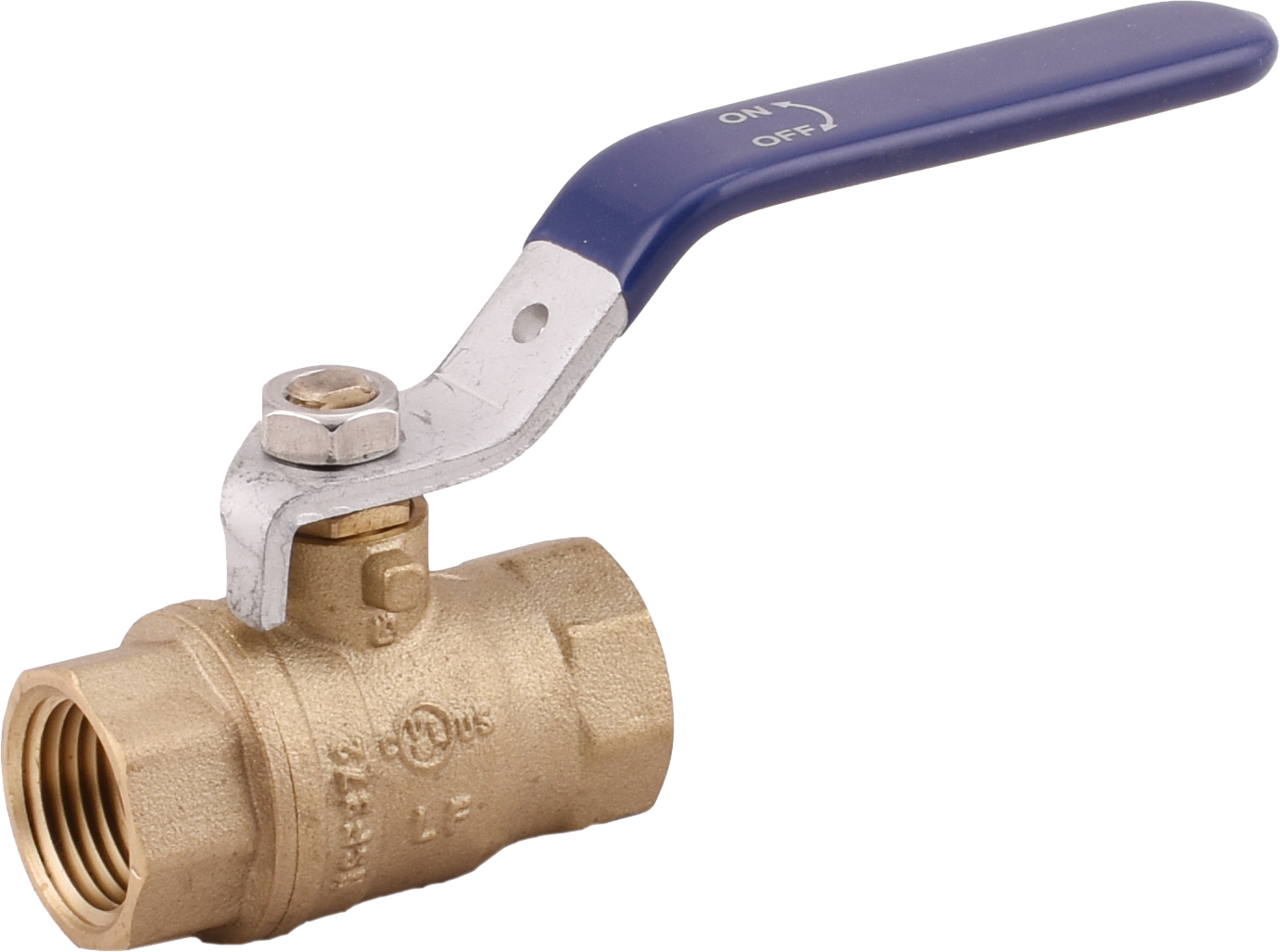
The 8081 is a 2-piece, full-port brass ball valve with a female NPT or BSP threaded connection. It is rated 600 WOG (4.1 MPa) with a working temperature of -20°C to 150°C. The chrome-plated brass ball and blow-out-proof stem design allow quarter-turn lever or wing-handle operation. Sizes range from 1/2"–4" (DN15–DN100). The 8081 is suitable for water supply and heating systems, including potable water in lead-free versions.
LD 30303 Brass Check Valve
The LD 30303 is a brass check valve designed to prevent backflow. It is available in swing or spring-loaded versions, in sizes from 1/2"–2" (DN15–DN50), with a pressure rating of 200 WOG (1.4 MPa) and a working temperature range of -20°C to 150°C. The spring version uses an SS304 stainless steel spring, and the disc has a PTFE sealing face. Connections can be threaded female NPT or BSP, PRESS, PEX, MPT, SWT, or Cold Expansion.
Key selection factors: pressure, temperature, and flow
The first technical check when comparing gate, ball, and check valves is system operating pressure versus valve pressure rating. The T-22017A gate valve and LD 30303 check valve are both rated 200 WOG (1.4 MPa). The 8081 ball valve is rated 600 WOG (4.1 MPa). For high-pressure water supply lines, or where an extra safety margin is required, the 8081 ball valve offers a higher pressure ceiling.
Temperature range also differs slightly. The T-22017A gate valve is rated for -20°C to 120°C, while the 8081 ball valve and the LD 30303 check valve both are rated for -20°C to 150°C. For hot-water systems approaching 150°C, a gate valve may not be appropriate; specifiers should check the temperature limits of the valve body and sealing materials before selection.
Flow performance is another factor. The T-22017A is a full-bore gate valve, meaning the gate retracts fully into the bonnet so that the internal diameter aligns closely with the pipeline bore. This design minimizes flow resistance when fully open. The 8081 ball valve is also a full-port design, so it provides a straight-through flow path with low pressure drop in the open position. The LD 30303 check valve, by contrast, creates some flow resistance because its disc or spring mechanism must open against the flow. In gravity-fed or low-pressure systems, check valves should be selected carefully to avoid excessive pressure loss.
Detailed comparison: T-22017A vs. 8081 vs. LD 30303
| Comparison Point | T-22017A Gate Valve | 8081 Ball Valve | LD 30303 Check Valve |
|---|---|---|---|
| Primary function | Fully open / fully closed isolation | Quarter-turn shut-off | Automatic backflow prevention |
| Size range | 1/2"–4" (DN15–DN100) | 1/2"–4" (DN15–DN100) | 1/2"–2" (DN15–DN50) |
| Pressure rating | 200 WOG (1.4 MPa) | 600 WOG (4.1 MPa) | 200 WOG (1.4 MPa) |
| Working temperature | -20°C to 120°C | -20°C to 150°C | -20°C to 150°C |
| Connection type | Female NPT or BSP threaded | Female NPT or BSP threaded | Threaded, PRESS, PEX, MPT, SWT, Cold Expansion |
| Operation | 360° handwheel, rising stem | Quarter-turn lever / wing handle | Automatic (swing or spring-loaded) |
| Media suitability | Municipal water, residential/commercial plumbing, HVAC, irrigation | Plumbing and heating systems, water supply, gas, HVAC | Pumping systems, water supply, heating/boiler systems, irrigation, industrial fluid lines |
Ball valve vs. gate valve: which is right for shut-off?
Distributors often ask whether a ball valve or a gate valve is the better shut-off valve for residential plumbing. The answer depends on how the valve will be used and what the buyer prioritizes.
A ball valve is the better choice when fast shut-off is needed. A quarter turn of the lever fully opens or closes the valve. This makes it suitable for applications where the user may need to stop flow quickly, such as an appliance supply line or a water heater inlet. Ball valves generally offer higher pressure ratings and tighter shut-off because of their PTFE seats.
A gate valve is better suited to applications where the valve remains fully open most of the time and is only occasionally operated for maintenance isolation. The full-bore design allows low flow resistance. Because it uses a metal-to-metal seat and a multi-turn handwheel, it is not designed for frequent cycling or fast emergency shut-off. If a buyer needs a valve for a main water line where flow loss must be minimized and operation is rare, a gate valve can be a practical choice.
If the goal is reliable shut-off with minimal effort and the piping can accommodate a lever handle, the 8081 ball valve provides a higher pressure rating and faster operation. If the local code, project specification, or client preference requires a traditional multi-turn isolation valve, the T-22017A gate valve meets that requirement with a rising stem and full-bore flow path.
When to specify a brass check valve
A check valve performs a fundamentally different job from gate or ball valves: it prevents reverse flow automatically without manual operation. The LD 30303 is installed in systems where backflow could cause contamination, water hammer, pump damage, or boiler system malfunction.
Common applications include pump discharge lines, heating and boiler systems, agricultural irrigation lines, and industrial fluid lines. The LD 30303 is available in both swing and spring-loaded configurations. Horizontal or vertical installation is possible depending on the selected version. For a spring-loaded in-line check valve, the SS304 stainless steel spring helps the disc close quickly, which can reduce water hammer in some systems.
One important procurement point: a check valve should not be used as a manual isolation valve. It does not provide positive shut-off for maintenance the way a gate or ball valve does. Most plumbing designs require a check valve plus a separate isolation valve (often a ball valve) on the same line.
Connections and installation: threaded vs. press vs. PEX
Connection type affects installation speed, labor cost, and regional code acceptance. The T-22017A gate valve uses female NPT or BSP threaded connections, which are common in North American and European piping systems. The 8081 ball valve also uses female NPT or BSP threads.
The LD 30303 check valve offers more connection flexibility: female NPT or BSP threaded, PRESS, PEX, MPT, SWT, or Cold Expansion. This is especially relevant for distributors serving markets where press or PEX connections reduce installation time. A threaded valve may be the default, but a press or PEX version may be required for specific projects using Uponor-style cold expansion or F1960 PEX-A connections.
Contractors should always confirm the thread standard (NPT vs. BSP) because the two are not interchangeable. For Longda valves, both NPT and BSP are available, but a buyer must specify the correct option before production or shipment.
Application use cases: which brass valve to choose
Residential water main and branch-line isolation
For the main shut-off or branch branch isolation in a single-family home, many plumbers choose a full-port ball valve such as the 8081 because it is easy to operate and provides a reliable seal. Municipal water supply and residential plumbing projects also commonly use the T-22017A gate valve when code or installer preference calls for a gate-type main shut-off.
Water heater and boiler connections
A water heater supply line typically needs a service shut-off. A quarter-turn ball valve allows the homeowner or technician to isolate the heater quickly. Heating and boiler systems often require a check valve such as the LD 30303 to prevent backflow between the boiler loop and the domestic water supply.
Pump discharge and irrigation
Pumping systems use check valves to prevent water from flowing backward through the pump when it stops. The LD 30303, with brass body and stainless steel spring, provides corrosion resistance in water and agricultural irrigation applications. For higher-pressure industrial fluid lines, the same check valve can be used within its 200 WOG rating.
OEM and private-label procurement programs
Distributors who sell under their own brand need a manufacturer that can supply all three valve types with consistent quality. LONGDA BRASS VALVE offers OEM, ODM, and customization (private label) production services. Customization options include size, body material (lead-free or DZR brass), handle type (lever, T-handle, butterfly), handle color, logo printing, thread type (NPT or BSP), and packaging (blister, box, poly bag). This allows distributors to consolidate SKUs from a single supplier rather than qualifying multiple factories.
OEM capability, quality control, and compliance considerations
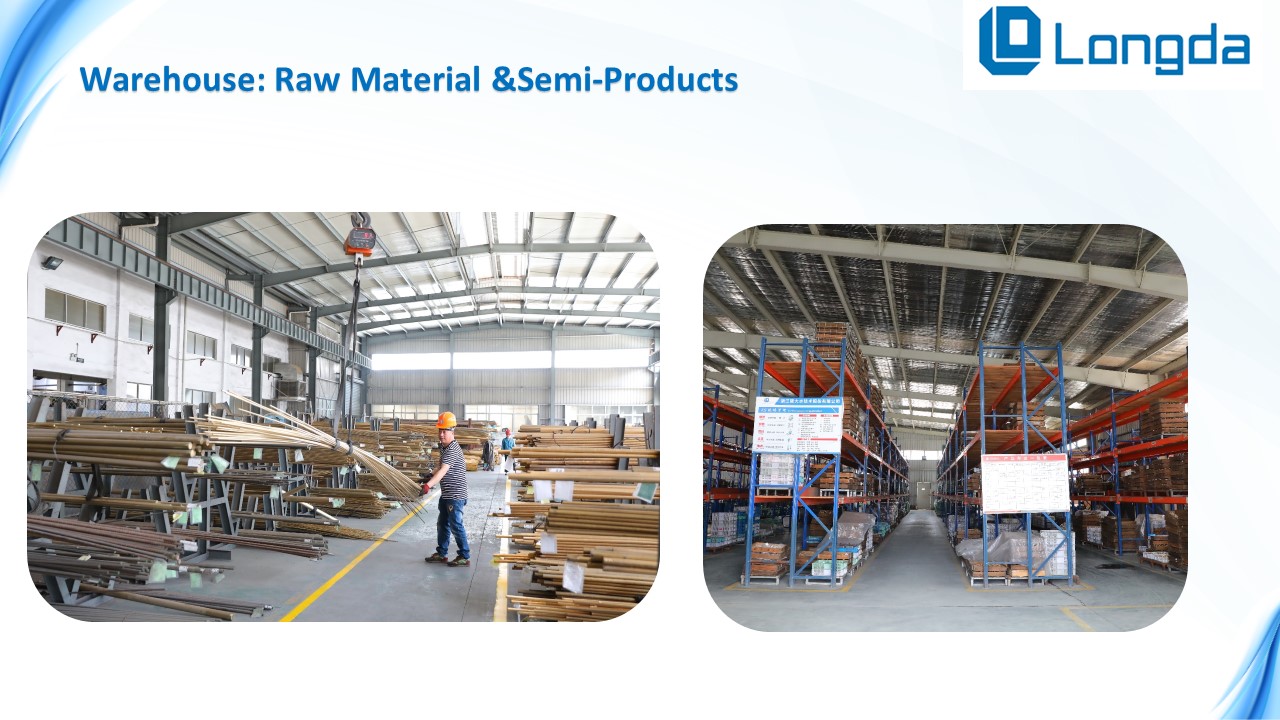
For distributors and contractors sourcing in volume, supplier capability is as important as product specifications. Zhejiang Longda Technology Co., Ltd., which operates as LONGDA BRASS VALVE, is a brass valve and fitting manufacturer established in 1993. Its facility in Yuhuan County, Zhejiang Province, covers more than 30,000 m². The company employs roughly 200 people and produces brass valves and fittings for residential and commercial use. Export markets include Europe, the USA, Canada, and South America.
Longda states that its products undergo 100% pressure testing before shipment. The company also supports a 12-month quality warranty with free replacement for quality defects, which is relevant for distributors who need to manage after-sales risk.
In North America, lead-free requirements apply to potable water contact surfaces. For valves used in drinking water systems, the wetted surface lead content must be ≤ 0.25% under NSF/ANSI 372 and the US Safe Drinking Water Act. The applicable brass valve models—including the T-22017A, 8081, and LD 30303—offer lead-free options that are certified. The T-22017A lead-free gate valve is cUPC-listed and certified to NSF/ANSI 61 and NSF/ANSI 372 by IAPMO. The 8081 lead-free ball valve is covered by UPC listing certificate number 5938 under IAPMO/ANSI Z1157 and ASME A112.4.14/CSA B125.14. The LD 30303 check valve is among the lead-free products covered by Longda's NSF/ANSI 372 listing certificate number 6304.
Buyers should verify the certification scope, certificate number, and applicable product models before placing an order. Certification documents should match the exact valve model and the target market. For the European market, buyers may ask about EN 13828 for copper alloy ball valves for drinking water, or EN 331 for gas valves, but for the three models examined here the core North American certifications are the ones documented in Longda's current certificate list.
Step-by-step valve selection checklist
- Define the valve function. Is it for manual isolation (gate or ball), fast shut-off (ball), or automatic backflow prevention (check)?
- Check system pressure. Compare maximum working pressure with the valve rating. For pressures above 200 WOG (1.4 MPa), consider the 8081 ball valve rated 600 WOG (4.1 MPa).
- Check temperature range. Ensure the valve can handle the media temperature. The T-22017A gate valve is rated -20°C to 120°C; the 8081 and LD 30303 are rated -20°C to 150°C.
- Confirm connection type. Select female NPT/BSP threaded, or for check valves choose PRESS, PEX, MPT, SWT, or Cold Expansion as required by the piping system.
- Determine material compliance. For potable water in the US/Canada, specify lead-free brass verified by NSF/ANSI 61 and NSF/ANSI 372 listings.
- Consider operation and maintenance. Use a ball valve for frequent operation; use a gate valve for rare operation where low flow resistance is a priority; use a check valve with a separate isolation valve where backflow prevention is needed.
- Validate supplier quality controls and warranty. Check for 100% pressure testing, material reports, and warranty terms before committing to a volume order.
Comparison summary for procurement
For a distributor building a stock assortment, a practical approach is to carry all three types because they serve different parts of a plumbing system. The 8081 brass ball valve covers general shut-off needs and higher-pressure lines. The T-22017A brass gate valve covers traditional main-line isolation where full-bore flow and metal seating are preferred. The LD 30303 brass check valve covers backflow-prevention requirements at pumps, boilers, and irrigation systems.
When selecting between these models, the most common decision criteria are: operating pressure, media temperature, connection type, operation speed, and applicable certification. The table earlier in this guide summarizes those points. For residential plumbing, the 8081's 600 WOG rating gives an extra margin above the 200 WOG rating of the T-22017A and LD 30303. For commercial hydronic or irrigation lines, the 200 WOG-rated gate and check valves are sufficient in many systems, but specifiers must always verify actual system conditions.
FAQ
Which brass valve is best for plumbing project shut-off: ball or gate?
If fast, quarter-turn operation and a higher pressure rating are the priorities, a ball valve such as the 8081 is generally the better choice. Its 600 WOG rating (4.1 MPa) and PTFE seats provide tight shut-off and quick response. If the project requires a traditional multi-turn valve with minimal flow resistance when fully open, the T-22017A gate valve is appropriate, but it is rated 200 WOG (1.4 MPa) and is not designed for frequent operation.
Can a brass gate valve be used for high-temperature water up to 150°C?
The T-22017A brass gate valve has a working temperature range of -20°C to 120°C. It should not be used for continuous media temperatures above 120°C. For systems up to 150°C, the 8081 ball valve and LD 30303 check valve are both rated for -20°C to 150°C, provided the pressure stays within their respective ratings.
Does the brass check valve prevent backflow without electricity or manual operation?
Yes. The LD 30303 brass check valve is an automatic valve. In a swing or spring-loaded configuration, the disc closes when downstream pressure reverses, preventing backflow. No electricity or manual operation is required. It should be selected based on the pipe orientation (horizontal or vertical) and the system flow rate.
Are lead-free versions available for the T-22017A, 8081, and LD 30303?
Yes. LONGDA BRASS VALVE offers lead-free brass versions of the T-22017A gate valve, 8081 ball valve, and LD 30303 check valve. The lead-free gate valve is certified by IAPMO to NSF/ANSI 61 and NSF/ANSI 372. The lead-free ball valve is cUPC-listed under certificate 5938. The check valve is included under the lead-free listing certificate number 6304 (NSF/ANSI/CAN 372).
Does LONGDA BRASS VALVE support OEM/private label production for distributors?
Yes. LONGDA BRASS VALVE provides OEM, ODM, and customization (private label) production services. Distributors can customize size, body material (lead-free or DZR brass), handle type (lever, T-handle, butterfly), handle color, logo printing, thread type (NPT or BSP), and packaging. The factory produces roughly 500,000 pieces per month for supply-stop products under capability unit 730 and 300,000 pieces per month under capability unit 721, with different MOQ levels depending on product and size.
Download the LONGDA Brass Valve Catalogue
View / Download PDF
To request a quote or samples for the T-22017A gate valve, 8081 ball valve, or LD 30303 check valve, contact sales@ld-valve.com or WhatsApp +86 13506869135.
This guide is provided for general procurement reference. Always verify project-specific pressure, temperature, connection, and code requirements with a qualified engineer before purchase.