
Brass Valve Compliance Guide: Certifications, Materials, and Test Criteria That Protect Your Supply Chain
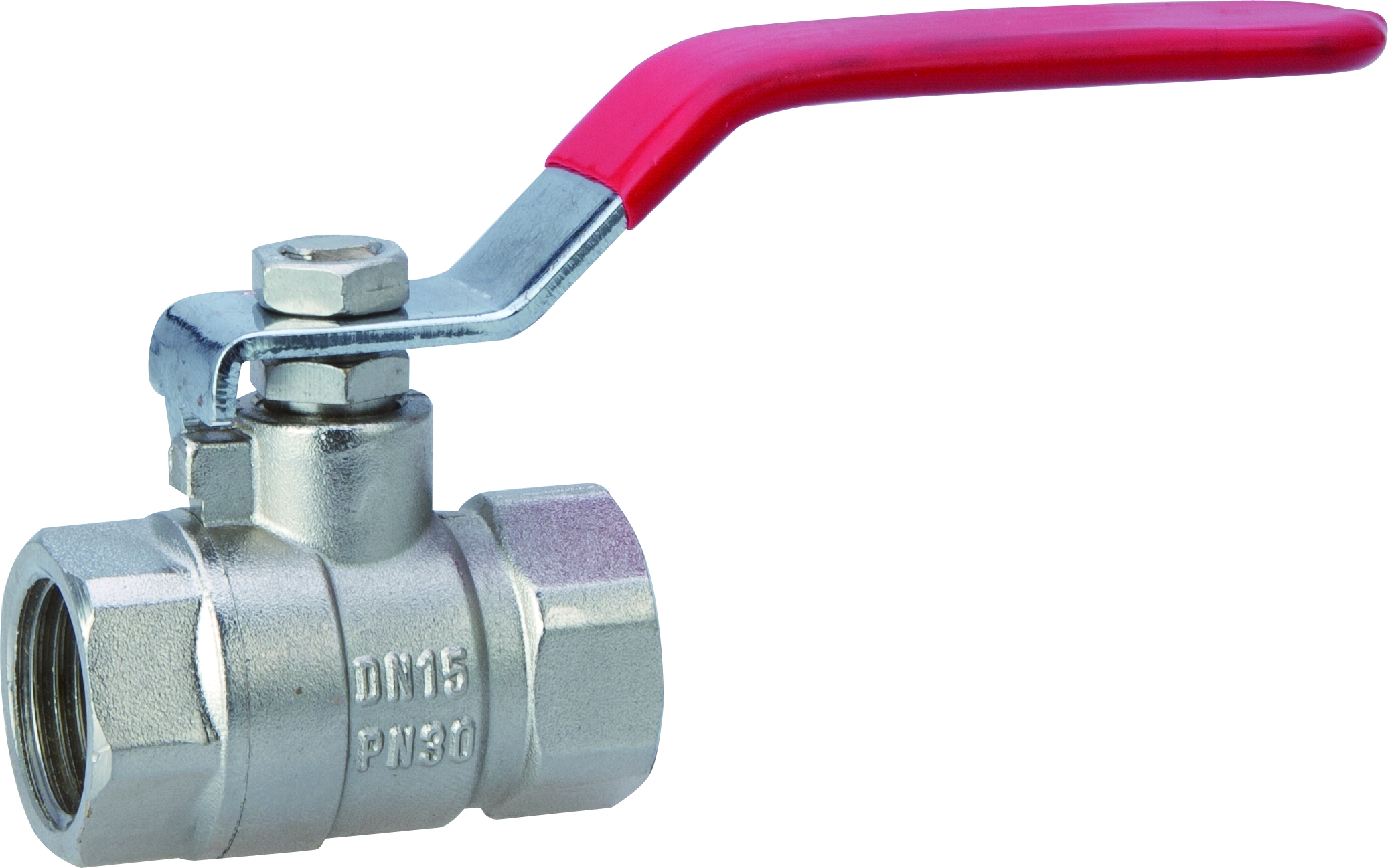
Brass Valve Compliance Guide: Certifications, Materials, and Test Criteria That Protect Your Supply Chain
When you source brass valves as a wholesaler, importer, plumbing contractor, or manufacturing buyer, certification documents and material declarations are not just paperwork. They are the first line of defense against rejected containers, field failures, and regulatory exposure. This compliance guide explains the certification and parameter checks that matter for brass valves, including brass angle valves, and shows how Zhejiang Longda Technology Co., Ltd. documents its range.
Zhejiang Longda Technology Co., Ltd. (also sold under the Longda Brass Valve brand and formerly known as Zhejiang Longda Water Technologies Co., Ltd.) was established in 1993. The company is located in Xuangang Industrial Zone, Lupu Town, Yuhuan County, Zhejiang Province, China, and focuses on brass valves and brass fittings for residential and commercial use. Its products serve plumbing, heating, HVAC, refrigeration, and power-station applications and are mainly exported to West European countries, the United States, South America, and other markets.
Why certification checks are non-negotiable for brass valve buyers
A brass valve can look identical on the outside while using different alloys, sealing materials, threads, and testing procedures. For North American potable-water installations, the key regulatory direction is lead-free compliance. According to the EPA and U.S. Safe Drinking Water Act framework, lead-free brass has become the accepted baseline for wetted surfaces in drinking-water systems. In practice, buyers need documents that confirm the product meets the NSF/ANSI 61 health-effects standard and the NSF/ANSI 372 lead-content standard for the U.S. and Canadian markets. In addition, cUPC listing confirms the product is accepted under the Uniform Plumbing Code and related Canadian plumbing codes.
The wider market context reinforces the importance of choosing a qualified supplier. The global brass valves market was valued at approximately USD 14.8 billion in 2025 and is projected to reach USD 24.1 billion by 2034, according to Dataintelo. Ball valves accounted for the largest product-type share at about 38.4 percent in 2025, and North America represented roughly 26.1 percent of global revenue. China also exported USD 22.6 billion in valves in 2024, according to OEC, making it the largest global exporter. When so many valves cross borders, documentation quality is what separates compliant product from costly non-compliance.
CE status: what it is and what it does not tell you
The query “CE-certified brass angle valve manufacturers” is common among buyers who want to sell into Europe or who equate CE marking with broad quality approval. CE marking is not a general product-quality certificate. It indicates conformity with applicable EU directives for products within the scope of those directives. For a brass angle valve, whether CE marking is required depends on the exact product category and the directive that applies. For many plumbing valves, the real acceptance criteria are European product standards rather than a generic CE mark.
For example, the European standard EN 331:2015 sets requirements for manually operated ball valves for gas installations, while EN 13828:2003 specifies requirements for manually operated copper-alloy ball valves for drinking-water supply. In addition, the raw material itself can be declared to EN 12164 and EN 12165, which cover copper and copper alloy rods and tubes. A buyer going into the EU should therefore ask for the specific EN standard applicable to the valve type and service, not just for a CE statement.
Longda Brass Valve’s current published documentation does not include a CE certificate for the brass angle valve model ART.98011. What the documentation does show is a factory that tests 100 percent of products and offers lead-free material options, OEM service, and North American certifications across its potable-water brass valve family. If your destination is the EU, request the relevant EN specification and a declaration of conformity from the supplier before purchase. If your destination is the U.S. or Canada, redirect the conversation to cUPC and NSF listings.
The compliance data behind Longda brass valves
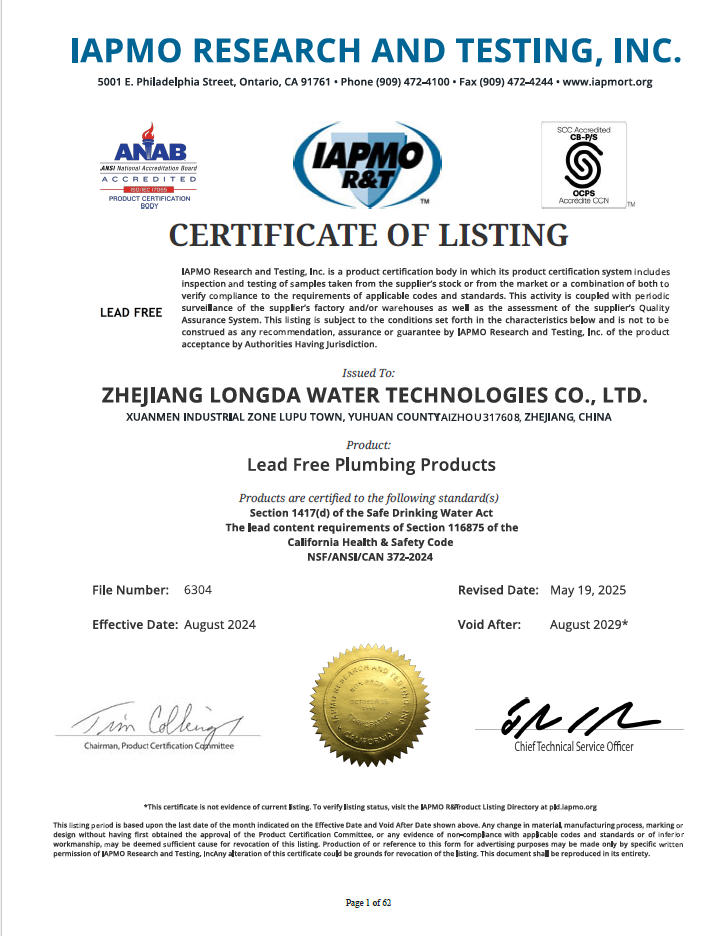
Longda’s product-specific certifications and standards can be used as a benchmark when you compare supplier documentation. The following facts are taken from the company’s current product records:
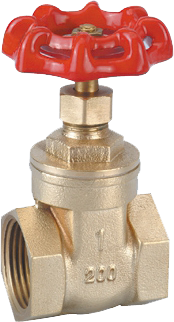
- Brass gate valve, model T-22017A: Full-bore, threaded rising-stem gate valve. The lead-free brass version is certified to NSF/ANSI 61 and NSF/ANSI 372 by IAPMO. The model is designed for municipal water supply, residential and commercial plumbing, HVAC, and agricultural irrigation.
- Brass Y strainer, model LD.73154: The lead-free brass version is certified to NSF/ANSI/CAN 61 and NSF/ANSI 372 by IAPMO. It uses an SS304 stainless steel screen and supports threaded, press, and solder connection options.
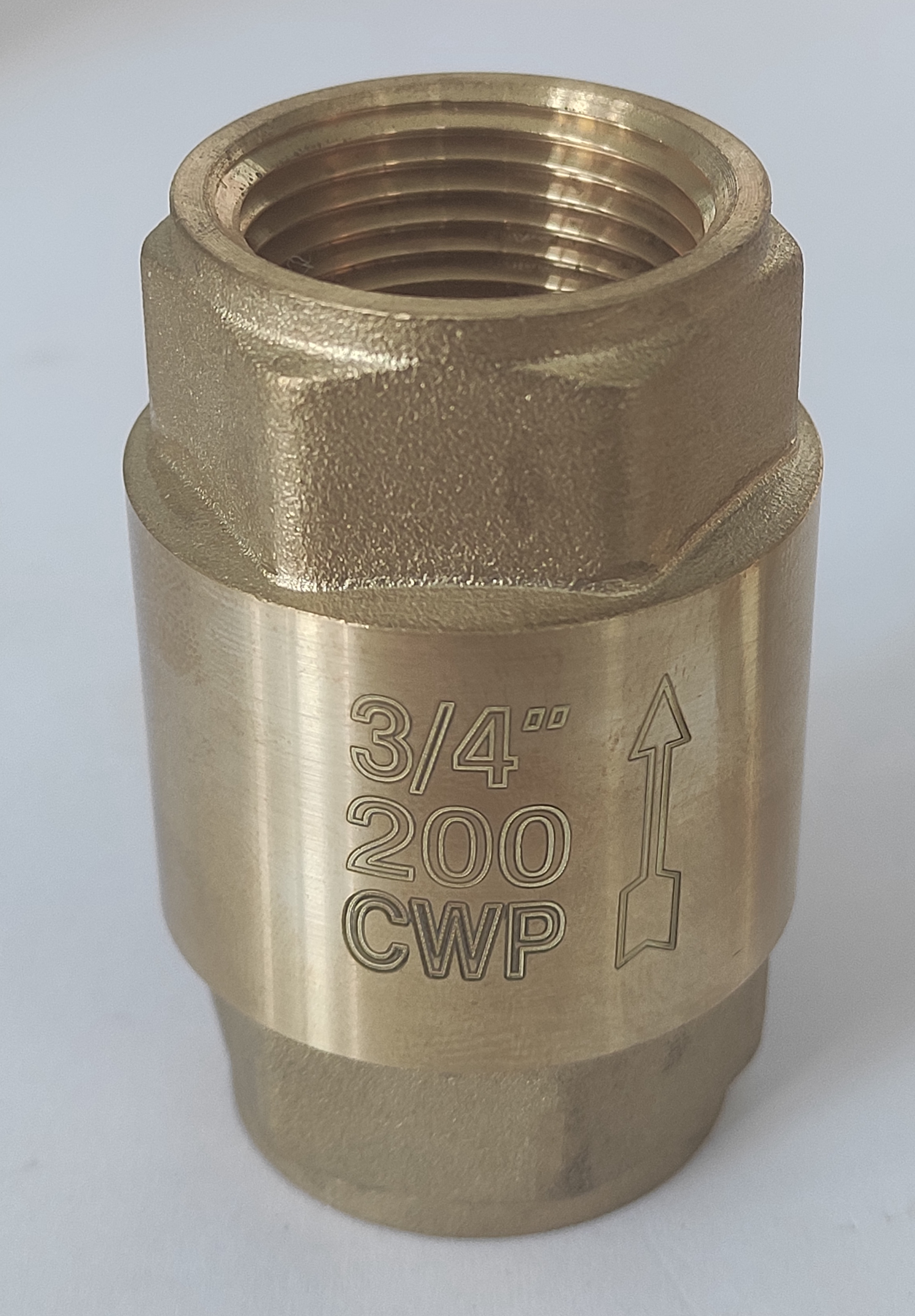
- Brass check valve, model LD 30303: The lead-free version is certified to NSF61 and NSF372. It is available as a swing or spring-loaded check valve with threaded, press, PEX, sweat, or cold-expansion connection options.
- Brass ball valve, model 8081: Full-port 2-piece brass ball valve. The lead-free version is certified to cUPC, NSF/ANSI 61 and 372. The product is also listed under IAPMO/ANSI Z1157 and related plumbing-code standards.
- Brass supply stop valve, model 98023-LF: A quarter-turn or multi-turn supply stop used for faucet, toilet, washing machine, and water-heater terminal applications. It conforms to NSF/ANSI 61/372 and CUPC and is IAPMO certified, with certificate 5775 under ASME A112.18.1/CSA B125.1 for plumbing fixture fittings.
- Brass fittings, model 15111: The fitting line includes PEX (ASTM F1807), PEX-A cold-expansion (ASTM F1960), press (IAPMO/ANSI Z1117), push-fit (ASSE 1061), sweat, and threaded types. Relevant certifications include cUPC listings issued by IAPMO and coverage under NSF/ANSI 61 and NSF/ANSI 372.
Beyond product-specific listings, the company holds ISO 9001:2015 quality management certification and ISO 14001:2015 environmental management certification, issued by China Quality Certification Centre. These system certificates apply to the design, development, and manufacture of medium- and low-pressure valves, plumbing faucets, and fittings.
Material and alloy verification: the hidden constraint
Certification alone does not guarantee that the raw material matches your application. Buyers should request an alloy declaration and, where relevant, a material test report. Longda’s valve range is produced in several brass alloy families to serve different export regulations:
- Normal or standard brass such as CW617N, HPb59, or C37700 is used for general-purpose plumbing and heating valves.
- Lead-free and dezincification-resistant options include Eco-Brass C69300, CW724R, lead-free C46500, CW511L, low-lead CW509L, CW510L, and DZR CW602N. These help meet global “green” and potable-water standards.
- For the European-styled brass water ball valve model ART.60621, the body is manufactured in European brass CW617N in compliance with EN12164 and EN12165 standards, with alternate brass grades available on request.
For North American potable-water systems, the decisive metric is wetted-surface lead content no greater than 0.25 percent, governed by NSF/ANSI 372 and referenced in U.S. lead-free laws. If a supplier cannot provide the alloy composition and the corresponding lead-free certification, the safest decision is to move to a qualified manufacturer.
Pressure, temperature, connection, and test parameters
Each brass valve category has its own operating envelope. Use these documented examples to compare against specifications from competing suppliers:
- Brass gate valve T-22017A: Size range 1/2 inch to 4 inches; pressure rating 200 WOG (1.4 MPa); working temperature -20°C to 120°C; female NPT or BSP threaded connections. Its shell test pressure is 1.5 times rated pressure and seat test pressure is 1.1 times rated pressure.
- Brass ball valve 8081: Size range 1/2 inch to 4 inches; pressure rating 600 WOG (4.1 MPa); working temperature -20°C to 150°C; 2-piece full-port construction; chrome-plated brass ball with PTFE seats; lever or wing handle.
- Brass ball valve ART.60621: Nominal pressure 30 bar; temperature range -20°C up to 140°C; suitable for drinking water, domestic hot water, heating systems, and compressed air.
- Brass angle valve ART.98011: Sizes 1/2 x 1/2 inch and 1/2 x 3/8 inch; pressure rating 125 psi WSP / 600 WOG; quarter-turn chrome-plated brass ball with brass or ABS handle; seats and seals in PTFE/NBR; lead-free material option available.
- Brass supply stop valve 98023-LF: Sizes 1/2 x 3/8 inch and 1/2 x 1/2 inch; pressure rating 125 psi; working temperature -20°C to 120°C; connection options include compression, FIP, sweat, threaded, PEX (ASTM F1960), PEX (ASTM F1807), press, push-fit, and CPVC.
- Brass Y strainer LD.73154: Size range 1/2 inch to 2 inches; pressure rating 200 WOG; working temperature -20°C to 150°C; replaceable SS304 screen in 20/40/60/80 mesh; blow-down drain plug for fast cleaning.
- Brass check valve LD 30303: Size range 1/2 inch to 2 inches; pressure rating 200 WOG; working temperature -20°C to 150°C; swing or spring-loaded types; horizontal or vertical installation.
Every Longda product line is 100 percent factory tested. In detail, the factory performs 100 percent air pressure testing under water before shipment, plus thread gauge inspection and material test reporting where required. This form of quality control is especially valuable for high-volume importers because it reduces the risk of field leakage complaints after installation.
Connection compatibility and end-use fit
A brass valve is only compliant if its connection matches the piping system and local installation method. Ask the supplier for connection options before locking in a specification. Longda documents several connection families:
- NPT / BSP threaded connections for North American and global piping conventions.
- Compression connections for fixture supply stops and service lines.
- PEX crimp connections per ASTM F1807 for SDR9 PEX tubing.
- PEX-A cold-expansion connections per ASTM F1960 for PEX-A systems.
- Sweat / solder connections for copper piping.
- Press connections per IAPMO/ANSI Z1117.
- Push-fit connections per ASSE 1061.
For example, in U.S. new residential construction with PEX plumbing, a common constraint is the use of ASTM F1960 cold-expansion connections on PEX-A pipe. A Longda PEX-A ball valve or PEX-A supply stop using a cold-expansion connection creates a permanent joint without reducing the pipe inner diameter, and the lead-free brass body keeps potable-water compliance in place.
A practical 6-step supplier verification checklist
Use this checklist before issuing a purchase order or approving a new factory:
- Define the destination standard. Identify whether the valves will be sold into the U.S./Canada, the EU, or another market. Select the relevant product standard, such as cUPC/NSF for North America or EN 13828 / EN 331 for specific EU valve types.
- Request certificates by exact model. A generic factory certificate is not enough. Ask for the certificate number, issuing body, product scope, standard edition, and validity period for each model.
- Verify the alloy. For potable water, confirm the body alloy is lead-free or DZR as required. Ask for a material report and compare it to the certificate scope.
- Confirm pressure and temperature ratings. Match the valve rating to your system: for example 200 WOG for many plumbing fixtures, 600 WOG for full-port brass ball valves, or 30 bar for the European-style brass ball valve ART.60621.
- Check the connection system. Ensure the valve can be supplied with NPT, BSP, compression, PEX, press, or push-fit connections, whichever your project requires.
- Audit factory tests and warranty. Ask for a documented 100 percent factory-test process, understand the test medium and test pressure, and confirm the after-sales policy.
Comparison table: Longda brass valve line at a glance
| Product / Model | Documented Certification / Standard Highlights | Operating Parameter |
|---|---|---|
| Brass Supply Stop Valve 98023-LF | cUPC (5775), NSF/ANSI 61 & 372, IAPMO | 125 psi; -20 to 120°C; many connection options |
| Brass Angle Valve ART.98011 | 100% factory tested; OEM service; lead-free option | 125 psi WSP / 600 WOG; quarter-turn |
| Brass Ball Valve 8081 | cUPC, NSF/ANSI 61 & 372; IAPMO/ANSI Z1157 | 600 WOG; 1/2–4 in; -20 to 150°C |
| Brass Ball Valve ART.60621 | European brass CW617N per EN12164/12165 | 30 bar; -20 to 140°C |
| Brass Gate Valve T-22017A | NSF/ANSI 61 & 372 on lead-free version | 200 WOG; 1/2–4 in; test pressure 1.5x shell / 1.1x seat |
| Brass Y Strainer LD.73154 | NSF/ANSI/CAN 61 & 372 on lead-free version | 200 WOG; 1/2–2 in; SS304 screen |
| Brass Check Valve LD 30303 | NSF61 & NSF372 on lead-free version | 200 WOG; 1/2–2 in; swing or inline spring |
| Brass Fittings 15111 | cUPC listings: ASTM F1960, F1807, Z1117, ASSE 1061; NSF/ANSI 61 | Up to 600 WOG; 1/4–2 in |
Use cases: applying compliance data to real sourcing decisions
Case 1: Distributor supplying U.S. residential repiping projects
A plumbing distributor stocking fixture supply stops for new construction should prioritize lead-free brass, quarter-turn operation, and compatibility with PEX-A, crimp PEX, and compression systems. The Longda brass supply stop valve model 98023-LF is designed for faucet, toilet, washing machine, and water-heater terminal applications. Its lead-free version is cUPC/NSF/ANSI 61 and 372 certified. This combination supports localized shut-off without requiring the main water supply to be turned off, which is the standard expectation behind sinks and toilets.
Case 2: Whole-house PEX-A repiping contractor
For a whole-house repipe using PEX-A pipe, the installer needs a full-port shut-off ball valve with an ASTM F1960 cold-expansion connection. Longda offers PEX-A ball valve configurations in its 8081 product family, including the blue-lever cold-expansion version designed for potable-water lines. The valve must maintain full port flow and be listed to NSF/ANSI 61 and NSF/ANSI 372 in lead-free brass. Verifying the connection standard and the listing before ordering prevents delays in the field and inspection failures.
Case 3: HVAC contractor replacing a European-style water ball valve
In heating and domestic hot-water systems where the piping uses European threads and pressure design, the brass ball valve ART.60621 provides a documented 30-bar nominal pressure rating and -20°C to 140°C temperature range. It is manufactured in European brass CW617N in compliance with EN12164 and EN12165, and it is suitable for drinking-water networks, hot-water distribution, heating systems, compressed-air networks, and pneumatic applications. Buyers should still confirm whether the project requires the valve itself to meet an EN product standard such as EN 13828.
Frequently asked questions
Are Longda brass angle valves CE-certified?
Longda Brass Valve’s published product data does not include a CE certificate for the brass angle valve model ART.98011. CE marking is not a universal quality mark; for EU projects the relevant acceptance criteria are specific EN standards, such as EN 13828 for manually operated copper-alloy ball valves for drinking-water supply or EN 331 for gas valves. For U.S. and Canadian installations, the decisive documents are cUPC, NSF/ANSI 61, and NSF/ANSI 372 listings. Longda brass angle valves are 100 percent factory tested, can be supplied with chrome-plated brass balls, and are available with a lead-free material option.
Which North American certifications are documented for Longda brass valves?
Documented certifications include NSF/ANSI 61 and NSF/ANSI 372 for lead-free product versions across brass ball valves, brass gate valves, brass Y strainers, brass check valves, brass fittings, and brass supply stop valves. cUPC listing is documented for brass ball valve model 8081, brass supply stop valve model 98023-LF (certificate 5775), and brass fittings under ASTM F1960, ASTM F1807, IAPMO/ANSI Z1117, and ASSE 1061 programs. The applicable codes include the Uniform Plumbing Code and the National Plumbing Code of Canada. Certification numbers and issuing details are available from sales@ld-valve.com.
What material and alloy checks should buyers perform?
Buyers should request a material test report and compare the alloy name to the certificate scope. Standard brass alloys used by Longda include CW617N, HPb59, and C37700. Lead-free and DZR options include C69300, CW724R, C46500, CW511L, CW509L, CW510L, and DZR CW602N. For one European-style water ball valve, ART.60621, the material is European brass CW617N in compliance with EN12164 and EN12165. For North American potable-water products, wetted-surface lead content should be no greater than 0.25 percent to satisfy NSF/ANSI 372 and U.S. lead-free requirements.
What are the typical sample and production lead times for brass valve orders?
Longda provides OEM/ODM services with customization for size, connection type, handle type, finish, logo, packaging, and certification support. For one high-volume fixture supply-stop line, samples take about 5–7 days and production lead time is 30–60 days, with a minimum order quantity of 1,000 pieces per size. Other brass valve lines have monthly capacities and lead times that depend on product type and size; lead time typically ranges from about 20 to 50 days. The factory performs 100 percent pressure testing before shipment. To obtain a documented lead-time plan and quotation, contact sales@ld-valve.com.
Download the full Longda Brass Valve product catalogue and compliance overview here: Longda Global Catalogue (PDF). For model-specific certificate numbers, material reports, and OEM inquiries, email sales@ld-valve.com or use the WhatsApp link on the Longda contact page at www.ld-valve.com.