
Brass Valve Compliance by Product Family: NSF 61, NSF 372, AB1953 and Regional Requirements
Compliance for brass valves and fittings is granted by product family, not by factory. A lead-free claim becomes usable evidence only when it names the alloy grade, the exact model, the connection standard and the test record behind it — and when that same evidence set is re-checked for each destination market: the United States, Canada, Mexico or the EU.
This guide maps the main brass valve and fitting families to the certifications and regional requirements buyers must interpret: lead-free brass with wetted-surface lead ≤ 0.25%, the federal Safe Drinking Water Act, California AB1953, and NSF/ANSI 61 and NSF/ANSI 372. It then shows how 100% factory testing — including shell testing at 1.5× and seat testing at 1.1× the rated pressure — supports a compliance submission rather than merely decorating it.
Zhejiang Longda Technology Co., Ltd. (LONGDA BRASS VALVE) is a Chinese brass valve and fitting manufacturer established in 1993 in the Xuangang Industrial Zone, Lupu Town, Yuhuan County, Zhejiang Province, exporting approximately 95% of its output to Europe, the USA, Canada and South America. Its experience with North American potable-water documentation is the practical backdrop for the family-by-family mapping below.
The Problem: A Certificate Is Issued to a Model, Not to a Supplier
The most common compliance failure in brass valve sourcing is not a missing certificate. It is a certificate that does not cover what is actually being shipped. Buyers routinely receive a folder of PDFs and treat it as blanket approval for an entire supplier relationship — while the listing inside the folder names one model, one size range and one connection type.
Three failure modes cause most of the damage:
- Scope mismatch. A cUPC listing covering a lead-free supply stop does not automatically extend to a brass gate valve, a Y strainer, a check valve or a press fitting. Each family has its own wetted-surface geometry, its own pressure boundary and often its own listing.
- Material claim without an alloy. “Lead-free brass” is a marketing phrase until it is attached to a specific alloy grade and a test report stating the wetted-surface lead content. Under NSF/ANSI 372 the accepted definition of lead-free is a weighted average lead content of ≤ 0.25% on wetted surfaces — a number, not an adjective.
- Connection standard drift. A valve certified against one connection basis (NPT threads, press, push-fit or ASTM F1960 PEX-A expansion) may be installed into a system specified to a different one. The certification is technically valid, and the installation is still not compliant.
For a distributor, the consequence is measurable: rejected shipments at the port, re-certification cycles that push a project schedule, or an emergency re-source in the middle of a fit-out. Compliance decisions made at the family level cost far less than compliance problems discovered at the container level.
Industry Background: Why the Documentation Layer Is Under Pressure
Brass valve supply is a large, geographically concentrated and regulation-sensitive market, which is exactly why certification scope matters commercially as well as legally.
- The global brass valves market was valued at USD 14.8 billion in 2025 and is projected to reach USD 24.1 billion by 2034, with a CAGR of 5.6% from 2026 to 2034 (Dataintelo).
- The brass ball valve segment alone is valued at approximately USD 3.2 billion in 2024 (DataHorizzon Research).
- North America held approximately 26.1% of the global brass valves market in 2025, while Asia Pacific accounted for a 41.2% revenue share (Dataintelo).
- China exported USD 22.6 billion in valves (HS 8481) in 2024, remaining the largest global exporter (OEC), and accounts for approximately 41% of global brass ball valve export shipments, followed by Vietnam at 30% (Volza).
- Zhejiang and Guangdong provinces are the primary industrial clusters for brass valve manufacturing in China (Dataintelo).
On the regulatory side, lead-free brass alloys are becoming the mandatory standard for potable water applications in the United States under the Safe Drinking Water Act (EPA). California’s AB1953 applies the same lead-free definition at state level, so a product built for California is generally built for the federal requirement — but the reverse is not automatically true when documentation is incomplete.
Other markets layer their own structural standards on top. In the EU, EN 13828:2003 specifies requirements for manually operated copper alloy ball valves for drinking water supply, and EN 331:2015 governs brass gas valves for safety in gas installations (CEN). Material and connection standards sit underneath everything: ASTM B584 defines chemical and mechanical requirements for copper alloy castings used in valves, and ISO 228-1 regulates the pipe threads where pressure-tight joints are not made on the threads — the basis of BSP connections.
The practical takeaway for a buyer in the Decision stage is that compliance is a stack of four layers: material, health effects, product performance, and connection. Missing any one layer leaves the others unusable in a submission.
The Compliance Map: Which Requirement Applies to Which Family
The cleanest way to build a submission is to treat compliance as five layers and then assign each brass product family to the layers that actually touch its wetted surface.
Layer 1 — Lead-free definition: NSF/ANSI 372, SDWA and AB1953
The lead-free requirement is a material rule. For USA and Canada, wetted-surface lead content must be ≤ 0.25% as defined by NSF/ANSI 372 and the US Safe Drinking Water Act, with California AB1953 applying the same threshold in that state. This is the layer that determines which alloy the factory is allowed to run, and it is also the layer most often documented with a generic statement rather than a report.
Layer 2 — Health effects: NSF/ANSI 61
Where lead-free answers “how much lead,” NSF/ANSI 61 answers “what else leaches.” All materials in contact with potable water must conform to NSF/ANSI 61 health effects requirements. A valve family with a compliant alloy can still fail this layer if elastomers, seals or coatings are not covered by the listing — which is why the seal stack matters as much as the body material.
Layer 3 — Product performance listing: cUPC and family standards
The listing layer ties the certified product to a performance standard. For supply stops, the cUPC-listed standards are ASME A112.18.1 / CSA B125.1; for PEX-A expansion connections the governing connection standard is ASTM F1960. This is where “the factory is certified” has to become “this model, in this size and this connection, is listed.”
Layer 4 — Connection standards across the family range
Connection basis is a separate compliance decision from material and health effects, and brass valve families are frequently mixed inside one project:
- NPT threads conforming to ASME B1.20.1 for the North American market;
- BSP threads, with ISO 228-1 regulating pipe threads where pressure-tight joints are not made on the threads, for other markets;
- Press fittings evaluated against the Z1117 connection standard;
- Push-fit fittings under ASSE 1061;
- PEX-A cold expansion connections per ASTM F1960, where the pipe end is expanded, the fitting inserted, and the ring contracts to form a permanent leak-free joint without reducing the pipe inner diameter;
- Compression, FIP × compression, sweat and solder terminations used across fixture supply and distribution piping.
Layer 5 — Regional overlay: US, Canada, Mexico and the EU
The same family needs different paperwork depending on where it lands:
- United States: lead-free alloy, NSF/ANSI 61 and NSF/ANSI 372 conformity, cUPC listing for plumbing products, NPT threads per ASME B1.20.1.
- Canada: the same lead-free and NSF/ANSI 61 stack, plus cUPC-listed performance requirements such as ASME A112.18.1 / CSA B125.1 for supply stops and ASTM F1960 for PEX-A expansion connections.
- Mexico: NOM certification is required on top of the lead-free material requirement for the relevant fixture-supply products.
- European Union: PED 2014/68/EU compliance for pressure equipment, EN 215 for radiator balancing valves, EN 13828:2003 for manually operated copper alloy ball valves in drinking water, and EN 331:2015 for brass gas valves.
The alloy list behind the claim
A lead-free statement is only credible if the factory can name the grades it runs. LONGDA works with Eco-Brass C69300, CW724R, Lead-Free Brass C4650, CW511L, Low Lead Brass CW509L and CW510L, DZR CW602N, and various brass alloys selected to meet global “green” standards. DWZR grades in particular address dezincification resistance in aggressive water — a long-term durability question that sits next to, but separate from, lead content.
Step-by-Step: Assembling a Compliance Submission That Survives Review
The following sequence is written for a buyer or specifier preparing a Decision-stage package before a purchase order. It works whether you are qualifying one family or a full multi-family program.
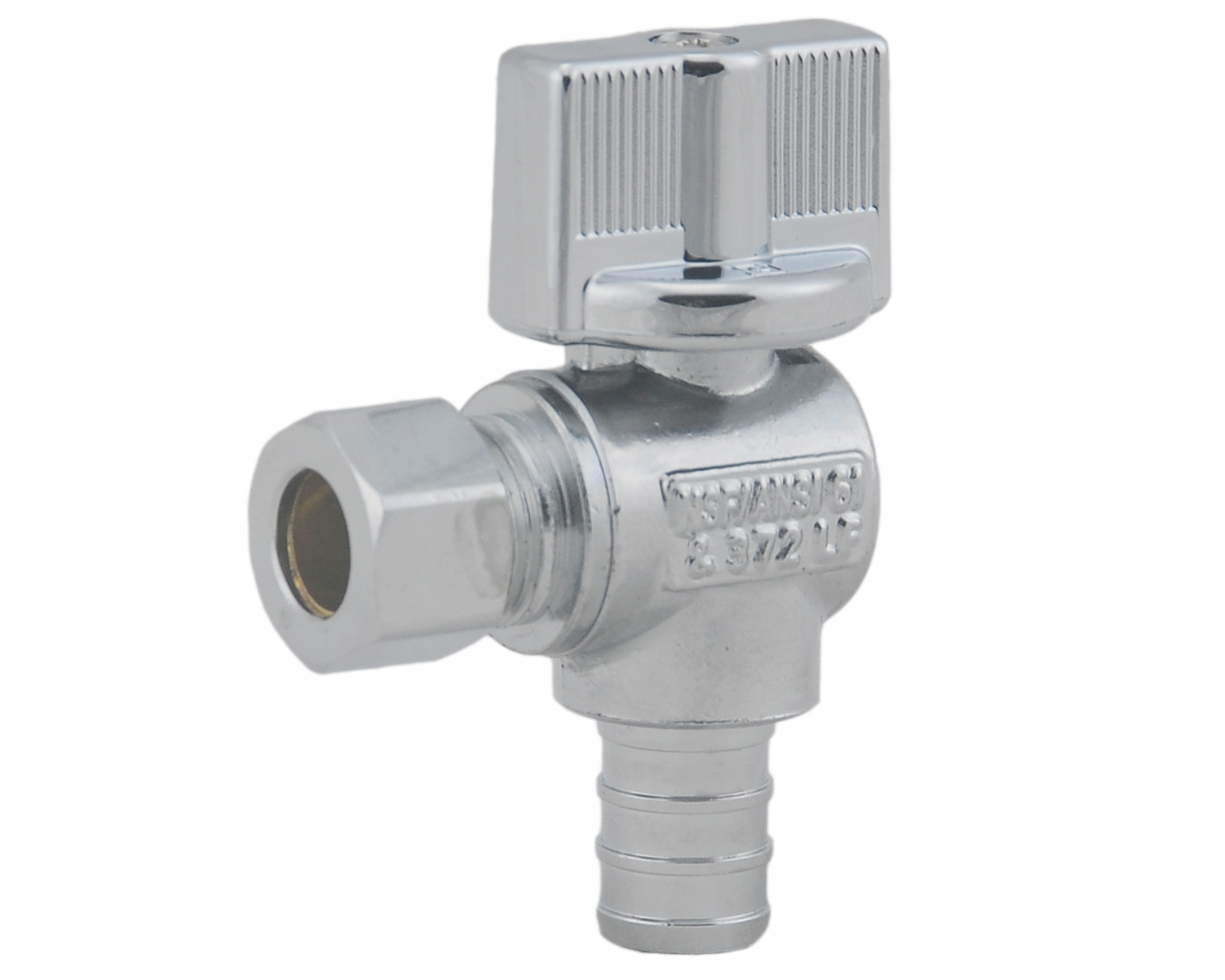
- Define the wetted-surface scope per family. List every model in the package — for example the 8081 ball valve, LD 30303 check valve, 15111 fitting, LD.73154 Y strainer, T-22017A gate valve and the 98023-LF supply stop / angle valve. Each line item is a separate compliance object, even when it comes from one supplier.
- Match alloy grade to the market mandate. Confirm the alloy used in wetted parts meets the ≤ 0.25% lead threshold for NSF/ANSI 372 and SDWA/AB1953 territory, and that NSF/ANSI 61 health-effects coverage exists for all wetted materials, including seals.
- Verify the listing names the exact model. A supplier certificate that lists a category rather than a model number should be treated as unverified until the model-specific listing is produced.
- Align connection standards with the installed system. Decide once whether the project uses NPT per ASME B1.20.1, BSP per ISO 228-1, press per Z1117, push-fit per ASSE 1061 or PEX-A per ASTM F1960, then require the documentation to state the same basis.
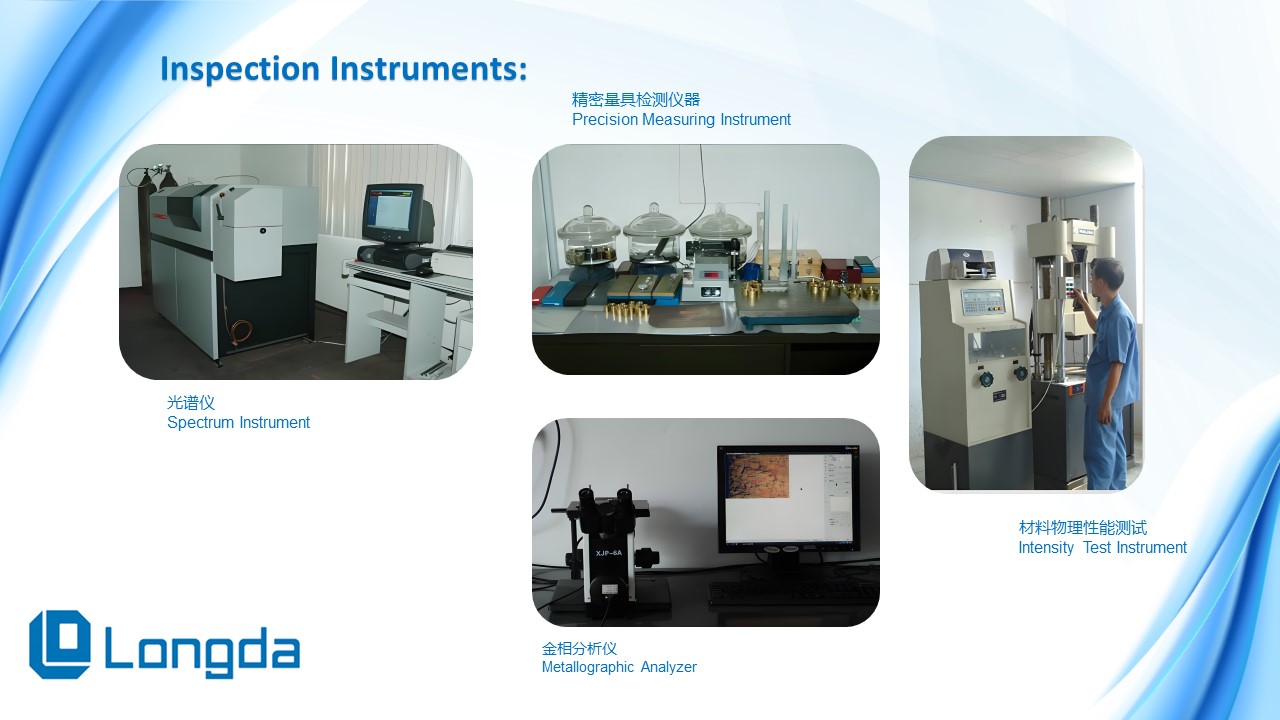
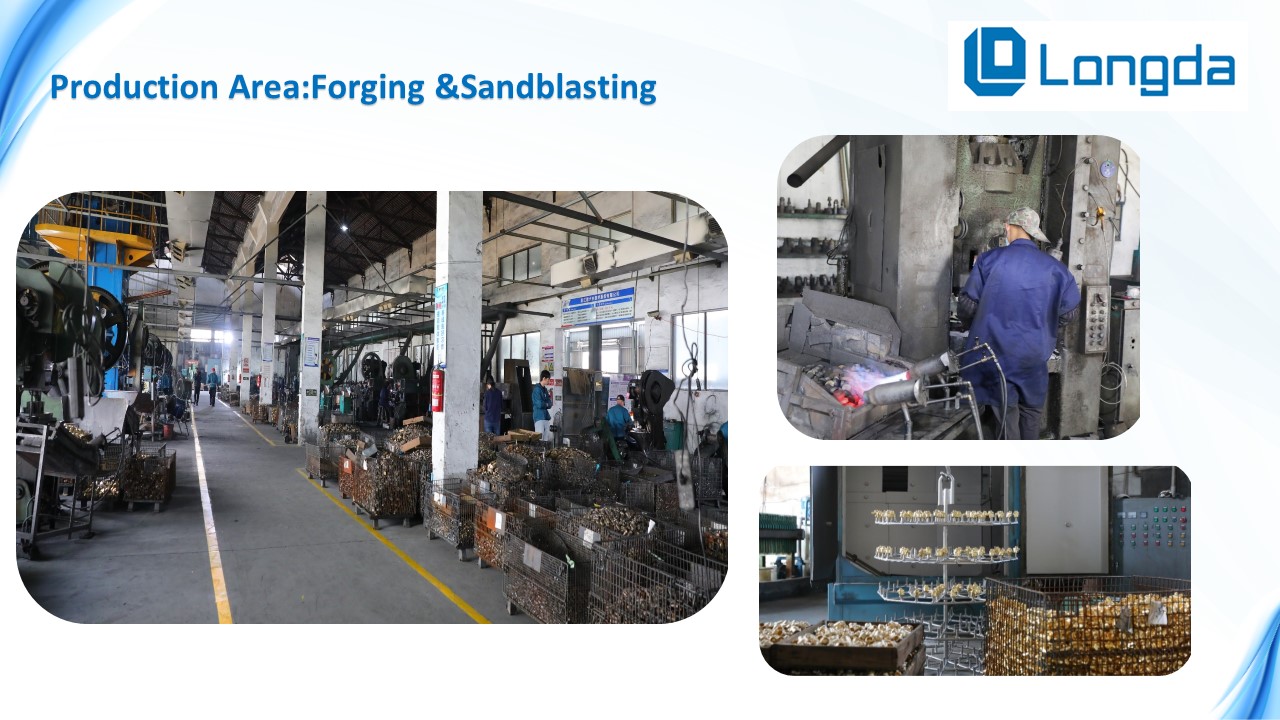
- Collect test evidence, not test claims. Ask for the factory’s 100% pressure test record, thread gauge inspection report on the lot, and the lead-free material test report. Testing every unit before shipment — with shell integrity checked at 1.5× rated pressure and seat tightness at 1.1× — is the difference between a sample-based claim and a lot-based record.
- Map the regional overlay. Add NOM for Mexico, PED 2014/68/EU and EN 215 for EU hydronic products, and EN 331:2015 where brass gas valves are in scope.
- Freeze documentation versions. Record which revision of which report corresponds to the production lot. When the alloy, seal compound or connection changes, the file must change with it.
Working conditions to check against the file: general brass valve families are typically specified for working pressure up to 200 psi (1.4 MPa) and media temperatures from −10°C to 110°C; fixture supply stops for 40–80 psi (0.28–0.55 MPa) and 4°C–60°C; angle supply stops for 40–150 psi and 4°C–90°C; PEX ball valves up to 100 psi (0.7 MPa) and up to 180°F (82°C); and hydronic balancing valves up to 232 psi (1.6 MPa) across DN 15–DN 50. A certification that ignores the operating envelope does not protect the installation.
Use Cases: The Same Map, Four Different Buyers
1. US residential plumbing program (potable water, fixture supply)
A distributor replenishing a retail chain needs lead-free supply stops and angle valves with cUPC, NSF/ANSI 61 and NSF/ANSI 372 documentation that names the model. The seal stack matters here: PTFE seals with double O-ring sealing, a quarter-turn ball core and a chrome-plated anti-corrosion finish are the construction features that keep the health-effects layer intact over time, alongside 100% air pressure testing before shipment and thread gauge inspection on every lot.
2. Canadian PEX-A repiping project
A Canadian contractor working in PEX-A needs the connection standard visible in the file. ASTM F1960 cold expansion applies, alongside the lead-free and NSF/ANSI 61 stack, ASME A112.18.1 / CSA B125.1 for supply stops, and NPT threads where the fitting meets threaded equipment.
3. Mexico residential fit-out
The material and health-effects requirements track the North American pattern, but NOM certification is the additional gate. Buyers who assume a US file travels unchanged into Mexico typically discover the gap at customs or at inspection.
4. EU heating and radiator balancing
Hydronic balancing valves have a different compliance profile from potable-water valves. PED 2014/68/EU compliance, EN 215, supplied Kv values and pressure drop curves, and a tamper-proof preset function are the evidence items that matter across DN 15–DN 50 sizes, together with a BSP thread basis per ISO 228-1.
Comparison Table 1: Certification and Connection Requirements by Product Family
| Product family (model reference) | Typical duty | Certification / standard layer | Connection basis to confirm |
|---|---|---|---|
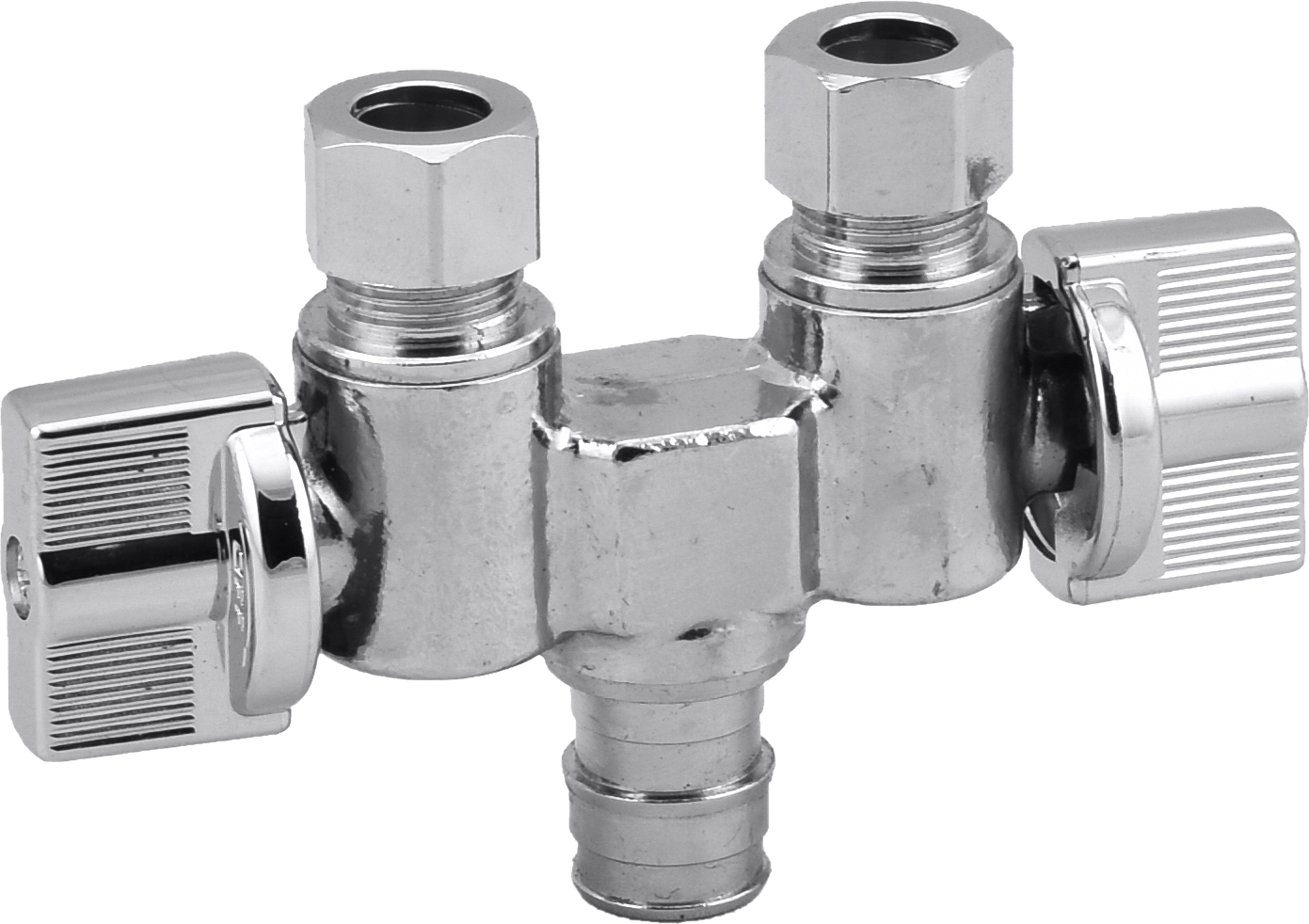
| Lead-free supply stop / angle valve (98023-LF) | Fixture shut-off on potable water; faucet, toilet, washing machine, water heater terminals | NSF/ANSI 61, NSF/ANSI 372, SDWA & California AB1953, cUPC; ASME A112.18.1 / CSA B125.1 | Compression × compression, FIP × compression, PEX × compression (ASTM F1960), sweat, threaded (NPT) |
| Ball valve (8081) | Full-port isolation with minimal pressure drop; potable and hydronic lines | Potable-water stack where in wetted contact; ASME B16.34 / MSS SP-110 referenced for pressure-tight design | NPT per ASME B1.20.1, BSP per ISO 228-1 |
| Check valve (LD 30303) | Backflow prevention and isolation on supply lines | Same potable-water stack where in wetted contact, plus cUPC listing per market | NPT / BSP; press per Z1117 where specified |
| Y strainer (LD.73154) | Debris protection upstream of valves and equipment | Potable-water stack when in wetted contact | NPT / BSP; press per Z1117 |
| Gate valve (T-22017A) | Isolation on supply and hydronic lines | Potable-water stack when wetted; PED 2014/68/EU and EN 215 for EU hydronic duty | NPT per ASME B1.20.1, BSP per ISO 228-1 |
| Brass fitting (15111) | Pipe jointing in potable and heating circuits | Connection-standard listing: ASTM F1960, Z1117, ASSE 1061 as applicable | PEX-A expansion, press, push-fit, NPT |
| Balancing / radiator valve (heating family) | Flow balancing in radiator and underfloor heating circuits | PED 2014/68/EU, EN 215; Kv value and pressure drop data supplied; tamper-proof preset | BSP / NPT across DN 15–DN 50 |
Comparison Table 2: What a Documented Supply Program Looks Like
Compliance is the entry gate; supply performance is the reason a buyer stays. The comparison below reflects publicly stated performance of LONGDA’s supply stop product line against typical same-quality supply stop factories, and it is the kind of data set worth requesting in a comparable format from any candidate supplier.
| Decision metric | LONGDA supply stop line | Typical same-quality factory reference |
|---|---|---|
| Specification coverage | 50+ standard models covering various sizes, connections and finishes | Typically 10–20 models |
| Quality record | 0 quality complaints in the past 3 years | Higher complaint rates reported |
| Price at equal quality | 5%–10% lower than same-quality factories | Baseline |
| On-time delivery | Above 98% | Not always published |
| Sample lead time | 5–7 days | Not always published |
| Quotation response | Within 24 hours | Not always published |
| Certification coverage | cUPC / NSF 61 / NSF 372 meeting North American market requirements | Varies by factory and by model |
For context on the wider competitive field, Emerson Electric Co. is identified as the global revenue leader in the broader industrial valve market with approximately USD 4 billion in sales, while Mueller Industries, Inc., Watts Water Technologies and NIBCO Inc. are named major players in brass plumbing and heating valves, and Neway Valve as a top Chinese manufacturer competing in the high-end industrial valve segment. The top five global valve suppliers together control approximately 35% of global revenues. None of that concentration removes the family-level documentation obligation from a buyer’s checklist.
Frequently Asked Questions
Which certifications does a lead-free brass valve need for US potable water?
A potable-water brass valve in the United States needs a lead-free alloy with wetted-surface lead content ≤ 0.25%, as defined by NSF/ANSI 372 and the federal Safe Drinking Water Act (and California AB1953 in that state), plus NSF/ANSI 61 health-effects conformity for all materials in contact with potable water. Where the product is a plumbing fixture component such as a supply stop, cUPC listing under ASME A112.18.1 / CSA B125.1 applies, and threads should conform to ASME B1.20.1 (NPT). Canadian projects add the same lead-free and NSF/ANSI 61 requirements with cUPC-listed performance; Mexico adds NOM.
Can one supplier document a multi-family program, or does each family need its own certification?
Each product family is a separate compliance object, because each has its own wetted-surface geometry, pressure boundary and often its own listing. LONGDA’s facility covers more than 30,000 m² with more than 360 sets of processing and testing equipment and a stated output of 7,500 tons per year, and its products are IAPMO and ALS certified for North American and other international markets — but the documentation still has to be matched model by model across the 8081 ball valve, LD 30303 check valve, 15111 fitting, LD.73154 Y strainer, T-22017A gate valve and 98023-LF supply stop families rather than treated as one blanket approval.
Does family-level compliance increase the unit price?
Not necessarily. At the same quality level, LONGDA’s supply stop product line offers a 5%–10% price advantage over comparable same-quality factories while carrying cUPC, NSF 61 and NSF 372 coverage and recording zero quality complaints over the past three years. The real cost driver is the opposite scenario: unverified documentation that leads to rejected shipments, re-testing or an emergency re-source.
How fast can compliant samples be delivered for validation?
Sample lead time on the supply stop product line is 5–7 days, with quotation responses within 24 hours, which supports faster new-specification development. Because 100% of units are air pressure tested before shipment and thread gauges are checked on every lot, the sample approved in validation reflects the same control points as the production lot. A lead-free material test report is available to accompany the sample.
What is the expected lead time and delivery reliability for a long-term supply program?
On-time delivery on the supply stop product line is above 98%, which keeps lead times stable and controllable for long-term programs and reduces the safety stock a distributor has to carry. To start a compliance review on your own specification, send the model list and target market to sales@ld-valve.com — the team can return a sample plan, a quotation and the matching documentation set, or you can review the full product range in the LONGDA Global catalogue first.
Conclusion: Build the File by Family, Then by Market
Brass valve compliance is not a single certificate to collect. It is a five-layer stack — lead-free alloy definition (NSF/ANSI 372, SDWA, AB1953), health effects (NSF/ANSI 61), product performance listing (cUPC and ASME A112.18.1 / CSA B125.1), connection standard (NPT per ASME B1.20.1, BSP per ISO 228-1, press per Z1117, push-fit per ASSE 1061, PEX-A per ASTM F1960), and regional overlay (NOM for Mexico, PED 2014/68/EU and EN 215 and EN 331:2015 and EN 13828:2003 in the EU) — applied separately to each product family.
Buyers who make the family-level mapping before issuing a purchase order get three things: a submission that survives review, a connection standard that matches the installed system, and test evidence that traces to the actual lot rather than to a sample. The documentation discipline behind that — alloy control, 100% pressure testing with shell checks at 1.5× and seat checks at 1.1×, thread gauge inspection per lot and a lead-free material test report — is what turns a certificate into a manageable supply relationship.
Next Step: Sample, Quotation or Compliance Review
Send your model list and destination market and LONGDA will return a sample plan, a quotation and the matching certification file. Sample lead time is 5–7 days and quotation response is within 24 hours.
Contact: Libby Xiao | Email: sales@ld-valve.com | Tel / WhatsApp: +86 13506869135
Website: www.ld-valve.com | Blog: blog.ld-valve.com
Address: Xuangang Industry Zone, Lupu Town, Yuhuan County, Zhejiang Province, China
Catalogue: Download the LONGDA Global catalogue (PDF)