
Brass Valve Factory Comparison at Equal Quality
Brass Valve Factory Comparison at Equal Quality
Decision-stage comparison framework for importers, distributors, and procurement teams evaluating brass valve suppliers.
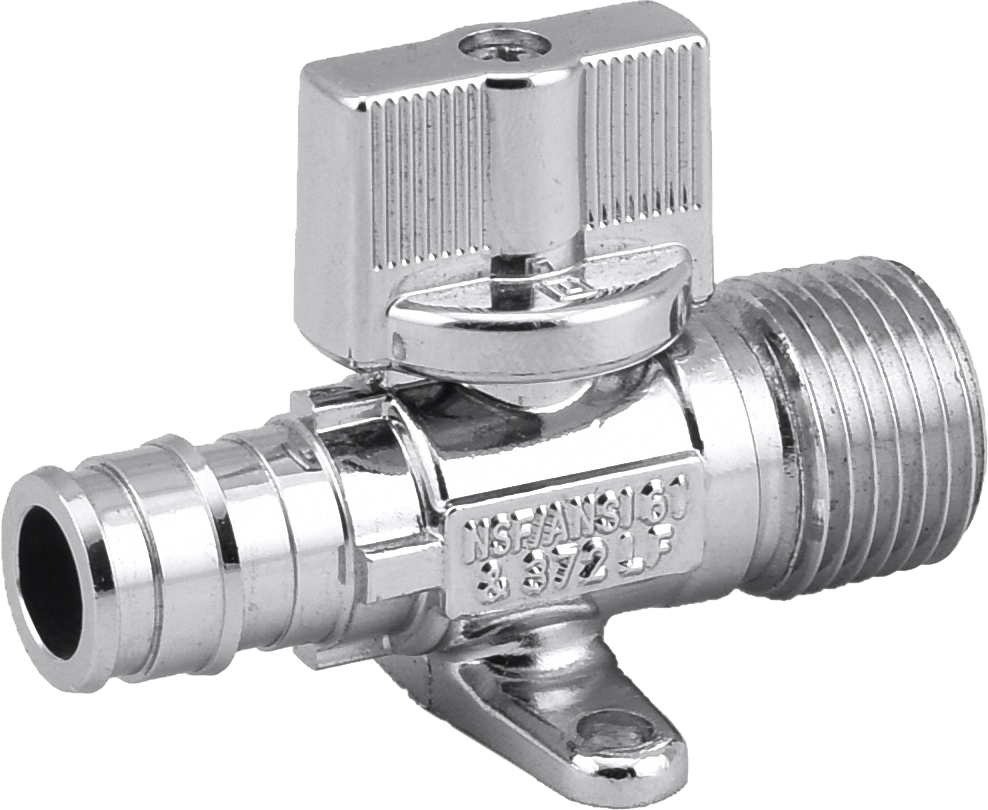
When a brass valve purchase reaches the decision stage, the remaining suppliers usually look similar on paper: comparable brass alloys, similar certifications, close unit prices. The factors that actually determine whether an order performs well over a full supply year are rarely visible in a single price list.
This article provides a decision framework for comparing brass valve factories at the same quality level. It uses published product-line data from Zhejiang Longda Technology Co., Ltd. (LONGDA BRASS VALVE), a brass valve and brass fitting manufacturer established in 1993 in Yuhuan County, Zhejiang Province, China. The company operates a 30,000 m² facility, employs about 200 people, and exports approximately 95% of its output to the EU, USA, Canada, and South America.
The comparison centers on the supply stop product line — brass angle valves, straight stops, compression stops, and PEX supply stops — because this family illustrates five factors that separate factories at an equal quality tier: specification coverage, price at equal quality, quality stability, development support, and delivery reliability.
Why Brass Valve Sourcing Decisions Fail
Most brass valve sourcing problems appear after the purchase order is signed, not before. Buyers compare unit prices and certification names, then assume the rest of supplier performance will be identical. In practice, the largest cost differences come from specification coverage, quality consistency, development speed, and delivery reliability.
- Narrow product range. A factory that can support only 10–20 standard models forces the buyer to split orders across multiple suppliers. This adds supplier audits, qualification work, packaging differences, and logistics overhead to every brass plumbing valve program.
- Inconsistent quality. Returns and claims add handling costs and damage distributor relationships. For products such as brass gate valves, brass check valves, brass radiator valves, brass gas valves, brass bibcocks, and brass PEX ball valves, a single quality failure can delay an entire project.
- Unpredictable lead times. Late shipments force buyers to carry higher safety stock and create retail out-of-stock risk that is difficult to recover.
- Compliance gaps. For USA and Canada potable water applications, lead-free compliance is mandatory. Without NSF/ANSI 61 and NSF/ANSI 372 certification, a brass stop valve simply cannot be sold into the residential plumbing channel.
These issues are not visible in a unit-price comparison. They only appear when the factory is evaluated across the full order cycle.
Industry Background: What the Brass Valve Market Looks Like
The global brass valves market was valued at USD 14.8 billion in 2025 and is projected to reach USD 24.1 billion by 2034, with a CAGR of 5.6% from 2026 to 2034 (Dataintelo). Ball valves held the largest product-type share at 38.4% in 2025 (Dataintelo).
Regionally, Asia Pacific dominated the brass valves market with a 41.2% revenue share in 2025, while North America accounted for approximately 26.1% (Dataintelo). China exported USD 22.6 billion in valves (HS 8481) in 2024, making it the largest global valve exporter (OEC). China also accounts for about 41% of global brass ball valve export shipments, followed by Vietnam at 30% (Volza). Zhejiang and Guangdong are the primary brass valve manufacturing clusters in China (Dataintelo).
The regulatory environment is tightening. Lead-free brass alloys are becoming the mandatory standard for potable water applications in the US under the Safe Drinking Water Act (EPA). In Europe, brass gas valves must comply with EN 331:2015 for safety in gas installations, and EN 13828:2003 specifies requirements for manually operated copper alloy ball valves for drinking water supply. Material requirements are commonly referenced to ASTM B584, while threaded connections follow ASME B1.20.1 (NPT) or ISO 228-1.
For buyers, the practical question is no longer whether to source brass valves, but how to evaluate factories that offer similar quality at different price levels. Global competition includes major players such as Mueller Industries, Watts Water Technologies, and NIBCO in North America (Dataintelo), while the top five global valve suppliers control approximately 35% of global revenues (Mordor Intelligence). In this environment, a structured factory comparison directly affects margin, inventory risk, and market access.
Detailed Solution: The Five-Factor Comparison Framework
When supplier qualification reaches the equal-quality stage, five factors separate a dependable brass valve factory from one that only looks dependable. The framework below uses the LONGDA supply stop product line as a reference case.
1. Specification Coverage
The core difference between LONGDA's supply stop product line and other supply stop factories at the same quality level is specification coverage: 50+ standard models covering various sizes, connections, and finishes, whereas average factories typically offer only 10–20 models.
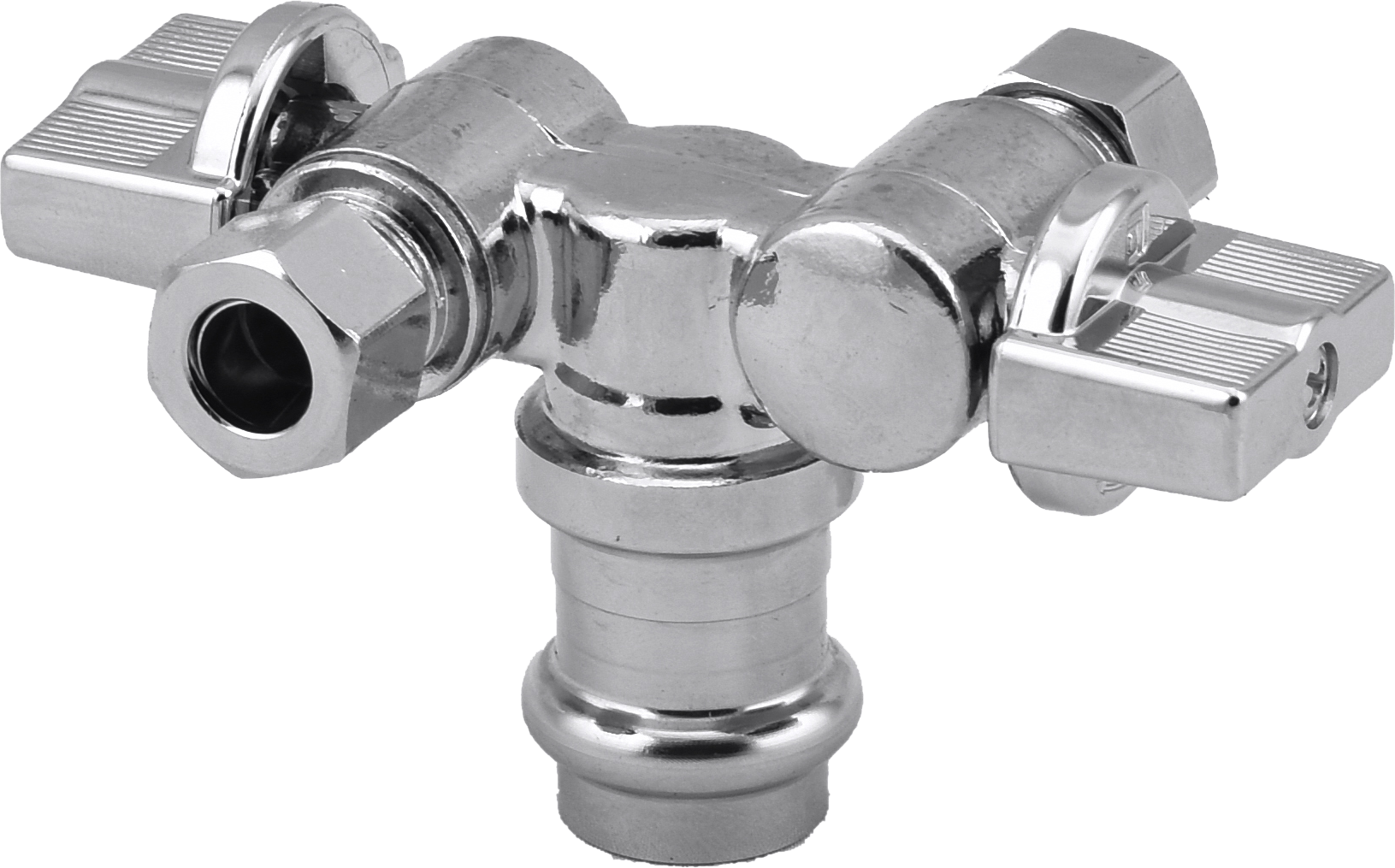
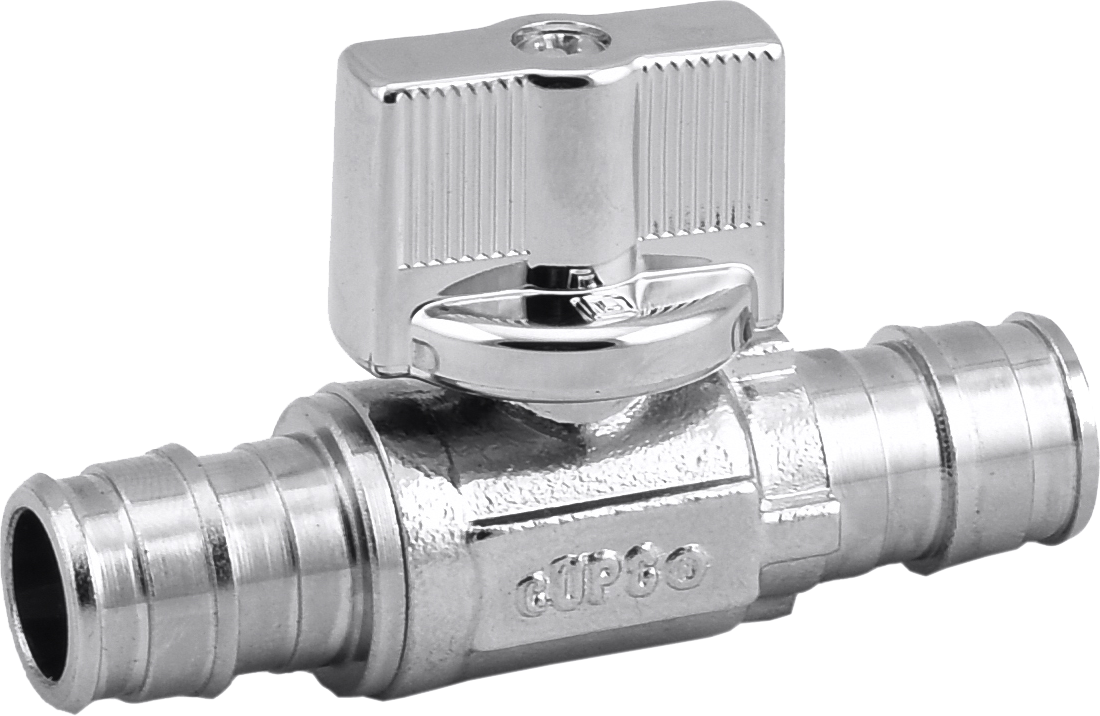
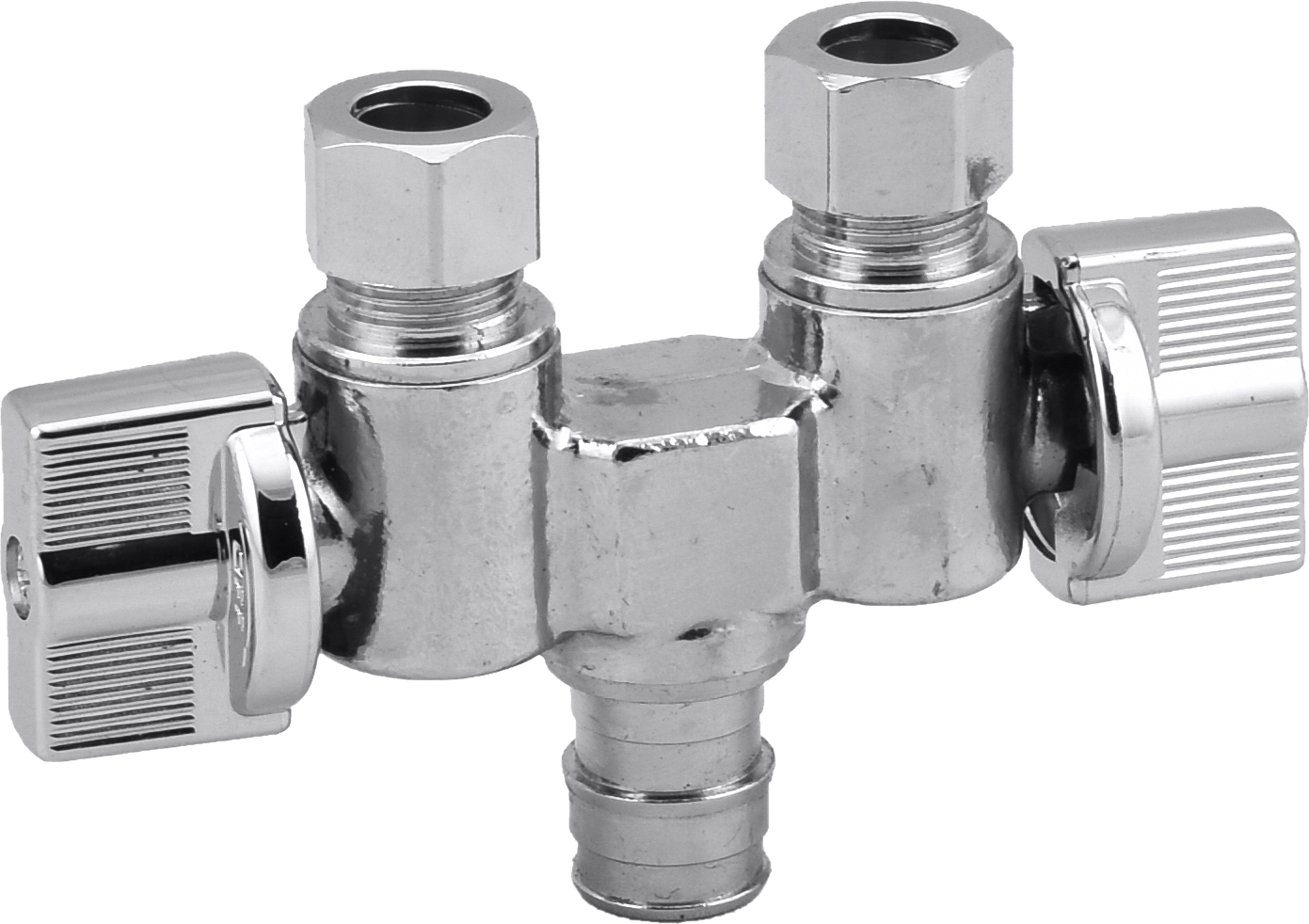
What this means for a buyer: one supplier can support more SKUs. The range covers 1/2" × 3/8" and 1/2" × 1/2" (DN15 × DN10/DN15) sizes, quarter-turn (ball) and multi-turn types, angle and straight patterns, and connections including compression × compression, FIP × compression, PEX × compression (ASTM F1960), sweat, and threaded. Lead-free versions are certified cUPC, NSF/ANSI 61 & 372, and cover faucet, toilet, washing machine, and water heater terminal applications.
2. Price at the Same Quality Level
At the same quality level, LONGDA's supply stop product line provides a 5%–10% price advantage over factories with the same quality, with stable quality and zero complaints in the past 3 years. This produces a lower total procurement cost without quality compromise.
The decision rule: a price gap only counts if the quality tier is genuinely identical. Buyers should verify material grade, certification scope, and test records before applying the price comparison to a supplier decision.
3. Quality Stability and Complaint Record
The LONGDA supply stop product line recorded 0 quality complaints in the past 3 years, indicating higher reliability compared with factories that report higher complaint rates.
This record is supported by production controls: 100% air pressure testing before shipment, thread gauge inspection on every lot, lead-free material test reports, and a 12-month quality warranty with free replacement. The company's 30,000 m² plant is equipped with more than 360 sets of processing and testing equipment, including spectral analysis instruments, high-pressure testing sets, high-low temperature test boxes, salt-spray test boxes, resistance test instruments, and laser marking machines.
4. Sampling and New Specification Development Support
For buyers developing private-label or project-specific products, development speed is a competitive factor. LONGDA's supply stop product line provides sample lead times of 5–7 days and quotation responses within 24 hours, enabling faster support for new specification development.
The company offers a one-stop OEM/ODM solution from in-house tooling and design to final production and testing, supported by 6 R&D engineers and more than 30 technical staff.
5. Delivery Reliability for Long-Term Programs
The on-time delivery rate for LONGDA's supply stop product line is above 98%, ensuring stable and controllable lead times for long-term supply programs. For distributors, this reduces safety stock requirements and lowers inventory risk.
Step-by-Step Breakdown: How to Compare Brass Valve Factories
Use the following seven steps before committing to a brass valve factory.
- Define your target product portfolio and specifications. List the brass valve types, sizes, connections, finishes, and certifications needed for retail shelves or project tenders.
- Shortlist factories at the same quality tier. Compare material grades such as CW617N or lead-free brass, certification scope (cUPC, NSF/ANSI 61 & 372, ASME standards), and factory test procedures.
- Compare specification coverage. Count standard models and map them to your SKU list. A range of 50+ models can consolidate orders; a range of 10–20 models may force multi-supplier splitting.
- Compare price at equal quality. Confirm material and certification parity first, then compare unit prices. A verified 5%–10% price advantage is meaningful only when quality is matched.
- Verify quality records and testing. Review complaint history, factory test equipment, pressure-testing policy, and warranty terms. Reference data for the LONGDA supply stop line: 0 complaints in 3 years, 100% air pressure testing, and a 12-month warranty.
- Test sampling speed and quotation responsiveness. Request a quote and a sample of a new specification. Reference response: quotation within 24 hours and sample delivery in 5–7 days.
- Confirm delivery reliability and run a trial order. Agree on lead-time commitments and check on-time delivery records. An on-time delivery rate above 98% supports stable replenishment planning.
Use Cases: Where This Comparison Matters Most
Distributor replenishment and retail chain programs. A wide specification range lets distributors consolidate SKUs from one source instead of splitting orders. The LONGDA supply stop line's 50+ standard models and above-98% on-time delivery rate match the operating profile of long-term replenishment programs. In the US/Canada channel, this is the typical profile for wholesale supply to plumbing distributors such as Ferguson and Winsupply.
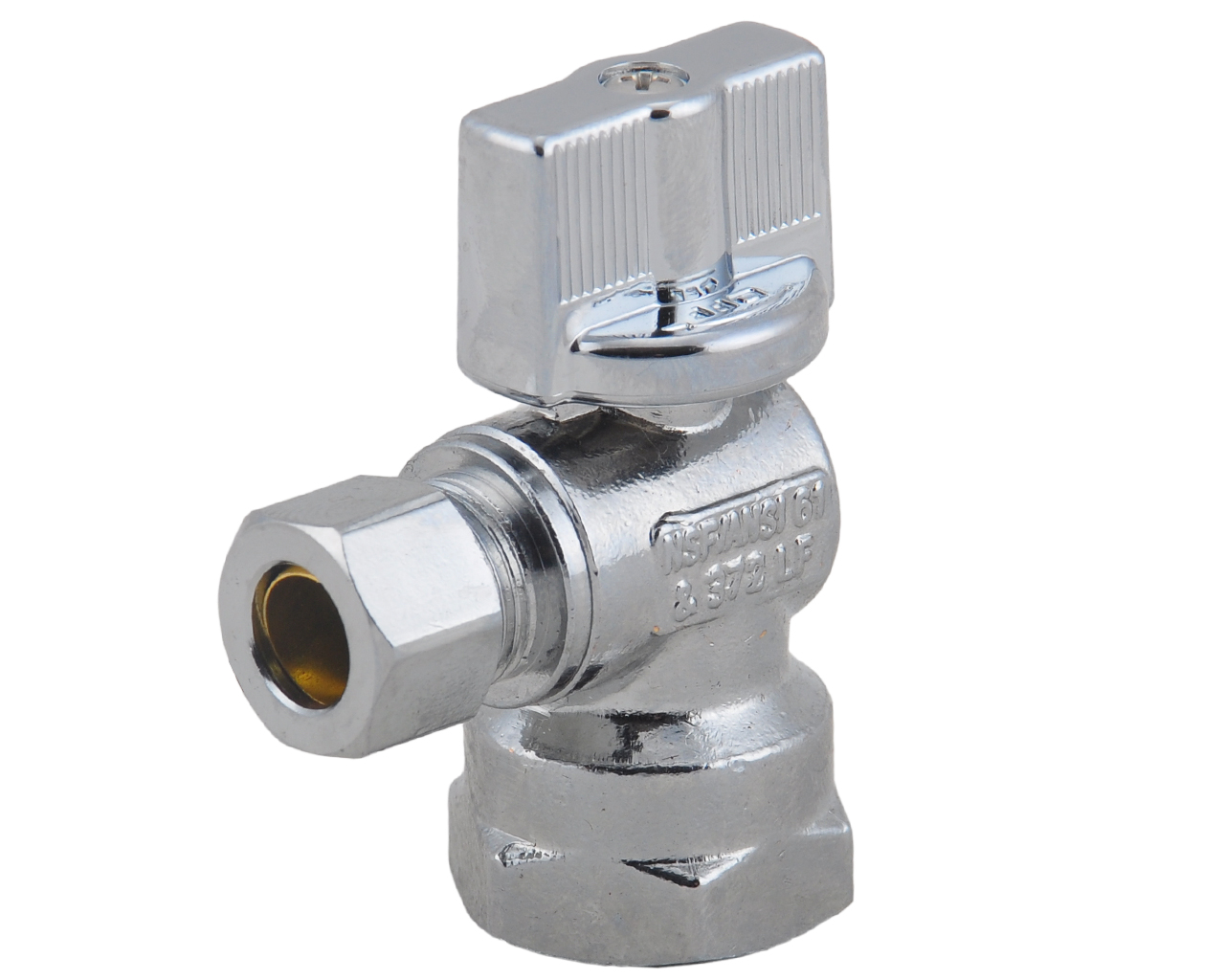
US and Canada potable water imports. Buyers must confirm lead-free compliance on wetted surfaces: lead content ≤ 0.25% per NSF/ANSI 372 and the US Safe Drinking Water Act (AB1953), NSF/ANSI 61 health effects compliance, cUPC certification, ASME A112.18.1 / CSA B125.1 compliance for supply stops, and NPT threads per ASME B1.20.1. LONGDA's lead-free supply stops carry cUPC, NSF/ANSI 61 & 372 certification.
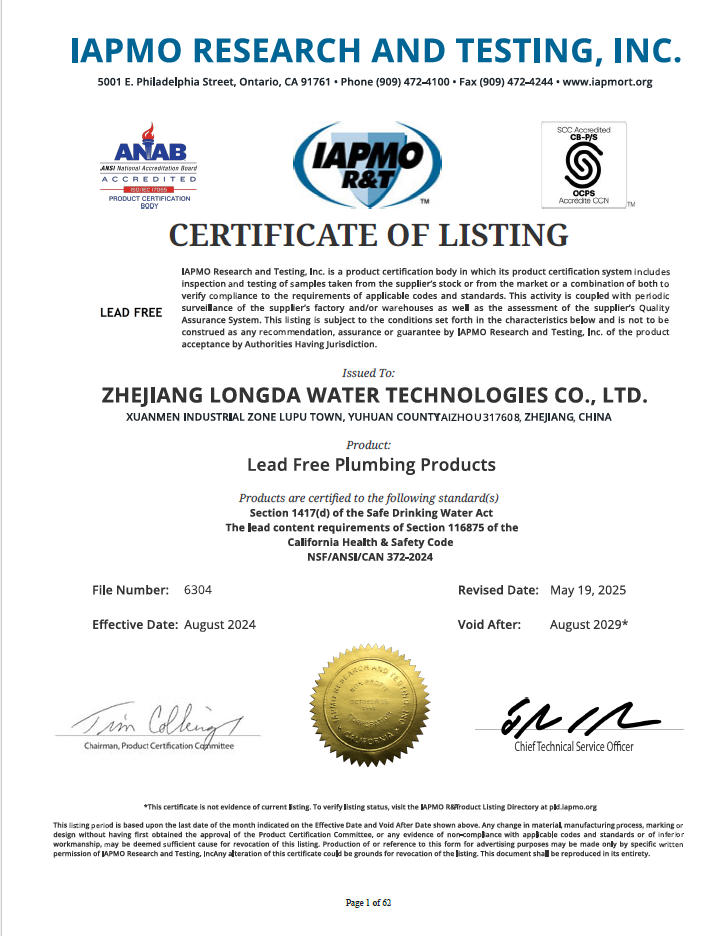
PEX plumbing system projects. For PEX-A systems, ASTM F1960 cold expansion connections create a permanent joint: the pipe end is expanded, the fitting is inserted, and the ring contracts to form a leak-free connection. The supply stop range includes PEX × compression stops with quarter-turn blue lever operation, suitable for potable water branch lines, whole-house repiping, and floor heating systems.
OEM and private-label development. Importers developing their own product range need a factory that responds quickly to new specifications. A 24-hour quotation response and 5–7 day sample lead time reduce development cycles, while in-house tooling supports design changes without a separate tooling vendor.
Brass Valve Supplier Comparison Table
The following table summarizes the comparison between the LONGDA supply stop product line and typical supply stop factories at the same quality level. All data comes from published LONGDA product-line records.
| Comparison criterion | LONGDA supply stop product line | Typical same-quality supply stop factory |
|---|---|---|
| Standard model coverage | 50+ models covering sizes, connections, and finishes | 10–20 models |
| Price at equal quality level | 5%–10% more favorable pricing | Higher cost for equivalent quality |
| Quality complaints in past 3 years | 0 complaints | Higher complaint rates reported |
| On-time delivery rate | Above 98% | Lead-time variability reported |
| Quotation response time | Within 24 hours | Varies by factory |
| Sample lead time for new specifications | 5–7 days | Typically longer |
| Potable water certifications | cUPC, NSF/ANSI 61 & 372 for lead-free versions | Not all factories hold these certifications |
Comparison basis: LONGDA published supply stop product-line data versus other supply stop factories at the same quality level. No third-party performance claims are included.
Brass Valve Factory Comparison FAQ
Are LONGDA brass supply stop valves certified for potable water use in the US and Canada?
Yes. The lead-free versions of the supply stop product line are cUPC certified and comply with NSF/ANSI 61 and NSF/ANSI 372. Wetted surface lead content is ≤ 0.25% per NSF/ANSI 372 and the US Safe Drinking Water Act (AB1953). The products meet applicable cUPC-listed standards such as ASME A112.18.1 / CSA B125.1 for supply stops, and threads conform to ASME B1.20.1 (NPT).
How many standard brass valve specifications can LONGDA support?
The supply stop product line covers 50+ standard models across sizes, connections, and finishes. The size range includes 1/2" × 3/8" and 1/2" × 1/2" (DN15 × DN10/DN15). Types include quarter-turn (ball) and multi-turn supply stops, angle and straight patterns, compression, FIP × compression, PEX × compression (ASTM F1960), sweat, and threaded connections. Average factories at the same quality level typically offer only 10–20 models.
How does LONGDA's brass valve price compare with factories at the same quality level?
LONGDA's supply stop product line provides a 5%–10% price advantage over factories with the same quality level, with stable quality and zero complaints in the past 3 years. This lowers total procurement cost without quality compromise. Stable quality also reduces return handling, and stable lead times reduce safety stock.
How fast can buyers get brass valve samples and quotations?
Sample lead time is 5–7 days, and quotation responses are provided within 24 hours. This supports faster development of new specifications compared with slower supplier cycles.
What delivery reliability can buyers expect for long-term brass valve supply programs?
The on-time delivery rate is above 98%, providing stable and controllable lead times for long-term supply programs. This reduces inventory risk and supports distributor replenishment cycles. To evaluate this product line against your current supplier shortlist, download the LONGDA Global Catalogue or contact sales@ld-valve.com.
Conclusion: Making the Final Brass Valve Supplier Decision
At the decision stage, brass valve factories should be compared on the factors that drive total procurement cost: specification coverage, price at an equal quality tier, quality stability, development speed, and delivery reliability. These factors determine whether a supplier can consolidate your SKU base, protect margins, avoid claims, and keep supply programs on schedule.
LONGDA BRASS VALVE's supply stop product line provides a concrete reference: 50+ standard models, a 5%–10% price advantage over same-quality factories, zero quality complaints in the past 3 years, sample lead times of 5–7 days, quotation responses within 24 hours, and an on-time delivery rate above 98%. The company is part of Zhejiang Longda Technology Co., Ltd., a manufacturer established in 1993 with a 30,000 m² facility, about 200 employees, and more than 360 sets of processing and testing equipment.
Next step: compare this product line against your current supplier list.
Download the LONGDA Global Catalogue (PDF)
Contact: Libby Xiao — sales@ld-valve.com | Tel/WhatsApp: +86 13506869135
Website: www.ld-valve.com