
Brass Valve: A Practical Guide to Types, Applications and Selection
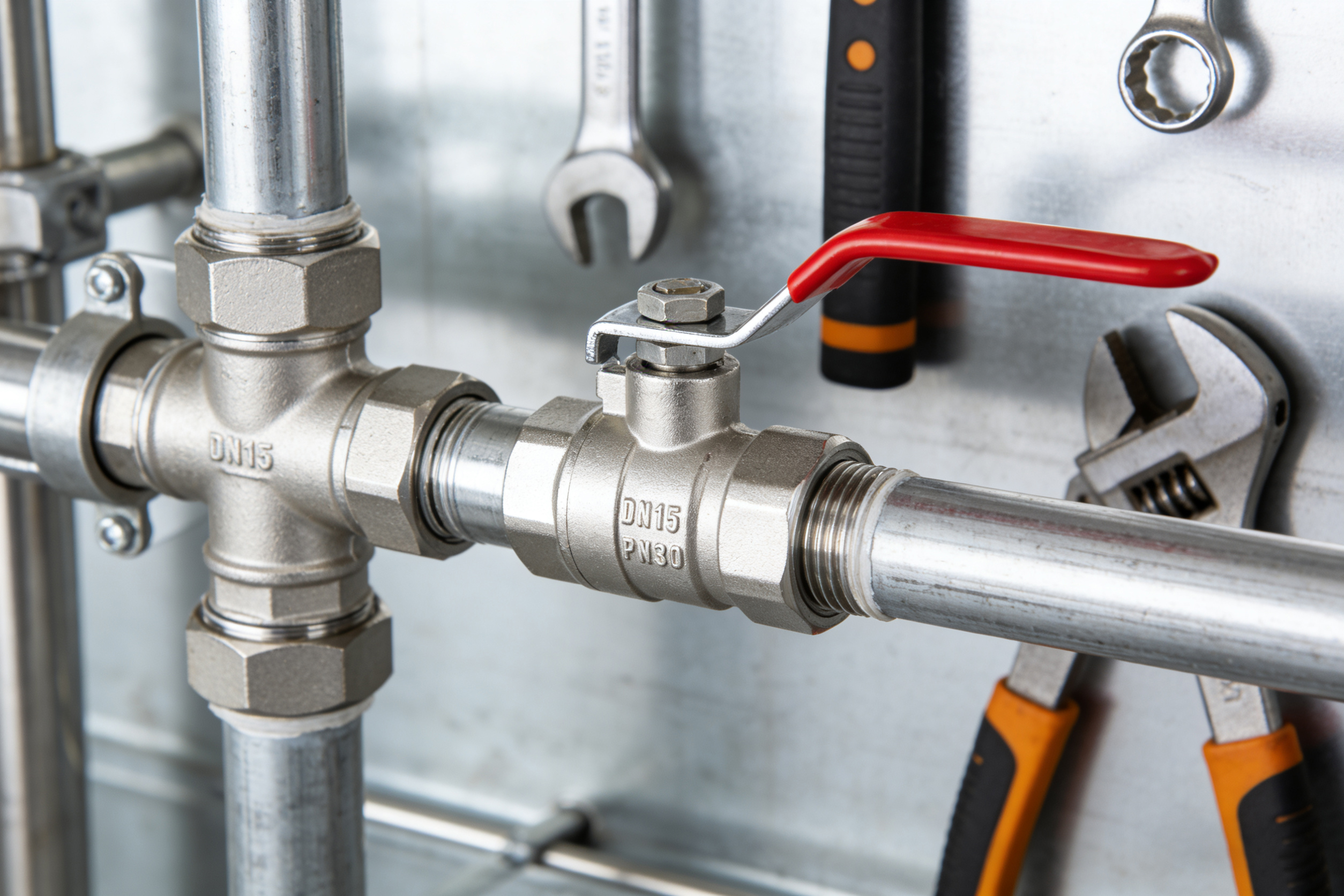
Brass ball valve used in residential and commercial water supply systems.
A brass valve is a flow-control device manufactured from brass alloy. It is used to start, stop, redirect, or regulate the movement of water, gas, or other fluids in a piping system. Brass is a common valve material in plumbing, heating, HVAC, gas piping, and industrial fluid lines because it combines corrosion resistance, mechanical strength, machinability, and a long service life.
Brass valves are sold in many configurations, including ball valves, gate valves, check valves, angle valves, supply stop valves, Y strainers, and coordinating fittings. For buyers moving from awareness to research, the large number of types and specifications can be confusing. This guide explains the main brass valve categories, key selection criteria, compliance requirements, and what to look for in a manufacturing partner.
According to Dataintelo, the global brass valves market was valued at USD 14.8 billion in 2025 and is projected to reach USD 24.1 billion by 2034. Understanding the product range and selection logic is therefore not just a technical exercise; it is also a procurement decision.
Why Brass Valves Are Confusing for Buyers
Buyers researching brass valves often encounter several sources of confusion. First, the same system can use different valve types. A main water line may use a brass ball valve, a heating loop may use an isolation valve, and a fixture outlet often uses an angle valve or supply stop. Second, materials vary from standard brass to lead-free brass and dezincification-resistant alloys. Third, connection methods include threaded NPT or BSP, sweat, compression, PEX, press, push-fit, and cold expansion. Fourth, certification requirements differ by region and application.
This guide reduces that complexity by defining each major brass valve type, presenting the performance parameters available from an established manufacturer, and giving a practical step-by-step selection path. The goal is to help engineers, distributors, contractors, and purchasing teams ask the right questions before placing an order.
Brass Valve Market and Industry Context
Market data helps explain why brass valves are so widely specified. Dataintelo reports that ball valves held the largest product type share in the brass valve market at 38.4% in 2025. The same source also reports that Asia Pacific held the largest regional share at 41.2%, while North America accounted for approximately 26.1% of the global market. The global brass valves market is expected to grow at a CAGR of 5.6% from 2026 to 2034.
On the production side, China exported a total of USD 22.6 billion in valves (HS 8481) in 2024, according to OEC, maintaining its position as the largest global exporter. Zhejiang and Guangdong provinces are identified as primary industrial clusters for brass valve manufacturing in China. These trends indicate a global supply chain in which buyers can access specialized manufacturers that export at scale.
For the purpose of this guide, the important implication is that brass valves are a mature, globally traded product category. Buyers should evaluate manufacturers not only by price, but also by material quality, certification coverage, testing capability, and the ability to provide consistent OEM/ODM support.
Manufacturer Profile: Longda Brass Valve
ZHEJIANG LONGDA TECHNOLOGY CO.,LTD, established in 1993, is a brass valve manufacturer located in XuanGuang Industrial Zone, LuPu Town, YuHuan County, Zhejiang Province, China. The company specializes in manufacturing brass valves, fittings, bibcocks, faucets, sanitary wares, and other brass components for residential and commercial use.
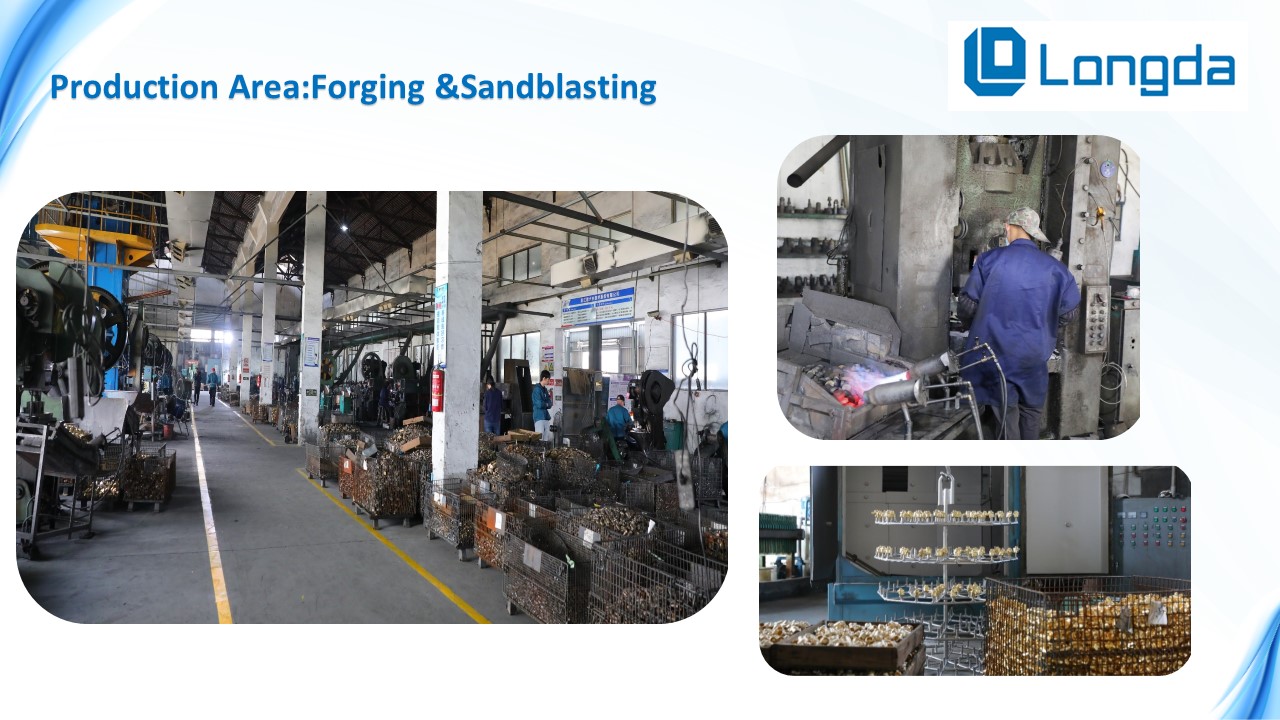
Longda factory production area.
Longda operates a manufacturing facility of 30,000 square meters and employs approximately 200 staff. Annual production capacity reaches 7,500 tons. The company has more than 30 technical personnel, including 6 engineers in research and development, and uses over 360 sets of processing and testing equipment. These include CNC machines, high accuracy lathes, assembly lines, spectral analysis instruments, intensity test instruments, high-pressure testing sets, and other quality-control equipment.
Approximately 95% of Longda products are exported, with major markets in the EU, USA, Canada, and South America. The company states that its products are IAPMO and ALS certified, and several lead-free product lines are certified to NSF/ANSI 61, NSF/ANSI 372, and cUPC requirements. Longda also offers one-stop OEM/ODM solutions, supported by in-house tooling, design, production, and testing.
This manufacturer profile matters for buyers because sourcing directly from a specialized factory can reduce supply-chain complexity, especially when a single partner can supply multiple valve types and connection options.
Brass Valve Types Explained
Brass Ball Valve
A brass ball valve uses a rotating ball with a bore to control flow. The 8081 is a 2-piece full port ball valve available in sizes from 1/2 inch to 4 inches (DN15 to DN100), rated for 600 WOG (4.1 MPa), with a working temperature range of -20°C to 150°C. It is operated by a quarter-turn lever or wing handle and is available with female NPT or BSP connections. The 8081 can be supplied as a lead-free version certified to cUPC, NSF/ANSI 61, and NSF/ANSI 372.
Brass Gate Valve
The T-22017A is a rising stem, threaded brass gate valve with a full bore design. It is available in sizes from 1/2 inch to 4 inches (DN15 to DN100) and rated for 200 WOG (1.4 MPa), with a working temperature range of -20°C to 120°C. The seat is brass-to-brass, which avoids rubber seal aging. Lead-free versions are certified by IAPMO to NSF/ANSI 61 and NSF/ANSI 372.
Brass Check Valve
The LD 30303 is a brass swing check valve, also available in spring-loaded in-line versions. It is rated for 200 WOG (1.4 MPa), operates from -20°C to 150°C, and is available in sizes from 1/2 inch to 2 inches (DN15 to DN50). The disc uses a PTFE sealing face, the spring is SS304 stainless steel, and the body can be supplied in lead-free and dezincification-resistant alloy.
Brass Y Strainer
The LD.73154 is a brass Y-type strainer with drain plug. It is available in sizes from 1/2 inch to 2 inches (DN15 to DN50), rated for 200 WOG (1.4 MPa), with a working temperature range of -20°C to 150°C. The screen is made of SS304 stainless steel in 20, 40, 60, or 80 mesh. The blow-down drain plug allows cleaning without disassembling the pipeline, and the screen is replaceable without removing the complete valve.
Brass Angle Valve and Supply Stop Valve
The ART.98011 is a quarter-turn brass angle valve designed for bathroom and kitchen faucets, toilets, and water supply terminals. It is available in 1/2 inch by 1/2 inch and 1/2 inch by 3/8 inch sizes, with a pressure rating of 125 psi WSP / 600 WOG and a working temperature range of 0°C to 90°C.
The 98023-LF is a quarter-turn supply stop valve available in angle and straight versions. It comes in 1/2 inch by 3/8 inch and 1/2 inch by 1/2 inch sizes, rated for 125 psi, and covers faucet, toilet, washing machine, and water heater terminal applications. Lead-free versions are certified to cUPC, NSF/ANSI 61, and NSF/ANSI 372.
Brass Fittings
The 15111 series includes brass adapters, couplings, nipples, elbows, tees, unions, caps, and plugs in sizes from 1/4 inch to 2 inches (DN8 to DN50). These fittings are available with NPT or BSP threads, PEX connections per ASTM F1807, PEX-A connections per ASTM F1960, press connections per ASTM Z1117, and push-fit connections per ASSE 1061. Depending on configuration, the pressure rating is up to 600 WOG (4.1 MPa).
Comparison Table: Brass Valve Types at a Glance
The following table summarizes the product data from the Longda range. It can help buyers compare the basic performance envelope before moving into detailed engineering.
| Type | Example Model | Size Range | Pressure Rating | Working Temp | Typical Applications |
|---|---|---|---|---|---|
| Brass Ball Valve | 8081 | 1/2 inch – 4 inch | 600 WOG (4.1 MPa) | -20°C to 150°C | Plumbing, heating, potable water, gas, HVAC |
| Brass Gate Valve | T-22017A | 1/2 inch – 4 inch | 200 WOG (1.4 MPa) | -20°C to 120°C | Municipal water supply, residential and commercial plumbing, HVAC, irrigation |
| Brass Check Valve | LD 30303 | 1/2 inch – 2 inch | 200 WOG (1.4 MPa) | -20°C to 150°C | Pumping systems, water supply, heating and boiler systems, irrigation |
| Brass Y Strainer | LD.73154 | 1/2 inch – 2 inch | 200 WOG (1.4 MPa) | -20°C to 150°C | Water supply pipelines, HVAC/chilled water, gas piping, irrigation |
| Brass Angle Valve | ART.98011 | 1/2 inch x 1/2 inch, 1/2 inch x 3/8 inch | 125 psi WSP / 600 WOG | 0°C to 90°C | Bathroom and kitchen faucets, toilets, water supply terminals |
| Brass Supply Stop Valve | 98023-LF | 1/2 inch x 3/8 inch, 1/2 inch x 1/2 inch | 125 psi | -20°C to 120°C | Faucets, toilets, washing machines, water heater terminals |
| Brass Fittings | 15111 | 1/4 inch – 2 inch | Up to 600 WOG (4.1 MPa) | -20°C to 150°C | Potable water, gas, HVAC, fire protection, irrigation, industrial piping |
How to Choose the Right Brass Valve: Step-by-Step
Step 1: Define the application and fluid medium
First determine whether the valve will carry potable water, domestic hot water, heating fluid, gas, compressed air, or an industrial liquid. Longda product lines include valves suitable for drinking water networks, domestic hot water distribution, heating systems, compressed air networks, and pneumatic applications. The fluid type directly influences material selection and certification needs.
Step 2: Determine the connection method
The connection affects installation time and compatibility with existing piping. Brass valves can be supplied with female and male NPT, BSP, PEX per ASTM F1807, PEX-A cold expansion per ASTM F1960, press per ASTM Z1117, push-fit per ASSE 1061, sweat, and compression connections. A project using PEX-A pipe requires a valve designed for cold expansion, while a copper renovation may use sweat or threaded connections.
Step 3: Check pressure and temperature rating
Always compare the system normal operating pressure and temperature with the valve rating. For example, the 8081 ball valve is rated for 600 WOG (4.1 MPa) and -20°C to 150°C, while the T-22017A gate valve is rated for 200 WOG (1.4 MPa) and -20°C to 120°C. Fixture-level angle valves such as the ART.98011 are rated for 125 psi WSP / 600 WOG and 0°C to 90°C. Choose a valve with margin over the expected conditions.
Step 4: Confirm material and compliance requirements
For North American potable water systems, lead-free requirements apply. The wetted surface lead content must not exceed 0.25% as defined by NSF/ANSI 372 and the U.S. Safe Drinking Water Act, including California AB1953. Products should also satisfy NSF/ANSI 61 health effects requirements. Several Longda models carry cUPC, NSF/ANSI 61, and NSF/ANSI 372 certification. For European gas installations, EN 331:2015 is a relevant standard, and EN 13828:2003 specifies requirements for manually operated copper alloy ball valves for drinking water supply.
Step 5: Choose the valve function
Each valve type has a distinct function. A ball valve provides quick quarter-turn shut-off with full flow and minimal pressure drop. A gate valve is suited for infrequent open/close duty and full bore flow. A check valve prevents backflow. An angle valve or supply stop provides local fixture shut-off behind sinks and toilets. A Y strainer protects downstream equipment by filtering sand, sediment, and weld debris.
Step 6: Evaluate manufacturer testing and quality control
The manufacturing process should include testing and inspection. Longda performs 100% factory testing and uses thread gauge inspection on production lots, with pressure testing and material-analysis equipment. Hot-forged brass construction helps eliminate casting porosity and avoids plating layers that can peel off. Buyers should review the manufacturer testing process, material reports, and available certifications before committing to volume production.
Step 7: Plan for maintenance and spare parts
Look for designs that reduce maintenance cost. The LD.73154 Y strainer has a replaceable SS304 screen and a blow-down drain plug for in-line flushing. Quarter-turn supply stops with PTFE seats and double O-ring sealing are designed to reduce stem and connection leakage. These design choices affect long-term operating cost, not only the initial purchase price.
Common Use Cases in Plumbing and Heating
Whole-House Repiping with PEX-A
In new residential construction or whole-house repiping, PEX-A pipe is often connected with cold-expansion fittings per ASTM F1960. The 8081 PEX-A ball valve uses a blue lever and is designed for potable water branch lines. The cold expansion connection contracts around the fitting to form a permanent, leak-free joint without reducing the pipe inner diameter. This makes it suitable for connecting PEX-A pipe to water heaters, manifolds, and appliances.
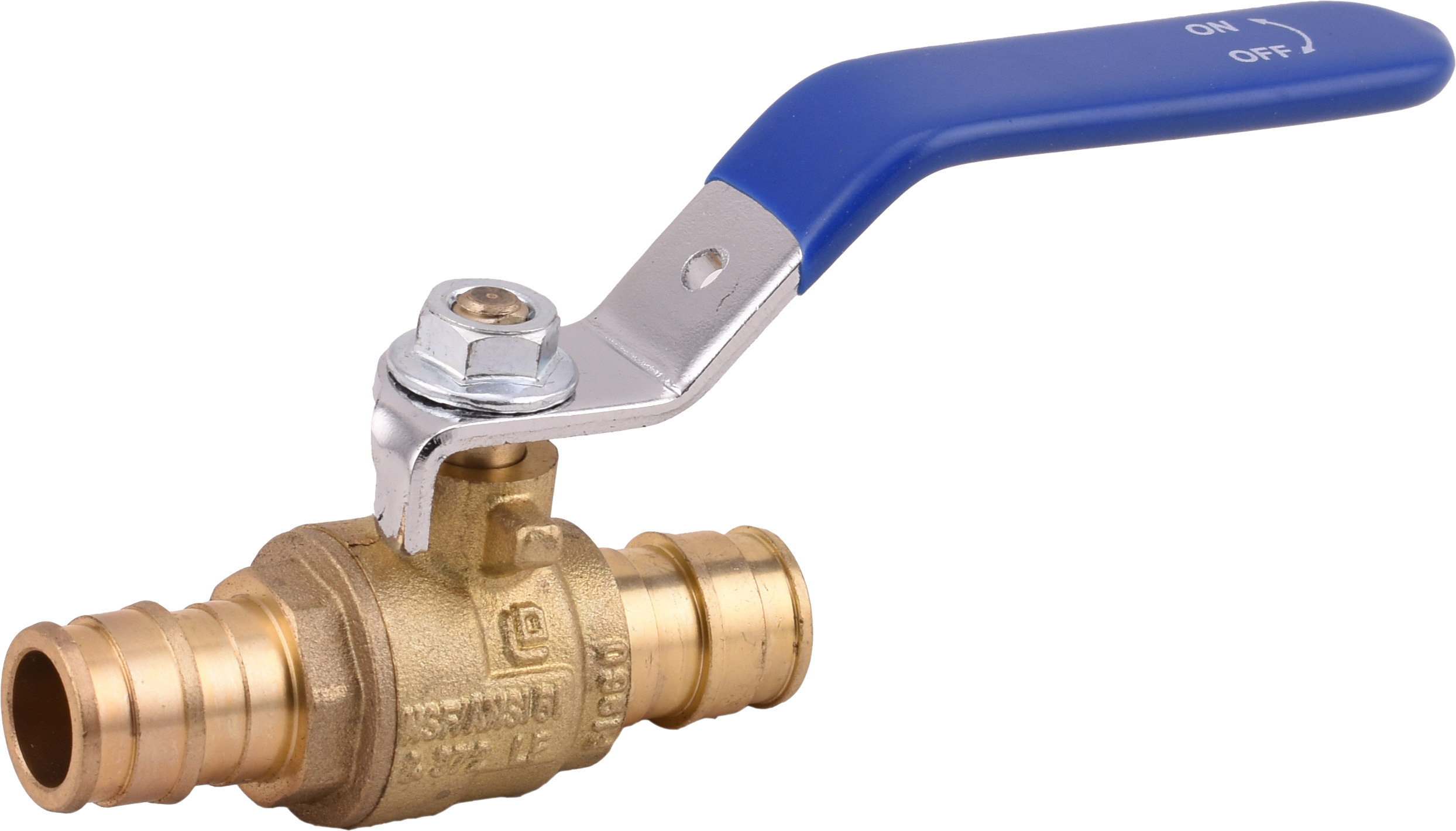
PEX-A ball valve with quarter-turn blue lever.
Fixture Supply Stops Under Sinks and Toilets
The 98023-LF quarter-turn supply stop valve is designed for localized shut-off without isolating the whole building. It is available with connections such as FIP by compression, PEX by compression, sweat, and threaded. Lead-free versions are certified to cUPC, NSF/ANSI 61, and NSF/ANSI 372. This valve is a common choice for faucets, toilets, washing machines, and water heater terminals.
Angle Valves for Bathrooms and Kitchens
The ART.98011 brass angle valve redirects flow at 90 degrees from the wall outlet to the fixture supply hose. It uses a quarter-turn mechanism and is installed in confined spaces behind sinks and toilets. It is suited to residential plumbing, commercial buildings, and water supply terminals.
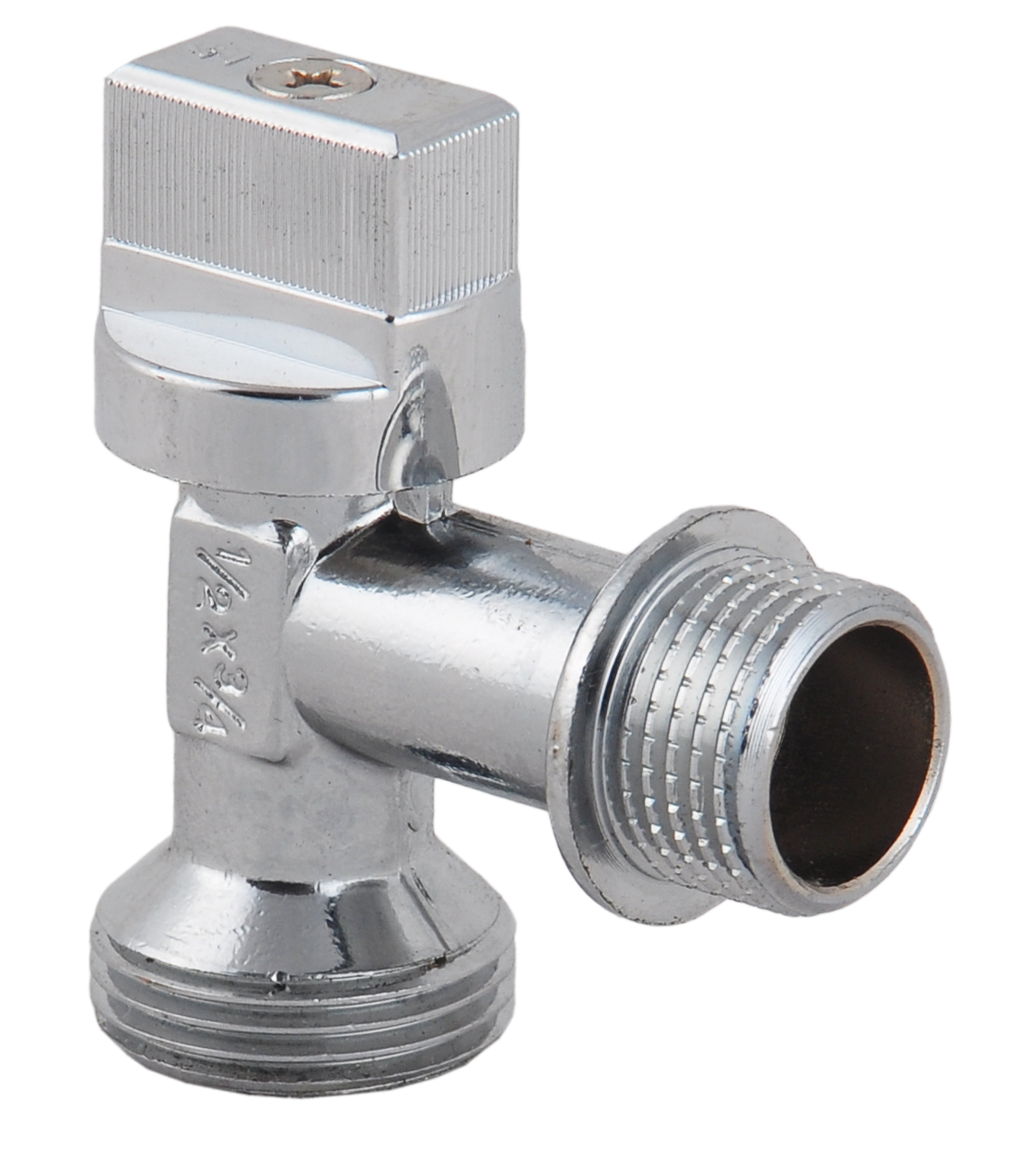
Brass angle valve for bathroom and kitchen water supply.
Heating and HVAC Systems
The ART.60621 brass water ball valve is manufactured in European brass CW617N in compliance with EN12164 and EN12165 standards. It is suitable for drinking water networks, domestic hot water distribution, heating systems, compressed air networks, and pneumatic applications. Its nominal pressure is 30 bar and its temperature range is -20°C up to 140°C.
Debris Protection with Y Strainers
The LD.73154 Y strainer protects downstream equipment such as pump impellers, ball valve seats, and water meters by filtering sand, sediment, and weld debris. The replaceable SS304 screen can be cleaned via the blow-down drain plug without removing the valve from the pipeline.
Frequently Asked Questions
1. What lead-free and safety standards apply to brass valves used in North American potable water systems?
For potable water contact in the US and Canada, brass valves must meet lead-free requirements: wetted surface lead content of 0.25% or less as defined by NSF/ANSI 372 and the US Safe Drinking Water Act, including California AB1953. Products should also comply with NSF/ANSI 61 health effects requirements. Several Longda models are certified to cUPC, NSF/ANSI 61, and NSF/ANSI 372, including the 98023-LF supply stop and the 8081 lead-free ball valve.
2. What types of brass valves and connection options are available?
Longda offers brass ball valves, gate valves, check valves, angle valves, supply stop valves, Y strainers, and brass fittings. Connection options include female and male NPT, BSP, PEX per ASTM F1807, PEX-A cold expansion per ASTM F1960, press per ASTM Z1117, push-fit per ASSE 1061, sweat, and compression. This breadth supports one-stop sourcing for residential, commercial, and HVAC projects.
3. How should buyers plan their budget when sourcing brass valves?
Longda is a manufacturer with a 30,000 square meter facility and an annual output of 7,500 tons, supporting OEM/ODM and volume shipments. The company positions its certified supply stop valves as offering certification and quality comparable to North American local brands at a more competitive price. Exact pricing depends on product type, material, finish, and order volume. Contact Longda via sales@ld-valve.com for a quote.
4. Can samples be requested before placing a bulk order?
Longda does not publish a generic sample policy in its public materials. Buyers can request samples and current availability by contacting the company at sales@ld-valve.com or +86 13506869135. The factory is located in Yuhuan, Zhejiang Province, China, and welcomes global partners to visit.
5. What lead time should be expected for brass valve orders?
Lead time depends on product type, specification, order quantity, and the current production schedule. To obtain a project-specific delivery schedule, contact Longda at sales@ld-valve.com or +86 13506869135. You can also review the product range in the company catalogue before requesting a timeline.
Conclusion and Next Step
Brass valves are fundamental components in plumbing, heating, gas, and industrial systems. The selection process becomes manageable when buyers define the application, choose the correct connection type, verify pressure and temperature ratings, confirm compliance requirements, and select a valve function that matches the duty.
Longda Brass Valve, with more than 30 years of manufacturing experience, offers a wide brass valve range and supports OEM/ODM projects. The company production capacity, in-house testing, and certification coverage make it a practical candidate for buyers evaluating a supply partner.
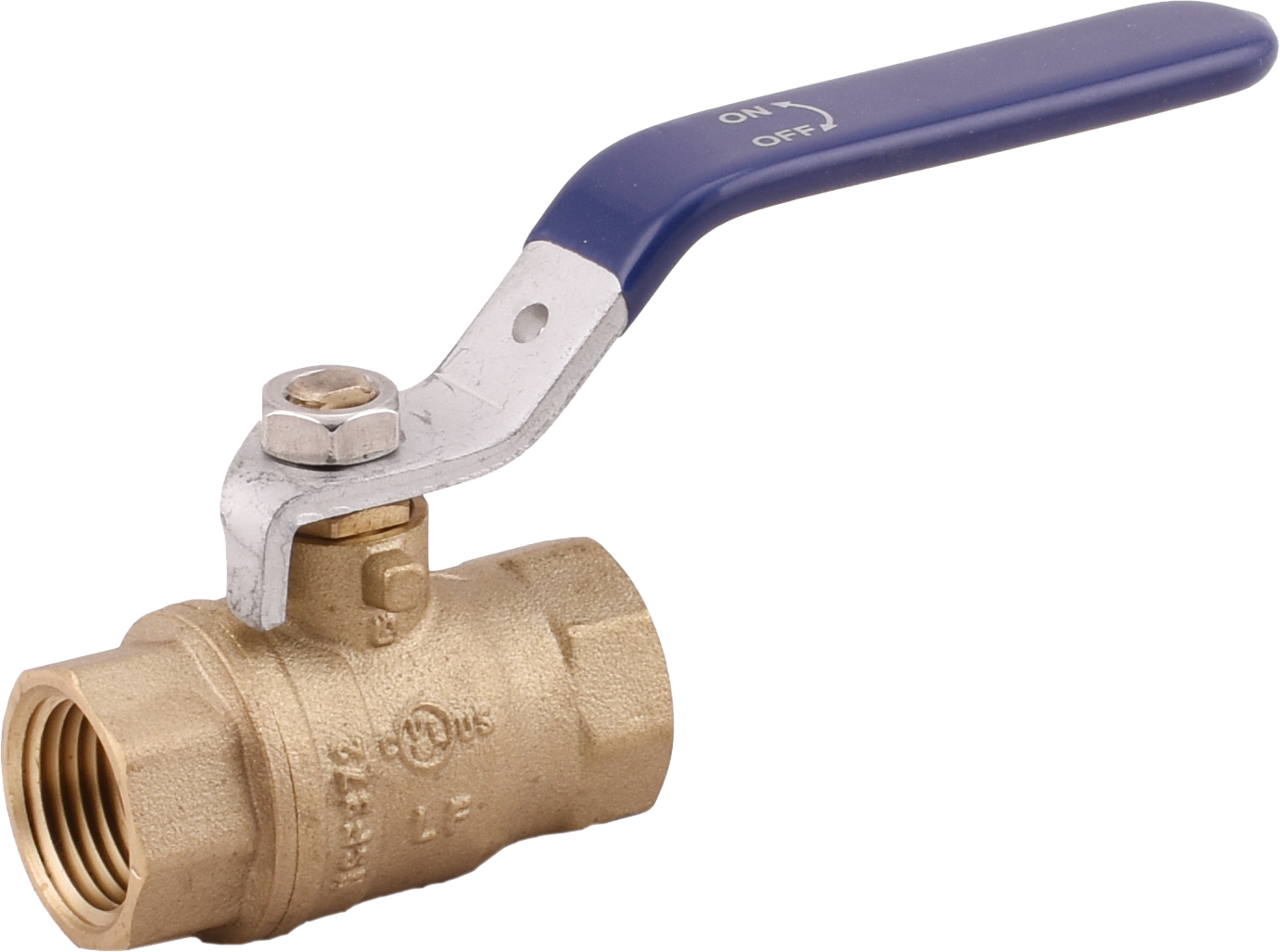
Example of a full port lead-free brass ball valve.
Download the Longda Global Catalogue or contact the sales team for samples and a quote.
Email: sales@ld-valve.com | Phone/WhatsApp: +86 13506869135 | Website: www.ld-valve.com
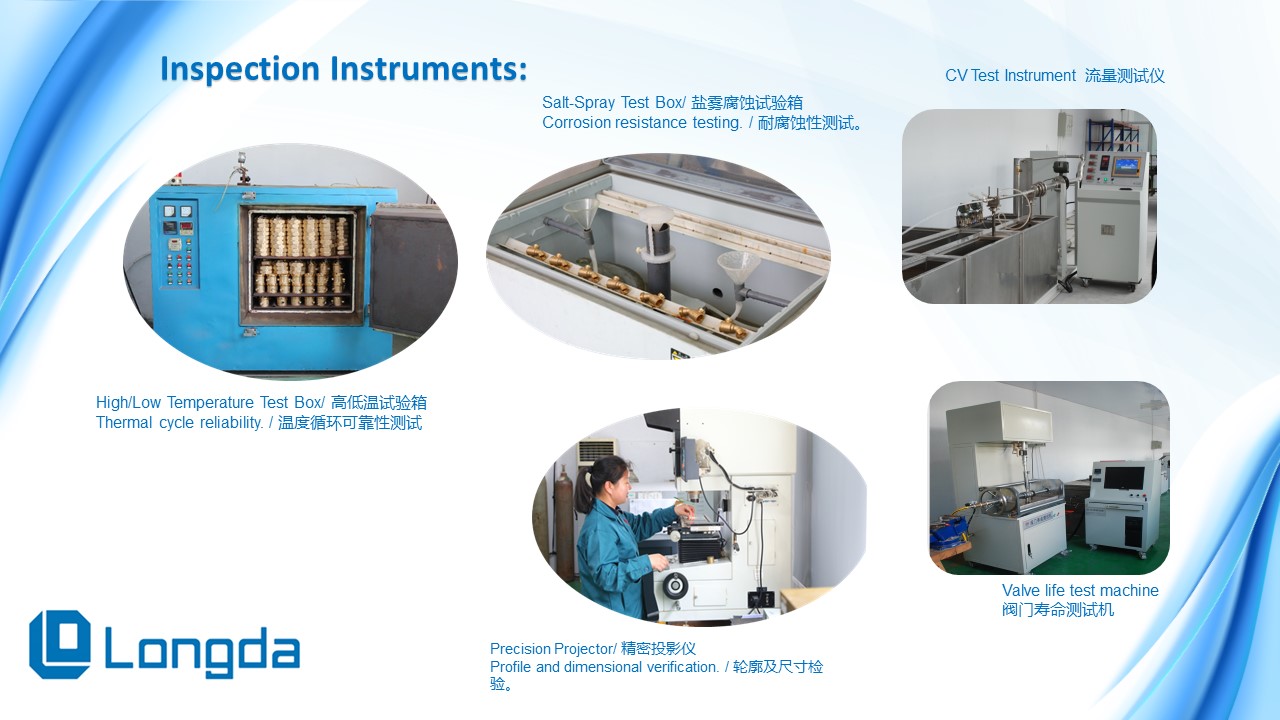
Longda factory testing station.