
Brass Valves for Bathroom Renovation and New Residential Construction: An Application Guide for Distributors and Contractors
Bathroom renovation and new residential construction generate two very different buying patterns for brass valves. A renovation job may call for a handful of fixture shut-off valves this week and a single main-line replacement the next. A new-build programme buys the same fixture valves by the thousand, on a delivery schedule tied to the plumbing rough-in. For a plumbing distributor, the difficulty is that one catalogue line has to serve both patterns without putting the wrong valve in the wrong position.
This guide covers the three decision points that matter in residential building work: the fixture-level shut-off valve behind every sink, toilet and washing machine; main-line control at the point of entry and on branch isolation; and the connection interface that has to mate with braided supply hoses and with PEX piping. The valves referenced here are manufactured by Zhejiang Longda Technology Co., Ltd., trading as LONGDA BRASS VALVE, a brass valve and brass fitting producer established in 1993 in Yuhuan County, Zhejiang Province, China. The company operates a 30,000 m² facility with approximately 200 employees and an annual output of 7,500 tons, and exports roughly 95% of production to the EU, the USA, Canada and South America.
Problem Definition: What a Brass Valve Actually Solves in a Residential Build
A brass valve in a residential plumbing system solves an isolation and maintenance problem, not a flow problem. The building supply main divides at the entry point; everything downstream of that, from the wall stub-out to the fixture, needs its own shut-off point.
When a bathroom lavatory has to be replaced, the installer has two options: shut down the building supply, drain the line, and restore it afterwards — or close a small valve under the sink. If that valve is missing, seized, leaking, or the wrong size, the first option is the only one available.
In new construction the same question is decided on paper, and it splits into three separate decisions that are frequently collapsed into one:
- Fixture-level shut-off. Confined space behind the fixture, continuous exposure to a dry-to-high-humidity environment, and a working pressure that in most residential fixture supply lines sits between 40 and 80 psi (0.28–0.55 MPa). The valve operates often but at low load.
- Main-line and branch isolation. Higher pressure, less frequent operation, and a requirement that the valve still works after years of sitting in one position.
- The connection interface. A fixture valve has pipe on one side and a hose on the other. That interface has to match the pipe system actually installed — copper, PEX, CPVC, press or push-fit — and the hose end actually used on site.
Specifying one valve type for all three positions is a common error. Size range, pressure class and end connections are different at each position, and so are the failure modes.
Industry Background: Where Residential Demand Sits
The global brass valves market was valued at USD 14.8 billion in 2025 and is projected to reach USD 24.1 billion by 2034, growing at a compound annual rate of 5.6% from 2026 to 2034 (Dataintelo). Ball valves alone held the largest product-type share within that market at 38.4% in 2025.
Demand is geographically concentrated. Asia Pacific accounted for 41.2% of brass valve market revenue in 2025, while North America held approximately 26.1% (Dataintelo). On the supply side, China exported a total of USD 22.6 billion in valves (HS 8481) in 2024, maintaining its position as the largest global exporter (OEC). The top five global valve suppliers together control roughly 35% of global revenues (Mordor Intelligence), which leaves the residential distribution tier — the segment that actually stocks fixture shut-off valves for contractors — working with a long tail of mid-sized manufacturers.
Regulation is tightening the material threshold. Lead-free brass alloys are becoming the mandatory standard for potable water applications in the United States under the Safe Drinking Water Act (EPA), with wetted-surface lead limited to 0.25% under NSF/ANSI 372. In Europe, EN 13828:2003 specifies requirements for manually operated copper alloy ball valves intended for drinking water supply. For a distributor, that means the sourcing decision now turns on material certification and documented test data as much as on dimension and price.
Detailed Solution: Fixture, Main-Line and Interface Valves
Fixture-level shut-off — brass angle valve ART.98011
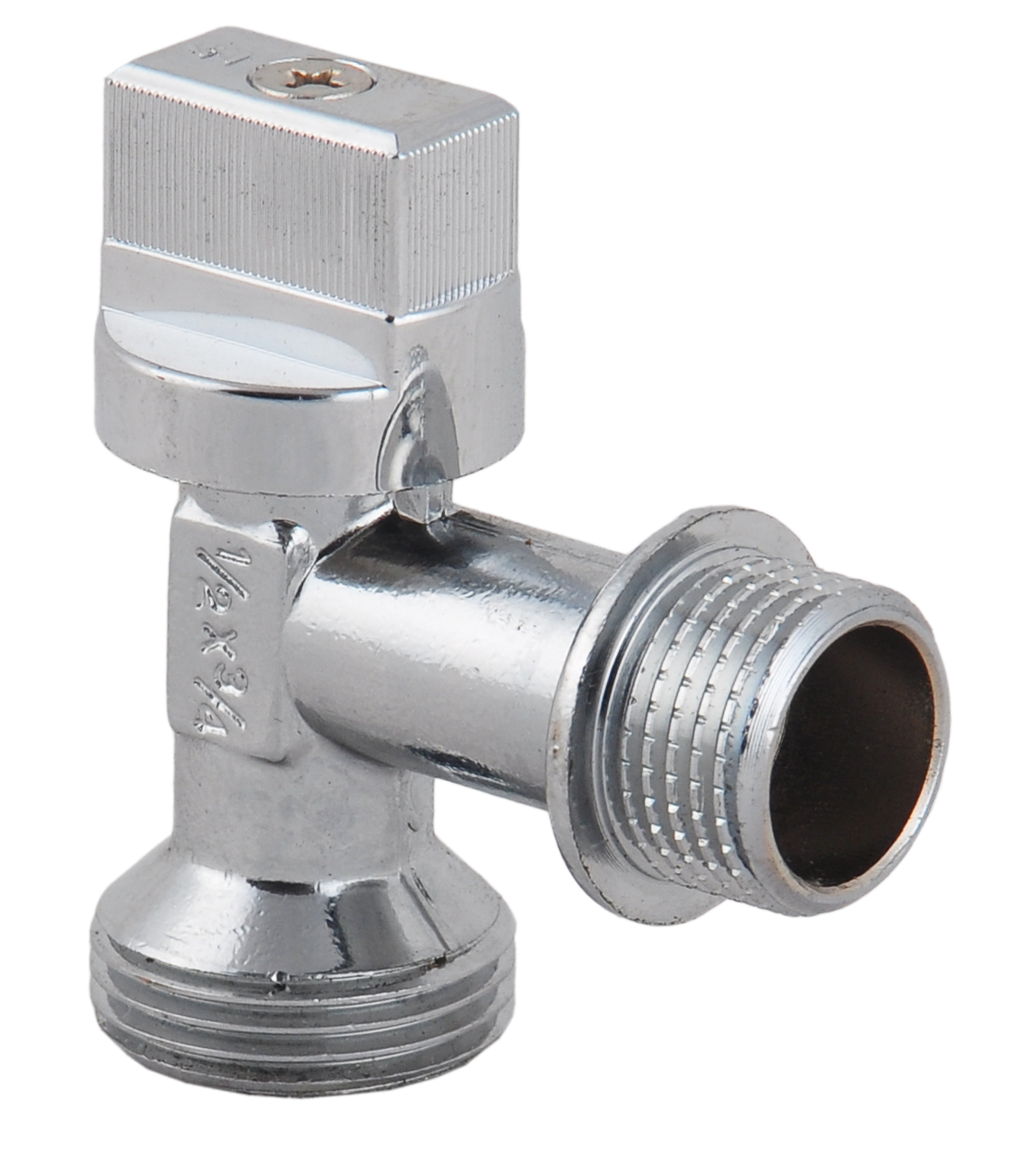
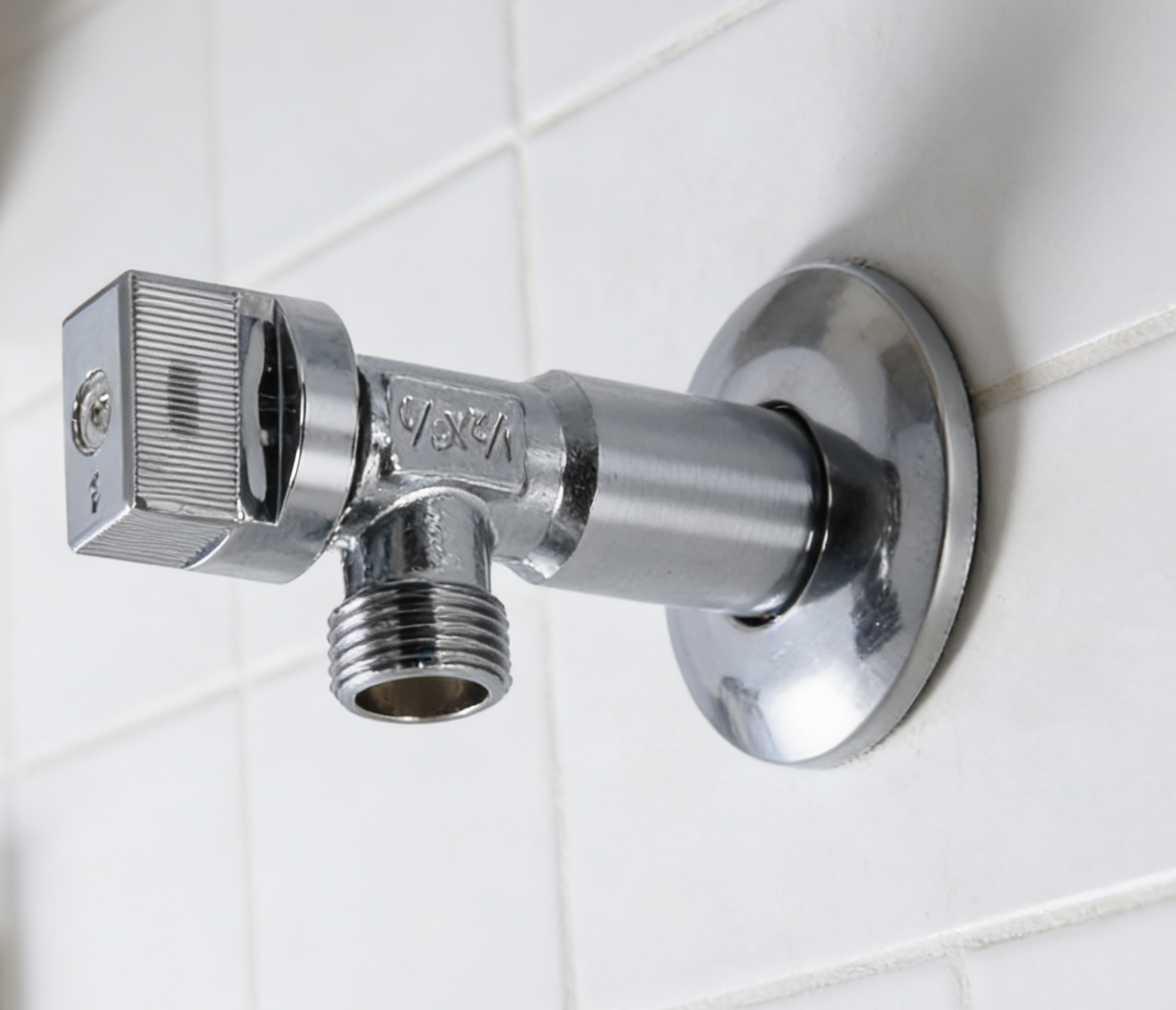
An angle valve sits between the wall outlet and the fixture, turning the water flow 90° in confined spaces behind a lavatory, a toilet or a washing machine. The ART.98011 brass angle valve is offered in 1/2" × 1/2" and 1/2" × 3/8" (DN15) sizes, rated at 125 psi WSP / 600 WOG with a working temperature range of 0°C to 90°C. It operates as a quarter-turn valve with either a brass ball or a POM stem.
Construction details that matter in a bathroom environment: the body is hot-forged normal brass with a lead-free material option available; the ball is chrome-plated brass; the handle can be brass or ABS; seats and seals are PTFE / NBR. OEM service is available, and the valve is designed for straightforward installation.
Why the rating is relevant to residential work: a typical fixture supply line runs at 40–80 psi, so a 125 psi WSP / 600 WOG rating carries margin rather than sitting at the edge of its envelope. The quarter-turn ball core suits the frequent on/off operation that fixture shut-off valves see over a building's life.
Multi-connection shut-off — brass supply stop valve 98023-LF
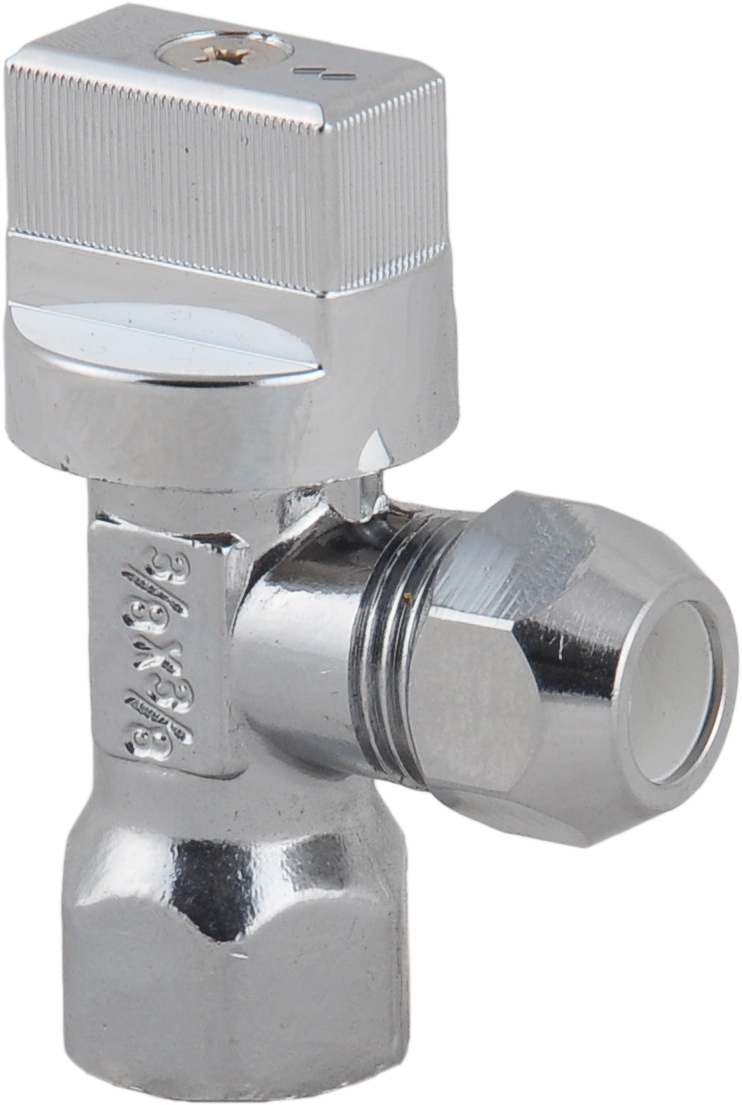
The 98023-LF brass supply stop valve answers the connection-diversity problem at the same installation point. It is supplied in 1/2" × 3/8" and 1/2" × 1/2" (DN15 × DN10/DN15) sizes, rated at 125 psi, with a working temperature range of −20°C to 120°C. The valve is available in either quarter-turn (ball) or multi-turn configuration, and in connection combinations that include compression × compression, FIP × compression, PEX × compression (ASTM F1960), sweat and threaded.
Available connector interfaces cover FIP, SWT, COMP, CPVC, PEX F1807 and PEX F1960, push-fit and press-fit. Handles can be customized, and the valve is available with a hose or with a water hammer arrestor. These valves are commonly installed under sinks, toilets and faucets to allow localized shut-off without turning off the main water supply, and the covered terminal applications are faucets, toilets, washing machines and water heaters.
The lead-free version is certified to cUPC, NSF/ANSI 61 and NSF/ANSI 372. The body is hot-forged normal brass CW617N, or lead-free brass for potable water contact; the stem and ball are brass; seats are PTFE; O-rings are NBR / EPDM. Two structural features are worth noting for service life: self-lubricating PTFE seats and a double O-ring arrangement.
The selection advantage here is coverage rather than a single specification. A distributor carrying 50+ models across angle and straight bodies, quarter-turn and multi-turn action, and compression / PEX / threaded / sweat connections can satisfy a renovation contractor and a production builder from one supplier instead of consolidating orders across several vendors.
Main-line control — brass ball valve 8081
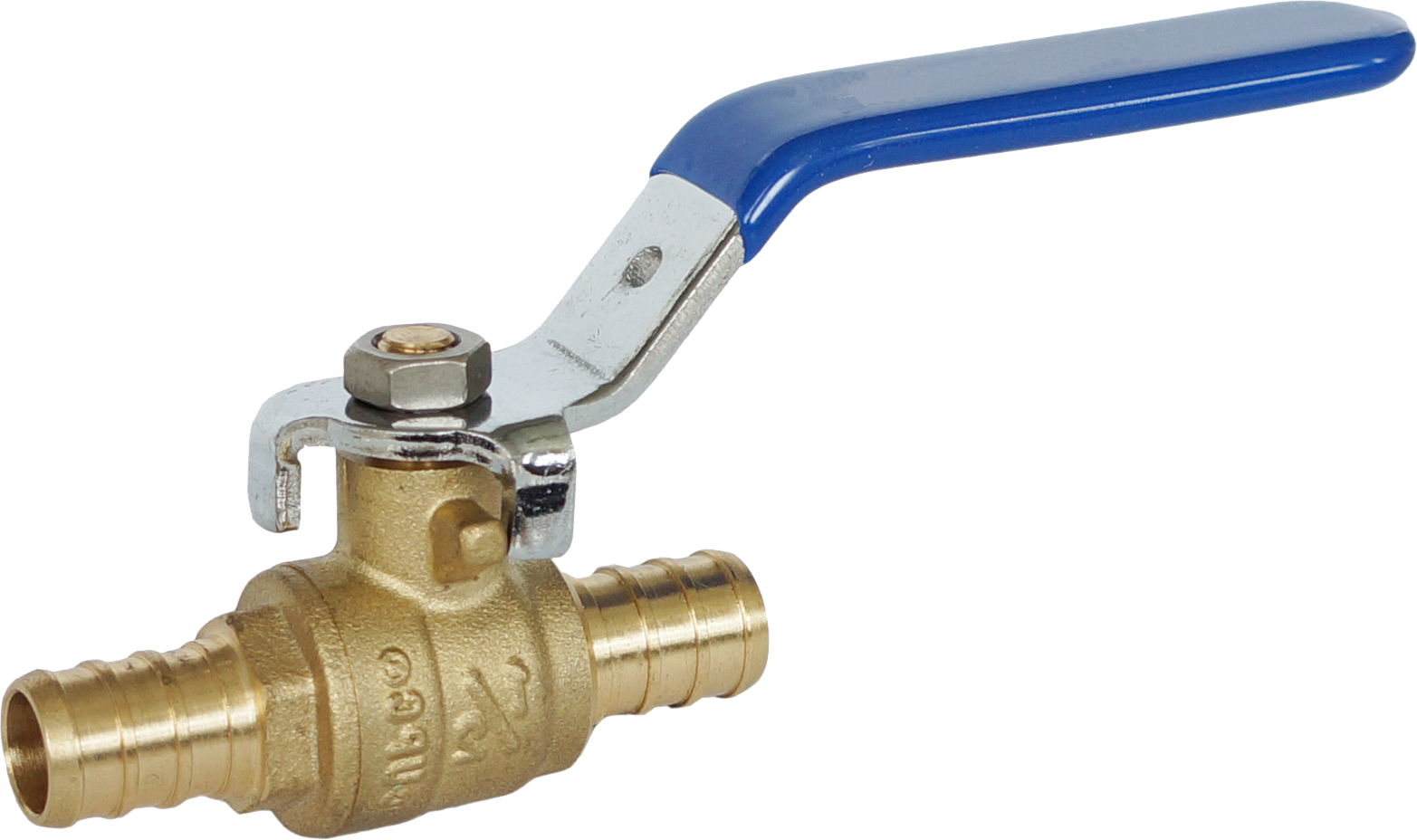
The 8081 is a two-piece full-port brass ball valve. It is available from 1/2" to 4" (DN15–DN100), rated at 600 WOG (4.1 MPa) with a working temperature range of −20°C to 150°C. The ball is chrome-plated brass and the stem uses a blow-out-proof design; seats are PTFE. Operation is a quarter-turn lever or wing handle, and the connection is female NPT or BSP.
The lead-free brass version is certified to cUPC, NSF/ANSI 61 and 372. In addition, the ball valve is covered by UPC Listing certificate 5938, issued by IAPMO, citing IAPMO/ANSI Z1157-2014e1(R2019), ASME A112.4.14-2022, CSA B125.14-22 and the National Plumbing Code of Canada, for the US and Canada market.
Available connectors include FPT, MPT, press, PEX, compression, SWT, ProPEX (cold expansion) and push-fit, which means one valve family can terminate into the piping systems found in both retrofit and new-build work. Every unit is 100% factory tested. The full-port geometry gives an unobstructed bore equal to the pipe diameter, so an open ball valve contributes minimal pressure loss to the system.
Main-line control — brass gate valve T-22017A
The T-22017A is a rising-stem gate valve with a brass-to-brass metal seat. It is available from 1/2" to 4" (DN15–DN100), rated at 200 WOG (1.4 MPa) with a working temperature range of −20°C to 120°C, connected by female NPT or BSP thread and operated by a 360° handwheel. Test pressure is 1.5× the rated value on the shell and 1.1× on the seat.
The lead-free brass gate valve is certified to NSF/ANSI 61 and NSF/ANSI 372 by IAPMO. Body and bonnet are hot-forged brass in CW617N or Hpb59, or a lead-free option in CW724R / C46500; the stem is brass, the disc is forged brass, and packing and seals are PTFE / EPDM.
The trade-off inherent in a brass-to-brass metal seat is worth stating plainly: there is no rubber seal to age, which suits infrequent shut-off duty and long idle periods, but it is not the right choice for a valve that is cycled weekly. The full-bore flow path equals the pipe diameter, keeping pressure loss low across the valve.
Ball valve or gate valve on the main line? Use the 8081 ball valve where the valve is operated often and the open/closed state should be obvious at a glance. Use the T-22017A gate valve where the valve is set once and expected to remain in position, and where minimal flow resistance matters more than operating convenience.
Interface: braided supply hoses and PEX piping
Every fixture valve sits between two different systems: the in-wall pipe and the fixture hose. In North American residential work that usually means compression threads on the hose side and one of several pipe systems on the wall side.
Both major PEX connection systems are covered by cUPC certification. Cold expansion fittings rated to ASTM F1960-2024 and CSA B137.5-2023, with NSF/ANSI 14-2023, are covered by IAPMO certificate 10232 for the USA and Canada market. F1807 PEX fittings are covered by UPC Listing certificate 8222, citing ASTM F1807-2023, CSA B137.5-2020 and NSF/ANSI 14-2023, valid from 2024-10-01 to 2029-09-30. Push-fit fittings are covered by CUPC certificate 17433 under ASSE 1061-2025 and NSF/ANSI 14-2023, valid until 2030-06-01.
Matching brass pipe fittings are supplied from 1/4" to 2" (DN8–DN50) with a pressure rating up to 600 WOG (4.1 MPa) and a working temperature range of −20°C to 150°C. Connection types span threaded, sweat, PEX, PEX-A, press and push-fit, with a dezincification-resistant (DZR) option. The range covers adapters, couplings, nipples, elbows, tees, unions, caps and plugs, which means a distributor does not have to consolidate a fixture-valve order across multiple vendors to get the fittings that go with it.
Step-by-Step Breakdown: Specifying and Installing for a Residential Job
- Count the shut-off points per dwelling unit. Assume one fixture-level shut-off at every lavatory, kitchen faucet, toilet, washing machine and water heater terminal. A typical three-bedroom unit in the US or Canada generates four to six fixture shut-off points before laundry and water heating are added. Distributors stocking by dwelling unit rather than by individual house can align their inventory with what the builder actually hands over.
- Match the connection before choosing the brand. The valve body is rarely the constraint — the interface is. The wall side may be PEX-A, PEX F1807, copper sweat, CPVC, press or push-fit; the hose side is usually 3/8" or 1/2" compression. A mismatch on either end makes the valve unusable. The 98023-LF multi-connection range exists precisely to collapse that problem into one valve family.
- Check the pressure class against the actual duty. Fixture supply lines normally operate at 40–80 psi; a 125 psi fixture valve carries adequate margin. Main-line valves carry higher and more variable pressure, which is why the 8081 is rated at 600 WOG and the T-22017A at 200 WOG rather than at fixture-grade ratings.
- Choose the main-line valve by operating frequency. Frequent operation and a clear visual state call for the 8081 ball valve. Infrequent isolation duty and low flow resistance call for the T-22017A gate valve with its brass-to-brass metal seat. Both are available across 1/2"–4" (DN15–DN100) on female NPT or BSP threads, so a distributor can hold one thread system across a project.
- Verify the certification and material documentation before installation, not after. For potable water systems in the US and Canada, lead-free is a regulated requirement. Look for NSF/ANSI/CAN 372 lead-free compliance, NSF/ANSI/CAN 61 health effects coverage, and cUPC product listing. The supply stop valve 98023-LF carries cUPC listing 5775 under ASME A112.18.1-2024 / CSA B125.1-24; the ball valve 8081 carries UPC listing 5938. Manufacturing is covered by ISO 9001:2015 certificate CN00124Q37399R2M/3300 and ISO 14001:2015 certificate CN00124E33461R2M/3300, both issued by the China Quality Certification Centre (CQC).
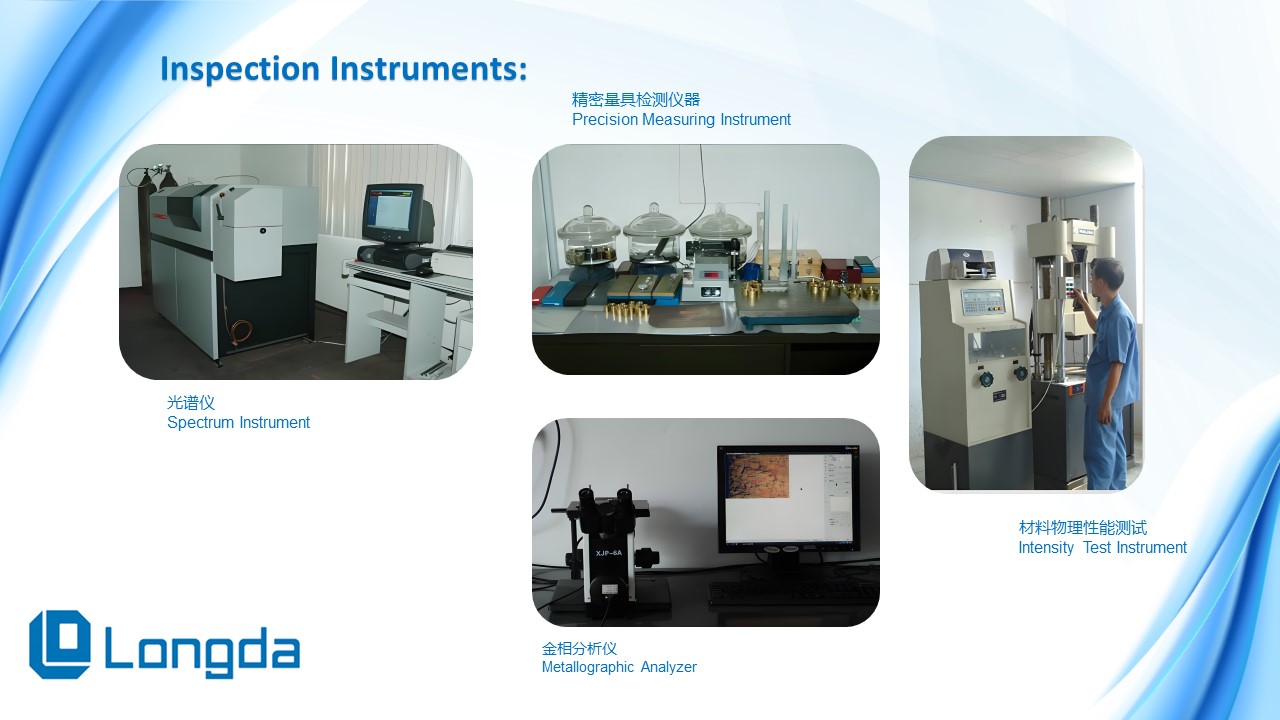
- Confirm factory testing and warranty terms as part of acceptance. Every valve is 100% air-pressure tested under water before shipment, every lot is thread-gauge inspected, and a lead-free material test report can be supplied. The stated warranty is 12 months with free replacement for quality defects, supported by technical and installation guidance. For a residential project, these are the points that determine return rates rather than the purchase price on the invoice.
Use Cases
New residential construction
In new construction the plumbing rough-in is done before wall close-in. Fixture shut-off valves are installed directly on the PEX branch, where an ASTM F1960 cold expansion joint forms a permanent connection without reducing the pipe inner diameter — a useful property for a joint that will be buried in a wall. Typical sizes are 1/2". Multiple dwelling units on the same site are supplied on a repeating schedule, so consistency between shipments matters more than any single innovation.
Bathroom and kitchen renovation
Renovation work frequently encounters older pipe material. This is where a multi-connection valve earns its place: compression ends work with copper and PEX, FIP ends handle older threaded stubs, and press or push-fit options shorten the time on site where access is limited. Working pressure in these installations typically sits in the 40–80 psi range, and the valve will be operated more often than in a new build because the fixtures above it are more likely to be serviced.
Hotel and apartment fit-out
Fit-out programmes buy in fixed quantities per room and deliver by floor. Quality stability matters more than unit price, because a single failed fixture shut-off in a serviced apartment generates a maintenance call, a water-damage claim and a room taken out of service. Verified supply-stop performance in volume residential programmes includes a US manufacturer taking 8,000,000 pcs per year and a Canadian distributor order of 70,000,000 pcs over a three-year relationship, both recording zero leakage complaints, a 100% pass rate in retail quality audit and monthly repeat orders. Those programmes used cUPC / NSF 61 certified fixture shut-off valves with chrome-plated corrosion resistance and quarter-turn operation.
Laundry and washing machine supply points
Washing machine supply points are among the most frequently operated fixture valves in a house and are also where water hammer appears, because a solenoid fill valve closes abruptly. Supply stop valves configured as a straight body are used in these positions, and a version supplied with a water hammer arrestor addresses the pressure spike directly.
Comparison Table
The table below compares the four valve families on the specifications that determine where each one is used. All values are manufacturer-published product data.
| Parameter | Brass Angle Valve ART.98011 | Brass Supply Stop Valve 98023-LF | Brass Ball Valve 8081 | Brass Gate Valve T-22017A |
|---|---|---|---|---|
| Size range | 1/2" × 1/2" and 1/2" × 3/8" (DN15) | 1/2" × 3/8" and 1/2" × 1/2" (DN15 × DN10/DN15) | 1/2"–4" (DN15–DN100) | 1/2"–4" (DN15–DN100) |
| Pressure rating | 125 psi WSP / 600 WOG | 125 psi | 600 WOG (4.1 MPa) | 200 WOG (1.4 MPa) |
| Working temperature | 0°C to 90°C | −20°C to 120°C | −20°C to 150°C | −20°C to 120°C |
| Connection | Angle body, threaded | Compression × compression, FIP × compression, PEX × compression (ASTM F1960), sweat, threaded | Female NPT or BSP | Female NPT or BSP |
| Operation | Quarter-turn, brass ball or POM stem | Quarter-turn (ball) or multi-turn | Quarter-turn lever or wing handle | 360° handwheel, rising stem |
| Sealing | PTFE / NBR seats and seals | PTFE seats, NBR / EPDM O-rings | PTFE seats, PTFE sealing gland, two PTFE seats | Brass-to-brass metal seat, PTFE / EPDM packing |
| Typical residential position | Bathroom and kitchen faucets, toilets | Faucets, toilets, washing machines, water heater terminals | Main supply and branch isolation, frequent operation | Main supply, infrequent shut-off duty |
| Certification coverage | ISO 9001:2015 scope; lead-free material option available | cUPC 5775; NSF/ANSI/CAN 61 (N-5775); NSF/ANSI/CAN 372 | cUPC 5938 (Z1157 / ASME A112.4.14 / CSA B125.14); NSF/ANSI 61 & 372 | NSF/ANSI 61 and NSF/ANSI 372 certified by IAPMO |
A second mapping is useful when a contractor asks which valve goes where on a specific job.
| Building position | Valve role | Recommended valve | Decision rule |
|---|---|---|---|
| Under lavatory and kitchen sink | Fixture shut-off | Angle valve ART.98011 or angled supply stop 98023-LF | Confined space requires 90° redirection between wall stub-out and hose |
| Behind toilet | Fixture shut-off | Supply stop valve 98023-LF | Covered terminal application; angle or straight body depending on stub-out |
| Washing machine point | Fixture shut-off | Straight supply stop, optionally with water hammer arrestor | Frequent cycling plus solenoid-induced pressure spike |
| Water heater supply | Terminal shut-off | Supply stop valve 98023-LF | Covered terminal application; temperature range to 120°C |
| Building entry main | Main isolation | Brass ball valve 8081 | Frequent operation, full-port low pressure loss, 600 WOG rating |
| Branch line isolation | Main isolation | Brass gate valve T-22017A | Set-and-leave duty, brass-to-brass seat, no elastomer aging |
| PEX branch termination | Connection interface | Brass fittings (F1807 / F1960 / press / push-fit) | Must match the certified PEX system used on the project |
FAQ
1. Which certifications should a distributor verify on brass angle valves and supply stop valves before ordering?
For the US and Canada market, three certifications carry the most weight. NSF/ANSI/CAN 372 lead-free compliance limits wetted-surface lead to 0.25%, and the brass supply stop valve 98023-LF holds it. NSF/ANSI/CAN 61 covers health effects for drinking water system components; IAPMO listing N-5775 covers the supply stop valve, the 8081 ball valve, the T-22017A gate valve, the LD 30303 check valve, the LD.73154 Y strainer and the 15111 fittings range. cUPC listing confirms compliance with the applicable product standard — supply stop valve 98023-LF under certificate 5775 to ASME A112.18.1-2024 / CSA B125.1-24, and ball valve 8081 under certificate 5938 to IAPMO/ANSI Z1157-2014e1(R2019), ASME A112.4.14-2022 and CSA B125.14-22. Manufacturing is covered by ISO 9001:2015 certificate CN00124Q37399R2M/3300 and ISO 14001:2015 certificate CN00124E33461R2M/3300. Ask the supplier for the certificate that names the model on your order, not just the logo on the catalogue cover.
2. Fixture supply lines usually run at 40–80 psi. Do these valves have enough pressure and temperature margin?
Yes. The ART.98011 angle valve is rated 125 psi WSP / 600 WOG and the 98023-LF supply stop valve is rated 125 psi, both above the 40–80 psi typically seen on residential fixture supply branches. Main-line valves are deliberately rated higher because supply pressure and surge are higher there: the 8081 ball valve at 600 WOG (4.1 MPa) and the T-22017A gate valve at 200 WOG (1.4 MPa). On temperature, the ART.98011 is rated 0°C to 90°C, the 98023-LF −20°C to 120°C, the 8081 −20°C to 150°C and the T-22017A −20°C to 120°C.
3. What are the minimum order quantity and lead time for a first residential project order?
For angle and supply stop valves, the minimum order quantity is 1,000 pcs per size, with a monthly capacity of 500,000 pcs and a lead time of 30–60 days for volume orders. Ball valve capacity is 300,000 pcs per month, with lead times of 20 to 50 days depending on the product, and MOQ varies by size. Large residential programmes are normally scheduled in phased deliveries matched to the build programme rather than shipped in a single lot.
4. Can samples be supplied before committing to a volume order?
Yes. Sample lead time is 5–7 days, which allows a contractor or distributor to pressure-test and install a valve before the production order is released. Customization can be confirmed against the same sample — size, connection combination (FIP × compression, IPS × compression, FIP × FIP, PEX × PEX, PEX × compression, press × compression, cold expansion × compression and cold expansion × cold expansion), handle type, chrome finish, logo, and blister or box packaging, along with cUPC / NSF certification support.
5. How are quality defects handled after delivery?
Every valve is 100% air-pressure tested under water before shipment, every production lot is thread-gauge inspected, and a lead-free material test report is available on request. The stated warranty is 12 months with free replacement for quality defects, plus technical support and installation guidance. For a residential programme, the practical next step is to run a sample batch through your own installers and inspection process before the first volume release. The full product range and specification data are available in the LONGDA download catalogue at catalogue Longda-Global.pdf, or by contacting the sales team directly at sales@ld-valve.com.
Conclusion
Bathroom renovation and new residential construction both come down to three valve decisions, and getting them right is a matter of matching specification to position rather than of selecting a single universal product. The fixture shut-off point needs an angle or supply stop valve rated for the 40–80 psi and dry-to-high-humidity conditions behind a sink, toilet or washing machine, with end connections that match the pipe system and the braided supply hose actually on site. The main line needs either a full-port ball valve for frequent operation or a metal-seated gate valve for set-and-leave isolation. The junction between them needs fittings certified to the PEX or press system in use.
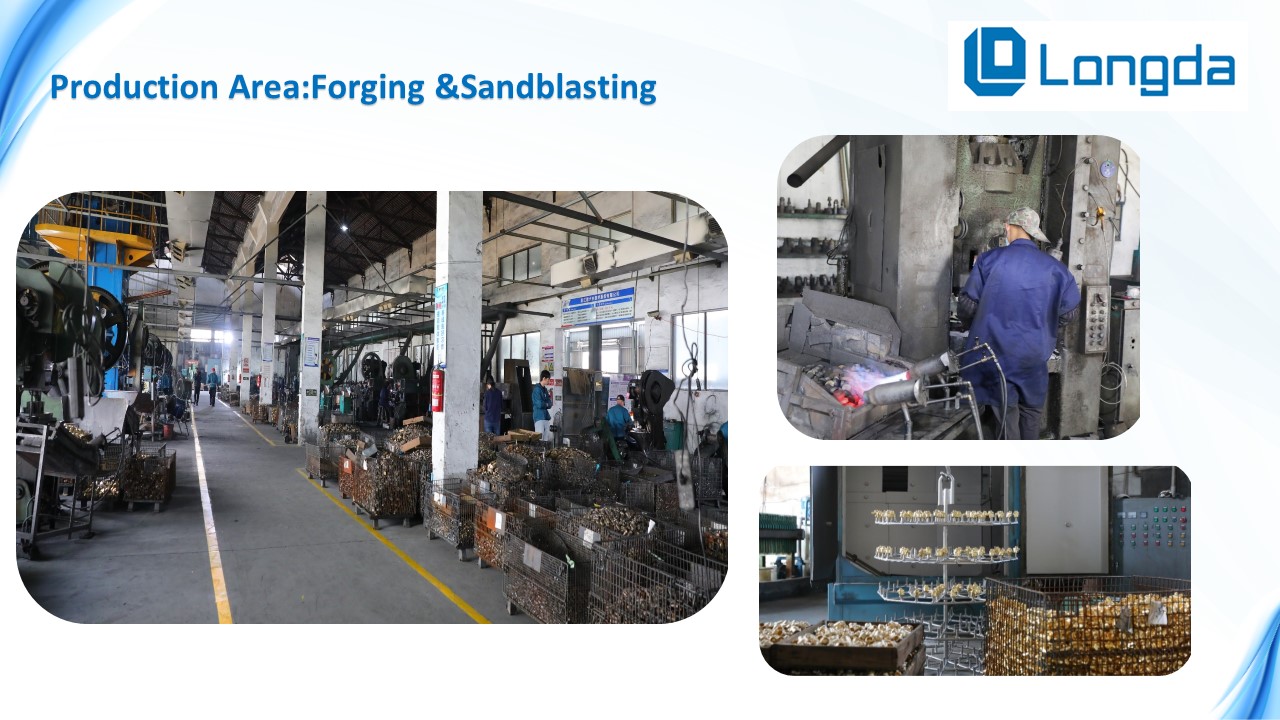
LONGDA BRASS VALVE manufactures across all three positions from a single facility in Yuhuan, Zhejiang, with cUPC, NSF/ANSI 61 and NSF/ANSI 372 certifications documented by certificate number for the specific models involved. Distributors and contractors who want to validate a valve on a live project can request samples through www.ld-valve.com or by email at sales@ld-valve.com, and product and specification content is published at blog.ld-valve.com.
Request a Sample or Quotation
Tell us the fixture positions, pipe system and target market for your next renovation or new-build programme. LONGDA BRASS VALVE will confirm the matching angle valve, supply stop valve, ball valve or gate valve configuration, together with certification documents for the named model.
Email: sales@ld-valve.com | Tel / WhatsApp: +86 13506869135 | Website: www.ld-valve.com
Download the full catalogue: catalogue Longda-Global.pdf